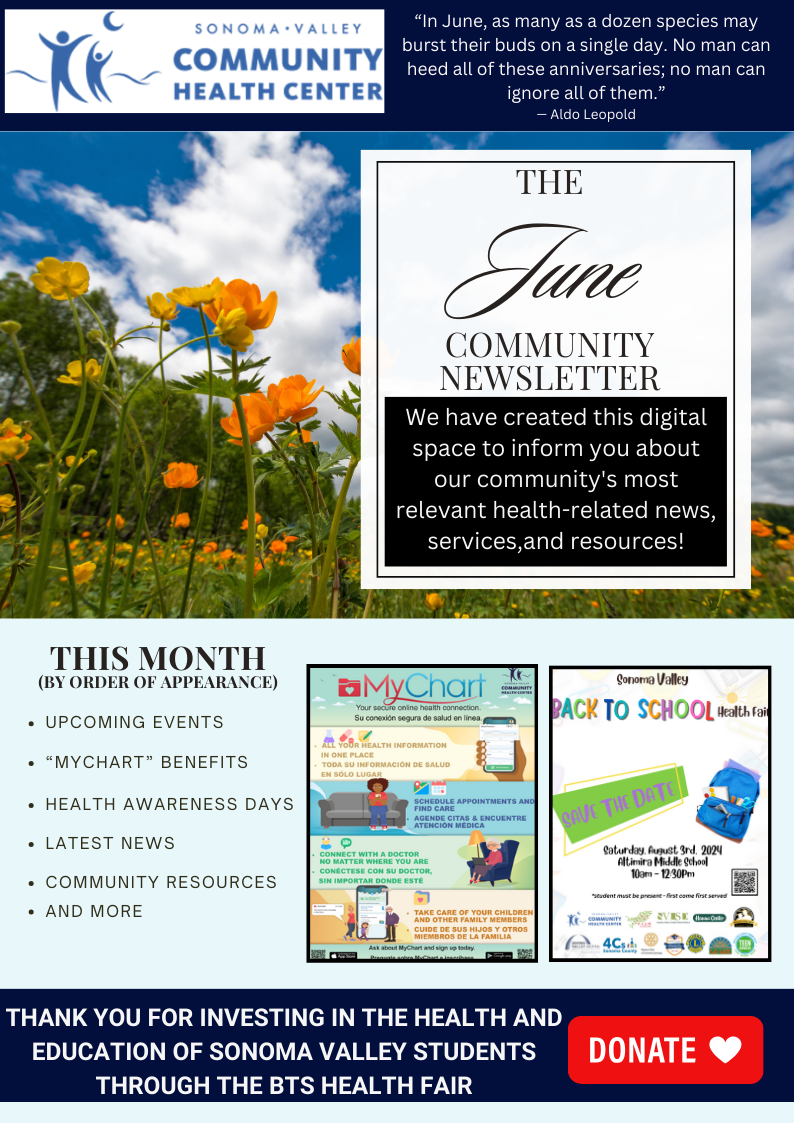
|
We celebrated Father's Day on June 16th.
But we still want to recognize all the fathers and father figures in our clinic, the community, and the rest of the world!
Being a father is a great source of achievement, pride, and inspiration. Fatherhood teaches about unconditional love, reinforces the importance of giving back, and inspires a person to become a better version.
| |
|
This year’s People Choice Awards in the Sonoma Index-Tribune honor Janet Byrd & Jerome Smith
AS FINALISTS.
| |
|
SVCHC is proud to see its colleagues receiving well-deserved recognition for their unceasing efforts to provide the best service to our patients.
Support our providers by voting here!
You can vote until July 7th by providing an email address and a zip code.
| |
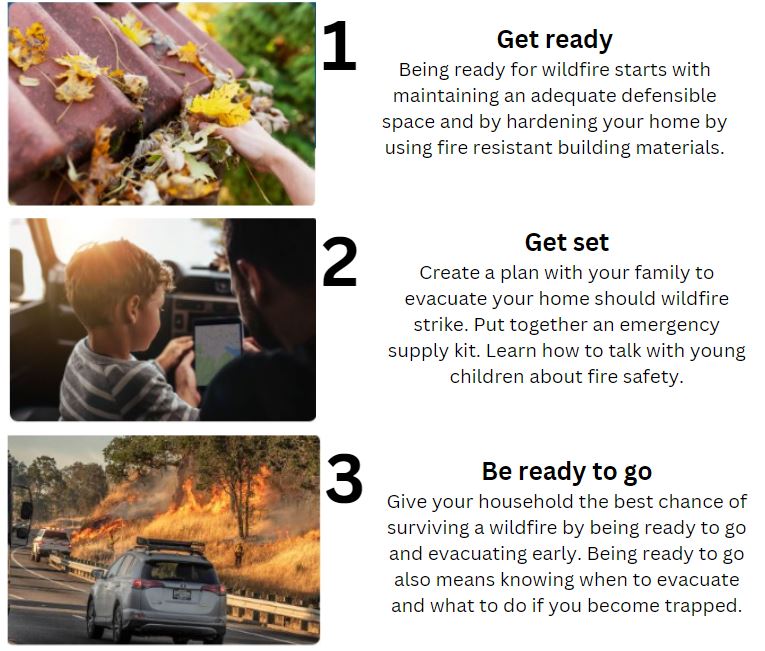
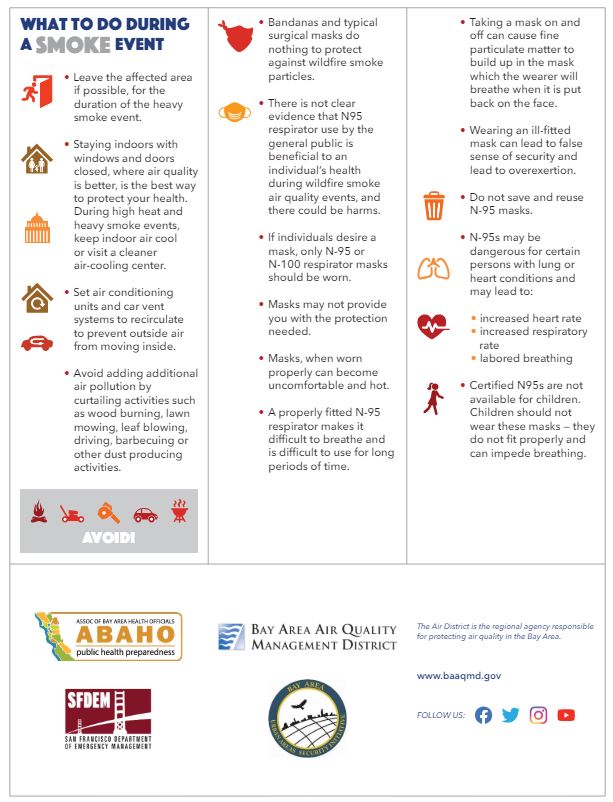
CALFIRE provides the following information about how to prepare and protect yourself before, during, and after wildfires. For more information visit here. | |
|
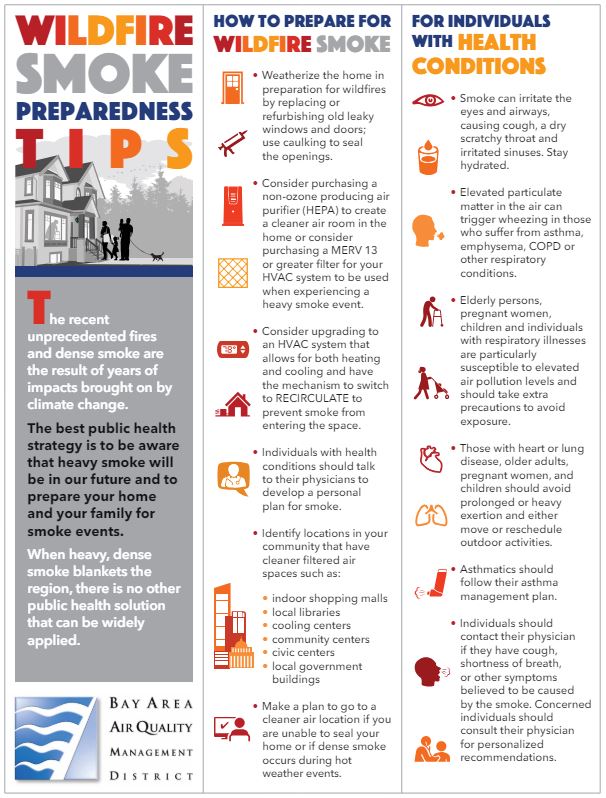
Tips to follow during poor air quality alerts due
to wildfire smoke.
| |
Sonoma Valley Community Health Center, in collaboration with the BTS Committee, invites you to: | |
|
This year's goal is to provide 600 backpacks to participating Sonoma Valley K-12 students. Participants will have the opportunity to access a resource fair with local and countywide services and obtain an age-appropriate backpack filled with school supplies. Students need to be present to receive a backpack.
100+ volunteers are needed to make this event happen!
If you wish to volunteer and be part of this event's magic, check out the flyer below and share it with your family and friends!
| |
Don't miss the opportunity to contribute to something big and get great exposure for your business or organization! | |
|
We accept and appreciate all levels of monetary donations!
To learn about the benefits of becoming a sponsor, click here or email us.
| |
|
Are you getting the benefits of MyChart?
Learn how this great tool can make your health connection easier, more effective, and more enjoyable!
| |
|
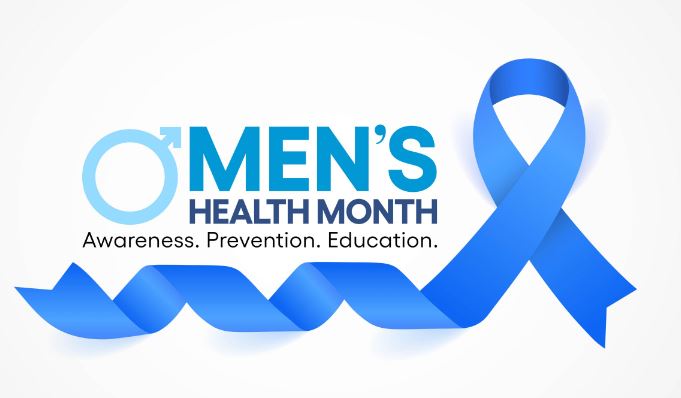
June is Men’s Health Month, a time to bring special awareness to health issues commonly affecting men. Studies show that men are less likely to see a primary care doctor, and they die at higher rates from the three leading causes of death: heart disease, cancer, and accidental injuries. This month is a good opportunity to talk to your loved ones about healthy habits that can lower their risk for health problems.
- Get an annual preventive care check-up. Even if you feel fine, a regular check-up can help catch small health problems before they become big ones. Your doctor can recommend any screenings or tests you may need, like colorectal cancer screenings or blood sugar testing.
- Eat a heart-healthy diet. This includes plenty of whole grains, lean proteins, fruits, and vegetables (try making half your plate fruits and veggies).
- Aim to exercise for 30 minutes per day. Take advantage of the nicer weather and go outside for a walk or play your favorite sport!
- Kick your nicotine habit if you have one. Whether it’s living longer or feeling (and looking) younger, find your motivation to quit.
-
Take care of your mental health. Life can be stressful and demanding. If you’re struggling to cope, talking with a mental health professional can help. Learn more about behavioral health support and care options.
Source
This year, the U.S. Department of Health and Human Services (HHS) Office of Minority Health (OMH) is focusing on improving health outcomes for racial and ethnic minorities and American Indian/Alaska Native (AI/AN) men through its theme, Be the Source for Better Health: Improving Health Outcomes Through Our Cultures, Communities, and Connections. This theme calls on each of us to better understand how the unique environments, cultures, histories, and circumstances (known as social determinants of health, or “SDOH”) of racial and ethnic minorities and AI/AN men impact their overall health.
On average, men in the United States die nearly 6 years earlier than women and are at higher risk for many serious diseases, including heart disease, lung cancer, and HIV. In addition, men experience unique health problems that don’t affect women, like prostate cancer. Negative impacts of SDOH factors, like economic stability and educational access and quality, can increase their risk for poor health outcomes.
Source
| |
June is LGBTQ+ Pride Month | |
|
LGBTQ+ is an acronym that stands for lesbian, gay, bisexual, transgender, queer or questioning, and other gender identities. The plus sign (+) is used to represent identities that aren't fully captured by the letters and words. For example, queer is a term that can be used to express fluid identities and orientations and is often used interchangeably with LGBTQ. Other terms related to LGBTQ+ include:
Ally: A person who isn't LGBTQ+ but supports LGBTQ+ people and promotes equality.
Gender dysphoria: Clinically significant distress that occurs when a person's assigned birth gender doesn't match their gender identity
Nonbinary: An adjective that describes a person whose gender isn't male or female and may use other terms like genderqueer, agender, bigender, or genderfluid.
The rainbow is a well-known symbol for the LGBTQ+ community. Its association with Pride dates back to 1978 when Gilbert Baker designed the original Pride flag.
Here are some organizations that support LGBTQ+ people:
A nonprofit organization that provides suicide prevention and crisis intervention services for LGBTQ+ young people 24/7
An organization that works to achieve freedom and justice for LGBTQ+ people and their families
To learn more about the LGBTQ+ symbols, click here:
Did you know?
- LGBTQ+ teens are six times more likely to experience symptoms of depression than non-LGBTQ+ identifying teens.
- LGBTQ+ youth are more than twice as likely to feel suicidal and over four times as likely to attempt suicide compared to heterosexual youth.
- Forty-eight percent of transgender adults report that they have considered suicide in the last year, compared to 4 percent of the overall US population.
Mental Health Resources For LGBTQ+ Communities
For more information and resources, click this link
**********************************************
MENTAL HEALTH RESOURCES AVAILABLE TO YOU
| |
|
The only way to know for sure whether you have HIV is to get tested. Knowing your HIV status helps you choose options to stay healthy.
People with certain risk factors should get tested more often. You should get tested at least once a year if:
- You’re a man who has had sex with another man.
- You’ve had anal or vaginal sex with someone who has HIV.
- You’ve had more than one sex partner since your last HIV test.
- You’ve shared needles, syringes, or other drug injection equipment (for example, cookers).
- You’ve exchanged sex for drugs or money.
-
You’ve been diagnosed with or treated for another sexually transmitted disease.
-
You’ve been diagnosed with or treated for hepatitis or tuberculosis (TB).
- You’ve had sex with someone who has done anything listed above or with someone whose sexual history you don’t know.
Before having sex for the first time with a new partner, talk about your sexual and drug-use history, disclose your HIV status, and consider getting tested for HIV together.
For more information, click HERE
| |
June is Pet Preparedness Month
| |
|
Your pets are important family members and must be included in your family’s emergency plan. To prepare for the unexpected, follow these tips with your pets in mind:
- Make a plan.
- Build an emergency kit.
- Stay informed.
Make a Plan
If you have a plan in place for you and your pets, you will likely encounter less difficulty, stress, and worry when deciding during an emergency. If local officials ask you to evacuate, that means your pet should evacuate too. If you leave your pets behind, they may be lost, injured, or worse.
Things to include in your plan:
- Have an evacuation plan for your pet. Many public shelters and hotels do not allow pets inside. Know a safe place where you can take your pets before disasters and emergencies happen.
- Develop a buddy system. Plan with neighbors, friends, or relatives to ensure that someone is available to care for or evacuate your pets if you are unable to do so.
- Have your pet microchipped. Make sure to keep your address and phone number up-to-date and include contact information for an emergency contact outside of your immediate area.
- If you’re unsure how to care for your pet in an emergency, contact your local emergency management office, animal shelter, or animal control office for additional advice and information.
Build a Kit for Your Pet
Just as you do with your family’s emergency supply kit, think first about the basics for survival, such as food and water. Have two kits: one larger kit if you are sheltering in place and one lightweight version if you need to evacuate. Review your kits regularly to ensure their contents, especially foods and medicines, are fresh.
Stay Informed
-
Pay attention to wireless emergency alerts for local alerts and warnings sent by state and local public safety officials.
- Listen to local officials when told to evacuate or shelter in place.
-
Download the FEMA app and get weather alerts from the National Weather Service for up to five locations anywhere in the United States.
- Always bring pets indoors at the first sign or warning of a storm or disaster.
For more information, click here
Resources:
Halter Project
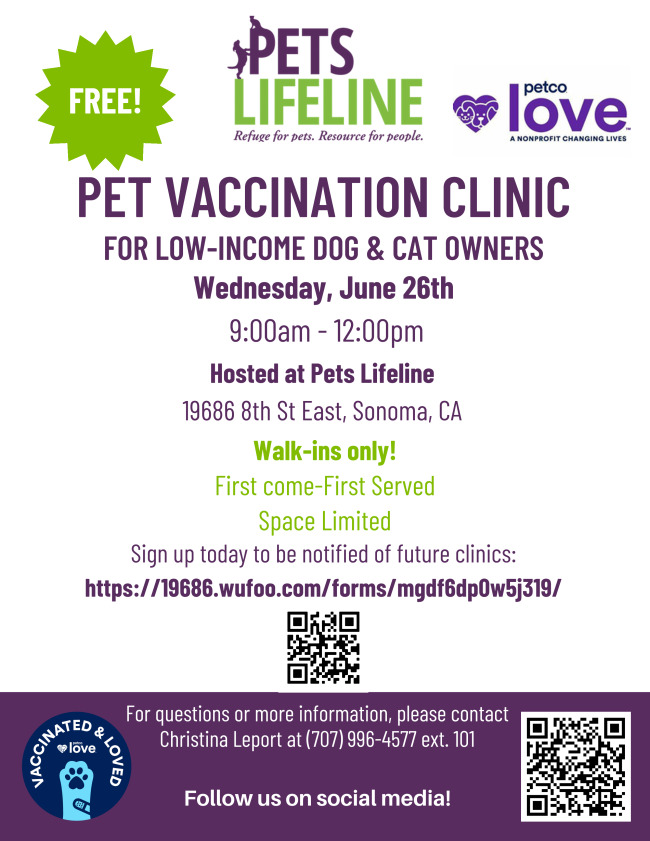
Pets Lifeline
Sonoma CART
| |
According to the Centers for Disease Control and Prevention (CDC), cataracts are the leading cause of blindness worldwide and the leading cause of vision loss in the United States. More than half of all Americans have cataracts by the time they are 80 years old. Additionally, an estimated 20.5 million Americans aged 40 years and older have cataracts in one or both eyes. Sometimes, they can be found in young people or even newborn babies.
What is a Cataract?
A cataract is a clouding of the eye’s lens, which blocks or changes the passage of light into the eye. The lens of the eye is located behind the pupil and the colored iris and is normally transparent. The lens helps to focus images onto the retina – which transmits the images to the brain.
Your vision may become blurry or dim because the cataract stops light from properly passing through your retina.
What are the types of cataracts?
Age-related – 95% of cataracts are age-related, usually after age 40.
Congenital – These are present at birth, usually caused by infection or inflammation during pregnancy, possibly inherited.
Traumatic – Lens damage from a hard blow, cut, puncture, intense heat, or chemical burn may cause cataracts.
Secondary – Some medicines, eye disease, eye infection, or diseases such as diabetes cause these cataracts.
Cataracts usually form in both eyes, but not at the same rate. They can develop slowly, quickly, or progress to a certain point, then not worsen. As a result, you may not notice large changes in your sight right away.
Risk factors for developing cataracts include:
Besides getting older, other factors may cause cataracts to form. Eye infections, some medicines (such as steroids), injuries, or exposure to intense heat or radiation may cause cataracts. Too much exposure to non-visible sunlight (called UV or ultraviolet light) and various diseases, such as diabetes or metabolic disorders, may also contribute to cataracts forming.
Other factors include:
- Inflammation in the eye
- Hereditary influences
- Events before birth, such as German measles in the mother
-
Long-term steroid use (medicines used to treat some health problems, like arthritis or allergies)
- Eye injuries
- Eye diseases, such as glaucoma
- Smoking
How can I prevent cataracts?
- Protect your eyes from the sun
- Protect your eyes from injury
- Don't smoke
- Make eye-healthy food choices. Eat plenty of healthy foods, such as fruits and vegetables, leafy greens, nuts, and whole grains.
-
Visit our great optometry team for a check-up.
For more information, click on the source here.
| |
-
For questions regarding renewing Medi-Cal or questions about Covered California, please get in touch with the SVCHC Eligibility Team at (707)939-6070 or by email: eligibility@svchc.org
-
Appointments for the W.I.C. Office must be made via phone before visits. Please call 707-565-6590.
Location: 19080 Lomita Ave. Sonoma, CA.
-
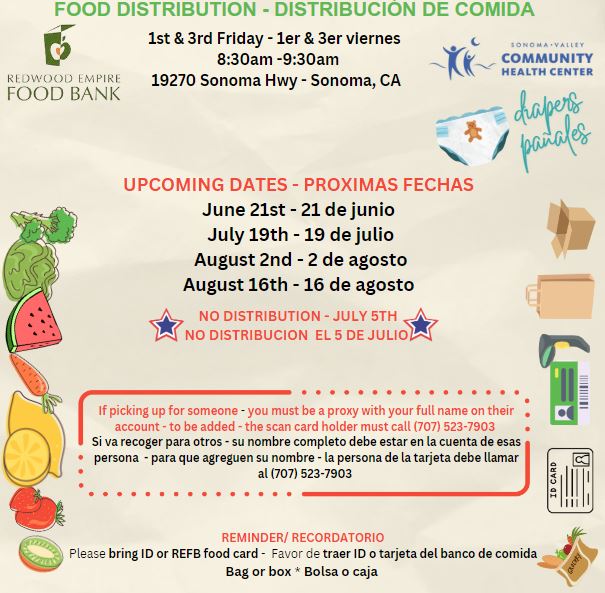
REFB Food Distribution is at SVCHC every 1st and 3rd Friday of each month. Distribution hours are from 8:30 a.m. to 9:30 a.m. or until supply lasts.
-
Click here to check the Rental/Financial Assistance flyer for Santa Rosa residents.
-
To learn more about Zero Waste Sonoma, click here or follow them on their Facebook page.
-
For more community resources, visit our website.
| |
If you need a W5 scan card, please call (707) 939-6070 ext 212 or send an email at community@svchc.org | |
|
SUMMER LUNCH PROGRAMS IN SONOMA VALLEY
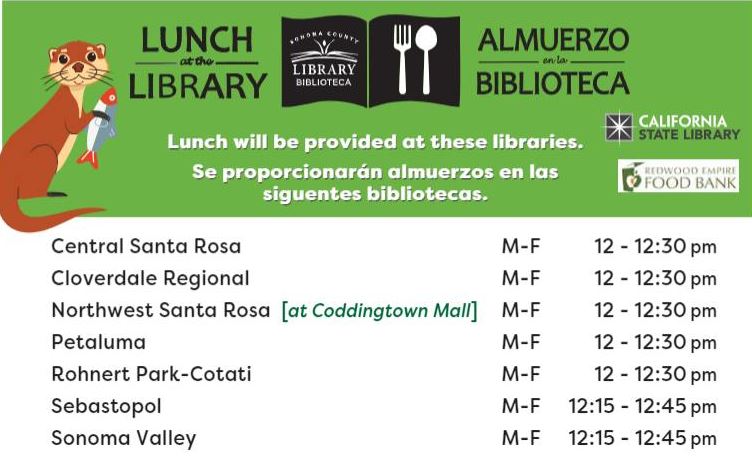
- Sonoma County Library will provide REFB summer lunch service at seven library locations from June 10th to August 9th, 2024. Lunch is available to all children between the ages of 0 to 18. Families are welcome to enjoy lunch, stay to play, and read together.
- SVUSD provides a summer lunch program at Altimira & Flowery schools from the beginning of June through mid-July
| |
|
News from the Senderos Naturales Program
What's new from June to September?
| |
|
Check the news about The Senderos Naturales Program and their adventures for this summer. Thanks to a grant from Parks California, many of these outings offer free transportation from a local meeting point, such as La Luz Center or a library, to Sugarloaf and back. Outings below marked with an asterisk (*) denote available transportation for those who wish to join the activity.
Senderos: La vida en el arroyo
Saturday, June 29, 1:30-4:30 pm in collaboration with Sonoma Valley Regional Library*.
Senderos a la luz de la luna
Saturday, July 20, 6:30-10:15 pm; not recommended for children under 12.
Senderos: Art at the park
Saturday, August 10, 9:30 am-1:30 pm, in collaboration with La Luz Center*.
Senderos: ¿What is a sugarloaf?
Saturday, September 14, 9:30 am-1:00 pm, in collaboration with Northwest Santa Rosa Library*
Learn about access to parks for and your family through ParkRX
| |
Families with Cal Fresh, Medi-Cal, or children who receive school lunches may qualify for SUN Bucks (Summer EBT). | |
OUR MISSION: To provide accessible quality health care to those who need it, especially the underserved.
OUR VISION: To be recognized as a leader in providing patient and community-centered care in collaboration with other organizations.
707-939-6070 * www.svchc.org * community@svchc.org
| | | | |