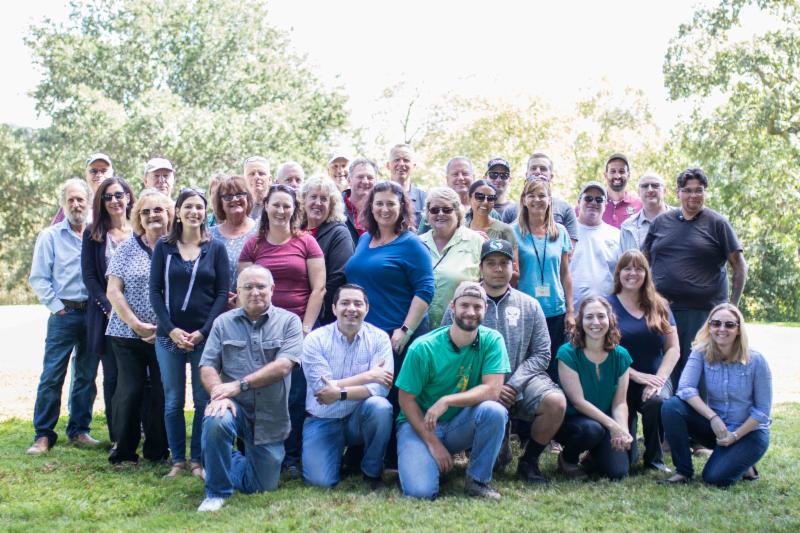
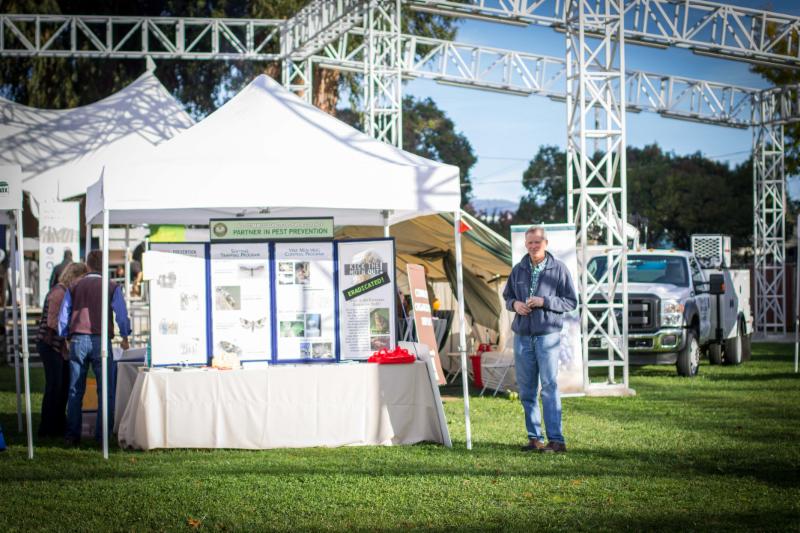
Ag Commissioner Greg Clark’s last day, August 3, 2018
|
The staff of the Napa County Agricultural Department thanks Greg Clark for his 18 years of service and dedication to Napa County, agriculture, and the people within our department. Originally from Oakdale, California, Greg joined Napa County in 2000 as the Assistant Agricultural Commissioner/Sealer of Weights & Measures. He brought with him a Bachelor's degree in Viticulture from CSU Fresno and a Master's degree in Public Administration from San Jose State University, as well as six years of advocating for conservation of agricultural lands and sustainable urban growth and land use policies. Greg built his career foundation as a vineyard manager and during his time working for the Santa Clara and Stanislaus County Ag Departments.
Greg was appointed Napa County Agricultural Commissioner/Sealer of Weights & Measures in 2013 and took on the significant task of eradicating the grape-destroying European grapevine moth (EGVM) from Napa County. EGVM was successfully eradicated in August 2016 and the cooperative efforts employed were seen as a model regulatory program.
As Napa County Ag Commissioner/Sealer, Greg made an impact on the community, industry and the County of Napa. As our fearless leader at the Ag Commissioner’s Office he had an equally significant impact on each of us. He was a mentor, considerate and caring, and always had a great sense of humor. We will miss Greg’s extraordinary knowledge and experience, and support him wholeheartedly in his future endeavors. Thank you Greg, for your work and dedication!
|
|
Vine Mealybug - History and Prevention
|
|
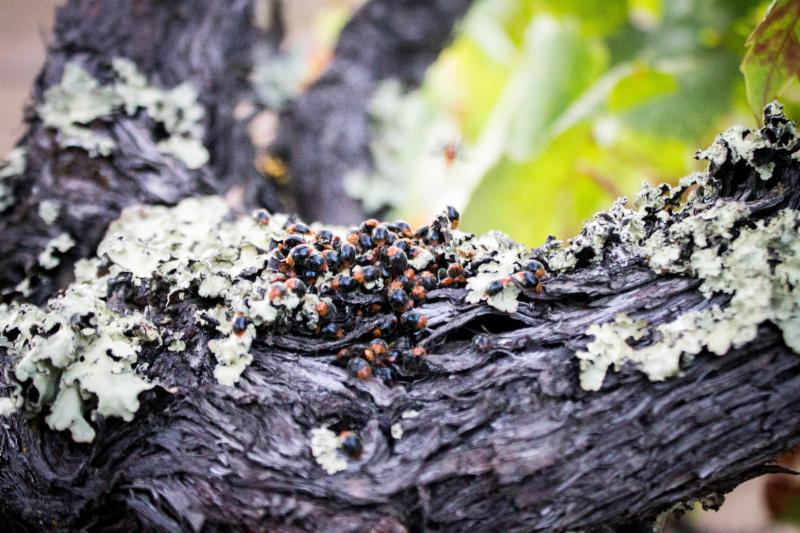
In 1994, damage to table grape crops in the Coachella Valley led to the first observation of the Vine Mealybug (VMB) in California. This grape vine pest began to spread to the San Joaquin valley and beyond until VMB appeared between the Carneros region and just south of St. Helena in 2002. VMB was possibly spread via infested nursery stock from the Central Valley. The Napa Agricultural Commissioner’s Office immediately began a VMB trapping program to track the spread of this highly damaging pest.
Grapevines infested with VMB may have an unusual amount of ant activity, since ants feed on the sugary excretions of the insects. This sticky substance can provide a perfect substrate for damaging molds, and can render the crop unmarketable. Besides causing a general decline in the vigor of an infested vine, VMB may also transmit
leafroll viruses
.
Unfortunately, the populations of VMB in the Napa wine grape growing regions has spread over the years. The insects might lodge in mechanical pruning and harvesting equipment, moving between vineyards. Thorough cleaning of all equipment is key to preventing the expansion of this pest. Only the tiny male VMB can fly, but for very short distances. They may, however be transported much further by wind or birds moving infested fruit.
The Agricultural Commissioner’s Office deploys and then microscopically examines over 4,100 traps each year to track the changes in VMB density. We invite you to visit our
webpage
to see this information on
interactive maps
that allow users to search for specific locations, or simply take in a broader view of the distribution of VMB’s detected in the traps. There is also a wealth of information on best practices for sanitation to prevent the spread of VMB, the biology of the pest, and guides for identification.
|
|
Medfly Quarantine
Lifted in Solano County!
|
|
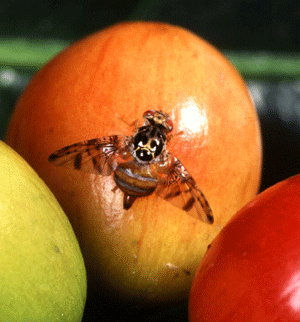
The California Department of Food and Agriculture (CDFA) announced this past Monday that the Mediterranean Fruit Fly (Medfly) quarantine in Solano County has been lifted. The quarantine was put in place following the detection of a female Medfly caught in a detection trap in the city of Fairfield by Solano County Agriculture Department staff in late August 2017.
The lifting of the quarantine ends any restrictions on the movement of fruits and vegetables out of the established quarantine area within Solano County. Fruits and vegetables are free to move to Napa County farmers markets. Additionally, there are no restrictions for Solano County winegrape producers planning to transport fruit to Napa County wineries. For additional information, you can read a recent article in Solano County’s
Daily Republic.
|
|
48 Hour Notification Requirement
|
|
The Napa County Agricultural Commissioner’s Office would like to remind you that California regulations now require that growers provide an annual notification of the pesticides expected to be applied to agricultural crops within 1/4 mile of a public K-12 school or child care center (schoolsites).
In addition, if a grower needs to use a pesticide that is not included on their existing list, schoolsites and the commissioner’s office must be informed at least 48 hours prior to use by adding an amendment to your list.
We encourage you to visit and use your
CalAgPermits
webuser accounts, as it is the easiest and most efficient way to provide and maintain these required notifications and amendments.
If you have any questions or concerns about these regulations, or would like help setting up or using your
CalAgPermits
webuser account please call our
office
at (707) 253-4357.
|
|
Harvest Scale Weighing Devices
|
|
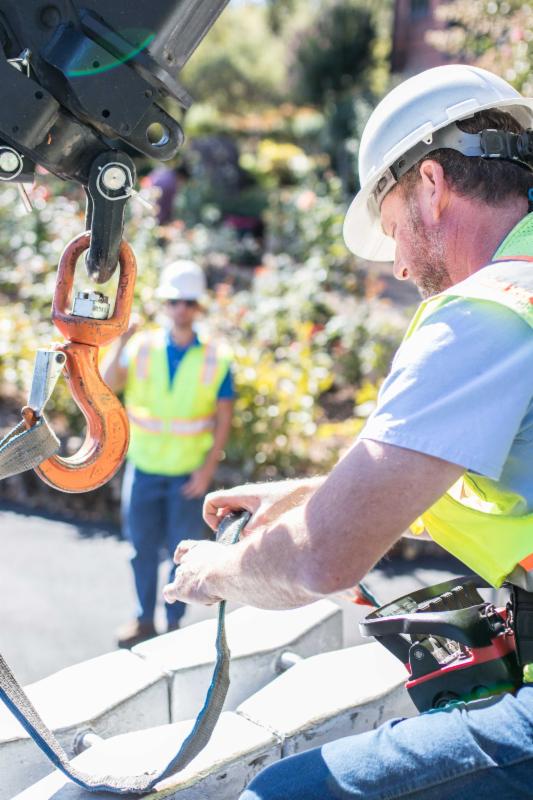
The Napa County Weights and Measures Department is busy conducting inspections for industry leading up to harvest season for Napa Valley. We have completed inspections on over 55 vehicle scales and have moved on to inspecting and certifying the portable scales used at the various vineyards and wineries throughout the valley.
Currently, we have approximately 500 portable/platform scales and 55 hanging/crane scales to inspect and certify for accuracy before harvest begins. To complete this task the weights and measures team prioritizes based on information given by the wine industry indicating when fruit is ready to be harvested. Inspections are conducted by region for efficiency.
The inspection and certification process includes ensuring that devices are accurate before use and setup, and are working properly. We ask wineries and growers to setup scales as they would during harvest, so they can be inspected and the accuracy determined. It is very important that portable platform scales are installed on a level, solid surface to provide accurate weighing. In the unfortunate event that devices do not pass inspection, they would need to be repaired by a CDFA licensed repair agency or replaced with a suitable device.
We would like to thank our wine grape partners in getting the weighing devices ready and scheduled for inspection as we prepare for harvest.
If you have any questions or need assistance with weighing or measuring devices please contact the Napa County Department of Weights and Measures at (707) 944-8714 or
weightsandmeasures@countyofnapa.org
|
|
 |
As an Ag Inspector Greg Music works primarily in the Pest Detection and Pesticide Enforcement programs. He is also an Authorized Certifying Officer for Agriculture products that are exported internationally. He has a BS Degree from Cal Poly San Luis Obispo in Agriculture Business Management.
Before starting his Ag W&M career in 2005 Greg spent 19 years managing turkey ranches in California, Washington and Minnesota. (That’s the poultry turkey not the human). He is a nerd for the processes of agriculture and is fascinated by the hard work it takes to bring food to our tables. Not only food, but wine, beer and whiskey as well.
Greg has two grown daughters that he will happily brag about and is married to a nurse that feeds his curious mind with stories of the human condition. His favorite activity is hiking with family and friends, while solving the world’s problems.
Yes he has a sarcastic bent!
|
|
|
|
|
|
|
|
|
|
|
|