Wisconsin Coastal Resilience Newsletter | |
|
Greetings from the Wisconsin Coastal Resilience Team!
This month's newsletter contains:
Member-to-Member Updates: Call for Nominations and Lake Michigan Day
Lake Michigan Water Level Update
Resource of the Month: Ready-to-Fund Resilience Toolkit
Funding Opportunities
- GLISA Small Grants Program
- EPA GLRI Environmental Justice Grant Program
- NOAA Climate Resilience Regional Challenge
Trainings: Preparing for Effective Risk Communication
News
- Solving the Problem of Lakefront Access & Erosion Control
- Great Lakes Cumulative Impact Assessment
| |
Call for Nominations & Lake Michigan Day | |
|
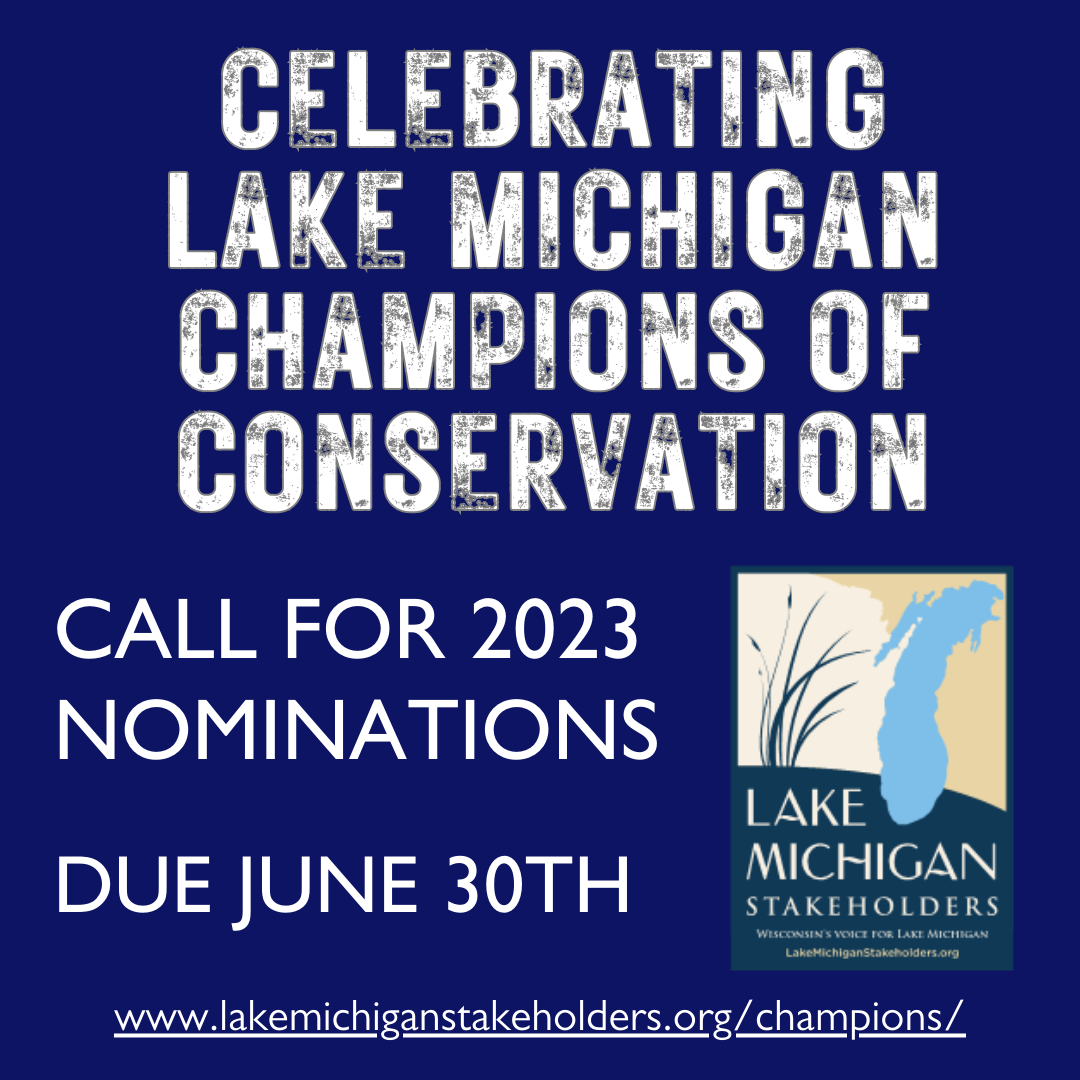
Lake Michigan Stakeholders, a proud partner of Lakeshore Natural Resource Partnership (LNRP), is seeking nominations for the annual Lake Michigan Champions of Conservation Awards. This environmental award program recognizes and honors outstanding achievements in multiple categories. Nominations are open to any group, program, organization, business, or individual located in the Lake Michigan Basin. We are looking for individuals or groups that have gone beyond the normal scope of work on the restoration, improvement, or enhancement of Lake Michigan and its watersheds. Nominations are due Friday, June 30th, 2023.
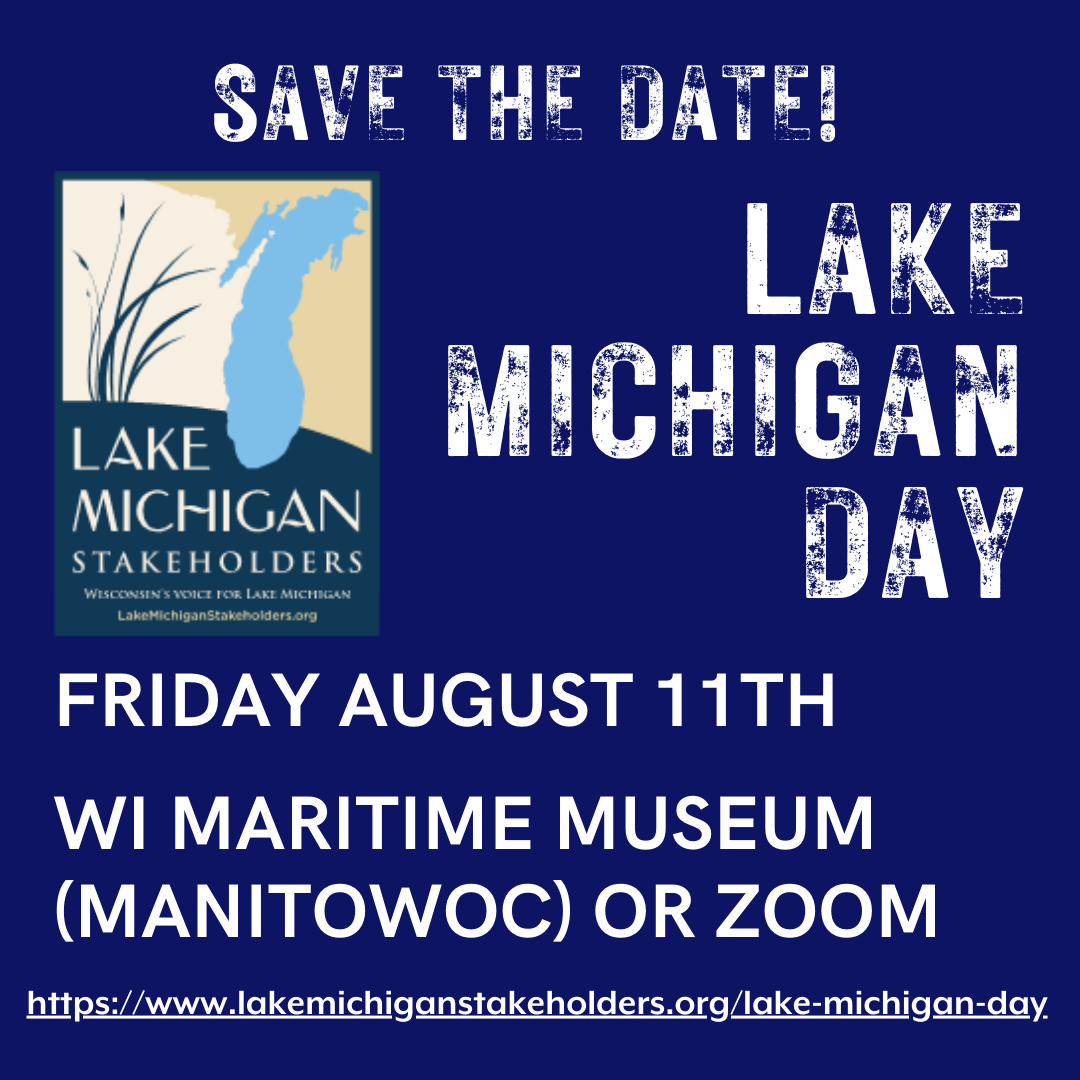
The Lake Michigan Stakeholder Champions of Conservation award winners are recognized at the annual Lake Michigan Day event. We invite you to save the date for the 10th annual celebration on Friday, August 11th, 2023 at the Wisconsin Maritime Museum in Manitowoc (with an option to join virtually). Lake Michigan Day highlights the significant opportunities for continued restoration and protection of Lake Michigan and the broader Great Lakes Basin while highlighting the ongoing challenges that face all of us as stakeholders. With an excellent lineup of panelists, speakers, and lightning talks, Lake Michigan Day has provided a forum for practitioners, decision-makers, and community leaders to learn about ongoing collaborative, community-focused water and land conservation work. This year, our focus will be on the initiatives and funding opportunities making our coastal communities more resilient in the face of climate change. The final workshop schedule and registration details will be made available at: www.lakemichiganstakeholders.org/lake-michigan-day
| |
June 2023 Water Level Update | |
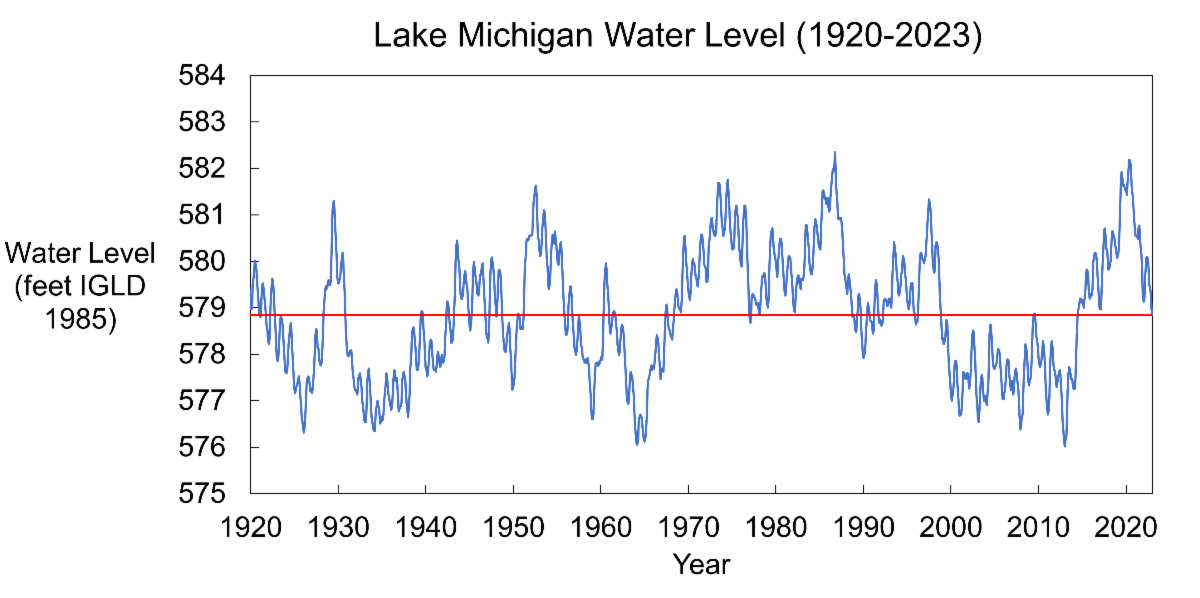
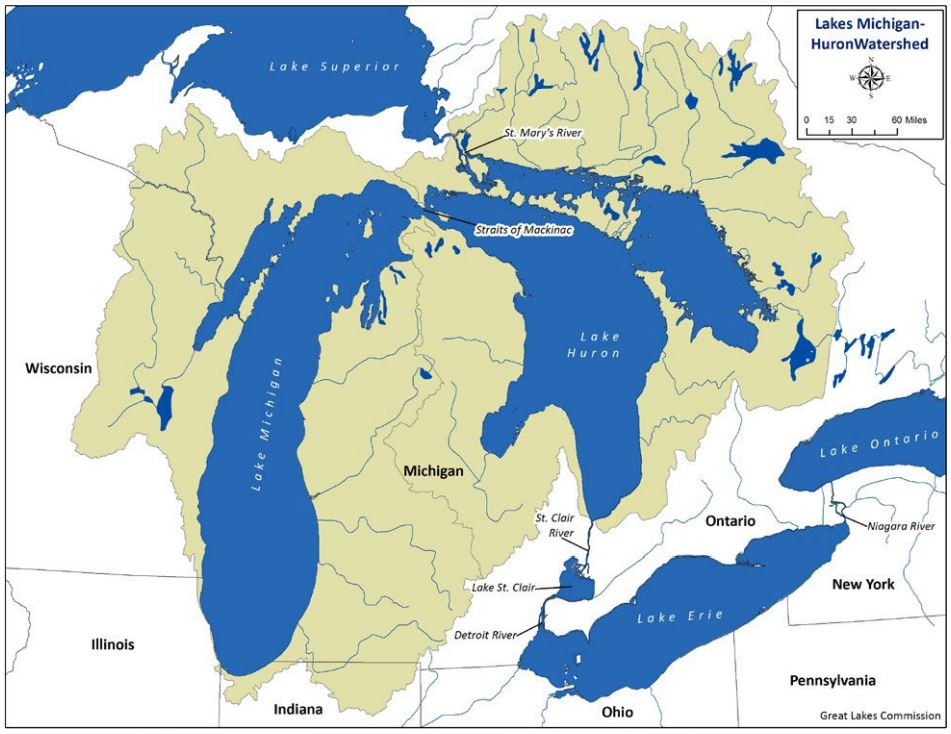
Lake Michigan water levels remained within an inch of last month's water levels. Though Lake Michigan is now about 30 inches below the highest monthly water level recorded in June 2020, the Lake is still about 5 inches higher than the long-term average water level for the month. Water levels are expected to rise another inch over the next month. | |
Ready-to-Fund Resilience Toolkit | |
|
The American Society of Adaptation Professionals has published the Ready-to-Fund Resilience Toolkit. This toolkit describes “how” local government leads and partners can design more fundable projects. This is an online resource that walks users through ten characteristics to integrate into climate resilience projects to ensure they’re ready to receive the funding and finance needed for success. It provides tips for overcoming challenges such as lack of resources, funding, or political will and a mismatch between older plans and community needs.
| |
GLISA Small Grants Program | |
|
Great Lakes Integrated Sciences and Assessments (GLISA) is seeking letters of intent for their 2023 small grants program. GLISA will award several 2-year grants of up to $30,000 each to organizations that will collaborate with GLISA to advance equitable climate adaptation in the Great Lakes region. Our goal is to foster and sustain a suite of collaborative projects that increase GLISA’s impact and address and amplify dimensions of justice, equity, diversity, and inclusion (JEDI) in adaptation action.
Eligible applicants include community groups, non-governmental organizations, academic institutions, local, state, and Tribal governments, trade associations, and other not-for-profit or private entities active in the Great Lakes region.
Applicants will have two funding categories to choose from:
- Scale up or improve GLISA’s existing suite of tools and approaches; or
- Propose an idea to advance priorities of frontline communities and increase their capacity to adapt.
Deadline to submit letters of intent has been extended to Friday, June 30, 2023 at 5pm ET.
| |
EPA GLRI Environmental Justice Grant Program | |
|
The EPA is soliciting applications for their Great Lakes Environmental Justice Grant Programs (GLEJGP). This funding opportunity designed to direct funds to projects benefitting underserved communities experiencing or affected by adverse and disproportionate environmental and human health risks or harms. The GLEJGPs will provide funding for two types of applications aimed at furthering the goals of the Great Lakes Restoration Initiative (GLRI): 1) applications that aim to create a GLEJGP to provide funding for projects in a particular region of the Great Lakes Basin; and 2) applications that aim to create a GLEJGP to provide funding for projects across the entire Great Lakes Basin.
This RFA is not targeted directly at underserved communities themselves - it is targeted at a potential pass-through entity or entities with established relationships with underserved communities or with the ability to quickly build and sustain such relationships with those communities.
Priority activities in support of the GLRI Action Plan include:
- Habitat restoration/enhancement/protection
- Invasive species control
- Non-point source runoff reduction
- Aquatic connectivity
- Hands-on, place-based Great Lakes environmental educational opportunities
Due Date: August 11, 2023
| |
NOAA Climate Resilience Regional Challenge | |
|
The NOAA Climate Resilience Regional Challenge will support collaborative approaches to achieving resilience in coastal regions with an emphasis on risk reduction, regional collaboration, equity, and building enduring capacity. The Challenge is a $575 million competition with a Letter of Intent phase and two exclusive funding tracks designed to meet the needs of coastal communities wherever they are in the resilience and adaptation process. There is no matching requirement for this opportunity.
Track 1: Regional Collaborative Building and Strategy Development
Supports building capacity for, development of, and collaboration on transformational resilience and adaptation strategies for coastal communities. Successful applicants will receive $500,000 to $2,000,000 to support regional scale coordination, engagement, planning, advancement of equitable outcomes, and capacity building for resilience and adaptation.
Track 2: Implementation of Resilience and Adaptation Actions
Supports implementation of transformational resilience and adaptation strategies and associated actions for coastal communities anchored in previous planning efforts. Applicants must propose a suite of complementary adaptation actions that together build the resilience of multiple communities within a coastal region, including those that have been marginalized, underserved, or underrepresented. Applicants can apply for not less than $15,000,000 and not more than $75,000,000, with most awards being between $25,000,000 and $50,000,000.
Applications Due: August 21, 2023
Information Sessions: June 27th, July 11th, and July 12th, 2023
| |
Preparing for Effective Risk Communication | |
|
NOAA has posted a new risk communication training module on the Digital Coast. This course provides the steps you might follow to develop a risk communication strategy focused on, and designed to meet the needs of, a specific audience. You’ll also learn how to listen more effectively, share information appropriately, and build relationships for improved conversations about hazards.
The training consists of interactive modules that take approximately 90 minutes to complete. The training is self-service and can be taken whenever.
| |
News from Around the Great Lakes | |
Solving the Problem of Lakefront Access and Erosion Control | | |
|
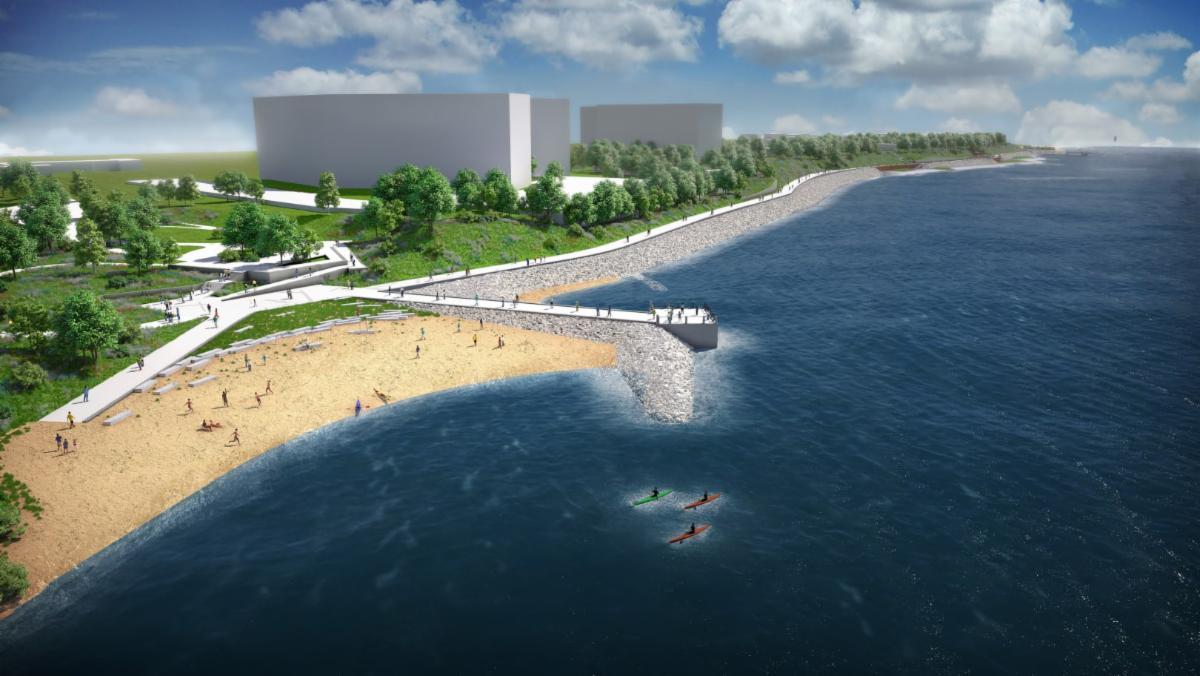
This story covers the Euclid, Ohio Waterfront Improvement Plan. This unique private-public partnership is collaboratively finding solutions to coastal access and erosion challenges. | |
Cumulative lmpact Assessment of Withdrawals, Consumptive Uses and Diversions | |
|
Every five years a Cumulative Impact Assessment study is required by the Agreement and Compact between States and Provinces that are members of the Great Lakes-St Lawrence River Water Resources Regional Body and the Great Lakes-St. Lawrence River Basin Water Resources Council. For the most recent study, 2016-2020, projected climate models were included, in addition to projected trends.
“Our findings suggest that over the next several decades, we may see greater fluctuation levels in the Great Lakes-St. Lawrence, but the overall water level is projected to remain on par with historical averages,” Dr. Andrew Gronewold, associate professor at the University of Michigan and the study’s principal investigator said. “We do find that both precipitation and evaporation are likely to increase over the coming decades, leading to a wetter and hotter climate in the region.”
| |
|
For questions about the CALM Network, or to submit something to the newsletter, contact:
Lydia Salus
lydia.salus@wisconsin.gov
608-266-3687
| |
For questions about Lake Michigan coastal hazards or how to approach, plan, and prepare for them, contact:
Adam Bechle
608-263-5133
| |
University of Wisconsin Sea Grant Institute | (608) 262-0905 | 1975 Willow Drive, 2nd Floor, Madison, WI 53706 | | | | |