View as Webpage

Did somebody forward you this email? Sign up here.

My project _4_.png

Climate Monitor


A weekly roundup of Maine's most urgent environmental and energy-related news from The Maine Monitor.

August 12, 2022

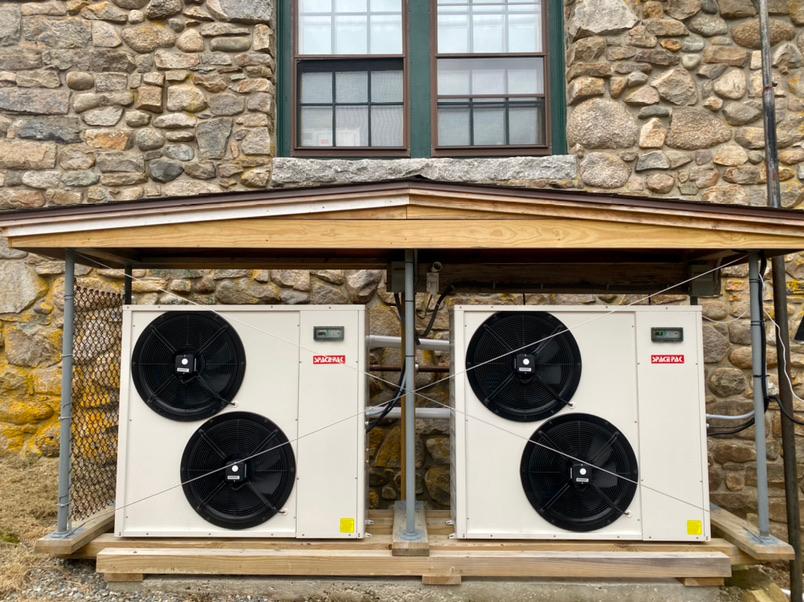
Heat pumps at the town office in Isle au Haut.

What the Inflation Reduction Act means for Maine

By Kate Cough


Many of my journalism colleagues are undoubtedly more efficient, but reporting (at least for me) often begins as a long exercise in flailing about, lots of deep Googling, and periodic panic that I have accidentally closed the one tab that held all of the vital information, the key to the story. I begin making phone calls only once I've grasped enough information on a subject to mostly avoid embarrassing myself in front of interviewees, or at least ask marginally informed questions.


But with the climate-health-tax legislation (also known as the Inflation Reduction Act) passed by the Senate this week, I had no idea where to start, and my attempts at poring over the 750-page bill proved fruitless. So I called Jack Shapiro, climate and clean energy director for the Natural Resources Council of Maine, and asked him what is, on its face, a pretty basic question: What does the legislation mean for Maine?


Short answer: everyone is still figuring it out. But, said Shapiro, "It's going to accelerate all of the key elements of the clean energy transition," and that will impact all of us.


It's helpful to think of the money in the bill (which includes $369 billion over ten years for climate and energy programs) in three buckets: transportation, home and building, and energy, said Shapiro. For Mainers, many of whom heat with oil and live in older, leaky houses with outdated systems, the tax credits and rebates associated with home efficiency upgrades could make some of the biggest difference.


According to Rewiring America, the bill includes $4.5 billion in direct rebates for low- and moderate-income households to incentivize the installation of more efficient electric appliances.


Low-income households (those who make 80% or less of area median income) would get the most money back, while moderate-income households (up to 150% of area median income) would be able to access rebates covering 50% of the cost.


Here's a list of the rebates that will eventually be available:


  • Up to $8,000 for the cost of heat pump or space heating installation
  • Up to $1,750 for a heat pump water heater
  • Up to $840 for an electric stove, cooktop, range, or oven
  • Up to $840 for an electric clothes dryer
  • Up to $2,500 for upgraded electrical wiring
  • Up to $4,000 for a breaker box upgrade
  • Up to $1,600 for insulation, air sealing, and ventilation


Those programs are going to take time to set up, but once they're in place, rebates will happen at the point of sale, saving people money up front, said Shapiro. In the meantime, the Act extends a tax credit for homeowners who make efficiency improvements. They can claim up to $1,200 a year or 30% of the total cost at tax time.


These federal incentives could also stack on top of those that Efficiency Maine already provides, said Shapiro, which already cover up to half of a $10,000 efficiency upgrade.


"There's a lot of opportunity here in Maine for people to save money," said Shapiro. "This is all about long term energy savings and making it more accessible and faster for people to be able to make these switches and start to benefit."


Incentives like this could go a particularly long way in Maine, where three out of five households use fuel oil as their primary energy source for home heating, a higher share than any other state.


There are also provisions in the bill that are expected to lower energy costs by reducing the price of oil and natural gas and lowering certain costs for solar and offshore wind developers. That should spur competition and reduce electricity rates for consumers, said Shapiro, especially in New England, where the grid is very reliant on natural gas.


The legislation also shores up existing tax credits for residential solar and energy storage, such as batteries. Though 2032, homeowners could get up to 30% of the cost of installing a residential solar or energy storage system back at tax time, according to NPR.

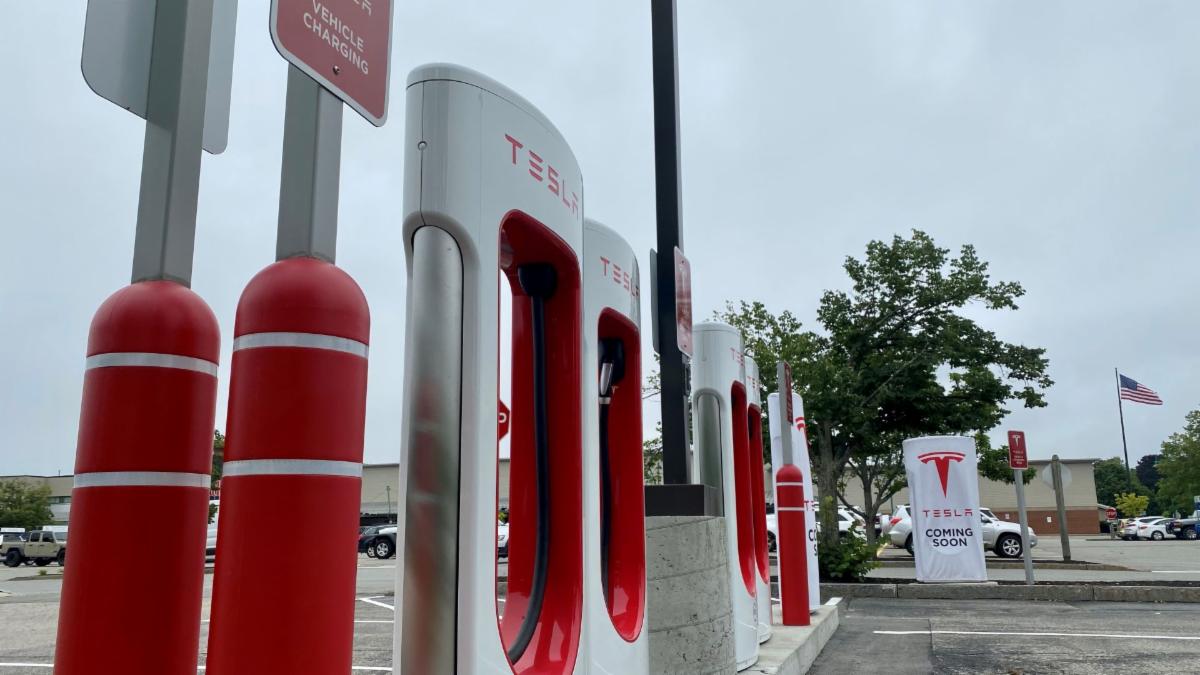
Transportation, which accounts for 54% of Maine's greenhouse gas emissions, is another area where the bill provides incentives that could lower the cost of buying an electric vehicle and make it more attractive for Mainers to make the switch.


Tax credits could shave up to $4,000 off a used electrical vehicle and $7,500 off a new one, as long as that vehicle doesn't cost more than $55,000 for a car and $80,000 for a truck/SUV/van. Those tax credits could be available at the point of sale, said Shapiro, which means you wouldn't have to wait until you file your taxes to access them.


"We think this is going to be really important for Maine as a low-income state," said Shapiro. But, he added, "the biggest challenge for EVs right now is that they can’t build them fast enough. People really want to make this switch and the supply of these vehicles needs to catch up with the booming demand."


It's also likely that a majority of EVs on the market today won't qualify for the credit. John Bozzella, president of the Alliance for Automotive Innovation, estimated that 70% of the 72 EV models available in the United States would not be eligible when the bill passes.


That's partially because the Act requires vehicles to be assembled in North America, Bozzella said in a statement earlier this week. It's also because half of the $7,500 is tied to requirements that a certain amount of the critical minerals that make up the battery be extracted in a country with which the U.S. has a free trade agreement or have been recycled in North America. 


"We can’t currently meet the demand for these materials on our own," said Bozzella. The bill does provide money to boost production and recycling of these minerals, both at home and abroad, although those operations will likely take years to ramp up, and mining and processing is rarely without controversy.


But the credits may still help some Mainers offset the cost of an EV, which could save them money, particularly in an era of high and fluctuating gas prices. Lifetime ownership costs of an EV are also thousands of dollars lower than a comparable internal combustion engine vehicle, according to Consumer Reports. "We want more people to be able to access those savings," said Shapiro.

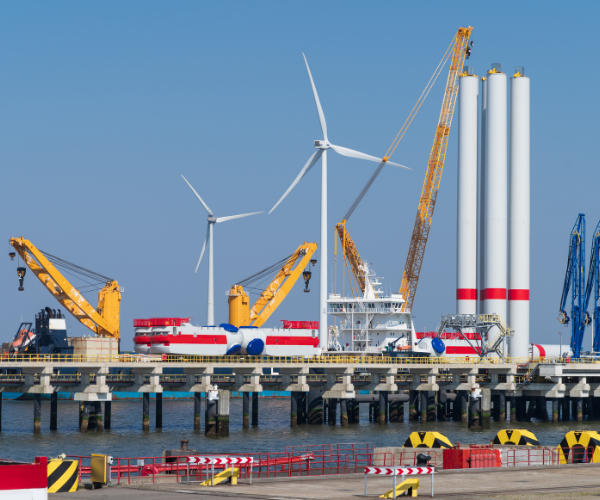
Offshore wind turbines being readied for deployment in Holland.

Another area Maine could see big effects is in offshore wind manufacturing, said Shapiro.


"We would like to see Maine be the place where floating offshore wind gets manufactured," he said, "And the kinds of programs in this in this bill for clean energy manufacturing are exactly the kind that line up with with trying to make that happen."


The legislation incentivizes both the construction of projects, with a tax credit of 30% for offshore wind projects that begin construction before January 1, 2026, and a new 10% tax credit for the domestic production of wind components and specialized offshore wind installation vessels. There is also a $3 billion grant for reducing emissions at seaports and a provision that would allow for the development of offshore wind projects in Puerto Rico, Guam and the U.S. Virgin Islands.


Maine is in the midst of assessing its ports, in particular the port of Searsport, for the transportation, assembly and fabrication of offshore wind turbines. (That hasn't been without controversy, which I wrote about last winter.)


Because offshore wind turbines and their foundations are so large, each component must be manufactured or assembled close to the water, with no bridges or electrical wires overhead and water deep enough to accommodate the ships to tow them out to sea. There are few ports (and few ships) that can handle such enormous parts, and there are no ports designed specifically for floating offshore wind anywhere in the world. The state began testing at Sears Island for the suitability of an offshore wind terminal this week, according to the Bangor Daily News. 


"Whether we make that happen or whether that stuff gets built in Salem, Massachusetts because they move more quickly than us remains to be seen," said Shapiro. 


"First and foremost," Shapiro continued, "this bill is going to make these lower cost, less expensive technologies more accessible to more people sooner in Maine. Whether that's in people's homes, the vehicles that they drive, or the energies that we use to power the grid. It's going to speed that up."


The House is expected to vote on the bill today.


Want to get in the weeds? Here's some further reading:


Correction:

Last week's newsletter contained a typo that made for a nonsense number (800,00) - thank you to those readers who caught it! Callahan extracted 5 million tons of waste rock at its mine in Brooksville, 800,000 tons of which was valuable ore. 

In other Maine news:


Wind:

Big wind farms planned in northern Maine could benefit Massachusetts.


Ocean:

Climate change has reversed 900 years of cooling in the Gulf of Maine.


Invasive species:

Maine’s newest invasive species are here, thanks to climate change.


Electric boats:

Maine Maritime Academy has signed an agreement with a “vehicle-to-grid” energy company to establish a center at the Castine campus that would be the hub for experimentation with the company’s technology on the water.


Offshore wind:

The state begins testing at Sears Island for the suitability of an offshore wind terminal there.


Beaches:

The Maine Department of Environmental Protection considers making it easier to spread sand on beaches in an effort to combat erosion accelerated by rising seas.


Mining:

Officials from a Canadian company looking to mine in northern Maine have been quietly meeting with local officials in the hopes of gaining support for their proposal.


Trash:

A company expected to play a key role in reviving a Hampden trash plant is inextricably linked with a firm that left behind operations that either failed or never materialized. Also related: Maine communities paid $1.5 million for that trash plant this week and renamed it Municipal Waste Solutions.


Gas:

Maine's gas price fall, but remain higher than the national average.


Hay:

Maine livestock producers could face hay shortage this winter due to drought.


Heat:

Portland sets a new record high temperature.


Fire:

Fires sparked by improperly disposed of batteries are daily occurrence at waste-to-energy plant in Orrington.


Electric vehicles:

The York Select Board rejects sending an electric vehicle charging station ordinance to voters this November.


Heat:

Warming in the Gulf of Maine has contributed to Maine's recent hot weather.


Blueberries:

Drought devastates the wild blueberry crop on the Blue Hill peninsula.


Conservation land:

New legislation could expand the Katahdin Woods and Waters National Monument.


Ropeless fishing:

Federal regulators have released a plan to increase the use of ropeless fishing gear in an effort to save endangered right whales.

ICYMI From The Monitor:


Columnist Marina Schauffler looked at the loss of species that define Maine woodlands:


In forests, we expect slow change. Trees gain height and breadth by small degrees, and the mix of species shifts gradually over decades. But reality no longer conforms to our expectations. Many tree species in Maine and elsewhere are rapidly succumbing to non-native pests.


This transformation is evident along one of my favorite trails, which follows a brook through a mix of woodland ecosystems. The trail begins in a floodplain dominated by brown ash and dotted with winterberry shrubs. Farther upstream, it winds into a hemlock stand that shields the brook from sun. Then the trail climbs a hillside of beech trees, dense with leaves that glow green in spring and gold in fall, before mellowing to a pale copper in winter.


Read the rest of the column here.

Thanks for reading. See you next week.


Kate Cough covers energy and the environment for The Maine Monitor. She's a graduate of Columbia University and an 8th generation Mainer born in Portland who's now decamped Downeast. You can reach her at kate@themainemonitor.org or @kaitlincough.

Send us a tip

The Maine Monitor is a non-profit, independent investigative news outlet. We're committed to informing Mainers about the issues impacting our state. We don't have a paywall and we don't have subscribers, which means we rely on donors like you in order to do our work. If you like what you see, consider supporting our work by becoming a donor. To those who already are, thank you! We couldn't do this without you.

Support our work

You can also support us by spreading the word and sharing this newsletter with a friend.

Screen Shot 2022-04-25 at 11.13.38.png

To manage which of the three Maine Monitor newsletters (Daily Monitor, Sunday Monitor, Climate Monitor) you receive, please click "Update Profile" below. You should hit "Unsubscribe" ONLY if you no longer want to receive any emails from us.