View as Webpage

Did somebody forward you this email? Sign up here.

My project _4_.png

Climate Monitor


A weekly roundup of Maine's most urgent environmental and energy-related news from The Maine Monitor.

April 28, 2023

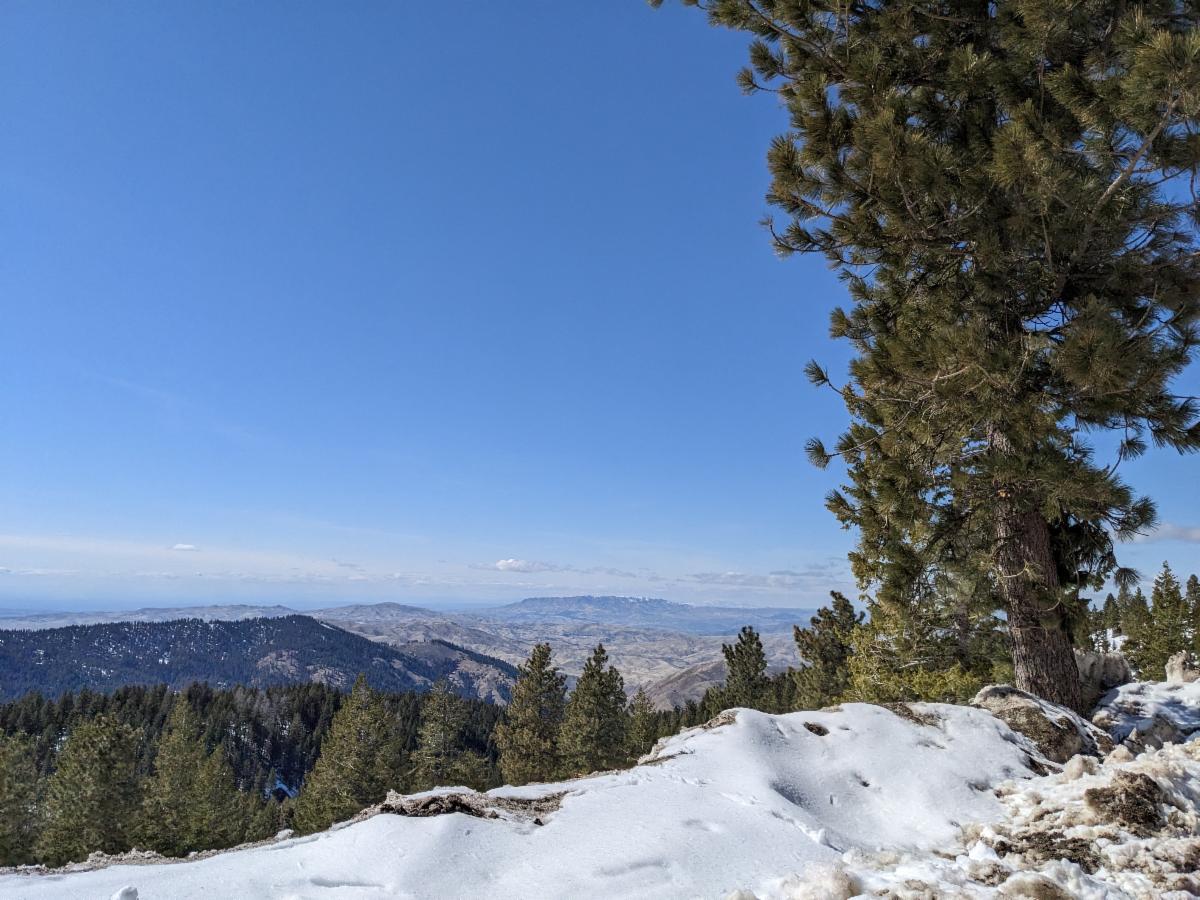
A view from the tail end of spring skiing at Bogus Basin, a nonprofit ski area in Idaho's Boise National Forest just outside the capital city. The ski area is adding a large generator in hopes its snowmaking system can double as a sprinkler array for wildfires. Photo by Annie Ropeik.

A watershed moment for river systems

By Annie Ropeik


I spent last week in sagebrush country at the Society of Environmental Journalists annual conference in Boise, Idaho. (I'm on the SEJ board of directors). It was my first time in the Gem State and the first time in a while I've had to specify "which Portland."


This land of booming in-migration and ecosystems threatened by wildfires, pollution, recreation and hydropower has more in common with Maine than you might expect.


Today, I've brought back some takeaways from a workshop put on at the conference by the journalism collaborative for which I work part-time, the Mississippi River Basin Ag & Water Desk. We looked at how reporters -- and their audiences -- can better understand watersheds as connected systems.


Whether it's the Kennebec or the Columbia, we all live in a watershed -- a distinct drainage of water on the land and in the ground into a river, basin or the sea. Across the U.S., these watersheds are facing unprecedented threats from pollution and population growth, all exacerbated by climate change.


"We're dealing with a time when we're going to have to really rethink what it means to relate to water," said Bryan Hopkins, the director of freshwater conservation for the Nature Conservancy in the upper Mississippi River basin.


This relationship includes urban stormwater, agricultural runoff and irrigation, and the floodplains and dams where rivers may be constrained or allowed to move and change. Maine's many watersheds span all these issues.


We have 10 watershed regions, containing hundreds of lakes, rivers and streams, according to Maine Rivers -- which reports that the Penobscot is the second-largest watershed in all of New England, and 25% of the state's population lives in the Casco Bay watershed. Here's a cool map by the Lakes Environmental Association of all of Maine's watersheds. Zoom in to see the small and even smaller drainages within each major area.


"I don't know a single river system that doesn't have four or five major stressors on it -- whether it's not enough water, too much water, water at the wrong time," Hopkins said. "And then you put on top of all of that, what is now becoming quite clear, that climate change is going to amplify everything."


With a drought crisis in the Colorado basin and growing flood risks on the Mississippi, Hopkins and other panelists said there's a growing push for more inclusive governance that crosses interest groups and regional lines, taking a bigger-picture look at the impacts of climate change and these other hazards.


Janae Davis, the associate conservation director with American Rivers, said environmental justice for threatened communities means connecting these dots. It made me think, for example, of how Maine's industrial and agricultural legacies have helped drive PFAS chemical contamination -- which now threatens the state's growing network of small, regenerative farms that seek to make our food system and lands more resilient in a changing climate.


"What really makes a community vulnerable to flooding and other issues?" Davis said. "The historical components, and the many different political and economic and environmental and cultural components that play into that -- they're very much interrelated. You can't parse them out from each other."


Davis said river stewards in her region, around the Carolinas, are struggling to focus on both flooding and the potential for future droughts at the same time, and looking from the Southeast to the West for answers.


"Right now, yes, we're in the flood cycle. But just 10 years ago, we were in a severe drought," she said. "I think there is a short-sightedness at this moment. ... Everything is going toward flooding. But the drought period will come again."


In a changing climate, both extremes are an increasing risk, even for places like the Northeast that have traditionally felt very secure in their water supplies. Maine has seen coastal flooding and washed-out culverts in rainstorms at the same time as it's endured extreme short-term droughts in recent years.


Experts say resilience means being ready to endure either threat -- and working to tackle the hazards facing our watersheds holistically, rather than in siloes.


Look up where you live on this amazing Environmental Protection Agency tool for mapping local waterways and understanding their health and condition -- and reply to this email to send us a picture from your watershed, if you like.


PS -- Next year's SEJ conference will be in Philadelphia, a bit closer to home. It's our first time back East in many years, and we're hoping to tackle offshore wind issues, PFAS, climate disinformation and more. Maybe I'll see you there.

In other Maine news:


Derailment:

The state is criticizing the railroad company overseeing the clean-up of a derailed train leaking fuel in rural Somerset County. The wreckage was slated for removal this week.


Mining:

State regulators are backing a bill that would significantly relax Maine's strict mining law, after a world-class lithium deposit was found in Newry.


PFAS in politics:

Maine lawmakers are divided over businesses' calls to roll back some of the state's PFAS regulations. Only 60 companies have so far reported PFAS in their products under a law that sought to require that disclosure this year.


PFAS in fish & game:

The state says you should avoid eating fish from certain Maine waterbodies due to PFAS, but it's reducing the area covered by a similar advisory on deer and turkeys.


PFAS in wastewater:

The Anson-Madison wastewater treatment needs $59 million to complete a system that could help filter the chemicals out of sewage from across the state.


CMP Corridor:

Utility officials say they'll know by "mid-year" about the timeline for restarting construction on the transmission line after a major court victory.


Earth Day:

Youth activists gathered in Portland on the holiday to call for an end to era of fossil fuels and for recognition of environmental racism and injustices.


Fisheries:

A bill would offer funding to help lobstermen test new whale-friendly gear; and herring fishers struggling with closures will get federal aid.


Fish passage:

A fishway in a St. Croix River dam in Baileyville will get federal funding for much-needed upgrades to let anadromous species reach the sea.


Nutrient pollution:

Advocates say land-based nitrogen sources need the most regulation to protect Casco Bay; and a federal settlement would have the national fish hatchery in Orland reduce its phosphorus discharge to Alamoosook Lake.


Ocean warming:

A sudden spike in ocean temperatures is an "extreme event" that climate scientists say could herald a potentially strong El Nino or something more.


Homesteading:

Bangor Daily News environment writer Julia Bayly has a big series on how this iconic Maine tradition is changing with the times.


Water extraction:

A bill would give towns more control over water that's being removed from their communities for export by companies like Poland Spring.


Electric vehicles:

A bill proposes a $72 annual surcharge on EV registrations to help offset lost gas tax revenue and pay for road maintenance.


Wildfire:

A wildfire burned half an acre in Acadia National Park last weekend. The fire is now out and no cause has yet been determined.


Wetlands:

The Army Corps of Engineers wants to lower the size of wetland areas in Maine where construction requires extra fees.


Departing:

Prominent environmental and social science researcher Tora Johnson is leaving UMaine Machias, but makes plans to continue her work. 

Thanks for reading. See you next week.


Kate Cough covers energy and the environment for The Maine Monitor. She's a graduate of Columbia University and an 8th generation Mainer born in Portland who's now decamped Downeast. You can reach her at kate@themainemonitor.org or @kaitlincough.


Annie Ropeik is a freelance environmental reporter based in Portland and a board member with the Society of Environmental Journalists. You can reach her at aropeik@gmail.com or @aropeik, or at her website.

Send us a tip

The Maine Monitor is a non-profit, independent investigative news outlet. We're committed to informing Mainers about the issues impacting our state. We don't have a paywall and we don't have subscribers, which means we rely on donors like you in order to do our work. If you like what you see, consider supporting our work by becoming a donor. To those who already are, thank you! We couldn't do this without you.

Support our work

You can also support us by spreading the word and sharing this newsletter with a friend.

Screen Shot 2022-04-25 at 11.13.38.png

To manage which of the four Maine Monitor newsletters (Daily Monitor, Sunday Monitor, Climate Monitor, Downeast Monitor) you receive, please click "Update Profile" below. You should hit "Unsubscribe" ONLY if you no longer want to receive any emails from us.