|
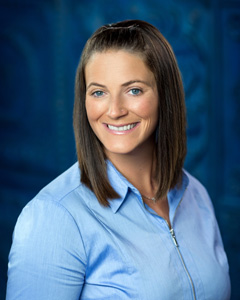
Hello Pamela ,
Happy Halloween!!! I love this time of year with all the beautiful colors and candy options to choose from! My favorite candies are Tootsie Rolls or taffy because the yumminess (is that a word?) lasts a little longer in my mouth before it is gone! What is your favorite candy? Read on to find out if yours is at the top of the list! Do you know what candy was originally called "chicken feed"? You can find that answer as you read through our new monthly Food for Thought addition to our newsletter!
Join me in doing something to make someone smile today!
All my best,
Dr. Pam McCaskill
office@mccaskillfamilyservices.com
734-416-9098
| |
|
McCaskill Family Services Newsletter
Term: Fall | Issue 46| October 31st, 2023
| |
|
Navigating Divorce with Children
Divorce is a topic that people rarely like to talk about. It can be messy, heartbreaking, and challenging for everyone involved. However, during a difficult and ever changing time for your family, talking about divorce is one of the most important things you can do to ensure a healthy transition. While there is never a one-size-fits-all answer on how to do this, we have some guidelines that may be helpful if your family is currently experiencing a divorce situation. Tip Number 3? "Be honest, but choose your words carefully." As always, do not hesitate to seek professional help if you feel like you or a member in your family needs additional support.
Our MFS therapists are available for immediate openings and are currently accepting new patients.
| |
At McCaskill Family Services, we specialize in working with adults, children, teenagers and families with various presenting issues. If you or someone you know could benefit from our services, please contact us. Our clinicians are trained in empirically-based techniques, and would be happy to promptly schedule an appointment in person or via tele-health. We can be reached by phone at 734-416-9098 or by email at office@mccaskillfamilyservices.com.
| |
Food For Thought:
A new monthly newsletter addition from our Dietitian and Eating Disorder Recovery Team.
October Food for Thought - Spooky Foods
Halloween is here, which means there’s likely been lots of sweets and treats around
your house or workspace. Do you find yourself getting anxious about this? Feeling like you
can’t have these foods, and then eating a bunch later? Feeling guilty for having a Twizzler or
Reese’s Cup? Deciding to go for a run before or after eating one of these treats because you have to “earn it” or “make up for it”?
We all have foods that we dislike, but did you know that sometimes we have foods that scare us? A “fear food” (or, for the sake of the season, spooky food) describes a certain food that someone is scared to eat because of negative feelings about the nutritional content or gaining weight after eating the food. More importantly, when someone eats one of their fear foods, it can create a lot of guilt or shame. This can cause us to try to avoid the food altogether, or avoid social gatherings (like Halloween parties!) because we know the fear food will be there. But sometimes, our brains want us to have the food, especially if we’ve been telling ourselves that we can’t have it, which can cause us to end up eating more of the fear food than we would’ve otherwise.
If you would like to learn more about how to face your own fear foods, you can contact our office to book an appointment with our multidisciplinary Eating Disorder Treatment Team (even if you don't think you have an eating disorder!). We have immediate availability in person at our Plymouth office or virtually.
| |
|
Dr. Nicole Wozniak, Psy.D., is the Clinical Director of our Brighton location and runs our Equine-Assisted Therapy Program.
She is a Fully Licensed Clinical Psychologist with therapy and psychological testing experience in a variety of areas. Her main area of interest is adolescents struggling to overcome behavioral problems, anxiety, depression, and/or self-esteem issues.
Dr. Wozniak utilizes a variety of evidence based treatments in therapy, such as cognitive behavioral therapy, dialectical behavior therapy, and motivational interviewing. In addition to clinical work, Dr. Wozniak is a PATH certified Therapeutic Riding Instructor and specializes in equine therapy. She is an avid horse lover, committed to the idea that the power of the horse contributes uniquely to the therapeutic experience.
Dr. Wozniak received undergraduate degrees in psychology and criminal justice from Michigan State University and completed her Master's and Doctoral degrees from Eastern Kentucky University. She completed her pre-doctoral internship at the Colorado Mental Health Institute at Pueblo where she worked with adult offenders and children and adolescents with severe emotional behavioral concerns.
Check out our Equine program below!
| |
|
- The fastest pumpkin carving ever took 16.7 seconds and included a complete eyes, nose, mouth and ears. The record still stands in the Guinness Book from October of 2013!
- According to 11 years of data from candystore.com, Skittles are the TOP Halloween candy, while candy corn is rated the WORST !
-
Harry Houdini, the famous magician and illusionist, died on Halloween night in 1926. Very on-brand if you ask us.
-
Pumpkins are a fruit, not a vegetable. Although they may look like a vegetable, they start with flowers and have seeds!
- Finding a spider in your house on Halloween night is considered good luck !
-
Candy corn was originally called "chicken feed", packaged with a rooster on it's box to appeal to America's agricultural roots in the 1880's. The recipe has remained largely unchanged since it's creation.
- The pathological fear of Halloween is called Samhainophobia.
- These U.S. Cities have names benefitting Halloween!
- Scareville City, Indiana
- Tombstone, Arizona
- Sleepy Hollow, New York
- Slaughter Beach, Delaware
| |
|
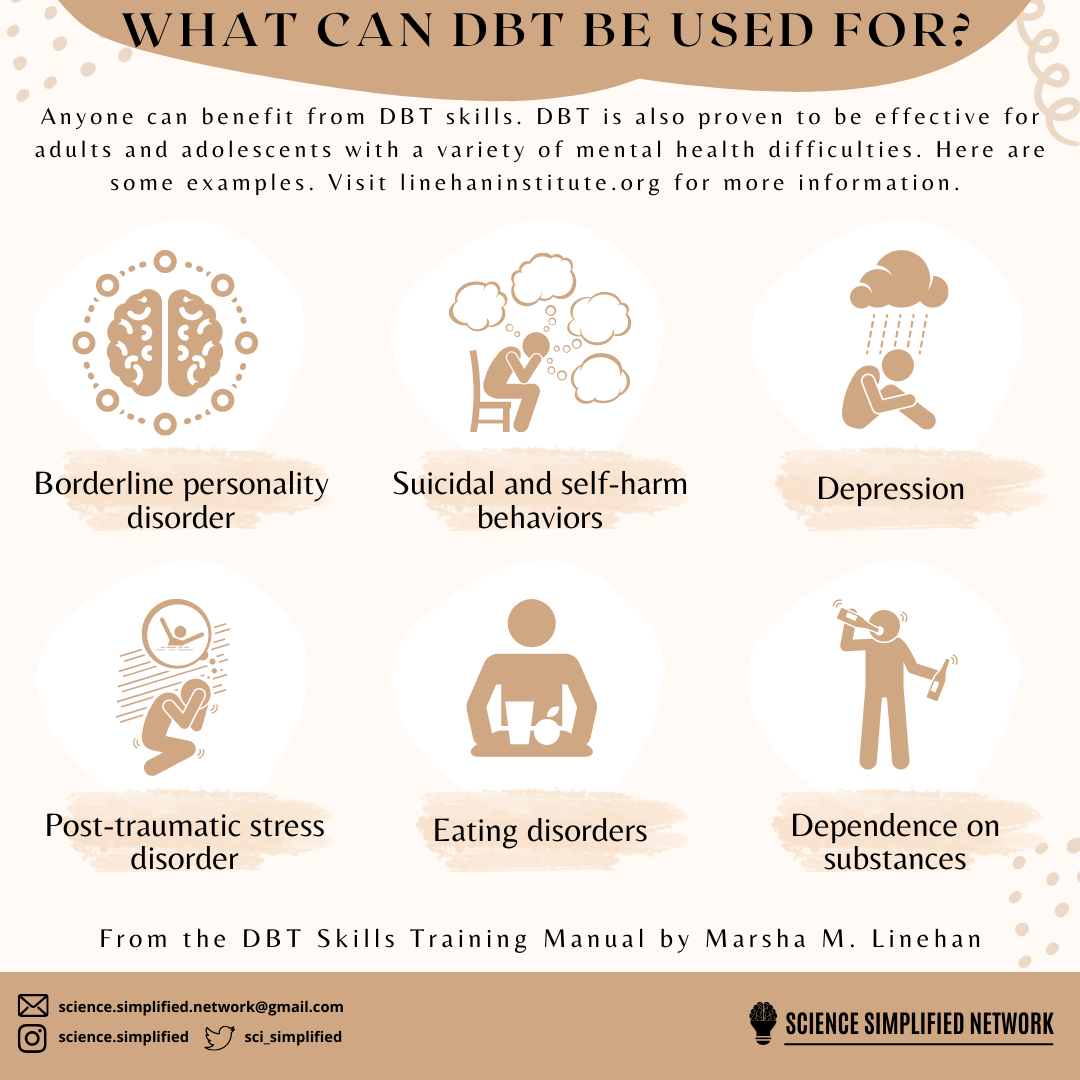
DBT stands for Dialectical Behavioral Therapy.
DBT is an empirically supported therapeutic approach that focuses on learning and developing vital skills for successful relationships and self-improvement!
We like to think of DBT as an emotional "tool box" that you can utilize to support your mental health! All ages and most mental health concerns can benefit from these skills.
- Do you get frustrated easily?
- Are you constantly thinking about the future & missing out on the present?
- Do you frequently experience conflict in your relationships?
- Do you suffer from panic attacks that seem to come out of nowhere?
- Do you feel like your child can't solve problems quickly or effectively?
- Are you struggling with motivation or not achieving your personal goals?
If you answered "yes" to any of these questions, DBT may be helpful !
At McCaskill, many of our therapists are trained in this method to provide you therapeutic support- backed by research. Additionally, DBT can be a helpful adjunct to include in your sessions if you are already in therapy. McCaskill offers an 8-week DBT teen group, that includes parental support, several times throughout the year!
Please visit our website, give us a call, or ask your current therapist for more info on DBT.
| |
Newsletter Editor's Notes | |
|
What your therapist wants you to know.
Article Three
We want you to know that:
We want you to use diagnostic vocabulary seriously
During conversation, people often use diagnostic psychological vocabulary in a casual manner:
"I'm feeling depressed today. "
"OMG, I'm so OCD."
"I had a panic-attack."
"I totally have PTSD from that."
While we are happy that these words/phrases are no longer shunned or stereotyped in social settings, we worry about the implications using them casually can have on individuals that are truly struggling with such diagnoses. Us therapists view these words from a clinician standpoint, and we strongly believe that we need to stop using these terms as a more intense way to describe experiences we are having. Saying, "I'm feeling so sad today" and "I'm depressed" are two very different things. Being sad is a normal (albeit tough) part of the human experience that waxes and wanes based on our environment and co-occurring internal state. Depression involves prolonged sadness for 2 weeks or more, an ongoing sense of hopelessness, loss of interest in the things we normally enjoy and changes in sleeping or eating habits.
What we seem to forget is that we don't need to be using "stronger" words to help others understand our feelings, because both depression and sadness matter. The good people in our life will be attentive and supportive of us, regardless of where we are on the emotional pendulum. Whether it's a low energy day, mild frustration that makes you cry, grief, or clinical depression, every level of feeling deserves acknowledgement and support. We don't need to label/call ourselves depressed as a way to "legitimize" reaching out to a loved one for comfort, or even seeking professional help.
Additionally, I often hear from clients who have diagnoses of OCD, Panic Attack Disorder, Depression etc. describe how frustrating it is to hear others use these words commonly in conversation. They frequently tell me how upsetting it is because they feel like others don't understand what they struggle with, especially if they have the capability to use those words inaccurately. These diagnoses are life altering for people and should be used respectfully.
Taking a moment to reflect on your feelings and accurately name them before you communicate is a therapeutic (first-step) practice that we teach in therapy. By accurately identifying your feelings, you can then figure out how to best help yourself. Properly describing your experience can be helpful to both yourself and those around you. If you are ever wondering about your symptoms (e.g., "is this depression or grief?" "would my eating habits be considered an eating disorder?") seek the guidance of a professional to help you better understand your symptom presentation and develop a proper treatment plan.
| |
Greetings reader! I'm a masters level clinician at McCaskill Family Services who specializes in the treatment of OCD, anxiety, self-harm and eating disorders for all ages. I co-run the McCaskill Family Services DBT groups for teens and adults, and specialize in psychological assessment. I am also our monthly newsletter editor and social media manager!
I'd like to personally thank you for staying in touch with our practice, and hope you find this newsletter inspirational and informative. If you or someone you know would like to schedule an appointment with me, please contact our office at 734-416-9098 or email us at office@mccaskillfamilyservices.com. I look forward to working with you!
| |
409 Plymouth Road, Suite 250, Plymouth, MI 48170 • 734.416.9098
| |
| | | |