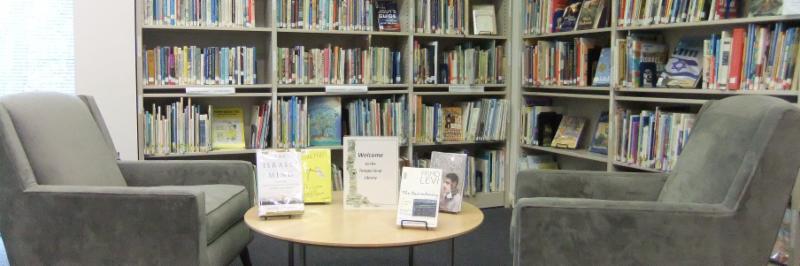
Check It Out!
at the Temple Sinai Library
| |
| |
|
Long Island Compromise, Taffy Brodesser-Akner
Forty years after a wealthy, Jewish businessman is kidnapped (and returned after his family pays a ransom), the trauma of the event has permanently scarred his family, including his three adult children. The novel, based on an actual event, touches on many topics including the corrosive effects of inherited wealth. Set in the affluent fictional town of Middle Rock, its residents feel safe and protected until they aren’t. Perhaps a metaphor for the situation Jews find themselves in today, not to mention the past.
| | |
|
Amerikaland, Danny Goodman
Set in the not-too-distant future, terrorism and antisemitism are intertwined with the stories of two athletes: a German tennis star who was recently shot while she was playing in a tournament and a Jewish baseball hero who found a dead, Jewish boy on his doorstep. Both are participating in World Day, an Olympic-type event, in New York when the stadium is bombed killing thousands of people. Their back stories reveal family secrets which lead each of them to understand how they are connected to the attack. Amerikaland is a chilling tale in which what might have been unimaginable a few years ago no longer seems so.
| | |
|
Lublin, Manya Wilkinson
What starts off sounding like a fairy tale or stereotypical Jewish joke--three teenage Jewish boys start off on a trip from their village to Lublin to sell brushes--is neither. Set in 1907, what begins as an innocent jaunt through the Polish countryside turns tragic, although not without some dark humor. A tale of antisemitism and violence, “Lublin is . . . cogent and unflinching in its exploration of Jewish experience.” (NYT, April 28, 2024)
| | |
|
Displaced Persons, Joan Leegant
In 14 short stories--half set in Israel, half in America–Leegant delves into the nature of being displaced--both physically and psychologically. For some the displacement takes place after a personal trauma, for others a move to a new city or country. In every instance they all struggle to find their footing, some more successfully than others. Most of the characters are Jewish. These poignant stories ring true with the struggle so many face both now and throughout history when displaced either through force or by choice.
| | |
|
The Threshold of Dissent: A History of American Jewish Critics of Zionism, Marjorie N. Feld.
Feld argues that there has been an assumption in the American Jewish community that support for Israel is to be taken for granted and any criticism of Israel is heresy. She further posits that this position has been promulgated by mainstream American Jewish organizations and has allowed little space for other views. In The Threshold of Dissent, Feld explores American Jewish criticism of Zionism and Israel from the 1880s to the 1980s and demonstrates that contemporary critics of Israel are part of a long continuum. It goes without saying that this book is relevant today in light of the war in Gaza and the rift it has caused (or perhaps exacerbated) in the Jewish community.
| | |
|
Palestine 1936: The Great Revolt and the Roots of the Middle East Conflict, Oren Kessler
The Great Revolt provides a greater understanding of contemporary events in Israel by presenting the history of this little remembered but significant conflict. Beginning in 1936 and continuing for three years, this uprising was an attempt by Palestinians to gain independence from British rule and crush Zionism. It ultimately failed but the dream of the Zionist leaders of a modus vivendi with the Arabs was replaced by the realization that their hopes for sovereignty could only be achieved by wielding the sword.
| | |
|
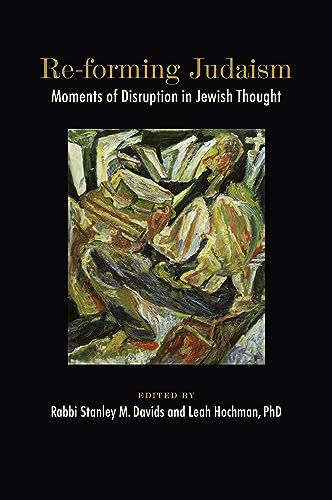
Re-forming Judaism: Moments of Disruption in Jewish Thought, Stanley M. Davids and Leah Hochman, eds.
Perhaps the most enduring question concerning Judaism relates to the way it has sustained its vibrancy and relevance over its long history. In Re-forming Judaism, the editors call upon a number of scholars to answer this question. They respond by describing historical disruptions which led to lasting changes in Jewish thought. Beginning with the ancient prophets the narrative continues with the rationalists, mystical, and extremist medievalists, to the impact of Haskalah and early modern Reform thought. Because of these various disruptions Judaism was constantly reinvigorated and has not only survived but continues to be foundational in our lives.
| | |
|
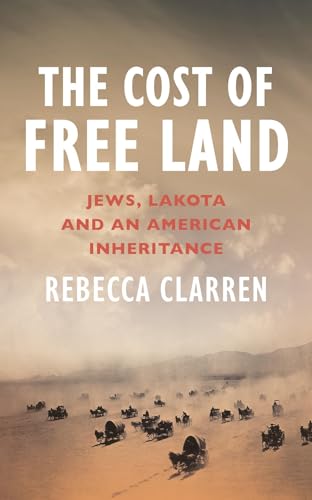
The Cost of Free Land: Jews, Lakota, and an American Inheritance, Rebecca Clarren
The author’s great-great-grandparents fled oppressive Russia at the beginning of the 20th Century and came to South Dakota where they settled and eventually prospered on a 160-acre homestead. What they didn’t know was that this land, which was given free or nearly free to white settlers, had essentially been stolen from the Lakota tribe. Clarren delves into both the personal history of her family and how it intertwines with the tragic losses – in terms of land, culture and resources – that affect the Lakota into the present.
The painful irony of Clarren’s family fleeing oppression in one country only to benefit from it in another cannot be emphasized enough. Which also begs the question of how to apply the concept of tikkun olam to today’s members of the Lakota tribe?
| | |
|
unalone, Jessica Jacobs
Jessica Jacobs’ beautiful poetry collection, unalone, draws on the Book of Genesis as a living document whose stories and wisdom can engage the reader more fully with his/her own life. Structured around the twelve portions of Genesis, unalone explores an abundance of experiences: wrestling with religious history and the imposed roles of womanhood, exploring how the past foreshadows our current climate crisis, embracing one’s sexuality, reversing roles as the adult child of aging parents, and navigating the challenges and joys of new and old love relationships. Jacobs reminds the reader that all poetry serves as a kind of prayer. Her poem “Stepping Through the Gate” concludes: “here, love, is fruit with the sun still inside it. Let me // thumb the juice from your chin. Let us honor what we love / by taking it in.”
| | |
|
This Dark Descent, Kalyn Josephson
A world where horse-racing, magic, and political intrigue are intertwined with a touch of romance, this fantasy novel is steeped in Jewish culture and lore. Mikira Rusel must win the the Illinir, a treacherous horse race the city of Veradell hosts once every ten years. But to even make it to the track, she’ll need to gather new friends and escape the crosshairs of old foes.
| | |
|
The Witch of Woodland, Laurel Snyder
Zipporah Chava McConnell, Zippy, is a 13-year-old girl who is preparing for her bat mitzvah even though her family does not identify strongly as Jews. In fact, they are like any other White family in Atlanta. But it also turns out that Zippy is a witch who conjures up a girl with no memory. In helping this girl find out who she is Zippy discovers her identity as well.
| | |
|
Eyes that Weave the World’s Wonders, Joanna Ho, Liz Kleinrock, Dung Ho (Illus.)
A young Korean girl who is adopted by a White family knows she is loved and accepted. Still, she wonders what it would be like to meet someone with eyes like hers. A seemingly simple story, it is layered with the complex questions of her identity.
Ages 4-8
| | |
|
Jewish Mindfulness for Kids, Blanca Sissa, Camila Carrossine (Illus.)
In this stressful, post-pandemic time, teaching children how to rest their minds and bodies is more important than ever. Mindfulness, or the Jewish value of Yishuv Hada'at, means focusing on a special moment. To achieve this state, the author outlines various exercises using everyday items or experiences.
Ages 3-8
| | |
|
Miryam’s Dance, Kerry Olitzky and Rachel Stock Spilker, John Baptiste Tumuhaise (Illus.)
Jews who are from different places tend to incorporate elements of their culture into universal Jewish rituals. This is true of Ugandan Jews and is exemplified in Miryam’s Dance where a young girl is distracted from her chores of preparing for Shabbat when a dance troupe arrives in her village. As we follow Miryam we learn of these differences which are unique to this Ugandan community, known as the Abayadaya, or Tribe of Judah.
Ages 5-8
| | |
|
Bring Back the Babka!, Marilyn Wolpin, Madison Safer (Illus.)
Two brothers go searching for their mama’s missing babka and on their way they discover other delicious Jewish delicacies as well as words of wisdom from their neighbors. Clues are included in the illustrations as to the location of the babka as well as a recipe for babka. Yummy!
Ages 3-8
| |
Don't want to receive emails from the Temple Sinai Library? Please email us at templesinainews@templesinaidc.org to be removed from the TSL email list. Clicking "Unsubscribe" at the bottom of this email will remove you from all email lists associated with Temple Sinai. | | | | | |