|
2. Technical Challenges in Laser Cutting of Ceramic Substrates
Laser cutting of ceramics faces two main technical challenges: “spatter accumulation” and “non-directional fracture.”
• Spatter accumulation can roughen the surface of the scribed line.
• Non-directional fracture refers to irregular fractures or bursts that occur with minimal external force or high-temperature baking, posing difficulties and losses in thick film circuit manufacturing. Solutions include:
• Using protective gases.
• Opting for smaller laser pulse widths at the same frequency to increase vaporization proportionally, shorten heating time, and reduce the heat-affected zone.
• Keeping the optical path unobstructed, using beam expanders to compress the beam divergence angle, minimizing aberrations, and ensuring even laser irradiation energy.
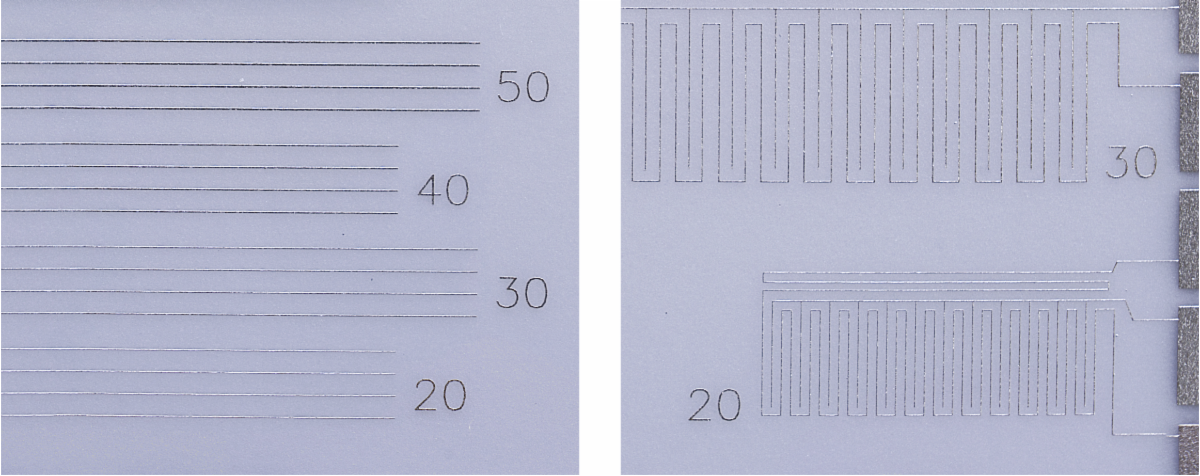
Laser scribing offers advantages such as fine scribing, high speed, smooth cross-sections, and minimal substrate damage.
|