March 2024 - Catch up on the latest news from CAARI! | |
|
Dear William,
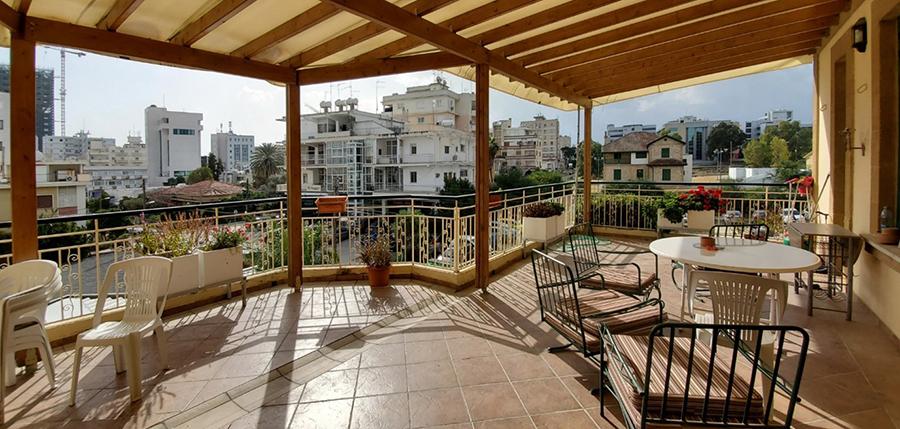
The torrential winter rains that blanketed the Troodos in heavy snow have given way in Nicosia to bright days inching into the 20s C. The views from CAARI’s balcony are sunlit and tempting, but activity within the building is intense. The residence has been fully occupied with researchers from thirteen different countries just this year—since 2021, we’ve welcomed scholars from thirty-three nations—and with local students they more than fill our library seats. Occupancy will remain high into the fall, and readers of the Newsflash are advised to make plans early if they expect to stay at CAARI. Those who do come to CAARI will have access to the brand new Collections Data Portal through the internal CAARI network. To be completed this spring, the Portal will include all objects, data, and many study photographs in CAARI’s collections. Meanwhile, many friends have joined CAARI from afar to enjoy its public lectures, either by Zoom or YouTube. We send an appreciative thanks to those who funded the new equipment enabling the lectures’ successful transmission.
This Newsflash brings three views of archaeological work that is happening within or in association with CAARI. First, Dr. Lindy Crewe in her “Message from the Director” reports on events, activities, and prospects ahead for the Institute. Then we follow Peltenburg Fellow Dr. Francesca Meneghetti’s inquiries into the scores of little ceramic vessels uncovered a half-century ago in the Middle to Late Cypriot site of Bamboulari tis Koukounninas near Athienou. Her graphs visualize her questions and conclusions about these intriguing artifacts, large enough to be identifiable by shape but too small to serve the functions their shapes imply. Examples of the little vessels were illustrated in her public lecture of January 25, now on CAARI’s YouTube site. Then from the ceramic era, we plunge back many more millennia in time, to savor an astonishingly vivid, many-faceted view of life in the early Neolithic Troödos. Dr. Alan Simmons, famous already for bringing Cyprus’ distant past to unexpected life, offers a preview of his newly published and very eagerly awaited book, From the Mountains to to the Sea: Ais Giorkis, an Early Neolithic Hamlet in the Troödos Foothills of Western Cyprus. The collaborative work of over twenty authors, the book offers fresh vistas into a very distant past.
| |
|
Message from CAARI’s Director
Dear friends and supporters of CAARI,
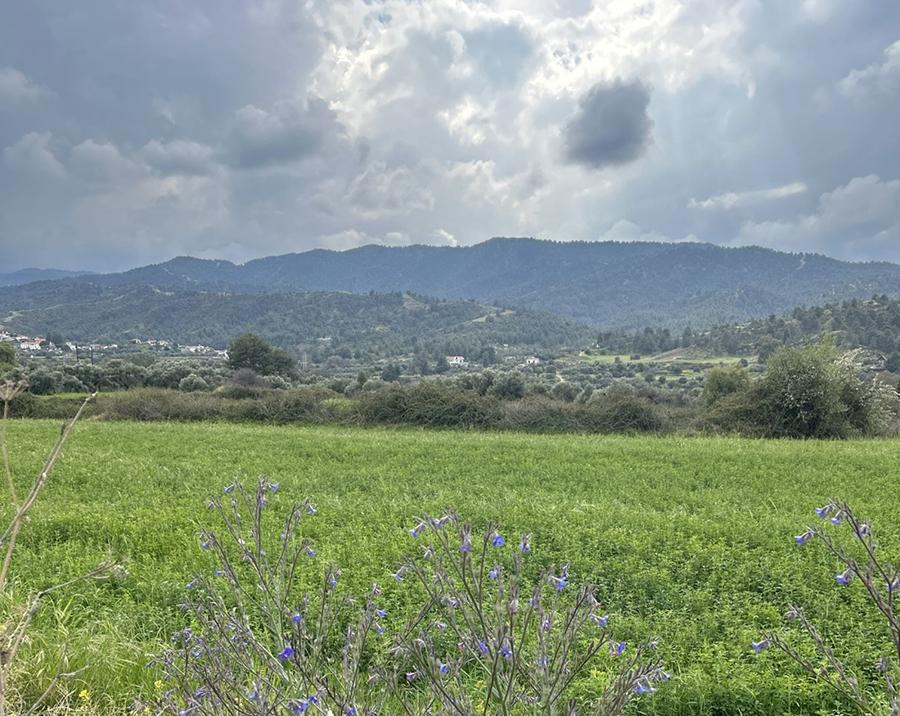
Spring is certainly here! You can see its profusion of flowers and tumultuous skies in my view over Evrychou, taken on Clean Monday (March 18).
| |
|
Last week I attended an event in the Cyprus Museum to celebrate the excellent work of the team who have been busy in the stores over several years on the Digitising the Museums of Cyprus project. This was followed by a fascinating workshop at the Archaeological Research Unit, organized by Artemis Georgiou and Cassandra Donnelly as part of Artemis’ ERC-funded ‘ComPAS (Commercial Patterns Across the Sea) project. Marks, Marketing and Markets: Investigating the intersection of marking practices and commercial strategies in the Bronze Age and Early Iron Age eastern Mediterranean opened with a keynote lecture by Nicolle Hirschfeld (who it was lovely to see here after many years) on her prodigious work on pot marks and Cypro-Minoan script. The following day’s papers gave us fascinating insights into a broad chronological and geographical range of marking practices in the region.
I have had a reminder that Covid-19 is still around and causing havoc. It finally got me last month, during the week we should have been hosting Dr Nicholas Stanley-Price’s fascinating lecture on one of the real characters of the British period: Rupert Gunnis and Cyprus antiquities: author, ‘policeman’, collector and fugitive. I am very grateful to Dr Rita Severis and her team at the Centre of Visual Arts and Research (CVAR) for offering their venue to host Dr Stanley-Price’s lecture at such short notice as a joint CAARI-CVAR venture. You can watch the lecture on CVAR’s YouTube channel here, along with an additional lecture Dr Stanley-Price gave there earlier in the same week on John Hilton, the first Director of the Department of Antiquities.
The remainder of our spring program is set. We have two more Thursday evening lectures, the first will take place on 28 March when Dr Thomas Kiely, Cyprus Curator at the British Museum will be talking on Law and (dis)order? Managing the archaeological heritage of Cyprus in early British times, 1878–1914. The second lecture on 25 April will be delivered by Fulbright Fellow Prof. Steven Falconer, University of North Carolina Charlotte, on Bronze Age Village Life and Landscape Dynamics at Politiko-Troullia, Cyprus. As ever, we will be hosting these in hybrid format so do join us in the CAARI library or online, or catch up on our YouTube channel at your convenience.
On Tuesday 16 April we will be hosting a round table workshop at CAARI in collaboration with Prof. Thilo Rehren and the PlaCE-ITN (Pre-modern Plasters and Ceramics) project of the Cyprus Institute. This event is targeted at students and other interested participants and includes workshops on Archaeology and Data Literacy with CAARI US Embassy Fellow Dr Nathan Meyer and Throughlines in the Cypriot Landscape: Pigment, Painting & Place with Fulbright Fellow artist Elisabeth Heying, discussing and demonstrating her project on collecting and creating natural earth pigments. It is sure to be a fun and informative day.
Finally, we have set the date for the CAARI summer archaeological workshop for Saturday 15 June! We're grateful to the Bank of Cyprus Cultural Foundation for allowing us to hold it in their wonderful premises at Phaneromeni again. We will of course be holding the traditional evening party in the CAARI courtyard so do join us if you can.
Looking forward to seeing many of you over the coming months in Cyprus,
Lindy Crewe, PhD
Director, CAARI
| |
|
WWW.CAARI.ORG/SUPPORT
Zuzana Chovanec
CAARI Development Chair
As this edition of the Newsflash clearly highlights, there is so much that is enabled within CAARI’s walls in Nicosia: enduring professional and personal connections made, new ideas becoming a reality through lectures and publications, and research materials that help inspire and support them. The numerous and fruitful endeavors that are undertaken at CAARI also have a real cost, which includes not only supporting our research fellowships and library, but likewise maintaining the very walls that welcome so many. A significant new need to address pressing repairs to CAARI’s foundations and exterior walls has emerged. We thank you for your consistent generosity in the past and ask for your continued support as we address the repairs.
WWW.CAARI.ORG/SUPPORT
or
| |
|
CAARI
11 Andrea Dimitriou Street
Nicosia 1066
Cyprus
| |
|
CAARI
209 Commerce Street
Alexandria, VA 22314
USA
| |
|
Beyond Dimensions: A New Approach to the Study of the Small-size Pottery from Athienou-Bamboulari tis Koukounninas
Dr. Francesca Meneghetti
Archaeological Research Unit, University of Cyprus
2023-2024 Edgar J. Peltenburg Postdoctoral Fellow
| |
|
The village of Athienou lies in the Mesaoria plain, 20km south-east of Nicosia, midway from Larnaka. Its location is strategic, close to the mines of Troulloi (15km) and important archaeological sites, such as Kition, Enkomi, Idalion, and Ayios Sozomenos. Despite its archaeological interest, the area was not systematically investigated until the second half of the 20th century.
After brief surveys of the area by Catling and the Department of Antiquities, the first investigations focused on the locality of Giorkous, to the north-east of the modern village, where the University of Thessaloniki dug, between 1969 and 1972, a site believed to be the ancient Golgi. At the same time, between 1971 and 1972, an archaeological mission from the Hebrew University at Jerusalem dug in the locality "Bamboulari tis Koukounninas" to the north of the village. They exposed a site dated between the end of Middle Cypriot and the end of Late Cypriot periods (Strata IV-II), with a brief re-occupation during the Iron Age (Stratum I). According to the excavators, Strata III and II are the primary occupational phases of the site. Among their finds were many miniature vessels. Stratum III and its ceramic material are the focus of the project “Beyond dimensions: a new approach to the study of the small-size pottery from Athienou-Bamboulari tis Koukounninas,” which I am carrying out as the 2023-2024 Edgar J. Peltenburg Postdoctoral Research Fellow in Cypriot Prehistory.
The four members of the expedition carried out excavations all over the island, at more than twenty individual archaeological sites. The overall ambition was to establish a thorough chronology in Cypriot archaeology. Crown Prince Gustaf Adolf, later King Gustaf VI Adolf of Sweden, was chairman of the Swedish Cyprus Committee, which was established in the spring of 1927 for the organization of the Swedish expedition. He visited Cyprus in October 1930 in connection with the division of its finds and also took part in the excavations. The activities of the Cyprus committee and the Cyprus collections (Cypernsamlingarna) in Sweden lasted until 1954, when the Museum of Mediterranean and Near Eastern Antiquities (Medelhavsmuseet) was founded in Stockholm, incorporating the Cyprus collections.
CAARI provides a pleasant and stimulating research environment, and the role of scholar in residence is rewarding. It presents an independent framework in which to carry out scholarly work, with occasional social interaction in the residence and informal conversations about scholarly and project-related issues and aspects. The weekly Wednesday coffee meetings have also been beneficial in this regard. I hope to have provided at least a little inspiration and insight for my fellow researchers!
| 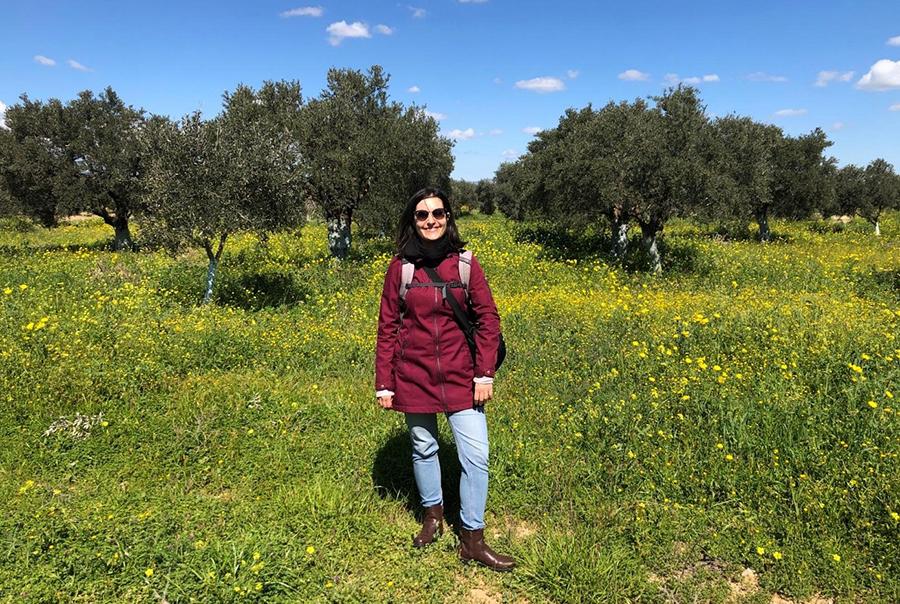 | |
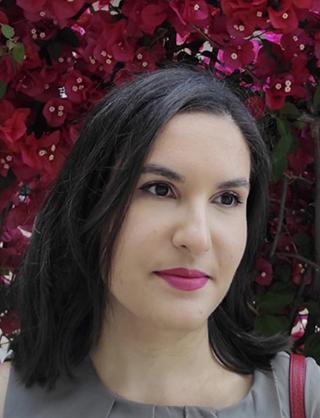
Dr Meneghetti near Bamboulari tis Koukounninas, where her miniature ceramics were found | |
|
First, my work aimed to re-examine the function and role that the so-called miniature pottery might have played at the site. Scholarship has traditionally interpreted Athienou’s small-size ceramics as votives and primary indicators of ritual activities at the site. This interpretation, however, is based on a very brief published catalogue and a cursory investigation of their context and function(s).
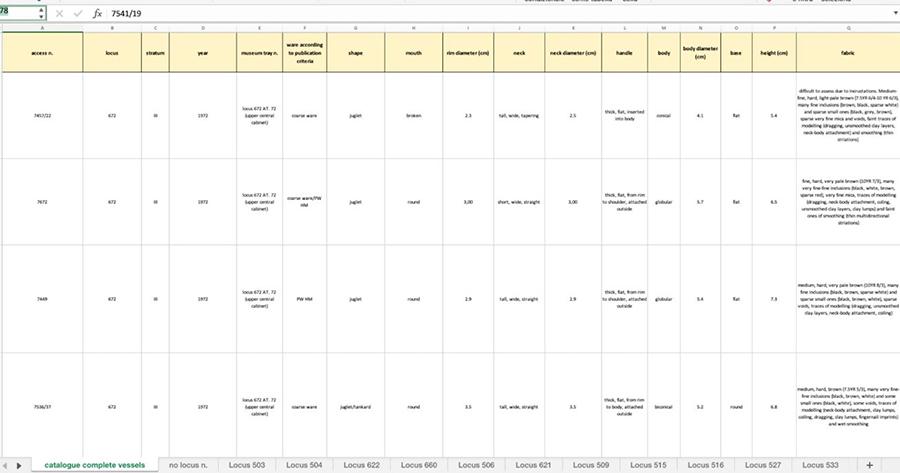
I devoted most of my fellowship to cataloguing the examples of this pottery currently stored at the Cyprus Museum. I have catalogued material from almost every locus of the stratum, and its analysis is ongoing. As I am writing, I examined and catalogued more than 850 pieces of ca. 1,000 I had estimated at the start of this project. The catalogue registers as much data as possible about each piece: inventory number, locus, stratum, dimensions (height, diameter), shape and other features. Since one of the purposes of the project is establishing dimensional categories, I analyzed only pieces that are complete in height. Therefore, also inspired by the work of Signe Barfoed on Archaic and Hellenistic miniature pottery from Greek sanctuaries, I created three groupings: the first comprises vessels between 1cm and 7cm high (miniatures), the second those between 7cm and 10cm (medium-size), and the third those above 10cm (full-size). They are not, by all means, fixed categories, as further research will refine these subdivisions.
| |
Dr. Meneghetti’s database of her material | |
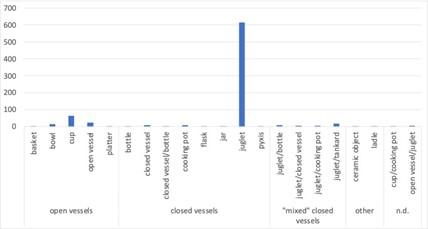
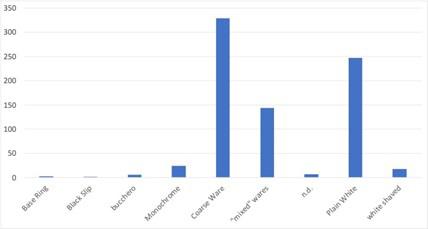
From a preliminary material analysis, most vessels are juglets, followed by cups and shapes in between juglets and other closed shapes. In terms of wares, Coarse Ware and Plain White are the most often encountered, with a small percentage of other Late Cypriot wares (Monochrome, Base Ring, Red and Black Slip, White Painted, White Shaved) and of pots which imitate, in their form but not their fabric, specimens of other wares. | |
Analysis of pottery shapes found among the small-sized vessels | |
Lately, I have focused on a large pit (locus 672) on the western side of the Stratum III courtyard, seemingly of an earlier courtyard phase. A closer analysis of its content will be crucial to re-assess the chronology of this phase and, therefore, of the site. The current cataloguing process registered the presence here of Red and Black Slip pottery, which is seemingly not encountered in other heaps and pits of Stratum III courtyard and would further suggest the subdivision of the stratum in two different phases. | |
Analysis of the wares represented by the small-sized vessels | |
|
Since the context plays a crucial role in understanding the function of archaeological remains, my research also re-analyses the findspots of the small-size pottery. I am closely examining the published account and reviewing, in the first place, the stratigraphy, architectural and archaeological features of Stratum III. Although the stratum largely remains unexcavated, a prominent feature of this phase is a building with possibly two rooms and a courtyard, where heaps and pits contained large quantities of material, among which were small-size ceramics. If the new stratigraphical reading is correct, one of the most important results of this contextual reassessment might be the presence of two unidentified phases, at least in the Stratum III courtyard, as the preliminary analysis of pit 672 might show. Indeed, its presence at a lower level than the other heaps located on the eastern side of the courtyard and the possible identification of a fill (locus 511+541+557), which a published section shows covering the pit and whose top elevation almost coincides with the bottom of the eastern heaps, could confirm this new reading. However, only access to the original excavation documentation (which remains unlocated) and a deeper analysis of the ceramic material from the courtyard could confirm, or not, this hypothesis.
Always connected with the stratigraphical revision of Stratum III is the possible redating of some contexts (or loci) to the following Stratum II. An example is the multi-loci pit 516+563+531+536, which the excavators located in the center of Stratum III courtyard even if they could not relate it to any architectural feature of this stratum. However, looking at the published evidence (final publication, excavation pictures), the pit cuts a hard surface of the following Stratum II courtyard, making it, and its content, datable to Stratum II and not Stratum III. And, since some of the content is seemingly small-size pottery, this material was probably still used and discarded in Stratum II, unlike what the excavators reported.
I devoted another small but significant part of my fellowship to interviewing traditional Cypriot potters. Eleni P. (from Phoini) and Louiza K. (from Kornos) welcomed me into their workshops. They were helpful and patiently replied to my questions on how they learned to make pottery and how they still make it today. Interviewing Eleni, a true Phoini potter who has been producing pottery since she was 5-6 years old, was particularly valuable in grasping how children might start to make pottery and the struggles they might encounter. Meeting and observing Louiza manufacturing small-size pottery was also meaningful, as it allowed me to visualize the production process. That would suggest how ancient Athienou’s potters could have produced the same small-size pots I have been cataloguing at the Cyprus Museum since July.
In conclusion, these nine months have been an extraordinary formative and professional experience. I could collect a vast amount of data that will enable me to develop the project in the future. I thank all CAARI’s staff, Dr Crewe for her academic support and Katerina Mavromichalou and Photoulla for their organizational assistance. A heartful thanks goes to Dr Gloria London for putting me in contact with Eleni and Louiza. Many thanks also go to the Department of Antiquities for allowing me to study the material from Athienou and providing logistic support. Last but not least, another huge thanks should also go to the Cyprus Museum’s personnel for their help in handling the immense amount of material in the storerooms.
| |
|
Ais Giorkis:
An Early Neolithic Hamlet in the Troödos Foothills
Dr. Alan Simmons
Distinguished Professor Emeritus, University of Nevada Las Vegas
Research Associate, Desert Research Institute, Reno
CAARI Trustee
| |
 | 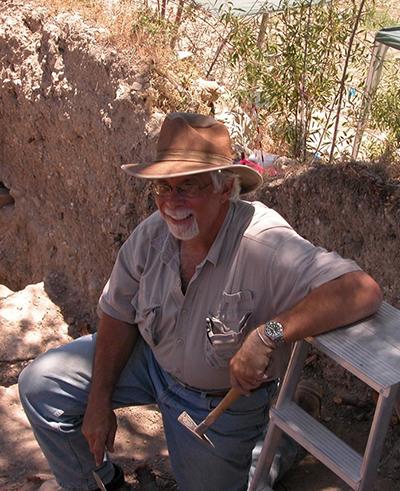 | For a relatively small island, the archaeology of Cyprus continues to surprise us. One of the most exciting aspects of this relates to the initial colonization of the island, starting with what were likely short visits during the Epipaleolithic, beginning around 12,000 years ago, and culminating with the actual permanent settlement of the island with the Neolithic. Long dismissed is the original paradigm that Khirokitia, starting around 7,000 cal. BC, is representative of the island’s Neolithic. The past few decades have revealed a complex scenario showing earlier Neolithic occupations including both PPNA (PrePottery Neolithic A) and PPNB (PrePottery Neolithic B) components that stretch past 9,000 cal. BC. This makes the Cypriot Neolithic every bit as early as the mainland’s, and this research should forever dispel the notion that Cyprus was a late “footnote” to the Neolithic Revolution. It was during this time that the island was fully settled, attesting to the sea-faring abilities of these early colonists. This likely also was the time when Cyprus’ unique island identity was forged, something that stands out to the present day!
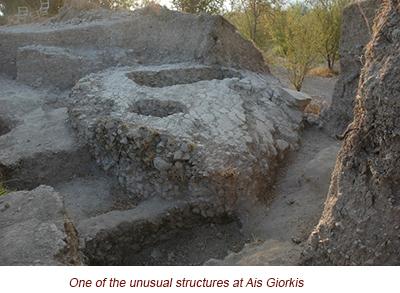
Although most early sites in Cyprus are near the coast, a few have now been documented at upland locations. One of these is the Cypro-PPNB hamlet of Kritou Maroutto Ais Giorkis in the Troodos foothills, some 25 kilometers from modern Paphos. After several years of excavation and analysis I am pleased to announce that the final report on our multi-disciplinary investigations is out as a Studies in Mediterranean Archaeology (SIMA 156). It is entitled From the Mountains to the Sea: Ais Giorkis, an Early Neolithic Hamlet in the Troödos Foothills of Western Cyprus. I am the editor of this large volume, and it consists of contributions by over 20 scholars.
| |
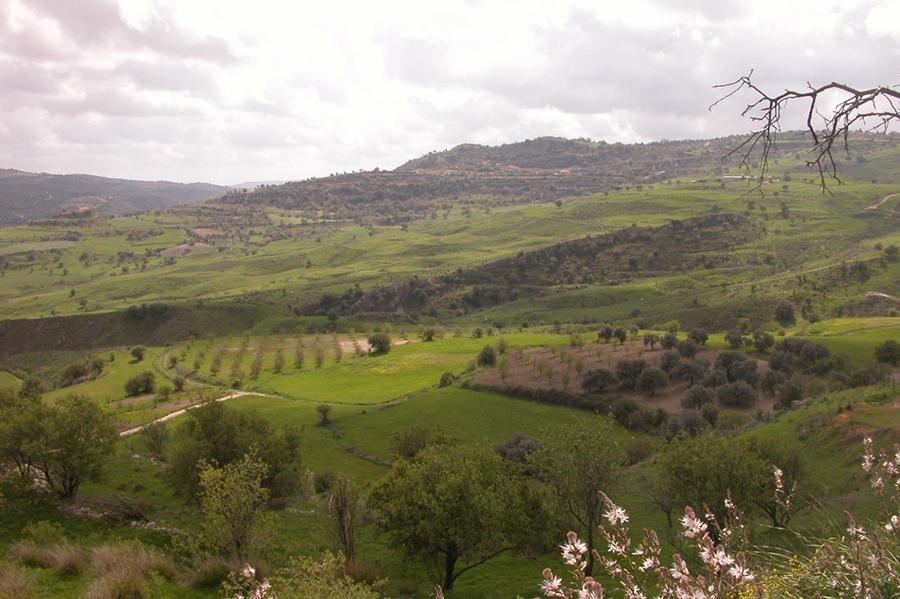
Overview from the site in spring | |
I seem to have the fortune (or misfortune?) of excavating “out of the envelope” sites in Cyprus, starting with the still controversial case of Akrotiri Aetokremnos, a small Epipaleolithic site on the Akrotiri Peninsula. I say controversial because some 30 years after its excavation, the association of humans with extinct endemic pygmy hippos is still questioned by some. The second site I excavated in Cyprus was supposed to be a more “traditional” Khirokitian Neolithic settlement, that of Kholetria Ortos, initially recorded by David’s Rupp’s innovative CPSP study. While clearly a rich Khirokitian site, Ortos was odd in that it contained only limited traces of architecture, which likely had been present but was destroyed by both erosion and modern agricultural activities. | |
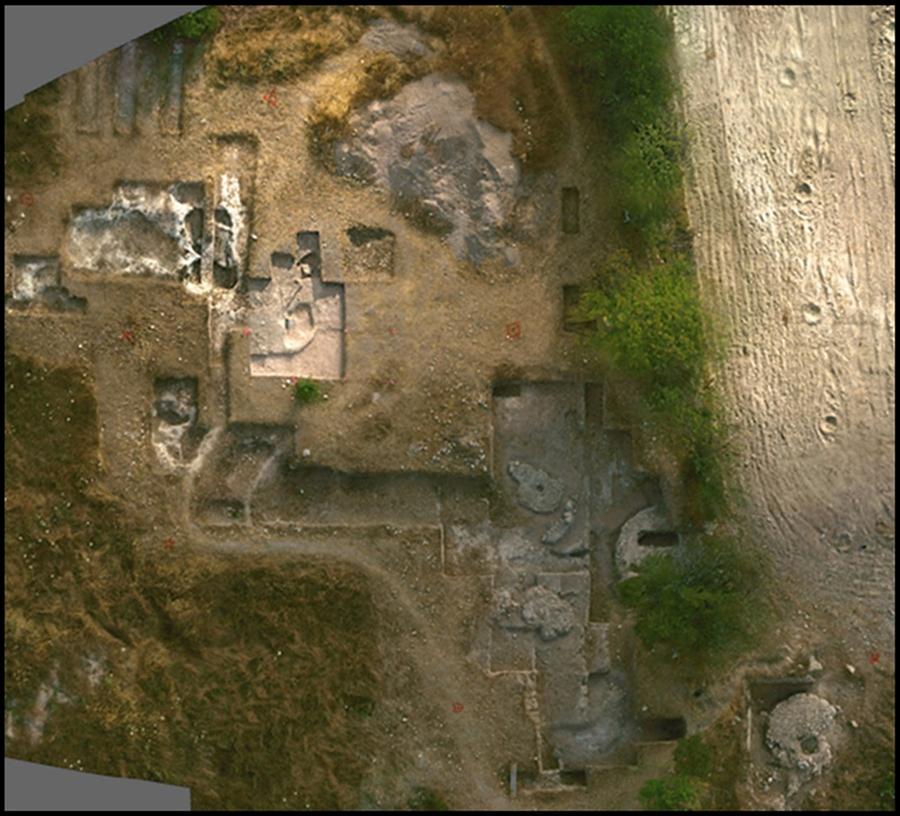
Drone shot of major excavation area at Ais Giorkis | |
Trying for a third “normal” site, I had the good fortune of excavating Ais Giorkis (and adjacent Kannaviou Kochina), also located by the CPSP (thank you David Rupp for finding these sites for me to excavate!). Both were supposed to be small Khirokitian occupations, perhaps most significant because they were in the uplands, a rarity. We conducted our brief initial test season in 1997. Kochina turned out to be too disturbed by modern activities to provide much information, beyond its Khirokitian origin. But, Ais Giorkis once again turned into something far beyond “normal.” After excavating at the large Jordan Neolithic “mega-site” of Ain Ghazal, Ais Giorkis seemed like an ideal place for limited studies. All indications were that it was a small, limited activity Khirokitian site, and we were interested in examining it to see what it could tell us of rare upland Neolithic occupations. Fifteen seasons later, (and often alternating between excavations at Ais Giorkis and the complex PPNB Jordanian site of Ghwair I, something I do not necessarily recommend) we know that Ais Giorkis, while relatively small, was anything but “limited activity” and that it was earlier than the Khirokitian, dating to the Cypro-PPNB. We estimate we excavated only ca. 15% of the site, but it yielded a tremendous amount of important data, much of it unanticipated. For a start, this included amongst the largest faunal and chipped stone assemblages on the island, as well as the documentation of unusual architectural features. | |
|
I am very pleased that several MA and Ph.D. theses and dissertations were an end project of our investigations. Furthermore, our seasons often consisted of a field school operated by Paul Croft for Edinburgh University. This was my good fortune in providing both learning opportunities and “cheap labor” (for me) that Paul had to house and feed! We also sought Cypriot students for the team and were quite successful in this. In particular, Angelos Hadjikoumis was a fresh young student when he joined us. He has long since completed his Ph.D. dissertation and is an incredible archaeozoologist. And, Margarita Kouli also joined us as an undergraduate. Since then she completed her MA thesis and is now an archaeological officer at the Paphos Museum.
Our investigations are detailed in the monograph in a series of 19 chapters. Some of these are quite large. Not surprisingly, for example, the chapter on chipped stone is substantial, not unusual for a “pre-pottery” site. It would have been even more so if not for the untimely passing of Carole McCartney. Other chapters include important and detailed studies of the ground stone assemblage, the incredibly well-preserved (and huge) faunal assemblage, the botanical remains and the numerous radiocarbon determinations. Additionally, residue analyses revealed unexpected results from ground stone, isotopic studies of the fauna provided surprising results, and the geoarchaeological chapter is critical to the interpretation of the site and its paleoenvironment. Several other contributions were smaller but no less important. These range from obsidian and picrolite analyses, to detail on the two human burials, to microscopic studies including one suggesting that population suffered from parasitic infections. This is only a brief description of the volume’s contents, and while managing over 20 authors has often been equated to herding cats, the end results were worth the effort.
In addition to Carole McCartney’s untimely passing we also mourn the loss of Onisiforus Loucaides from the Kouklia Temple of Aphrodite Museum who helped us in so many ways. Both individuals were dear friends to many in the archaeological community and are sorely missed. In addition to Oni’s numerous archaeological talents (both for Ais Giorkis and Ortos), his barbeque skills, as illustrated by a memorable feast at the museum for Renee and my wedding, were something to behold! (Articles devoted to Carole McCartney [March 2022] and Onisiforus Loucaides [October 2021] can be found in CAARI Newsletters.)
| |
|
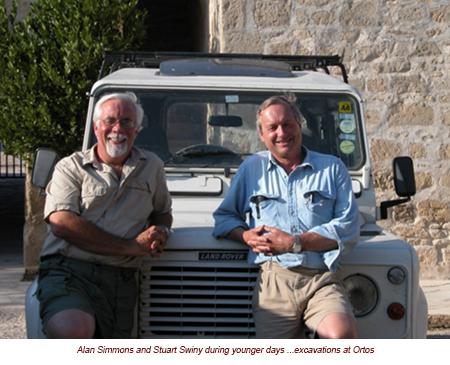
Likewise, the indefatigable Vathy Moustouki was always a source of help and friendship. And, of course, I have to thank Stuart Swiny who got me started in Cyprus. Finally, David Frankel and, especially, Jennifer Webb, as SIMA editors are thanked for all of their patience and help (especially in differences between American and British grammatical rules).
| |
|
Thanks from CAARI
We extend our heartfelt thanks to all who join in this exciting and challenging venture! Your help is what makes our eager ambitions real.
Our mission is to sustain and develop new and seriously innovative research on Cyprus itself and its eastern Mediterranean context. Cyprus’ recurring role as a staging post for both military and humanitarian aid in the current Israel/Hamas conflict has brought out its vital interconnection with the mainland communities of the eastern Mediterranean. This is the world that we are dedicated to. You help us realize CAARI’s mission of deepening understanding of Cyprus itself and its eastern Mediterranean context. We send our sincerest thanks to ALL who join in giving CAARI the funds to sustain our mission.
| |
Annemarie Weyl Carr
Vice President, CAARI Board
| | | | | |