|
Quote of the Week:
“If you change the way you look at things,
the things you look at change.”
— Wayne Dyer
| |
Caregiving: The Balancing Act | |
Where else could one find themselves suddenly drafted into a job position, not applied for, while provided with neither operator's manual, on-the-job training, nor a compensation package?
Vacations and regular time off? Not included. Sick leave? Better stay healthy. Sounds quite impossible. Yet, the fact is, the latest statistics point to at least 53 million unpaid caregivers in the U.S. who are presently caring for a relative or loved one with mental, cognitive, or physical impairment. Impairments causing them to inadequately care for themselves independently.
Caregivers caring for elderly loved ones are often themselves, are, or near to, retirement age. The toll on caregivers can present as both physical, as well as, difficult emotional challenges.
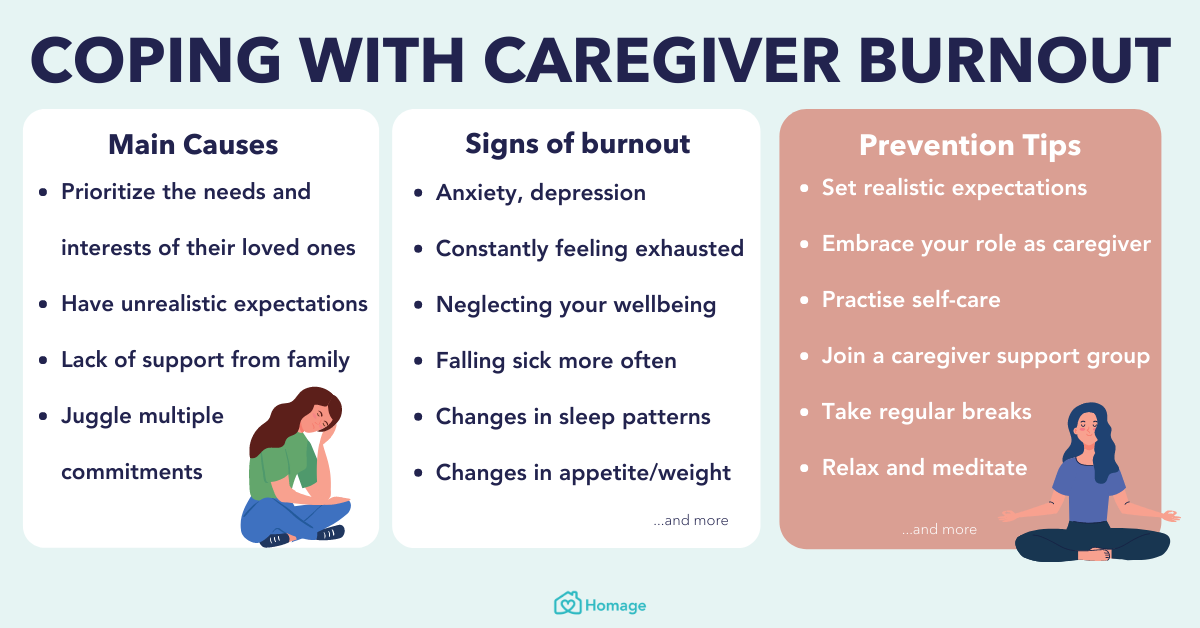
Caregiver stress can affect mental and physical health leading to, as examples: depression and anxiety, a weak immune system, excess weight and obesity. Additionally, chronic diseases such as heart disease, cancer, diabetes, and arthritis are considered stress related. Long-term stress has been well documented as contributing to a breakdown of one's general health. Caregiving is stressful! We refer to it as: "the hardest job you will ever have."
Caregivers often report feelings of invisibility ; seeing others overlooking their situation. Finding a balance can be challenging. Moving beyond the challenges begins with recognizing them. Working towards a greater sense of wholeness can be achieved by seeking support with a willingness to thrive, not simply survive. A sense that you are not alone, that you are seen, and valued, can move us all towards that wholeness.
| |
ANGER/FRUSTRATION
GUILT
DEPRESSION
STRESS/EXHAUSTION
GRIEF
SOCIAL ISOLATION
| |
|
-
ANGER: Easily annoyed or irritable, crying, sense of powerlessness, helplessness, feeling mad and hostile, irrational behavior/aggression, rapid heart bear, shallow breathing.
Coping suggestions: Physical exercise, movement. Taking a walk, journaling, talking with a trusted friend who is willing to let you vent. Remembering: "This, too, shall pass." Positive self-talk...your emotions are not wrong, however, be ever mindful to avoid taking them out on others (or yourself). Don't let it bottle up, consider your expectations, talk to yourself as you would a dear friend, and accept that anger needs a voice...release to remove.
-
GUILT: Not doing enough, enjoying yourself, sad thoughts and feelings, negating others, wishing you could get away, wishing "it" would all go away feeling resentful, guilt over your own healthiness.
Coping suggestions: Recognize that all feelings are natural, share feelings with a support group of fellow caregivers, talk with a healthcare professional, realize that you are doing the best that you can. Give yourself credit, not guilt. Hold compassion for yourself. You deserve a lot of slack, this is hard! "When you know better, you do better." We are all "works in progress!"
-
DEPRESSION: Feeling down, frequent crying, change in appetite/weight, sleep problems, loss of interest in things in general, low motivation/energy, inability to concentrate, thoughts of death or suicide.
Coping suggestions: Engage in physical exercise, spend time in nature and sunshine, seek positive support, consult a healthcare professional, find cute or funny pet videos on YouTube, journal a loving letter to your younger self, eat and drink comforting, healthy snacks and meals, treat yourself in ways that you would with a dear friend. Be gentle with yourself. Never forget that you matter, and that there is only one of you in the entire universe!
-
STRESS/EXHAUSTION: Physical or emotional tension, Fixating on past and future challenges, internal regrets and self-judgements, internal stress, external stress, challenges in coping abilities, resisting "what is", not accepting present situations, fearing what others think, taking on too much, not willing to say "no" when asked to do what you can't/don't want to do. Failing to set healthy boundaries. Not giving yourself a well-earned "time out." Not getting enough quality sleep.
Coping suggestions: Maintain a healthy diet/exercise program, go for short walks, remember to breathe deeply...and often, prioritize and ask for help, schedule regular "me time," practice relaxation techniques (great yoga sessions on YouTube) be willing to say NO, or delay non-emergency care receiver requests, take periodic breaks, connect with caregiver support, the use of the "r ant line" can help release stress related tension, when especially stressed, take a much needed timeout before you continue with your task. At every possible interval, take a nap, or just rest with your eyes closed. Avoid pushing yourself too hard... what doesn't get done today can be handled tomorrow.
-
GRIEF: Emotional pain, sad about changes, disappointment, the loss of the life you had, the loss of the relationship you once shared, dread of the future, falling back on the past, plans that can never come true, loss of a fantasized future, loneliness, feeling isolated, feeling unseen.
Coping suggestions: Allow yourself to grieve, recognize that feelings come and go, be gentle with yourself, sadness and the pain of loss are very real, very understandable, Avoid judging yourself, all emotions deserve dignity and acceptance. Surround yourself with people who "get" you, allow yourself a safe place to fall. Move respectfully through painful emotions. There exists no time-line for grief; past, present, or future.
Make space for gratitude and appreciation for all that you have now. Learn to treasure what is present. In some ways, "these are the good old days. Gratitude has a way of easing us through grief. When we are willing to look, there are treasures surrounding us. Feel fully, but allow the sun, that is always there... above the clouds, to shine through when you least expect it.
|  |
|
- Know what you can and cannot do.
- Pick which things are important.
- Take it one day at a time.
- Schedule time for yourself.
- Know that you are not alone.
| |
|
FIVE MINDFULNESS EXERCISES TO DO IN 1 MINUTE:
- Eat two mindful bites of food.
- Take one deep breath.
- Take a mindful break and just "be."
- Feel the air and sunlight on your skin.
- Scan your body and release tension in tense areas.
There will come a day when you gaze into the mirror and the person looking back at you very possibly will astound you. You will see someone who endured the impossible, showed up with courage, flexibility, resourcefulness, and determination.
This is a stronger, wiser version of yourself. Having met tremendous challenges, disappointments, grief and longing... chose to thrive, not simply survive.
Take a moment to give thanks. This is the person who can take you home.
— Karen Kelleher, M.A
Family Caregiver Support Coordinator
| |
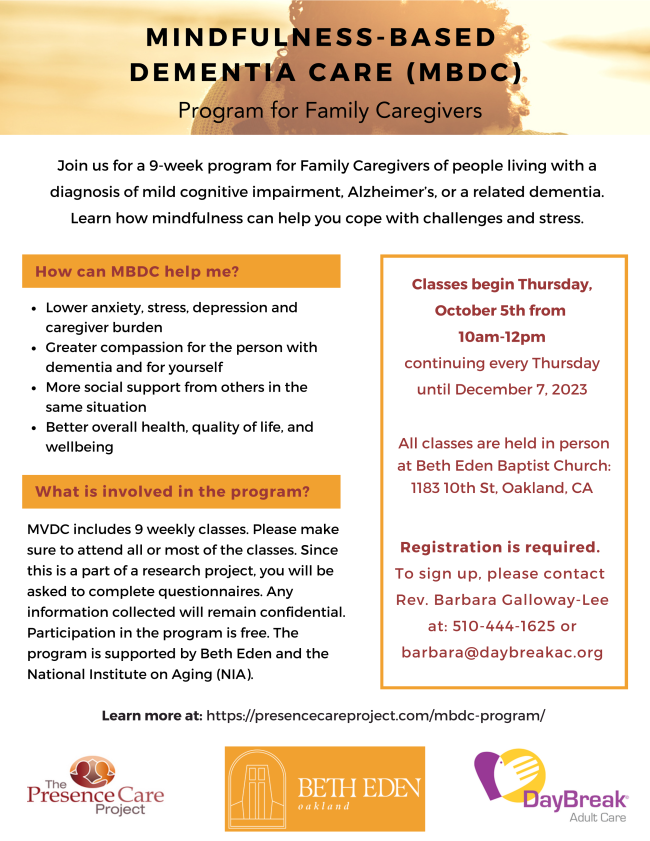
Upcoming Events & Workshops: | |
Empower Change through Giving:
| |
|
Together, we can make a meaningful difference in the lives of
elders and the caregivers who selflessly support them.
| |
|
DayBreak is committed to offering essential support to elders and caregivers navigating diverse difficulties. If you know a senior in need of our care and coordination services, or if you're aware of a caregiver seeking assistance,
encourage them to reach out to us at:
510-834-8314
| | | | |