SHARE:  
newbanner2
Capitol Notes
Wisconsin Political and Legislative Update


FROM: Tony Langenohl
              Capitol Consultants, Inc.
              & Wimmer Company, S.C.

DATE:  April 7, 2015

SUBJECT: Spring Election Results
TOP
 
In This Issue
March Madness, and then there was one
Justice Bradley Re-Elected
Chief Justice Constitutional Amendment Passes
Farrow Elected Waukesha County Exec
Other races of note
Stay Connected
 
If you know anyone that would enjoy receiving our weekly updates, please feel free to forward and have them join our mailing list below. 
Join Our Mailing List
 

And then there was one...


And then there was one, Senior Legislative and Regulatory Analyst for America's Health Insurance Plans (AHIP) David Kennedy wins it all.  Congratulations  David!

David has actually requested that the $500 Amazon Gift Card be traded in for a gift certificate for Bucky's Locker Room.  So he can use all of the money on Badger gear.  $500 worth of Grateful Red gear headed to DC.

Thank you to everyone who played this year, we had another record number of participants.

#BadgerProud
#MadeEmBelieve


Justice Bradley Re-elected to Wisconsin Supreme Court


Justice Bradle
Justice Ann Walsh Bradley easily won re-election tonight.  With 80% of the precincts reporting, Justice Bradley had 58% of the vote to Rock County Circuit Court Judge James P. Daley's 42%.

Bradley was first elected to the Supreme Court in 1995 and re-elected in 2005 and now re-elected to another 10-year term in 2015.  

 [From her website biography]


A native of Richland Center, Wis., Justice Bradley received a bachelor's degree from Webster University in St. Louis. She was a high school teacher before entering the UW Law School, where she earned her law degree.


Justice Bradley was in private practice until becoming a circuit court judge in Marathon County in 1985. She is a winner of the American Judicature Society's Harley Award, a national honor that is reserved for judges whose outstanding efforts and long-term contributions have resulted in substantial improvements to the justice system.


Justice Bradley is Vice-Chair of the Board of Directors of the International Judicial Academy and has served as a lecturer for both the Academy and the American Bar Association's Asia Law Initiative. Currently she serves as the state co-chair of iCivics, serves as the North American delegate to the Board of Directors of the International Women Judges Association, and is an elected member of the American Law Institute as well as a member of the American Judicature Society, the State Bar Bench-Bar Committee, the Board of Visitors of the UW Law School, the Judicial Conference Executive Committee, and the Federal-State Judicial Council. She is a past associate dean of the Wisconsin Judicial College and has formerly served as a Commissioner of the National Conference on Uniform Laws, Chair of the Wisconsin Rhodes Scholarship Committee, and a member of the Wisconsin Judicial Council.


Currently, observers of the Court divide the 7-member court into three camps;

  1. Conservatives;  consisting of Justices Michael Gabelman, David Prosser, Pat Roggensack and Annette Ziegler.
  2. Liberals; Chief Justice Shirley Abrahamson and Justice Ann Walsh Bradley.
  3. Swing vote; Justice N. Patrick Crooks.
Current Justices (by seniority):

Name
First elected
Term Expires
Shirley Abrahamson Appointed in 1976 July 31, 2019
Ann Walsh Bradley 1995 July 31, 2025
N. Patrick Crooks 1996 July 31, 2016
David Prosser Appointed in 1998 July 31, 2021
Patience Roggensack 2003 July 31, 2023
Annette Ziegler 2007 July 31, 2017
Michael Gabelman 2008 July 31, 2018

Next race right around the corner:

Based on the election cycle  for the 7-member court, there are now elections to the court every year through 2019.  Next up is " swing vote" Justice N. Patrick Crooks, who has already announced that he will not be seeking re-election to the court in 2016, setting up an open seat election to the court. 


Chief Justice Constitutional Amendment Passes


Concurrent with  the Supreme Court race this evening was a constitutional amendment question on how the chief justice of the Wisconsin Supreme Court is selected.  Currently the longest serving member of the Supreme Court serves as the chief justice.  

Tonight, voters voted to adopt the constitutional amendment on a 53% to 47% that the chief justice be selected by a vote of the majority of the court.  
 

Currently Justice Shirley Abrahamson serves as the Chief Justice of the Wisconsin Supreme Court.  Chief Justice Abrahamson was appointed to the court in 1976 and won elections to the court in 1979, 1989, 1999 and 2009.  She became Chief Justice in 1996.  Based on the old chief justice selection process, Justice Ann Walsh Bradley is the next most senior member of the court, and would become chief justice when Abrahamson retires from the court (if she does not seek re-election in 2019).


Under the constitutional amendment, the court will elect one of its 7 members chief justice and to serve for a term of two years.  The process for electing the chief justice will be determined by the Court.


Although Justice David Prosser is the most senior conservative member of the court, pundits and observers of the Court are speculating that Justice Patience Roggensaack will likely be the Justice that conservatives select as the new Chief Justice under the constitutional amendment.


Justice Roggensack

From the Wisconsin Supreme Court website:


Justice Patience Drake Roggensack was elected to the Supreme Court in 2003. She was the first Wisconsin Court of Appeals judge elected to the Supreme Court, and continues to be the only Supreme Court justice to have served on Wisconsin's intermediate appellate court.


Born in Joliet, Ill., Justice Roggensack received a bachelor's degree in biology from Drake University. She worked as a research associate at several universities prior to entering the UW Law School, where she graduated with honors in 1980.


Before joining the Supreme Court, Justice Roggensack was elected to the Court of Appeals in 1996 and re-elected in 2002. Prior to becoming a judge, Justice Roggensack practiced law for 16 years in Madison.


Justice Roggensack is a commissioner on the Uniform Laws Commission, Fellow of the American Bar Foundation, a member of the Wisconsin Judicial Council, a member of the Supreme Court Rules Procedure Committee, a member of the Supreme Court Finance Committee and the Committee for Public Trust and Confidence in the Courts. She is a member of the American Bar Association, the State Bar of Wisconsin, the Western District of Wisconsin Bar Association, of which she is a past president, and numerous other local bar associations. 


Justice Roggensack is a member of the International Women's Forum, and a past president of the Wisconsin chapter. She is a frequent guest lecturer at the UW Law School, Marquette University Law School and many state and national organizations.


She has also served on the board of directors and was a past member of the YWCA of Madison, the Wisconsin Center for Academically Talented Youth, and the Olbrich Botanical Gardens.


Justice Roggensack is married and has three children. Her current term expires July 31, 2023.


Farrow Elected Waukesha County Executive


Assistant Senate Majority Leader Paul Farrow (R-Pewaukee) easily won election to the role of Waukesha County Executive, capturing 68% of the vote.

Senator Farrow
Assistant Leader Paul Farrow was first elected to the Wisconsin State Assembly in 2010.  He was re-elected in 2012, before winning a Special Election in December 2012 to fill the vacancy created by Senator Rich Zipperer (R-Pewaukee) joining the Walker Administration. 

Senator Farrow has over 15 years experience as a small business owner, and continues to operate his radon mitigation business House to Home Services, LLC with his business partners.

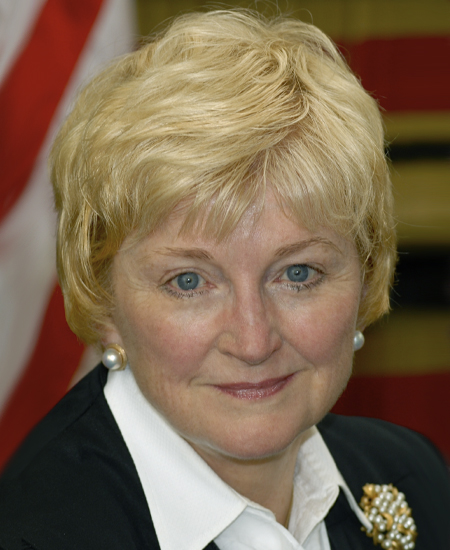
Senator Farrow is the son of former Wisconsin Lieutenant Governor and State Senator Margaret Farrow. 

Farrow said that he will continue to serve in the State Senate until Governor Walker signs the state budget and then will resign his seat so the Governor can call a special election to fill his seat.  Traditionally the budget is signed around July 1st of odd-numbered years.

State Representative Chris Kapenga (R-Delafield) is a likely candidate to run for Farrow's seat when it becomes vacant.  Kapenga and Farrow competed in the Republican Primary for the Senate seat in 2012, with Farrow capturing 53% to Kapenga's 47%.


Other Races of Note


Mayoral Races


Stay Connected on what's going on politically throughout the week 


twitter
Follow us on Twitter
facebook
Like us on Facebook


Archived copies of the Capitol Notes as well as PowerPoint Presentations and other information are always available on our website at CapitolConsultants.net