|
The California Asphalt Pavement Association
Vol. 17, Issue 28 || July 15, 2024
| |
|
Dear Russell,
This weekly report contains news and information of interest to the asphalt pavement industry, customers and agency partners in California. Please feel free to distribute this newsletter to others who may be interested in asphalt pavements. To subscribe to the newsletter click HERE. To provide feedback or story ideas click HERE. Having difficulty viewing this newsletter? View as Webpage
| |
CARE Foundation receives official charitable designation from the IRS | |
CalAPA's newly formed charitable arm, the California Asphalt Research & Education (CARE) Foundation, has received its official charitable designation from the federal government.
"We're pleased to tell you we've determined you're exempt from federal income tax under Internal Revenue Code (IRC) Section 501(c)(3)," the June 20 letter from the Internal Revenue Service states. "Donors can deduct contributions they make to you under IRC Section 170. You're also qualified to receive tax-deductible bequests, devises, transfers or gifts under Section 2055, 2106, or 2522. This letter could help resolve questions on your exempt status."
CalAPA attorney Mark Alcorn, who specializes in representing non-profit organizations and helped prepare the foundation articles of incorporation and other legal documents, said it was the fastest IRS approval he could ever recall for such an application. CARE Foundation Board Chair Scott Frasier also remarked, "that moved through quicker than expected."
The CARE Foundation was officially incorporated on Feb. 27 of this year. The CARE Foundation Board of Directors has held three meetings so far, most recently on June 13 in conjunction with CalAPA's "Summit at the Summit -- Executive Leadership Forum" in Lake Tahoe. At that meeting the board approved an initial set of goals, budget and Code of Ethics. Now that the federal government has weighed in, a similar tax status designation is expected to be approved soon by the State of California.
The CARE Foundation was established to support CalAPA's many workforce-development adn knowledge-advancement activities. The Women of Asphalt California Branch activities have been a prominent example the kinds of programs the CARE Foundation was created to support. To learn more about the CARE Foundation, click HERE. To learn more about the Women of Asphalt California Branch, click HERE. Donations will be cheerfully accepted. Make checks payable to the California Asphalt Research & Education Foundation. The CARE Foundation FEIN # is 1985283.
| |
Members in the news: Ryan Aukerman named president of Griffith Co. | |
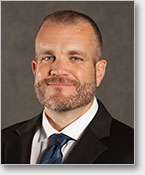
Griffith Company, a heavy civil contractor based in Southern California, announced that Ryan Aukerman has been selected by the Board of Directors as the company’s new President, effective July 1, 2024.
“Griffith Company has experienced several successful years under Ryan’s leadership in operations, and I am very proud to promote Ryan to the President’s seat of Griffith Company”, said Jaimie Angus in the July 1 announcement. “The president role for Griffith Company is a significant milestone in Ryan’s career and speaks to his hard work and dedication to the company.”
On his appointment, Aukerman said, “Griffith Company truly has the most amazing men and women at all levels of our business, and I am honored and grateful for this opportunity. This company has been my family for the last 20 years and I am excited to lead the organization through new challenges and drive us to new opportunities in the next chapter of our evolution.”
Aukerman will succeed Angus, who has transitioned to CEO and Chairman of the Board. Angus held the role for Griffith Company from 2015 to 2024 and will continue to work closely with the executive management team throughout the transition, the company said.
Aukerman joined Griffith Company in 2004 as a Project Engineer and quickly advanced to the role of Estimator/Project Manager in 2006. In 2011, he was promoted to Regional Manager and oversaw the company’s largest business unit, the Southern Region. In 2013, he was appointed to vice president and most recently served as executive vice president overseeing the day-to-day operations for the company, a role he has held since 2015.
Over his more than 20 years with the company, Aukerman has worked closely with many public and private owners and participated in alternative project delivery methods such as Design-Build, CMGC, and Progressive Design-Build. He earned a Bachelor of Science degree in Technology and Operations Management from California State Polytechnic University, Pomona. Among his other leadership roles, he has been appointed as management trustee of the Laborers-Employers Cooperation and Education Trust Fund (Southwest ) and is a longtime member of the Caltrans-industry Partnering Steering Committee.
Aukerman works to support the AGC Construction Education Foundation, including its "Build California" program, multiple AGC student chapters, and the Griffith Company's own Internship Program. His official company biography is HERE. The main company website is HERE.
| |
Free educational webinars to focus on pavement-type selection, cold-weather paving and optimizing parking lot paving | |
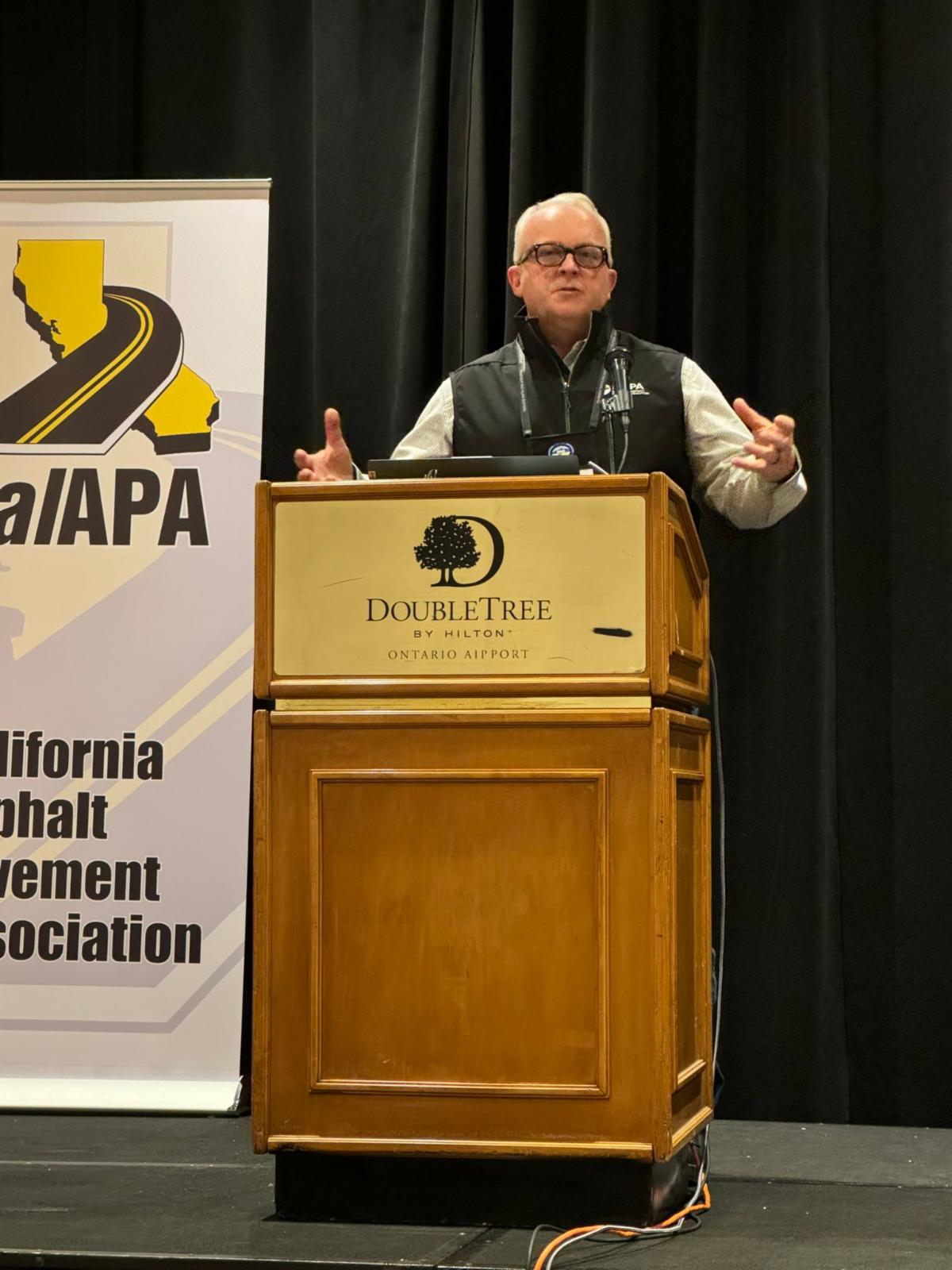
The Asphalt Pavement Alliance, a CalAPA partner, will be launching a free series of 90-minute educational webinars starting Aug. 8 titled "Back to Basics with Buzz," featuring APA Technical Director Buzz Powell.
Powell, Ph.D., P.E., (pictured) is familiar to CalAPA members, having delivered a highly regarded technical presentation at this year's CalAPA Spring Asphalt Pavement Conference in Ontario.
The Aug. 8 webinar is titled, "Choosing the Right Pavement Type: A Comprehensive Guide." The presentation will delve into how selecting the appropriate pavement type is crucial for infrastructure longevity and performance. This presentation is tailored to state DOTS, pavement engineers and road owners. The webinar is scheduled to take place on Thursday, Aug. 8 from 11 a.m. to 12:30 p.m. PDT. On-line registration must be completed in advance HERE.
On Thursday, Sept. 19, Powell will be back with "Cold Weather Paving Mastery: Best Practices and Techniques." Participants will gain insight to master the challenges of cold-weather paving with expert guidance, best practices and proven techniques. The webinar is scheduled to air from 11 a.m.. to 12:30 p.m. On-line registration is HERE.
On Thursday, Oct. 17 the title of Powell's educational webinar is, "Optimizing Parking Lot Pavements for Longevity and Performance." Powell notes that parking lots are the underappreciated components of infrastructure, and require careful consideration in design and construction. The webinar is scheduled to take place from 11 a.m. to 12:30 p.m. On-line registration for the Oct. 17 webinar is HERE. Shameless plug: CalAPA's special magazine investigation on our disappearing parking lots is HERE.
All of the webinars qualify attendees for up to 1.5 for professional development hours of continuing education. Information about future APA webinars can be found HERE.
| |
CARB passes new regulations aimed at phasing out certain types of forklifts | |
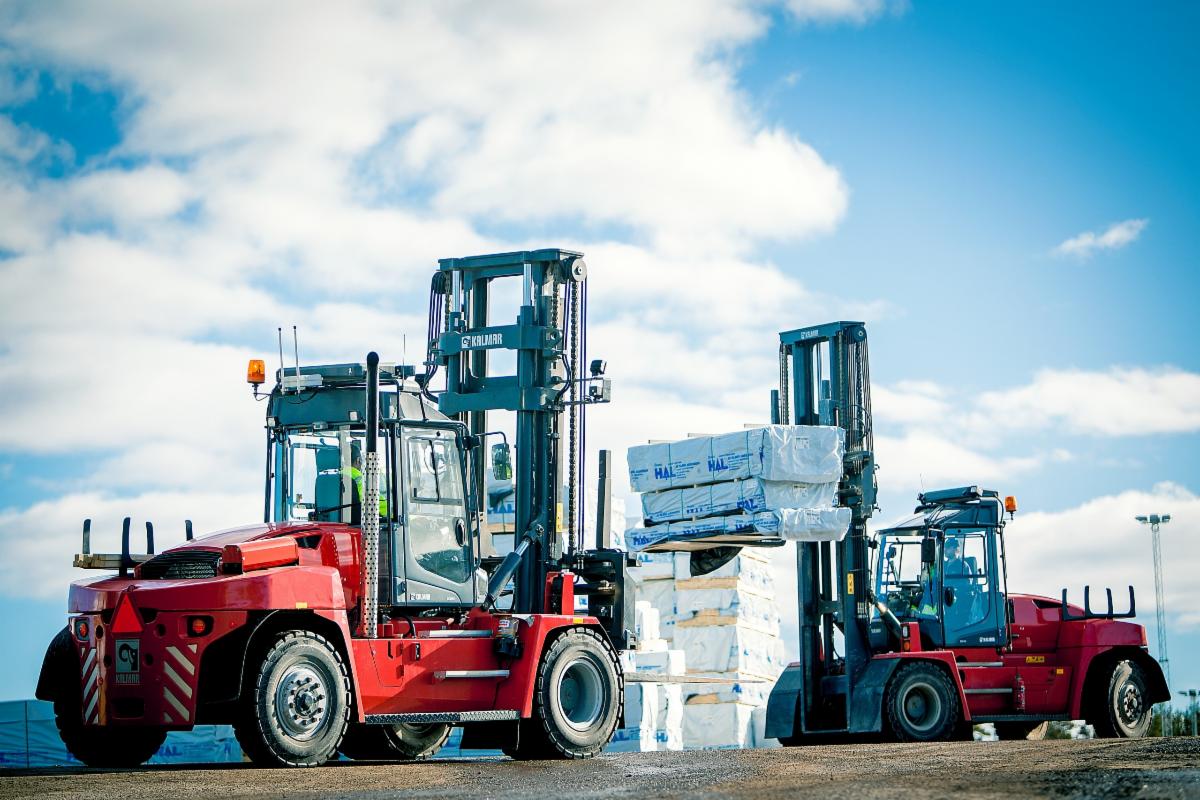
The California Air Resources Board has adopted a new regulation that will phase out certain forklifts commonly used in California, including by the asphalt pavement industry. The agency says the phase-out of so-called Large Spark-Ignited (LSI) forklifts will "spur the use of zero-emissions alternatives." A June 27 CARB announcement on the new regulation is HERE.
Under the rule, beginning in 2026 manufacturers are prohibited from producing or selling for use in California Class IV and Class V LSI forklifts. This type of equipment is typically powered by propane, gasoline and and natural gas.
The rule also contains language phasing out, starting in 2028, the use of spark-ignited forklifts by large fleets, which the agency defines as containing 26 or more units. The phase-out schedule is by model year so that no forklift is required to be phased out before it is 10 years old. Smaller fleets will phase out the use of spark-ignited forklifts beginning in 2029.
The agency estimates the rule will impact more than 89,000 spark-ignited forklifts currently in operation in California, and CARB projects the new regulations will eliminate more tahn 2 tons of nitrogen oxide emissions per day by 2031. About half of forklift sales today are zero-emission models, CARB noted. Based on industry input, CARB included compliance exemptions for special circumstances, such as low-use forklifts, and certain emergency operations.
To learn more about CARB's Zero-Emission Forklift program, click HERE. Photo courtesy of CalAPA member Hawthorne CAT.
| |
'Greenbook' operating procedures, style guide set the tone for clear spec development | |
As reported last week, the Greenbook Asphalt Task Force resumed monthly meetings under the leadership of new co-chairs, Krishna Nadaraja with the Orange County Public Works Department and CalAPA Technical Director Brandon Milar. The co-chairs welcomed new members to participate in the meetings.
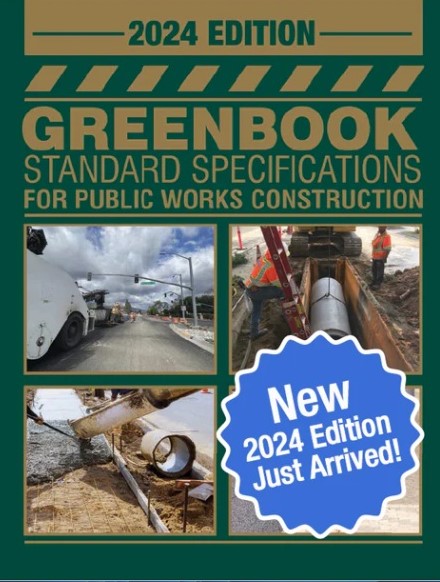
The meetings are intended to give local agency engineers and technical personnel, consultants and industry stakeholders the opportunity to propose and discuss revisions to the asphalt materials and construction sections of the Greenbook Standard Specifications for Public Works Construction. These Standard Specifications are used by local agencies throughout California.
In resuming the meetings, Milar and Nadaraja distributed two important reference works that help guide the specification-development discussions, the Greenbook Operating Policies and Procedures Manual, and the Greenbook Style Guide. The latter book should be required reading for any technical person who must read, interpret and follow specifications, as well as anyone who thinks they have an idea on how to make a specification better (in other words, pretty much everyone). The Greenbook Operating Policies and Procedures Manual is HERE. the Greenbook Style Guide is HERE.
The the opening of the Operating Policies and Procedures Manual includes the following aspirational language that should resonate with any public works official, noting that additions, deletions to the Greenbook "should promote uniformity, and eliminate conflicts and confusion, among the standard plans and specifications used by local public agencies."
The Greenbook Style Guide further drives home the point as it focuses on the importance of clear contract documents, stating "well-written specifications are grammatically correct, easy to understand, structured in a sequential manner, and do not contain ambiguities or conflicting requirements."
Amen.
For additional information, please visit the Greenbook webpage HERE. The Greenbook Asphalt Task Force web page is HERE.
| |
|
Each week we highlight a word, acronym or other term commonly used in the asphalt pavement industry in California.
PAVEMENT STRUCTURE (COMBINATION OR COMPOSITE): All courses of selected material placed on the foundation or sub-grade soil, other than any layers or courses constructed in grading operations. When the asphalt pavement is on an old Portland Cement Concrete base or other rigid-type base, the pavement structure is referred to as a combination or composite-type pavement structure.
| |
Paving Pointer of the Week | |
Each week we highlight a key point or best practice of interest to asphalt paving crews, inspectors and others working in the field. We welcome suggestions. More tips can be found in our "Asphalt Parking Lot Construction Checklist" HERE. Information on the CalAPA "Quality Paving Certificate" program is HERE.
COMPACTION/DENSITY: The plans and specifications should specify how density is tested. The inspector needs to monitor the specified compaction density with a gauge to ensure that final target densities are achieved. Regular visual inspection of the mat during compaction is also required: look for segregation, indentations, properly sealed joints, and under-compacted areas.
| |
|
Each week we highlight a term that is specific to climate-change issues related to the asphalt pavement industry. This feature is intended to raise awareness of the asphalt industry's climate-change initiatives and the specialized terminology that goes with them. More information on "The Road Forward" asphalt industry climate initiative can be found HERE.
CARBON EMISSIONS: Carbon substances released into the atmosphere
| |
|
“At the present time the liberty of association is ... a necessary guarantee against the tyranny of the majority.”
– Alexis de Tocqueville, “Democracy in America,” 1835
| |
|
We hope you enjoy CalAPA's Asphalt Insider newsletter. We are committed to providing you with the most up-to-date information on technical issues, regulation, news, analysis, people, events and trends in California that is of interest to the asphalt pavement industry and our various agency partners. To subscribe to the newsletter, click HERE. For comments, questions or to suggest a story idea, click HERE.
Sincerely,
Russell W. Snyder, CAE
Executive Director
The California Asphalt Pavement Association (CalAPA)®
| |
The "Asphalt Insider" is an official publication of the California Asphalt Pavement Association. For more information or to inquire about membership, call (916) 791-5044, or click HERE to contact us. Copyright © 2024 California Asphalt Pavement Association -- All Rights Reserved. The CalAPA name (No. 5,621,794) and logo (No. 5,621,795) are registered trademarks with the U.S. Patent & Trademark Office. | | | | |