The Coastal States Organization represents the nation’s Coastal States, Territories, and Commonwealths on ocean, coastal, and Great Lakes resource issues. |
|
Spotlight on Coastal Management:
National Estuaries Week
|
|
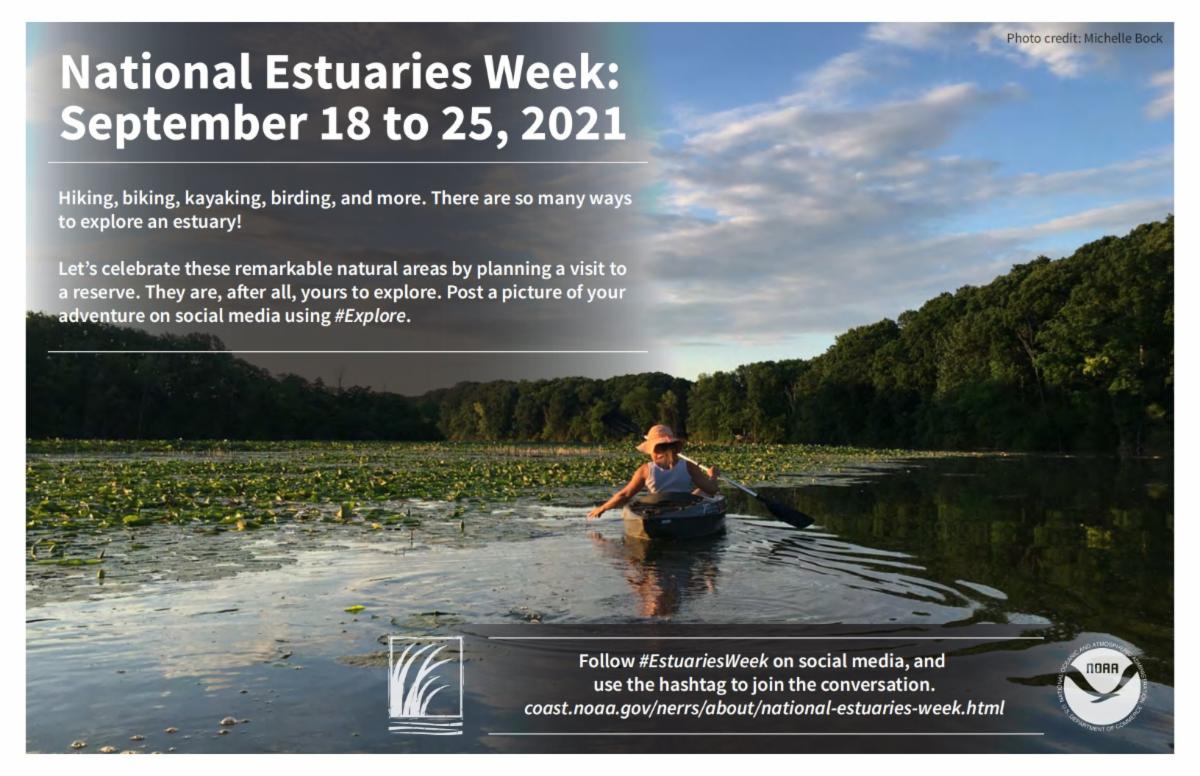
National Estuaries Week is a nationwide celebration of our nation's bays and estuaries and the many benefits they provide to local communities. It is an annual celebration and campaign to increase public awareness of estuaries and to encourage people to become involved in the protection of these important natural resources.
Each year, hundreds of organizations throughout the country host local events in celebration of National Estuaries Week, from beach cleanups and marsh restoration events, to kayaking tours, find an event near you here!
Each year, NOAA's Office for Coastal Management holds a National Estuaries Week photo contest - check out the winners here!
|
|
In the States and Regions |
|
UTA Developing Sensor Network to Monitor Climate Change Effects in Coastal Texas Town
A University of Texas at Arlington civil engineer is working with a Texas coastal town to develop a low-cost sensor network that will help the community monitor climate change effects. Michelle Hummel, an assistant professor in UTA’s College of Engineering, received a $150,000 grant from the National Science Foundation to work with the city of Ingleside on the Bay, Texas. The city has seen environmental impacts on its community from higher tides, ship wakes and air and water pollution caused by industrial growth. Citizens in Ingleside on the Bay, located near Corpus Christi, have expressed concern about climate change and its impact on the community because of the city’s exposed shoreline, as well as worries that growth in the oil industry could negatively impact air and water quality. Hummel and her team will create a low-cost sensor network to monitor air and water quality and flooding potential, then transfer the data to an online dashboard. Read more
FSU Joins NSF-Funded Research Hub to Enhance Resilience in Underrepresented Coastal Communities
Along the northern coast of the Gulf of Mexico, communities from Texas to Florida are particularly at risk for coastal hazards, including hurricanes, tsunamis, coastal storm surges, flooding, sea-level rise and erosion. Now, a Florida State University anthropologist is part of a team of researchers from five institutions across the country that will conduct fundamental research in support of holistic decision-making for historically underrepresented communities impacted by coastal hazards. The Focused Coastline and People Research Hub at Texas A&M will bring together communities, stakeholders and researchers as part of a five-year, nearly $4.2 million grant from the National Science Foundation. The grant is provided in conjunction with NSF’s interdisciplinary research initiative, the Coastlines and People program, or CoPe. Read more
|
|
North Carolina Program Aims to Help Coastal Towns Plan, Protect Against Floods
Pine Knoll Shores, a small barrier island town on North Carolina’s Crystal Coast, is known for its sandy beaches, a popular aquarium—and for flooding when major storms blow in along the coast. The town has taken a multi-pronged approach to protecting itself. Officials have passed ordinances to limit impervious coverage. Its long-running beach maintenance program has provided a model for other seaside communities. Despite the frequent flooding—which often leaves much of the town underwater—the town's population has continued to grow, requiring more infrastructure and leaving more people and property at risk. Now, Pine Knoll Shores is one of 25 communities getting help dealing with future floods thanks to a North Carolina Division of Coastal Management (DCM) program that is funding the planning and building of projects to protect local infrastructure. The North Carolina Resilient Coastal Communities Program (RCCP) has already awarded $675,000 in grants to those communities for the first two phases of the program, and Phases 3 and 4 may see those communities seeking engineering firms and contractors for dozens of flood mitigation projects. Read more
Baker-Polito Administration Announces $6.7 Million to 14 Coastal Communities for Infrastructure and Design Projects to Benefit Local Economies, Counter Climate Impacts
the Baker-Polito Administration announced more than $6.7 million in Seaport Economic Council (SEC) grants for 16 projects in 14 coastal communities. The awarded funds will help coastal communities advance projects that benefit commercial maritime industries, improve resident and visitor access to waterfront assets, mitigate the impacts of climate change, and advance future dredging. The Seaport Economic Council serves all 78 of Massachusetts’ diverse coastal communities and awards grant funding to municipalities and other entities in support of shovel-ready projects that promote job creation and economic growth, transformative public-private partnerships, educational opportunities for young people, local economic development planning efforts, coastal infrastructure improvements, and the planning and permitting of saltwater dredging. Read more
|
|
Department of Administration: Wisconsin receives $249,908 Special Merit Grant funding for Lake Michigan coastal communities
Governor Tony Evers has proclaimed September as Coastal Awareness Month in Wisconsin, recognizing the important role that Lake Michigan and Lake Superior serve in enhancing the economic and recreational opportunities, clean drinking water, and the quality of life for all Wisconsinites. The proclamation serves as a reminder to ensure the Great Lakes and coastal communities continue to be protected. In addition, the state was recently awarded an 18-month $249,908 Project of Special Merit grant from the National Oceanic and Atmospheric Administration (NOAA). Funding from the Collaborative Action for Lake Michigan Coastal Resilience (CALM) grant will help Wisconsin’s Lake Michigan communities to develop, revise, and adopt policies to improve coastal hazard resilience. Read more
NOAA Ecological Forecast Helps Solve Mystery in Lake Erie
During a recent late summer weeknight, residents of several northeast Ohio Lake Erie towns were surprised by a strong foul smell. As reported by The Plain Dealer (Cleveland.com), residents fearing a potential dangerous gas leak quickly started calling their local fire departments. The local gas company was called to investigate and were quick to reassure the residents that no gas leak was found and that the unusual late night smell was actually coming from the lake. Thanks to the work from collaborative team of NOAA scientists and partners, the NOAA Experimental Lake Erie Hypoxia Forecast was able to predict that the Greater Cleveland area was going to be exposed to a large mass of low oxygen water, also known as hypoxic water, moving in from the deeper parts of the middle section of Lake Erie known as the Central Basin. Hypoxic water can have a foul odor due to the reduced sulfur and nitrogen compounds that come from decomposing matter at the lake bottom, which could be mistaken for the odor additives in natural gas. Two days in advance of the event, NOAA sent a notice to an email list for the experimental hypoxia forecast, including public water systems, state agencies, charter anglers, and researchers, which helped to prepare officials to respond to public inquiries. Read more
|
|
California Legislature Passes Landmark Legislation to Bolster Offshore Wind Energy
The California Legislature on Sept. 9, 2021, approved landmark state legislation to facilitate California's offshore wind energy potential. Assembly Bill (AB) 525 requires the California Energy Commission (CEC) to prepare a strategic plan for developing offshore wind resources in the years to come, as well as specific megawatt targets for 2030 and 2045. The legislation has been submitted, and is now awaiting the governor's signature. Read more
Project to Address Coastal Erosion
A project to initiate a Maalaea Village Coastal Resilience and Erosion Management Plan will begin Tuesday, the Maui County Planning Department announced last week.
The project, which will cover the area from Maalaea Harbor to Haycraft Park, seeks a “proactive and holistic approach” to manage worsening coastal erosion at Maalaea Bay Beach by exploring different coastal resilience strategies, including erosion mitigation options and relocation of threatened structures, the department said. Read more
|
|
September 28-October 1, 2021
September 27, 2021
September 29, 2021
September 30, 2021
October 12, 2021
October 13, 2021
October 19-20, 2021
October 26, 2021
December 13-17, 2021
February 1-3, 2022
|
|
Climate Change in the West: Submit Your Photos
Calling all students in 5th through 12th grade! Send in your photos showing how climate change has impacted you or your community in the West before November 15, 2021. Winning submissions will be shared with NOAA climate experts who will develop a written response about the climate impact or change captured in the photo, and both the photos and responses will be shared on the NOAA Western Region website. Applicants from across the U.S. are eligible, but photos must be taken in one of these western states: Washington, Oregon, California, Idaho, Montana, Wyoming, Colorado, Utah, Nevada, Arizona, and New Mexico. Learn more and submit your photos here!
NOAA’s Community Resilience Education Grant Competition Now Open
announce the NOAA Environmental Literacy Program’s new funding opportunity for community resilience education. Through environmental literacy, projects will build resilience to extreme weather and climate change. This funding opportunity is soliciting requests of $250,000 - $500,000 for two types of projects through separate competitive priorities. The first deadline for pre-applications is November 1, 2021. Learn more here.
NOAA Office of Education 2022 Undergraduate Scholarship Applications Now Open
The Hollings Scholarship Program and the EPP/MSI Undergraduate Scholarship Program are accepting applications until Monday, January 31, 2022. The Hollings Scholarship Program provides successful undergraduate applicants with awards that include academic assistance (up to $9,500 per year) for two years of full-time study and a 10-week, full-time paid ($700/week) internship at a NOAA facility during the summer. The EPP/MSI Undergraduate Scholarship provides funds for two years of undergraduate study to rising junior undergraduate students majoring in Science, Technology, Engineering and Mathematics (STEM) fields that directly support NOAA's mission. Participants conduct research at a NOAA facility during two paid summer internships. Since 2001, 219 students have completed the program and over 75% go on to graduate school.
FEMA Webinar: Addressing Future Climate, Population, and Land Use Changes Through Hazard Mitigation Planning
As the number and intensity of disaster events continue to grow, it is important to account for future conditions and climate change in your hazard mitigation plan. “Future Conditions” include the impacts of a changing climate, changes in population, and changes in land use and the built environment. This recorded webinar provides ideas, resources and examples of how to integrate future conditions information into your hazard mitigation planning process to increase overall resilience. Watch here.
FEMA published in the Federal Register the final rule that includes an update to the Hazard Mitigation Assistance programs and mitigation planning regulations. The rule incorporates requirements enacted by the Biggert-Waters Flood Insurance Reform Act of 2012 (BW-12) and reflect uniform administrative requirements. Read the rule here.
NEW International Guidelines on Natural and Nature-Based Features for Flood Risk Management
The U.S. Army Corps of Engineers (USACE) Engineering With Nature® (EWN) Initiative has released the International Guidelines on Natural and Nature-Based Features (NNBF) for Flood Risk Management which provides practitioners with the best available information concerning the conceptualization, planning, design, engineering, construction, and maintenance of NNBF to support resilience and flood risk reduction for coastlines, bays, and estuaries, as well as river and freshwater systems. Learn more and read the guidelines here.
Highlighting Blue Carbon As An Important Tool For Combating Climate Change
Pew released a new brief on Blue Carbon as a tool for combating climate change with an overview of the topic, case studies, fast facts, and actions that nations and states can take to incorporate coastal blue carbon into climate goals. Read the brief here.
Upcoming NOAA Office for Coastal Management Trainings
The NOAA Office for Coastal Management is offering the following upcoming trainings to build social science skills for coastal managers:
-
Social Science Basics: Using Social Science for Stakeholder Engagement, September 27, 2021, 2 to 5:00 p.m. Eastern. Register here.
-
Social Science Basics: Writing Effective Survey Questions, September 28, 2021, 2 to 4:00 p.m. Eastern. Register here.
-
Economic Guidance for Coastal Management Professionals, September 30, 2021, 2 to 3:30 p.m. Eastern. Register here.
Coastal Management and Digital Coast Fellowship
Any U.S. citizen who will complete a master’s or other advanced degree at an accredited U.S. university between August 1, 2020, and July 31, 2022, is eligible to apply for the Coastal Management and Digital Coast Fellowships. A variety of degrees are applicable to the fellowship because the projects are new and different each year. Previous fellows have had degrees in environmental studies, natural resource management, marine affairs, marine science, geology, public affairs, communications, social sciences, and regional land management. The most important prerequisite is an interest in coastal issues. Application packages must be submitted to the Sea Grant program office in the state where you earned your degree by January 21, 2022. Learn more about the Fellowships and how to apply here.
Social Coast Forum 2022 Call for Abstracts
The Call for Abstracts for the Social Coast Forum is now open! Presentations and discussions at the Social Coast Forum 2022 will focus on applying social science data, tools, and practices to address climate change in coastal communities. Submit an abstract today, of 300 words or less, to present in person at the event in Charleston, February 1-3, 2022. Abstracts are due September 27, 2021. Learn more and submit your abstract here.
Seminar Series: Perspectives On Urban Flood Resilience
Urban flooding is of particular concern as human populations concentrate in urban areas, which are often located in coastal or flood prone areas. CUAHSI is hosting a seminar series which brings together scholars from a variety of perspectives and fields to share their research on urban flooding, recommendations for how to lessen future impacts or approach challenges, and highlight areas of needed research and collaboration. This series seeks to reach scientists at all stages of their careers, policy makers, and urban flood practitioners to establish connections between members of different fields, shed light on interdisciplinary research and methodologies, and to define calls to action for both research and practice. Join the series Wednesdays this fall from September 8th - October 13th at 12:00 p.m. - 1:00 p.m. ET. Learn more here.
Margaret A. Davidson Graduate Fellowship
It’s an exciting two-year fellowship program that will place one graduate student at each of the 29 national estuarine research reserves. Through a research project, fellows address a key reserve management need to help scientists and communities understand coastal challenges that may influence future policy and management strategies. The research reserves represent the apex of estuary science. At these coastal sites, fieldwork, research, and community engagement come together to create the scientific advances that change our communities and our world. Applications are due December 10, 2021. Learn more and apply here.
|
|
In The States
In The Agencies
In NGOs and Academia
Job Boards
|
|
The views expressed in articles referenced here are those of the authors and do not represent or reflect the views of CSO.
If you have a news item or job posting to include in future CSO Newsletters, please send an email to: rkeylon@coastalstates.org with a subject line: "Newsletter Content". Please include the information to be considered in the body of the email. Please note: CSO reserves final decision regarding published newsletter content and may not use all information submitted.
|
|
Coastal States Organization | 50 F Street. NW, Suite 570, Washington, DC 20001 | 202-508-3860 | cso@coastalstates.org | www.coastalstates.org |
|
|
|
|
|
|