|
Environmental Newsletter
Vol. 13, No. 7 - July 2024
| |
What's New!
CSC Team Expansion
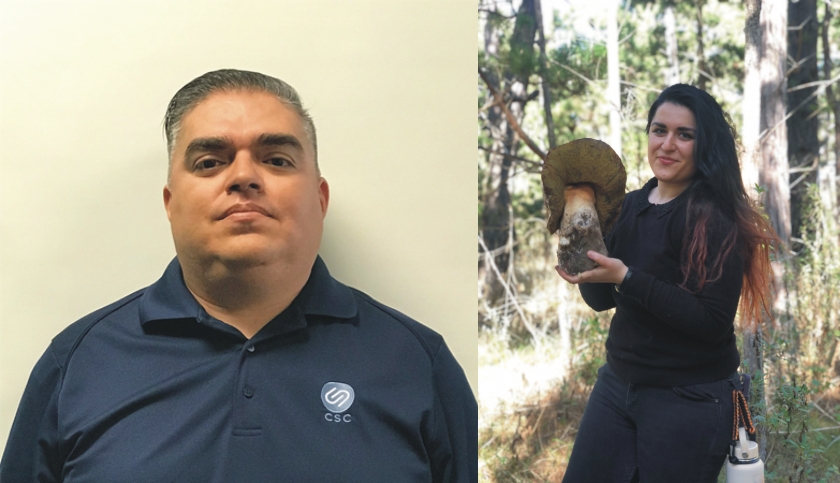
As CSC grows, we seek new talent to help deliver our brand promise. We recently welcomed new people to the team and we’d like to introduce them to you.
Oscar Garcia is an Army veteran who joined CSC in March 2024 as a Certified Site Surveillance Technician. He is also NIOSH 582 Certified. Oscar has conducted comprehensive asbestos and hazardous materials surveys at various locations throughout Southern California including terminals at LAX World Airport, The Vons companies, office buildings, retail stores, the parking areas at the Westfield Century City Mall, and many other projects. He’s also performed air monitoring at Los Angeles Unified School District, Fox Studies, Palos Verdes Peninsula Unified School District, etc. When Oscar isn’t working, he likes to BBQ and work on classic cars.
Dr. Tania Kurbessoian joined CSC in May 2024 as a Project Scientist and Expert Microbiologist. She has a Bachelor’s degree in Microbiology (2013) and an M.S. in Biology from California State University, Northridge (2016). Her research at CSUN focused on rumen archaea and soil bacteria. She also has a Ph.D. in Microbiology from the University of California, Riverside (2022), where her research thesis focused on clinical and environmental isolates of black yeasts. After completing her Ph.D., she was a remote postdoctoral scholar with the UNC - Chapel Hill, working on a clinical fungal isolate called Histoplasma capsulatum and observing genetic differences. In her spare time, Tania enjoys foraging for mushrooms and using them to find natural fungal dyes. The dyed wool can be used to crochet and create fiber arts.
California Adopts Indoor Heat Safety Rule
The California Occupational Safety and Health Standards Board approved a new Section (3396) to the Title 8 standard on June 20, 2024, to protect indoor workers from heat illness, the state Department of Industrial Relations announced on June 21, 2024.
The new regulation requires indoor workplaces to be cooled to below a temperature and heat index of 87 degrees Fahrenheit, if feasible when employees are present. Indoor workplaces, where employees toil in high-radiant heat areas or must wear protective clothing that restricts heat removal, must be cooled to below 82 degrees, if feasible. Other requirements will include providing cool-down areas, methods for cooling the work areas under certain conditions, water, rest, and training.
Employers should take steps now to achieve compliance with the new regulation. CSC offers compliance consulting, management/worker training, and interior workplace heat assessment/testing to reduce heat stress incidents and to help clients achieve compliance with recent additions to changes in California Title 8. For more information, call Clark Seif Clark at (800) 807-1118 or by email at csc@csceng.com. Stay tuned for more updates.
| | |
|
Protecting Building Occupants from Mold and Other Respiratory Exposure Risks
Elevated concentrations of mold in the places where people live, work, go to school, or spend time can cause potential health issues for many individuals. This is because mold is known to be an allergen, irritant, asthma trigger, and in some cases, the cause of opportunistic infections or the source of toxic substances known as mycotoxins.
The U.S. Environmental Protection Agency (EPA) states that allergic reactions to mold are quite common. These reactions can be immediate or delayed and may include hay fever-type symptoms, such as sneezing, runny nose, red eyes, and skin rash. Mold can even cause an asthma attack in some people with asthma who are allergic to mold. The agency also warns that mold exposure can irritate the eyes, skin, nose, throat, and lungs of mold-allergic and non-allergic people.
Breathing elevated levels of mold may cause hypersensitivity pneumonitis (HP), a condition that resembles bacterial pneumonia. In addition, exposure to some types of mold found in water-damaged properties may result in opportunistic infections in people who have a weakened or suppressed immune system.
“Like many indoor environmental quality topics, mold is misunderstood and misrepresented. For mold to amplify, or grow indoors, mold requires four things at the same time,” said Derrick A. Denis, Disaster Ready Emergency Preparedness and Infection Control (DR EPIC) Program Industrial Hygienist and Senior Vice President for Clark Seif Clark (CSC). “First, viable mold spores must be present. Rest assured viable mold spores are a universal component of airborne and settled dust all over the planet, so this criterion is always met. Second, mold needs a favorable atmosphere, which is the same temperature range and presence of oxygen that people require. So, unless you live in a freezer this criterion is always present. Third, mold needs an organic nutrient source, such as paper, leather, wood, skin cells, pollen, etc. Organic building materials and contents are common, but, even if you made a room out of materials mold cannot digest, such as a shower made of metal, glass, and ceramic, mold can still eat the nutrients in the biofilm of soap and dust. Fourth, mold requires water, such as flowing liquid water or condensed water vapor. Water is the one factor that can and should be controlled in the built environment.”
Mr. Denis suggests, “Align yourself with experienced, certified, insured professionals for assistance in assessing your built environment, prescribing corrective measures, conducting measures to remediate any issues, and providing proof of completion. Let professionals guide your response to any visible mold growth or imbalanced airborne mold concentrations with tempered and pragmatic solutions. CSC’s experts meet these criteria and are dedicated to providing comprehensive building assessments, testing, monitoring, consulting, and training services. CSC is a resource to help to identify and mitigate indoor exposure risks to mold and other microbial pathogens, allergens, respiratory irritants, and airborne pollutants.”
CSC recently sponsored an educational video about mold exposure and potential health effects which can be seen below.
To learn more, visit www.csceng.com or call (800) 807-1118.
| |
|
Infection Control Resources to Mitigate Exposure Risks to Acinetobacter and Other Environmental Pathogens
Acinetobacter is described by the Centers for Disease Control and Prevention (CDC) as a group of bacteria commonly found in the environment. While there are many types, the most frequent cause of infections in humans is Acinetobacter baumannii.
Infections of the blood, urinary tract, and lungs, or in wounds in other parts of the body can all be caused by Acinetobacter baumannii. It can also colonize or live in a person without causing infections or symptoms, especially in respiratory secretions or open wounds, according to the CDC.
As recently as 2017, carbapenem-resistant Acinetobacter caused an estimated 8,500 infections in hospitalized patients and 700 estimated deaths in the United States alone. CDC warns that those most at risk of infection include patients in hospitals, especially those who:
- are on breathing machines
- have devices such as catheters
- have open wounds from surgery
- are in intensive care units
Microorganisms have always presented a challenge to healthcare providers. Miraculous science has developed various antibiotics to assist in restraining these invisible foes. But, to quote Jeff Goldblum in Jurassic Park, ‘life finds a way’. Even with our recent emphasis on antibiotic stewardship, Multidrug-resistant Organisms (MDRO) or so-called ‘Superbugs’ are presenting new challenges to our healthcare system due to what amounts to microscopic selective breeding. One such example is Multidrug-resistant Acinetobacter (MDR-A).
To reduce our reliance on antibiotics and to preserve the efficacy of our current antibiotic arsenal, we must be vigilant in our universal precautions approach. Acinetobacter can persist on environmental surfaces and shared equipment, and antibiotic resistance is rising. So, it is wise to redouble efforts on hygiene basics: rigorous environmental cleaning, careful environmental disinfection, persistent hand hygiene, and conscientious aseptic techniques.
To help with infection control efforts, the professionals at CSC are dedicated to identifying and mitigating indoor exposure risks to Acinetobacter and other environmental pathogens. They provide infection control, industrial hygiene, and indoor environmental quality testing, consulting, and training services. CSC also recently sponsored an educational video about Acinetobacter and potential exposure risks that can be seen below.
To learn more, visit www.csceng.com or call (800) 807-1118.
| | | | |