|
YOUR SOURCE FOR CAWG AND INDUSTRY NEWS
FOR CAWG MEMBERS ONLY
| |
|
This week's eNews Includes:
CAWG News:
- Lead Story: UI Benefits for Striking Employees
- Enough is Enough
- Fruit Fly Quarantine
- Streamline Disease Scouting with Aerial Imagery Webinar Recording
- eAlert: Excessive Heat Warning and New Cal/OSHA Field Offices
- Congressional Action on Wildfires Needed
Industry News:
- Biden-Harris Administration Announces New Round of Investments in Wildfire Protection through Community Wildfire Defense Grants
- SWEEP Grants Return This Fall
- California Minimum Wage Rising to $16 on January 1
- In the News: California Researchers Race to Find Solutions to Wildfire Smoke-Tainted Wine
- $1.9 Million in Grants to Support Integrated Pest Management in California
- Using Hedgerows to Manage Pests
- Create Custom AVA Maps Using Google Earth
- Central Valley Farmer Shares New Experience with On-Farm Groundwater Recharge
Upcoming Events
- Winery Order: Water Quality and Compliance Webinar - Aug. 23
- Acres U.S.A. Healthy Soils Summit - Aug. 23-24
- Mechanization and the Future of Farming - Aug. 23
- 2023 Grape Pierce's Disease Field Day - Sept. 6
- Wage and Hour Compliance in the Field, Packhouse, and Plant Webinar - Sept. 12
- FIRA USA 2023 - See Autonomous Farming Solutions in Action - Sept.19-21
| |
Reminder: 2024 Unified Symposium Sponsorship & Advertising Opportunities Available
The Unified Wine & Grape Symposium is an ideal opportunity to promote your company at the wine and grape industry's premier gathering! Thousands of industry professionals attend the symposium each year.
New in 2024! New opportunities are available and include a Wi-Fi sponsorship, Thursday General Session Breakfast & Networking sponsorship, and the Spanish Workshop sponsorship.
Contact us today to discuss how to promote your brand and stand above the competition.
| | |
|
Lead Story: UI Benefits for Striking Employees
Every year, as the legislature returns to session from its summer break, there is always at least one brand new bill that will be introduced and pushed through in the last few weeks of the legislative year. This year is no different – one of the new bills introduced intends to provide unemployment insurance (UI) benefits for workers who have been on strike for more than two weeks. (NOTE: The new bill will likely be SB 799 (Durazo) which currently deals with visitation of inmates in prison.)
Senate Appropriations Committee chair Anthony Portantino (D-Burbank) announced that he will author the new bill which will have the strong support of a coalition of labor unions. While labor unions already maintain a “strike fund” to help their members weather a labor dispute, Senator Portantino and labor union representatives argue that striking workers need UI benefits as well.
California’s UI Fund currently has a deficit of almost $20 billion which has resulted in increased UI taxes for employers. California will pay $306 million in interest alone in 2023 as it slowly pays down the deficit to the federal government over the next 15 years.
Labor leader Lorena Gonzalez has touted this as a “hot labor summer” as workers in hospitality, fast food, ports, UPS, public agencies, the entertainment industry, Starbucks, and even Planned Parenthood are either already on strike or may be on strike soon. As a past Assemblymember and powerful chair of the Appropriations Committee, Gonzalez has enjoyed a reputation for making no apologies whenever she refused to compromise on many of the labor bills she authored.
She is taking that same approach in collective bargaining and this week she was taken away by the CHP from a State legislative building in Sacramento. She was arrested for participating in an unpermitted demonstration by state workers and refusing to disperse. Consequently, we may see extended strikes due to stalemates in negotiations.
“We need federal labor law reform,” said Dolores Huerta, co-founder of United Farm Workers. She believes California needs to elect representatives, “into our Congress that are going to support working people and that are going to support labor unions.”
While Portantino is pursuing this change in California state law, he is also a candidate for Congress who is running to replace Congressman Adam Schiff who is running to replace outgoing Senator Diane Feinstein.
| |
|
Enough is Enough
In response to the broad scope of labor union-sponsored, costly legislation that is being rushed through the legislature in the next few weeks, several organizations representing a wide spectrum of industries are sounding the alarm with a “Hit the Pause Button” letter writing campaign. Through this link, any employer in the state can send a message directly to the Governor and their specific Senate and Assembly representatives in opposition to new employer mandates being considered in the remaining weeks of the session. It’s free, simple, and fast!
The specific bills addressed in this campaign are as follows:
-
AB 524 (Wicks); dramatically expands family caregiver status, increasing employment costs and potential litigation against CA employers;
-
SB 365 (Wiener); increases employer defense litigation costs by undermining arbitration laws;
-
SB 399 (Wahab); creates new litigation against employers related to speech in the workplace;
-
SB 616 (Lena Gonzalez); increases employer costs by more than doubling the number of paid sick leave days; and
-
SB 799 (Portantino); further indebting the -$18 billion UI Fund deficit and increasing payroll taxes on employers by allowing striking workers to collect unemployment from a fund that is bankrupt. (NOTE: On Thursday, August 17th, this bill is not yet in print.)
CAWG is opposed to all these bills and is working hard to defeat them.
Here are the links to the “Hit the Pause” website as well as the direct link to the “ACT NOW” page:
CAWG will also be engaging our growers in the next few weeks in efforts we can take specific to our industry to defeat these bills.
| |
|
Fruit Fly Quarantine
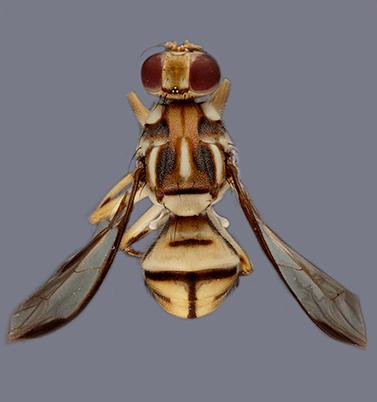
The Tau Fly (aka fruit fly) was found in northern Los Angeles County in June. For the last three weeks, the area around Santa Clarita and Newhall (just south of the grapevine on I-5) has been under quarantine, with potential restrictions in place for host fruits and vegetables. Winegrapes are not listed as a host fruit. The Tau fly has the ability to evade human detection and reproduce quicker than other fruit flies which poses a significant risk. This week, the quarantine was expanded from a 79 square mile area to 105 square miles.
CDFA reports, “To prevent the spread of fruit flies via infested homegrown fruits and vegetables, residents and people moving through the fruit fly eradication area are urged not to move any fruits or vegetables from their property.” The adult fruit fly is similar in size to that of a housefly. The body is yellow with black markings. The clear wings have two dark stripes, one along the front margin that ends in a dark spot and one about half as long-running diagonal from the wing base. The female has a pointed slender ovipositor to deposit eggs under the skin of host fruit.
CDFA also has the following information available:
CAWG staff will continue to monitor this situation and will update members accordingly should this become an issue for winegrapes.
| |
|
Streamline Disease Scouting with Aerial Imagery Webinar Recording
CAWG and VineView hosted a webinar on August 9 exploring the power of streamlining disease scouting through aerial imagery and data insights. VineView’s RedLeaf Scouting maps identify indications of redness within the vine canopy, providing vineyard managers with critical data to direct their scouting efforts efficiently.
Throughout the webinar, attendees learned how disease scouting is optimized with VineView’s RedLeaf Maps, viewed a detailed use case from a client, showcasing the problem, solution & result, and observed a live demonstration of the technology.
| |
|
eAlert: Excessive Heat Warning and New Cal/OSHA Field Offices
Earlier this week, CAWG issued an eAlert regarding the excessive heat forecasted through August 17 and Cal/OSHA expanding its physical presence in Fresno, Santa Barbara, and Riverside counties.
Cal/OSHA will be performing proactive high-heat inspections, strategically visiting worksites where workers are the most exposed to serious heat illness including agriculture. Employers in California must take steps to protect outdoor workers from heat illness by providing water, rest, shade, and training. Cal/OSHA’s heat illness prevention standard applies to all outdoor worksites.
Cal/OSHA believes its increased physical presence will allow field inspectors to respond more efficiently while providing services and resources to workers, employers, and community-based organizations in these areas.
Temporary satellite offices (which are in the process of becoming permanent office locations) are located in:
- Regional Office in Fresno
- High Hazard Office in Fresno
- District Office in Santa Barbara
- District Office in Riverside
| |
|
Congressional Action on Wildfires Needed
Johnnie White a sixth-generation winegrape grower, CAWG member, and Farm Bureau Board Member testified before the House Committee on Natural Resources asking for legislative action to protect California farms and ranches from wildfires.
“Wildfires have caused numerous direct and indirect impacts on California’s $50 billion agriculture industry,” White said in his prepared remarks to the committee. “In addition to being a significant public safety threat, many farms, ranches, wineries, employee housing, equipment, livestock, and commodities have been directly damaged or completely destroyed. For those only partially impacted, they are faced with the reality of rebuilding what remains of their operation. Because many farmers and ranchers live on their farming operation, some have also lost their home simultaneous to losing their farm and income.”
CAWG is advocating on both state and federal levels to mitigate wildfire risk in California.
| |
|
Biden-Harris Administration Announces New Round of Investments in Wildfire Protection through Community Wildfire Defense Grants
USDA Agriculture Secretary Tom Vilsack recently announced the USDA's Forest Service is currently accepting applications for the Community Wildfire Defense Grant program. In making the announcement, USDA states this program is funded by President Biden’s historic Bipartisan Infrastructure Law and is designed to assist at-risk communities, including Tribal communities, non-profit organizations, state forestry agencies, and Alaska Native Corporations with planning for and mitigating wildfire risks. Applications will be accepted through October 31, 2023.
USDA's announcement comes after $197 million was awarded to 99 project proposals across 22 states and seven Tribes during the first year of the grant program's funding. The funded projects directly support the Forest Service’s 10-year strategy to treat up to 20 million acres of national forests and grasslands and 30 million acres of other federal, state, Tribal, and private lands to reduce wildfire risk to communities, infrastructure, and natural resources.
“We are proud to be partnering with Tribes, local communities, and a wide range of partners in working towards our mutually shared goals of addressing the wildfire crisis, mitigating climate change, and safeguarding the communities we serve,” said Secretary Vilsack. “President Biden’s Investing in America agenda continues to provide the tools and resources that people need to reduce both the financial and emotional burden of living with wildfire.”
| |
|
SWEEP Grants Return This Fall
CDFA recently announced the State Water Efficiency and Enhancement Program (SWEEP) Grants will return again this fall. This grant funds projects to implement irrigation systems that reduce greenhouse gases and save water on California agricultural operations. Eligible systems include soil moisture monitoring, drip systems, switching to low-pressure irrigation systems, pump retrofits, variable frequency drives, and installation of renewable energy to reduce on-farm water use and energy.
SWEEP anticipates opening the grant application period for direct-to-farmer grants in November 2023. The draft Request for Grant Applications is available online.
Changes for the 2023 grant period are outlined below:
- Returning to a competitive process, no longer on a first-come, first-served basis.
- Revised scoring criteria; more consideration given to well-rounded projects.
- Minimum scoring requirements eliminated.
- New tools for assessing greenhouse gas emission reduction.
- Previously funded parcels can apply again.
- More safeguards to prevent applicants from submitting multiple applications.
- More clarity on irrigation system funding requirements.
- Reduced funding available - $23 million available (down from $45 million in 2021.
| |
|
California Minimum Wage Rising to $16 on January 1
The California Department of Finance issued a notice on July 31 that the state’s minimum wage will be increasing from $15.50 an hour to $16 an hour on January 1, 2024, a 3.5% increase to adjust for inflation.
The minimum salary of a qualifying executive, administrative, or professional employee classified as exempt from minimum wage, overtime premium pay, and time-recordkeeping requirements in 2024 will be $1,280 per week (equivalent to $66,560/year). The 2023 minimum weekly salary is $1,240 (equivalent to $64,480/year).
Many agricultural organizations, including CAWG, have expressed concerns with the calculation as the U.S. Bureau of Labor Statistics uses an increase of 2.3% for the Consumer Price Index instead of the 3.5% increase used by the Newsom Administration.
Fisher Phillips released an article this week outlining the five things employers need to know about this impending change and what employers can expect in the coming months.
| |
|
In the News: California Researchers Race to Find Solutions to Wildfire Smoke-Tainted Wine
The team at UC Davis is currently testing a new approach to combat smoke taint - spraying a polymer-based solution with cinnamon as a main ingredient on the grapes to see if it will have an effect on protecting winegrapes from smoke damage. CapRadio released an article this week outlining the trial.
Research on smoke taint is relatively new. CAWG is working actively on the federal level to advocate for additional research funding and crop insurance protection for winegrape growers. Researchers hope that this will be a step forward for growers in mitigating smoke taint.
Anita Oberholster, a wine researcher with UC Davis who’s leading the August trial, and many others focusing on smoke taint, said previous testing has found similar sprays only offer about 10% protection for grapes against smoke exposure. Even so, she said winemakers are desperate for any help they can get, however small.
| |
|
$1.9 Million in Grants to Support Integrated Pest Management in California
The California Department of Pesticide Regulation (DPR) has opened $1.9 million in available funding to support integrated pest management (IPM) projects that expand available tools, resources, and practices that support a statewide transition to sustainable pest management while increasing the adoption of IPM.
The funding announced today is available through the 2024 Alliance and Research Grants programs. These programs have awarded more than $26 million over the last 20 years to support more than 100 projects that advance the use of IPM.
The 2024 Research Grants Program has up to $800,000 to award for projects of up to three years in length. Projects should develop pest management tools and practices to reduce the use of high-risk pesticides or decrease the impacts of pesticide use on human health and the environment. Project budgets may range from $50,000 to $500,000. Research Grant applications will be accepted through Sept. 14.
The 2024 Alliance Grants Program has up to $1.1 million to award for projects of up to three years in length. Projects should promote or increase sustainable pest management through the implementation, expansion, or adoption of effective, proven, and affordable IPM systems or practices. Project budgets may range from $50,000 to $800,000. Alliance Grant applications will be accepted through Jan. 18, 2024.
Learn more about DPR's grants here.
| |
Using Hedgerows to Manage Pests
Last year, the Department of Pesticide Regulation funded an Alliance Grant project, led by Wild Farm Alliance (WFA), to provide growers with information on how the use of integrated pest management (IPM) to preserve habitats for natural enemies can help to better control target pests.
WFA’s project provides growers with information on how to use hedgerows as a biological control. WFA hosted a hands-on field day at Santana Lepe Orchards in Livingston, California to provide planting education to growers firsthand. WFA also released a video resource to outline the benefits of hedgerows to manage pests and attract pollinators, including the positive financial impact on farm operations.
Learn more about WFA's grant project here.
| |
|
Create Custom AVA Maps Using Google Earth
A custom AVA map serves as a valuable tool for wine organizations and professionals in showcasing the vineyards and tasting rooms within the geographical boundaries of their region. The Wine Data Researcher recently released comprehensive instructions to create custom AVA maps displaying vineyards and wineries using Google Maps.
Utilizing this tool and integrating a custom AVA Google Map complements the digital and printable AVA maps that are currently available.
Create your custom AVA Map here.
| |
Central Valley Farmer Shares New Experience with On-Farm Groundwater Recharge | |
Upcoming Events and Trainings | |
|
Winery Order: Water Quality and Compliance Webinar
The California Sustainable Winegrowing Alliance and Wine Institute are co-hosting a webinar to provide information on the requirements of the statewide Winery Order, which regulates winery water quality. The January 20, 2024 deadline for many wineries to apply for coverage is fast approaching. More specifics about the requirements will be provided on the webinar.
The webinar will cover:
- An overview of the Statewide Winery Order, which was adopted in January 2021.
- How to use CSWA’s Integrated Winery Water Quality Management Tool to evaluate and implement sustainable practices for winery water quality.
- How the tool can assist wineries in better understanding their options for complying with the Winery Order.
When and Where:
Register
| |
|
Acres U.S.A. Healthy Soils Summit
This annual event held in Seaside is essential for ranchers, growers, and farmers looking to improve their soil health management systems. An optional half-day farm tour to Paicines Ranch and Pinnacle Organically Grown Produce is included.
When and Where:
Register
| |
|
Mechanization and the Future of Farming
The California Association of Winegrape Growers Foundation is inviting lawmakers and Newsom Administration staff for an educational program and dinner at Silt Wine Company in Clarksburg. The event aims to help inform policymakers on mechanization and the future of farming. Interest in this technology has increased as awareness of the environmental and safety benefits of the technology grows. The CAWG Foundation is hosting this event to showcase demonstrations of autonomous tractors as it is important that policymakers have first-hand experience with this technology.
Thank you to the event sponsors:
| |
|
When and Where:
- August 23, Silt Wine Company
If you are interested in sponsoring this important educational event, please contact Jenny Devine. The Foundation is a 501(c)(3) nonprofit organization.
| |
|
2023 Grape Pierce's Disease Field Day
A team of UC Davis researchers, led by Dr. Akif Eskalen, have been testing eight combinations of four biological treatments for controlling Xylella fastidiosa (Xf), the bacterial pathogen that causes PD, in the field. Join them for a Research Field Day where they will be sharing their latest results. The field day is free to attend, but registration is required.
When and Where:
- September 6, Armstrong Field Station, UC Davis
Register
| |
|
Wage and Hour Compliance in the Field, Packhouse and Plant Webinar
Fisher Phillips is hosting a webinar to discuss wage and hour hot topics in the agriculture industry including meal and rest break compliance, tracking non-productive time, and compensable vs. non-compensable activities.
When and Where:
Register
| |
FIRA USA 2023 - See Autonomous Farming Solutions in Action
FIRA USA is a three-day event bringing together all aspects of autonomous farming and agricultural robotics solutions.
During the event, attendees can expect to see robotic farming solutions, exhibitions, presentations, panel discussions and networking opportunities. More than 20 demos and 35 robots will be on display from manufacturers from all over the world. All demos and exhibitions will take place onsite, making it easy for attendees to navigate between presentations and the exhibitor and demo areas.
FIRA’s panel discussions include:
- How the federal government is investing in agricultural robotics
- Developing open digital infrastructure for agricultural automation
- Ag robotics education and career pathways
- What robotic weeding can teach us about next generation farm operations
When and Where:
- September 19-21, Salinas Sports Complex
The full agenda is posted online.
| |
|
August
23 - Mechanization and the Future of Farming
November
8 - CAWG Board Meeting & Outgoing Chair Dinner
January
23-25 - Unified Wine & Grape Symposium
| | | | |