C2C People Profile: Andrew Comrie

Each month we are highlighting members of our Leadership Council and showcasing their dedication to our mission of preparing every child for success in school and life, ensuring the economic vitality of our community. This month we are highlighting Leadership Council member Andrew Comrie, Chief Academic Officer for the Arizona Board of Regents.

How did you first become involved with C2C?

I was invited to join C2C early in 2016 when I was serving as provost at the University of Arizona. I quickly learned that C2C was a special kind of community organization that emphasized focused action and measurable results, and that it is part of a national movement (StriveTogether) aimed at elevating student success from preschool through K-12 and post-secondary education to career. After my first few leadership council meetings I was hooked! I recall the group studying data on early childhood literacy and debating how best to address kindergarten readiness, both issues well outside my expertise in higher education and yet critically important to long-term student success. The combination of colleagues with domain expertise and senior leadership experience from the public and private sectors created a collaborative and appealing “get it done” atmosphere. Since then, C2C has expanded the set of change networks to include post-secondary enrollment and completion, issues I work with every day in my current position as Chief Academic Officer at the Arizona Board of Regents (ABOR) that oversees all our state’s public universities.   


What is Arizona College Connect, and how are you involved with it?

Arizona College Connect is a special ABOR initiative designed to improve FAFSA completion rates. Filling out the FAFSA form, or Free Application for Federal Student Aid, is one of the strongest predictors of whether a student will pursue post-secondary education after high school. Arizona College Connect is an interactive, customized communications portal providing high school leaders with secure access to students’ FAFSA data and other college attainment information. My involvement is via colleagues at ABOR who developed this new tool through funding from Helios Education Foundation and a data partnership with the Arizona Department of Education. Authorized school and district users receive a weekly customized email providing a summary of their school’s FAFSA completion progress and a link to the database that enables users to view their student-level FAFSA data, customized data visualizations, resources and more. For more information, visit their website.


Why is FAFSA completion important?

Students who fill out the FAFSA are 84% more likely to enroll in a college or trade school immediately after high school. Arizona currently ranks 48th in FAFSA completion in the nation. We need to increase Arizona’s college-going rate to help raise our level of educational attainment – the percentage of adults who earn a two- or four-year degree. Currently, that figure is about 46%, and it significantly trails the national average of 66%. Students who continue to college and earn a degree enjoy a higher quality of life, better wages, and lower unemployment than peers with a high school diploma. Completing the FAFSA is a really important step on that pathway so that students, especially those who are low income, from underrepresented groups, or who are first in their family to attend college, understand that it may be more affordable than they imagine.


Why is a community partnership like C2C important for increasing post-secondary enrollment and completion?

Post-secondary achievement, like primary and secondary achievement, requires more than a set of educational institutions. The students in our educational system reflect the complex social and economic forces of the day, which create opportunity gaps and unnecessarily limit students in realizing their talents. Post-secondary success can be traced all the way back through high school graduation to 8th grade math, 3rd grade reading and even to kindergarten preparedness. We need community partnerships to help find solutions to address our community’s needs and provide equitable opportunities – doing that across all levels of education will ensure positive change literally from cradle to career, including career training and college success.

Partner Highlight: Pima County Superintendent's Office

C2C brings together community organizations with a shared goal of ensuring young people have access to education and career pathways. This month we are highlighting the work of our partners at the Pima County Superintendent’s Office.

What role does the Pima County Superintendent’s Office play in our community?

Under Superintendent Williams' leadership, our office is responsible for school district elections, including Governing Board Members and Bond/Override elections, PK-12 school, and Pima Community College board appointments in non-election years. Additionally, our office operates the Pima Accommodation District, which provides alternative education programs to school-aged children in the county who live outside the boundaries of an organized school district, are detained by the juvenile court, or are incarcerated in the county jail. The office registers affidavits for homeschooled students (A.R.S.§15-802) and provides accounting services for most school districts, including the distribution of state funding in excess of one billion dollars annually.


We also offer K-12 education programming, workforce development programs and initiatives, and professional development for educators in Pima County. Our newest program is Pima Cycle Breaker, which is aimed at assisting our justice-system-involved youth by re-engaging them with wrap-around services, education opportunities, career exploration, skills development, and job placements to help them achieve a career with livable wages and set them on a path to further education and training. This program offers counseling opportunities to address the root causes of their life challenges, housing assistance, food assistance, clothing, transportation, childcare, tuition, job skills training/credentialing, and employment placements.


For a complete list of services and programs please visit: schools.pima.gov.


What is the Tucson Leadership Academy?

The Tucson Youth Leadership Academy is an incredible 30-hour program that the Pima County School Superintendent's Office developed in partnership with Greater Tucson Leadership. TYLA provides Title 1 students with opportunities to gain leadership experience and build social capital with business owners and executives in the employment fields that drive Tucson's economy. Through TYLA, our students get to explore their strengths via the Gallup Clifton Strengths for Students and their career interests via the Meyers Briggs Strong Assessment. They also get to engage with industry leaders through interactive panels, receive direct instruction in leadership development theories from Greater Tucson Leadership's knowledgeable staff, and complete 10 hours of job shadowing within their chosen employment fields.


This year, through GTL’s efforts, we are excited to announce that we are expanding our partnerships with Pima Community College, The University of Arizona, and others to provide additional support to our students. The program has already significantly impacted many students' lives, often expanding their ideas about career and post-secondary education options. We deeply appreciate the generous support from our partners at United Way of Tucson, The Center for the Future of Arizona, and Raytheon that helps to make the program possible.


Do you have any upcoming events you would like people to know about?

We are excited to announce that we are currently working with C2C and the Goodwill Re-Engagement Centers to develop a more robust workforce pipeline in the Hospitality Sector. Caroline Lewis, Program Manager for the Cradle to Career Partnership, created an Essential Skills for Hospitality Careers Internship that she is leading. This 20-hour experience includes a range of topics such as Personal Identity and Strengths, Mental Health & Wellness at Work, and Substance Misuse Prevention. Attendees will engage with a Hospitality Panel and get a chance to tour the Westin La Paloma, making it a comprehensive and hands-on experience. This work is specifically geared toward Goodwill’s Opportunity Youth and youth enrolled in the Pima County School Superintendent’s Pima Cycle Breaker program, which primarily serves justice-system-involved individuals between the ages of 18 and 25. We are proud to say that twenty-three youths are attending this training, and we intend to connect them to hospitality jobs at our local resorts.


In addition, we are also working with United Way, Goodwill of Southern Arizona, The Pima County Workforce Investment Board's Youth Council, and others to offer a Hospitality Job Fair on Wednesday, September 20th. We are currently working to include exhibitors from PCC Culinary, NAU's Hospitality Program, Gap Ministries, Goodwill, Job Corps, JTED, and more. Human Resources managers from Hacienda Del Sol, La Paloma, Miraval, Ritz Carlton, Sheraton El Conquistador, Starr Pass, Ventana Canyon, and Westward Look resorts will be in breakout rooms ready to discuss entry-level jobs, explain career pathways, and interview job seekers. This will provide an excellent opportunity for job seekers to network and connect with potential employers.


Our audience will range in age from 16 – 60 and include CTE and JTED High School students, Goodwill/Cycle Breaker Opportunity Youth, and adult job seekers from the Pima County One-Stop.


Please check our website for the location and further details in August.

Learn More

Data Highlight: Leaders in Literacy's Impact

The Cradle to Career Partnership concluded another successful year of Leaders in Literacy program with three partner school districts: Marana Unified, Tucson Unified, and Sahuarita Unified. Early school and participant data shows the huge impact that the expansion of this vital program made over the past school year. 


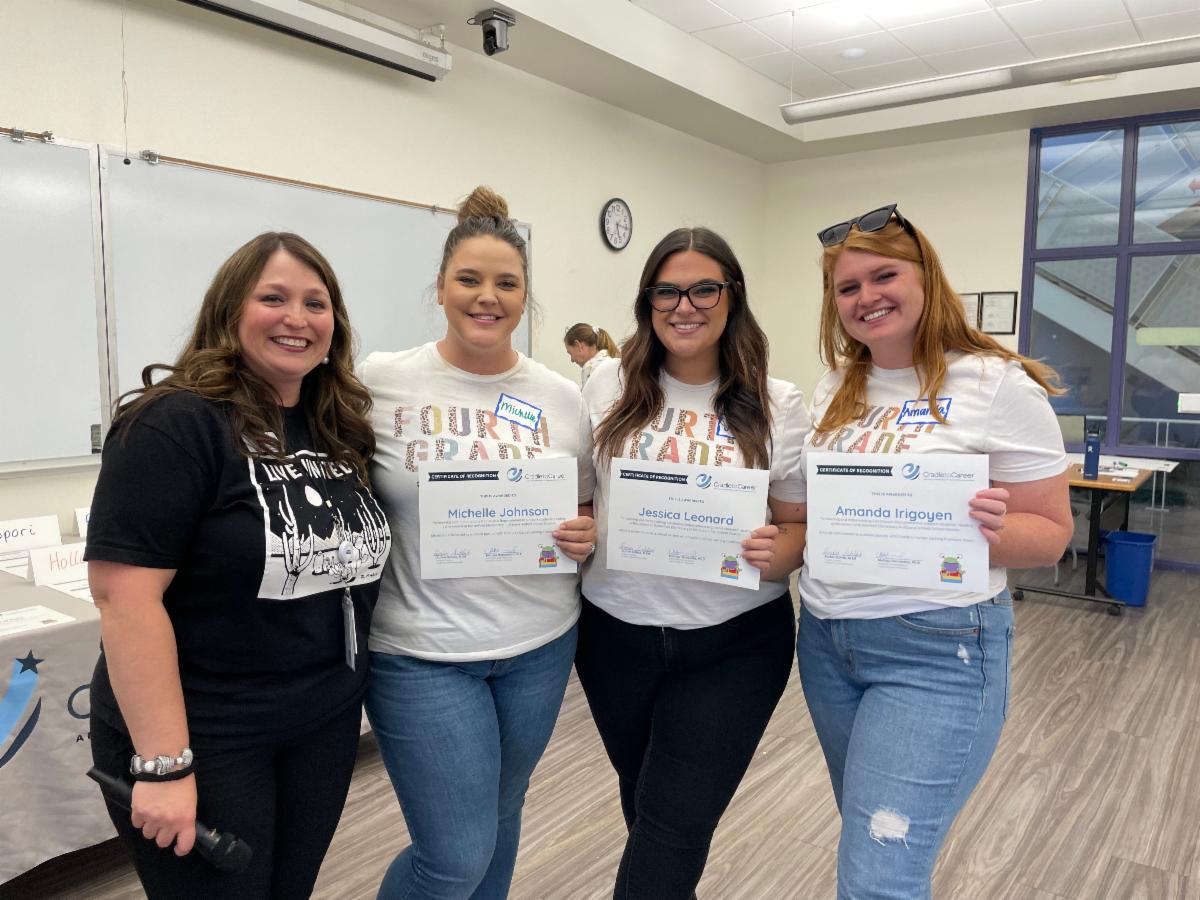
This school year, 63 educators participated in the Leaders in Literacy program, directly impacting their 818 students. An additional 3,914 students were impacted due to district-wide shifts in practice due to learnings from the Leaders in Literacy program.

For one district, assessments showed that at the beginning of the school year 32% of the K-3rd students of teachers working with C2C were reading at target level. By the end of the year, that percentage was 55%. 

 Check out more Leaders in Literacy impact data by clicking below.

Read More

Cradle to Career Updates

C2C Attends Aspen Opportunity Youth Forum Convening


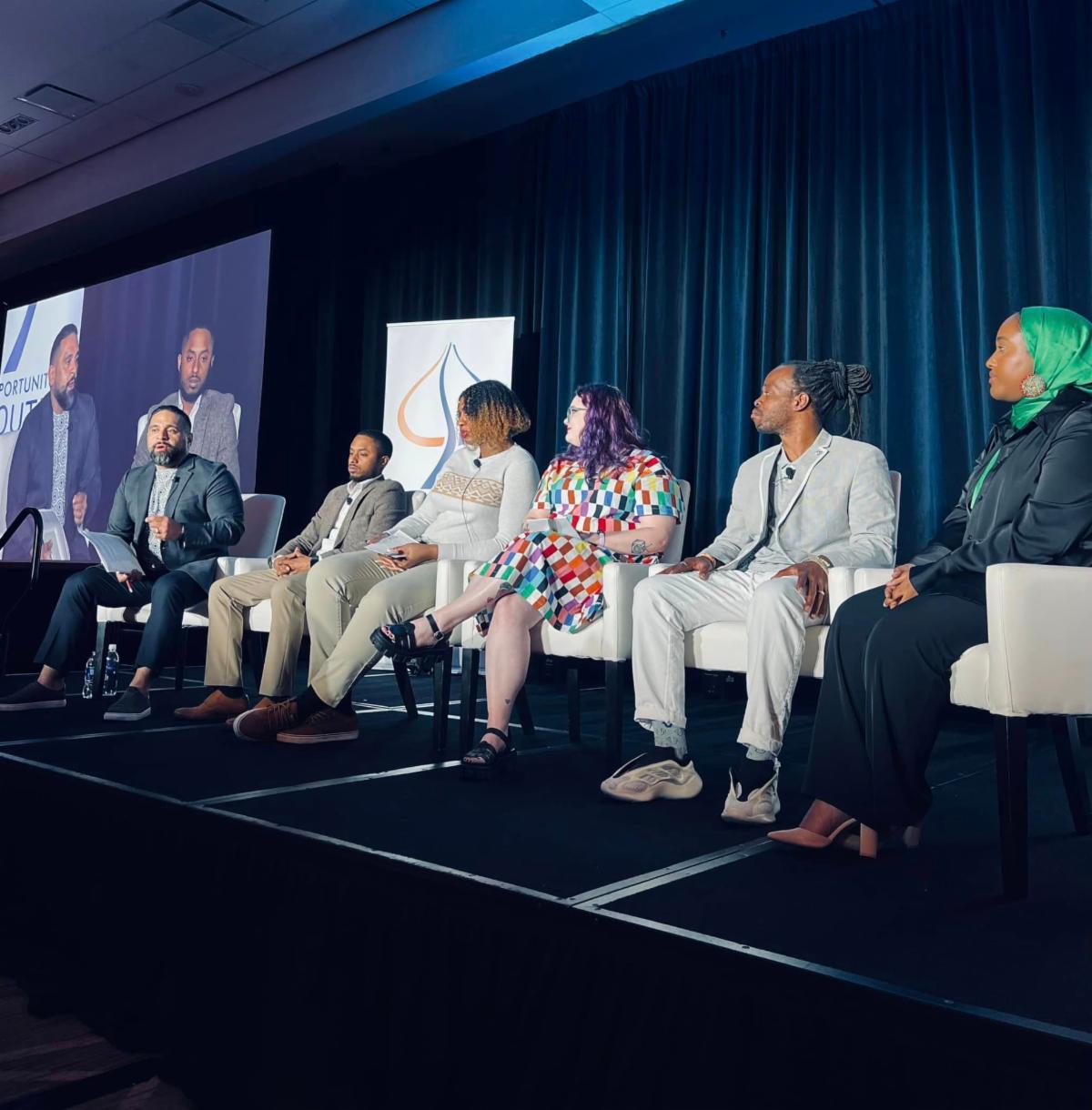
Caroline Lewis, the Cradle to Career Program Manager, and Isaiah Francisco, the Healthy Masculinity Coordinator at Goodwill METRO REC, both represented Youth on the Rise at the Aspen Opportunity Youth Forum Spring Convening from May 22-24 in Austin, Texas. The convening provides an opportunity for connection with other organizations doing this work to learn and share strategies.

Read More

Make a gift to the Cradle to Career Partnership and keep the work moving forward.

Donate Today
Facebook  Twitter  Instagram  Youtube  
Cradle to Career Partnership | c2cpima.org | 520.903.9000