Logo_Full_Color_CMYK.jpg

Behind the Scenes at the JMZ

June 13, 2023

Hello Friends,


Since its inception, the Friends of the Palo Alto Junior Museum & Zoo has supported the mission of the JMZ, which is to engage a child's curiosity in science and nature. Perhaps few things spark a young child’s imagination and curiosity more than dinosaurs, and I’m very excited for the California Dinosaur Garden to open at the JMZ later this year. For this month’s newsletter, JMZ Exhibits Director Tina Keegan provides an update on the exhibit’s progress and an inside look at the process to bring this incredible concept to life. Generous donations from our donor community, which supplemented a grant awarded to the JMZ by the Institute of Museum and Library Services, have made the California Dinosaur Garden possible. 


This is a busy month for Friends’ events at the JMZ. In celebration of Pride Month, the Friends and the Palo Alto Library will host a storytime and craft event on Thursday, June 29 from 11 a.m. to noon in the Courtyard. In celebration of Juneteenth, the Friends will host a storytime on Tuesday, June 20 from 11 a.m. to noon in the Courtyard, and the JMZ will display a series of posters featuring Black scientists throughout this month. Friends’ events are free with admission; please remember to purchase tickets to the Palo Alto Junior Museum & Zoo in advance. We hope you will join us!


Lauren Angelo

President, Friends of the Palo Alto Junior Museum & Zoo

California Dinosaur Garden Sneak Peak

Questions for Tina Keegan, JMZ Exhibits Director


What can we expect to see in the California Dinosaur Garden?


The California Dinosaur Garden will feature life-size dinosaur and animal sculptures, prehistoric plants, and interactive exhibits– including a fossil dig. The exhibit will create a glimpse of life during the Cretaceous period, more than 66 million years ago when many different dinosaurs lived in what is now California. They shared a verdant wooded landscape with lots of different animals. This rich variety of life was critical for a healthy planet, just as it is today.


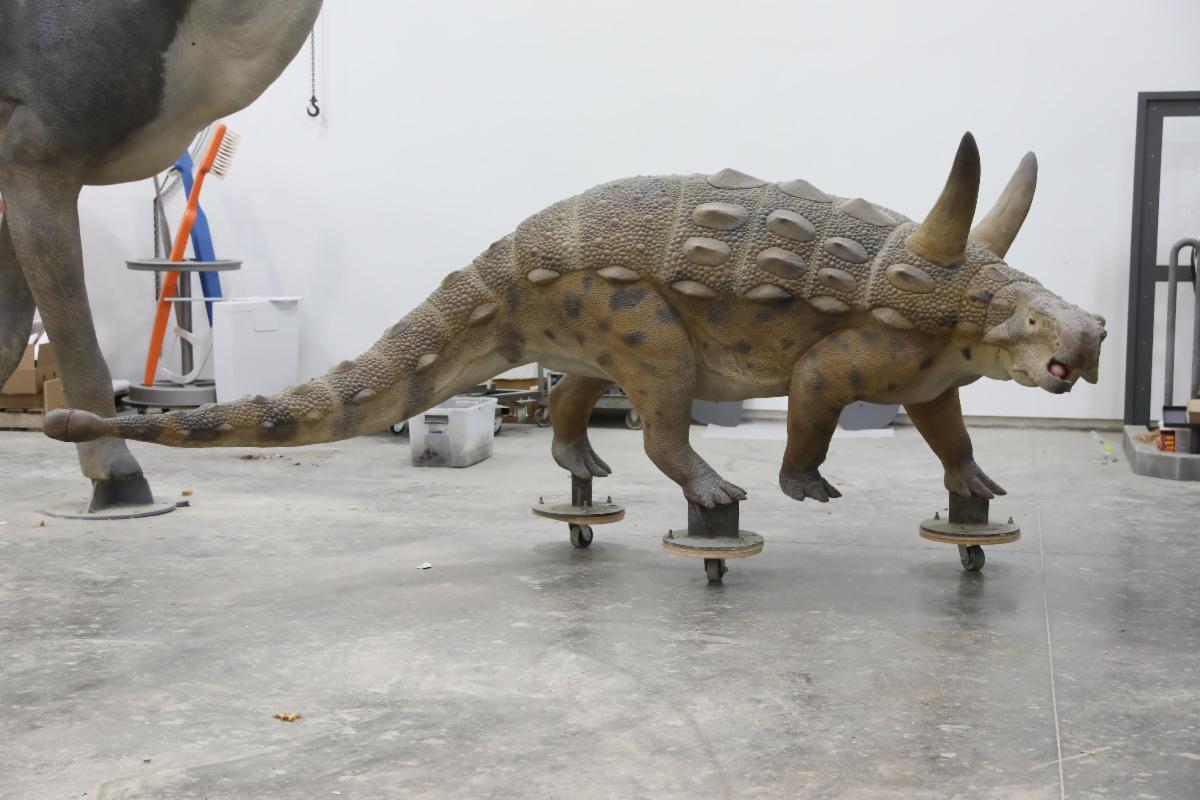
We know that dinosaurs are one of the top subjects that interest children, making it a perfect gateway to learn about science. So, we will install seven life-size animal sculptures, ranging in size from a tern-sized bird to a 32-foot-long Hadrosaur to help kids imagine these animals in an ecosystem. There will be an Ankylosaur that kids can climb and get a sense of scale. Children can also pretend to be paleontologists as they dig for fossils in the fossil dig.


We will have lots of fossil replicas to touch, such as dinosaur bones, teeth, and skin textures. To further enhance access for our visitors with vision loss, we partnered with the Lighthouse for the Blind and Visually Impaired to make some graphics tactile with braille. All labels will have audio versions in English and Spanish. We will also have a braille and large-print label guide available to borrow. 


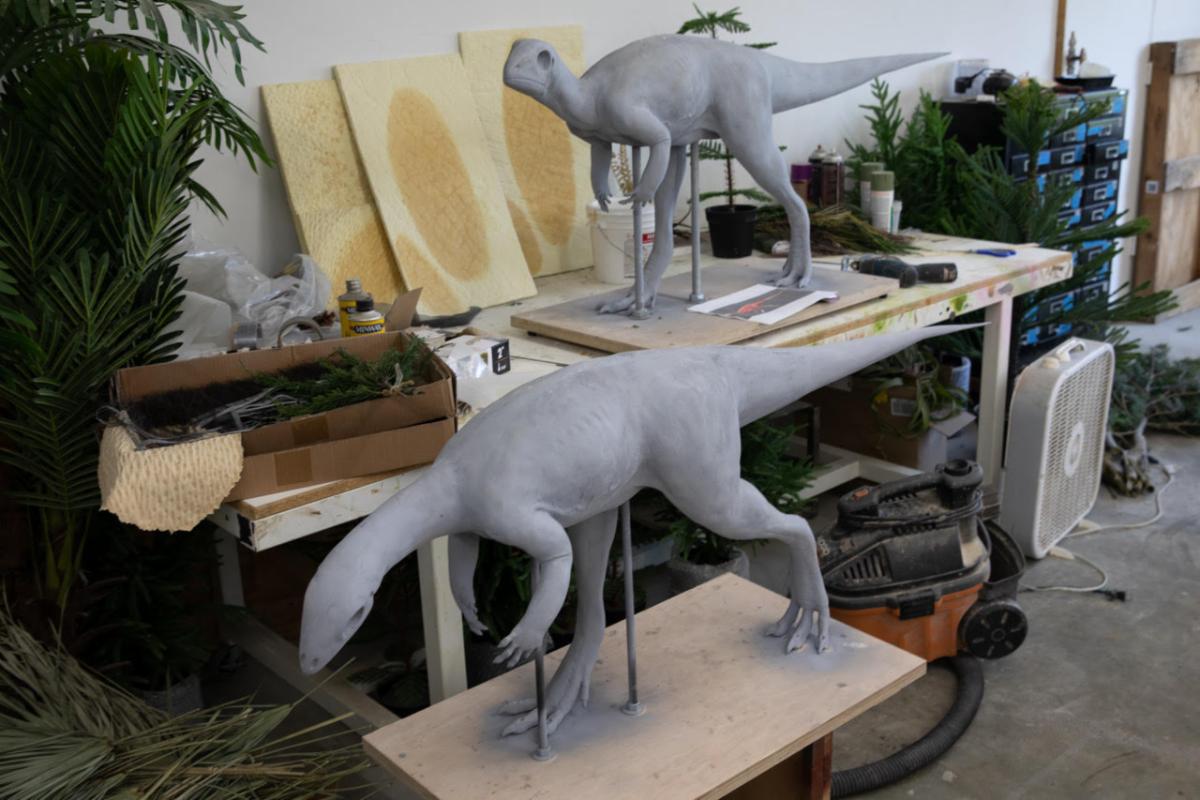
We consulted with three scientific advisors– Kevin C. Boyce, Richard Hilton, and Ken Kirkland– who assisted with research and content and label reviews to ensure accuracy. Based on the fossil record and scientific research, we know that all of the featured animals once lived in California. According to our advisors, the life-size sculptures, which were custom-created for our exhibition, will be the most accurate on display anywhere. This is an invaluable experience for our visitors and the larger scientific community.


I can’t wait to see children in the exhibit with their families or on school field trip! Seeing their eyes light up and their curiosity stoked is always the biggest reward for all of the hard work that goes into new exhibits.

Photo of two life-size dinosaur sculptures in progress.

Photo of the climbable Ankylosaur.

Can you tell us more about the fossil dig?


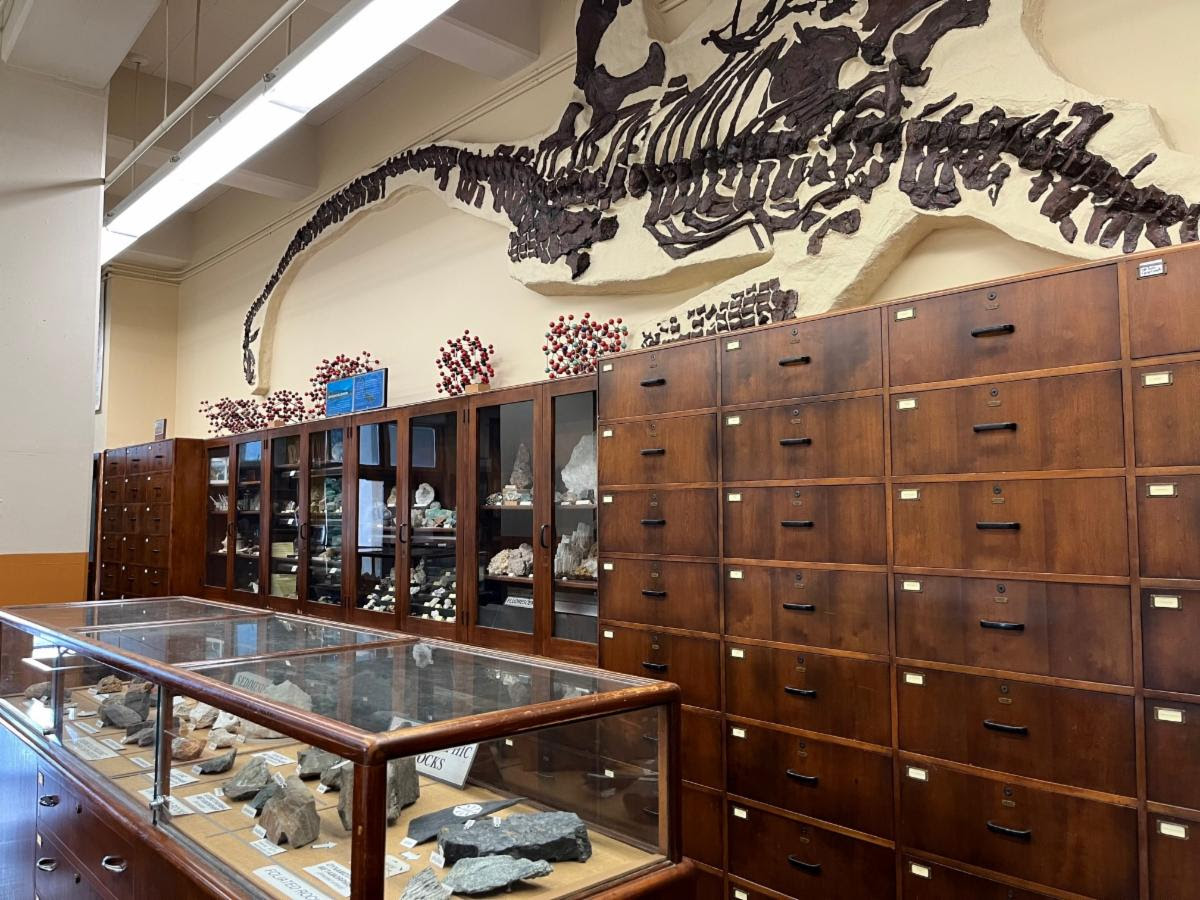
The fossil dig will be a cornerstone of the new exhibit. In the dig, visitors will be able to unearth a fossil replica of a Plesiosaur, a huge sea-dwelling reptile with a long neck and flippers. Plesiosaurs lived at the same time as dinosaurs more than 66 million years ago. The most complete Plesiosaur skeleton ever excavated was found in California, near Fresno. The specific species in our dig will be a Hydrotherosaurus alexandrae, which was named after avid fossil collector and museum supporter Annie Alexander. A cast of the skeleton is currently on display at City College of San Francisco. We digitally scanned this cast in order to create a copy for our fossil dig. The dig will have both a wheelchair transfer station and a wheelchair-accessible fossil dig table to accommodate a variety of guests.

Photo of the Hydrotherosaurus alexandrae hanging on a wall at City College of San Francisco.

How do you create and test the new exhibits?


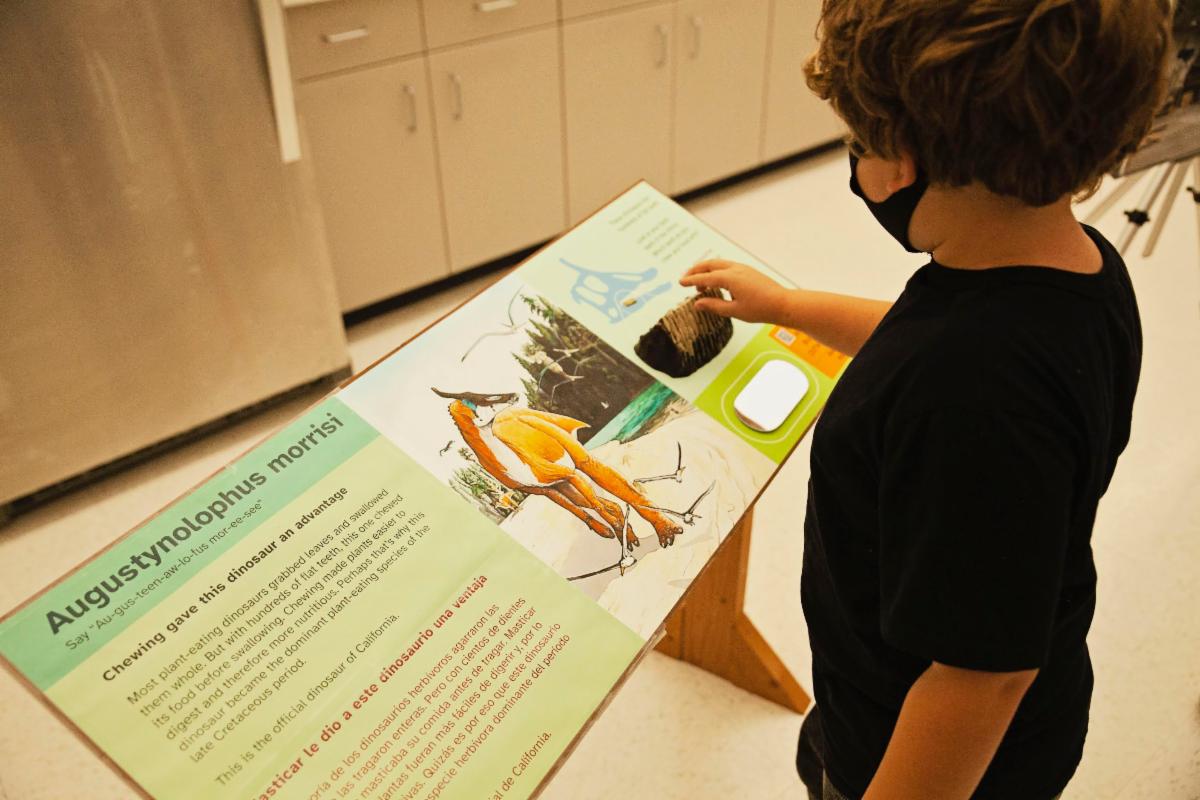
Our exhibits staff builds prototypes of new exhibits in our workshop. We test them with visitors to ensure they understand how to operate them and the concepts presented. We then make changes based on their feedback. We also consult with our Accessibility Advisory Team and scientific advisors and make additional improvements. Our accessibility advisors are disability experts, parents, and people with disabilities, and they provide excellent accessibility guidance. For example, our advisors helped us to understand best practices for adding American Sign Language (ASL) interpretation to our three exhibit animations and to make them accessible for visitors with vision loss. Feedback improves our exhibits and saves money in the long run by ensuring we build an exhibit well the first time.

Photo of a young visitor interacting with an exhibit prototype.

Can you share more about the animations?


We knew that key content, such as how something becomes a fossil, evolution, and dinosaur extinction were tough topics to convey through hands-on exhibits. Instead we opted for a child-friendly storytelling technique: animation. These short videos were developed with a professional writer and animator. During development, we sought out feedback from children to make sure they could understand these complex topics. We felt it was important for the main character to be a child who shares how she came to understand these new ideas. We recruited talent locally by partnering with the Palo Alto Children’s Theatre, Kennedy Middle School, and California School for the Deaf. All three children brought different personalities to the animations, and we’re hoping this inspires interest in science in our young visitors. Our animations will have open captioning and be available in English, Spanish, and ASL. The California Dinosaur Garden uses hands-on experiences, storytelling, and the natural world in order to engage visitors of all ages.

Interested in learning more about the California Dinosaur Garden? Read our Exhibit Preview from last year. Thank you to our generous supporters for making this exhibit a reality.

Friends of the Palo Alto Junior Museum & Zoo

info@friendsjmz.org | www.friendsjmz.org

DONATE NOW

Connect with us

Facebook  Instagram