|
|
BAES Teaching and Learning News Volume 4: Issue 2 March 2017
|
|
|
A Series on Building Self-Efficacy
in the
Virtual Classroom
|
|
|
Message From The Director of Education
|
|
Building Self-Efficacy in the
Virtual Classroom
Dr. Newton Miller, Director of Teacher Education
Introduction
For the past two years in Ashford University’s College of Education, there has been a centered theme in the professional development around keywords/ideas like “empathy”, “our why”, “learners from poverty backgrounds”, and “mindset”. All of these topics are powerful and directly impact an online instructors’ ability to better serve their students. It follows that as online enrollment increases in private and public universities across the country, (Allen and Seaman, 2013), innovative practices are needed to improve quality of instruction. Thus, to simplify things, all of the fabulous topics which have been explored in the College of Education, point directly to the ability of an effective online instructor to build their students' self-efficacy in the virtual classroom experience.
Educators often side-step the reality that only a majority of students encountered in any online or face-to-face classroom, are the “ideal student” (Varvel, 2011). Thus, a challenge that online instructors, in particular face, is to develop the skills of “non-ideal students” while establishing a diverse learning environment that is engaging, rigorous, and accommodating for the multi-levels of students enrolled in the course.
Six Successful Traits
There are six traits that have been deemed common to successful online students (Varvel, 2011).
- Time management skills
- Discipline and motivation
- Synergy in an online learning community
- Communication skills
- Technological competence
- Access to technology
Since these six traits are known to be common in successful students, it follows that instructors should build course rooms and conduct their own behaviors within those course rooms such that they model, teach, encourage, and limit the need of self-mastery of these traits for “non-ideal students”. This can be very tricky for an online instructor to predict, plan for, and accomplish.
What's Good For One Is Not Always Good For All
Making online course rooms more interactive by integrating timely and responsive feedback, getting creative with discussion boards, maximizing engagement of non-task interactions, like study groups and chats, using multiple communication tools to stay connected, and having specific plans and activities to match those tools are all fabulous strategies (Peterson, 2016). However, what happens when courses are filled with nontraditional students, students influenced by poverty, and beginners in an online modality? Those integration strategies, as powerful as they are, can be daunting, offer new challenges, make success seem out of reach, and possibly lower the sense of efficacy nontraditional students possess as compared to students found in a traditional face-to-face environment (Hauser, Paul and Bradley, 2012).
What Affects Self-Efficacy
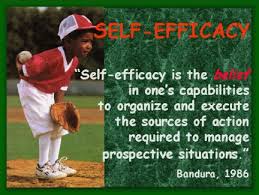
Albert Bandura (1997) identifies four major factors that affect the self-efficacy of nontraditional students’ in the classroom: 1) sense of mastery, 2) vicarious experience, 3) social persuasion, 4) physiological factors. These titles may sound difficult and elusive but there are some very simple strategies that today’s online instructors can implement into their own behaviors within the classroom such that they positively affect self-efficacy of the nontraditional students. This in turn will help those students be more successful in mastering the content being taught.
Sense of Mastery
Success begets success, so online instructors should seek to create an opportunity for a successful experience for all of their students as early as possible in the course. Find something that can be genuinely praised to provide positive feedback to create an initial feeling of success. Focusing on what is done correctly before giving any critical feedback can create a safe atmosphere where students begin to be efficacious about their ability to master the content (Boettcher 2013). Let’s face it, most nontraditional students enter their course afraid, and not sure that they will do well. If the instructor minimizes the challenge that they are about to face by reducing the vocabulary and explanation of the content to a common and comfortable colloquialism, the nontraditional student will be much more willing to stretch themselves and participate more readily in the course (Payne, 2003).
Vicarious Experiences
In the face-to-face classroom, the natural tendency of a student is to compare themselves to their classmates, and create relationships that are a natural grouping of students who feel like they are similar, academically, socially, and emotionally. This is difficult to do in the online classroom because students are not in the same physical location and they can’t see each other and interpret verbal and nonverbal behaviors. When nontraditional students are forced to stand alone they cannot capitalize on the phenomenon that there is “strength in numbers” (Payne, 2013). As a result, they are likely to second-guess themselves and create a mindset about the course that is more negative and critical than it needs to be. Thus, it is up to the instructor to find ways to simulate the vicarious experience nontraditional students need to be successful.
One way this can be done is to encourage students to view positive feedback that instructors have provided to their classmates. Pointing students to their classmates allows them to identify with the thoughts their classmates have shared and the instructor’s approval of those thoughts. In essence, nontraditional students begin to see how alike they are in their thinking. Then the connection is made about the thought process of what is expected from the instructor.
Another strategy to create vicarious experience in the course room is to share, anonymously of course, comments that students from previous classes have made about the course as new students are preparing to begin the course (Vilkas and McCabe, 2014). For example, an instructor can post a previous student’s comment that states, “When I first started this course. I didn’t know anything about action research, and I was terrified. However, the instructor made everything easy and I really enjoyed the experience.” Again, this provides some connection of the instructor’s present students to previous students, by showing that thoughts and concerns about the course are similar and therefore normal. Most importantly, that they can have a successful ending.
Social Persuasion
According to the research conducted by Nagel, Blignaut, & Cronje (2009), a sense of community can be established through the discussion boards by ensuring students are producing engaging discussions that are of a high quality and exhibit higher order thinking. Additionally, classmates should be responding to those high quality discussion posts by encouraging the furtherance of critical thinking by their classmates.
For nontraditional students, this task could cause some anxiety and attack their sense of self-efficacy. The easiest way to counteract that issue and to encourage a sense of community is for the instructor to model the desired behavior by responding to as many discussion posts as possible and publicly commenting to students with a focused and deliberate praise, redirecting thinking, and asking questions that encourages higher order thinking and real-world application (Vilkas and McCabe, 2014). To put the icing on the cake, evaluative feedback to personal communications such as phone calls, text messages and emails also make nontraditional students feel socially competent and persuades them to connect more to the community of learners in the virtual course room (Dinther, Dochy & Segers, 2011).
Physiological Factors
In a face-to-face classroom it is easy to see whether students are experiencing nervousness or anxiety. In an online classroom detecting these emotions is “virtually” impossible until it is too late and a student has fallen so far behind they are in danger of failing the course. Therefore, online instructors must take a proactive approach in decreasing the fears, stress and anxiety that non-traditional students may be dealing with.
There are many simple ways to be proactive and counteract how physiological factors can damage the self-efficacy of a nontraditional student. The easy and most logical method is to create a sense of rapport on day one of the course. One strategy to establish that sense of rapport could include instructors creating a video introducing themselves. This video should be recorded with a very relaxed and inviting tone. This sends a message to the student that the instructor is a person who enjoys what they do and wants to enjoy interacting with them, on their level, during the course (i.e. come on, let’s get this party started). Instructors can share things that they, have to do to be successful. This means the online instructor must become vulnerable to her or his students and admit to shortcomings and challenges, and share the strategies and accommodations to which they hold themselves in order to overcome any personal pitfalls. When online instructors are transparent with their students, it is one of the most powerful ways to empathize and demonstrate that they care (Hauser, Paul & Bradley, 2012). The instructor’s selfless example is the perfect stimulant that promotes positive growth of a students’ overall sense of self-efficacy.
Instructors should provide clear instructions for assignments that warn students of possible gray areas where they may make a wrong turn. Sharing with present students questions that past students have asked about assignments and tasks in the classroom helps to eliminate anxiety and increase self-efficacy. Instructors should also provide examples and templates to spark the thought process of their nontraditional students and provide visuals of what exemplar student work will looks like.
A very controversial strategy that both Boettcher (2013) and Ragan (2012) imply in their work is for online instructors to make students aware that they understand that “life happens” and they are willing to be flexible with deadlines, due dates and will provide formative feedback that encourages students to repair and resubmit assignments. When the online instructor is proactive in informing non-tradition students that they already have plan for the unplanned and that plan involves understanding the demands on the students’ life, anxiety is relaxed and self-efficacy grows.
These are just a few ways online instructors can adjust their behaviors to create an environment to nurture the growth of self-efficacy of the nontraditional students they serve. There are undoubtedly an infinite number of ways to accomplish the same goal. However, they all seem to lie in an instructor’s willingness to become self-efficacious about their ability to differentiate instruction for all of the students that they serve. Providing students with multiple opportunities and formats for learning, including videos, project choices, and strategies that help engage and encourage learning for all levels and preferences not only encourages engagement in the online classroom, it is the building block of self-efficacy.
References:
Allen, I.E. & Seaman, J. (2011). Going the distance: Online education in the United States, 2011. Babson Survey Research Group, Retrieved from
http://www.babson.edu/Academics/centers/blank-center/global-research/Documents/going-the-distance.pdf
Bandura, A. (1997). Self-efficacy: the exercise of control. New York: W.H. Freeman and Company.
Dinther, M., Dochy, F., & Segers, M. (2011). Factors affecting students’ self-efficacy in higher education.
Educational Research Review, 6, 95-108.
Hauser, R., Paul, R., Bradley, J., & Jeffrey, L. (2012). Computer self-efficacy, anxiety, and learning in online versus face to face medium.
Journal Of Information Technology Education, 11, 141-154.
Nagel, L., Blignaut, A. S., & Cronje, J. C. (2009). Read-only participants: a case for student communication in online classes.
Interactive Learning Environments, 17(1), 37-51.
|
|
|
Editor-In- Chief Dr. Angela Dallas
P
lease send newsletter ideas, articles, comments, and suggestions to angela.seaydallas@ashford.edu. Make sure to submit any noteworthy events and activities. We want to celebrate you!
|
|
|
QUOTE FOR THE MONTH THE SUCCESS MINDSET DECLARATION
|
|
|
"EXCUSES ARE TOOLS OF INCOMPETENCE USED TO BUILD MONUMENTS OF NOTHINGNESS ."
Unknown
|
|
|
I am a successful individual.
I am wonderful, amazing, and magnificent.
I always show up strong and win.
I have the victory and I am expecting greater.
Favor shines upon me.
I am MAXIMIZING my gifts, my talents, my time, and my resources.
I am a magnet for success.
Joyce S. Agee, The Income Maximizer
|
|
|
BLOG FROM THE FIELD
SETTING THE STAGE FOR SUCCESS: HELPING STUDENTS SUCCEED
|
|
Mrs. Seawright, 25 years of Service
|
|
When Mrs. Seawright thinks about classroom management, her primary belief is providing structure. She believes that students generally require a quiet classroom to think, yet she offers frequent opportunities for collaborative group work time. Clear expectations and consequences are paramount. Mrs. Seawright believes that she must follow through so that students believe that she means what she says and that she expects what she says she expects. However, laughter and compassion must be in the mix. Her pure enjoyment of kids rubs off on them as well!
Mrs. Seawright is a dedicated lifelong learner and collaborator at her campus. She is continually enrolled in opportunities for professional development. Her 5th grade team collaborates weekly, and Mrs. Seawright collaborates daily with her neighboring 5th grade teacher. It benefits her students and her tremendously! Mrs. Seawright states, “A well-respected fellow teacher will advise you at moments of stress and provide clarity when emotions are involved in a conflict. Shared ideas grow in creativity and relevance. We are all better teachers if we collaborate. Mutual support, shared responsibility, and inspiration are all results of good collaboration.”
The desire to learn about and implement technology should be a priority for every prospective teacher. In the Poway Unified School District, current trends in innovative teaching include: technology for everything, evidence-based opinions, and interactive science. Mrs. Seawright offers this sound advice for any student teacher preparing for a successful lesson: “WORK!” Research, brainstorming, and practice all help to ensure that pre-service teachers are prepared to engage their young learners.
Mrs. Seawright has taught successfully for 25 years and shows no signs of slowing down. She is a beloved teacher, highly-regarded by colleagues, administrators, parents, and most of all… her students. What is the secret to her longevity and what drives her to be her best every day? She believes that she is doing something worthwhile. Furthermore, loving kids makes her love what she does for a living!
Continued success, Mrs. Seawright!
|
|
|
Changing Teaching Strategies with the Signs of the Times
|
|
|
English Language Learners: No Child Left Behind & Every Student Suceedd
Dr. Holly Wilson, Assistant Professor
|
|
Introduction
The United States is becoming increasingly diverse, and in less than 30 years is expected to become a majority-minority nation Sargrad, (2016). One consequence of this is an ever-increasing number of English language learners (ELLs), students who have a language other than English as their first language and are in need of English language instruction. In 1990, one in 20 public school students was an ELL, while today, one in nine are ELLs, and nearly three-quarters of all public schools enroll at least one ELL. This means that most teachers can expect to have ELLs in their classrooms Sargrad, (2016).
This greater diversity in our schools provides a wonderful opportunity to help all students become global citizens and prepare them for living in the 21st century Sargrad, (2016). Having students in the same classroom from diverse backgrounds has the potential for developing everyone’s (including the teacher’s) cultural competence, which will enable them to interact more positively with people from different backgrounds in and out of the classroom. However, schools still need to adjust to these changing demographics to serve students with very different needs more effectively Sargrad, (2016).
ELLs face the dual challenge of having to learn both English and content in English simultaneously. If students do not receive the appropriate instruction, they can become long-term English learners (LTELs). As described by Menken & Kleyn (2009), LTELs are ELLs who have attended U.S. schools for seven or more years, but who are lagging behind in their content learning because they perform below grade level in reading and writing. They generally receive poor grades and grade retention is commonplace, which puts them at high risk of dropping out. Unfortunately, many ELLs who start learning English in the lower grades struggle to make progress, and between 25% and 50% of them become LTELs (Sargrad, 2016). As a result, it is important to improve the quality of instruction provided for ELLs.
After three failed attempts since 2007 to replace No Child Left Behind (NCLB), Congress passed the Every Student Succeeds Act and President Obama signed it on December 10, 2015 Martin & Sargrad, (2015). Every Student Succeeds can be seen as a modification of NCLB in reaction to the fact that NCLB focuses heavily on the testing of students and accountability for their improved achievement, but does not provide for the support for students who are not meeting the required levels of achievement. NCLB also led to too much testing during class time, and forced schools to used reforms that did not produce the desired results President Obama as cited in Korte, (2015). The Every Student Succeeds Act provides for that support, so it now looks hopeful that ELLs will receive better instruction and therefore, may be able to avoid becoming LTELs (Sargrad, 2016).
No Child Left Behind
The No Child Left Behind Act uses the term “limited English proficient” (LEP) to describe students aged three to twenty-one who are enrolled or preparing to enroll in an elementary or secondary school, and whose lack of English language skills may affect their ability to succeed in school or perform well on state assessments (Center for Public Education, 2007). However, today the term English language learner is used to describe this population to emphasize learning rather than the implication that non-native English speakers are somehow deficient (NCATE, n.d.), and thus will be used in the rest of this article.
NCLB holds that those states using federal funds be accountable for student academic achievement. It required states to develop a set of yearly student academic assessments that focuses at a minimum on reading/language arts, mathematics, and science. The reporting of the results of these assessments is referred to as “adequate yearly progress” (AYP). NCLB also requires that AYP be reported separately for four subgroups of students: 1) economically disadvantaged, student from major racial and ethnic groups, students with disabilities, and students with limited English proficiency (LEP).
Under NCLB, several problems emerged from the way that these assessments were administered, reported, and used Abedi,(2004). The principle problem is that while NCLB’s intentions were to improve the performance of the four subgroups of students named above, it unintentionally placed undue test performance pressure on schools with large numbers of English Learners with negative consequences. That is, instead of providing schools with more funding to help these students, they could be denied funding if their test scores did not meet the criteria established by NCLB.
One problem with assessing and interpreting the data related to ELLs was the definition of students labeled as “LEP” in NCLB. This is because ELLs are a highly heterogeneous and complex group of students, with diverse educational needs, backgrounds, languages, and goals (NCATE, n.d.). Furthermore, the operational definition of ELL varies considerably across schools, districts, and states. Since students labeled as ELL differ substantially, the group is not well-defined, which affects the validity of the assessments given them (Abedi, 2004).
Assessments were also not valid because ELLs were not able to accurately demonstrate their content knowledge due to their lack of English language skills (Abedi, 2004). That is, their lack of understanding of test items meant that they may have left test items blank or have just been guessing what the answers were, rendering the scores invalid. ELLs are only able to demonstrate real improvement in content knowledge when their English language level is high, which meant that schools with larger numbers of ELLs were likely to be cited as “in need of improvement” than schools with fewer ELLs under NCLB (Abedi).
Nevertheless, despite its problems, Sargrad (2016) believes that NCLB took a major step forward for ELLs by dis-aggregating achievement data and holding schools accountable for supporting English language learners. On the other hand, Sargrad also believes that by creating a separate accountability systems for English language learners, it created confusion and sent the message that helping these students learn English was a secondary concern.
Every Student Succeeds
Under the Every Student Succeeds Act, all schools have to demonstrate improvement in the English language proficiency of their ELLs. However, instead of having funding taken away, schools with ELLs will receive additional funding. As Sargrad (2016) comments, this action signals that providing appropriate instruction for ELLs must be a priority. The amount currently allotted by the U.S. Department of Education provides $737 million for these programs, but under the Every Student Succeeds Act, this amount could increase by more than 20% by 2020. Every Student Succeeds also sets up a framework that has a much better balance between accountability and flexibility compared to NCLB, which has a one-size-fits-all approach that looks at one test on one day Martin & Sargrad, (2015). Instead, the states will look at multiple measures beyond test scores and graduation rates.
Nevertheless, there are still challenges that states and districts face to comply with the new law Sargrad, (2016). For one, only a few states (Arizona, Colorado, Georgia, and Illinois) include English language acquisition in their accountability systems. The rest will have to make significant changes to incorporate English language proficiency. Furthermore, the diversity of ELLs needs to be recognized and taken in to consideration, and all teachers need to receive better training and support to work with ELLs.
Thus, Every Student Succeeds has the promise of providing more resources and support for ELLs, and a renewed focus on helping them succeed Sargrad, (2016). However, as Sargrad also points out, accountability alone will not bring the necessary improvements, particularly when there are widespread shortages of English as a Second Language (ESL) teachers and regular classroom teachers with lack high-quality professional development. This means that the effects that Every Student Succeeds Act has on ELLs will depend on how individual states spend the increased funding that they will be receiving.
References
Abedi, J. (2004). The No Child Left Behind Act and English language learners: Assessment and accountability issues. Educational Researcher, 33 (1). Retrieved from: http://www.ode.state.or.us/teachlearn/conferencematerials/sped/abedi_article_2.pdf.
Center for Public Education (2007). What NCLB says about ELL students. Retrieved from: http://www.centerforpubliceducation.org/Main-Menu/Instruction/What-research-says-about-English-language-learners-At-a-glance/What-NCLB-says-about-ELL-students.html.
Korte, G. (2015). The Every Student Succeeds Act vs. No Child Left Behind: What’s changed? USA Today. Retrieved from: http://www.usatoday.com/story/news/politics/2015/12/10/every-student-succeeds-act-vs-no-child-left-behind-whats-changed/77088780/.
Martin, C. & Sargrad, S. (2015). Leaving behind No Child Left Behind. U.S. News. Retrieved from: https://www.usnews.com/opinion/knowledge-bank/2015/12/03/every-student-succeeds-act-is-better-than-no-child-left-behind.
Menken, I., & Kleyn, T. (2009). The difficult road for long-term English learners. Supporting English Language Learners, 66(7). Retrieved from: http://www.ascd.org/publications/educational_leadership/apr09/vol66/num07/The_Difficult_Road_for_Long-Term_English_Learners.aspx.
NCATE (n.d.) English language learners. [Policy Brief]. Retrieved from: http://www.ncte.org/library/NCTEFiles/Resources/PolicyResearch/ELLResearchBrief.pdf.
Sargrad, S. (2016). Hope for English-language learners. U. S. News. Retrieved from: https://www.usnews.com/opinion/knowledge-bank/articles/2016-01-13/every-student-succeeds-act-brings-new-hope-for-english-language-learners
|
|
|
Associate Faculty Spotlight
|
|
Sandra Brueck
is the
Associate Faculty Spotlight of the Month.
Thank you for sharing your expertise...We APPRECIATE all that you do for our students!!!
|
|
|
|
|
Sandra has worked in the field of education for over thirty years. She has had many experiences that add to her knowledge in the field. For the first 13 years, she taught special education to learning disabled students. During this time, she studied and earned her master’s degree in reading so she could better assist her students reading skills. Her next experience was to serve as a teacher consultant in learning disabilities for 14 years. In this role, she worked with educators and students. Her last experience in the school system was as an administrator in special education. She led the staff in learning more about teaching students to read, and managed a program for students with significant disabilities.
Sandra is currently working for the Michigan Department of Education as a special education consultant. She is fortunate enough to be able to help families and educators get their questions answered related to special education and investigate individual complaints against school districts.
Sandra earned her Bachelor of Science and Master of Arts degrees from Western Michigan University. She also completed a 36-credit hour program in school and special education administration at Grand Valley State University.
In her spare time, Sandra enjoys reading thriller novels written by authors such as Douglas Preston, Lincoln Childs, Stephen King, and Dean Koontz. In the summers Sandra and her husband enjoy being outdoors as much as possible and camping with friends. She and her husband have one daughter who is a senior in college.
At the higher education level, Sandra has taught for several online and brick-and-mortar universities in the areas of literacy, writing, and reading. She is excited to be a new member of the Ashford family and has been impressed with the students and the faculty.
|
|
Rise by Lifting Others (No Hot Air Required!)
Everyone wants to get ahead in this world, but it's hard when people go about it in rude, selfish and thoughtless ways. The fact is, the real rise to the top starts by just letting go of the rat race and concentrating on lifting and inspiring others. When we stop focusing on ourselves, we find extraordinary joy in watching others' dreams take flight. In the process, they become the 'wind beneath our wings,' and we effortlessly float to the top with them. In fact, we often find ourselves soaring higher than we ever dreamed possible. The ride is a blast, and the view is amazing. So inspire, uplift and empower others. It's the secret to true and lasting greatness.
Suzy Toronto
|
|
Stay Focused
Think Positive
Renew Daily
Improve Daily
Victory Fuel
Elevate
2 Agree 0 Excuses 1 Idea 7 Gifts/Talents
Joyce. S. Agee, The Income Maximizer
|
|
|
The Bachelor of Arts in Education Studies degree builds a strong theoretical foundation that supports teaching and learning and develops your awareness of instructional skills including communication, group behavior, and human development.
The full time faculty in the BAES programs and the courses that they lead are:
Dr. Carl Beyer - Research focus and specialty is cultural diversity
Courses Lead: EDU 372 and EDU 382
Deborah Carpenter - Research focus and specialty in teacher preparation and educator support
Courses Lead: EDU 304
Dr. Angela Dallas - Research focus and specialty in serving at-risk adult learners and family engagement in preparing learners in under-served populations
Courses Lead: EDU 321 and EDU 371
Joen Larson - Research focus and specialty in teacher preparation and Education Associations
Courses Lead: EDU 324 and EDU 498
Autumn Leal - Research focus and specialty is assessment and support services
Dr. Newton Miller - Research focus and specialty is serving at-risk adult learners and K-12 urban education.
Courses Lead: EDU 352 and EDU 381
Dr. Sarah Miller - Research focus and specialty in curriculum development and special education
Whether you are a student or an associate faculty member, every full-time faculty lead is available at your request to discuss issues that you may experience in your courses.
Please contact us with any concerns, questions or ideas. It is our pleasure to serve you!
|
|
|
Student Spotlight of the Month
|
|
Sandra F. Glenn is the youngest of three children born to Ms. Josephine H. Murray and Rev. E. W. Murray, Sr., and resides in Montgomery, Alabama. Sandra was educated in the Montgomery Public Schools and received her high school diploma from the Jefferson Davis High School in 1988. To further her education, Sandra received an Associate Degree in Applied Technology, Strenography, in August 1991 from the H. Councill Trenholm State Technical College. This degree paved the way for Sandra to gain employment with the Department of the Air Force, where she is currently employed since 1990. Then, Sandra received a Bachelor of Science Degree in Management Human Resources, Faulkner University, May 2015, and a Bachelor of Arts Degree in Education and Public Policy, Ashford University, February 2016. Sandra is a member of the National Organization of Blacks In Government (BIG), Inc., where she serves as National Secretary for a second two-year term; please visit www.bignet.org for more information on BIG.
Since Sandra was a child, she has always wanted to be a teacher; she would teach her dolls and stuff animals daily but chose her current career path as a reliable resource to support her family. After receiving her undergraduate degree from Ashford, Sandra enrolled in the Master of Arts Education Degree Program with a concentration in Curriculum and Instruction and has faced several personal challenges but continues to pursue her dream to receive her graduate degree. Sandra has ambitions to pursue a terminal degree in Educational Leadership with a specialization in Curriculum and Instruction after her graduate degree. Sandra’s professional goals are to develop policies for educational and career programs for the Air Force and to educate students on all grade levels for a brighter academic future.
“Ashford University has been a great educational resource to me, which equips me with knowledge on pertinent educational issues in our society. I have learned the importance of developing educational policies and how such policies affect teachers, students, parents, and the community. It is crucial to narrow the academic gap in American education and restore America’s top ranking educational order in the world; thereby, society must be committed to foster quality and diverse education among all American students. As an Ashford student, I have gained more confidence in myself through learning. My mother says, “Once you learn something, no one can rob you of your knowledge; use your knowledge to make a difference and not be a hindrance.” Every day, I strive to learn something new and to use that knowledge for enhancement and improvement of my life and those around me every day. Because it takes a village to improve education, I am committed to be that beacon of hope to raise the standards and encourage our students to learn more and be more. I want everyone to believe in self without any doubts and set his or her sight on greater heights to achieve. Always see yourself in the future and strive to be your best.”
Of Sandra’s accomplishments, she considers the greatest to be the mother of her two adult sons, Chad and Jayson. Sandra is definitely proud of Chad and Jayson and their many achievements.
|
|
|
9 Ways to Stop Procrastinating and Get Things Done
1. Set your wake-up time a half hour earlier tomorrow.
2. Memorize and repeat this motto: "Action today, Not tomorrow."
3. When people tell you their problems, give solution-oriented feedback.
4. Finish what you start.
5. Be constructively helpful instead of unhelpfully critical.
6. Make a list of five necessary but unpleasant projects you've been putting off, with a completion date for each project.
7. Seek and converse with a successful role model.
8. Understand that fear, as an acronym, is False Evidence Appearing Real and that luck could mean Laboring Under Correct Knowledge.
9. Accept problems as inevitable off shots of change and progress.
Dennis Waitley
www.success.com
|
|
1. They set goals and follow through.
2. They are consistent.
3. They make the best of every situation.
4. They take responsibility for their lives.
5. The form valuable relationships.
6. They make unusual sacrifices.
7
. They never give up.
8. They take risks.
9. They cherish hard work & discipline.
10. They create value.
Abayomi Jegede
www.lifehack.org
|
|
|
As an undergraduate student, I have experienced a positive, caring, and supportive culture at Ashford. Specifically, for the past few courses. I am enjoying the ride. I will say to you, you must plan. If you fail to plan, you plan to fail. Planning is important to your success as a college students. You also want to make sure that you communicate with your instructors, ask questions if you do not clearly understand the assignment tasks, and most of all, use your time wisely. Work hard, even if you get behind, do not give up. Keep working! You will experience success.
Shahnaz Dirky
As a college student with several other responsibilities, I would advise new students to talk to their family, to let them know that you will need to devote time to complete your weekly assignments. Family support is extremely important to your success. Your instructors will provide the support and assistance you will need during and sometimes after the course is over. Do your best and you will be excited about the reward of successfully completing one course at a time. I am enjoying it, as I strive to complete my program of student. You will to. The possibilities are endless.
Sarah Hughes
|
|
|
Certification and Licensure Terms and Conditions: This program is not CAEP*, TEAC or NCATE accredited, which is a requirement for certification in some states, and successful completion of the Bachelor of Arts in Education Studies program by itself does not lead to certification or licensure in any state. Other factors, such as a student’s criminal history, may prevent an applicant from obtaining licensure or employment in this field of study. All prospective students are advised to visit the Education Resource Organizations Directory (EROD) and to contact the licensing body of the state where they are licensed or intend to obtain licensure to verify that these courses qualify for teacher certification, endorsement, and/or salary benefits in that state prior to enrolling. Prospective students are also advised to regularly review the state’s policies and procedures relating to licensure as those policies are subject to change.
|
|
|
|
|
|
|
|