|
The Corresponder
The Newsletter of the Committees of Correspondence for Democracy and Socialism
| |
|
Purple Zones: Local areas that were reliably Democratic in the past but now waver on the edge
August 26th
8pm EDT
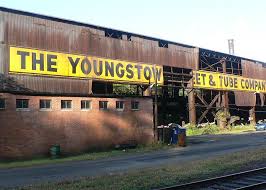
Carl Davidson will discuss Beaver County, western PA, as the 'case in point' and the economic and social crisis behind this shift. We'll also discuss the
blue' and 'red' areas and the different tactics that might be used in each.
4th Monday Series presentation
Sponsored by the Socialist Education of Project of CCDS
Register at: https://us02web.zoom.us/meeting/register/tZUudOmhqDssHdxwCIKBxugq2z28WlLjR29k
| |
|
Why We Need Union Halls in Every Town
By Jared Abbott
reprinted from Jacobin
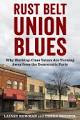
Lainey Newman and Theda Skocpol’s Rust Belt Union Blues makes a compelling case that left-wing success in the rust belt depends on reviving the presence and stature of unions — and the sense of social connection they offer — in local communities.
Review of Rust Belt Union Blues by Lainey Newman and Theda Skocpol (Columbia University Press, 2023).
Progressives have rightly sounded the alarm about the dire state of labor in the United States for decades. Today union density in the private sector stands at just 6 percent, down from a high of over 30 percent in the 1960s, and the labor movement exerts less influence in American politics than it has since the 1920s.
The effects of labor’s weakness are easy to predict: mass unionization went hand in hand with decreased income inequality and higher wages for workers and increased job security and working conditions, in addition to decreasing gender and racial economic disparities and encouraging pro-worker legislation like minimum wage standards and paid leave. Not surprisingly, then, American workers do not feel great, and many commentators correctly argue that the only cure is a large-scale revival of the labor movement.
Yet as Lainey Newman and Theda Skocpol argue in their new book Rust Belt Union Blues, even the daunting task of organizing new workers into unions on a mass scale to reverse decades of tragic decline is only half the battle. Unions not only need to add new members to their roles, but they also must be present in communities in a way that they haven’t been for a long time; they have to mean something in the daily experiences of workers and the communities where they live. Without this key second ingredient, workers will not look to unions anywhere beyond the narrow confines of the bargaining table, and unions’ historic role as an effective conveyor belt for connecting working-class communities to progressive politics will never be restored.
Since there is no other likely institutional force in American politics that can play a similar role, the bottom line of their story is that any future for majoritarian egalitarian politics rests on successfully embedding unions into the lives of people across the United States.
The Union Man and the Union Town
Newman and Skocpol set out to answer the question of why unions don’t resonate with people today like they once did, particularly in rust-belt communities like those in western Pennsylvania — the focus of their book — where unions (and the Democratic Party) were once a trusted, organic fixture of daily life, but are now largely absent and viewed with suspicion. Even among the people who are in unions, however, unions typically mean much less to their daily lives and their personal identities than was once the case.
Any future for majoritarian egalitarian politics rests on successfully embedding unions into the lives of people across the United States.
While many argue that the declining influence of unions in the rust belt can be attributed to the increasing importance of cultural conservatism in these communities, Newman and Skocpol argue, to the contrary, that there is little evidence working-class communities have become more conservative over the past several decades: they were culturally conservative in the 1960s, and they still are today. Instead, they argue, the reason why unions don’t resonate with people as much anymore in blue-collar professions is because unions have become disconnected from the ordinary lives of workers, even when workers are formally members of those unions.
In the heyday of rust-belt union towns during the 1960s and 1970s, unions were deeply embedded in the social, cultural, and political fabric of local communities. For one thing, being a “union man” carried deep meaning. Being a union man meant you were part of a broader community of solidarity and would always have your union brothers’ back through thick and thin. It meant having an awareness of how bad things were before unions came to town in the 1930s or 1940s — and therefore a visceral understanding of the importance of unions — and it meant occupational pride.
And being a union man did not stop at the factory gates: unions helped organize recreational leagues and community events. They were active in churches, schools, and politics. Unions were also connected to ethnic and fraternal groups, making them key organizations in communities. Union members “attended the same churches, their children attended the same schools, their stay-at-home wives exchanged recipes and baby-sitting favors, and they socialized together at neighborhood diners and bars.” Union halls were also a key site of community events in many towns. Union halls were a symbol of unions’ permanence in communities. Union practices also typically mirrored those of fraternal and ethnic associations in terms of the rituals, meeting styles, etc. employed, making unions seem natural in communities.
In turn, the deep well of good will and trust that unions built up in local communities translated into very real but subtle gains for progressive politics; there was simply a social expectation around voting for union candidates, reinforced through a dense web of union-related geographic, personal, and social ties. Yes, unions endorsed candidates, but direct political lobbying was not the main reason why people voted for union (almost always Democratic) candidates. To cap it off, people got most of their basic political information from union publications, so more progressive views on different topical issues of the day also had an organic means of dissemination throughout rust-belt communities.
The Fall
While far from idyllic — women and people of color were brought into the union fold only through sustained poking and prodding, and women were largely relegated to a subordinate status in public life — 1960s- and 1970s-era rust-belt America, according to Newman and Skocpol, nonetheless demonstrates how progressive institutions can play a fundamental role in the lives and communities of working people, and reap large political rewards in the process.
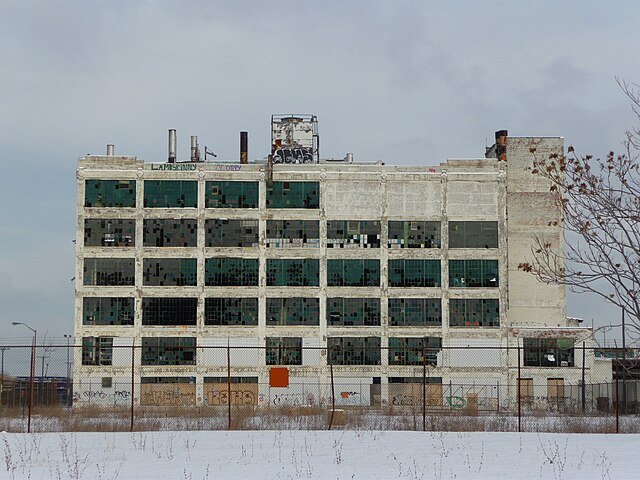
Yet this fragile ecosystem depended almost entirely on the postwar economic boom that fueled rapid growth in the steel mills of Allegheny, Beaver, and other western Pennsylvania counties. Once European and Japanese competition began ramping up in 1960s, and the neoliberal onslaught to roll back the New Deal started gaining steam by the late 1970s, the fate of US manufacturing jobs was largely sealed, and the union town began its inexorable decline.
Unions tried to stop the downfall of their industries, in some cases by trying to use eminent domain to takeover factories, but this failed. There were also broader attempts to create publicly controlled factories along the lines of the Tennessee Valley Authority (TVA), such as the “Steel Valley Authority” (SVA) and the “Tri-State Conference on Steel” (TCS). Though they generated a great deal of community support, these efforts were ultimately no match to the overwhelming opposition of employers.
Communities started to feel that unions simply couldn’t protect jobs and that it made more sense to take an individual rather than collective path. Workers focused more and more on just doing whatever they could to save their own jobs, and increased competition for scarcer jobs meant less solidarity and more weariness toward strikes.
Workers focused more and more on just doing whatever they could to save their own jobs, and increased competition for scarcer jobs meant less solidarity and more weariness toward strikes.
Workers’ declining faith in unions was exacerbated by the institutions’ declining presence in local communities. As unions reasonably sought to channel their rapidly diminishing resources into emergency political advocacy, union little league sponsorships ended, Labor Day parades were scaled back or canceled, local union publications were suspended, and union halls were shuttered or turned into food banks. As a result, unions’ presence in towns gradually diminished, and with it their relevance in the daily lives of working people. Even those few still in unions increasingly ignored (if they even listened to) their distant national union leaders.
The Void Is Filled
As unions took their leave from the rust-belt stage, a conservative trifecta of large employers, Evangelical Churches, and increasingly ubiquitous gun clubs stepped in to fill the void. Companies began to offer services and benefits to communities that unions once did, leading working people to identify more with the company than with unions. Gun clubs and Evangelical churches offered social and cultural outlets that unions once provided: socializing in communities now happens around gun clubs rather than unions. And just like unions in the past, gun clubs and Evangelical churches subtly disseminate a range of cultural and political ideas consistent with their worldview that are reinforced through a range of social networks. Conservative social values and political commitments made their way organically into the common sense of rust-belt communities in just the same way that progressive union values once did.
The upshot of this conservative filling of the void is that rust-belt communities today are more likely to understand their dissatisfaction through the lens of cultural resentment at coastal elites (“Rich Men North of Richmond”) than through a class lens, as they once would have done. Many workers who might have once voted Democratic thanks to their union commitments now say they’re voting for the GOP because the party better represents “who they are.” The result, in combination with a large exodus of young people from rust-belt communities, has been the increasing dominance of Republican politics in these areas and rejection of Democrats.
Bringing Union Halls Back to Main Street
Though this picture is bleak, for Newman and Skocpol all hope is not lost. As their analysis of how unions and later gun clubs and Evangelical churches help to shape the cultural terrain of rust-belt communities, it is not inevitable that rust-belt area workers will hold views incompatible with progressive politics; this depends a great deal on the broader social ecosystem in which they live.
The solution for Newman and Skocpol is surprisingly simple: unions need to do a better job of embedding in communities and connecting with members if they want to get back to the role they once played:
No matter how strapped for resources unions may be, high-level leaders need to realize that efforts to build and reinforce buy-in and community ties beyond as well as within workplaces are not an expendable luxury; such efforts are vital to the member solidarity that is a core ingredient of organized labor clout in the economy and politics. A shared sense of pride among existing union members is also import to new member recruitment; new members need to hear not only that unions collect dues but also that they offer a community of brothers and sisters who “have each other’s back” for contract negotiations and much more.
Unions (and progressive politicians) need to be present in these communities year-round, even in places where right now the politics look hopeless; this must be a long-term process of organization building, not a short-term process of vote maximization in the next election. For Newman and Skocpol there is no shortcut around this likely decades-long process of re-embedding, but the dividends for working people and American democracy make them feel it is worth the cost.
Unions need to do a better job of embedding in communities and connecting with members if they want to get back to the role they once played.
Nostalgia for an Unrecoverable Past?
Re-embedding unions in local communities on a mass scale is a very attractive idea that helpfully focuses our attention on the critical role played by deep social and cultural networks in shaping political attitudes and behaviors. Yet the compelling story Newman and Skocpol tell about the interlocking economic, social, political, and cultural factors that led to unions’ decline in rust-belt areas begs the question of why we should expect a turnaround along the lines they suggest.
There are no clear political-economic changes on the horizon that would provide the material foundation for an economic renaissance in these communities — despite important advances in the direction of industrial policy and investing in manufacturing jobs embodied by Biden-era legislation. Nor is it easy to imagine how anything like the mutually reinforcing ecosystem of social, political, and cultural organizations in midcentury rust-belt America could be replicated or even approximated today given the vastly different nature of work and the fragmented nature of social organizations that are no longer tied to place in the way they once were.
First, as Newman and Skocpol describe, the geographic distribution of workers has changed dramatically over the past four decades. On the one hand, workers must travel farther and farther to work and cannot maintain strong social ties at work even if they want to. Coworkers can’t socialize, because they don’t have time to just go out and get a beer after work (they may have to drive hours home, and, unlike in the mid-twentieth century, are likely to have more child-rearing responsibilities). This means that most workers today simply can’t develop the strong shared sense of identity that they could in the past. On the other hand, workers are much less likely to work at the same place as their neighbors (or really anyone in their immediate community), so that crucial mechanism that allowed unions to gain such a strong foothold in communities is no longer present.
What’s more, communities today are much more likely to be formed online, where forging deep and lasting social ties is difficult — if not impossible. In turn, the kinds of dense in-person associations Newman and Skocpol identify as key sites for reinforcing the role of unions in local communities — from ethnic societies to fraternal associations — no longer exist or are greatly diminished. All of this makes one wonder if Newman and Skocpol’s clarion call for a union rust-belt revival is more nostalgic than strategic.
The Road Ahead
That said, Newman and Skocpol are undeniably correct in their insistence that in the long-term a durable progressive working-class coalition in the United States depends not just on growing the ranks of labor but also on making unions a central feature in the lives and communities of working people. Newman and Skocpol offer the somewhat surprising case of building trade unions as a possible model.
Given that the trades always had to cover a large geographic area, they — unlike place-based industrial unions — had to constantly find ways to build connections between dispersed members. This has enabled building-trades unions to sustain themselves through the massive changes of the neoliberal era in a way that other unions could not.
If the rust-belt union revival is to succeed, even in part, it will likely take hybrid in-person and virtual forms, and mix place-based community organizing with creative approaches to maintaining long-distance solidarities. The road ahead is long and the path to success unclear, but Newman and Skocpol’s diagnosis of the causes and basic solution to the problem of working-class dealignment in the rust belt is right on the mark.
| |
|
Ira Grupper, Presente!
January 4, 1944 - July 23, 2024
Ira Grupper, a CCDS member, proud troublemaker and ungovernable character, left this world to rile up the next one. He was a jokester, champion of ordinary folk, checkers and Scrabble enthusiast, and garlic bagel gourmand (cream cheese, lox, and tomato, required).
Ira was born and raised in Brooklyn, New York. He dropped out of Brooklyn College to become a member of the Student Nonviolent Coordinating Committee (SNCC) and join the Civil Rights Movement in Atlanta, Georgia and Hattiesburg and Columbia, Mississippi. Those were the proudest days of his life and began his sixty years of advocacy work for civil rights, disability rights, and labor rights.
Ira wore his legal blindness as a badge of determination. And he delighted in boasting about his big mouth, which he used in jaw-on-the-floor inappropriate situations. But also, to stand up for people facing injustice.
He lived in Louisville, Kentucky and worked on the assembly line at the Philip Morris cigarette factory for decades, where he also served as a union shop steward. Ira spoke fluent Spanish, loved to travel, whistled and sang with abandon, and could recite dozens of poems he’d memorized. Self-taught and with experience as his degree, he spent part of his retirement teaching Civil Rights and Middle East Studies classes at Bellarmine University.
Ira is preceded in death by his parents, Harry and Selma, beloved daughter, Robin, aunts, uncles, cousins, and friends. He is survived by his son, David, daughter, Sarah (Mark), son, Daniel, brother, Lewis (Maria), cousin, Larry, beautiful nieces, and other cherished family members and friends.
The world is more than a smidge quieter without Ira’s Donald Duck impression, indecorous language, and boisterous room entrances. We love you, Daddy. Wherever you are, we know you’re shaking up the leaves, standing at the ready to make “good trouble.”
(Celebration of Life Saturday, August 17, 2024 at 11 o’clock. First Unitarian Church, 809 S. Fourth Street, Louisville, Kentucky 40203. In lieu of flowers, donations can be made to the Kentucky Alliance Against Racist and Political Repression, PO Box 1543, Louisville, KY 40201)
Listen to this interview with Ira
| |
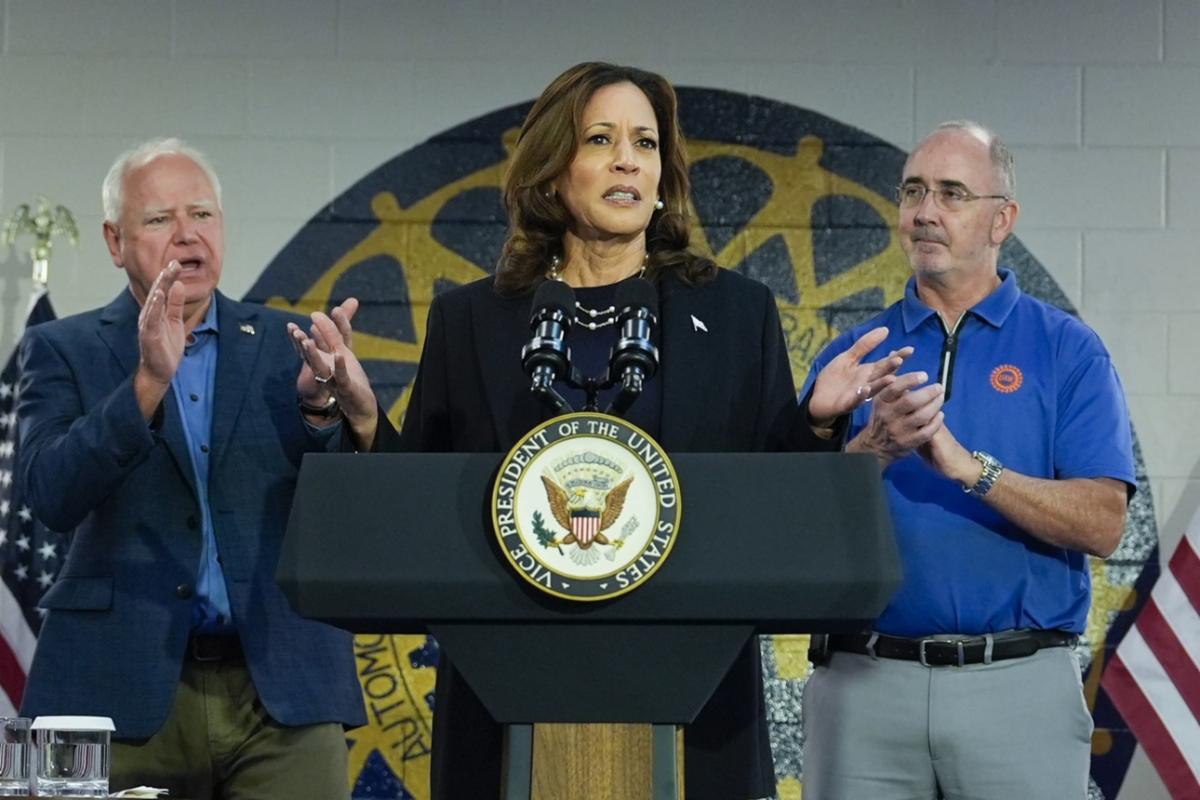 |
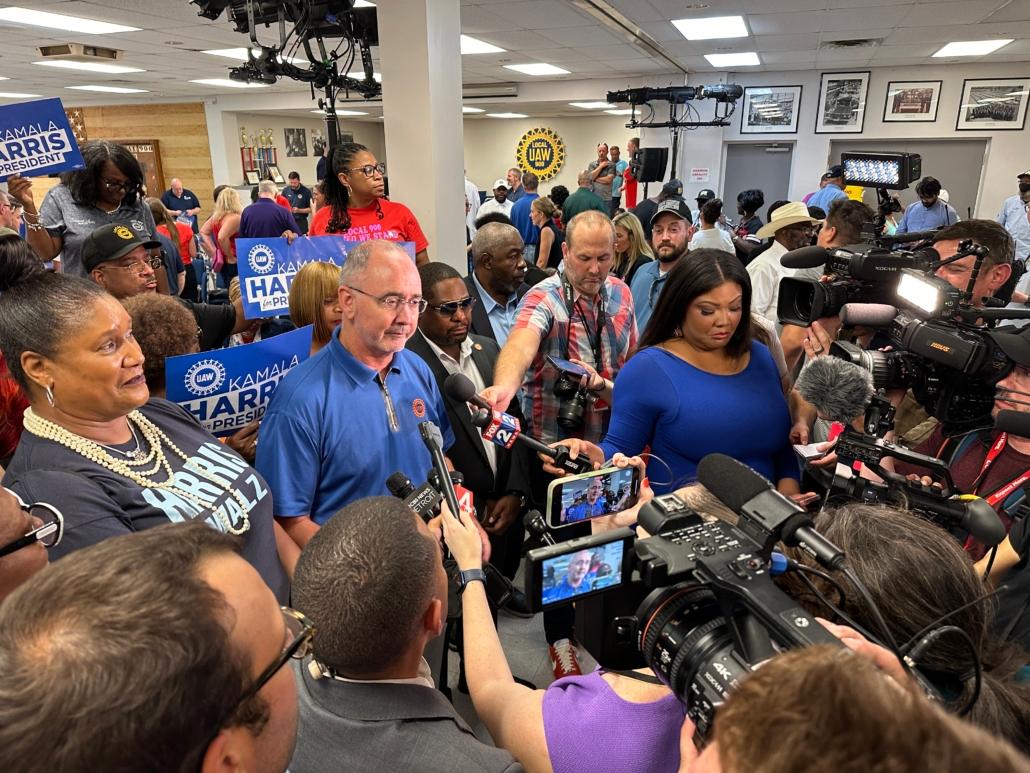
Harris-Walz ticket makes historic campaign launch at UAW union hall
August 12, 20249:59 AM CDT
By John Wojcik And Joelle Fishman
reprinted from The Peoples World
Democratic presidential nominee Vice President Kamala Harris, with Democratic vice presidential nominee Minnesota Gov. Tim Walz, left, and Shawn Fain, right, speaks at a campaign rally at UAW Local 900, Thursday, Aug. 4, 2024, in Wayne, Michigan. | Julia Nikhinson/AP
The members of UAW Local 900 made history again last week, crowded into their union hall to welcome union brother Tim Walz and lifelong union supporter Kamala Harris as they launched their presidential campaign. The turnout of members was big following their Stand Up strike almost a year ago that resulted in winning a breakthrough contract with the big three auto companies.
UAW president Sean Fain welcomed the first-ever presidential campaign launch in a union hall as an epic battle between two who walked the picket lines, Vice President Harris and Governor Walz, and union buster Donald Trump.
Crediting unions for the weekend, five-day work week, and vacations, Harris made the connection between a national sense of community and collective bargaining. “We’re not falling for those folks who are trying to divide us, trying to separate us, trying to pull us apart,” she vowed.
“There’s a suggestion that somehow strength is about making people feel small, feel alone,” Harris said. “But isn’t that the opposite of what we know? Unions know how to be strong. It’s about the collective,” she emphasized. “It’s about understanding that one should never be made to fight alone. That we are all in this together.”
Upholding the right to collective bargaining she said, “In a negotiation, don’t we all believe the outcome should be fair? But if one person faces off against a big company, how’s that outcome gonna be fair? We want fairness and dignity for all. Our campaign is about ‘We trust the people. We see the people. We know the people.’”
Indeed that trust results from the fact that the Harris-Walz campaign is a critically important part of a historic anti-MAGA coalition that represents the hopes, the aspirations, and the demands of the broadest sectors of the U.S. population, mobilizing in defense of all democratic rights.
Listed priorities
Harris listed the priorities she plans to achieve should she win including expansion of child care, the John Lewis Voting Rights Act, the Freedom to Vote Act, and preserving the Affordable Care Act. Strongly she declared support for a national right to abortion – a right, she reminded the crowd, that Trump’s three Supreme Court justices helped overturn two years ago.
Although not mentioned in the rally, while supporting Harris the UAW is also in the forefront of demanding an immediate ceasefire and end to aid to Israel in the war on Gaza and Palestine.
Along with almost every union in the country, every major civil rights organization is on board with the anti-MAGA campaign to elect Harris as the first woman and first Black and South Asian woman in the White House.
Women’s organizations are also deeply involved with every major reproductive rights group battling Trump and pushing for the election of Harris.
Major groups battling for the environment and for climate justice including the Sierra Club and many more have endorsed and are active in convincing their members to participate. Advocates of the Green New Deal which includes the youth-oriented Sunrise Movement have endorsed Harris.
Major Latino organizations, including LULAC, are active in the campaign. Never before in its 95-year history has LULAC endorsed a presidential candidate. Also new among electoral coalitions in the country is South Asians for Harris.
Also on board with the anti-MAGA coalition is every major anti-gun violence organization and most of the well-known groups advocating for LGBTQ rights.
Reflective of only what a massive anti-MAGA coalition can do are the millions who have gotten on historic Zoom calls including African American women and men and white women and white men. Too many to mention are the countless youth organizations, motivated more than ever now, who are joining the effort and with them sports celebrities, musicians, and Hollywood actors and performers.
Among the most influential and important of the anti-MAGA forces on board are more than 15,000 Black religious leaders, ministers and priests, and the Evangelicals for Harris too. Also, Jewish, Muslim, Hindu, Sikh, and other religious organizations are involved.
All of this has led to the signing up of tens of thousands of volunteers to fan out across the country. It is the existence of this massive labor-led anti-MAGA coalition that explains in large part how, in only a matter of weeks, the Harris-Walz campaign has Donald Trump and the fascists on their heels.
The task now is to hold this coalition together to get the maximum voter turnout and then, for the sake of the country, keep it together after the election.
The members of Local 900 vowed that as they organized in 90 days last year for their contract, they would go all out to speak with their members, families, and friends in the 90 days to the election.
“When We Fight Together We Win Together” was the chant.
|
Racism Is Why Trump Is So Popular
By James Risen
reprinted from the intercept
Trump’s popularity with his base isn’t the result of economic anxiety, as many claimed in 2016. It’s about race and demographics.
To understand the rise of Donald Trump, you don’t need to go to a diner in the Midwest or read “Hillbilly Elegy,” J.D. Vance’s memoir.
You just need to know these basic facts:
In 1980, white people accounted for about 80 percent of the U.S. population.
In 2024, white people account for about 58 percent of the U.S. population.
Trump appeals to white people gripped by demographic hysteria. Especially older white people who grew up when white people represented a much larger share of the population. They fear becoming a minority.
While the Census Bureau says there are still 195 million white people in America and that they are still the majority, the white population actually declined slightly in 2023, and experts believe that they will become a minority sometime between 2040 and 2050.
Every component of the Trump-Republican agenda flows from these demographic fears.
The Trump phenomenon and the surge of right-wing extremism in America was never about economic anxiety, as too many political reporters claimed during the 2016 presidential campaign.
It was, and still is, about race and racism.
The mainstream press has been afraid to say this directly and succinctly. Political pundits keep looking for other causes; after Trump’s upset win in 2016, they thought that “Hillbilly Elegy” was the answer. I read the book in its entirety — something I doubt most campaign reporters can claim — and it offers nothing about Trump or the economic anxieties in the American heartland that supposedly led to Trump’s election. It’s a personal memoir about his dysfunctional family, and the closest thing Vance gets to a political message comes when he writes that his relatives screwed up their lives on their own and have no one else to blame.
But the political press somehow concluded that the book’s narrative unlocked the key to understanding Trump voters, and the ambitious Vance, now Trump’s running mate, didn’t bother to correct them.
The press hasn’t done any better in the years since. It has now failed to adequately cover Trump for three straight presidential campaigns.
It is Trump’s shamelessness about his racism that appeals to white people.
The simple truth is that Trump is a racist, and it is his shamelessness about his racism that appeals to white people. He says what they wish they could get away with saying. They forgive his criminal behavior, his lies, his egomaniacal behavior, and his other flaws because of his racism, not in spite of it. They don’t care that his economic policies will benefit billionaires and not them, just so long as he makes sure minorities have it worse than them. Vance followed up “Hillbilly Elegy,” his supposed paean to the working class, by becoming a puppet of right-wing billionaire Peter Thiel, who bankrolled his Senate campaign in Ohio. Trump no doubt chose Vance to be his running mate at least in part to get more money from billionaires for his campaign.
The evidence of Trump’s racism is so overwhelming that the press and many voters now seem to consider it old news, shrugging at his constant stream of bigoted comments. That is exactly what Trump is counting on; it’s difficult to remember that his racism was still considered shocking as recently as 2016 when he ran for president.
Trump has been a racist his whole life; the Justice Department sued him for racial discrimination in the 1970s. In the 1980s, he took out newspaper ads calling for the death penalty in the case of the Central Park Five — Black and Latino men falsely accused in a New York City rape case — and he has stubbornly refused to apologize to the exonerated men.
He first gained prominence as a political figure for being an obsessive “birther,” propagating false conspiracy claims that Barack Obama wasn’t born in the United States and thus couldn’t legally be president.
Trump remains obsessed with race and is constantly looking for ways to discredit and dehumanize any and all minorities: African Americans, Mexicans, Native Americans, Muslims, Asians. He’s claimed that Mexican immigrants are murderers and rapists, that Obama was the founder of ISIS, that Covid-19 was the “kung flu,” that migrants crossing the southern border have been released from mental institutions and are coming to take “Black jobs,” that Haitians probably have AIDS.
When Trump first emerged as a presidential contender, many Republican Party leaders claimed they were disgusted by his blatant racism.
Now they embrace it. Read more
| |
The Steward Hospital Crisis: How Medicare for All and Eminent Domain Would Solve this Problem
June 20, 2024
Prepared for Mass-Care by David Cohen, retired International Representative, United Electrical, Radio and Machine Workers of America (UE); Peter Knowlton, retired UE National President; Sandy Eaton RN, retired Board member, Massachusetts Nurses Association (MNA); and Jon Weissman, retired President, National Association of Letter Carriers Branch 46, with helpful suggestions from several Mass-Care Activists. The authors of Appendix 3 are Professor Elizabeth Bartholet and Marjorie Butler from the Harvard Law School Labor Law Project.
Download as PDF
Introduction
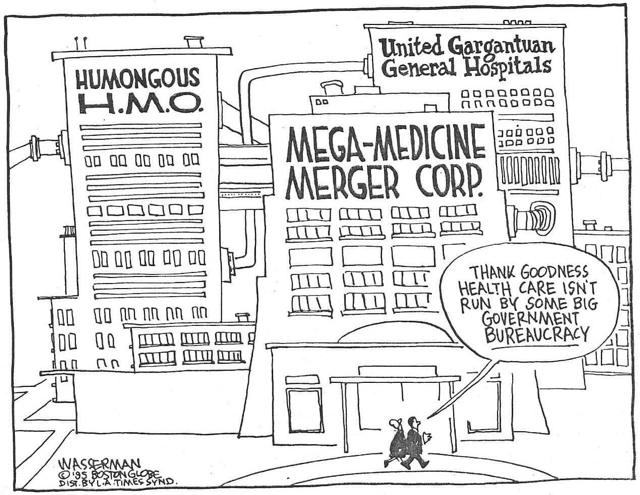
The recent crisis of the Steward Health Care system's bankruptcy and threat to close nine hospitals serving eastern and southeastern Massachusetts demonstrates the problem of having for-profit corporations owning vital health care institutions and infrastructure.
The Steward hospital debacle is just the latest in an ongoing crisis of access to health care in Massachusetts. The Massachusetts Nurses Association has published a list showing 42 hospitals that closed in Massachusetts from 2009 to 2022. (Appendix 1) They have also published a list of 10 closed maternity units in Massachusetts from 2010 to the present. (Appendix 2)
This is not the first time that Massachusetts has faced problems caused by corporations closing facilities, yet the State government appears to have learned little. In the 1980s, faced with massive factory closings as corporations chased higher profits by moving to Mexico and the South, the Dukakis administration, under pressure from the labor movement, convened a "Commission on the Future of Mature Industries". The Dukakis administration, however, forbade the commission from recommending any actions to actually stop factory closings. The end result was just more unemployment insurance, some advance notice of closings, and a little bit of job retraining. A tragic failure of public policy.
In 1986 the City of Boston considered taking by eminent domain the Colonial Provisions meat packing plant. The city's corporation lawyer ruled that the city could not take over the company, a move that was lauded by the business press. What followed were many opinions by legal scholars that the City could have taken the plant by eminent domain. A missed opportunity.
With the Steward crisis we are seeing the same refusal of the legislature and Governor to take any action that would interfere with a for-profit health care corporation's ability to deprive our communities of decent health care in the drive for greater profits.
There are at least three methods that could be used to prevent the Steward closings.
1) If the Governor declares a health care emergency (as was done because of COVID), the Public Health Commissioner can take whatever steps necessary to protect public health. Chapter 17 Section 2A:
The commissioner, with the approval of the public health council, may establish procedures to be followed during such emergency to [e]nsure the continuation of essential public health services and the enforcement of the same.
The Commonwealth could take over the hospitals and appoint people who will run them. Who owns the hospitals can then be sorted out without endangering the public.
2) If An Act Establishing Medicare for All in Massachusetts were enacted, provisions within the legislation could be used to keep all the Steward hospitals open and serving their communities.
3) The State or local governments could use their power of eminent domain to take over the hospitals and either run them as community hospitals or sell them to a non-profit organization. We are aware of eminent domain being abused in the past to harm communities, homeowners, farmers, etc. However, that would not be the case with seizing Steward’s hospitals and providing health care.
We will examine all three options in this paper and provide detailed information on how eminent domain could be used.
read more
| |
|
Over its past three meetings the Peace and Solidarity Committee of CCDS has considered the matter of formally joining the Boycott, Divestment, and Sanctions (BDS) campaign against Israeli firms operating or doing business in the US, along with products sold in the US. A decision was made to join and actively participate in the campaign.
As well as this general decision, it was decided to explore some particular avenues of CCDS involvement. Among those was a decision to research and produce information-sharing materials about Israeli-funded campus involvement, so as to strengthen and network student-led efforts to curtail such involvement.
Another initiative adopted was to research, publicize, and either join or initiate action against state and local legislation or policy that forbids or inhibits the adoption of or participation in BDS. According to a 2019 article, see in link below, 26 states have enacted anti-BDS legislation. This article, as possibly updated, may be considered Step 1 in a process leading to a campaign challenging such bans.
Step 2 is determining which states these are. Several are identified in the article. Also it may be noted in passing that none other than US Sen. Marco Rubio (D-FL) unsuccessfully sought to enact a federal BDS ban. We might expect similar legislation to reappear at some point, more likely if Trump wins.
Step 3 is taking a look at the successful ACLU cases in Kansas and Arkansas, making some determination as to whether these might be replicated, and crafting a strategy that might involve legal challenges as well as public outreach and direct action.
Step 4 would be sharing and deploying the strategy, waging the campaign.
If you would like to become involved, please consider joining or participating in the Peace & Solidarity Committee, which meets via Zoom the second Monday of every month at 8:00 pm.
The link for the 2019 article:
The controversy over laws punishing Israel boycotts, explained
| |
|
“New International Realities Subcommittee”
CCDS CONVERSATIONS ABOUT THE NEW INTERNATIONAL REALITIES
We invite you to attend our ongoing discussions at our next meeting on:
Date: Monday, September 9
Time: 9 pm Eastern time
Place: On Zoom
for more info contact jlynjenks@gmail.com
| |
Tuesday, August 6, 2024
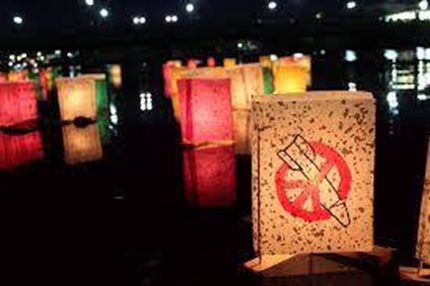
THE UNITED STATES BOMBS HIROSHIMA AND NAGASAKI
Harry Targ
In these early August days we reflect on the decision to drop atomic bombs over Hiroshima and Nagasaki in the summer of 1945. The official explanation for the use of these horrific new weapons was that they were required to end the World War in Asia. But subsequent historical research has indicated that the United States chose to drop the bombs to threaten the former Soviet Union and as a result to facilitate the United States construction of a post-war world order that would maximize its economic and political vision.
United States foreign policy over the last 150 years has been a reflection of many forces including economics, politics, militarism and the desire to control territory. The most important idea used by each presidential administration to gain support from the citizenry for the pursuit of empire is the claim that America is “exceptional”.
Think about the view of “the city on the hill” articulated by Puritan ancestors who claimed that they were creating a social experiment that would inspire the world. Over three hundred years later President Reagan again spoke of “the city on the hill” (and the image of American Exceptionalism continued as former Secretary of State Madeleine Albright, the Clintons and others referred to the US as ‘the indispensable nation’).
One can recall public addresses by turn of the twentieth century luminaries such as former President Theodore Roosevelt who claimed that the white race from Europe and North America was civilizing the peoples of what we would now call the Global South. Indiana Senator Beveridge’s stated it clearly: “It is elemental….It is racial.”
From the proclamation of the new nation’s special purpose in Puritan America, to Ronald Reagan’s reiteration of the idea, to similar claims by virtually all politicians of all political affiliations, Americans hear over and over that we are different, special, and a shining example of public virtue that all other peoples should use as their guide for building a better society and polity.
However, the United States has been involved in wars for 201 years from 1776 to 2011. Ten million indigenous people had been exterminated as the “new” nation moved westward between the 17th and the 20th centuries and at least 10 million people were killed, mostly from developing countries, between 1945 and 2010 in wars in which the United States had some role. In addition, world affairs was transformed by the use of the two atomic bombs; one dropped on Hiroshima on August 6, 1945 instantly killing 80,000 people and the other on Nagasaki on August 9, 1945 killing another 70,000.
Comparing the image of exceptionalism with the domestic reality of American life suggests stark contrasts as well: continuous and growing gaps between rich and poor, inadequate nutrition and health care for significant portions of the population, massive domestic gun violence, and inadequate access to the best education that the society has the capacity to provide to all. Of course, the United States was a slave society for over 200 years formally racially segregated for another 100, and now incarcerates 15 percent of African American men in their twenties.
Although, the United States is not the only country that has a history of imperialism, exploitation, violence, and racism US citizens should understand that its foreign policy and economic and political system are not exceptional and must be changed.
Finally, are there any common threads that run from 1945 when two atomic bombs were dropped on the Japanese people? First, a small number of politicians, elected and appointed, made decisions of monumental importance to the victims of the bombing and the subsequent danger of nuclear war.
Second, the decisions were made in the face of overwhelming evidence that the use of these horrific bombs was not needed to end the war in Asia.
Third, Truman and his aides made their decisions in contradiction to warnings of the dangers of atomic war for civilization. Opposition came from significant sectors of the scientific community, including some scientists who worked on the Manhattan Project, which developed the bomb.
Fourth, the decision to use atomic weapons was profoundly political. Demonstrating that the United States had this powerful new weapon sent a message to the Soviet Union. In addition, key decision-makers including General Leslie Groves, Director of the Manhattan Project; James Forestall who would become the first Secretary of Defense; and James Byrnes, Secretary of State, were virulently anti-communist. Also, the decision to drop the bomb, whether a motivation or not, communicated to the American people that President Truman, not seen as particularly qualified for the job, was tough and potentially a great leader. He, like some historians and former advisors, continued to defend the decision for years to follow.
Finally, a better future and the survival of humanity require a realization, as Paul Robeson once suggested, that what is precious about all people is not their differences but their commonalities. Exceptionalist thinking separates people and facilitates decisions like the dropping of the bombs over Hiroshima and Nagasaki. Sharing what we have in common as human beings, both our troubles and our talents, is the only basis for creating a peaceful and just world.
| |
|
Follow up to above article from Steven Jonas
Further on "what happened" in Japan, and Korea, at the end of WW II. Also the date for the agreed-to invasion of Hokkaido by Soviet Forces was Aug. 8, not the 7th.
https://www.opednews.com/articles/Korea---A-Settlement-Ve-by-Steven-Jonas-History_Iran_Korean-Unification_Korean-War-170907-79.html
It happens that it was the U.S. that created the two Koreas. As World War II was coming to a close, the Soviet Union was poised to invade Japan and its then colonial possession, Korea, on August 8, 1945. One motivation for the dropping of the atomic bomb on Hiroshima (August 6) and Nagasaki (August 9) was to foreclose the possibility that the Red Army would establish a foothold on Japanese territory (the first landings were to be on the northernmost Japanese island of Hokkaido) and would quickly take over the whole of the Korean Peninsula.
With the forestalling of the Soviet invasion, U.S. personnel quickly were moved to Korea. Before they arrived in September, in Washington a young U.S. colonel, one Dean Rusk, looked at a map and decided that a line dividing Korea in two, one a "Soviet" zone, and the other a "U.S." zone, would a) be a good idea, and b) would be [arbitrarily] drawn at the 38th parallel. (With this sort of action, Rusk was obviously preparing for his much bigger role in preparing for and perpetuating the War on Viet Nam.) Although the first North Korean leader, Kim il Sung, and his parents, had been leading anti-Japanese guerrilla forces since the Japanese conquest of Manchuria in 1932, and was widely respected (revered by some) throughout Korea, the U.S. set-up a pro-U.S. government under the former exile, the pro-U.S. Syngman Rhee. Using many former Korean Japanese collaborators, they spent much of their time rooting out, and in many cases killing, supporters of Kim il-Sung residing in the South.
| |
|
Friday, August 9, 2024
STILL: THE MEANINGS OF FERGUSON AND MILWAUKEE IN 2024
(Portions of this essay, “The Meanings of Ferguson,” appeared on August 20, 2014 in Diary of a Heartland Radical).
Harry Targ
In addressing violence, researchers, educators, journalists and religious leaders have usually concentrated on its most visible forms: murder and war. The central features of such violence include physical assault and killing. In our own day terrorism has joined war as the most popular common subject for study.
Over the years, peace educators have developed intellectual tools to uncover more diverse meanings of violence, their differences and their connections. Structural violence has been distinguished from direct violence. Researchers continue to analyze direct violence, physical assault and killing, but also study structural violence, the various forms of human suffering that take more time; impose pain, sickness, depression, and death on populations; and are perpetuated by leading institutions and relationships in society. Structural violence includes economic inequality, low wages and poverty, inadequate access to health care and education, and the psychological damage that economic suffering causes. These injustices, the concept of structural violence suggests, are embedded in economic, social, and political institutions.
It is possible to disaggregate further the structural violence that is embedded in institutions. Institutional violence refers to unequal distribution of power and influence in major societal institutions: political, criminal justice, and educational, for example.
Finally, cultural violence refers to the images, symbols, and educational materials that value some population groups over others. Culture refers to the public consciousness of history, traditions, and popular narratives that describe people. Stereotypes are short-hand representations of a culture.
In total then violence is direct, structural, institutional, and cultural. These kinds of violence may occur separately but in most cases are inextricably connected. It is this fourfold conception of violence that is relevant to the crisis that unfolded in Ferguson, Missouri.
Ferguson, Missouri 2014
The tragedy of Ferguson, Missouri came to national attention because of direct violence. A Ferguson policeman shot and killed an unarmed young African American male. In response to the collective expression of community outrage that followed, the local police initiated a multi-day barrage of tear gas, strong-arm arrests, and threatening street protestors with military vehicles and loaded rifles. The images on television screens nationwide were of a people under assault, parallel to Israeli bombings in Gaza and United States targeted air strikes in Iraq. The fear that young African American males in Ferguson have historically felt every time they stepped into the streets of their city escalated since the killing of Michael Brown.
Beyond the threat of direct violence in Ferguson is structural violence, less visible but as important. Brookings Institute researcher Elizabeth Kneebone (“Ferguson, Mo. Emblematic of Growing Suburban Poverty,” brookings.edu, August 15, 2014) reported that the community of Ferguson experienced a qualitative economic decline over the decade before the shooting. The city’s unemployment rate increased from 5 percent in 2000 to 13 percent by 2010. Earnings of community members declined by one-third. One-fourth of the population was living in poverty.
Kneebone indicated that poverty rates have doubled in suburban neighborhoods surrounding the 100 largest cities in the United States. “By 2008-2012, 38 percent of poor residents lived in the neighborhoods with poverty rates of 20 percent or higher. For poor black residents in those communities, the figure was 53 percent.” Of course, poverty is highly related to declining schools, inadequate access to health care, lessened prospects for jobs, and large-scale youth unemployment.
Institutional violence is reflected in a 300-year history of slavery and racism. Professor Clarissa Hayward, Washington University, said: “The St. Louis metropolitan area has been an extreme example of racial segregation for 100 years.” She pointed out that St. Louis geographically was at the nexus of the South, the Midwest, and the West and added: “The practices and politics of St. Louis created the problems that underlie the tension that boiled out in Ferguson this week.” (Puneet Kollipara, “Wonkbook: The Social and Economic Story Behind the Unrest in Ferguson,” Wonkblog, The Washington Post, August 18, 2014).
In terms of the Ferguson political system, two-thirds of the community is Black and the local government has been almost all white. At the time of the shooting of Michael Brown, five of six city council members were white, the Mayor was white, and six of seven school board members were white. And fifty of 53 police officers were white.
Finally, cultural violence addresses the issue of ideology, consciousness, images of the other, and additional ways in which whites see African-Americans. Racist culture socializes the dominant class and race to reflect its superiority. For example, Missouri Lt. Governor Peter Kinder said shortly after the shooting: “That’s one of the great advances of Anglo-American civilization, that we do not have politicized trials. We let the justice system work it out.” The mayor of Ferguson declared that his community was free of racism.
Since the killing of Michael Brown in Ferguson, police and politicians organized a campaign to demonize the victim of the police killing. The tall young man, an African-American, was a robber, a drug consumer, and violence-prone. Also, the days of protest in Ferguson were framed to privilege the peaceful, religious, mourning adults and to explain night-time violence not as police violence but violence perpetrated by outside agitators from New York, Chicago, and California. The fact that young African Americans left their houses at their own risk could not, the frame implies, engender outrage.
Milwaukee, Wisconsin 2016
And in August, 2016 Milwaukee, by many measures the most segregated and racist big city in the United States, experienced the police shooting of Sylville K. Smith followed by two days of frustrated rebellion by some residents of the Sherman Park neighborhood. State violence, poverty, and racial segregation have created a tinderbox of frustration and anger in that city. According to a 2015 NPR report, the state of Wisconsin invests more in prisons than education, incarcerating a higher percentage of Black men than anywhere in the country. “…in Milwaukee County more than half of all Black men in their 30s and 40s have served time.” In one zip code alone 62 percent of Black men have been incarcerated for some time by the age of 34. The prison population of the state has tripled since 1990.
NPR also quoted a study finding that Milwaukee has the second highest black poverty rate in the country with an unemployment rate four times higher than whites (Kenay Downs, “Why is Milwaukee So Bad for Black People?” NPR, March 5, 2015). A Madison, Wisconsin group, the Young, Gifted, and Black Coalition, after defining the idea of a “neighborhood,” found that 31 of Wisconsin’s 56 Black neighborhoods are jails and an additional 21 neighborhoods are apartment complexes or section 8 housing or both. Prisons and poverty dominate the life of Black communities (YGB, “31 of Wisconsin’s 56 Black Neighborhoods are Jails,” ).
Summing up the situation in Milwaukee, Alderman Khalif Rainey said: “The Black people of Milwaukee are tired. They’re tired of living under this oppression. This is their life.” (Tanzina Vega, “Milwaukee’s Staggering Black-White Economic Divide,” CNN Money, August 17, 2016, money cnn.com).
So from police violence--killing, gassing, beating--to economic despair, to lack of political representation to cultural rationales for state violence, the basic characteristics of American society are uncovered. And once again, the victimization of people of color, as well as workers, and women, suggest the following conclusions:
--the root cause of exploitation, racism, and sexism is structural violence (capitalism).
--physical violence is used to crush rebellion against class exploitation and racism.
--unrepresentative political institutions are dominated by the wealthy and powerful.
--dominant cultural stereotypes and specific narratives about society reinforce the economic system, the political system, and justify the police violence in the St. Louis area, Milwaukee and all around the United States.
Black Lives Matter
But between Ferguson and Milwaukee a new social movement emerged, Black Lives Matter, led by young women and men represented over 60 organizations around the country. They issued a powerful programmatic statement “A Vision for Black Lives: Policy Demands for Black Power, Freedom, and Justice, The Movement for Black Lives." It presented six demands, each with detailed recommendations:
-End the War on Black People
-Reparations
-Divest-Invest
-Economic Justice
-Community Control
-Political Power
These demands represent African Americans, Women, Workers, and all oppressed peoples. They address direct violence—Stop the Killing—and structural violence—Redistribute Wealth and Income, Political Power, and Opportunity for Human Development for All. The struggles continue.
| |
|
Below are education materials that you can use!
Share with friends. invite people over for a video night, etc!
| | |
|  |
|
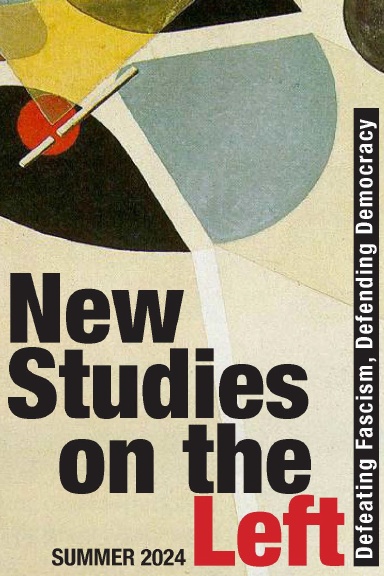
New Studies
on the Left
Paperback $19.95
...is a journal of socialist theory and practice. It is the successor to ‘Dialogue and Initiative, published as an annual journal of the Committees of Correspondence for Democracy and Socialism in book form from 2012 to 2022. It will continue the CCDS policy of left unity, including articles with a variety of left perspectives, including debates.
This issue contains over 30 articles grouped under the headings of Analysis and Global Reach, Debate and Controversy, Labor, Socialism, and Book Reviews. Some are reprinted from other sources, but many appear here for the first time.
Among the authors are David Bacon, Joan Braune, Carl Davidson, Bill Fletcher, Jr., Jerry Harris, Jay Jurie, Paul Krehbiel, Sun Liping, Adewale A. Maye, Duncan McFarland, Jasmine Payne-Patterson, Vijay Prashad, Nikhil Pal Singh, Harry Targ, and Janet Tucker.
Table of Contents
Click HERE to purchase
| | |
|
`Buy this book in honor of incredible woman!
click HERE to purchase
| |
CHANGEMAKER PUBLICATIONS: Recent works on new paths to socialism and the solidarity economy
Remember Us for Gift Giving and Study Groups
We are a small publisher of books with big ideas. We specialize in works that show us how a better world is possible and needed. Click Gramsci below for our list.
| |
522 Valencia St.
San Francisco, CA 94110
415 863-6637
| | | | | |