|
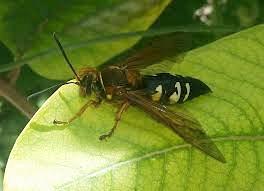
You've probably seen at least one of these hanging out in your yard this summer. Meet the cicada killer wasp. These wasps are not usually aggressive & rarely sting but can be rather intimidating based on their size alone. At nearly an inch and a half in length, their long, yellow & black striped bodies cause them to resemble overgrown yellow jackets.
Each female wasp burrows one hole in the ground to lay her single egg. Before laying her egg, she will paralyze another large insect, preferably a cicada. She buries the large insect in the hole then places her single egg on top of it. Eventually, the egg hatches and uses the paralyzed insect as a food source while it goes through all of its life stages underground before emerging the next year as an adult wasp.
Unfortunately, little can be done for these foraging wasps other than an additional treatment targeting individual holes. Our technicians are trained in how to spot burrows & puff certain dusts into any found; however, that just controls that one single cicada killer wasp. Usually, the best idea is simply to wait it out. Males die shortly after mating & females die shortly after laying all their eggs. Typically, they'll
be gone in a week or two after you spot them.
|