|
Friends,
I want to begin my note this week by expressing my sincere sadness upon hearing of the loss of Lowertown community leader Lee An Labore. Lee Ann was a dedicated community member and passionate steward of Mears Park and Lowertown among so many other things. Councilmember Noecker wrote a lovely tribute to Lee Ann that you can find here. Whether or not you were fortunate to know her personally I'd encourage you to give it a read to learn more about her impact on downtown.
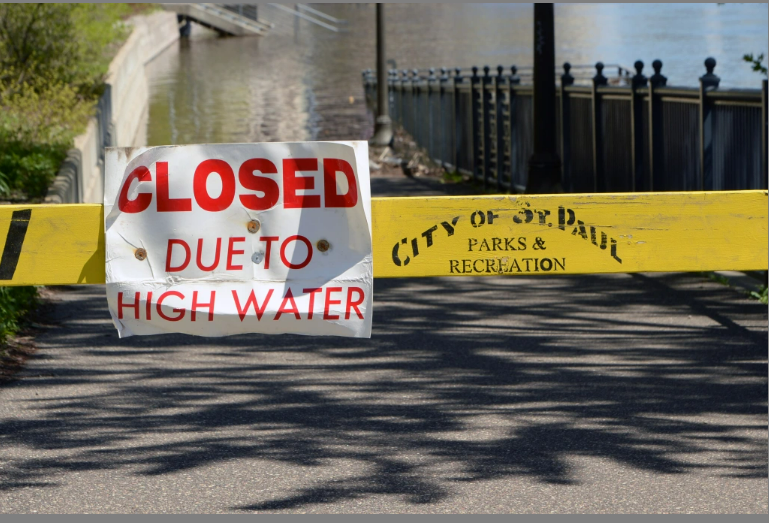
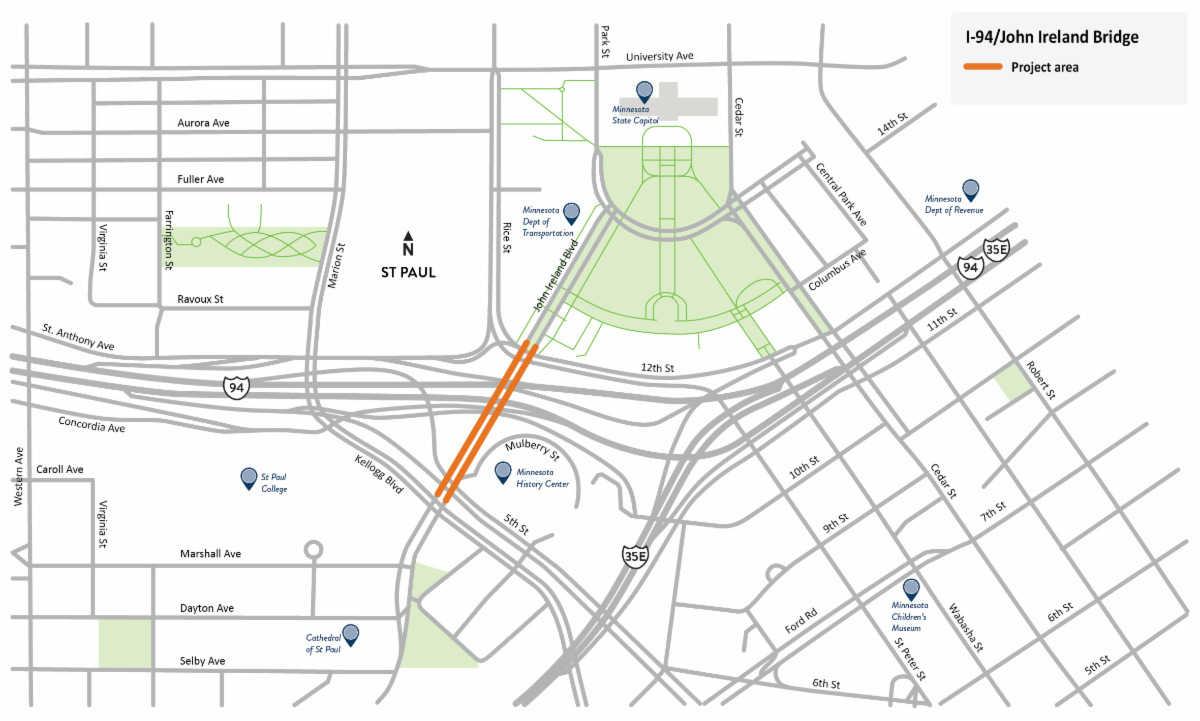
It's been a busy week of news downtown. The Ordway and Saint Paul Chamber Orchestra both announced stellar 2023-24 seasons, spring flooding is fast approaching and road closures begin this afternoon, and the Gold Line BRT received hundreds of millions of federal dollars — just to name a few of the headlines you can read more about below.
However, this week I'd also like to call your attention to two recent reports published by Brookings that have resonated with me. Both reports stem from a study that began last fall with Brookings seeking to understand perceptions of downtown health and recovery. They mixed qualitative data collected by speaking with nearly 100 stakeholders in New York, Chicago, Seattle, and Philadelphia, including business leaders, major employers, public sector officials, residents, place governance associations (like the Downtown Alliance), and other nonprofit and civic leaders, with quantitative spatial analysis of population, employment, travel, and real estate data impacting downtown recovery.
Despite the fact that Brookings collected data from four major cities obviously much larger than our own downtown, their findings illustrate the ebb and flow that downtowns, regardless of their size and prior to COVID-19, have experienced time and again over the past decades and explores what the next phase of downtown growth will look like. There are too many great insights from "Breaking the ‘urban doom loop’: The future of downtowns is shared prosperity" to share them all, but here's a great preview:
"[The] specter of an office real estate apocalypse, 'urban doom loop,' transit death spiral, or 'ghost towns' is filling some urban observers with existential dread. So too are reports of rising crime and unsheltered homelessness in downtowns. However, this fear is not new, nor is it destiny."
The second report, "The geography of crime in four U.S. cities: Perceptions and reality," explores a topic we're all familiar with at this point, but digs in deeper and analyzes the disparities between perceptions and reality as well as offers recommendations for evidence-based solutions. It's heartening to know that several efforts that align with their recommendations are already underway in downtown Saint Paul. Their analysis also acknowledges that while crime rates have risen in recent years, spatial analysis research demonstrates that increases, if any, have been negligable in downtowns specifically.
I hope you'll take the time to check out one or both of these reports. One of the first lessons I learned in this job back in 2018 is that while downtown Saint Paul is, of course, its own special and unique place, our challenges are not and our solutions can be found by learning from downtowns everywhere.
Have a great weekend!
-Joe
p.s. As I mentioned last week, Wild playoff season kicks off next week. We're still waiting to learn when the first home game will be (either Friday the 21st or Saturday the 22nd), but whichever day it lands on there will be a block party at Herbie's. Additional details soon!
|