Blue Chip logo
Bug Bytes
 
April
 2018

IN THIS ISSUE:
spring-raingear.jpg
PRIORITIZE PEST-PROOFING DURING SPRING CLEANING

spring_cleaning_sponge.jpg

Did you know that April is National Pest Management Month? (And YUM! April's also National Soft Pretzel Month but that's another story for another day!) Yep -- for 40 years and counting, this month has been dedicated to the men and women in the pest control industry that play an important role in not only protecting our homes and families from pests but also helping safeguard our nation's food supply. During this month, we recognize the pest control industry's commitment to the protection of the public to all the dangers and diseases posed by pests. 

However, this month isn't all about us. We get to share this credit with YOU! Homeowners and business owners play a crucial role in your partnership with us to ensure that the pest control program that's been designed for your specific needs is as effective as possible. Spring cleaning season is upon us. As you declutter and make your home or business as welcoming as you can for yourself, your family and/or your employees and customers, be sure to take some extra time to make sure it's as unwelcoming as possible for any pests that may be lurking around. Here's some tips on how to do that: 

SURVEY & SEAL
Walk around the outside of your home or business. Pay special attention to any areas which are entry points for pipes and utilities. Do you see any cracks? Seal these with silicone-based caulk. 

EMPTY &  ELIMINATE
April kicked off mosquito season in St. Louis. Mosquitoes only need 1/2" of water to breed. This is a great time to eliminate as many of these water sources as possible. Examples of common areas you'd find standing water include clogged gutters, flower pots, pool covers, bird baths and baby pools. Eliminate moisture buildup indoors by properly ventilating basements and crawl spaces. Humidity levels inside should be around 50 percent. 

REMOVE & REGROUP
Get ready for some yard work! It's time to trim bushes and cut tree branches back from your home or business. Remove any rotted tree stumps. Keep a slight separation between the brick or siding of your home/business and any mulch, leaving some concrete foundation exposed, is also a good idea.
KEEPING YOU PEST-FREE...AT WORK & PLAY
customer quote

It's nice to both work AND play in a pest-free environment, right? No doubt you've heard this expression: Do one thing and do it well. At Blue Chip, we do pest control exceptionally well....and we do it well at both homes AND businesses all over the St. Louis area. 

Do you see one of our technicians at your business doing a pest control treatment and you'd like to have that same level of protection at your home? Let us know! We offer $25 off the initial pest control service for anyone who mentions their business when their first service visit is scheduled. Here's a little more info on our Residential Pest Control Services.

Or do you use us for pest control at your home and weren't aware that we also offer customized pest control options designed with your unique business in mind? Learn more about our  Commercial Pest Control Services here. 
WIN THIS VIEW FOR YOU AND YOUR 3 BESTIES!
Busch Stadium

Congrats to Rachel W. who just scored 4 field box seats to a recent Cardinals game (with this incredible view!) PLUS a parking pass for a spot in Ballpark Village! You wanna win this amazing gift package too? It's sooooo easy! Here's how: 

1. Visit us on Facebook at Blue Chip Pest Services. 

2. "LIKE" Blue Chip's Facebook page. Our Cardinals free giveaways packages are reserved for our fabulous Facebook fans. I mean, you like us in real life, right? You might as well "LIKE" us on Facebook too! :) 

3. Check in with us on Facebook from time to time. We give this package away many times during baseball season and would for you (yes, YOU!) to be our next winner! 

We're not too far from announcing the date of our next Cardinals giveaway so stay tuned! Until then...

LET'S GO CARDINALS! 
BUG BAROMETER: SPRING & SUMMER 2018
USA map


Twice a year the National Pest Management Association releases its "Bug Barometer." Based on weather patterns and the biological behaviors of certain pests, this barometer acts as an indicator of what type of pest activity people might see based on different regions of the United States. For this spring and summer, predictions are in for an increased and significant amount of pest activity throughout the entire United States due mostly to leftover moisture from La Nina and much milder weather conditions. Let's breakdown our region (North Central) as well as others that you might include in your summer travel plans. 

North Central US (This includes St. Louis!): Thanks to our warmer-than-average winter, ticks will most likely be around in increasingly high numbers. They'll also start taking advantage of the upcoming spring warm-up to get a jump start on populations even before the summer arrives. (Fun fact: Did you know our Mosquito Control Program is also highly effective at controlling fleas and ticks in your yard too?) Ant & fly populations are expected to be on the rise this spring and summer as well. 

Southwest: A warmer winter followed by a drier spring creates the perfect mix for an increase of cockroach activity in these states. 

Northwest: Ants had an easier time surviving this year's winter and have already begun expanding their colonies by leaps and bounds. 

South Central: Termite populations are expected to be higher than normal due to a moist spring. 

Great Lakes/Ohio Valley/Midwest: Ants will be on the rise this spring then make way for an influx of ticks later this summer. 

Southeast: An unusually cold winter brought sleet which, in turn, brought additional moisture which, in turn, brings predictions for a quick rebound of mosquitoes. (This includes Florida so if you have any beach or Disney trips planned for this summer, be sure to pack insect repellent that contains at least 20% DEET.) 

Northeast & New England: A colder winter with heavy snow brought a lot of rodents indoors to stay warm & find food. Expect to find potential rodent issues in this area. 
ARMADILLOS: YOUR NEW NEIGHBOR?
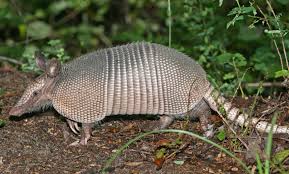
armadillo

Armadillo is a Spanish word which means "little armored one." This refers to the bony plates that cover the back, head, legs and tail of these odd-looking creatures. If you get close enough, you might see their pointy snout or itty bitty eyes. ("Fun" fact: Even though you could get close to one, you don't want to. Armadillos carry the bacteria that's associated with human leprosy. If humans can actually contact leprosy through interaction with infected armadillos is still debated; however, I'm betting you're not interested in testing out that theory.) Closely related to anteaters and sloths, these mammals can be known to sleep up to 16 hours a day. #MustBeNice #WeekendGoals

Over the past couple of years, we've noticed armadillos moving into the St. Louis area. They're moving from south to north & from the west to the east. Springtime is one of the more prevalent times of year that they migrate because they don't like freezing temperatures. #JoinTheClub As temperatures warm up, the food sources for armadillos, insects & vegetation, become more plentiful and these guys are starting to get cozy in St. Louis. They usually travel in pairs, or even small groups. The first signs you might notice if an armadillo has moved into your yard might be tracks in the dirt or mud. Armadillo tracks look like 3 long toe prints with a sharp claw on the tip. Their scaly tails drag behind them as they move and appear as a line drawn in the soil. 

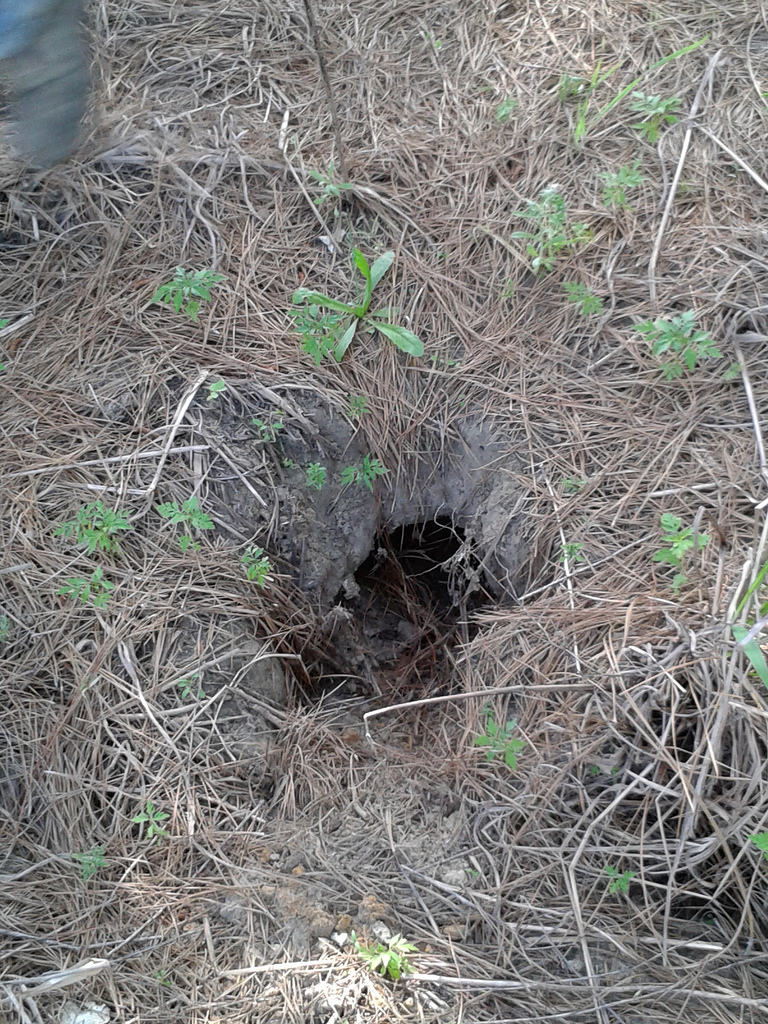
The most common damage caused by armadillos is divot holes they make in the ground with their strong feet and claws as they dig their burrows. The holes range in size but are typically from 1-3" deep and 3-5" wide. Their burrows can have openings of 7-8" wide and be upwards of 15 feet in length underground. Here's a picture of an armadillo burrow opening:

armadillo burrow

Live trapping is the only real way of controlling them. Fencing around your property can help deter armadillos; however, they can climb over fences and burrow underneath them. The only effective fencing would need to be installed at a 40-degree outward angle and be recessed in the ground at least 12 inches. You'd have to contact a specialized contractor for the fencing but Blue Chip does offer live trapping options if you ever encounter any armadillos in your yard. 
Want more information on a specific service we offer? Looking for a quick Pest ID Guide for a bug you have found? Want to see video clips of our technicians in action? Interested in reading our latest blog entry? Want to chat with one of our service representatives online? YOU GOT IT!