Tree Fertilization Programs
A regimented program is used to help obtain and maintain heal
thy trees for our customers. This program includes four yearly visits by a certified arborist to assess your tree's health throughout the year, inspect for possible insect or disease activity, and apply each treatment. It is anchored by four regular treatments and may include additional treatments recommended by the arborist based on each individual case.
Fall Deep Root Fertilization
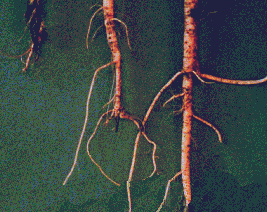
This treatment is done in November. The majority of a tree's root growth takes place in the fall and root feeding helps
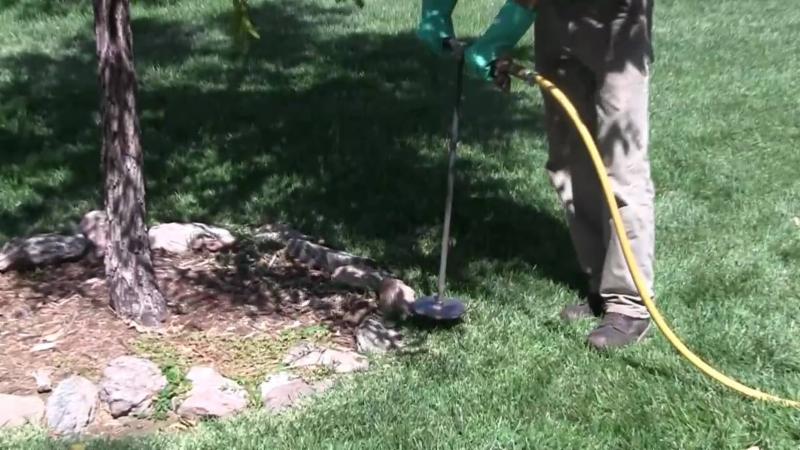
encourage this growth. This application utilizes an injection with a needle that leaves 1 inch holes in the soil at each injection site at a 23ft spacing around the tree. These injections provide necessary nutrients directly to the root zone and also allow for aeration of the soil, or additional oxygen to the root zone.
Spring Deep Root Fertilization
This is the first treatment of the calendar year and is done in February and March. The majority of trees have an abundance of growth during the spring followed by slower growth throughout the summer and fall. Because of this single influx of growth, it is beneficial to have nutrients available as this growth is about to occur. Our spring fertilization delivers fertilization to the roots to encourage more abundant growth in the canopy.
Summer Stress Treatment
This treatment is done in August or September. The Austin climate can be extremely stressful for trees and by the end of summer many species are showing visible signs of high stress. To combat this, trees in our program receive a compost tea spraying to control disease and fungal infections and a mycorrhizae injection to improve soil structure, water penetration, and water absorption levels to help combat the heat and dry conditions.
*If the site has experienced high amounts of compaction, and additional aeration is recommended, an arborist may complete the fertilization program utilizing vertical mulching instead of deep root injections. This is a more intensive process in which a 2 to 3 inch auger is used to drill holes, still in a grid pattern about the tree, and these holes are filled with a mixture of fertilizer pellets and a soil amendment such as compost, peat moss, perlite, or sand as needed.