"You get tired of people treating you like they don't care": Standing up for safe affordable senior housing at Brith Sholom House

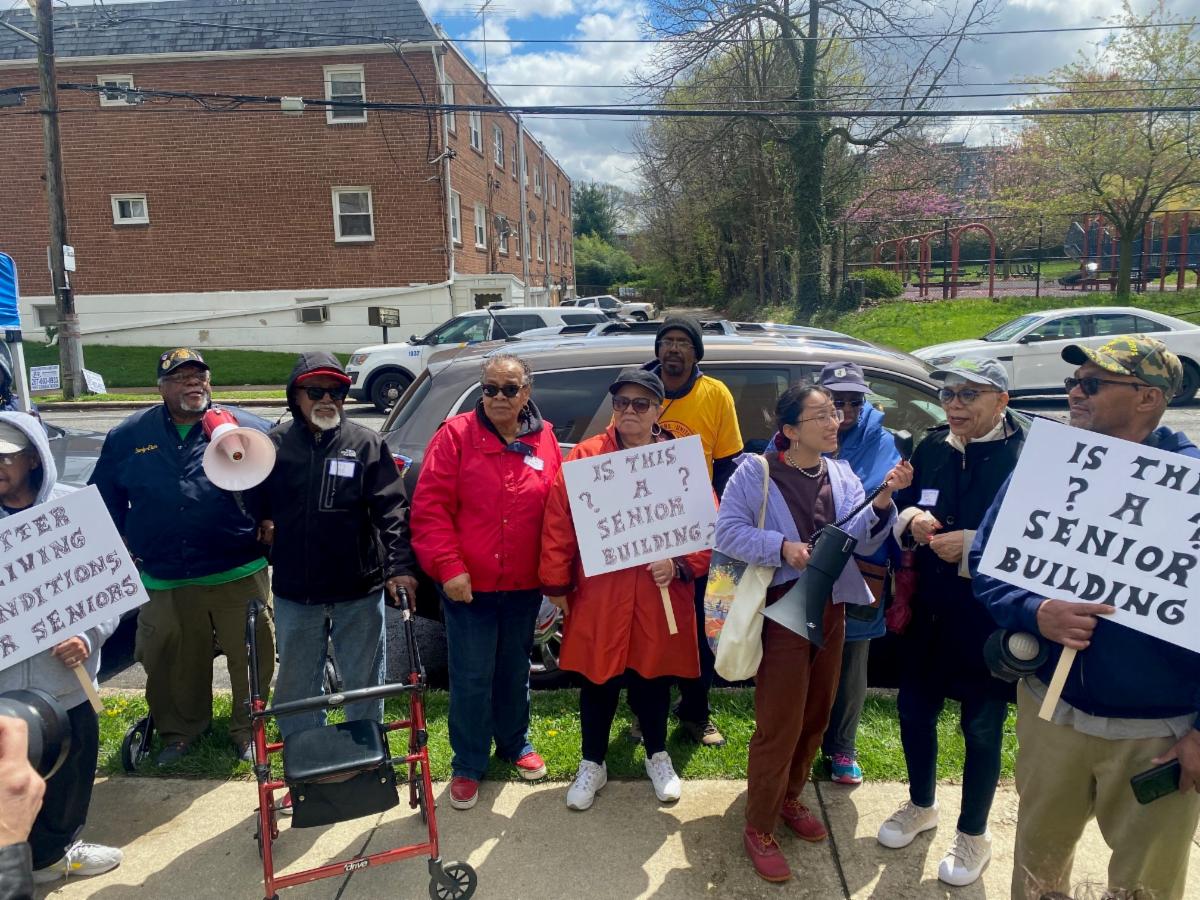
Tenants at Brith Sholom House protest unacceptable housing conditions.


Seniors living in the Brith Sholom House apartment building in Wynnefield Heights--one of Philadelphia's few affordable senior housing complexes--experience unacceptable conditions every day: broken plumbing systems, exposed wires, leaking pipes, pest infestations, fire code violations that threaten their safety, and much more. The Department of Licenses and Inspections has found more than 100 serious code violations.


We represent the building's elected tenants' council. Residents have been organizing for months, hoping for a solution that holds building ownership accountable, provides the dignified housing they deserve, and allows them to stay in their homes. More than 150 low-income seniors live in the building.


“We should not be forced out of our homes by neglect and unbearable conditions,” said Marguerite Byrd, spokesperson for the Brith Sholom Tenants’ Council, “The City of Philadelphia needs to step in to save our community. If our landlord continues to refuse to provide safe and healthy housing, this building should be managed by someone who will.”


On April 12, tenants gathered outside the building for a protest of the deplorable conditions they have endured. The protest was covered by the Philadelphia Inquirer.


“I don’t want to leave, we have a good community here, but you get tired of people treating you like they don’t care,” tenant Sharon Burnett said.


Brith Sholom House is in receivership, and its owner was ordered to make the needed repairs in a November 15, 2023 injunction. Progress remains painfully slow, tenants say. The building is set to be sold at Sheriff’s Sale on June 4.


On May 1, WHYY reported that PGW notified tenants that gas service to the building could be shut-off May 23. Court filings indicate that the owner of the building, Brith Sholom Winit LP, have failed to pay any gas bills since January 2022, despite continuing to collect rent for which utilities are included. 


We will continue to stand with tenants to make sure the City of Philadelphia does not allow the mass displacement of seniors amid an affordable housing crisis.


“The residents who are still there are there because they believe that the building can return to the way it used to be and that they deserve livable conditions,” said Madison Gray, our Independence Foundation attorney fellow.

Voters sue Butler County for denying the opportunity to fix mail ballot errors with provisional ballots

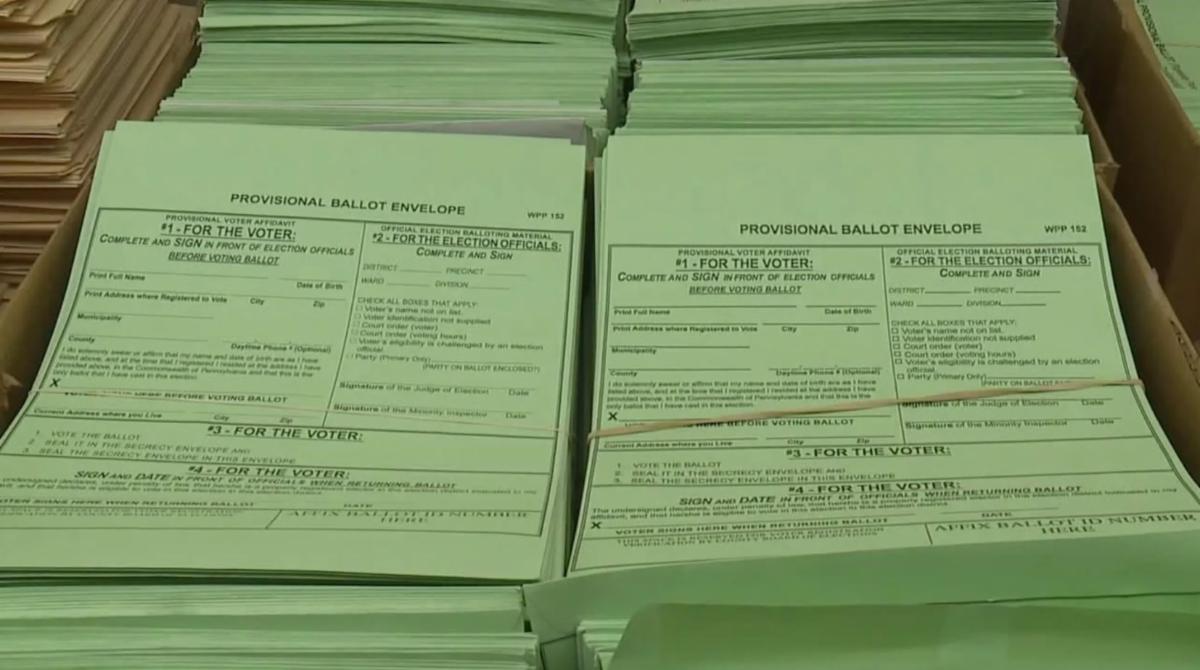
Our work protecting access to the ballot box for all Pennsylvania voters this election year has begun. On April 29, our clients, two Butler County voters, sued the county for not counting their provisional ballots in this month’s primary election.


The voters forgot to include the secrecy envelope when they returned their mail-in ballots, but when they attempted to cast provisional ballots to fix their errors, the county board of elections decided not to count them--preventing them from casting their vote. We are joined by co-counsel from ACLU-PA and Dechert LLP.


Provisional ballots are a vital safety net for our electoral system, but they only work if voters are able to use them,” said our legal director Mimi McKenzie. “There’s no dispute that our clients are eligible voters and that their mail-in ballots will not be counted. Denying their provisional ballots means denying their voice.” Read more here.


We will continue to watch counties across the state to ensure that voters have access to provisional ballots and are not prevented from casting a ballot because of clerical mistakes.


On April 16, we joined ACLU-PA to send a letter to Washington County, Pennsylvania after we learned that the county will no longer notify mail-in voters of paperwork mistakes, like an incorrect date, on their ballot envelopes, denying them the chance to correct those errors. We let county officials know that their decision could reject the ballots of hundreds of voters, in violation of their legal rights.

You can take action for constitutional public school funding in Pennsylvania

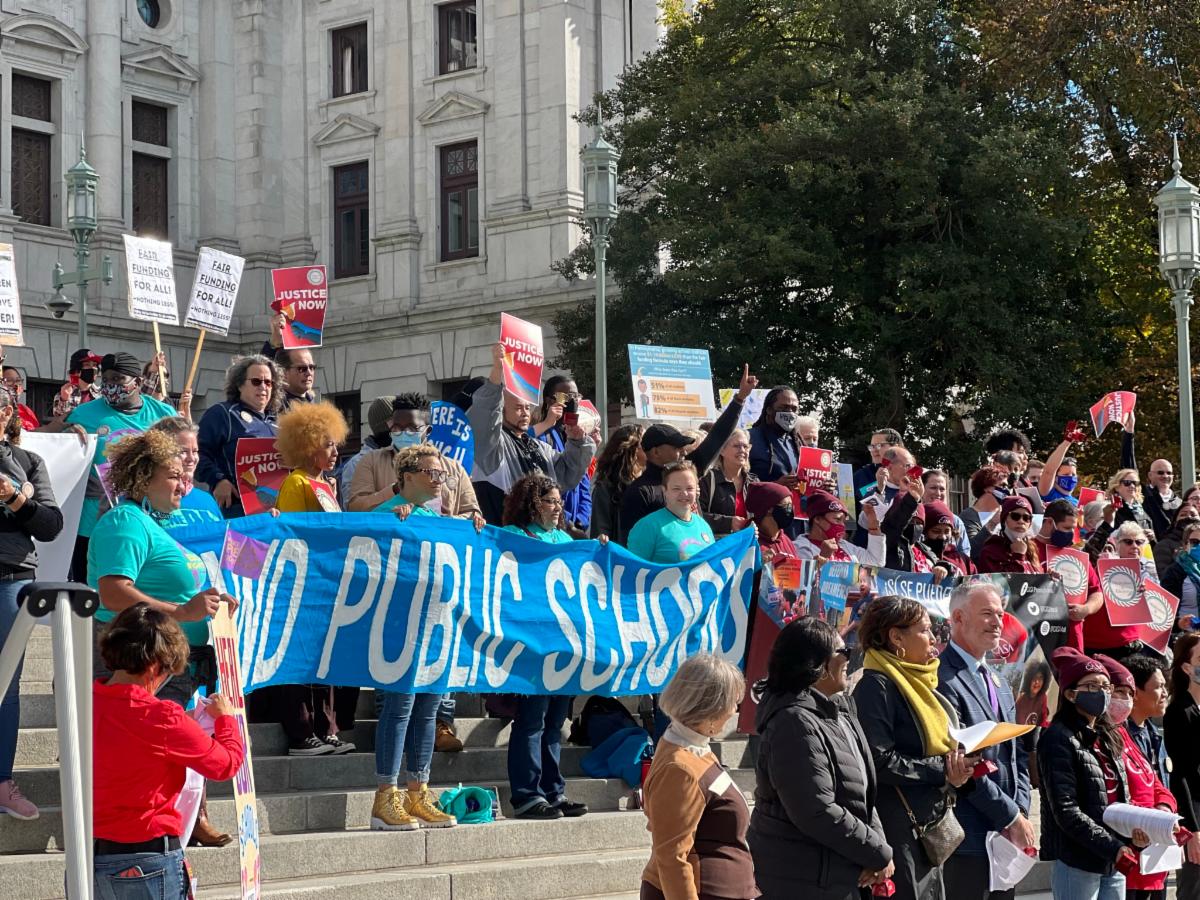
Left: A rally for fully funded public schools held during trial in our Pennsylvania school funding lawsuit.


This budget season is different. There is a transformational plan on the table in Harrisburg for public school funding that honors the limitless potential of our students--providing resources based on what they need to succeed, not the wealth of their community.


More than a year after the historic win in our school funding lawsuit, it's time to tell our leaders in Harrisburg to finish the job and fund our public schools.


Use this online tool to send a letter to your representatives in the General Assembly, urging them to pass Governor Shapiro's game-changing budget proposal for public education.


Advocates can help mobilize school boards and community organizations to come out in public support of this game-changing plan by passing resolutions sent to lawmakers in Harrisburg. Learn more and view a sample resolution from our friends at Education Voters PA.


Learn more about what the 7-year plan for public school funding would mean for your community with fact sheets for each district and summaries of state data from PA Schools Work.


Every Monday from 4-6 PM, the PA Schools Work campaign will host virtual phonebanks, talking to our neighbors across Pennsylvania about the importance of funding public schools--not just this year, but every year. Sign up here. All volunteers will receive training and be connected with an easy-to-use automatic dialer, and you can make calls from your home! Other times will likely be available soon as well.


On May 8, PA Schools Work will head to Harrisburg to meet with lawmakers to ensure that the General Assembly takes a first step toward constitutional school funding by enacting Governor Shapiro's full education funding proposal. If you are interested, sign up here.

We urge protections against imprisonment solely for the inability to pay fines in new comments on PA criminal procedure rules

A gavel on top of money illustrating the role of fines

No one should be put in prison solely because they are unable to pay court-imposed debt. On April 24, we submitted public comments urging the PA Supreme Court Criminal Procedure Rules Committee to ensure that the Committee’s proposed revisions to the Pennsylvania Rules of Criminal Procedure protect low-income defendants who default on their fines, fees, or restitution payments. As we write, the rules should be revised to "help ensure defendants living in poverty are not punished for being poor, in violation of their constitutional rights." Read our comment in full here.


Over 40 years ago, the U.S. Supreme Court ruled in Bearden v. Georgia that defendants who fail to pay debts related to their criminal cases cannot be jailed for this non-payment unless a court finds that the defendant "has willfully refused to pay the fine or restitution when he has the means to pay." Pennsylvania courts have repeatedly affirmed this principle and held that certain procedural safeguards must be put in place when a defendant is found in default of payment. But as we explain in our comments, “judges are not always aware of the legal safeguards that are required when a defendant is in default," and the proposed revisions to the Criminal Rules do not expressly and affirmatively codify these constitutional protections.


We ask the Rules Committee to consider three amendments to Rule 706--which governs the default of payment of fines, fees and restitution--to make these protections clear:

  • Require the court in every default hearing to conduct an inquiry into the reasons for a defendant’s failure to pay, considering “the totality of the defendant’s life circumstances" and the defendant’s good faith efforts to secure funds. 
  • Prohibit the court from imprisoning a defendant for nonpayment unless the Commonwealth is able to prove that the defendant has willfully refused to pay. 
  • Specify that defendants have a right to legal counsel before being sentenced to imprisonment or probation.


"We hope that the Committee will consider the proposed revisions to Rule 706 to safeguard important constitutional rights of low-income defendants," we write, "and to help [quoting the PA case Commonwealth v. Eggers] 'remind the lower court[s] that in Pennsylvania, we do not imprison the poor solely for their inability to pay fines.'"

We supported Joyce Wilkerson's nomination for the Philadelphia Board of Education

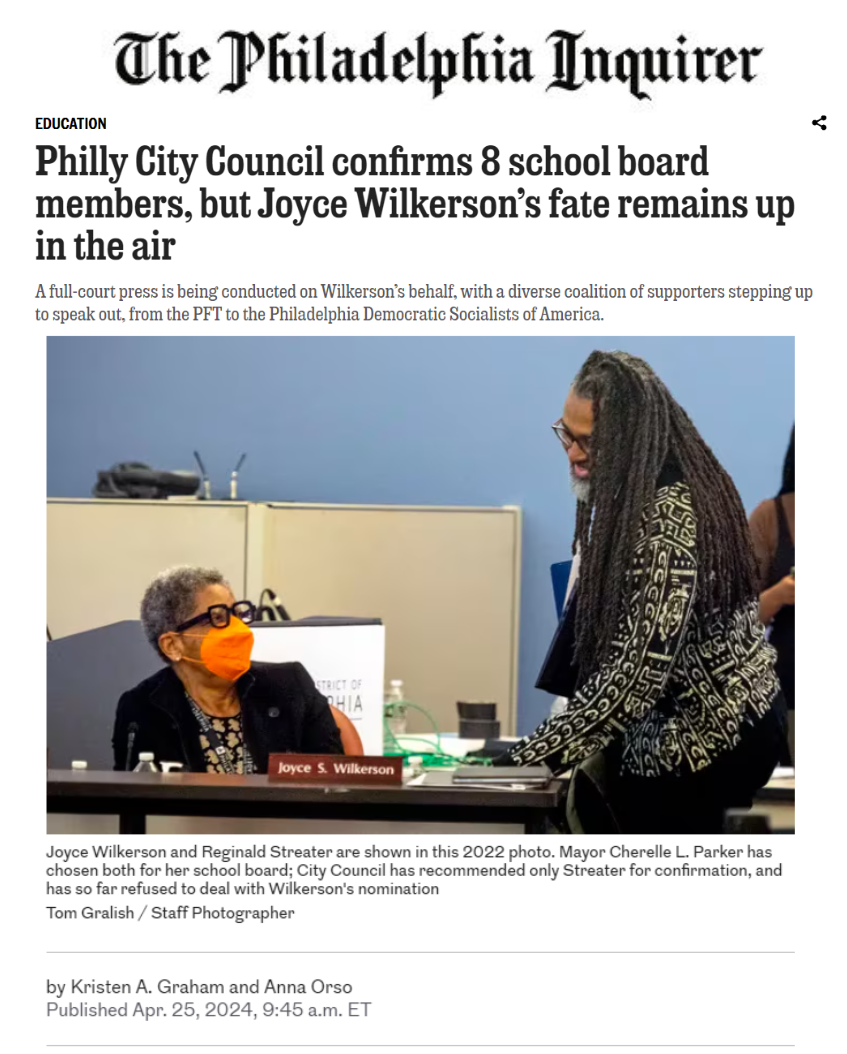
On April 18, the Philadelphia Inquirer reported that Philadelphia City Council was likely to oppose the re-appointment of Joyce Wilkerson and Reginald Streater to the Philadelphia Board of Education, responding to opposition from those who opposed the school district's oversight of charter schools. On April 24, our senior attorney Dan Urevick-Ackelsberg sent a letter to council urging them to reconsider. Both members, he wrote, are dedicated public servants who act with integrity, and who have a record of caring for all the children of Philadelphia. Read the letter here.


Charter school oversight is essential. "We know that many charter schools are accomplishing extraordinary things," Urevick-Ackelsberg wrote. "But what various scandals in the charter sector demonstrate—from federal convictions for diverting money from children to fund romantic getaways and bonuses, to schools closing on a whim, to admissions practices that weed out students of color or students with disabilities—is that each member of the board has a legal, ethical, and moral obligation to protect charter students by providing effective oversight to charter schools." Our letter was covered by the Philadelphia Inquirer.


Reginald Streater's nomination was confirmed by City Council on April 26, along with seven of the nine board members put forward by Mayor Cherelle Parker. On April 29, City Council withdrew Wilkerson's nomination without a vote--and Mayor Parker then appointed Wilkerson to fill the vacancy created on the board until a replacement is named and confirmed. We are glad the Mayor stood up for a board that provides support and real accountability in Philadelphia for all 197,000 children in public schools, whether district or charter.

Thank you to our spring extern!

Land Bank inquirer article

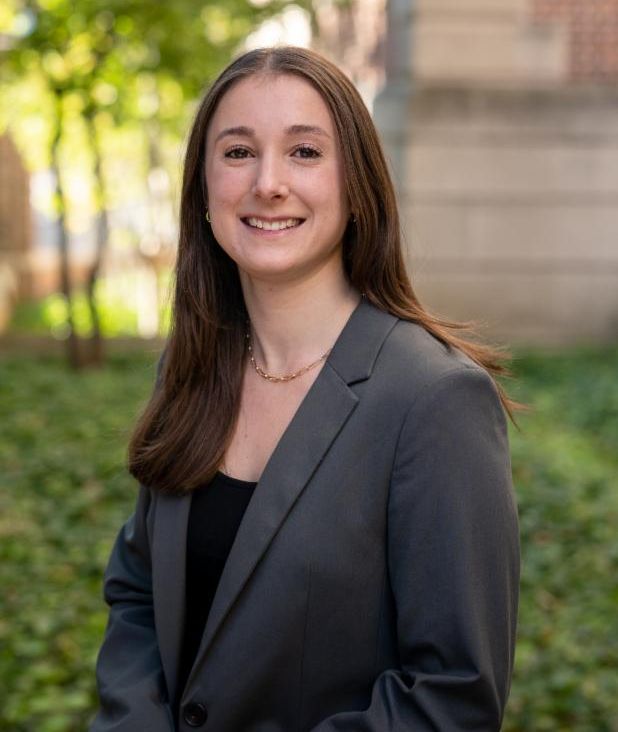
We would like to thank our spring extern, Alexandra Kurland, for her fantastic and invaluable work this semester. Ali is a 2L student at Penn Carey Law. Thank you!


Read more about our internship program here. The Law Center is currently accepting legal internship applications for Fall 2024.

Make a Donation
Facebook  Instagram  LinkedIn  X

The official registration and financial information of the Public Interest Law Center may be obtained from the Pennsylvania Department of State by calling toll-free, within Pennsylvania, 1-800-732-0999. Registration does not imply endorsement.