|
ANNOUNCING THE 2017 FRANKLIN INSTITUTE LAUREATES
|
We are pleased to announce
The Franklin Institute Awards Class of 2017!
These eight trailblazers of science and engineering have expanded our knowledge of the brain, pioneered exciting new materials, illuminated vital genetic processes, developed important light sources, and deepened our understanding of global climate. Their achievements are guiding us towards a better future.
Since 1824, The Franklin Institute has provided public recognition and encouragement of excellence in science and technology through its Awards Program. The list of Franklin Institute laureates reads like a "Who's Who" in the history of 19th, 20th, and 21st century science. The eight pioneers in the Class of 2017 join the giants who came before them, including Dean Kamen, Bill Gates, Jane Goodall, Stephen Hawking, Albert Einstein, Orville Wright, Marie and Pierre Curie, and Nikola Tesla, in the Institute's unmatched history of honoring the greatest minds of the past 192 years. Recognizing outstanding achievements in science, technology, and industry from around the world is an important way the Institute preserves Benjamin Franklin's legacy.
|
 |
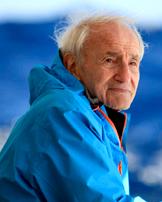
Photo credit Marc Perrey
|
2017 BOWER AWARD AND PRIZE FOR ACHIEVEMENT IN SCIENCE
Claude Lorius, Ph.D.
French National Center for Scientific Research (CNRS)
Paris, France
For iconic contributions to the understanding of global climate change from the analysis of greenhouse gas concentrations in ice cores from Antarctica, including discovering the glacial-interglacial cyclic relation between atmospheric carbon dioxide concentration and temperature that governs past and future climate.
|
|
|
2017 BENJAMIN FRANKLIN MEDAL IN CHEMISTRY
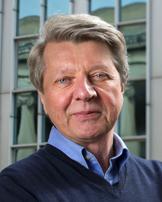
Krzysztof Matyjaszewski, Ph.D.
Carnegie Mellon University
Pittsburgh, Pennsylvania
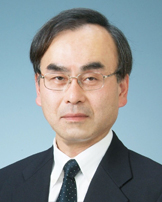
Kyoto University
Kyoto, Japan
For their seminal contributions to the development of a new polymerization process involving metal catalysts. This powerful process affords unprecedented control of polymer composition and architecture, making possible new materials including improved composites, coatings, dispersants, and biomedical polymers.
|
|
|
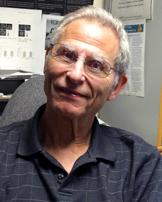
2017 BENJAMIN FRANKLIN MEDAL IN COMPUTER AND COGNITIVE SCIENCE
University of Oregon
Eugene, Oregon
Weill Medical College of Cornell University
For his central role in establishing the fields of cognitive science and cognitive neuroscience, thus increasing understanding of the human mind and brain through the pioneering use of reaction times and brain imaging in rigorous analyses to characterize attention, individual differences in attention, and both typical and atypical attentional development.
|
|
|
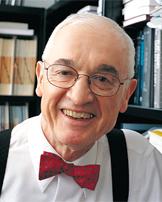
2017 BENJAMIN FRANKLIN MEDAL IN ELECTRICAL ENGINEERING
Nick Holonyak, Jr., Ph.D.
University of Illinois at Urbana-Champaign
Urbana, Illinois
For the development of the first visible (red) laser and LED used in displays and lighting, and the use of various alloys in colored light sources, which led to reduced energy consumption worldwide and contributed to the realization of optical data communications as the backbone of the Internet.
|
|
|
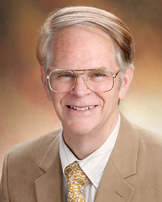
2017 BENJAMIN FRANKLIN MEDAL IN LIFE SCIENCE
Douglas C. Wallace, Ph.D.
Children's Hospital of Philadelphia
Perelman School of Medicine, University of Pennsylvania
Philadelphia, Pennsylvania
For demonstrating the maternal inheritance of mitochondrial DNA (mtDNA) in humans, using mtDNA variation to reconstruct ancient human migrations, identifying the first mtDNA mutation associated with an inherited disease, and showing that mutant mtDNA can profoundly affect the nuclear genome, causing complex diseases, thereby leading the way to therapies for those diseases and the aging process.
|
|

Photo credit Bryce Vickmark
|
2017 BENJAMIN FRANKLIN MEDAL IN MATERIALS SCIENCE AND ENGINEERING
Mildred S. Dresselhaus, Ph.D.
Massachusetts Institute of Technology
Cambridge, Massachusetts
For her fundamental contributions to the understanding and exploitation of carbon nanomaterials, such as the spheres known as buckminsterfullerenes, the cylindrical pipes called nanotubes, and the single-atom-thick sheets of carbon known as graphene, and for launching the field of low-dimensional thermoelectricity, the direct conversion of heat to electricity.
|
|
|
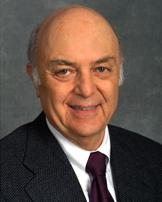
2017 BENJAMIN FRANKLIN MEDAL IN PHYSICS
University of California, Berkeley
Lawrence Berkeley National Laboratory
Berkeley, California
For making possible atomic-scale calculations of the properties of materials so detailed that new materials and their mechanical, thermal, electrical, and optical properties can be predicted in agreement with experiments.
|
|
|
2017 BOWER AWARD FOR BUSINESS LEADERSHIP
|
|
Save the Date!
|
The Franklin Institute Awards Ceremony & Dinner
May 4, 2017
|
2017 Awards Ceremony and Dinner Leadership 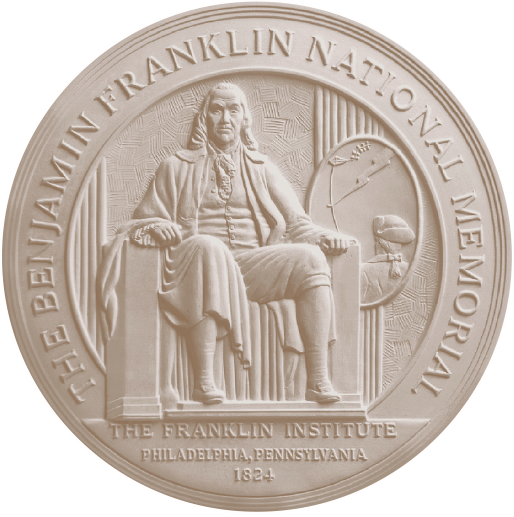
Maureen Brennan-Miller, Co-Chair
Michael C. Forman, Co-Chair
Leanne M. McMenamin, Vice Chair

For tickets to the Awards Ceremony and Dinner,
click here.
|
The Franklin Institute Awards Week
May 1-5, 2017
To learn more about The Franklin Institute Awards,
click here.
|
|
|
|
|
|