MIT Department of Aeronautics & Astronautics | May 2023


Announcements

The Roundup is a monthly e-newsletter to keep students, faculty, and staff up-to-date on research, community news, and important events and happenings around the department and MIT. If you'd like to include news items in next month's issue, submit them to aa-communications@mit.edu!

Commencement Events


AeroAstro Hooding Ceremony Brunch

Wed. May 31

11 a.m. — 1:30 p.m.

Bldg. 33 Lawn


School of Engineering Ceremony

Wed. May 31

3 p.m.

Killian Court


OneMIT Commencement

Thurs. June 1

3 — 4:30 p.m.

Killian Court

Undergraduate Ceremony

Fri. June 2

10 a.m. — noon

Killian Court


AeroAstro Ice Cream Social

Fri. June 2

12:30 — 2:30 p.m.

Bldg. 33 Lawn

News & Honors

  • In a follow-up event to the MIT-Cambridge sustainable aviation workshop for United States, United Kingdom, and European Union policymakers in April, the Laboratory for Aviation and the Environment director, Steven Barrett, was one of the U.S. delegates to meet King Charles III at a sustainable aviation roundtable in Cambridge, U.K. on May 9. Barrett addressed the king on the opportunities of contrail avoidance and areas for transatlantic cooperation. The roundtable was part of a groundbreaking event for a new $200m facility in Cambridge, U.K. focused on sustainable propulsion, which is a major expansion to the Whittle Laboratory, who we have enjoyed longstanding collaborations with.


  • Danielle Wood was selected as a 2023 winner of MIT's Teaching with Digital Technology Award. The Teaching with Digital Technology Awards are student-nominated awards for instructors who have effectively used digital technology to improve teaching and learning at MIT. The goal is to recognize instructors for their innovations and to give the MIT community the opportunity to learn from their practices. The awards are co-sponsored by Open Learning and the Office of the Vice Chancellor.


  • Rashmi Ravishankar won the CCSE Mathworks research prize for outstanding Master’s research. The prize is awarded to the best Master's thesis in computational research. Ravishankar's thesis proposed, optimized, and validated deep learning frameworks to detect rooftop and commercial photovoltaics.


  • Palak Patel, a PhD student in necstlab, was awarded a NASA Space Technology Graduate Research Opportunity (NSTGRO) fellowship with her proposal, "Nanoengineered Ultra High-Temperature Ceramics for High Strength and Toughness Multifunctional Composites for Space Applications."


  • Charles Dawson has been selected to participate in the 2023 Robotics: Science and Systems (RSS) Pioneers Workshop. RSS Pioneers is an intensive workshop for senior PhD students and early career researchers in the robotics community.


  • Charles Oman gave an keynote talk on April 18 at an invitation-only Space Motion Sickness Symposium hosted by SpaceX at their Hawthorne, CA facility. Limiting space sickness on crewed Dragon and Starship flights will be important for both safety and customer experience.


  • The renewal of the radome at the Green Building has been selected by the Cambridge Historical Commission to receive a 2023 Preservation Award. The ceremony and reception will be held at The Foundry, 101 Rogers Street, on May 25 from 6 - 8pm.

Research

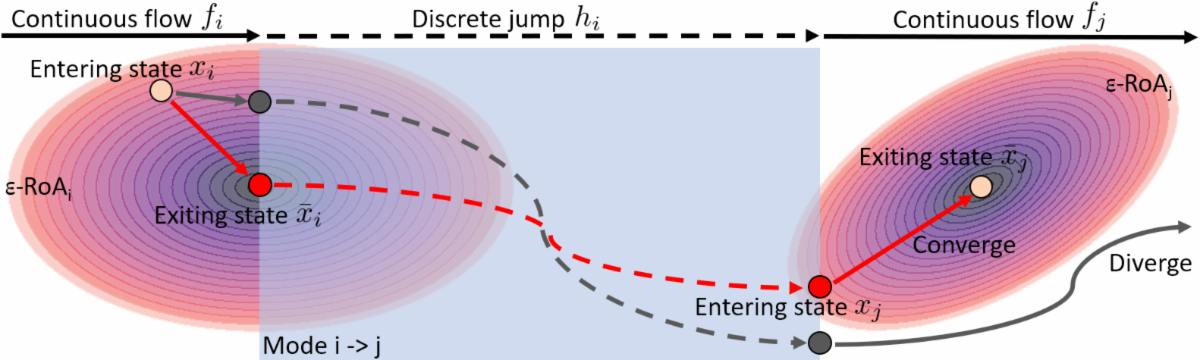
Yue Meng, a 3rd year PhD student in REALM, has had a paper accepted by the 5th Annual Learning for Dynamics & Control Conference. "Hybrid Systems Neural Control with Region-of-Attraction Planner" leverages Lyapunov function theory, proposes a new stability criterion for hybrid systems, and designs a neural network controller to stabilize hybrid systems, with applications like car tracking control on icy roads, jumping robot navigation and controlling bipedal robots.

This year's combined 16.83 (U) and 16.89 (G) senior space capstone design class presented a novel concept for a heliocentric satellite constellation, M-SUN-360 "SUNFLOWER," at 1AU that would be able to observe the sun from all 4pi-steradian angles and at all times. Their design consists of 9 satellites which carry 3 instruments each and would orbit the sun in a symmetrical Walker-Delta pattern at an inclination of 54.7 degrees relative to the ecliptic. The PDR was held on May 16 and NASA's new Associate Administrator for Science, Dr. Nicola "Nicky" Fox was in attendance at MIT. The 34 students in the class collectively won the James Means Memorial Award for Excellence in Space Systems Engineering. The class was co-taught by Olivier de Weck and Edward Crawley, with Rebecca Thorndike-Breeze and Chris Casatelli as CI-M instructors and Leilani Trautman and Nadia Khan as TAs.


Pictured: Daniel Gochenaur, a doctoral candidate in the ESL presenting the orbital dynamics of the M-SUN-360 constellation during the 16.83/89 PDR on May 16.

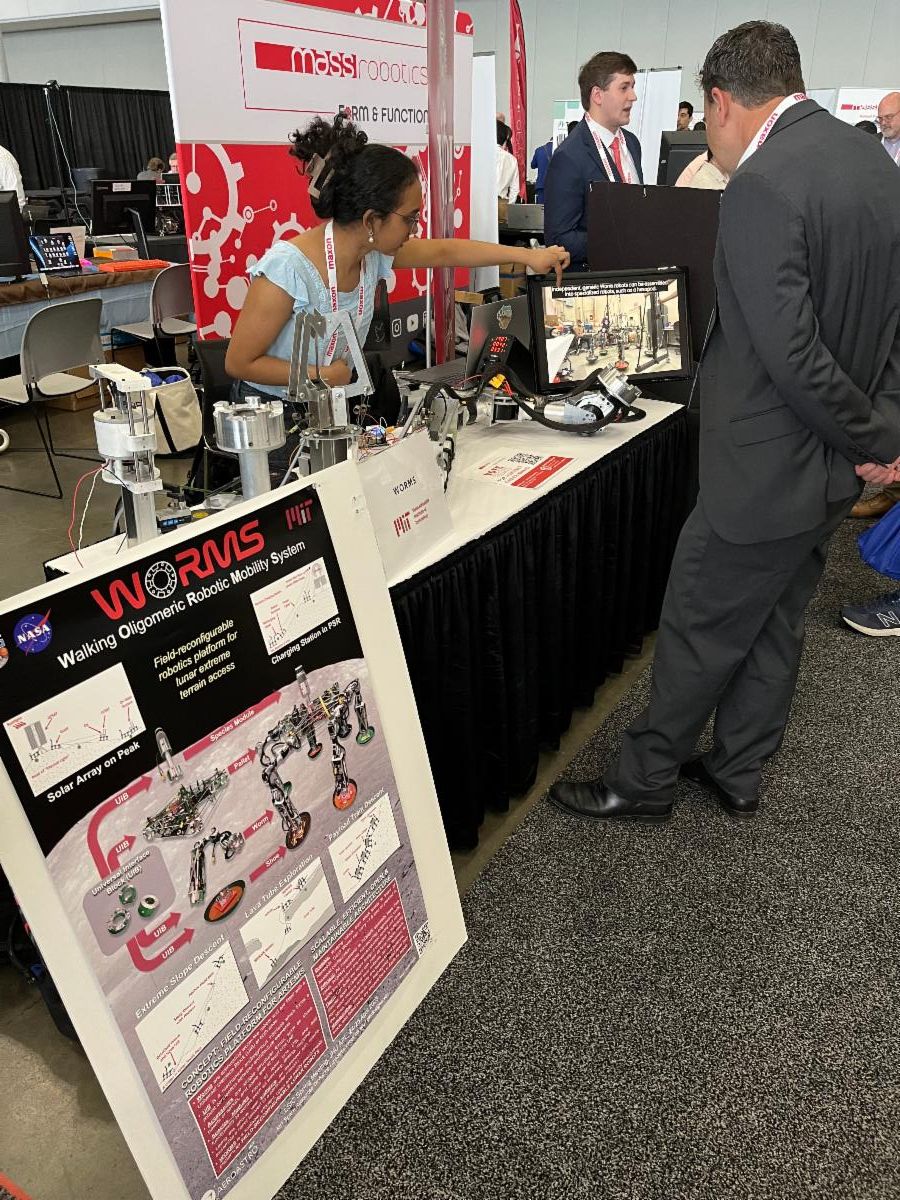
On May 10, the MIT WORMS team participated as a finalist at the MassRobotics Form & Function Competition at Boston Robotics Expo. The team demonstrated early prototypes of new additions to their modular lunar robotics platform including: teleoperation, machine vision, drilling and gripping.


Pictured: Jacob Rodriguez ‘24, Suchitha Channapatna ‘26, Trevor Johst ’26, Vealy Lai ‘26 and HSL graduate student Michael Brown.

Madeleine Schroeder, Ximo Gallud, Elaine Petro, Oliver Jia-Richards, and Paulo Lozano have a new paper, "Inferring Electrospray Emission Characteristics from Molecular Dynamics and Simulated Retarding Potential Analysis" in the Journal of Applied Physics.


Abstract:

In this work, we present coordinated molecular dynamics, ion cluster acceleration, and retarding potential analysis simulations to determine cluster fragmentation behavior in a realistic emitter geometry for electrosprays operating in the pure ionic regime. Molecular dynamics simulations are used to determine the fragmentation rates of ionic liquid clusters as a function of internal energy, electric field strength, and cluster size. A simplified model of electrospray cluster acceleration is developed from previous electrohydrodynamic emission models and used to simulate retarding potential analysis curves. Fragmentation rates and beam composition are inferred for experimental data based on the molecular dynamics and cluster acceleration simulations. We find that for these experimental data, temperatures of EMI-BF 44 dimers likely range between 590 and 687 K while trimer temperatures are larger between 989 and 1092 K. The percentage of monomers, dimers, and trimers in the beam is approximately 45%, 30%–43%, and 13%–25%, respectively. Both ionic liquid cluster temperatures and beam composition agree with previous analysis of this experimental work, supporting the use of coordinated molecular dynamics and retarding potential analysis as a method of inferring electrospray beam parameters. Insights gained from this simulation process are discussed in the context of currently unexplained electrospray emitter behavior and experimental results including the presence of tetramers and trimers in the beam and fragmentation rates in high electric field regions.

Afreen Siddiqi was invited by IEEE's Geoscience and Remote Sensing Society (GRSS) — Instrumentation and Future Technologies (IFT) Working Group to give a webinar on May 4. The talk was titled "Earth Observation Technical Performance Trajectories for Technology Roadmapping and Investments."


Abstract:

Technological capabilities in Earth observation (EO) systems are rapidly changing. Understanding these trends allows for developing baselines for future technology performance projections that can guide mission planning and technology investments decisions. Using an extensive database of over 5000 records of earth observation spacecraft since 1960s, this work empirically models quantitative trends in earth observation technologies and shows temporal change in performance metrics such as resolution, data rate, mass, and design life of EO instruments including passive optical and Lidar systems. The empirically derived technological trajectories are projected for mid (2030) and long-term (2040) scenarios and implications for technology portfolio investments, using Markowitz theory, and mission planning with technology roadmapping methods are discussed.

A survey on the current state of roadmapping was published by the Fraunhofer Institute (in German) with contributions from Sven Schimpf (Fraunhofer), Robert Phaal (University of Cambridge), Olivier de Weck and Thomas Abele. The study revealed that a larger percentage of companies uses roadmapping for strategic planning purposes compared to the last study in 2015.

Diversity, Equity, and Inclusion (DEI)

DEI Best Practices

"Being Asian American Women Scientists and Engineers in the United States: Intersection of Ethnicity and Gender"

by Roli Varma

May is Asian Pacific American Heritage Month observed annually to honor and celebrate generations of Asian American and Pacific Islanders who have "enriched American's history and are instruments; in its future." 


Resources and Materials:


Asian American and Pacific Islander Materials: A Resource Guide


Anti-Asian Violence Resources


3 Questions: Emma Teng on anti-Asian American violence in the US


Bystander Intervention Virtual Training: Conflict De-Escalation Training on Zoom

May 24, 2023 @ 2 p.m.

Register Here


NASA

NASA Celebrates AAPI Month


ICEO News & Events

Upcoming DEI Events


DEI Town Hall

Thursday, May 25

33-225

11a.m. — noon


DEI Lunch Meeting

Thursday, May 25

33-218

noon — 1 p.m.

AeroAstro DEI Calendar

Submit DEI Feedback

Community Corner

The MIT AeroAstro Spot Award Recognition Program provides an opportunity for members of the community to express appreciation for a colleague, to recognize someone’s contribution or exceptional work, and to acknowledge the unexpected ways that support, administrative, technical, and research staff at MIT go beyond their assigned duties every day. These awards can be given during any point in the year.


Spot Award Recipients

Bryt Bradley

Pam Fradkin

Karen Bruce


Nominate a staff member here.


Upcoming Events


Community Awards and Recognition Ceremony

May 24

noon

CommLab

Looking to build your own web portfolio? Check out the new CommLab Blog post by Fellow Morgan Blevins: “Creating content for your personal website using good communication techniques."


This month the CommLab ran a resume drop-in workshop to help undergrad and grad students polish and revisit their resumes. We had a great turnout with 20 students dropping by to work on their resumes.


CommLab Resume Quick Tips:


  • When deciding what to include, consider the intended purpose and audience
  • Create different versions of your resume that are tailored to each application
  • Emphasize what you did and how you did it (Problem - Action - Result)


Need assistance with a paper, presentation, poster, or other technical communication task? Make an appointment today with one of our talented peer communication coaches!

Successful Thesis Defenders


Dr. Axel Garcia Burgos

“Integral Quadratic Constraints and Safety Certificates for Uncertainty Characterization and Control Safety-Aware Filtering of Proximity Operations Between Satellites”

May 1, 2023


Dr. Colin Pavan

“Nanosecond Pulsed Plasmas in Dynamic Combustion Environments”

May 2, 2023


Dr. Björn Lütjens

“Deep Learning Emulators for Accessible Climate Projections”

May 3, 2023


Dr. Ondrej Cierny

“Sensorless Wavefront Correction Algorithms for Free-Space Optical Communications”

May 4, 2023


Dr. Kelly Mathesius

"Integrated Design of Solid Rocket Powered Vehicles Including Exhaust Plume Radiant Emission"

May 9, 2023


Dr. Andrew Cummings

"Development of an End-to-End Satellite Constellation Mission Design Methodology"

May 10, 2023


Dr. Seamus Lombardo

"Remote Sensing and Integrated Systems Frameworks for Decision Support in Sustainable Development"

May 10, 2023


Dr. Lindsay Sandman

"Transparent Value Alignment: Foundations for Human-Centered Explainable AI in Alignment"

May 11, 2023


Dr. Michael Brennan

"Gradient-based dimension reduction for Bayesian inverse problems and simulation-based inference"

May 16, 2023


Did you successfully defend your graduate thesis? Send a photo to aa-communications@mit.edu to be featured as one of our Successful Defenders!

News & Publications

Below are a few highlights of AeroAstro media coverage:

Olivier de Weck

"Environmental groups sue US aviation watchdog following the failed launch of SpaceX’s Starship craft"

Physics World


David Mindell

"The Apollo programme took humanity to the Moon but also changed the face of technology back here on Earth"

BBC


Maya Nasr

"What's it like to have a job in space?"

WIRED


HUMANS and SkinSuit teams

Axiom's Second Flight Paves the Way for a Commercial Space Station

WIRED


Kevin O'Connell

"Op-ed | Practical applications of a space mission authorization framework"

Space News

Highlights

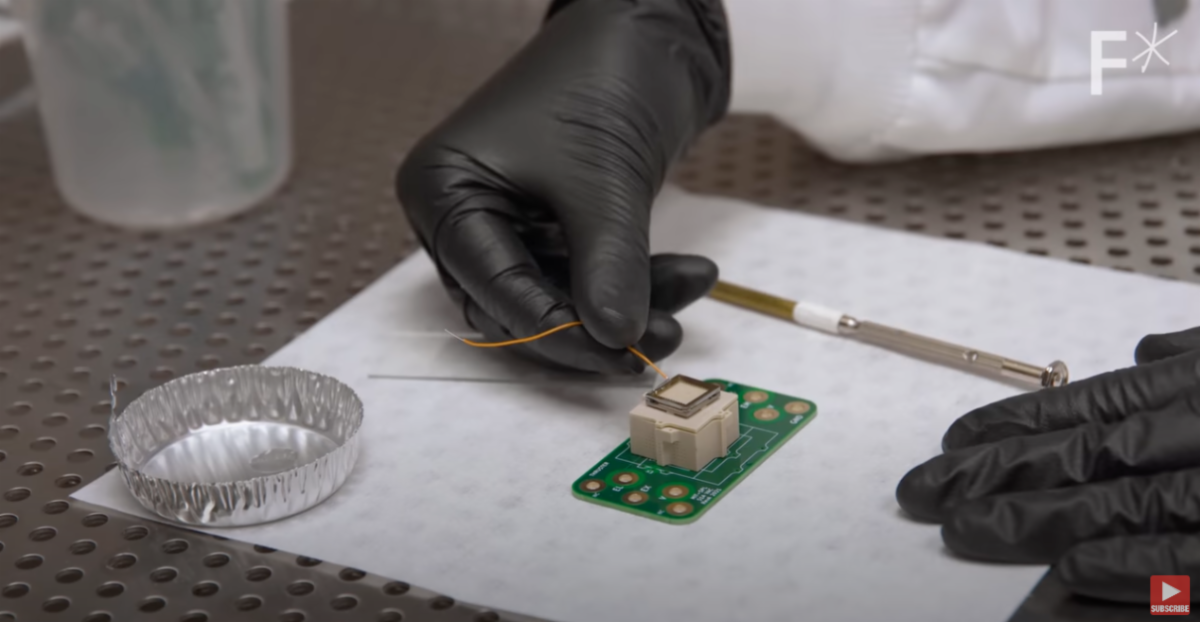
Paulo Lozano, Gustav Pettersson, Mia Bruno, and the Space Propulsion Lab were recently featured in Freethink's "Hard Reset" series. The mini-documentary explores the lab's work on an electric thruster system. 

16.821, Flight Vehicle Development, successfully tested their solar sea plane on the Charles earlier this month.

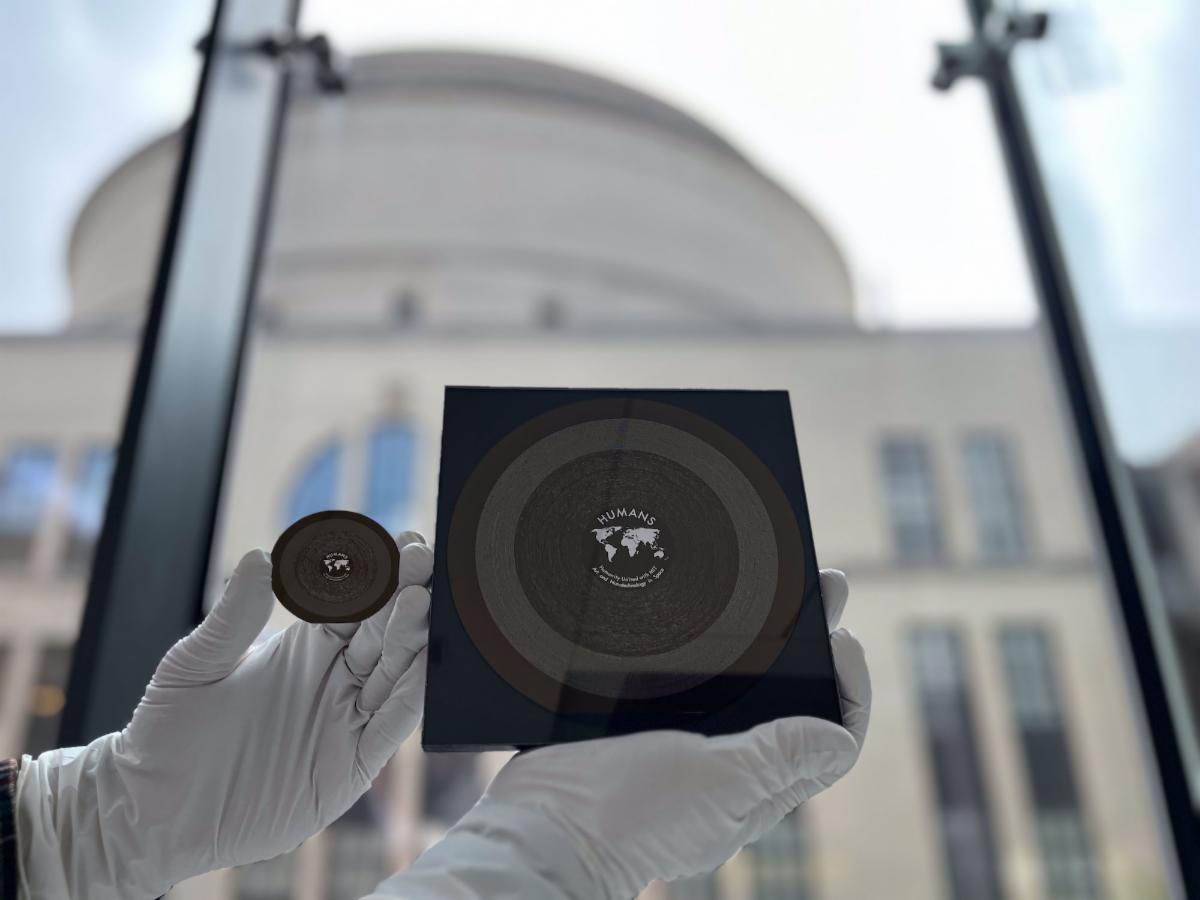
Join the HUMANS team at the MIT Museum on Sunday, May 28 at 10a.m. to listen to astronauts on the ISS play the HUMANS audio mesh, present the nanowafer, and participate in a live Q&A with the astronauts.


The nanowafer successfully launched to the ISS on the Ax-2 mission last Sunday.

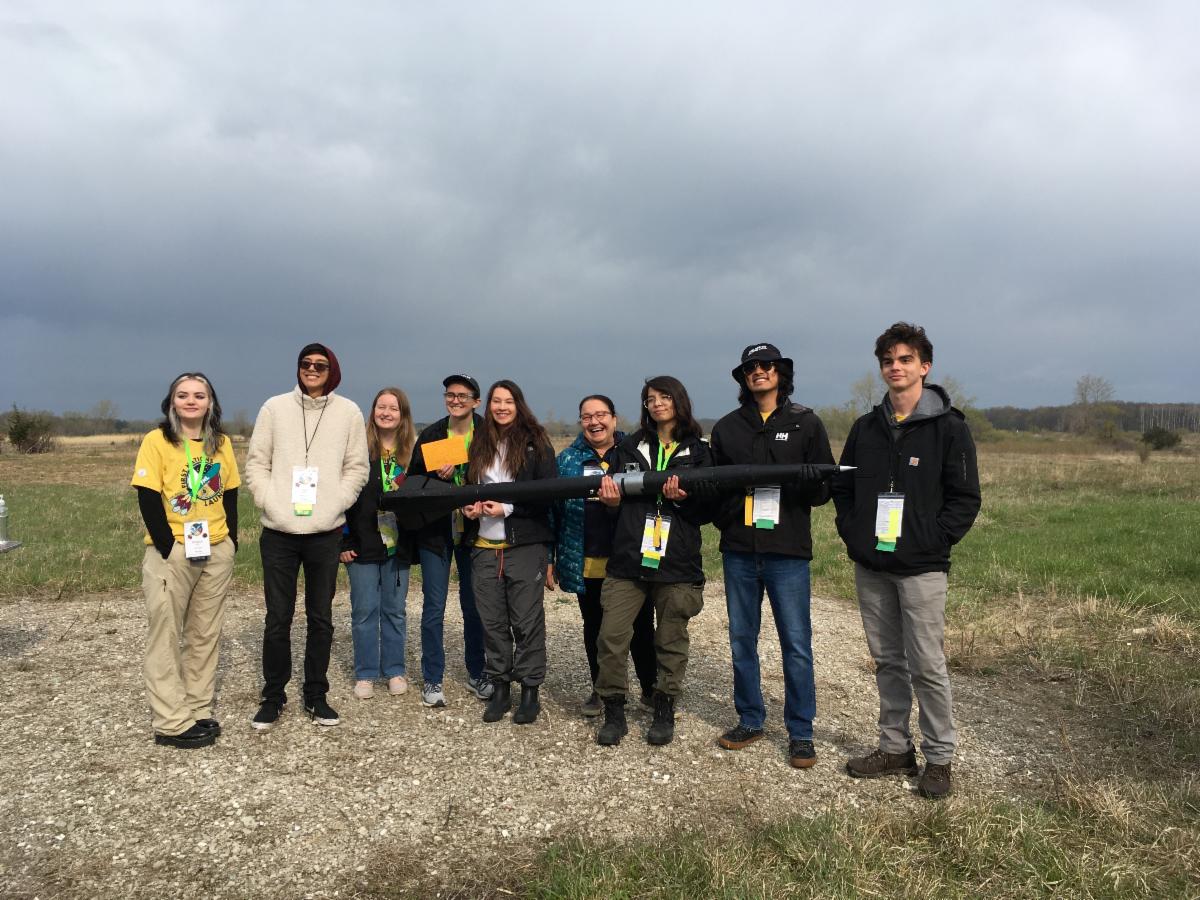
MIT First Nations Launch, an Edgerton team advised by Jeffrey Hoffman and led by Nicole McGaa (Oglala Lakota, '24), successfully launched their completed rocket on April 29 in at the First Nations Launch competition in Kenosha, WI, reaching an apogee of 4232 feet.


The team received a groundbreaking 3 awards at the competition. They were recognized for their progress as a brand-new team, their oral presentation, and their patch, designed by Peyton Meader ('26). Overall competition results will be announced in early June.


First Nations Launch is a NASA competition that focuses on Indigenous methodology and representation in the field of aerospace engineering. Currently a team of 8 students across several Indigenous Nations, the team is always looking for friends and relatives interested in joining for next year's competition. Contact Nicole McGaa for more information!

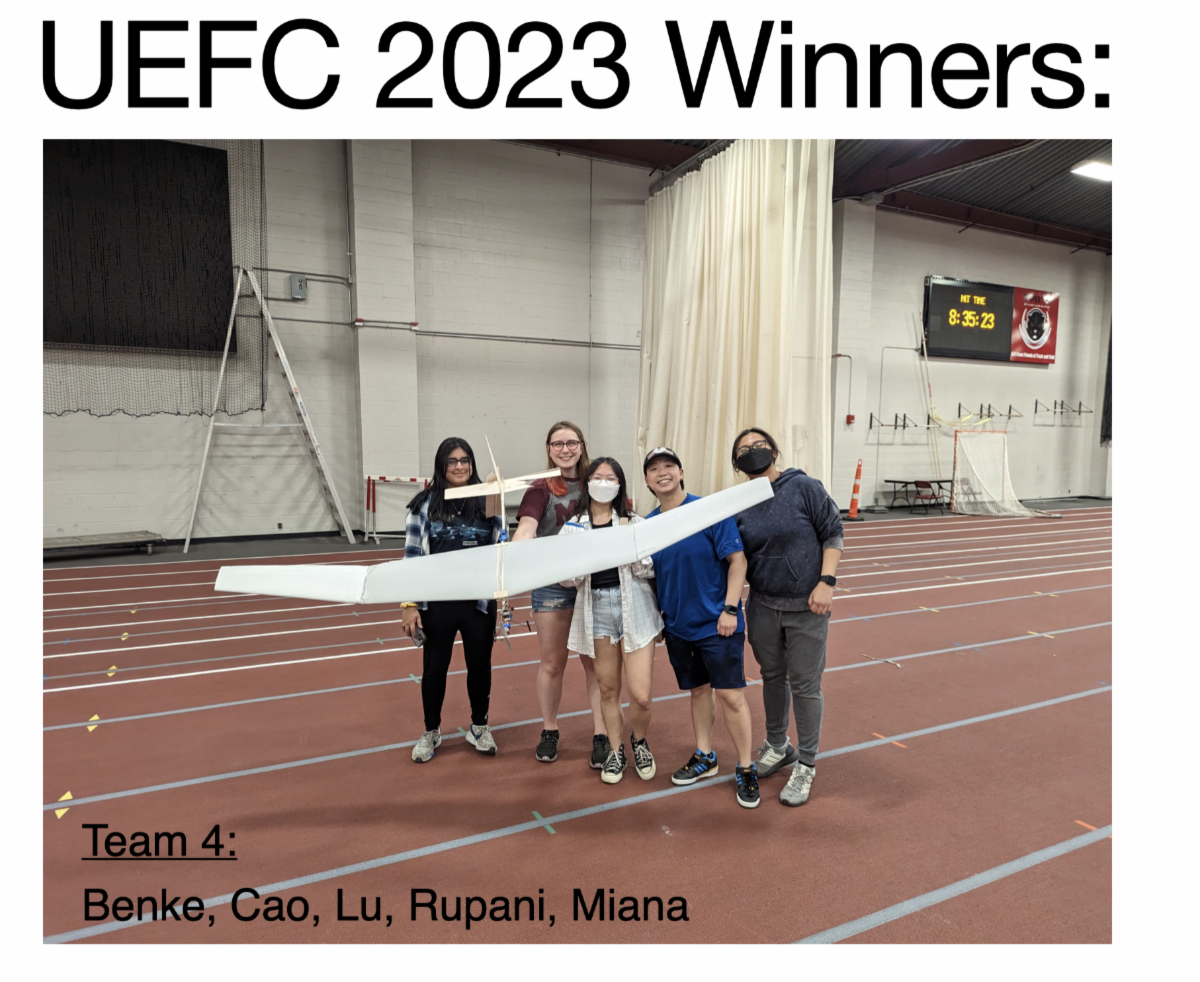
Unified Engineering hosted their annual flight competition last week — congratulations to the winners, Team 4! This year, the function to optimize was mpayload*speed^3.


Special thanks to instructor Adrián Lozano-Durán, plane pilot Mark Drela, Gelb staff Dave Robertson, and admin Pam Fradkin!

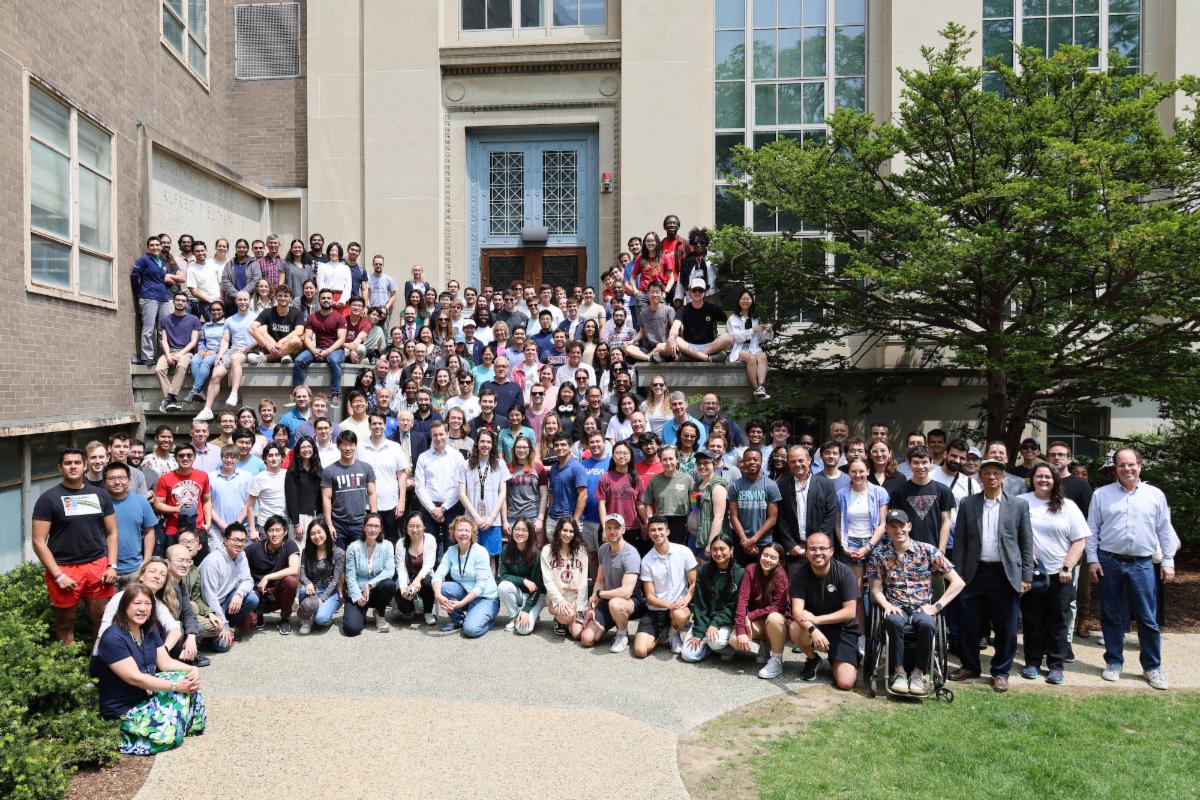
On May 16, AeroAstro celebrated the last day of classes with a picnic outside on the building 33 lawn.

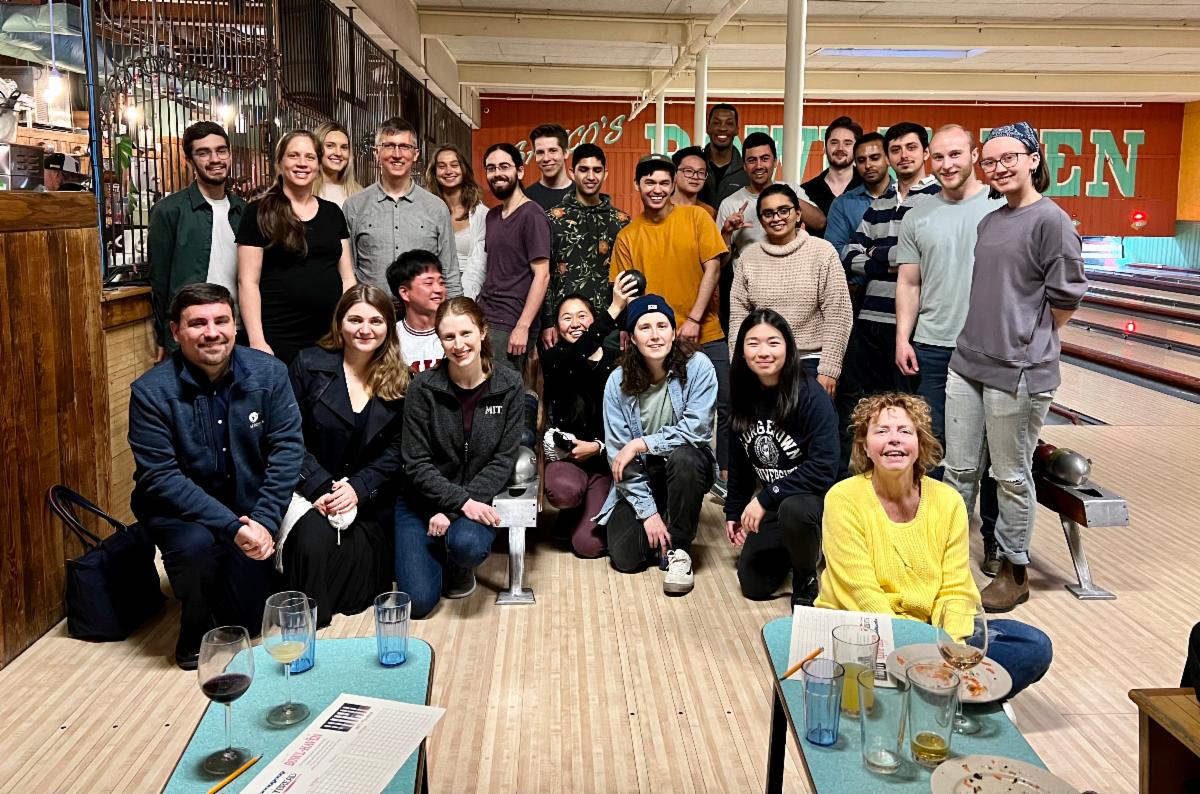
ICAT and LAE joined forces for an evening of bowling and pizza at American Flatbread in Somerville.

Do you have highlights to include in future editions of the

Monthly Roundup?

Send them to aa-communications@mit.edu.

Facebook  Twitter  Youtube  Instagram  LinkedIn

Website | Email | Facebook | Twitter | Youtube | Instagram | LinkedIn