MIT Department of Aeronautics & Astronautics | June 2022 | |
Note: The Roundup will take brief hiatus for the months of July and August. We will resume publication in September. Have a great summer! ☀️ | |
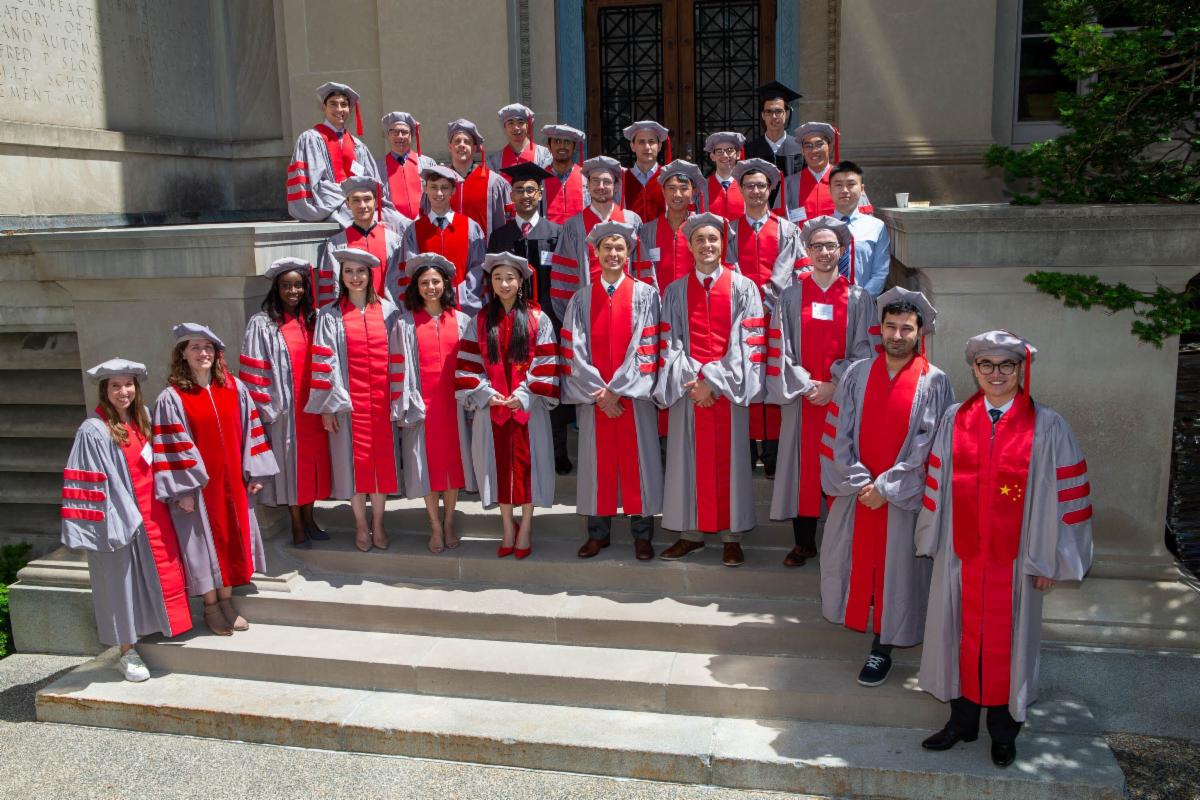
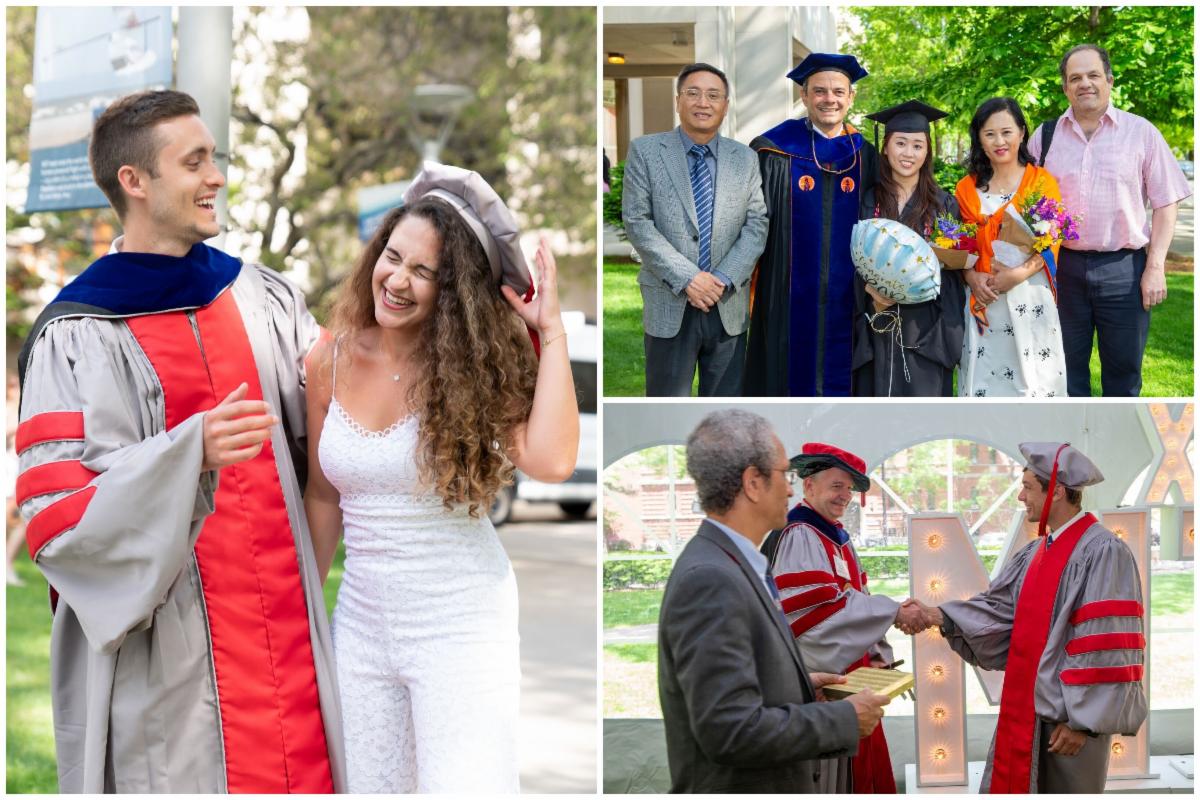
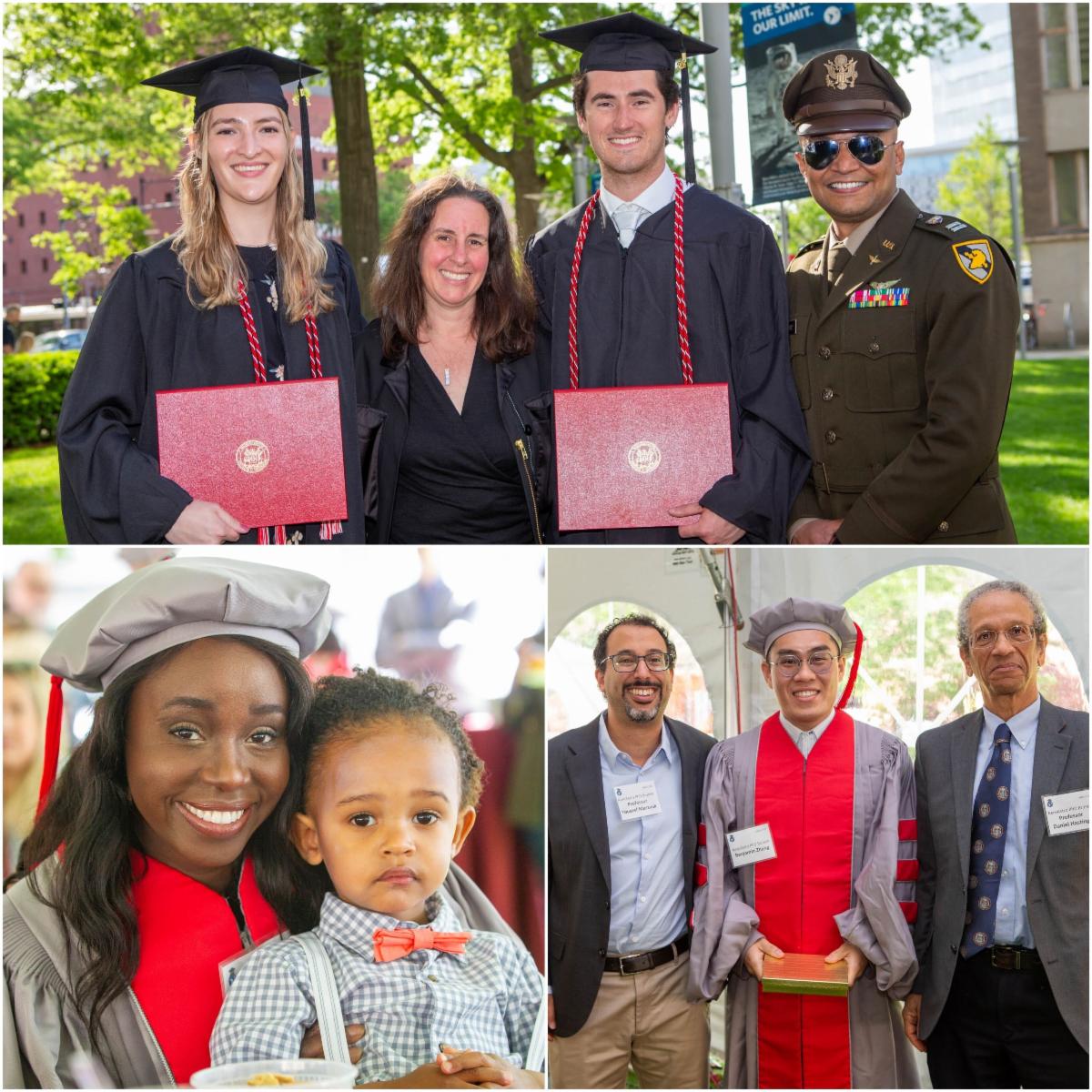
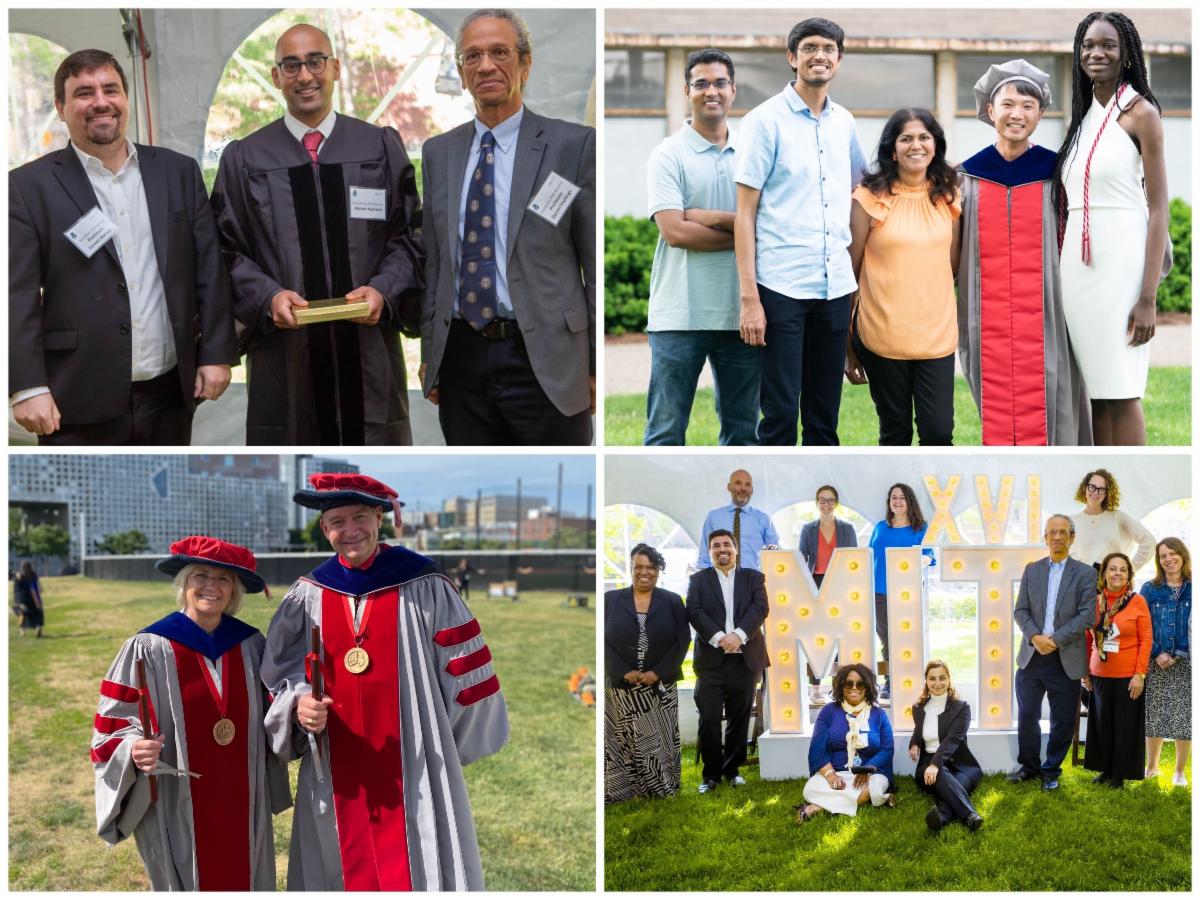
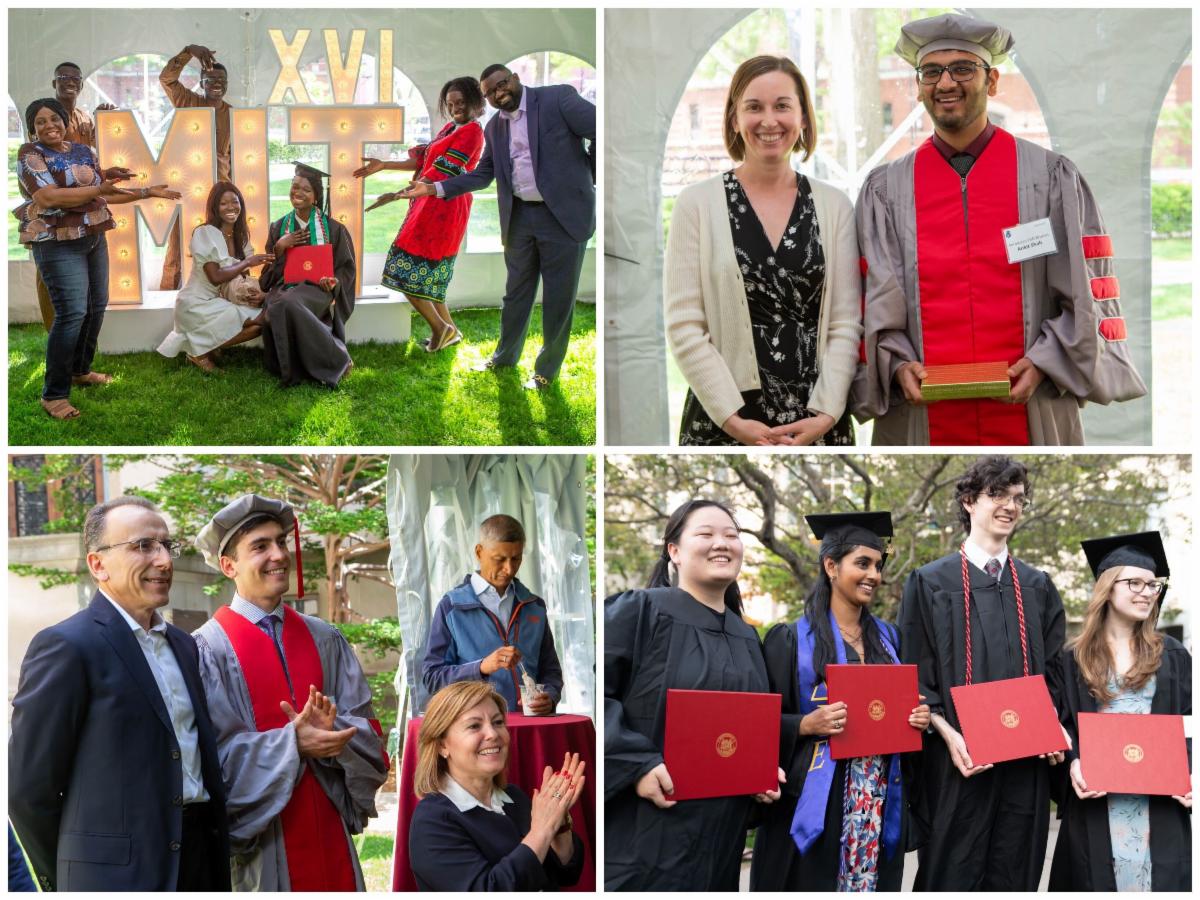
🎓 Congratulations Graduates! 🎓 | |
Welcome to our newest faculty members! | |
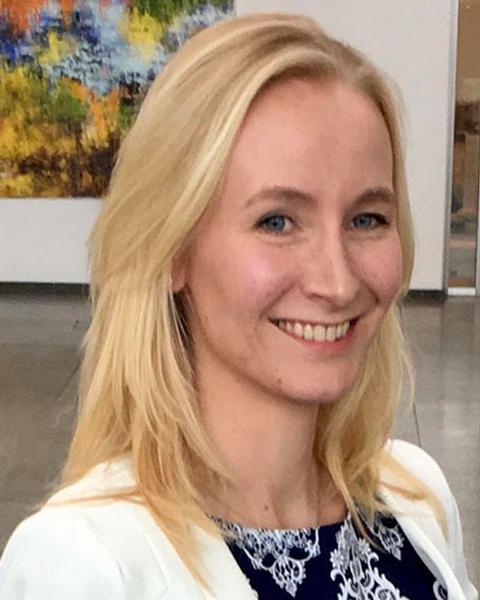
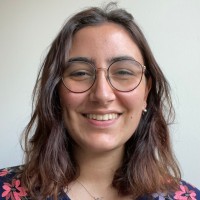
We are thrilled to welcome Katya Arquilla and Lonnie Petersen as new faculty members in AeroAstro. Both will join the Human Systems Lab and teach in the Space sector, and we look forward to the energy they bring to the Department! | |
Katya Arquilla
For the past year, Katya has been a part of the MIT community as a postdoc in AeroAstro. On July 1, her appointment as the Boeing Assistant Professor of Aeronautics and Astronautics officially begins! Katya received her PhD in bioastronautics from the University of Colorado at Boulder (UCB), where she was a Draper Fellow. She is an expert in bioastronautics, behavioral health and performance, wearable sensor systems, and human-autonomy interactions. Welcome to your new role, Katya!
| |
Lonnie Petersen
Lonnie is currently an Assistant Professor at UCSD in the Mechanical and Aerospace Department and will be joining us in AeroAstro on Sept. 1. She is an MD/PhD and an expert in space medicine; the effect of low gravity on human physiology and the appropriate countermeasures as well as hardware development and medical devices.Welcome to MIT, Lonnie!
| |
✈️ Unified Engineering Flight Competition ✈️ | |
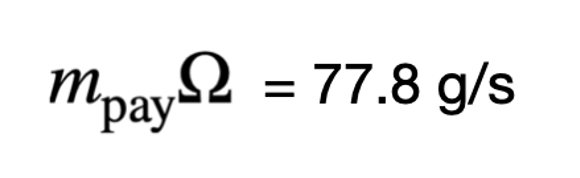
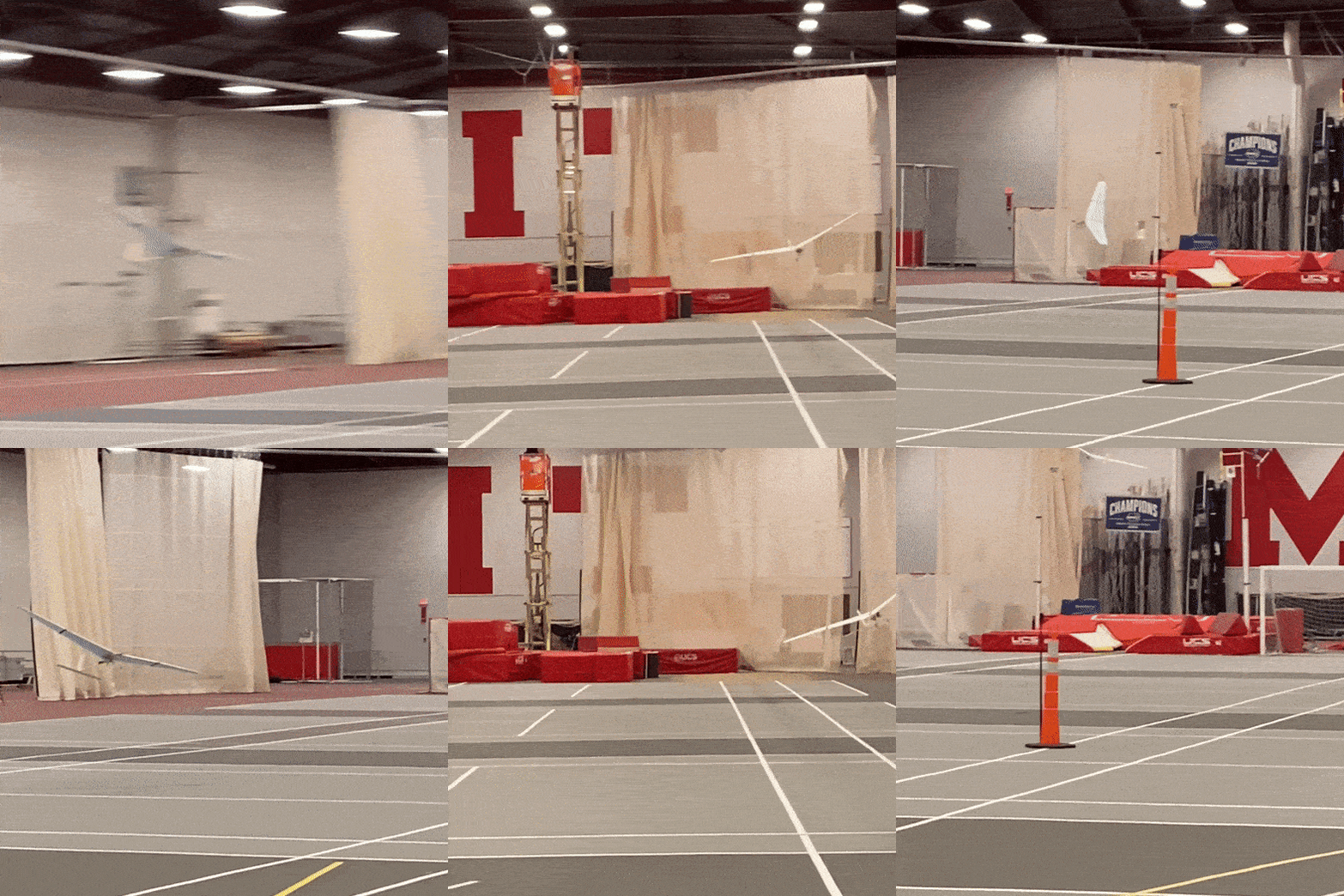
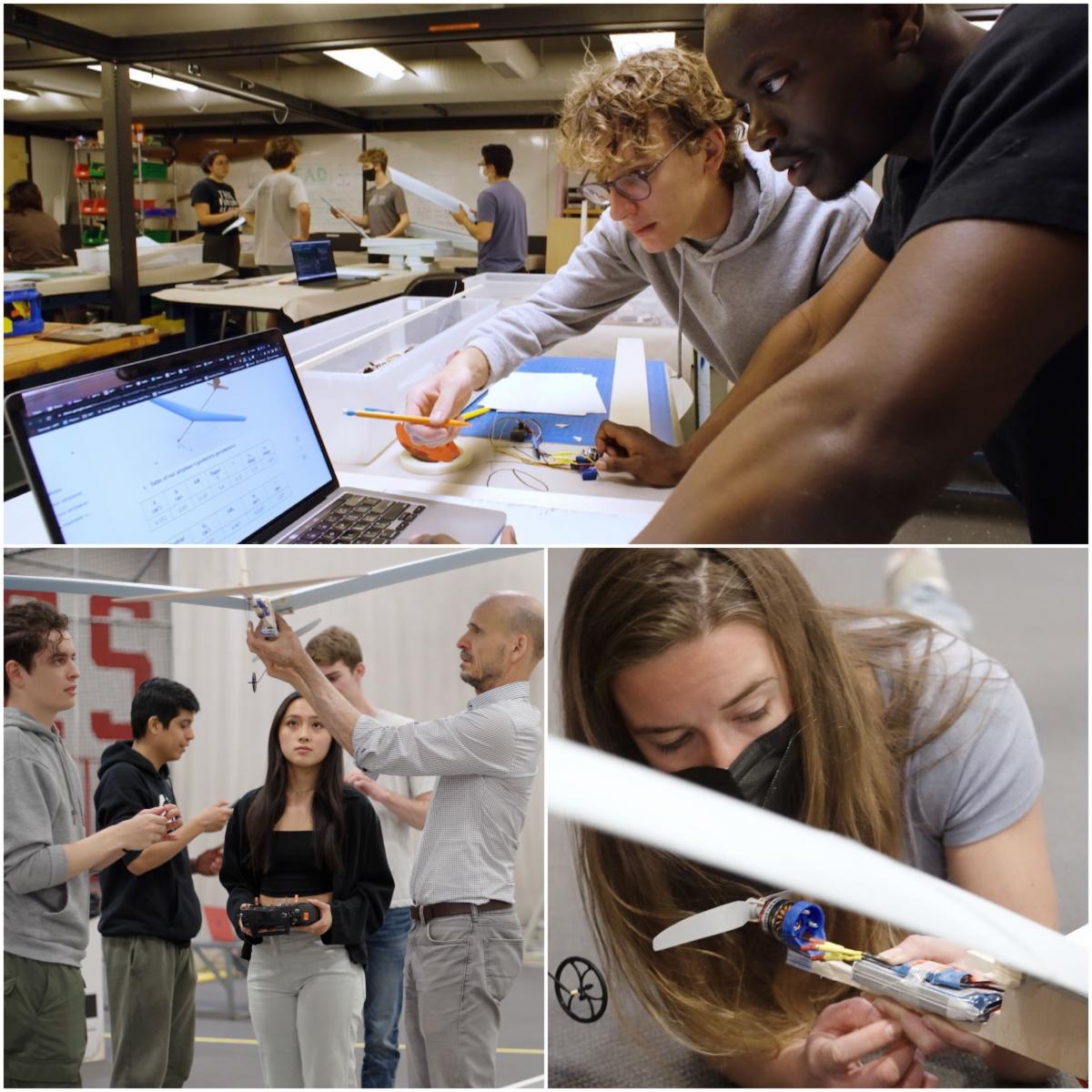
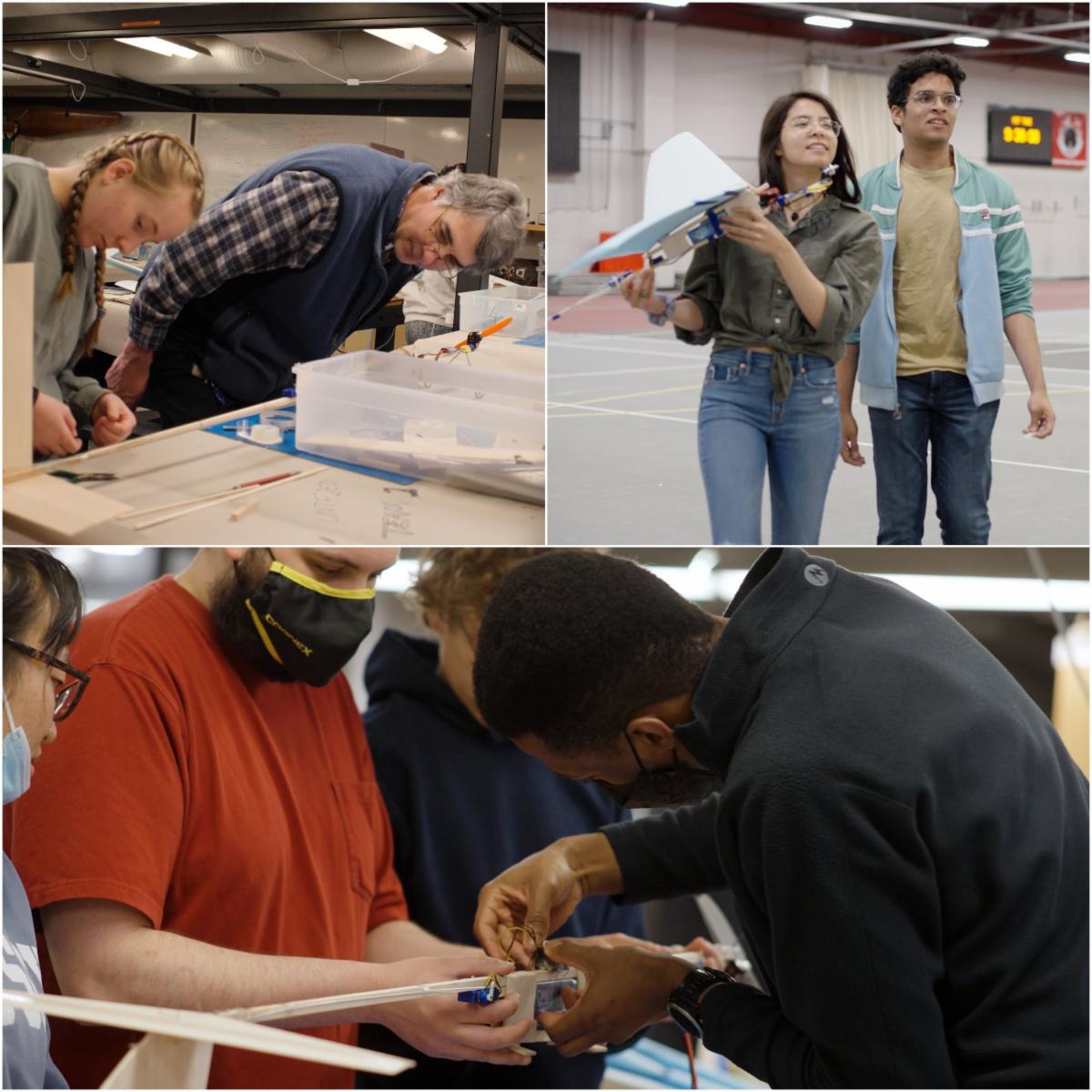
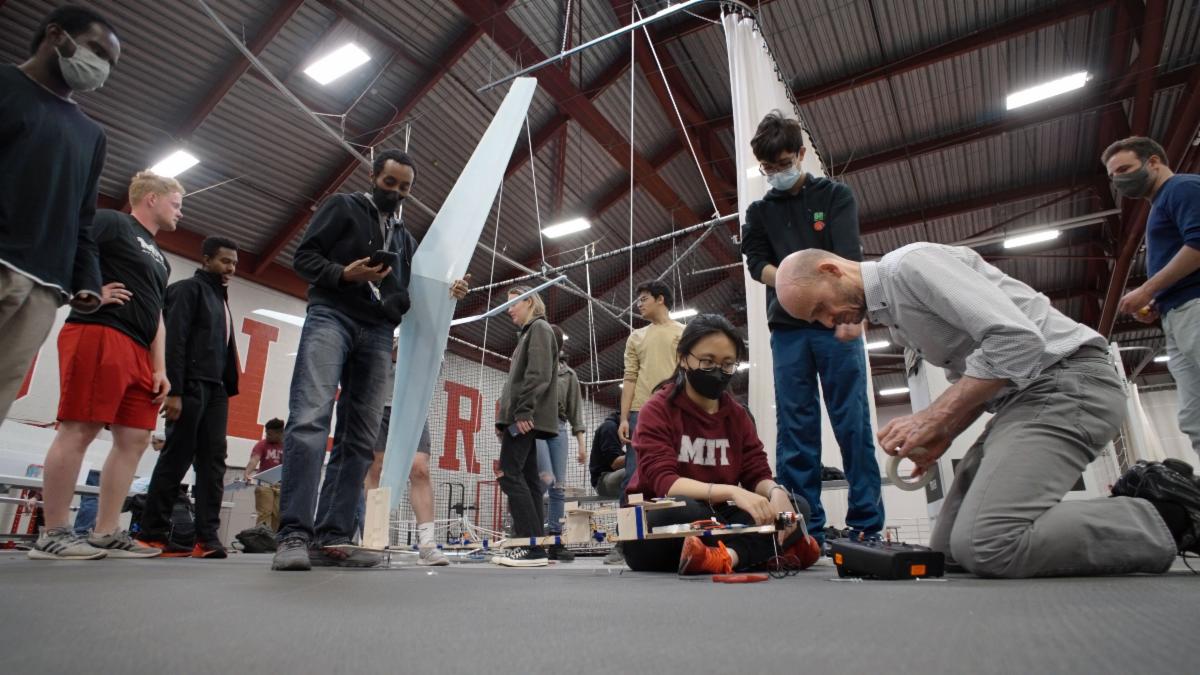
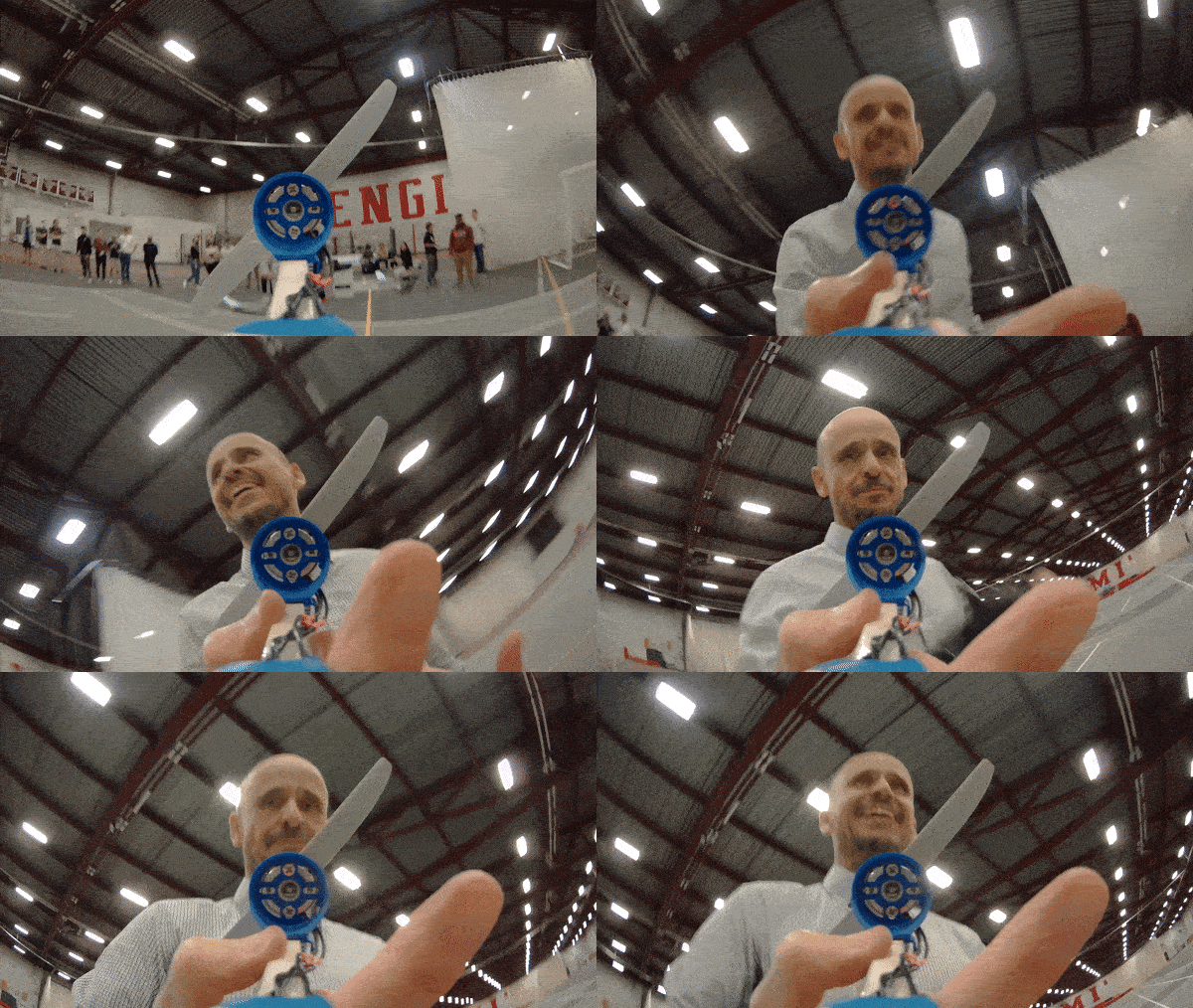
Each spring, Course 16 sophomores design and build a remote-controlled aircraft to fly against their classmates and compete for the highest score as a culmination of their experiences in Unified Engineering. The goal of the Unified Engineering Flight Competition is to achieve sustained flight in a circle carrying the max payload possible, and students design their airplanes to optimize this. The specific objective was payload mass times rotation rate...think of it as (how heavy a load can be carried) x (how fast can it be flown around a circle.) | Congratulations to Team 7! | |
|
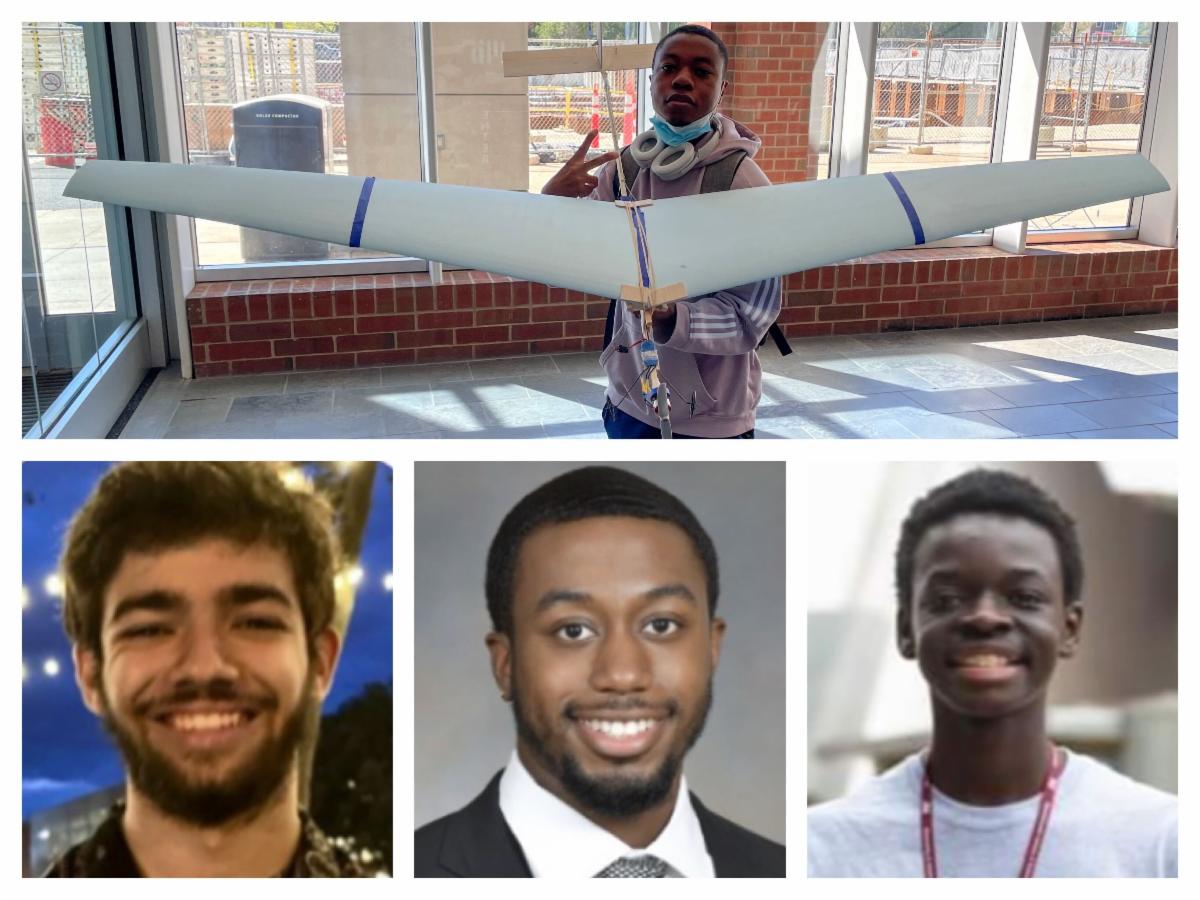
Congratulations to Team 7, who took the top spot in the Unified Engineering Flight Competition this year! Their design came in first place with 77.8 g/s for their payload mass times rotation rate!
Teammates:
-
Garrett Robinson (top, with the winning aircraft!)
- Isaac Broussard
- Dankwa Buckle
- Ahmed Diongue
Video (left) and photo (top) courtesy of Garrett Robinson.
| |
|
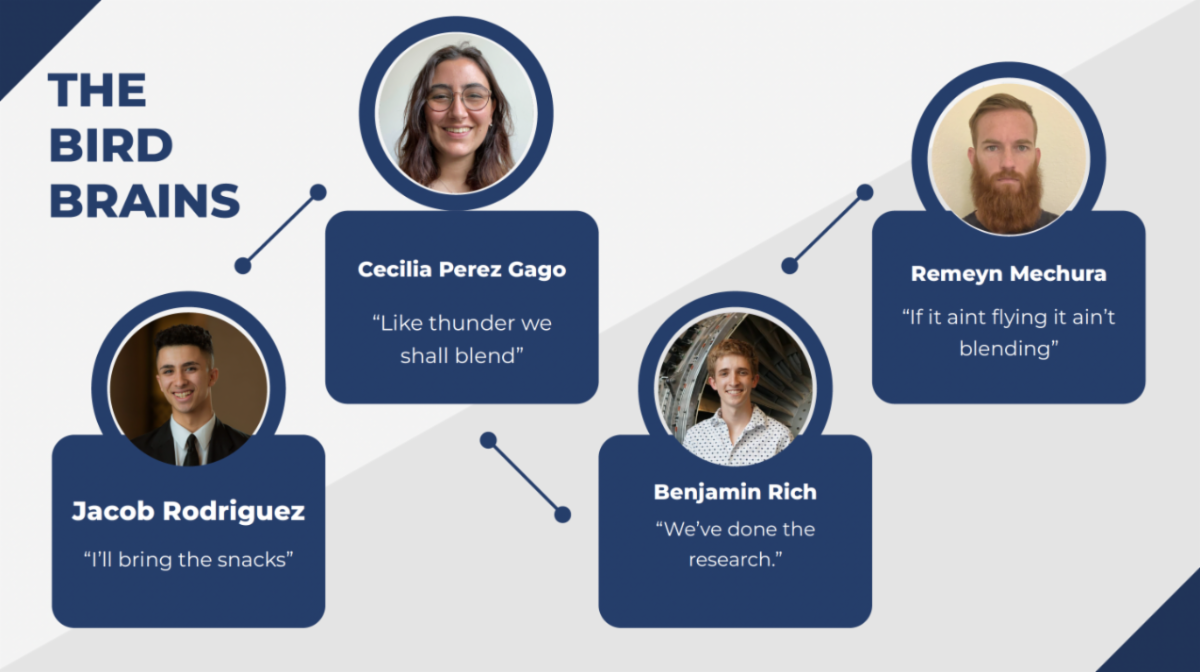
In addition to the Unified Engineering Flight Competition, students also participated in an aero-engine design competition. A new aircraft application was soliciting proposals for an advanced propulsion system and the Unified student teams were asked to put together a proposal that meets the aircraft requirements. The teams and their proposed turbofan engines were evaluated on criteria that included design strategy, first principles-based modeling, engine performance, and creating a company brand and slogan.
The winner of the Jet Lab Competition was Bird Blender, with the slogan “if it ain’t Blending, it ain’t flying.” Their concept featured an engine configuration for low specific fuel consumption with environmental considerations abiding by high performance requirements. Teammates included Jacob Rodriguez, Cecilia Perez Gago, Benjamin Rich, and Remeyn Mechura.
| |
|
This year, the recipient of the Yngve K. Raustein Memorial Award, which recognizes a Unified Engineering student who best exemplifies the spirit of Yngve Raustein and to recognize significant achievement in Unified Engineering, was Cecilia Perez Gago ‘24 "for unwavering engagement with the material and the concepts and for boundless passion for aerospace engineering."
| |
Special thanks to spring Unified instructors Mark Drela, Adrián Lozano-Durán, and Zoltán Spakovszky, graduate teaching assistants led by Arthur Brown (flight competition), Shun Zhang (fluids) and Ximo Gallud Cidoncha (thermo & propulsion), and staffers Pam Fradkin and Dave Robinson for lending their support and technical expertise to Unified Engineering this semester! | |
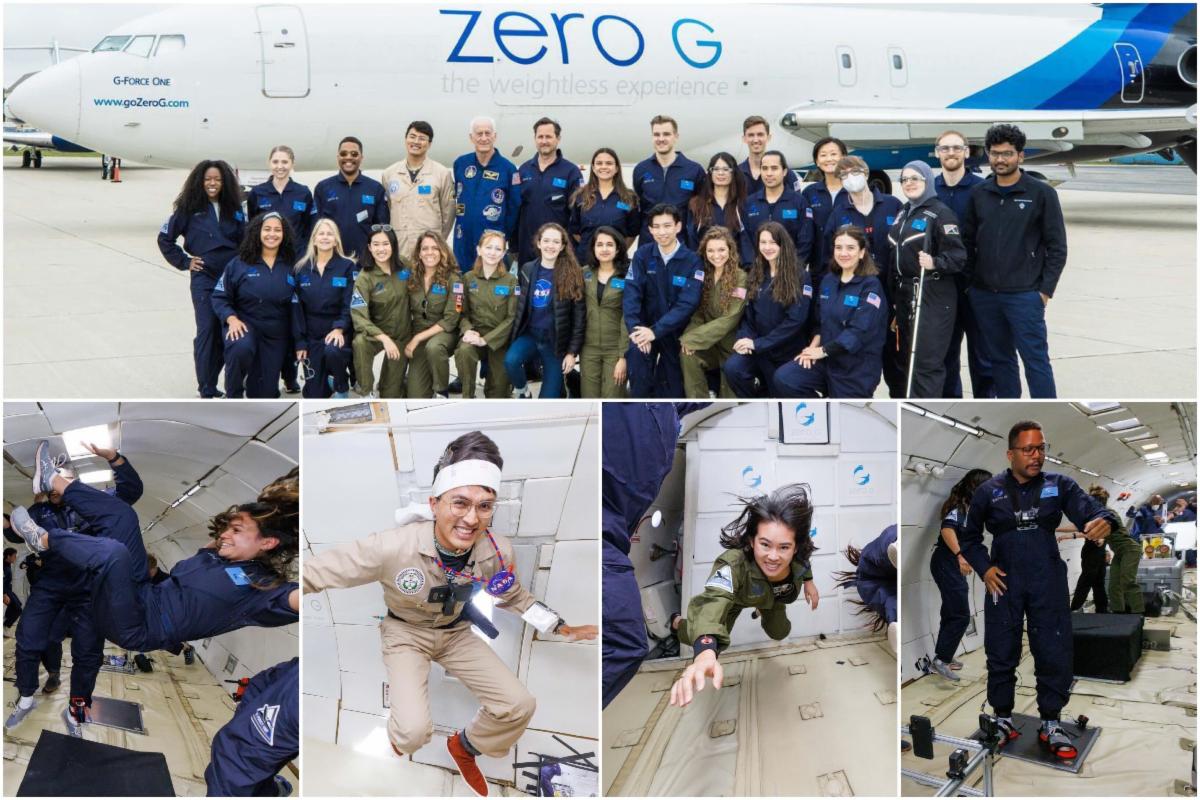
Taking to the skies in ZERO-G | Founded in 2016, the Space Exploration Initiative charters an annual ZERO-G parabolic flight for up to 15 projects and 25 researchers! This year's regularly-scheduled flight flew on May 20, 2022 and included many members of the AeroAstro community. The projects were tested over many microgravity parabolas (including two martian and five lunar parabolas). (Photo credits: Steve Boxall/ZERO-G) | |
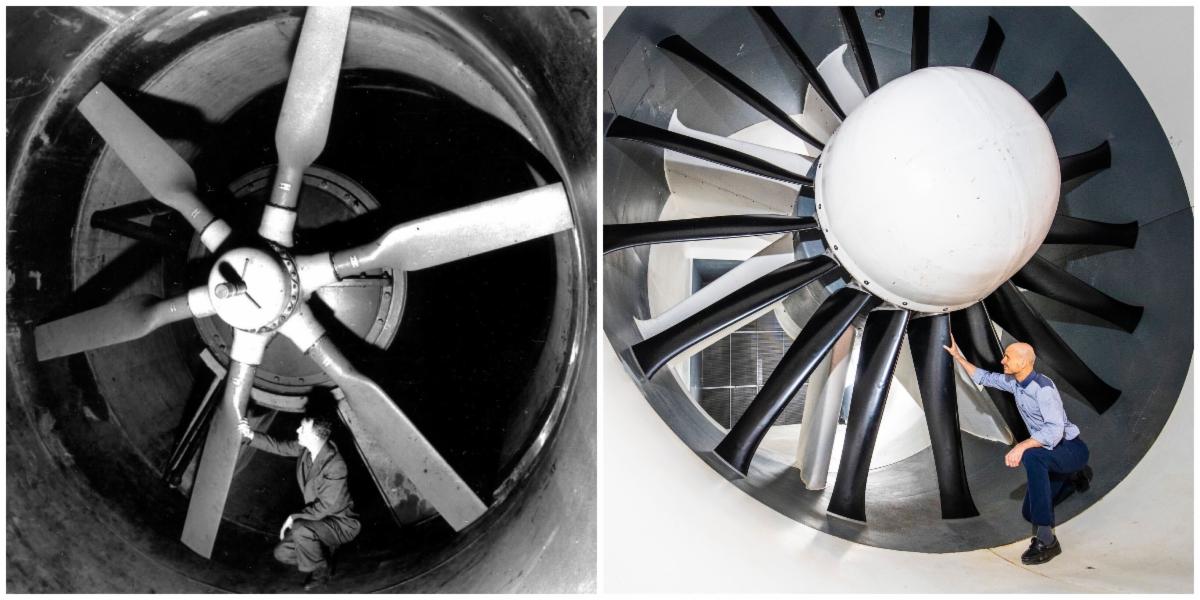
MIT unveils the new Wright Brothers Wind Tunnel | |
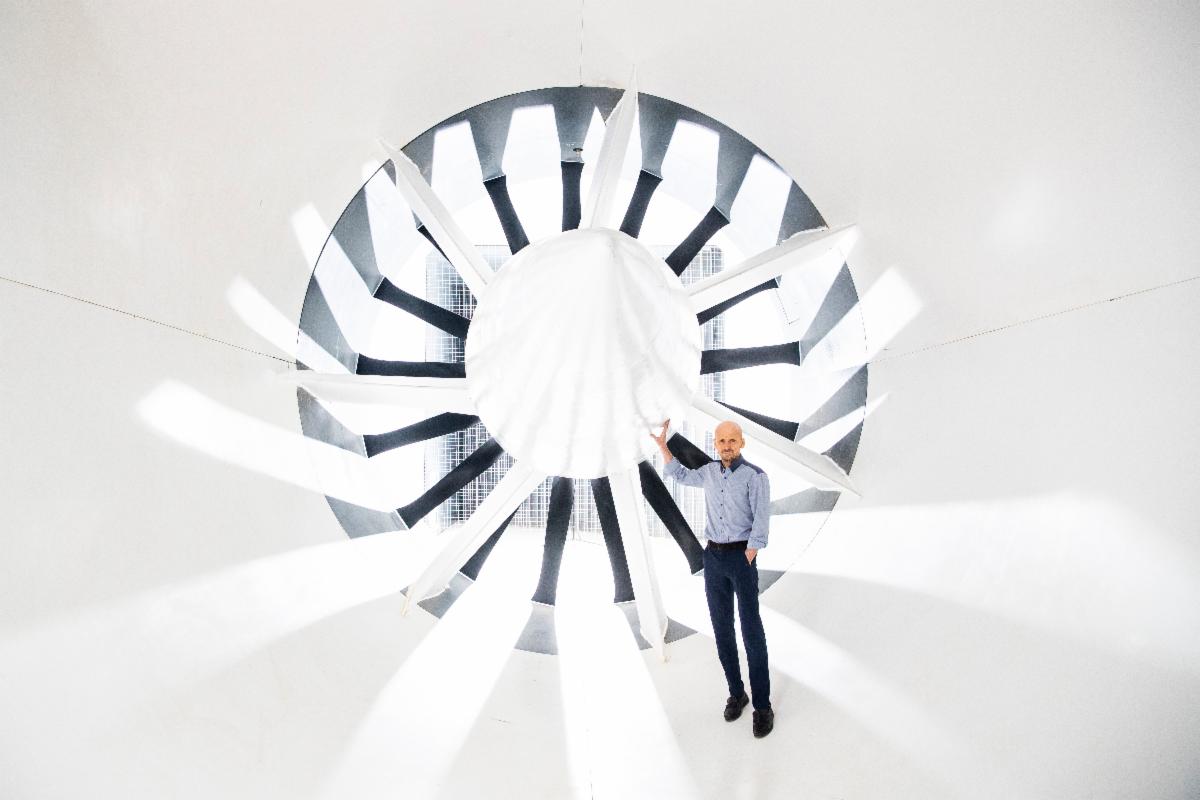
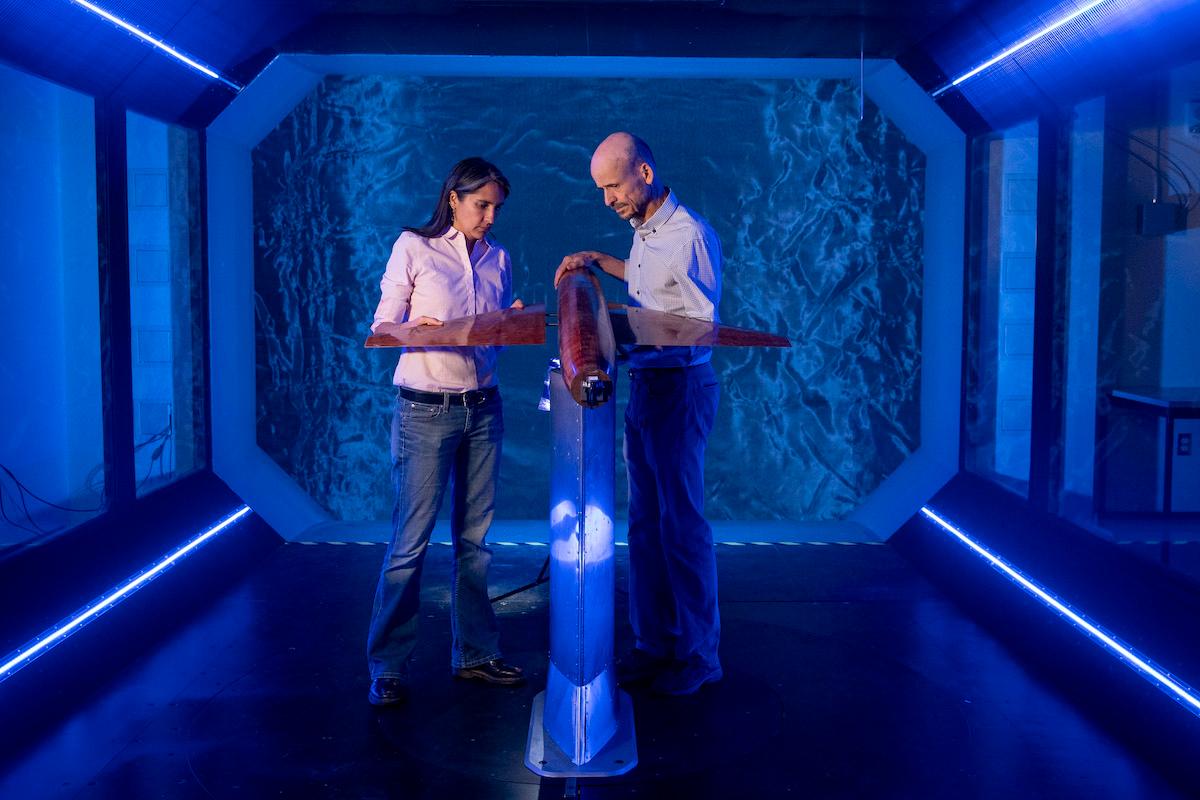
Since its dedication in 1938, the Wright Brothers Wind Tunnel has become a campus landmark used for education, research, industry, and outreach. But after nearly eight decades, the aged equipment became a challenge to use. In 2017, MIT AeroAstro announced it would replace the tunnel with a brand-new facility, and began construction in 2019. 22 months later, a state-of-the-art facility replaced a nearly 80-year-old campus landmark to become the most advanced wind tunnel in U.S. academia. | |
|
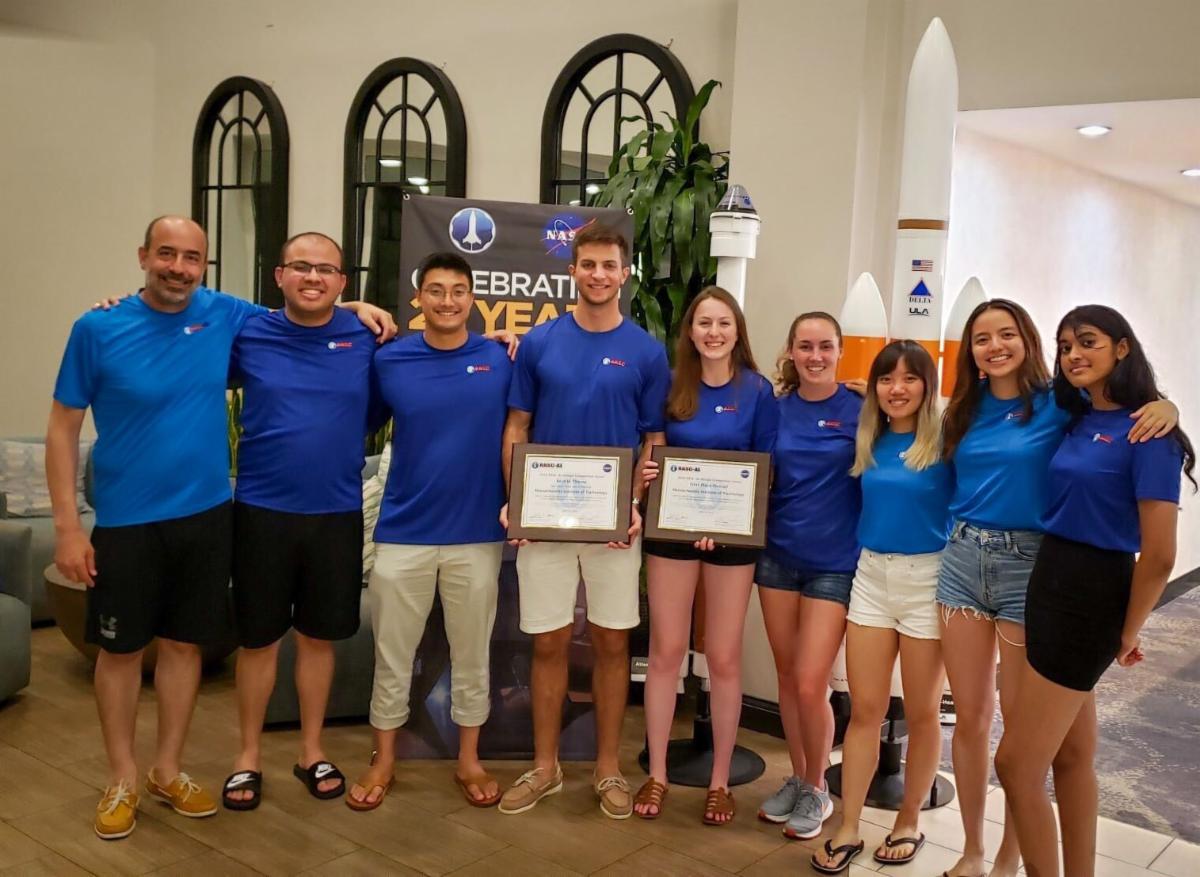
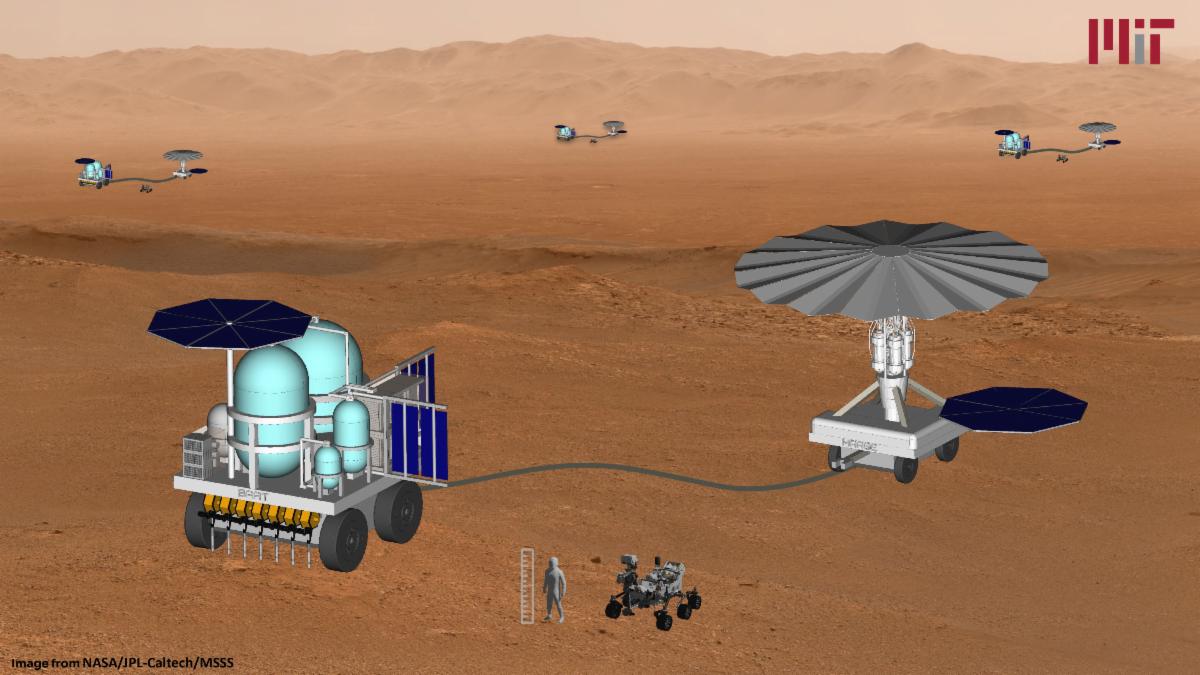
Last week, NASA announced that an MIT team received first place in the annual Revolutionary Aerospace Systems Concepts – Academic Linkage (RASC-AL) competition for their design that uses in-situ resource utilization (ISRU). Their project “Bipropellant All-in-one In-situ Resource Utilization Truck and Mobile Autonomous Reactor Generating Electricity” (BART & MARGE) describes a system where pairs of BART and MARGE travel around Mars in tandem; BART handles all aspects of production, storage, and distribution of propellant, while MARGE provides power for the operation. In addition, each BART & MARGE tandem is supported by an ice-scouting Perseverance-class rover that can also perform utility operations. After presenting their concept to a panel of NASA experts and aerospace industry leaders at the RASC-AL Forum in June, the team took first place overall at the competition and was also recognized as "Best in Theme for Mars Water-based ISRU Architecture.”
Chloé Gentgen led an interdisciplinary group of undergraduate and graduate students from MIT, including Guillem Casadesus Vila (visiting undergraduate student in AeroAstro from Universitat Politècnica de Catalunya), Madelyn Hoying (PhD candidate in MIT-Harvard Medical School Medical Engineering and Medical Physics program), Jayaprakash Kambhampaty SB’22 (AeroAstro), Mindy Long (EECS), Laasya Nagareddy (Math), John Posada (AeroAstro), and Marina Ten Have (EECS). AeroAstro PhD candidate George Lordos, who founded the MIT Space Resources Workshop and who has led or advised all MIT NASA competition teams since 2017, was a mentor for the project team. Jeffrey Hoffman, Professor of the Practice in AeroAstro and Olivier de Weck, Apollo Program Professor and Professor of Astronautics and Engineering Systems in AeroAstro, served as faculty advisors. A story for MIT News is in progress.
| |
|
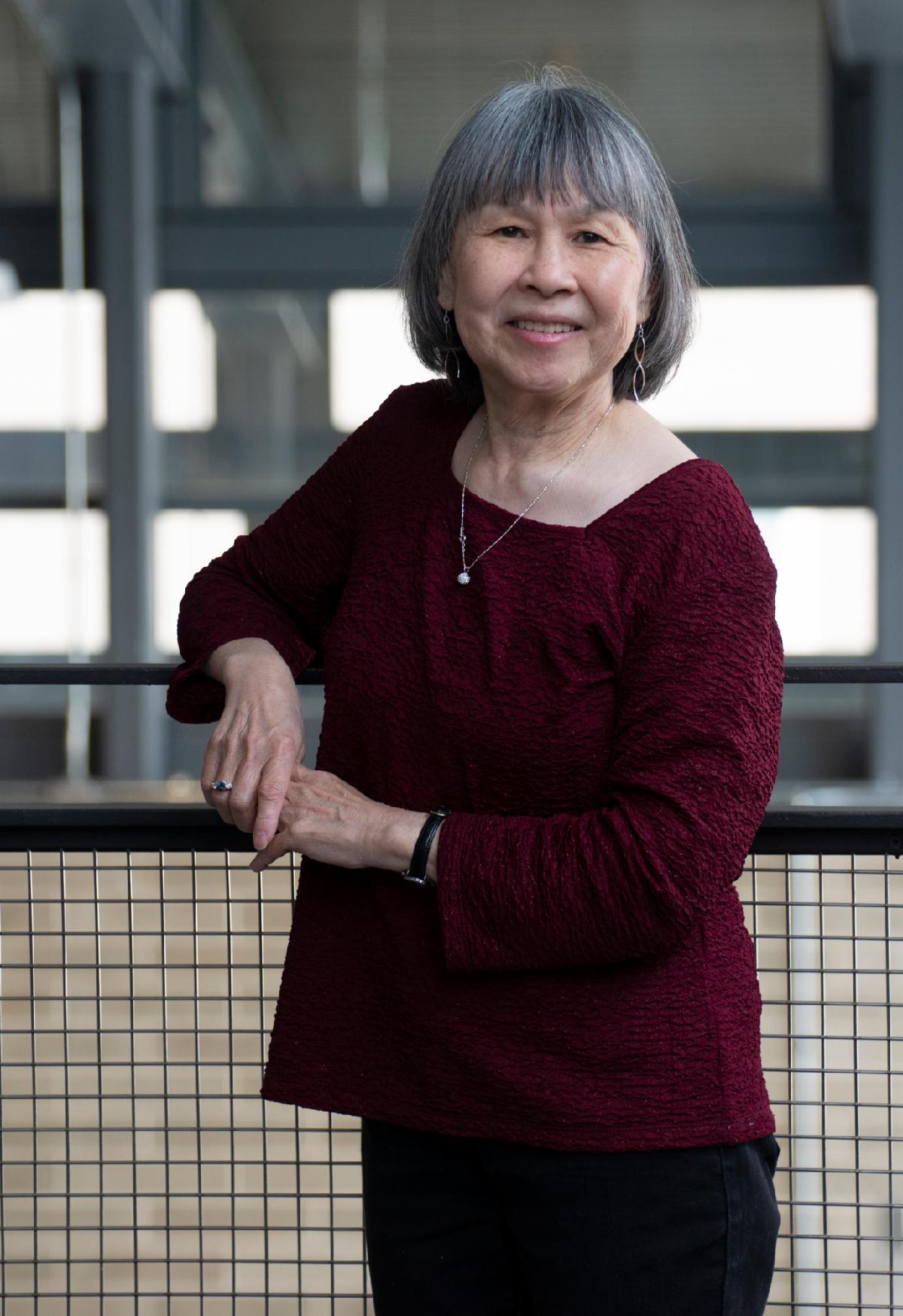
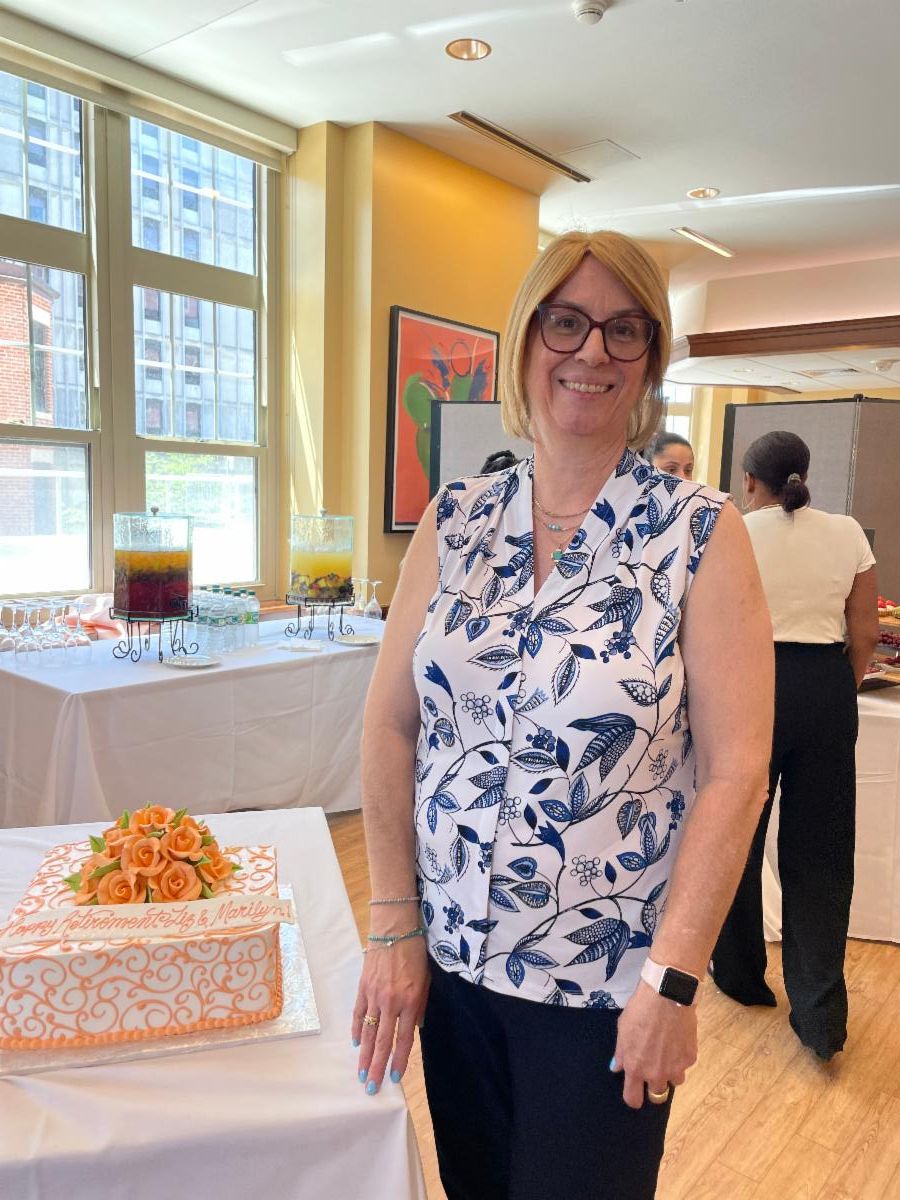
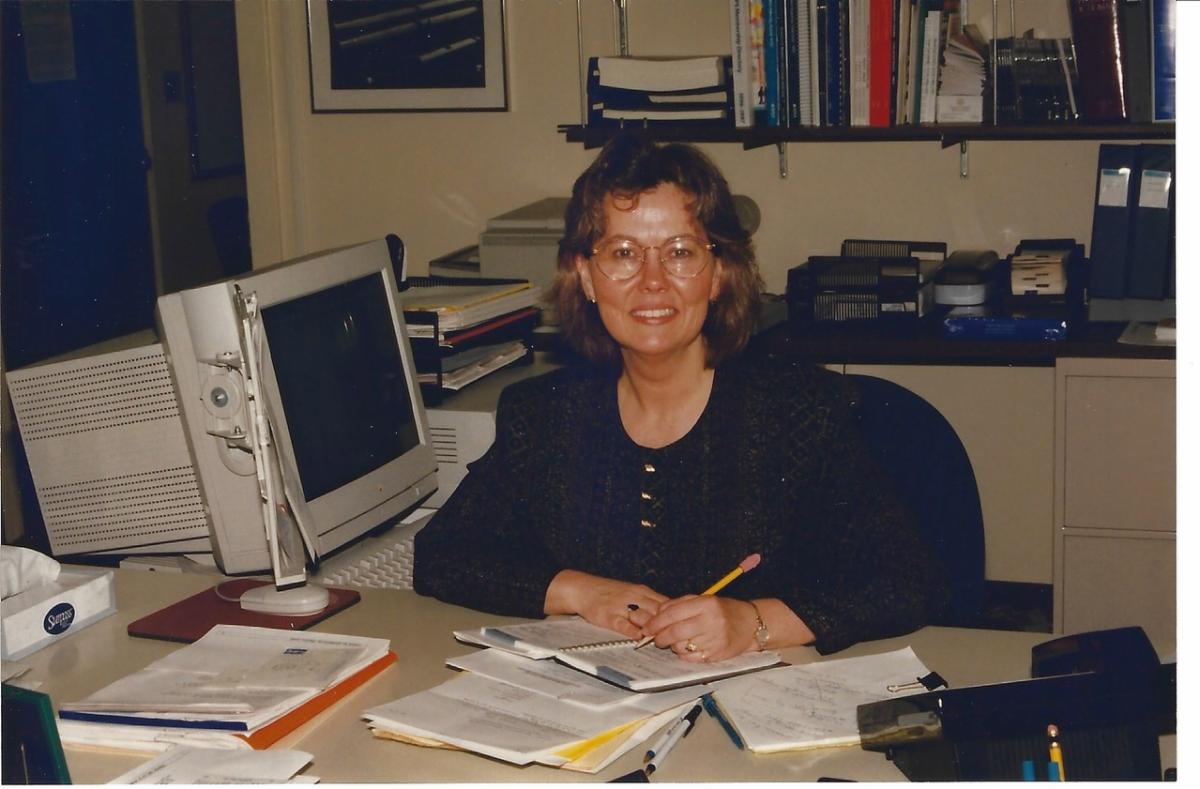
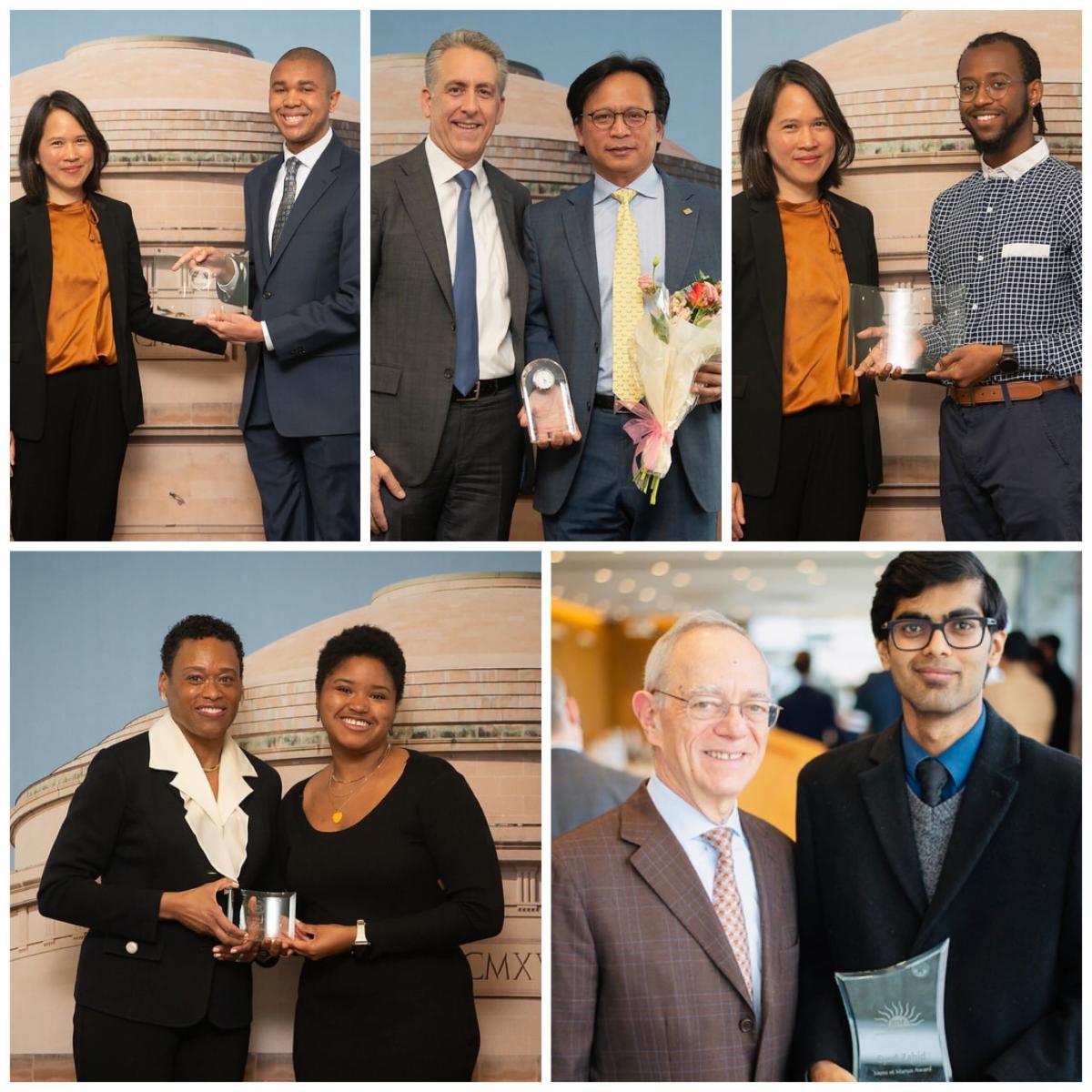
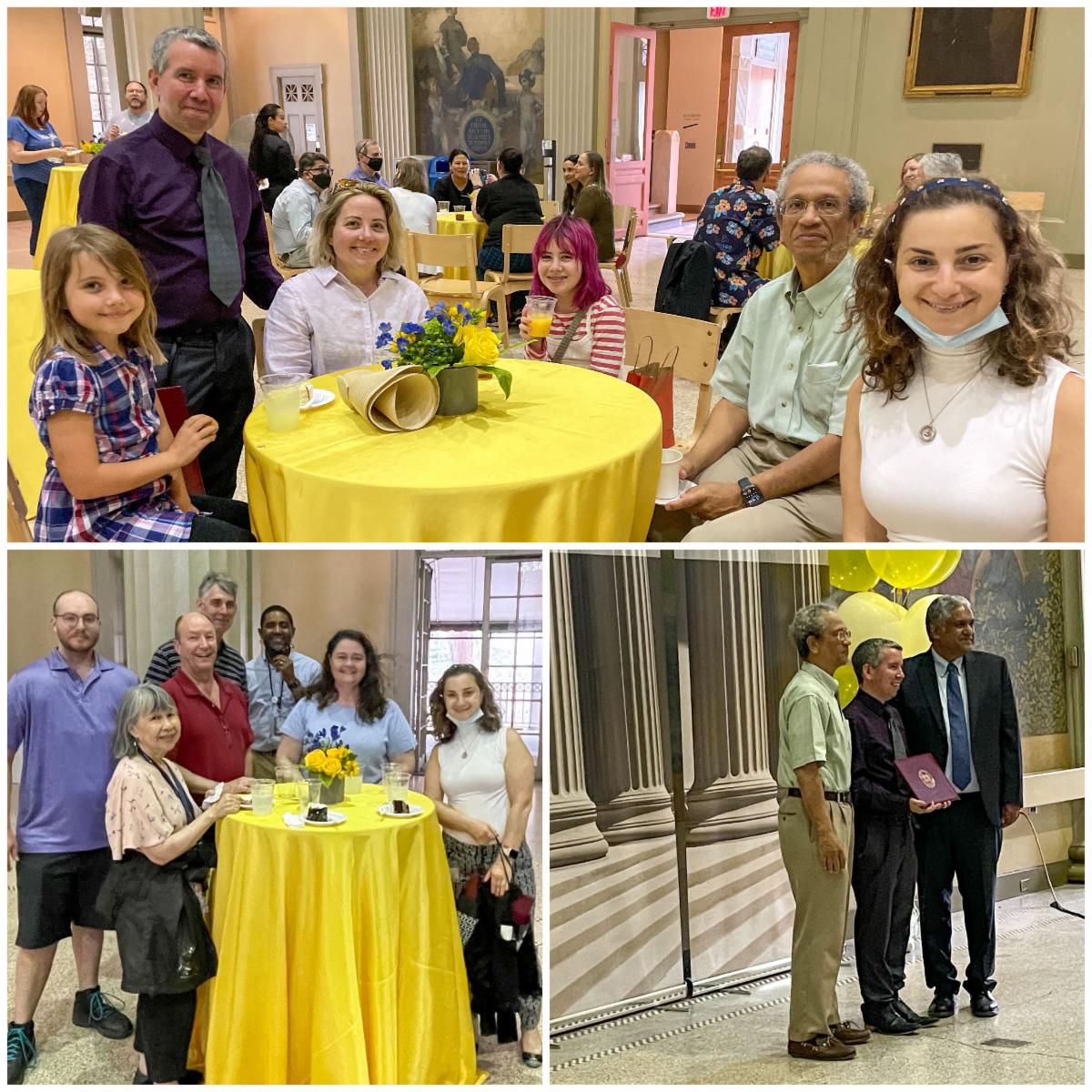
On Monday, June 16, Brían O’Conaill was among the honorees at the 2022 annual School of Engineering Infinite Mile and Mandigo Awards Ceremony. A virtual ceremony was held in the morning followed by an in-person celebration in Walker Memorial to honor recipients from this year as well as 2020 and 2021, including Beata Shuster and Quentin Alexander (IMA 2020), and Liz Zotos (Mandigo 2021).
Photos courtesy of Beata Shuster.
| |
Sertac Karaman recently gave a TEDxMIT talk, "Super-human autonomous cars and drones." | |
On Saturday, June 11, Dava Newman spoke at the investiture ceremony for Dartmouth's Thayer School of Engineering and received the school's highest honor, the Robert Fletcher Award. | |
|
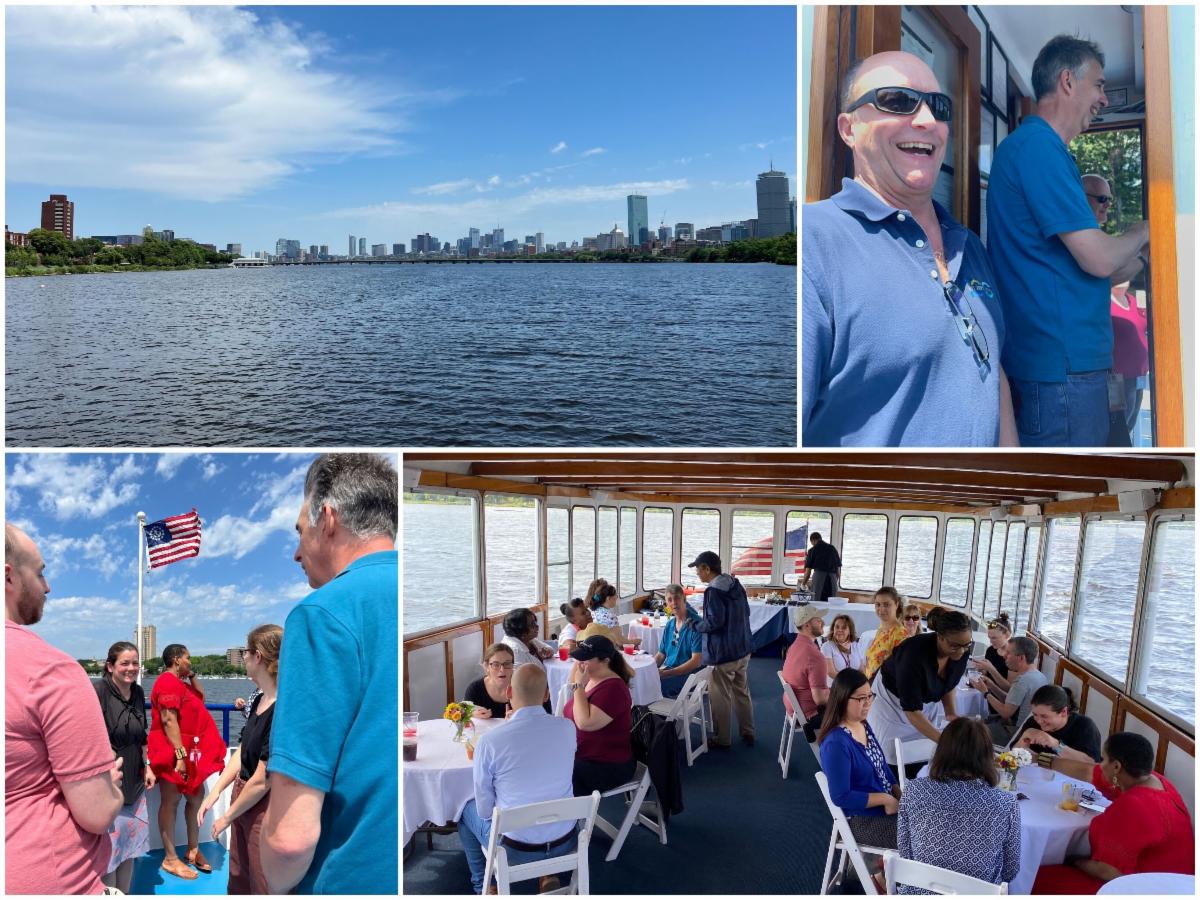
To celebrate the end of a busy academic year, AeroAstro staff were treated to a luncheon boat cruise on the Charles River on Friday, June 17. The forecasted summer storm held off long enough for 25 staffers to enjoy a beautiful day on the water! Special thanks to Joyce Light for planning!
Pictures courtesy of: Joyce Light, Sara Cody, and Beata Shuster.
| |
On June 3, Danielle Wood held an artistic performance and design exhibition that was the culmination of the year long class called "Queer-Feminist-Antiracism and Design for the Future." During the event, students and scholars from a variety of fields exhibited research projects that consider the role of identity to inform the design with methods grounded in systems engineering, visual art, graphics design, computer science, robotics, public health and aerospace. The second half of the event was a performance of a choreopoem called "Design for the Future" that was conceived by Prof Wood, Prof Austin Eyer of the University of Texas at Arlington and guest artists Jennifer Newman and Paul Lieber. The work was co-sponsored by grants from the Emerson Collective and the MIT Center for Art, Science and Technology. The performance featured original musical and spoken word compositions created by the performers, including 6 musical theatre students from the University of Texas at Arlington. The piece celebrated the legacy of cultural innovation from the Black feminist tradition. | | | | | |