|
APRIL GAZETTE
| Our 95th year!
April, 2017 - Vol 64, Issue 7
|
|
|
| Board of Governors |
President
Honeywell Building Solutions
President-Elect
Secretary
Past President
The HIDI Group
|
|
|
| President's Message |
In the spirit Earth Month, I wanted to kick off this ASHRAE Toronto gazette by focusing on making a positive impact within the built environment.
Every year, building owners and managers across Toronto organize sustainability events, such as Earth Hour, to demonstrate their dedication towards environmental stewardship. These events allow for occupant and public engagement and share the cause with a broader audience. Every individual contribution matters and everyone can make a positive impact in their own way.
As an active member of ASHRAE, there are plenty of opportunities to make a positive impact as well. Whether you want to join a technical committee, support the development of an ASHRAE Standard, influence political leaders, or volunteer at the local chapter level - everyone can find a way to make a positive impact.
 Environmental stewardship is at the core of ASHRAE's values and is engrained into everything we do. As a society, our mission is to advance the arts and sciences of heating, ventilation, air conditioning and refrigeration to serve humanity and promote a sustainable world.
Every month, ASHRAE Toronto strives towards delivering a value-added program to its members and industry professionals with the goal of sharing ideas and transferring knowledge. Every meeting this year has focused, either directly or indirectly, on our ability to come together and make a positive impact on the built environment.
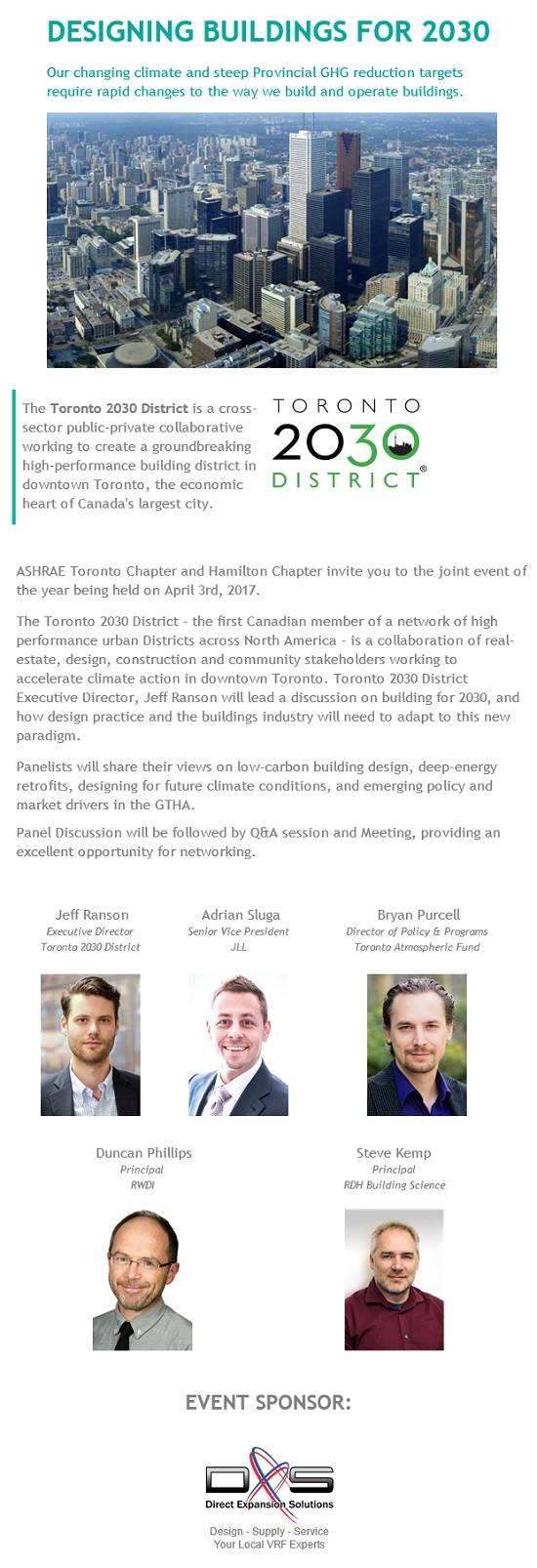
Our upcoming April meeting aligns perfectly with this ongoing theme. Next week, we will be learning about The Toronto 2030 District, a collaboration of real-estate, design, construction and community stakeholders working together to accelerate climate action in downtown Toronto.
With a focus on sustainability in April, I am implementing a CALL TO ACTION to all of our ASHRAE Toronto members - find a way to make a positive impact on the built environment. Whether you are designing a new mechanical system, operating a building, implementing a technology or educating a classroom of students, take this month to make a positive change in the world around you.
Thank you for your continued support of ASHRAE Toronto and hope you enjoy the April edition of our Gazette.
Marco Ottavino,
P.Eng., MBA
ASHRAE Toronto President
416-771-3824
|
|
|
|
| Notice of Meeting |
April Joint Dinner Meeting
Monday, April 3rd, 2017
5 pm - 7 pm networking & hour d'ourves
7 pm - 9 pm key note speaker & panel discussion
Mississauga Grand
35 Brunel Road Mississauga L4Z 3E8
All attendees must pre-register on-line to attend.
No walk-in registrations will be permitted.
Need Assistance?
Feel free to contact the following members for further details:
ASHRAE Toronto Chapter Technology Transfer Committee Chair
|
| Gazette Sponsors |
ASHRAE Toronto Chapter thanks the following
companies for their support of the Gazette
 |
|
|
|
|
|
|
|
|
post
your business card here!
|
|
| March Commissioning Seminar |
|
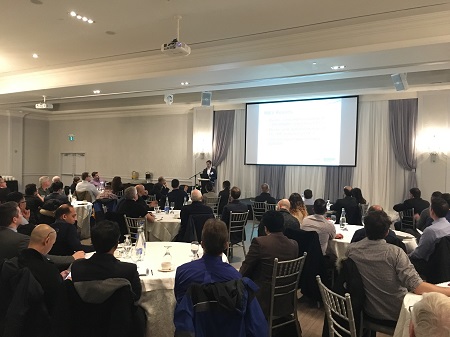
The agenda for the March meeting started with the Commissioning seminar in the afternoon. It was jointly held with the BCA Eastern Canada Chapter and through the efforts of Michael Loughry of HH Angus and Derek Cheung of Isotherm Engineering.
Attendees heard from subject matter experts on the following topics:
- Using Building Data to the Best Effect (Keith Larose, Copper Tree Analytics Inc.)
- M&V Case Studies: Chiller Plant Replacement and Demand Controlled Lad Exhaust (Michael Kurz, University Health Network)
- Total Building Commissioning (Dr Niall Byrne, Integral Group)
- Accurate Air and Water Balancing Improves the Commission Process (Linda Ku and Garret Wu, Aerodynamics Inpsecting Consultants Ltd)
- Energy Recovery Devices (Jason Henderson, HTS Toronto)
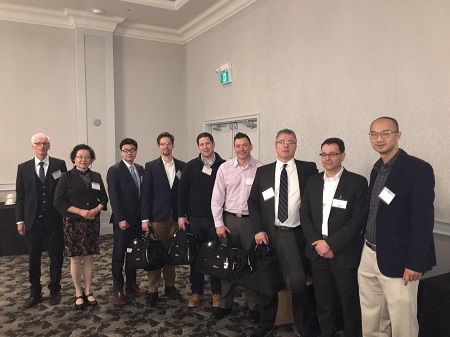
Left to right: Michael Loughry (HH Angus); Linda Ku (Aerodynamics Inspecting);
Garret Wu (Aerodynamics Inspecting); Michael Kurz (UHN); Niall Byrne (Integral Group)
Keith Larose (Copper Tree); Jason Henderson (HTS); Joe Bile (Toronto Hydro)
Derek Cheung (Isotherm Engineering)
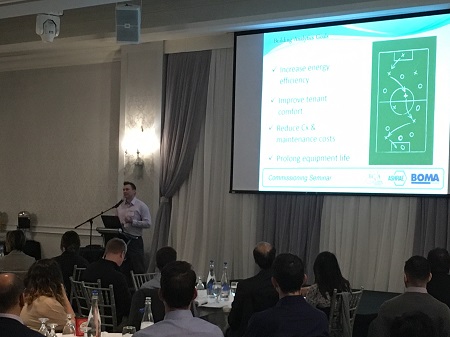
Keith Larose (Copper Tree) presenting on "Using Building Data to the Best Effect"
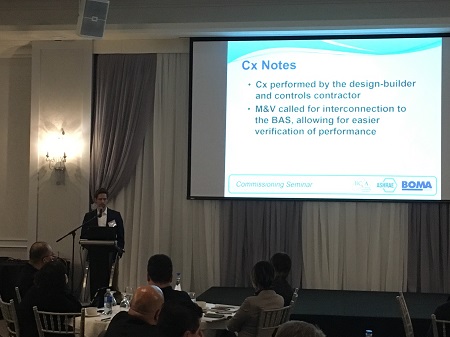
Michael Kurz (UHN) presenting on "M&V Case Studies: Chiller Plant Replacement
and Demand Controlled Lad Exhaust"
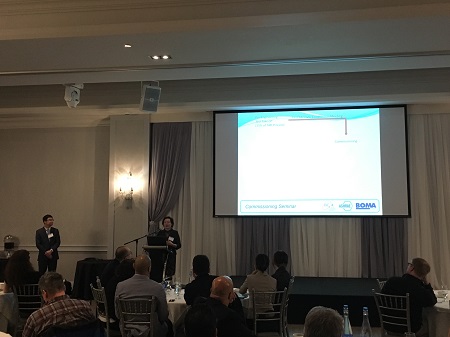
Linda Ku & Garret Wu (Aerodynamics Inspecting) presenting on "Accurate Air
and Water Balancing Improves the Commission Process"
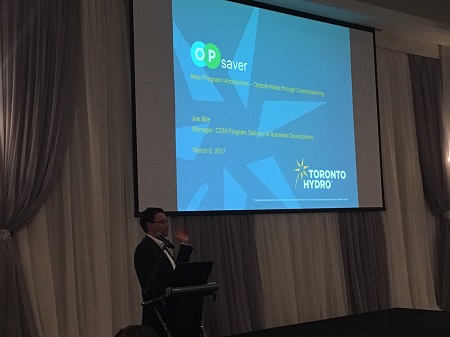
Joe Bile presenting on Toronto Hydro's new program "OPSaver"
|
| March Meeting Summary |
Tips, Tricks, and Techniques of Commissioning
The presentation at the March ASHRAE dinner seminar was provided by David Underwood, P.Eng. David is a well-known, esteemed member of the ASHRAE community. As ASHRAE's 2015-2016 president, his theme was "Making Connections." He is an ASHRAE Fellow and a Life Member. He has received an Exceptional Service Award, a Distinguished Service Award and the William J. Collins Research Promotion Award. He also served on the Board as a Director at large, two terms as a vice president and treasurer.
After graduation from the University of Manitoba, Underwood was employed by a major products manufacturer in HVAC&R. After approximately 10 years he founded Isotherm Engineering Ltd., an HVAC&R design-build enterprise, which continues to operate today.
He was a Board member of the Ontario Refrigeration and Air Conditioning Contractors Association for many years. He served on the advisory group that assisted in developing provincial refrigeration regulations and also coauthored a trade refrigeration safety manual.
David was on the Canadian Standards Association (CSA) B52 committee on Mechanical Refrigeration. As a member of a Canadian Federal committee, he participated in writing the Building Science and Plumbing section of the 2015 edition of the Model National Building Code (MNBC).
David Underwood is also an ASHRAE Distinguished Lecturer, and a member of Technical Committee 7.2, HVAC&R Construction & Design Build Technologies.
The theme of the dinner presentation was commissioning techniques, tips and tricks. As a long time practitioner, David's presentation provided a wealth of knowledge on some of the techniques and processes to successfully commission any project.
Commissioning is defined as the verification & documentation that all systems and assemblies are planned, designed and installed, tested and operated and maintained according to the Owner's Project Requirements. However, after years of experience, David's simplified version of this definition is: the transfer of the designer's knowledge to the operator's hands.
Commissioning a building can be a tricky process. Developing clear documentation that is detailed, while not overwhelming, simple, but not vague and overall, easy to understand and navigate is difficult to achieve. For complex building systems, this can be especially challenging.
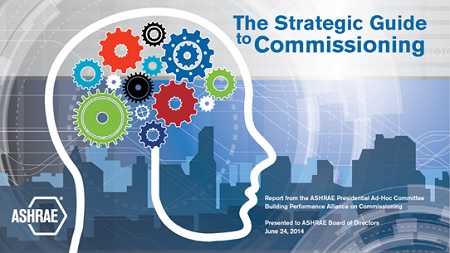
To assist with the process, there is a Strategic Guide to Commissioning which was developed by The Building Performance Alliance and can assist in providing details on the commissioning process, value and benefits of commissioning and loads of other information on how to go about successfully commissioning a new system.
ASHRAE has also been involved with several activities in the commissioning of systems including developing guidelines for outlining the commissioning process (Guideline 0), HVAC&R Technical requirements for commissioning (Guideline 1.1), procedures for preparing facility system manuals (Guideline 1.4) and several others.
There is also a document titled ASHRAE Standard 202 Commissioning Process for Building and Systems that outlines the minimum acceptable commissioning processes. While the standard outlines the minimum requirements, David reminded us all that it is more than acceptable to go above any beyond the minimum requirements to help the operators utilize the systems in the most efficient way possible.
However, while all this information can be vital to your commissioning project, one of the most important tricks that David stressed throughout his presentation was the importance of communication between the parties involved. Since the transfer of knowledge is the main goal during commissioning, clear, concise communication between the designer, operator and owner is the ultimate tool. Even with a well-designed system, great communication skills can be the difference between a well commissioned system that operates at optimal conditions and a system which underperforms and does not fulfill a building's requirements.
So why bother commissioning a project at all? What is the benefit for the parties involved? Well, for one, commissioning ensures that the owner's project requirements (OPRs) are met. It also ensures that a project is constructible and sustainable. Finally, it ensures that the operators are educated and trained properly to operate the system. Additionally, proper commissioning can be a large financial benefit. A study by the US federal government found that approximately 95% of the cost of owning a building is associated with operations (maintenance, financing, insurance, etc.) while only 5% of the cost was attributed to construction over a 15 year cycle. Having well-organized commissioning in place can have a noticeable reduction on the operating costs over the buildings lifetime.
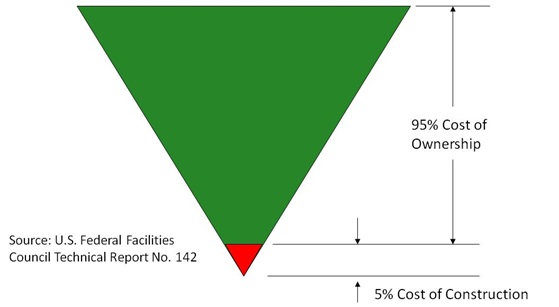
However, the irony of the situation is that when owners look for ways to reduce their costs, we find that they typically try to reduce their construction costs first.
As stated earlier, the commissioning process can be complex, especially for a large project with multiple systems being commissioned simultaneously. In a smaller job where only one or two systems require commissioning, only a specific commissioning authority is required. However for a larger project with several systems, a certified Commissioning Process Manager (CPMP) may be required to coordinate all the various specialized authorities. The CPMP typically required ASHRAE certification and other related professional qualifications.
A CPMP can be vital to a successful project. The owner can take advantage of their services by getting them involved early and helping to develop a comprehensive Owner's Project Requirements (OPR) for all the systems to be commissioned. The CPMP is vital to this process and can aid by using their experience to consider several factors when developing an OPR including:
- Anticipated building uses
- Appropriate design standards
- Local code requirements
- Project procedure, i.e.:
- Design bid build
- Integrated design
- Design-build
- Operator skill level
The operator skill level is especially important to consider. It can influence the Basis of Design for allowing effective system operations. You don't need to install DDC controls in a school where the operator is the janitor instead of a specialized building operator.
The OPR is also a living document that can be adjusted by the Owner during the life of the building. For example, if the building changes its intended use, or if new environmental efficiency objectives come into play, the document can ca be reformatted to suit.
In order to meet the OPR, each commissioned system must have a Basis of Design document (BOD) developed by the system designer. This document details the design procedures and processes used, details any design issues that deviate from the original OPR and contains the Owner's approval of the given design. The document also coordinates the technical and code requirements and logs all design changes affecting the OPR. Once the BOD is complete, it must be approved. In order for the BOD to be approved, it must be assessed by the commissioning authority and determined whether it complies with the OPR. The owner can then either reject or accept the commissioning authority's review of the BOD before the start of construction.
Once the BOD has been approved the commissioning authority's role changes from design review to overseeing the implementation. The commissioning authority must liaise with the project manager and general contractor to develop job scheduling, assist in project specific verification and produce interference sketches to avoid trade conflicts. They also test job specific protocols for system assemblies and compile test reports. All the verification testing reports are included in the final commissioning process report.

Once the construction is finished and the commissioning process report is complete and has been approved by the owner, a System Manual must be developed. The Systems manual provides specific documentation on how the final commissioned system operates and how to properly maintain them. After the OPR, the systems manual is probably the most valuable document prepared under the commissioning process.
The systems manual is vital in training operation and maintenance personnel. It is important to use the system manual to develop lesson plans, and record lesson procedures, including both lecture and hands on activity for future reference. Training is a vital step as the operators will be in charge of maintenance of the building for years to come and will be in charge of keeping the building operating as it was designed. A great tip to reinforce training is to schedule regular refresher courses for the operators.
During the first year of operation, the commissioning authority performs regular inspections and assures ongoing training. After one full period in operation, the commissioning authority turns the documentation over to the owner for their use.
Having a well-organized commissioning system in place can lead to benefits for all parties involved. The owner will have a completed project which meets their intended OPR, the designer is provided with detailed instructions to help develop an accurate BOD for the project, the constructor has co-ordination assistance, helpful communication points and reduced warranty costs, and the operations staff has clear instructions regarding building operation. With all the parties involved and the amount of documentation produced, it is easy to see why communication is such an essential key to successful commissioning of any project.
David's last bit of advice was to make sure that any commissioning project gets a commissioning authority involved as early as possible. The sooner the authority is involved, the more chance there is for increased communication, better organization and improved project deliverables.
Michael Peterson
WSP Group
Mike.j.Peterson@wspgroup.com
|
| March Meeting Pictures |
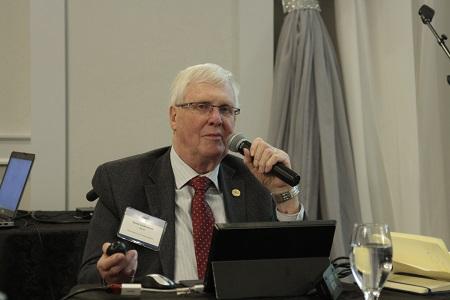
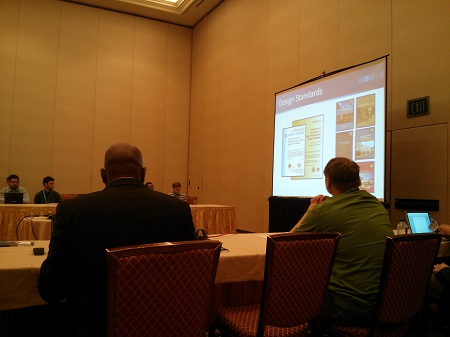
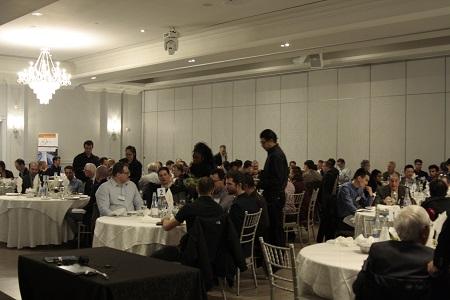
David Underwood, Distinguished Lecturer delivering the evening's presentation
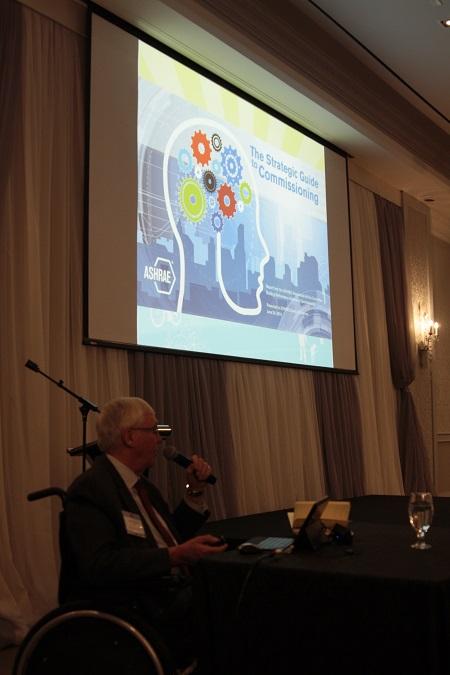
David Underwood delivering the evening's presentation
David is Past-President of both ASHRAE Toronto Chapter and ASHRAE Society
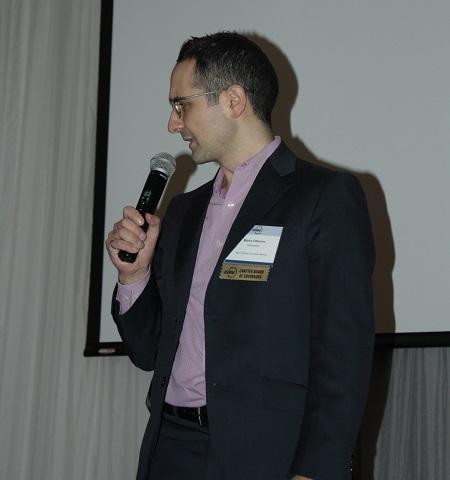
Marco Ottavino,Toronto Chapter President
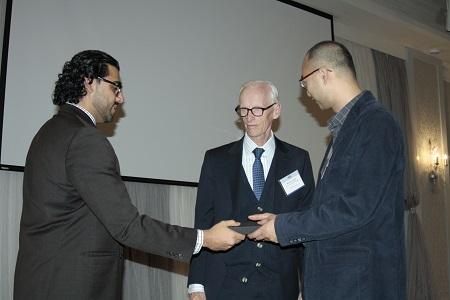
Abhishek Khurana (CTTC Chair, left) thanking Michael Loughry (HH Angus, center)
and Derek Cheung (BCA, Isotherm Engineering, right)
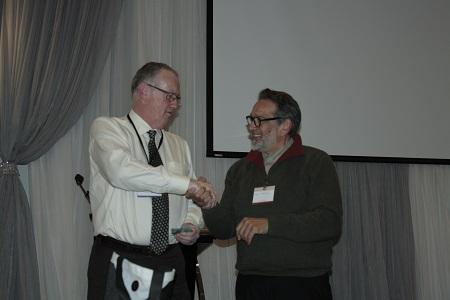
Al Porter (Past-President & RP Chair) with 50/50 ASHRAE Research winner
Photos by Niss Feiner of Delta-T Designs
|
| ASHRAE HVAC Design Training |
ASHRAE HVAC Design Training Comes to Toronto
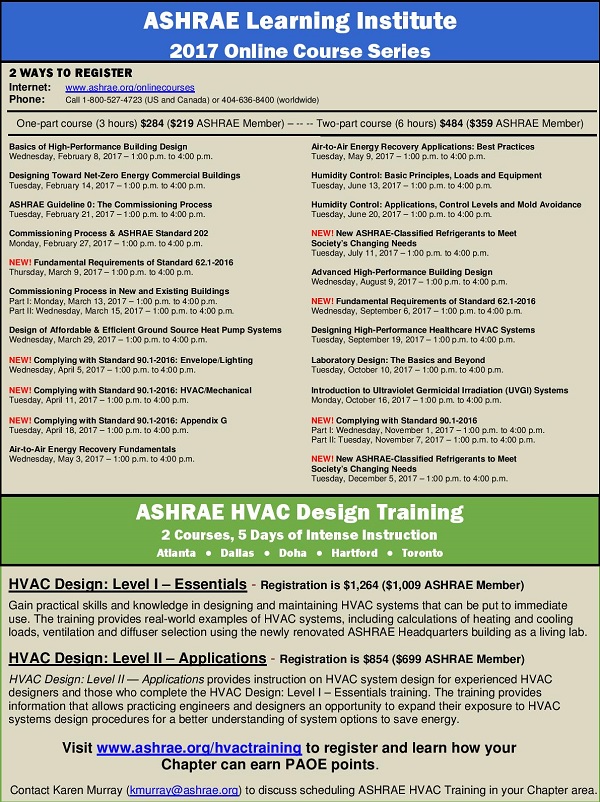
ASHRAE will be bringing HVAC Design Training Level I & II to Toronto in May. Level I will run May 8-10 2017, and Level II will run May 11-12 2017. Both Courses will be held at Humber College.
To learn more and to register please visit ASHRAE's website: https://www.ashrae.org/education--certification/hvac-design-and-operation-training/toronto-hvac-design-training-may-2017
|
Student Activities
|
2017 Winter Conference Student Experience
"I was one of the lucky students to get funded to go to the ASHRAE 2017 Winter Conference in Las Vegas early this year. At first I was hesitant since I didn't know what I would able to accomplish when I went, what I could get out of the experience, but I can say now that it was an opportunity I am extremely grateful to have experienced.
As a student, I don't know much about the industry other than what I'm told at the school, sure I'm involved in ASHRAE activities here in Toronto an go to the dinner meetings to learn, but you can only learn and see so much in little Toronto. Going to the conference was like being able to see into a window of something far greater than I had originally thought. Attending seminars based on research I hadn't known existed and sitting in technical committees where I can watch decisions being made that can affect the industry on a global scale is something else. To top it off, the AHR Expo was the icing in the cake. To have the chance to actually see the things I've only read about, to see new innovations and systems that the future will be comprised of, shows me all the possibilities and options that the industry provides.
The ASHRAE Winter Conference was definitely a memorable experience where I got to meet people of all different backgrounds and status, and didn't feel out of place. I feel like there is something for everyone at the conference, and you'd never really return empty handed. Just by attending, I feel that I have gained insight and knowledge about things I'd never had access to beforehand."
-Kajen Ethirveerasingham (Ryerson Student Branch President)
|
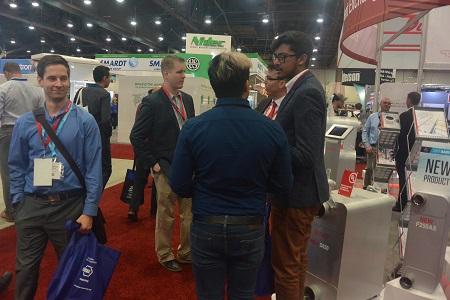 Toronto students exploring the AHR trade show
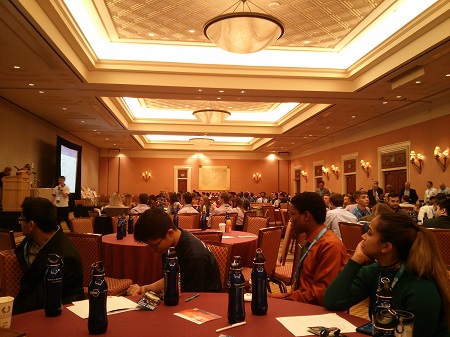
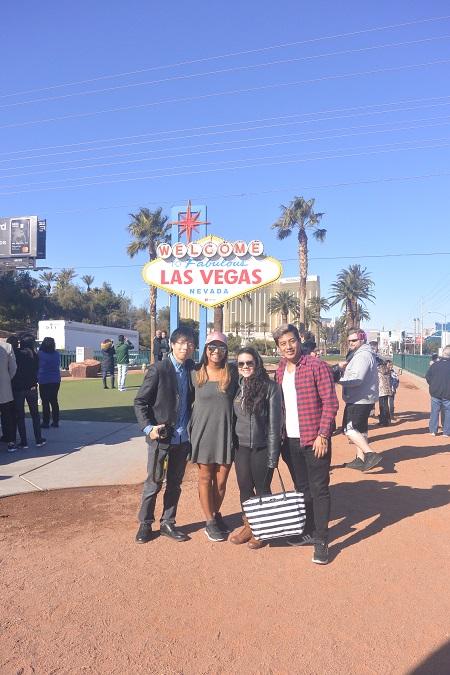
Students from all over North America and abroad experiencing the winter conference for the first time
It's not Vegas without a picture in front of the famous sign!
Technical committee meetings are open to the public, some students got the opportunity to attend
|
| PAOE |
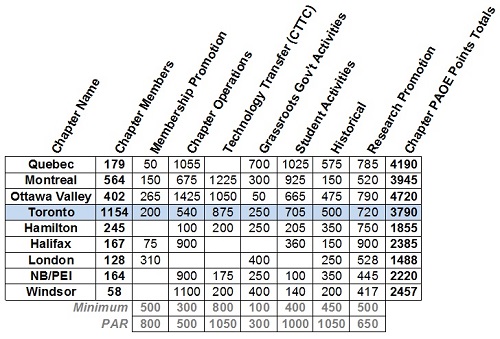
PAOE or Presidents Award Of Excellence, provides the chapters in Region II with a means of measuring success across a wide range of chapter operations. It is meant as a tool to guide the Board of Directors and Committee Chairs towards their goals. Below is a summary of PAOE Points for all of the Chapters in Region II so far this year.
Toronto Chapter President 2016-2017
|
| Social Media |
We want to hear from all members of the industry and are excited to share HVAC/building system news and current chapter events.
|
|
|
|
|
Statements made in this publication are not expressions of the Society or of the chapter and may not be reproduced without special permission of the chapter.
|
|
|