|
The Beginnings of Data Link
At its core, data link is simply digital communication between air and ground. Aeronautical Radio Inc., which soon became known as just ARINC, started providing this link to aviation in 1978. That was the launch of ACARS, by now a well-known set of systems and protocols. The initial meaning was “Aircraft Communications Addressing and Reporting System,” but most people just say “ACARS.” It first rolled out in the United States, using a network of VHF-radio-based ground stations to tie together aircraft, operations, and air traffic control systems. This was complicated by the need for many ground stations because VHF is a line-of-sight-only medium. By 1998, ARINC’s GLOBALink was added in China, Thailand, and Europe. And by 2010, expansion of the network and data link continued into Latin America, the Caribbean, eastern Europe, and parts of Africa.
For data link to work with the aircraft, some basics need to be in place. The aircraft avionics need to be able to connect to the GLOBALink air-to-ground network. This requires a ground station to be able to process messages via HF, VHF, or via satellite. HF, VHF, and satellite provide the connections for moving information among the aircraft avionics, the Global Message Processor (GMP), and host processing applications. The GMP is key to the operation of data link. It allows for tracking an aircraft’s proximity to ground stations; decodes formats and handles messages; and prioritizes air-traffic-service messages. The implementation of ACARS and the GMP have allowed for new and innovative uses for passing information between the aircraft and ground systems.
Some Benefits of Data Link
Many flight operations see the benefits of data link without having to think about it. If you are receiving out, off, on, and in reports (OOOI) reports, position reports, digital ATIS, NOTAMs, or flight diversion reports, they are coming through data link. Air traffic control is also leveraging data link to send pre-departure clearances (PDCs) and control messages through systems like FANS or ATN. Both OOOIs and PDCs help to increase the efficiency of your flight operations while simultaneously avoiding readback errors.
Reducing errors and improving safety in flight is a constant focus of our industry as more technology is integrated via data link. The ability to obtain the latest information in the form of PIREPs, SIGMETs, and NOTAMs improves situational awareness. Uploading flight plans directly into the FMS reduces human error. Voice channels are also being used over data link (voice-over-IP), which can provide clearer audio; these channels are appropriate for non-routine communications.
Data link not only improves safety and efficiency in flight, but it can also improve your operation’s awareness of engine health and aircraft maintenance issues. Data link allows for manual maintenance reports to be sent by the crew reporting specific issues they may be encountering. Newer aircraft may also support the sending of automatic maintenance reports via the centralized maintenance computer (CMC). These systems automatically generate reports on equipped aircraft, generally at top-of-climb and top-of-descent and/or upon arrival. The messages are automatically forwarded via ground networks to engine manufacturers and air-frame manufacturers if your avionics support it and ARINCDirect has configured it for you.
Modern Applications of Data Link
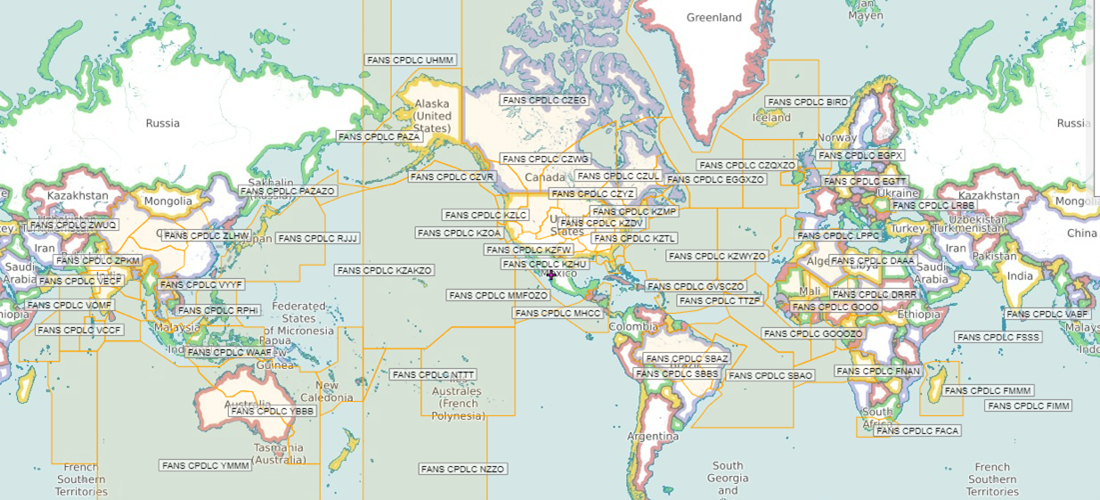
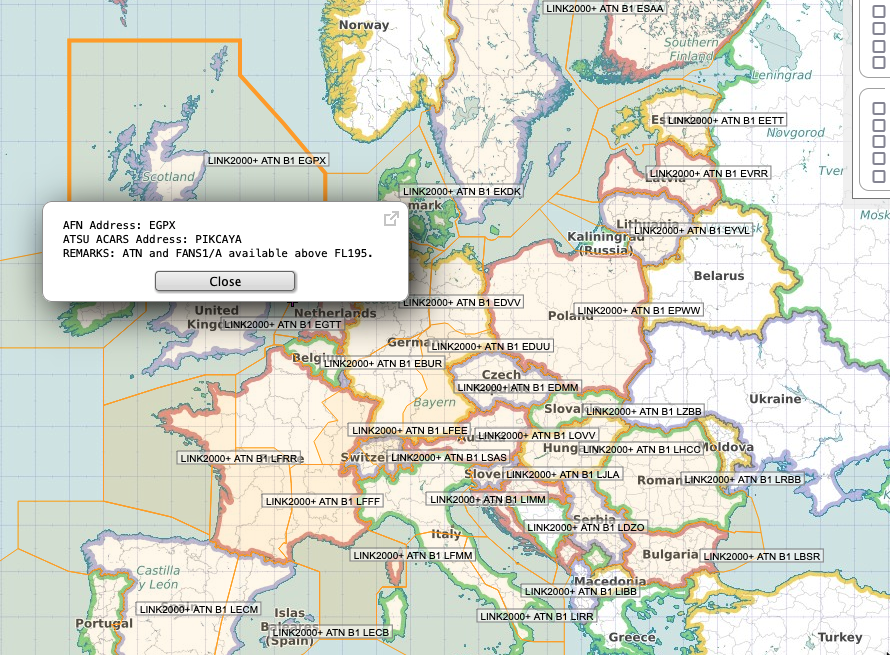
More modern applications of data link are readily available in the industry today. While ACARs messages are still in use, data link has provided a platform for Controller Pilot Data Link Communication (CPDLC). There are two CPLDC systems in use: FANS and ATN. Future Air Navigation System (FANS) operates in North America, over the North Atlantic, over the Pacific, in Australia, and in parts of Asia. The Aeronautical Telecommunications Network (ATN) operates throughout Europe. In some parts of the world, such as the high-level North Atlantic airspaces (NAT HLA) and EUROCONTROL airspaces, you are required to use CPDLC systems. If you have questions regarding these areas or expectations/requirements, please contact a flight coordinator at flightops@arinc.com.
|