One Vision, One Mission. Community Banks.

Wednesday, June 26, 2024

Sponsored by SHAZAM and BHG Financial


No copyright infringement intended
Vendor * Spotlight
null

Preferred Solutions Providers

null

Associate Members *

Benefit of FDIC leadership switch outweighs experience


The Federal Deposit Insurance Corp. could benefit from a leadership shake-up even though the nominee lacks bank regulatory experience, according to industry experts.


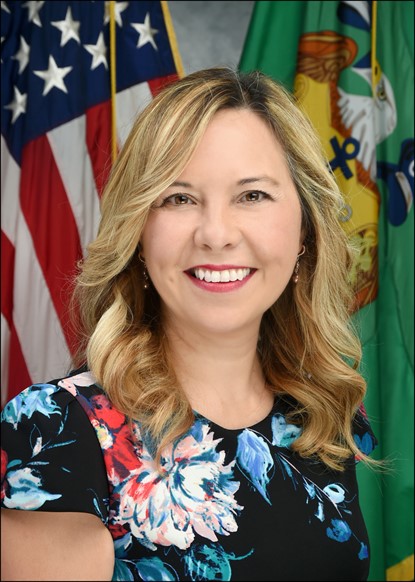
President Joe Biden nominated Christy Goldsmith Romero, currently a commissioner on the Commodity Futures Trading Commission, to replace Chairman Martin Gruenberg. Goldsmith Romero previously was the special inspector general for the Troubled Asset Relief Program, part of the government response to the 2008 financial crisis.


Despite the nominee's lack of bank regulatory experience, industry experts were generally bullish about a leadership shift as the agency could use a change from Gruenberg, who has been a staple at the FDIC since 2005 and recently was the target of scrutiny following an independent probe finding workplace misconduct at the agency.


"Gruenberg [has] been there at the FDIC for 20 years and has established what he thinks about certain things, and he knows the terrain, so he has his views and is known for being fairly skeptical of banks in general," Ian Katz, managing director at Capital Alpha Partners LLC, said in an interview. "There could be some possibility that for banks, she [Goldsmith Romero] may not be as antagonistic as Gruenberg has been because Gruenberg has been known to be pretty antagonistic toward banks at times."


Industry experts were mostly bullish on Goldsmith Romero's confirmation prospects as long as political dynamics and time limits in the Senate's schedule do not interfere.


"On the one hand, Goldsmith Romero is a strong candidate who has been confirmed by the Senate unanimously twice" for previous positions, Isaac Boltansky, managing director and director of policy research at BTIG LLC, wrote in a June 15 note. "On the other hand, there is some concern that she does not have a traditional bank regulatory background, and a number of Republican contacts have described her as too progressive to garner bipartisan support. From our seat, Goldsmith Romero is likely to be confirmed as the next FDIC Chair, but we view the timeline as relatively murky."


Senate Banking Chair Sherrod Brown (D-Ohio) is aiming to schedule a confirmation hearing in July, according to Politico. Anything beyond that could threaten Goldsmith Romero's approval prospects.


"If we get to the August recess without Goldsmith Romero being very close to winning a Senate floor vote, Republicans may try to put up obstacles so that she can't be confirmed before the November elections," Katz wrote.

Source: S&P Global Market Intelligence

Agencies propose amending BSA requirements


Federal banking regulators issued a proposed rule that would amend Bank Secrecy Act requirements for anti-money-laundering and countering-the-financing-of-terrorism programs. 


The proposed amendments are intended to align banking agency regulations with the Financial Crimes Enforcement Network’s proposed changes to AML/CFT standards under the Anti-Money Laundering Act of 2020. They include: 

  • A risk assessment process in the AML/CFT program rules that requires, among other things, consideration of the national AML/CFT Priorities published by FinCEN. 
  • Customer due diligence requirements to reflect prior amendments to FinCEN’s rule. 
  • Amendments to codify longstanding AML/CFT supervisory expectations. 


In a 2022 comment letter, ICBA laid out its plan for FinCEN to modernize its BSA framework. Responding to a FinCEN request for information under the AML Act, ICBA urged the agency to raise Suspicious Activity Report and Currency Transaction Report thresholds and withdraw bank beneficial ownership collection and verification requirements, among other recommendations to alleviate compliance burdens while producing more useful information for law enforcement.


Source: ICBA

Finalized rule on automated valuation models


Federal financial services regulators issued a final rule to implement quality control standards for automated valuation models, or AVMs, which mortgage lenders use to value real estate collateral. 


AVMs are used as part of the real estate valuation process and are driven in part by advances in database and modeling technology and the availability of larger property datasets. 


The interagency rule requires institutions that engage in covered transactions to adopt systems to ensure AVMs adhere to quality control standards designed to ensure the credibility and integrity of valuations. The agencies want to allow the industry to design and implement systems to determine if an AVM meets these standards.  


In a comment letter last year, ICBA called on federal regulators to avoid disincentivizing the use of AVMs by shifting responsibility to originators to assess AVMs. ICBA said that decreasing the use of AVMs would further disincentivize mortgage lending in rural areas, where AVMs can be utilized as more cost-effective, efficient, and accurate options to help value collateral and manage risk. 


In a previous comment letter to the Consumer Financial Protection Bureau, ICBA said regulators should avoid burdensome rules on AVMs, particularly for the community banks using these models to make underwriting decisions and find comparable values in rural areas.


Source: ICBA

Offices for harassment, discrimination claims


The FDIC created two independent offices to handle claims of sexual harassment, discrimination, other forms of interpersonal misconduct, and claims of retaliation. 


  • The Office of Professional Conduct will investigate complaints of interpersonal misconduct and enforce discipline against anyone violating the FDIC’s anti-harassment or anti-retaliation policies. 
  • The Office of Equal Employment Opportunity will handle complaints of discrimination under the laws enforced by the Equal Employment Opportunity Commission. 


An independent review conducted by Cleary Gottlieb and released in April found the FDIC failed to provide a workplace safe from misconduct and that management’s responses have been insufficient. The FDIC last month terminated the special committee that oversaw the independent review following its completion.

 Source: ICBA

Second comment period of current regulatory review


The FDIC board of directors approved the second interagency request for comments under the current Economic Growth and Regulatory Paperwork Reduction Act regulatory review. 


This second Federal Register notice requests comment on regulations in the categories of Consumer Protection; Directors, Officers, and Employees; and Money Laundering. Comments are due within 90 days of publication in the Federal Register. 


In comments following the first notice of the current EGRPRA review, ICBA called on federal regulators to take meaningful action to address excessive regulatory burdens on community banks. Among its comments, ICBA urged regulators to hire an outside consultant to quantify the regulatory burden on community banks and designate an overall director of the current EGRPRA review process. 


In a recent blog post, ICBA Senior Executive Vice President and Chief of Government Relations and Public Policy Anne Balcer said regulators must take bold action under the latest EGRPRA review to eliminate one-size-fits-all mandates that fail to consider the community banking business model.

Source: ICBA


ACB Compliance Event

September 10 & 11

Little Rock


See Agenda and Register


Efficiency ratio improves


The industry's aggregate efficiency ratio in the first quarter dropped from the previous quarter's sharp increase but remained elevated from historical levels.


Banks posted an aggregate efficiency ratio of 58.5%, down 7.3 percentage points from the linked quarter but up 5.6 percentage points year over year, according to S&P Global Market Intelligence data.


The efficiency ratio — derived from dividing noninterest expenses by net interest income and noninterest revenue — measures the amount of overhead it costs to generate $1 of operating revenue, where a lower number indicates higher efficiency.


The sequential improvement was thanks to a sharp drop in noninterest expense and a sizable jump in noninterest income. Net interest income dropped quarter over quarter but not enough to offset the impact of the other components' turnarounds.


Noninterest income jumped by over $10 billion to $77.89 billion from $67.58 billion in the prior quarter.


At the same time, noninterest expenses totaled $146.35 billion, excluding goodwill impairment and intangible assets, down from $159.92 billion in the fourth quarter of 2023. Of the top 20 banks by head count, 16 lowered noninterest expenses quarterly.


The fourth-quarter 2023 rise in expenses was due to the Federal Deposit Insurance Corp.'s special assessment to replenish the Deposit Insurance Fund following the bank failures in spring 2023.


Although that payment is now in the rearview mirror for large banks, expenses are still a pain point for the industry overall. The first-quarter total is well above the previous year's total of $138.74 billion and $132.77 billion in the first quarter of 2022.


Net interest income fell quarter over quarter to $172.51 billion from $175.48 billion. Annually, net interest income declined 2.4% from $176.69 billion.

Source: S&P Global Market Intelligence

ACB does not sell or share member email or

contact information for any purpose.


With the exception of official announcements, the Arkansas Community Bankers Association Board of Directors, Officers and staff disclaim any responsibility for opinions expressed and statements made in articles published in Arkansas Community Bankers NewsWatch 2024. Please note that by using some of the links in this publication, you will be leaving the Arkansas Community Bankers NewsWatch 2024. As a service and for informational purposes only, ACB may provide listings of and/or links to third party web pages/publications maintained by the U.S. Government, internet retailers, organizations and others. ACB does not monitor and is not responsible for the content or administration of these outside websites or pages.  No part of this publication may be reproduced without express written permission. © 1990 - 2024 by the Arkansas Community Bankers Association. All rights reserved.


* ACB Associate Member logos rotate on a calendar quarterly basis. Click here for a complete list.

a

The Compliance Event of the Year

September 10 & 11, 2024

Little Rock

You don't want to miss this one... See Agenda and Register

2024 ACB Bank Management & Directors Conference


October 9th

Clinton Presidential Library

Little Rock

*** Watch for Details ***