14 April 2023 — Oyster Recovery Partnership | |
Today, A Cause in Motion highlights Oyster Recovery Partnership (ORP). In 1993 the state of Maryland hosted an “Oyster Roundtable,” a panel of 40 organizations, institutions, elected officials, and individuals to address the Chesapeake Bay oyster population, which was threatened by disease, overharvesting, habitat loss, and declining water quality. The Roundtable released a 30-page Action Plan for Oyster Recovery, and the following year the Oyster Recovery Partnership was established to implement the plan’s objectives and coordinate efforts to help restore the oyster population.
ORP will receive the 2023 NMHS Marine Conservation Award on 9 May at the National Maritime Awards Dinner in recognition of its commitment to the health of the Chesapeake Bay through the successful restoration of oyster populations. The newly established NMHS Marine Conservation Award acknowledges the exemplary work of those who act as stewards of the oceans, seas, and waterways, including efforts to protect, enhance, and restore ecosystems, promote the sustainable management of marine resources, safeguard and improve the well-being of the communities that depend on these resources, and increase public awareness about the importance of protecting marine environments.
| |
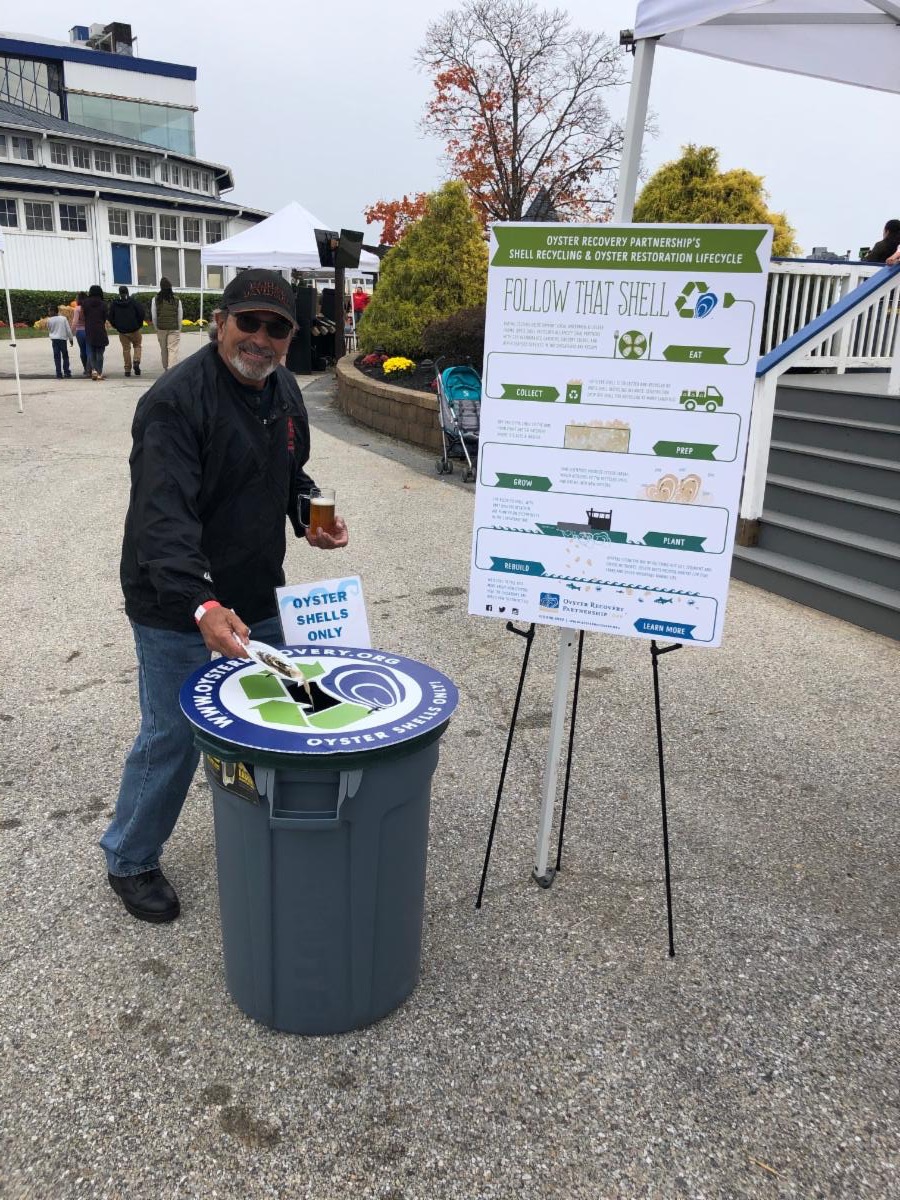
Community involvement is important! Dropoff sites like this one at events serve as an opportunity for public education as well as shell collection. Photo: Oyster Recovery Partnership. | |
“We're excited about this award,” says Ward Slacum, ORP Executive Director. “We appreciate being recognized. The work we do is really to benefit everyone. It's not necessarily to benefit just the oyster; the oyster is the mechanism that we use to promote the fact that the Chesapeake Bay is a treasure. People need to be aware of the creatures that live in the Bay, and oysters are an important component of that ecosystem. It is really for the benefit of all of us to make sure that we’re protecting and conserving oysters.” |
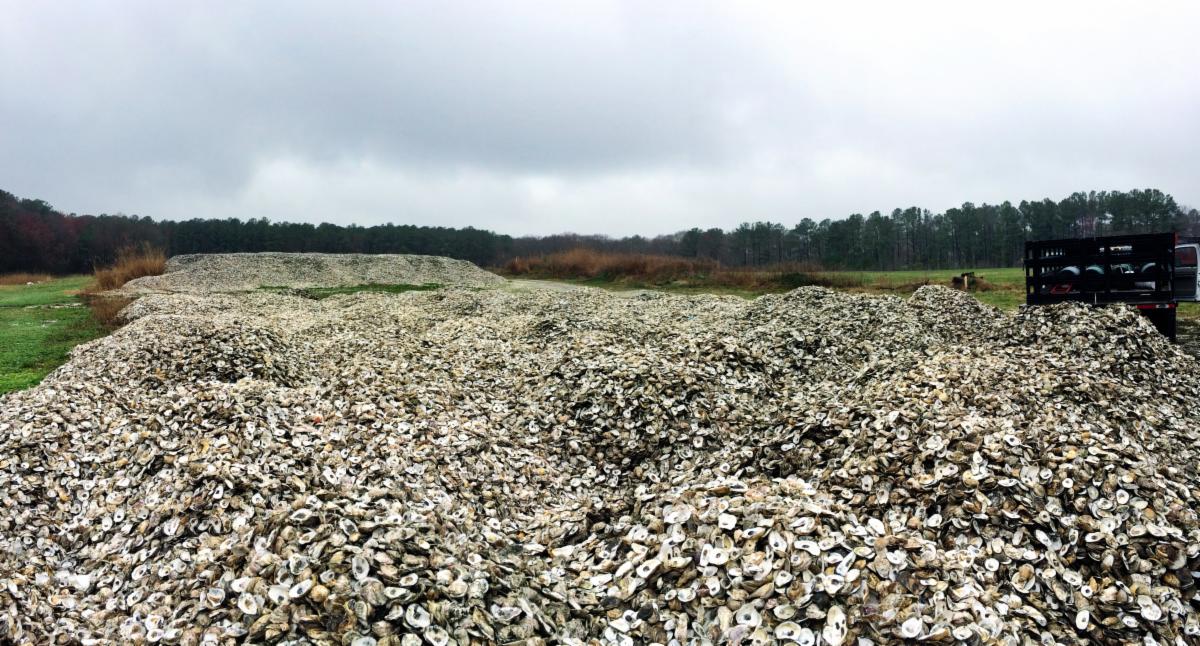
ORP collects 36,000 bushels of shell annually from over 200 restaurants and 70 public drop sites in the mid-Atlantic region. These shells will be aged and washed, then oyster larvae will attach to the recycled shells and be planted on oyster reefs in the Chesapeake Bay. Photo: Oyster Recovery Partnership. |
|
Overfishing and poor water quality have historically been challenges for this keystone species. As filter feeders, oysters clean our waters. A single healthy adult oyster can filter up to 50 gallons of water per day, removing light-blocking algae and excess nutrients like nitrogen and phosphorus. And oyster reefs provide critical habitat for the Bay’s underwater community, offering up food and cover for small and juvenile fish, crabs, shrimp, and other species, which in turn provide prey for larger fish and crabs. Healthy oyster reefs are also home to many barnacles, sea anemones, and hooked mussels.
In the 1600s, oysters in the Chesapeake Bay were so abundant that the oysters were filtering the bay's waters once a week. However, wild Chesapeake oysters were in decline after the 1880s, as millions of bushels were harvested. The Industrial Age, with refrigeration, steam-powered transportation, artificial ice production, and canning, had made oysters available to the national market. Seafood dealers in Norfolk and Baltimore supplied customers across the country. Ads for Star Brand oysters of the William Ellis Company of Baltimore appeared in the 1870s throughout the Midwest in cities such as Cincinnati, Indianapolis, Kansas City, and Omaha.
|
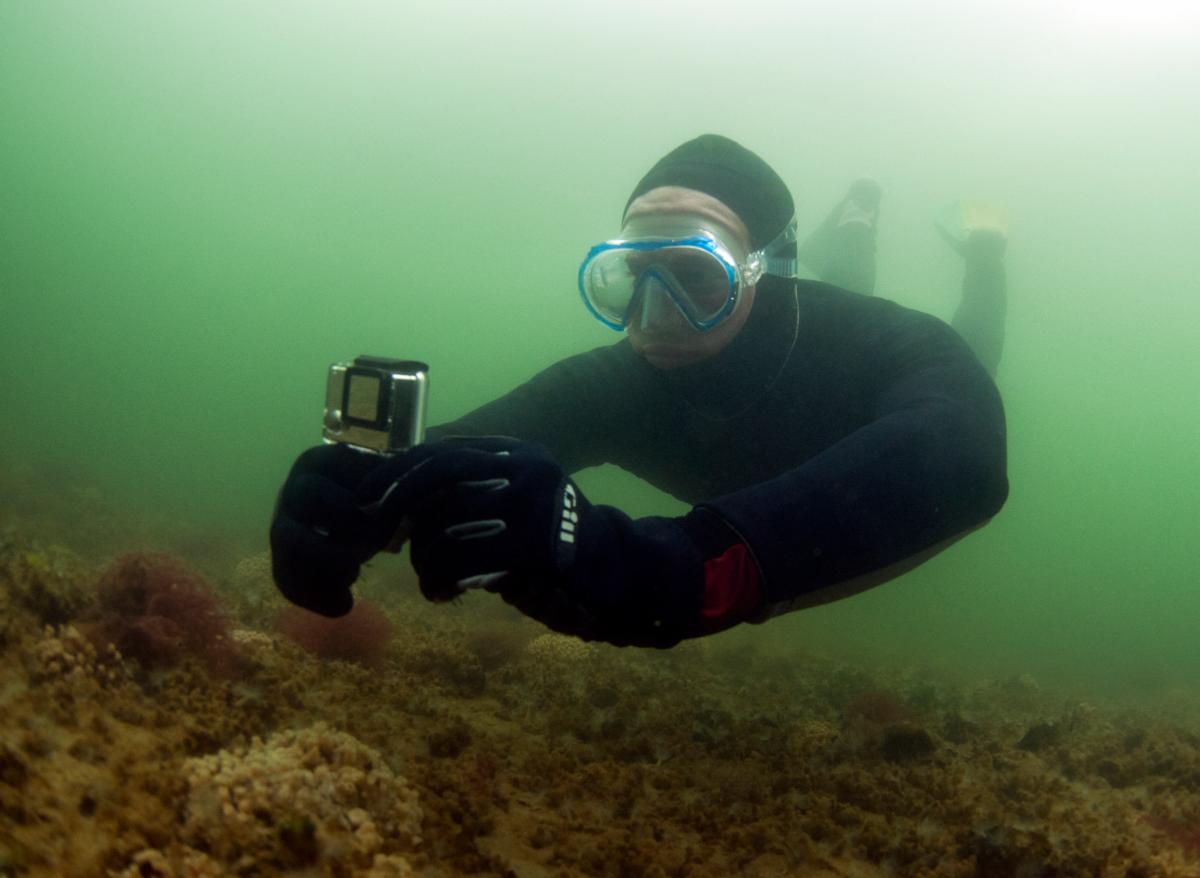 | A diver monitors the Little Choptank Reef. Photo: Jay Fleming. |
|
Today the tide is changing for the humble oyster; with the University of Maryland Center for Environmental Science (UMCES) Horn Point Hatchery, ORP annually produces hundreds of millions of oysters that are “planted” into the Chesapeake Bay. With over 10 billion oysters planted to date, ORP is the leading nonprofit restoring the oyster population in the Chesapeake Bay. Imagine the impact billions of new oysters will have on the Bay’s health!
Employing the latest science and technology to increase oyster populations and improve Chesapeake Bay health, ORP is building sanctuary reefs, rebuilding public fishery reefs, supporting the oyster farming industry, participating in shell recycling, and engaging the public through hands-on volunteering and events.
ORP supports Chesapeake Bay Program water quality goals, economic opportunities for local watermen, and the marketability of local seafood products. With its broad coalition of partners—including the Maryland Department of Natural Resources, NOAA Chesapeake Bay Program, Maryland’s County Oyster Committees, and the Maryland watermen community—ORP continues its successful work to improve the health of the Chesapeake Bay.
|
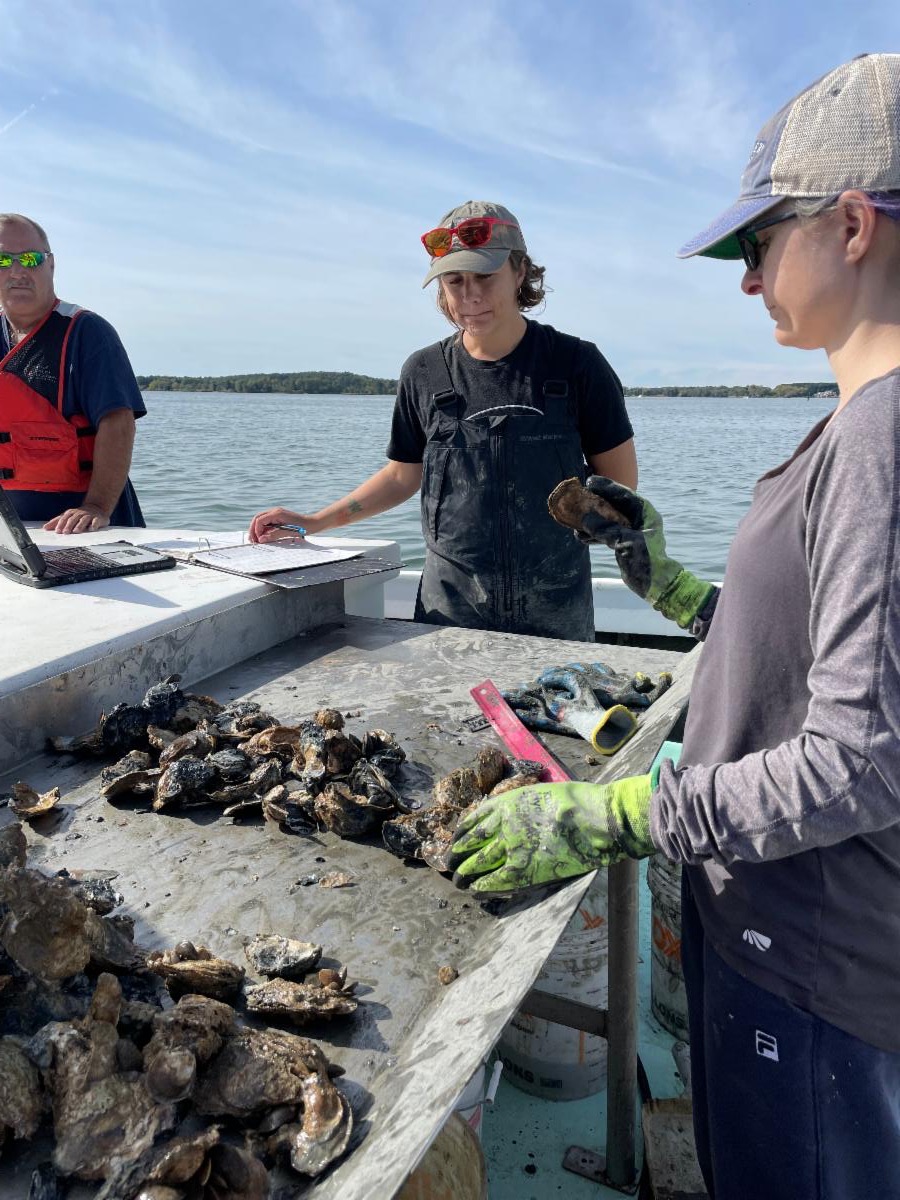 | A team measures a sampling of oysters and records its findings. Photo: Oyster Recovery Partnership. |
|
We invite you to join us for this year’s awards gala where, in addition to Oyster Recovery Partnership, we will honor the USS Constitution Museum and Congressman Joseph D. Courtney. The Society’s dinners are always a gratifying gathering of the maritime community, and this one should be no exception. The entertaining Gary Jobson, America’s Ambassador of Sailing, is our master of ceremonies for the evening’s festivities. Our honorees will be introduced via videos produced by award-winning documentarian Richardo Lopes and Voyage Digital Media.
Patrick O’Brien has curated the 2023 NMHS Maritime Art Gallery, an invitational exhibition that showcases contemporary artwork by some of today’s most notable marine artists. All works are for sale, with a portion of proceeds benefitting NMHS. Please click here for a preview of the exhibition. You need not attend to make your purchase.
For more information and to register for the gala, please click here, or contact Wendy Paggiotta via email at vicepresident@seahistory.org or at (914) 737-7878 ext. 557.
|  | | | | |