A BLOOMING BEAUTIFUL JUNE! | |
|
Hello Jaime,
June is here and now is when I feel gardening in earnest kicks into gear. I know. The old ways said everything absolutely must be done by Memorial Day. But that is old news. April can be cold. May can be rainy. There are only so many hours in a day (or a weekend). Planting time is now. At least in my world. I am still putting in seeds of beans, cucumbers, squash, and more. Some are second sowings already. As my early radishes are done, in go the carrots. Containers? I am still playing with them. Houseplants? Most are out on the deck, but that too is a project that takes a while. Dahlias? Well, I just keep buying more tubers so they aren't all in yet either. And then there is my "holding area" where new perennials and shrubs hang out until I plant them. That is overflowing. Gardening is a process, for me, a very joyful one.
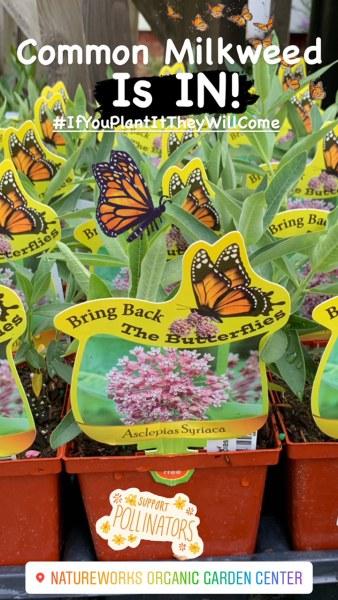
This is officially monarch and milkweed week. As I was talking to Diane this morning about this email, she said "be sure to mention that the Asclepias is all here this week!". As she spoke those words, a monarch butterfly flew by my window! So yes, we have not only common milkweed but every other kind of Asclepias you could wish for. If you don't know the difference and don't know which ones are the best fit for your yard, keep reading...
| |
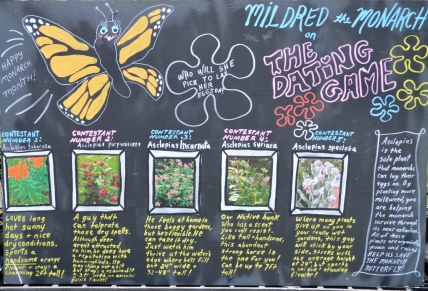
THE ASCLEPIAS DATING GAME | |
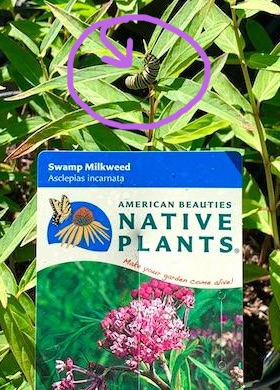
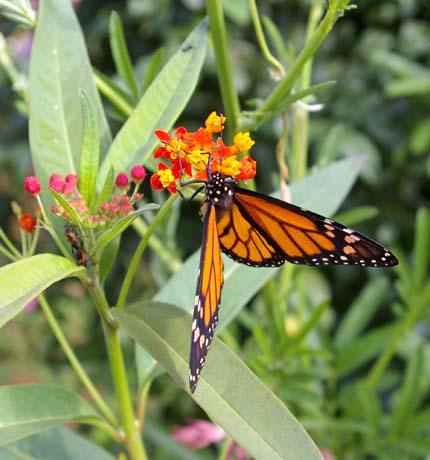
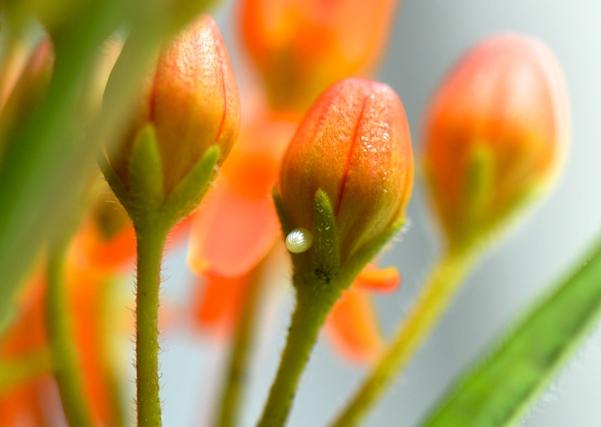
This is a really old picture from many years ago, but it still cracks me up. Which Asclepias does Mildred the Monarch choose to lay her eggs on? | |
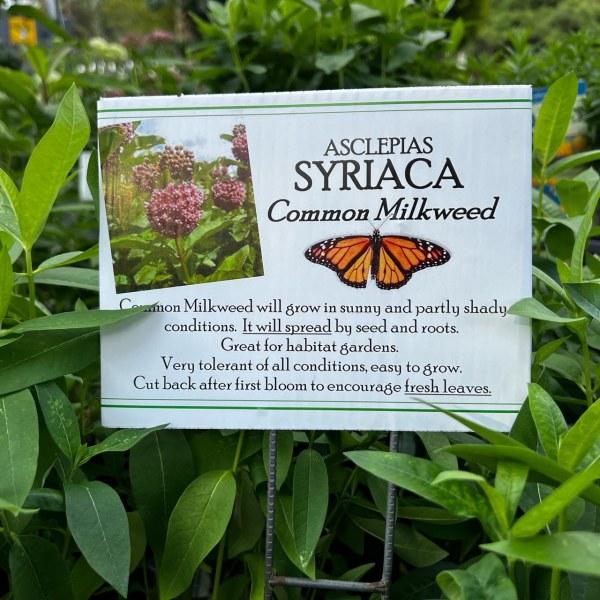
Common milkweed (Asclepias syriaca) is what we all think of when we think of larval food for monarchs. BUT, it may not be the right choice for you. It spreads. It may take a couple of years, but then it starts running underground. Plant it where you want it. A LOT of it! Think wilder areas, meadows, large gardens. | Swamp milkweed (Asclepias incarnata) is one of my favorites. It can tolerate sun or dappled shade as well as regular or wet soil. It also is a clumping perennial and does not spread by underground roots. It will grow taller than orange butterfly weed, reaching about 4'-5' tall. We carry the straight species as well as white and deeper pink varieties. After it blooms in June, we recommend trimming it back. It will branch, and rebloom and set seeds in late fall for next year. | |
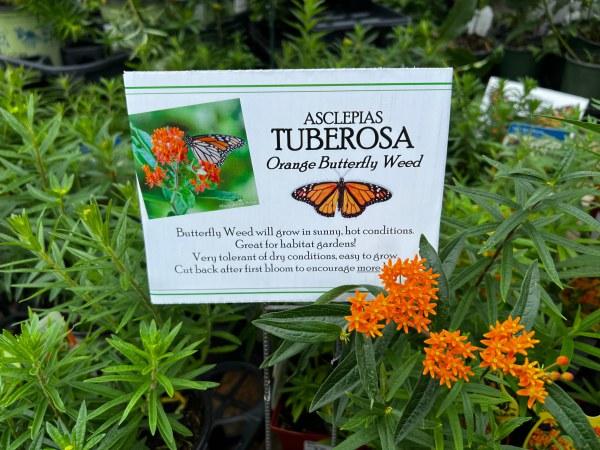
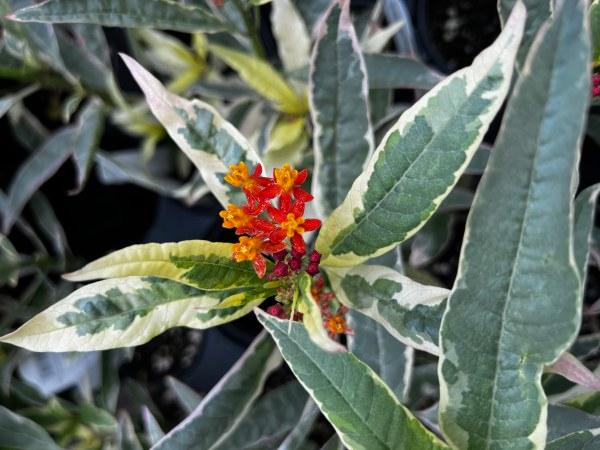
For sunny, smaller gardens, we always recommend orange butterfly weed, Asclepias tuberosa. This needs full sun and good drainage, but it is a clumping perennial that is much easier to manage in the average backyard garden. It grows about 24" tall in its second year.. | Tropical milkweed (Asclepias curassavica) is the choice if you only can grow monarch larval food plants in containers. Shown above is the beautiful variegated variety 'Monarch's Promise'. There is a bit of controversy about this species. In CT, it is an annual that dies with the first frost, so there is no danger of keeping the monarchs here long after their time to migrate. That is not the case in southern states. This is also a fabulous nectar plant as it blooms constantly all summer long. | |
|
But these aren't the only Asclepias species we carry. We also stock in limited quantities:
-
Asclepias exaltata- This milkweed grows well in dappled shade and is often found at the edge of the woods. It grows 5' tall, has white flowers, and is not an aggressive spreader.
-
Asclepias purpurescens- purple milkweed has bright purple, round flowers. It grows 3-4' tall and will grow in full sun or dappled shade. It is not an aggressive spreader.
-
Asclepias speciosa- showy milkweed grows 3' tall and has really pretty, large pink round flowers. It does spread underground, but not as aggressively as common milkweed.
| |
It is time to go monarch EGG HUNTING! Look for the creamy white, teeny tiny, pointed white eggs not only on the undersides of the leaves, but also on the flower buds.
We found our first 2 eggs in our shade garden on the common milkweed the other day!
| |
|
STRAIGHT SPECIES NATIVES
The conversation continues...
| |
|
I attempted to list all of the straight species native plants that we have on our benches this week. My unofficial count is 77 (I am sure I missed many of them). I did this because so many people come into Natureworks asking specifically for them. Here is the current link if you want to check it out-
Straight Species Native Plants List 6/5/24
We proudly carry native plants, both the straight species and many carefully chosen varieties, cultivars, and subspecies. We have native plants for everyone.
Some of my favorite speakers and authors on native plants teach only about the straight species. Read Uli Lorimer or Dan Jaffe or Jared Rosenbaum. Doug Tallamy has taught us that native insects have co-evolved with native plants.
BUT
Remember last week when I told you about the upcoming CT Horticultural Society's June talk featuring Sam Hoadley? He is the Manager of Horticultural Research at Mt. Cuba Center. He has trialed straight species and cultivars of many native plants and you may be surprised at the results. They have conducted trials on Amsonia, Echinacea, Phlox, Helenium, Hydrangea arborescens, Carex, Aster, Heuchera, Baptisia, Coreopsis, and Monarda. Click the link below and read for yourself what they discovered. And don't miss Sam's talk on June 20th in Middletown. The link is below.
Knockout Native Talk with Sam Hoadley
Mt Cuba Center Trials
| |
So what natives have caught my eye this week?
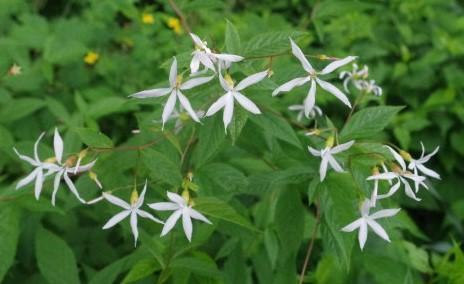
Besides all the different Asclepias, I am absolutely in love with Gillenia trifoliata (bowman's root).This has beautiful, star shaped flowers that float above the foliage and red stems. It grows 3-4' tall and does really well in the shade garden. It arrives on Thursday.
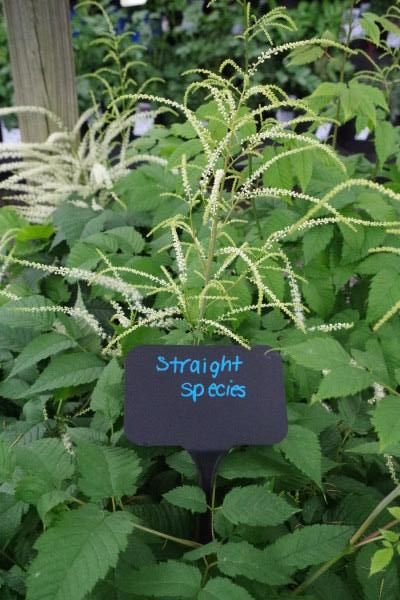
Aruncus dioicus, our native goatsbeard. This plant has white, fluffy flowers and will thrive in the shade. If given a rich, clay soil it will grow 4-5' tall. In average soil, expect it to reach 3' tall. We have gorgeous plants.
I am also excited to hear that we have a few plants of Arnoglossum atriplicifolium arriving on Thursday. This is called pale Indian plantain and is a very dramatic, bold native perennial that has white flower spikes reaching 5-8' tall. They are an absolute magnet for pollinators. I paid an absolutely RIDICULOUS amount for one plant at the CT Hort auction a few weeks ago because I knew it would be happy in my yard and I had never heard of it before. And a tray is now arriving at Natureworks!
| |
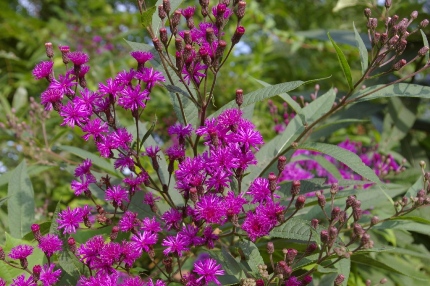
I have never met an ironweed (Vernonia) that I didn't like. Why? They are late summer and fall bloomers, to start with, and we all know we need more flowering perennials in our yards at that time of year. Plant them NOW, don't wait. This week we are getting in the tall, dramatic Vernonia noveboracensis (New York ironweed) that I cut back in my perennial pruning demonstration last Saturday. We also get in the shorter forms such as V. lettermanii 'Iron Butterfly' with feathery, linear leaves. | |
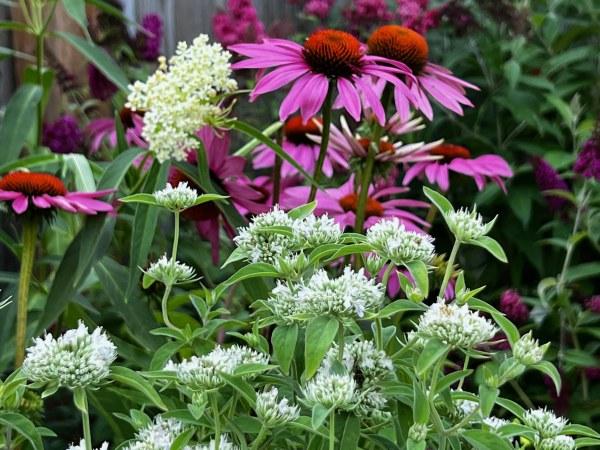
If you ask Diane St. John what her favorite natives are, she would quickly answer Echinacea and Pycnanthemum (mountain mint). And we have plenty of both right now. We have straight species of Echinacea paradoxa, pallida, and purpurea as well as many wonderful cultivars. We have Pycnanthemum muticum, flexuosum, and tenuifolium. They are great garden companions as shown above. | |
EVEN MORE WAY COOL ANNUALS! | |
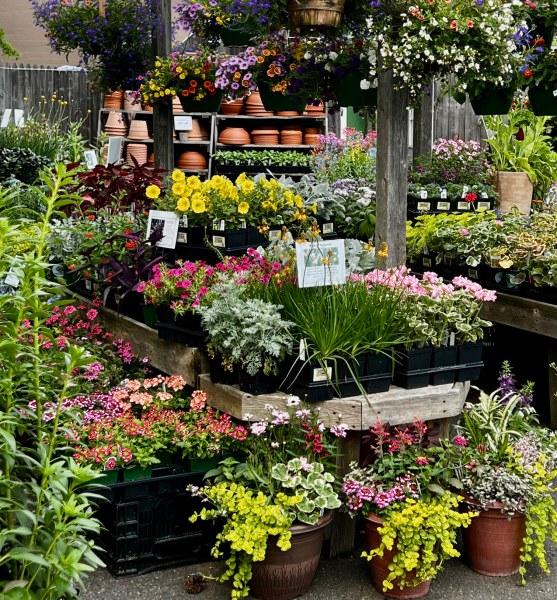
I read a lot of blog posts and articles about gardening. One theme ran throughout them over the weekend: "We are just getting the garden going..." I couldn't agree more. I simply can't resist popping in unusual and fun annuals everywhere I have a gap. Amber has sent me her list of the best annuals on our benches this week. Have you grown any of them? May we tempt you to add some more beauty to your porch, patio, deck, or gardens? | |
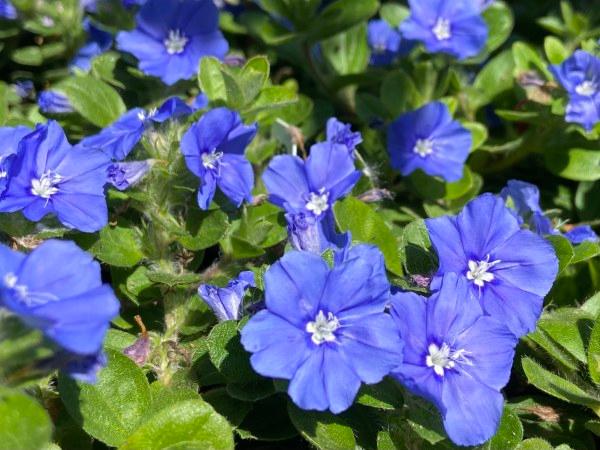
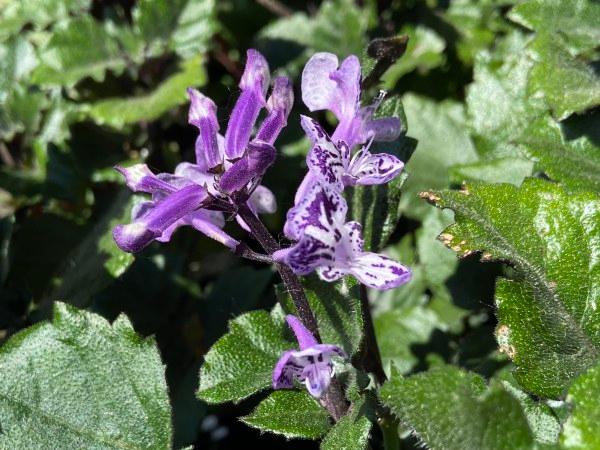
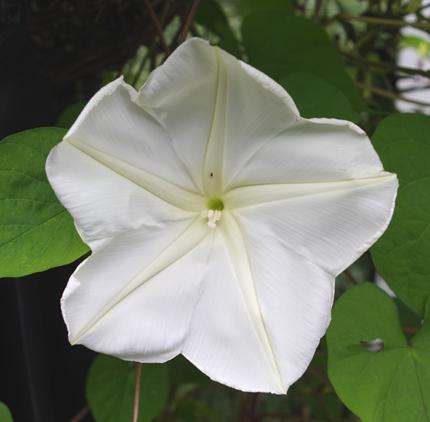
This is Evolvulus 'Beach Bum Blue' and this is its real, true-blue color! This is great for a ground cover or a trailing annual in pots or windowboxes. | Do you grow Plectranthus 'Velvet Elvis'? You can probably guess that we first chose this variety for the name. But then we discovered why it is called that. Turn each leaf over and it is a velvety, deep, dark purple. The flowers are a bonus. This is great for sun or partial shade and also makes a really great houseplant! (it is related to old fashioned Swedish ivy) | Have you ever tried to grow moonflowers from seed? It can be frustrating. First you knick the seed, then you soak the seed. It may take over a month to get the plant to the proper size for planting outside. Well, guess what? We have BIG, already established, vining moonflowers available! They are called moonflowers because they are vespertine, i.e. they bloom at night and emit a sweet fragrance to attract moth pollinators. The flowers are huge. | |
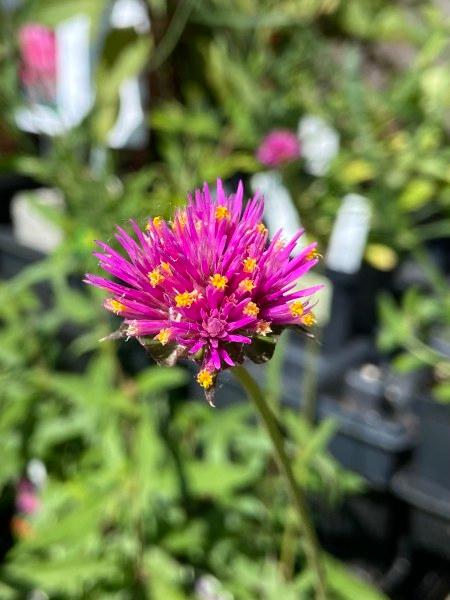
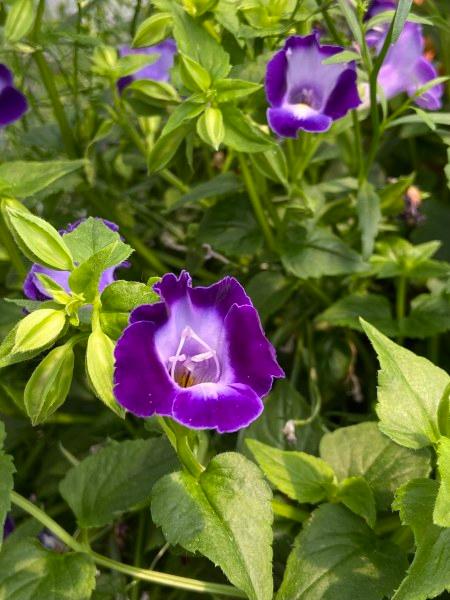
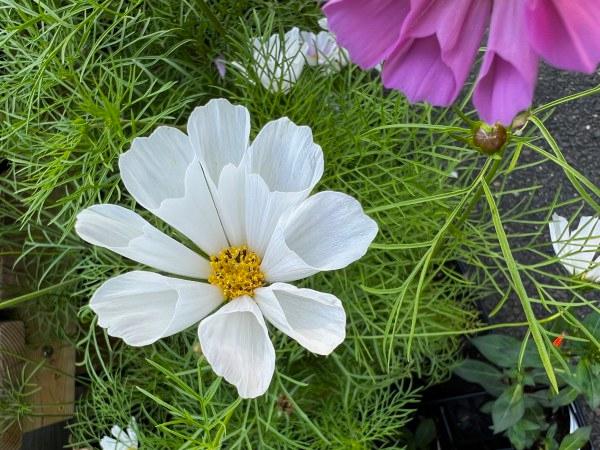
Gomphrena 'Fireworks' will supply you with hundreds of purple flowers on long stems, ideal for fresh cut or dried arrangements. This modest looking annual has incredible flower power. | Torenia (wishbone flower) has been around a long time but lately, new introductions have really made me sit up and take notice. They are "spillers", trailing over the edge of containers or used as a flowering ground cover. This is Torenia 'Bouquet Deep Blue'. | And then there are the cosmos, including 'Seashell' with tubular flower petals, compact forms, red varieties, peach varieties, and so much more. A summer garden isn't complete without them. | |
|
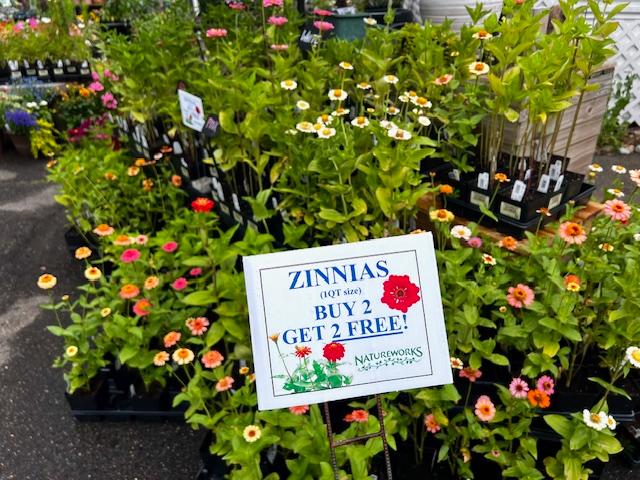
4" ZINNIA PLANTS ARE ON SALE!
BUY 2 AND GET 2 FREE!
BUY AS MANY AS YOU WANT AND SAVE!!!
Plant our larger plants and seeds together for continuous summer blooming.
| |
|
It's that time of year when we want to find homes for our wonderful tomato plants to make room for MORE plants!
ALL ORGANIC TOMATO SEEDLINGS BUY ONE GET ONE FREE!
20% OFF ALL PEONIES
30% OFF ALL LILACS
30% OFF Quercus palustris trees (native pin oak)
30% off Magnolia trees
30% off Cercidophyllum magnifcum 'Pendula' (weeping Katsura tree)
(in stock plants only while supplies last)
| |
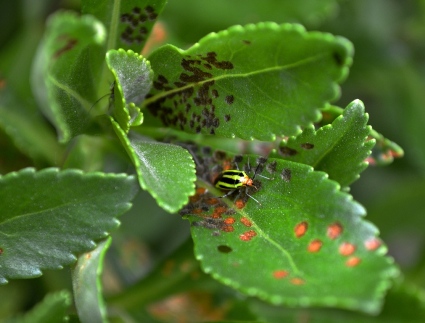
Are you noticing lots of round spots on the new growth of your mums, Montauk daisies, nepeta, and other plants? That is most likely the damage from the four-lined plant bug. You may never see it feeding as it comes out at dusk and feeds until dawn. You can spot them on cloudy or rainy days. In my own garden, I simply pinch off the damage (since I am actively pinching and cutting back many of my perennials this month). If you must spray, use Neem or Pyrethrin and ONLY at dusk after our precious pollinators have stopped flying. Spray ONLY the affected plants. Never blanket spray the whole garden. This insect only has one generation a year. When they are gone, that's it! Plants will outgrow the damage later in the summer. | |
|
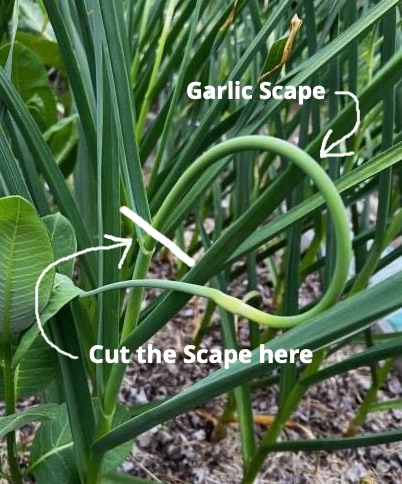
Over the weekend, I was very surprised to find myself harvesting garlic scapes. It seemed too early to me, but others have confirmed that yes, our hardneck garlic is in fact "scaping".
This means that the garlic is trying to flowers and you do NOT want it to do that. Flowering will take all of the energy from growing the garlic bulbs, which is the reason we grow this crop.
But wait, the scapes are a crop too! If you go into a gourmet grocery store, you will see them selling for top dollar. Cut them off when they are curling and then chop them up and add them to stir fries, soups, and stews. Make garlic scape pesto. Dice them and freeze them for the winter. Toss with olive oil, salt and pepper and grill them!
| |
|
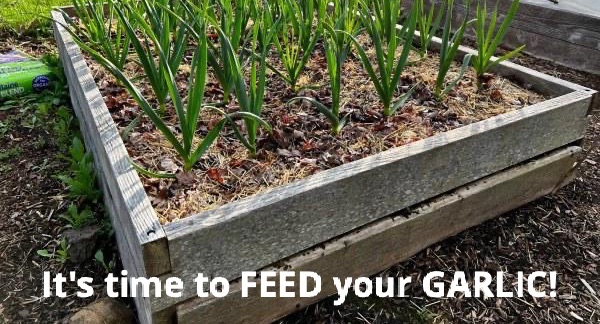
FEED YOUR GARLIC CROP NOW. This is when the bulbs are really forming underground. Keep your eye on the rainfall. A slight sprinkle won't do it, we need a few deep soakings to grow the biggest, juiciest garlic. So water your plants if it doesn't rain between now and harvest which is usually mid-July.
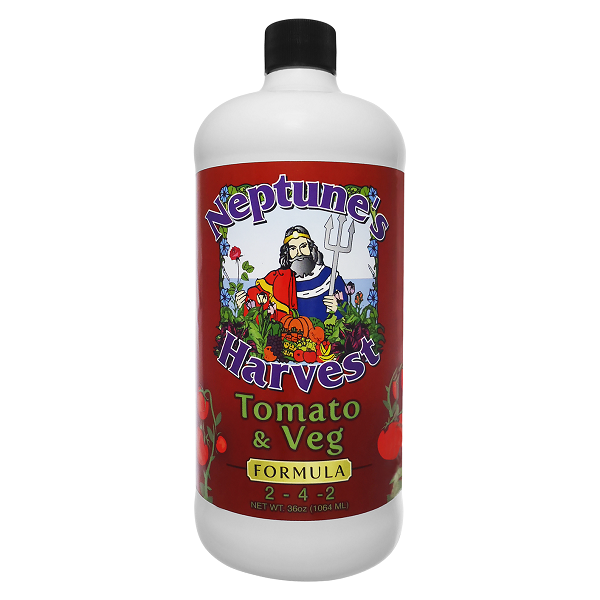
Right after we cut our scapes, Diane and I both feed our garlic with Neptune's Harvest Tomato and Veg Formula. We mix it up in a watering can and pour it on.
| |
Plants that Caught my Eye this Week | |
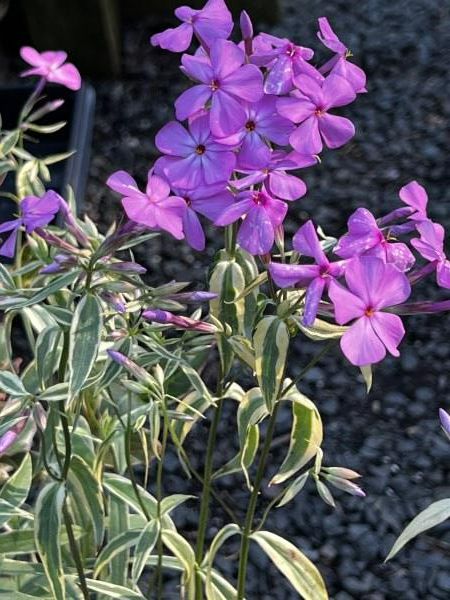
Phlox glaberrima 'Triple Play' is a variegated selection of our native meadow phlox. I use it in my designs. It blooms in June with lavender-pink flowers over cream and green variegated foliage that really brightens up the garden. Hummingbirds love meadow phlox and so do I! | |
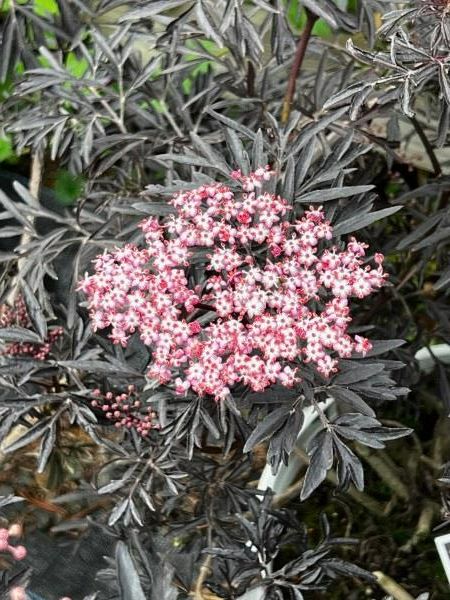
One of the prettiest flowering shrubs in our nursery yard this week is Sambucus nigra 'Black Lace'. This variety of elderberry has purple leaves and huge, 10" diameter pink flowers beloved by pollinators and beneficial insects. It will grow 5-6' tall. | |
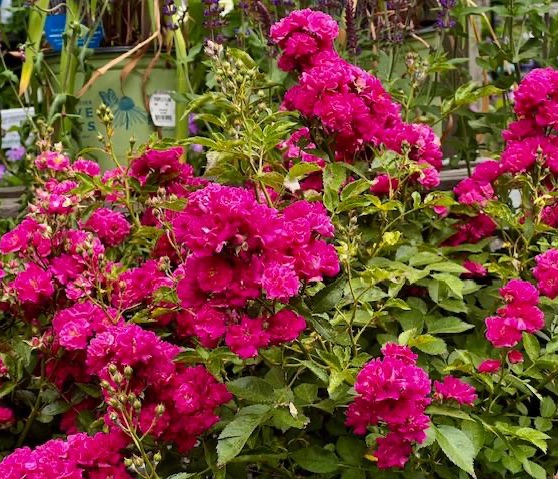
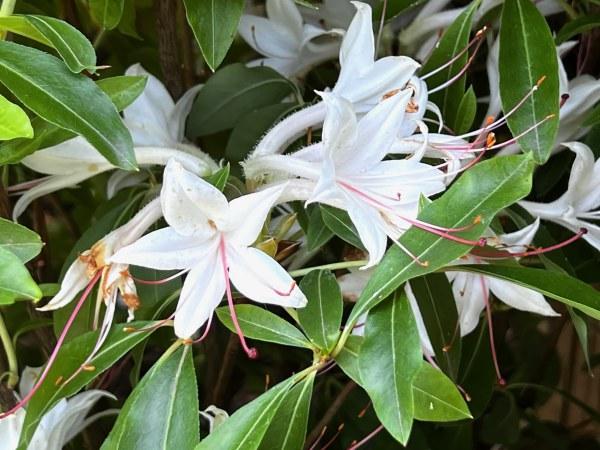
June is the month for roses to bloom. One rose in particular caught my eye this week, simply because it was absolutely SMOTHERED in blooms. It is called 'Oso Easy Peasy'! Clusters of deep pink flowers are just so beautiful. This award winning series was developed for ease of care, hardiness, and long bloom. It will grow 2.5' feet tall and 3.5 wide. | I know I keep telling you about my collection of upright, deciduous azaleas, but I MUST let you know that we have 2 plants of Azalea arborescens 'Hot Ginger and Dynamite' in the nursery yard right now. This has a special spot in my courtyard, literally right next to the deck so I can enjoy its sweet fragrance. It is no mistake that the common name for this species is sweet azalea! | |
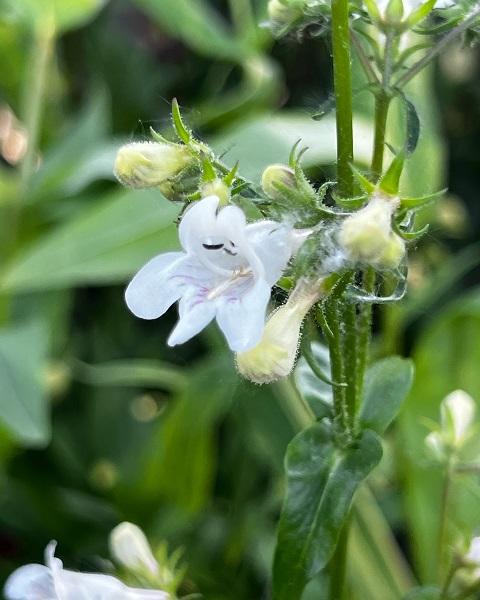
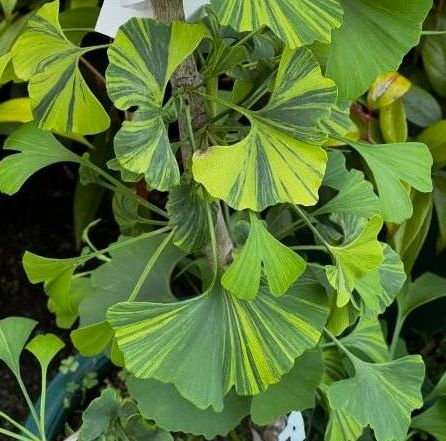
As I did my morning stroll through my yard, cup of coffee in hand, I saw that my Penstemon patch has started to flower. I grow many different ones, but Penstemon digitalis is the easiest and an excellent straight species native that is beloved by pollinators. Varieties include many with burgundy foliage and stems, all great garden plants and very long blooming. | In the category of "Gee, I didn't know we had that!", check out this variegated, semi-dwarf Gingko biloba 'Sunstream'. It will grow to about 8 feet tall. The fall color is brilliant golden yellow. | |
|
Garden TIPS from Nancy
Get your cages and hoops and stakes in place NOW!
I did a lot of that over the weekend, dragging everything out of the back garage and distributing them to all my raised beds, Smart Pots, and gardens. There is nothing worse than trying to support something after it has flopped. Trust me!
Get those row covers on! My second sowing of cucumbers just germinated this morning, row covers go on today. Better yet, right when you put seeds in the ground, put the row cover on. Same with my squashes. The light fabric covers stay on until the plants start flowering.
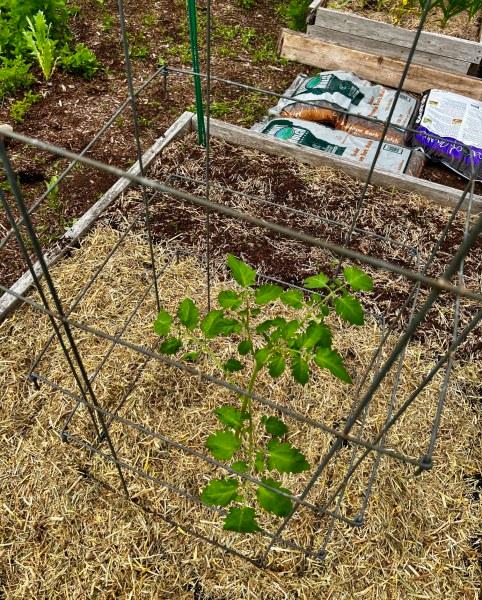
Mainely Mulch is the best product to use to keep the soil moist and the weeds down in your vegetable garden. You can put Planter's Paper under it if you want double the protection. Diane sent me this picture of her newly planted tomato plant, all caged and mulched. She uses our 58" heavy duty cages. It dwarfs the plant, but just wait--soon this Sungold tomato will be overflowing the cage!
Tomato cages and wood stakes are in stock now while supplies last.
| 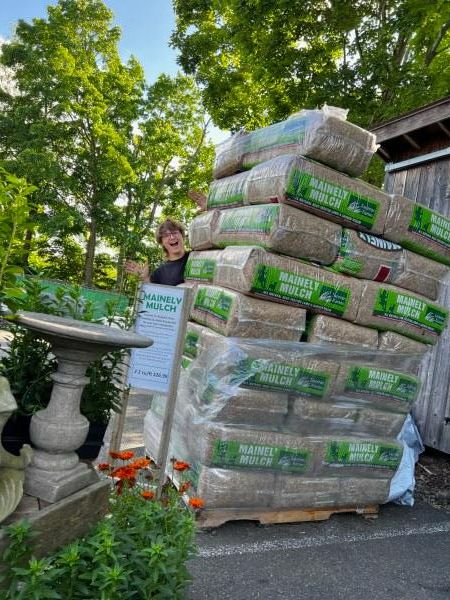 | Guess what Trevor just unloaded?! | |
|
Just keep planting is my mantra for this time of year. If you are running out of room, pick up one of our
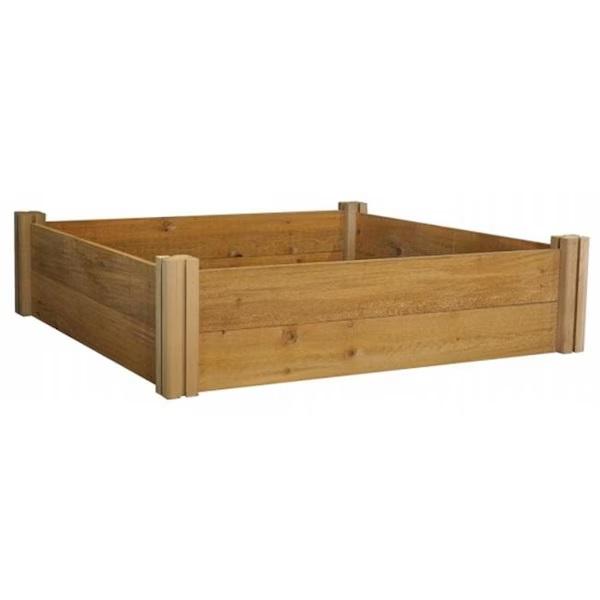
4' x 4' x13" cedar raised beds. Lay down some cardboard boxes to smother the lawn, add 6 bags of 2 cubic foot Coast of Maine Castine Raised Bed Mix and 4 bags Coast of Maine Lobster Compost. Mix well and plant. This will make your life so much easier- no more digging and edging.
You can also plop down a 10 gallon Smart Pot to grow peppers, greens, carrots, or flowers. Again, not digging, just drop, fill, and plant. We carry many sizes of SmartPots, click here to see the selection and order online for pickup.
Our OPEN DAYS are:
Wednesday-Saturday 10-5, Sunday 10-4
We are closed on Monday & Tuesday each week to restock.
I hope I have gotten you very excited about the many possibilities for the June garden. Enjoy every minute out there. This is a glorious time of year, it is what we have been waiting for.
I hope to see you at Natureworks this week. Come see what's new!
| |
|
Do you know how to tell the different Solidagos (goldenrods) apart? Do you know which ones for sun, which for shade? Some spread fast and others form clumps. Some bloom in the summer, some bloom in the fall.
I MADE A VIDEO! Click above on my picture...
| |
FREE TALK: CREATING AN ORGANIC POLLINATOR GARDEN | |
|
I am so excited to be giving a FREE talk on creating an organic pollinator garden next Tuesday night. There are less than 15 spots left, so if you want to attend, register today!
| |
|
Date: Tuesday evening, June 11th, 2024
Time: 6:30-7:30
Location: Miller Memorial Library, Thornton Wilder Hall, Hamden, CT
2901 Dixwell Ave, Hamden, CT
This talk is FREE, but seating is limited. You must reserve your seat. Click below to register.
Grow an Organic Pollinator Garden Free Talk
| |
Hop on the Bus with Nancy for a Fabulous Garden Trip! | |
|
Have you ever wanted to go to the Coastal Maine Botanical Gardens but never got the chance or didn't want to do the drive? Me too! Well, now is your chance. I am thrilled to be the guest horticulturist on a wonderful garden trip from September 112th-14th. It is sponsored by The CT Horticultural Society and Friendship Tours.
For the complete itinerary and registration information, click on the link below.
Maine Garden Trip with Nancy and CT Horticultural Society
Coastal Maine Botanic Gardens is an amazing place. I am thrilled to announce that Andy Brand (Director of Horticulture and formerly of Broken Arrow Nursery) will be giving us a guided tour!
Coastal Maine Botanic Gardens
We will also be visiting Bedrock Gardens and will be given a tour by my friend John Forti, the author the the book The Heirloom Gardener.
Bedrock Gardens John Forti Tour
On the way home, we will visit Tower Hill, also know as New England Botanic Gardens.
New England Botanic Garden at Tower Hill
| |
|
Visit our social media pages for more inspiration!
Facebook and Instagram are updated constantly!
| | | | |