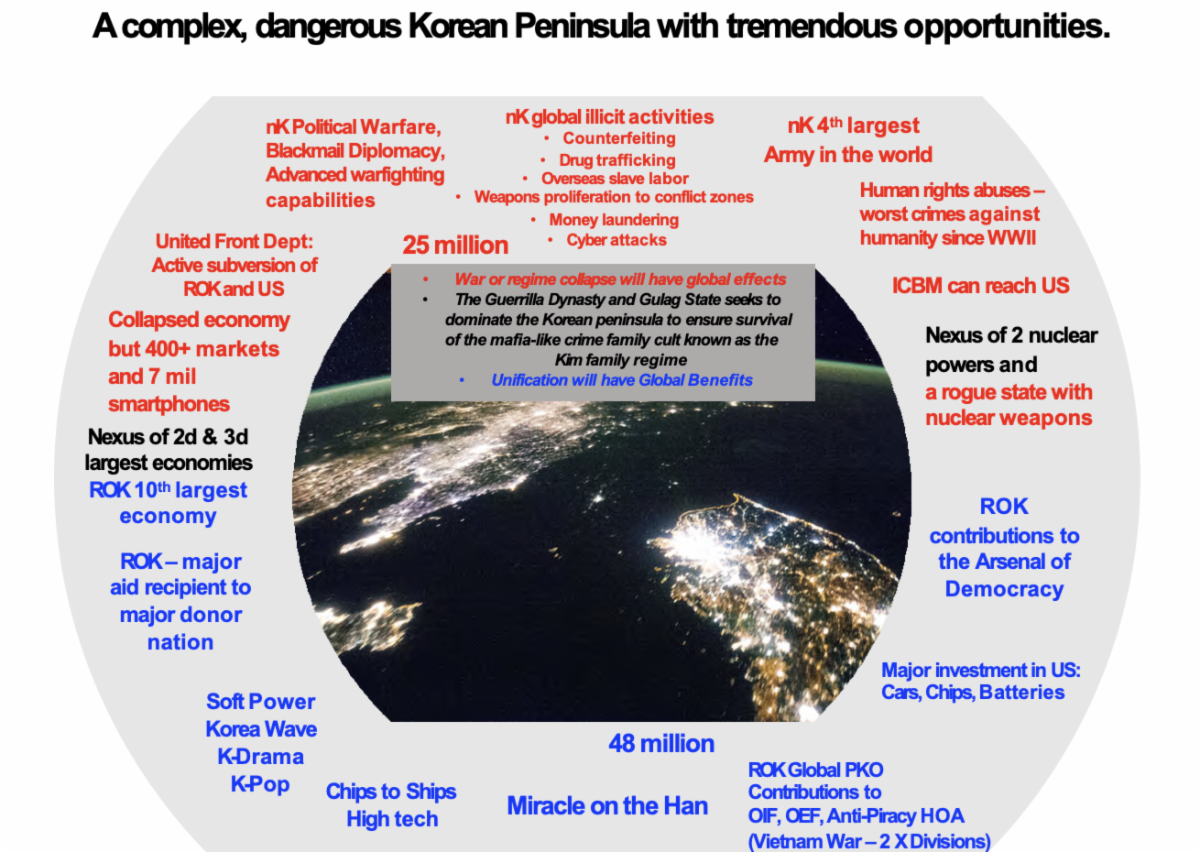
|
Quotes of the Day:
“At a dinner in Munich in February 2023, I found myself seated across the table from a European diplomat who had just returned from Africa. He had met with some students there and had been shocked to discover how little they knew or cared about the war in Ukraine. They had repeated Russian claims that the Ukrainians are “Nazis,” blamed NATO for the invasion, and generally used the same kind of language that can be heard every night on Russian evening news. The diplomat was mystified. He grasped for explanations: Maybe it was a legacy of colonialism, or Western neglect of the Global South. Maybe this was just the long shadow of the Cold War. He shook his head. Like so many Europeans and Americans who seek to explain the world using only their own experience, he had missed the simplest and most obvious explanation. The story of how Africans—as well as Latin Americans, many Asians, and indeed many Americans and Europeans—have come to repeat Russian propaganda about Ukraine is not primarily a story about European colonial history. It rather involves China’s systematic efforts to buy or influence media and elite audiences around the world; carefully curated Russian propaganda campaigns, some amplified by both paid and unpaid members of the American and European far right; and, increasingly, the efforts of other autocracies piggybacking on these networks, using the same tactics and the same language to promote their own illiberal regimes, often for the purpose of achieving similar narrative control. Antidemocratic rhetoric has gone global.”
– Autocracy, Inc.: The Dictators Who Want to Run the World by Anne Applebaum
"The greatest way to live with honor in this world is to be what we pretend to be."
– Socrates
"A man who uses a great many words to express his meaning is like a bad marksman who, instead of aiming a single stone at an object, takes up a handful and throws at it in hopes he may hit."
– Samuel Johnson
1. We fight with meticulous logic, 'MZ defectors' united in Washington and New York
2. North Korean defectors visiting the U.S.: “We will lead unification with a youthful perspective”
3. Time for fresh look at unification economics
4. North Korea says it deployed nuclear-capable missiles to South Korean border
5. North Korea's Kim oversees delivery of new tactical ballistic missile launchers
6. Assessing the Stalemate on the Korean Peninsula and its Implications for U.S. Interests
7. Declaring ‘Crisis,’ South Korean Firms Tell Managers to Work 6 Days a Week
8. Paris 2024 Olympics: North Korea performs diplomatic gymnastics
9. Authorities issue warning against N. Korean hackers trying to steal construction, machinery data
10. U.S. Army unit trains for rapid deployment to S. Korea
11. North vows to strengthen nuclear arsenal regardless of U.S. election results
12. Number of North Koreans entering Russia skyrocketed in first half, data shows
13. North Korean ‘People’s Athlete’ takes bronze in Olympic women’s boxing
14. Korea needs foreign agent registration act
15. How to counter N. Korea's garbage balloon campaign
1. We fight with meticulous logic, 'MZ defectors' united in Washington and New York
More reporting on our excellent North Korean Young Leaders Assembly program over the past two weeks.
Some controversial remarks below.
This is a Google translation of the Chosun report.
We fight with meticulous logic, 'MZ defectors' united in Washington and New York
The 2nd 'North Korean Youth Leaders' Conference'
https://www.chosun.com/international/us/2024/08/05/5IO2YTG7VBCBFJ5226XMDHF54M/
Washington = Correspondent Eun-joong Kim
Posted 2024.08.05. 00:35
Updated
2024.08.05. 00:50
5
North Korean defectors from the North Korean Youth Leaders Conference attend a North Korean human rights conference held at the Permanent Mission of the Republic of Korea to the United Nations in New York on July 29. Some attendees requested that their faces not be disclosed due to security concerns. The North Korean Youth Leaders Conference, comprised of ten defectors born in the 1980s and 1990s, visited Washington, D.C. and New York from the 24th to the 30th of last month, and met with the White House, State Department, and other U.S. government and civilian personnel to discuss the direction of U.S. policy toward North Korea. /North Korean Youth Leaders Conference
Ten young North Korean defectors living in South Korea and the United States visited Washington, D.C. and New York from the 24th to the 30th of last month and met with the White House, the State Department, and other U.S. government and private figures to discuss the direction of North Korea policy. The 'North Korean Youth Leaders' Conference', now in its second year, is comprised of people born in the 1980s and 1990s who are experts in various fields such as politics, law, media, and information technology (IT). They are young people who defected relatively young, received education in advanced countries other than North Korea, and have built expertise in their respective fields, standing in contrast to the previous generation of defectors.
This general meeting was established by siblings Lee Hyun-seung (39) and Lee Seo-hyun (33), who defected in 2014 as the children of Ri Jeong-ho, a high-ranking official in Room 39 of the Workers’ Party known as “Kim Jong-un’s safekeeper.” Hyun-seung, a researcher at the non-profit organization (NGO) Global Peace Foundation, said, “We, as young people who have received sufficient higher education outside of North Korea and have acquired international awareness, will communicate more smoothly with the international community and persuade South Korea and the United States to implement effective policies toward North Korea.” Seo-hyun graduated from Columbia University’s graduate school in May. North Korea is continuously being exposed for its dedication to hacking in order to provide funds for its nuclear and missile development, and his specialty is cybersecurity to block such online crimes.
Seo Hyun is fluent in both Chinese and English. Last year, she made headlines by rebutting the Chinese ambassador who supported North Korea at the UN Security Council in Chinese, and last month, she joined the McCain Institute's Global Advisory Council, which upholds the will of the late Senator John McCain (1936-2018). He said, "If our senior generation mainly talked about painful lives and pain, we will present solutions based on our knowledge and experience."
Lee Seo-hyun, who participated in this year's 'North Korean Youth Leaders' Conference'. She received a master's degree in international relations from Columbia University Graduate School, and last year, she became a topic of conversation when she rebutted the Chinese ambassador in Chinese at the UN Security Council. / Provided by Lee Seo-hyun
Jeong So-yeon (24), who defected from North Korea in 2013 and settled in the U.S. two years later, is a social media influencer. Her YouTube channel, which she started four years ago, covers topics such as American life and beauty, and has about 77,000 subscribers. Ahn Seong-hyeok and Jang Eun-sook, who were selected as Fulbright Scholars by the U.S. government after a fierce competition and are currently studying at Syracuse University and Brandeis University, respectively, also participated in this event. They attended a discussion held at the Hudson Institute in Washington, D.C. on the 26th of last month and expressed their opinion, saying, “(After defecting) I experienced freedom for the first time in my life by searching for ‘Kim Jong-il’ on Google. It is important to provide information that will help North Korean residents recognize their own problems.”
They plan to register the group as a non-profit organization and grow it into a platform for young North Korean defectors with expertise and international sensibilities to speak out. Hyun Seung said, “As people with similar backgrounds gathered together, we naturally spoke in the North Korean dialect (which we don’t usually use), and our sense of camaraderie grew as we cheered and encouraged each other.” They also attended the 71st anniversary of the armistice held at the Korean War Veterans Memorial in Washington, D.C. on the 27th of last month.
Recently, in the National Assembly of South Korea, Rep. Choi Min-hee of the Democratic Party of Korea apologized after saying to Rep. Park Chung-kwon, a defector from North Korea, “Do you not see the principles of democracy because you live in a totalitarian state?” Kim Geum-hyeok (33), a graduate of Kim Il-sung University and former policy advisor to the Minister of Patriots and Veterans Affairs, said, “It is an insulting remark to defectors,” and added, “We know very well how precious the liberal democracy that we fought for with our lives is, so we are making greater efforts to protect it.” Kim also said, “Assemblyman Choi himself, who was stripped of his right to run for office for violating the election law (finalized in 2018, banned from running for office for 5 years), is the one who needs to learn more about democracy.”
2. North Korean defectors visiting the U.S.: “We will lead unification with a youthful perspective”
This is another Google translation of a Radio Free Asia report on our North Korean Young Leaders Assembly.
North Korean defectors visiting the U.S.: “We will lead unification with a youthful perspective”
https://www.rfa.org/korean/in_focus/human_rights_defector/youngdefector-07262024155927.html?utm
WASHINGTON-Jamin Anderson andersonj@rfa.org
2024.07.26
North Korean defectors who participated in the 2024 North Korean Youth Leaders Conference had a meeting with U.S. Ambassador-at-Large Julie Turner, and Drew Arbushes, Director of the White House National Security Council’s Korean Peninsula Affairs Bureau, on the 24th. From left: Danny Lee, Ahn Sung-hyuk, Jang Eun-sook, Lee Hoon, Ambassador Julie Turner, Director Drew Arbushes, Evelyn Chung, Lee Hyun-seung, Park Jeong-yeon, Lee Seo-hyun, and David Maxwell, Deputy Director of the Center for Asia-Pacific Strategy (CAPS).
/ Provided by Lee Hyun-seung
Anchor : Young North Korean defectors who are active in their respective fields of expertise have visited the United States. Reporter Jamin Anderson met with them, who aim to have young defectors play a leading role in discussions about unification .
Ten young North Korean defectors living in South Korea and the United States are visiting Washington , D.C. and New York to discuss the future of North Korea and the Korean Peninsula .
These are young North Korean defectors who are building expertise in their respective fields, including politics, diplomacy , engineering , information and communications technology (IT), literature , and finance , and seeking ways to contribute to change in North Korea .
Hyunseung Lee, a researcher at the Global Peace Foundation who led this general meeting, said on the 25th that North Korean defectors who were educated in South Korea and acquired international sensibilities should now go beyond exposing the dire human rights situation in North Korea and directly express their opinions and exert influence on North Korea policy .
He explained that during the general meeting, meetings are being held with the U.S. government, congressional officials, and North Korea experts in the U.S. to understand and discuss the views of the U.S. and the international community .
Ahn Seong-hyeok, who is currently completing his doctorate in East Asian security at Syracuse University in the United States, said that on the 24th, he met with Julie Turner, the State Department's special envoy for North Korean human rights issues, and Drew Arbuseth, the White House National Security Council's director for Korean affairs, and heard positive responses about simplifying visa issuance and asylum procedures for North Korean defectors .
North Korean defectors visited RFA headquarters on the 25th for an interview. / RFA Photo - Yoo Hyeong-jun
Mr. Ahn Sung-hyuk : There are many North Korean defectors in South Korea who are preparing for unification . These young people want to come to the larger world of the United States, meet politicians, and study, but the reality is that they are being denied tourist visas . I made a proposal to the State Department ( to improve this ) , and I heard that they are enacting a law related to this . Also, I heard that they are trying to accept North Korea as a separate asylum application when North Korean defectors come directly to the United States .
According to the 2022 Unification Perception Survey by the Korea Institute for National Unification, the percentage of respondents who said unification was necessary was 53.4% , the lowest level since 2014 .
In particular, only 39.1% of those in their 20s and 42.4% of those in their 30s were in favor of unification .
Kim Geum-hyeok, a member of the Ministry of Unification’s Unification Future Planning Committee, argued that an environment should be created in which young North Korean defectors can play a leading role in encouraging greater participation from the younger generation in discussions on unification.
North Korean defectors participating as panelists in a discussion at the Hudson Institute on the 26th. / Courtesy of Lee Hyun-seung
Mr. Kim Geum-hyeok : Most of those who are currently discussing unification and preparing for the future are in their 50s or 60s . I critically argue that if a committee consists of, say, 30 people, at least 10 of them should be experts in their 20s or 30s , so that the younger generation can come up with more realistic and accessible policies that will have appeal and create real change . Fortunately, most of my criticisms ( in the committee ) are accepted .
He said , “ The younger generation in Korea does not know much about North Korea and feels resistance because they are afraid of the unknown, ” and “ When I actually discuss unification with young people in Korea, I can see a positive response . ”
Recently, the number of defectors from North Korea among the MZ generation , which refers to the generation born from the 1980s to the early 2000s , is increasing .
According to the Ministry of Unification, the number of MZ generation defectors who entered South Korea in 2022 was 34 , or 50.7%, and in 2023, it was 99 , or 50.5% .
Kim Geum-hyeok : The media is saying that we, as the Jangmadang generation, are leading the change in North Korea , but my friends ( MZ generation who recently defected ) are much more sensitive to external culture than we are and are showing characteristics of being critical and bold about the North Korean system . I have heard testimony that the MZ generation in North Korea is very cynical about the Kim Jong-un regime or the Kim Ju-ae successor theory , and that they are well aware of it .
He added, “ I felt hopeful when I saw the eyes of North Korean defectors and their desire for growth . ”
North Korean youth agree that the influx of dramas and K-pop is important, but they point out that this is only the beginning of opening their eyes to the outside world .
Jang Eun-sook, who will begin her master's program at Brandeis University in the United States in September, emphasized the importance of the quality of information, saying, " Before defecting, I was aware through external information that the North Korean system was not functioning properly , but my critical perspective was not directed at the leader . "
Jang Eun-sook : Since North Koreans idolize the Kim family , I think that if they start to harbor antipathy toward that family, a revolution could happen within North Korea . The influx of Korean Wave and cultural content is very important , but it’s only a way to open up interest in the outside world . The quality of information is important . We also need to have a correct understanding of history . If we can provide the North Korean people with the right information, and they can think for themselves and develop antipathy toward their leaders, I think we’ll be able to look forward to changes in North Korea .
Children of former North Korean high-ranking officials graduate from Ivy League schools at the same time
Ruling party recruits Kim Geum-hyeok: “ North Korea’s young generation , Hallyu wave spreaders … information inflow must continue”
Bush Center Selects 9 North Korean Defector Scholarship Students … Total Support of $ 50,000
This is the second year that the North Korean Youth Leaders' Conference has been held.
Mr. Lee Hyun-seung expressed his ambition to hold a general meeting every year to learn new perspectives on the North Korean issue and at the same time convey the perspectives of North Korean defector youth to the international community .
Mr. Lee Hyun-seung : If there is anything that is the same as last year, it is that there has been no significant change or development in the US policy toward North Korea . It is disappointing that it has continued without change . What is different from last year is that since we have met several times, people respect our different opinions and try to listen to them . This time, I visited the Brookings Institution , and through exchanges, I talked about the basic nature of the North Korean regime and persuaded them .
Mr. Lee Hyun-seung said that the international community's policy toward North Korea or its perception of North Korea will not change drastically every year, and that is why such programs should continue .
The North Korean youth will remain in the United States until the 31st, and are scheduled to meet with Deputy Permanent Representative of the United States to the United Nations Robert Wood, hold a meeting with the Permanent Mission of South Korea to the United Nations , and lay a wreath at the Korean War Veterans Memorial in Washington , D.C.
Editor Park Jeong-woo, Web Editor Kim Sang
3. Time for fresh look at unification economics
We must pay attention to Nick Eberstadt.
The US must support its ally and the Korean people in solving their Korea question. The US has to cure the disease from which it suffers: "US unification dismissiveness."
Time for fresh look at unification economics
The Korea Times · August 5, 2024
By Nicholas Eberstadt
Nicholas Eberstadt
Ever since the collapse of the Soviet empire and the end of the Cold War, South Koreans have been worrying about the economic costs of an eventual unification with the North.
The scale of social outlays and debt accumulation in Germany’s reunification in the early 1990s frightened observers in the South. Seoul’s emergency IMF bailout loan during the Asian financial crisis of 1997-98 reinforced the notion that South Korea’s economic success was too fragile to bear the burden of their impoverished Northern cousins.
But a lot has changed over the generations since South Koreans stopped thinking seriously about the economics of reunification.
For one thing: we now know, without a doubt, that the longer unification is postponed, the bigger the gap between North and South will be — and the greater the ultimate task of making the two Koreas one.
Trade patterns based on reports from partners — the only reliable data we have on Pyongyang’s economy — illustrate the diverging fortunes of the two Koreas. South Korean exports have been soaring since the 1960s, while North Korea’s share of global exports continues to shrink.
That growing North-South export gap speaks to striking differences in competitiveness and economic capability. It is a proxy for all the other widening inter-Korean socioeconomic gaps.
Nobody still believes the Kim family regime will somehow, someday, reform its system. Consequently, continued division of Korea promises an even greater chasm between the two Koreas in the future.
Second: it is by now obvious that North Korea’s poverty is the predictable consequence of three generations of extraordinary misrule by a worst-in-class dictatorship — rather than defects of the Koreans trapped under their control.
The Kim family regime is the architect of the most extraordinary economic failure of modern times. It managed to “achieve” the near impossible — to mastermind the only mass famine ever experienced in recorded history for a literate, urban population in peacetime.
According to the widely cited Index of Economic Freedom, North Korea’s “business climate” is dead last globally — and has been since 1995, when the index commenced. Is anyone surprised that the government with the world’s worst practices and policies also has the world’s worst economic record?
Don’t blame Pyongyang’s miserable performance on the North Korean people. They are the regime’s main victims: and with a slightly different roll of the historical dice, many in today’s affluent South might have ended up as impoverished Northern cousins themselves.
Third: unification will clearly be a huge undertaking — but if the returns on that investment are high, the project can basically pay for itself over the long run.
Outlays for unification won’t be “helicopter money.” Rather, they will be investments in a vast and complex long-term project. Rates of return will make the difference between whether or not unification is “affordable.”
The trick is generating high rates of return — and keeping them high. Obviously, this is easier said than done. But it is the heart of the matter. With high enough rates of return, even a mega-project can basically pay for itself.
Finally: thanks to decades of market-led development, South Korea and the international community are richer and more productive than ever before — better poised to mobilize and deploy the immense amounts of capital and know-how a successful Korean unification will surely require.
When they discuss unification, South Koreans often talk as if theirs is a poor country. That was true — once upon a time. Not today.
UBS Bank estimates South Korea’s private wealth-holdings in 2022 at nearly $10 trillion. That would put the South in the world’s top 10 countries for total private wealth — and would mean that wealth per adult is now higher in South Korea than in Japan.
Surprising as this may sound, a sudden “big bang” unification of the Korean Peninsula would leave the peninsula a richer place today, in terms of inflation-adjusted wealth per adult, than was Germany a decade after its reunification.
South Koreans have far more economic and financial resources for unification than they are accustomed to imagining. And don’t forget all that private capital sloshing around the world, looking for attractive projects to invest in.
Markets around the world fund over $35 trillion in foreign direct investment — and another $70 trillion in portfolio investment.
There is plenty of private money out there — for attractive investments. Making the economic reconstruction of the North an attractive proposition for all involved, consequently, looks to be absolutely central to the success of the venture.
Even a peaceful reunification of the peninsula promises to be a daunting proposition, fraught with uncertainties. We cannot know how or when the opportunity for Korean unification will present itself, whether the free and peaceful scenario will come to pass, or decidedly less pleasant variants instead. But Korean unification is “unthinkable” only so long as people fail to think about making it work.
Nicholas Eberstadt holds the Henry Wendt Chair in Political Economy at the American Enterprise Institute (AEI) in Washington DC. He is a founding director of the US Committtee for Human Rights in North Korea (HRNK) and a senior advisor for the National Bureau of Asian Research (NBR). His many books and studies on Korean affairs include "North Korea's Epic Economic Fail in International Perspective" and "National Strategy for Countering North Korea".
The Korea Times · August 5, 2024
4. North Korea says it deployed nuclear-capable missiles to South Korean border
North Korea says it deployed nuclear-capable missiles to South Korean border
Kim Jong Un warns US and defends military buildup at handover ceremony for 250 short-range missile systems
https://www.nknews.org/2024/08/north-korea-hands-over-250-tactical-missile-systems-to-units-on-rok-border/?utm
Colin Zwirko August 5, 2024
Hwasong-11D short-range ballistic missile launchers lined up at a handover ceremony on Aug. 4 | Image: Rodong Sinmun (Aug. 5, 2024)
North Korean leader Kim Jong Un handed over 250 new “tactical ballistic missile launchers” to “front-line units” on the border with South Korea at a ceremony Sunday, according to state media.
The missiles are a “new core offensive weapon of our armed forces,” the DPRK leader said as he called for improving nuclear capabilities to fend off threats from the U.S., the Korean Central News Agency (KCNA) reported on Monday.
They appear to be transporter erector launcher vehicles (TELs) for the Hwasong-11D short-range ballistic missile (SRBM), a type of missile Kim previously claimed could be fitted with nuclear warheads.
Kim has inspected multiple factories producing these TELs in the last year, including what appears to be a new one in Pyongyang that started operating before construction finished, indicating the urgency of the project.
Hwasong-11D short-range ballistic missile launchers lined up at a handover ceremony at the Mirim military parade training complex on Aug. 4 | Image: Rodong Sinmun (Aug. 5, 2024)
Each of the 250 new TELs can carry four missiles, potentially putting 1,000 nuclear missiles on South Korea’s border, though they can also be used conventionally and Pyongyang is not known to have secured enough fissile material for this number of warheads.
The ceremony at the Mirim military parade training complex in Pyongyang comes days after severe flooding ravaged parts of the northwest of the country, including around multiple important weapons factories, prompting mobilization of the military for rebuilding efforts.
Kim reportedly said in a speech that holding the ceremony days after the flooding shows his commitment to military development in the face of challenges, and that his priority on military spending will continue “without stopping under any circumstances.”
The DPRK leader also blamed the “U.S. and its followers’ ever-escalating military confrontation moves” for prompting his plan to mass-produce the SRBM systems.
Kim reiterated that he still has a choice of engaging in both “dialogue and confrontation” with the U.S. but that he still sees Washington as an “enemy state that our descendants will have to face for generations to come” no matter who occupies the White House.
Hwasong-11D short-range ballistic missile launchers lined up at a handover ceremony at the Mirim military parade training complex on Aug. 4 | Image: Rodong Sinmun (Aug. 5, 2024)
1
2
Satellite imagery confirms hundreds of objects were set up at the Mirim military parade training complex between Aug. 3 and 4, shown in state media to be 250 Hwasong-11D SRBM TELs | Image: Planet Labs (Aug. 4, 2024)
1
2
He also said North Korea has the sovereign right to continue developing weapons even if engaging in dialogue.
“We will clearly let the U.S. know that if they ignore our repeated warnings and continue to try to cause disaster in the region, they could bring about fatal consequences for themselves.”
Kim added that “this is just the first stage of our plans of building up front-line missile forces” and that “we will show the whole world the unfiltered view of generational updates for new military equipment every year.”
He also claimed these sorts of updates have a “particular deterrent effect” toward enemy countries.
Front-line units paraded with their new TELs at the complex’s mock Kim Il Sung Square after speeches by Kim Jong Un and party munitions industry department head Jo Chun Ryong. Kim also ordered them to quickly organize training exercises.
Edited by Arius Derr
Updated on Aug. 5 at 9:33 a.m. KST with additional details from state media
5. North Korea's Kim oversees delivery of new tactical ballistic missile launchers
North Korea's Kim oversees delivery of new tactical ballistic missile launchers
By Reuters
August 4, 20247:18 PM EDTUpdated 2 hours ago
https://www.reuters.com/world/asia-pacific/north-koreas-kim-oversees-delivery-new-tactical-ballistic-missile-launchers-2024-08-04/
Item 1 of 5 North Korean leader Kim Jong Un attends a ceremonial event to mark the delivery of new tactical ballistic missiles to his country's troops at an undisclosed location in North Korea, August 4, 2024 in this photo released by North Korea's official Korean Central News Agency. KCNA via REUTERS
[1/5]North Korean leader Kim Jong Un attends a ceremonial event to mark the delivery of new tactical ballistic missiles to his country's troops at an undisclosed location in North Korea, August 4, 2024 in this photo released by North Korea's official Korean Central News Agency. KCNA via REUTERS Purchase Licensing Rights, opens new tab
SEOUL, Aug 5 (Reuters) - North Korean leader Kim Jong Un oversaw the delivery of a new tactical ballistic missile system to troops on Sunday, state media KCNA reported on Monday.
Kim also gave a speech at the ceremonial event in Pyongyang where 250 new tactical ballistic missile launchers were unveiled, according to KCNA.
The launchers have been described by state media as a powerful up-to-date tactical attack weapon personally designed by Kim and ready to be transferred to KPA units.
KPA refers to the Korean People's Army, the country's military forces.
North Korea said it test-fired its new tactical ballistic missile last month.
Pyongyang will have enhanced nuclear readiness in the near future to deter nuclear threats and protect itself to respond to any challenges, the leader was quoted as saying in the speech to troops and military scientists.
Kim reaffirmed his stance that stockpiling and improving the country's nuclear weapons was the best way to counter what he said were nuclear threats and pressure from the United States.
The leader of the reclusive state also said peace was guaranteed by the "absolute and matchless self-defence capability," according to KCNA.
Get the latest news and expert analysis about the state of the global economy with the Reuters Econ World newsletter. Sign up here.
Reporting by Hyunsu Yim; Editing by Paul Simao and Stephen Coates
6. Assessing the Stalemate on the Korean Peninsula and its Implications for U.S. Interests
A rather negative view of unification. It is really a rehash of old think. Although Nick Eberstadt's important paper is referenced, I do not think the author really considered its importance and contribution to understanding the economic aspects of unification,
I wish he had considered the following:
Policymakers, strategists, and civil society activists must begin with a realistic understanding of the nature, objectives, and strategy of the Kim family regime.
Koreans themselves must solve the Korea question (Paragraph 60 of the Armistice - the unnatural division of the peninsula). No other country can lead the effort. However, the U.S. and the international community can and must support the Korean people.
Koreans must seek self-determination of government as the solution to the Korea question, in accordance with Article 21 of the UN Universal Declaration of Human Rights.
Change cannot occur until there is an internal transformation in the north. Kim Jong Un must either change his behavior, or the Korean people in the North must change Kim Jong Un.
Internal transformation will result from a human-rights-up-front approach and an information campaign to support action by Koreans in the north.
Internal transformation in the North is the only peaceful path to a free and unified Korea. A free and unified Korea will be a new Korea returning to its historical foundation with modern characteristics.
Assessing the Stalemate on the Korean Peninsula and its Implications for U.S. Interests
divergentoptions.org · by Divergent Options · August 5, 2024
Rocco P. Santurri III is a Department of Defense contractor with United States Forces Korea and a U.S. Army reservist with the 353rd Civil Affairs Command. He is a published author and contributes regularly to the Center for Historical Analysis and Conflict Research, the British Army’s think tank, as well as several other publications. His views are his own and do not represent his current or past employers. He can be found at https://www.linkedin.com/in/RoccoPSanturri3/. Divergent Options’ content does not contain information of an official nature nor does the content represent the official position of any government, any organization, or any group.
Title: Assessing the Stalemate on the Korean Peninsula and its Implications for U.S. Interests
Date Originally Written: July 18, 2024.
Date Originally Published: August 5, 2024.
Author and / or Article Point of View: The author is a U.S. Army Civil Affairs reservist and defense contractor. He believes that continued stalemate on the Korean Peninsula, as opposed to war, peace, or reunification, best serves U.S. national interests in what the author deems the emerging Eurasian theatre.
Summary: The U.S. faces an increasingly complex environment in the Korean Theatre of Operations (KTO) while balancing support for Ukraine’s war against Russia. An enduring stalemate in the KTO best serves U.S. interests in the region; it sets conditions for the U.S. to counter People’s Republic of China (PRC) aggression, mitigate growing Russian influence, and deter an emboldened Democratic People’s Republic of Korea (DPRK).
Text: With the Global War on Terror relegated to history, the U.S. finds itself navigating an unhinged and anarchistic geopolitical world. The Rules-Based International Order (RBIO) continues to be challenged by an emerging multipolar environment notable for the rise of mid-level powers, non-state actors, and the emergence of two “blocs” reminiscent of pre-World War I. The emerging “Eurasia” theatre is certainly not immune to these centrifugal forces; tensions are running hot in the KTO, while the first continental war in Europe since 1945 shows no sign of ending. Furthermore, the recent “summit” between Russian President Vladimir Putin and Supreme Leader of North Korea Kim Jong-un and the strengthening of Pyongyang’s relations with Moscow adds complexity and increased peril to Washington’s pursuit of its interests[1].
With the PRC officially termed its “pacing threat,” the U.S. has made clear its priority of effort[2]. Consequently, the U.S. alliance with the Republic of Korea (ROK) remains strong and shows signs of significant growth, while security cooperation with Japan, the United Kingdom, and Australia has expanded[3]. While U.S. support to the ROK aims to prevent DPRK aggression, the more existential threat to the U.S. and the ROK emanates not from Pyongyang but from Beijing, an inescapable reality given the meteoric rise of the PRC on the geopolitical scene. With that in mind, what possible scenario in the KTO best supports U.S. interests?
Seeming counter-intuitive on the surface, the ongoing stalemate, as opposed to war, peace, or reunification, best supports U.S. interests for a multitude of reasons, the primary being the threat posed by the PRC. Ongoing tensions between the ROK and an increasingly belligerent DPRK offer justification for the large U.S. military footprint on the Peninsula and the South China Sea. While these forces are officially emplaced to support the ROK, a more prescient purpose is deterring Chinese aggression in the region. The seemingly binary choices of peace or reunification makes it more difficult for any U.S. President to justify a large and expensive U.S. military presence in the ROK. Given the combat capabilities of the ROK, the DPRK, and their respective allies, all sides stand to suffer severe political, economic, and military consequences from a future conflict. While much of Korea lay in ruin after the Korean War from 1950-53[4], the massive increase in conventional military capabilities over the past 70 years ensures a more devastating conflict that now includes the risk of nuclear escalation. Conversely, continuing the stalemate substantiates the heightened American commitment to the region at a cost relatively minimal when compared to conflict. While peace on the Peninsula could incur American taxpayer vitriol at the cost of maintaining a force no longer needed, an enduring and tenuous stalemate demands a well-equipped American presence prepared to “fight tonight[5].”
Reunification is another component that Washington must consider vis-à-vis its interests. The cost of unification would be astronomical for most ROK citizens who are well aware of this massive burden. Polling in 2023 recorded the highest percentage of South Koreans opposed to reunification[6], with a principal reason being the associated costs[7]. Currently, the small number of DPRK defectors receive subsidies from the ROK government. Still, even this meager level of financial assistance is not unanimously supported by the ROK populace, a worrisome sign given the estimated trillions of U.S. Dollars (USD) needed for reunification. Absorbing the DPRK’s centrally planned economy with a poorly trained workforce and minimal market economics experience would be a Herculean effort for the ROK. Unsurprisingly, many South Koreans are content with their current economic status, which boasts an economy ranked 14th globally[9] with predictions of growth in 2024[10].
It is very likely the U.S. would support reunification efforts. However, unlike potential European Union support to Ukraine post-conflict, the U.S. would not have considerable partner nation assistance in providing aid to the Koreas. With a $34 trillion debt[11], the U.S. is poorly positioned to unilaterally provide aid without exacerbating its increasingly dire and potentially existential financial condition. The world has taken note of U.S. debt and there are already nascent efforts to supplant the USD as the world’s reserve currency. The USD’s primacy has been a bedrock of U.S. foreign policy and the RBIO for decades. The U.S. has often used aid and sanctions as a highly effective carrot-and-stick approach to motivate friends and foes alike to support its interests, whether eagerly or grudgingly. The degradation or destruction of the USD’s foundational and international influence due to defaulting on debt obligations would be a cataclysmic event for the U.S. and the RBIO. Such a development would have far-reaching effects on U.S. foreign policy, its pursuit of national interests, and the anchoring force it provides to the current international order. Such events could be delayed, if not prevented, if the stalemate endures.
Dreams of reunification linger in the minds of many Koreans both North and South. These hopes have persisted despite actions taken by Kim Jong-un to constitutionally dismantle any remaining vestiges of reunification. Indeed, the rapprochement between the North and South that culminated in 2018 now seems like a very distant memory[12]. A potential second term as U.S. President for Donald Trump also does not bode well for unification aspirations. Unfortunately for Koreans yearning for a united peninsula, the harsh realities of geopolitics and national self-interest make war, peace, or reunification an undesirable end state for the major political players in the KTO. U.S. interests are not immune to these realities. The U.S. continues to benefit from the spoils of the Korean stalemate, knowing it would incur substantial costs for alternative scenarios. Reflecting a pragmatic, Realism-centric perspective that would make Thucydides and Hobbes beam, U.S. interests stand to be best served by keeping the KTO in a state of competition and occasional crisis that borders on, but never crosses into, conflict. In sum, the U.S. possesses some ability to do what it can, while the ROK suffers what it must. While the menu of ways forward is less than optimal, such is the reality for a stretched superpower descending into “empire after-glow” within the fragmenting RBIO it created.
Endnotes:
[1] Town, J. Sun Y. Minyoung Lee, R. Tatsumi, Y. (2024, June 21). Takeaways from the Putin-Kim Summit. Retrieved on July 15, 2024, from https://www.stimson.org/2024/takeaways-from-the-putin-kim-summit/
[2] Garamone, J. Official Talks DOD Policy Role in Chinese Pacing Threat, Integrated Deterrence. (2021, June 2). Retrieved on July 15, 2024, from https://www.defense.gov/News/News-Stories/Article/Article/2641068/official-talks-dod-policy-role-in-chinese-pacing-threat-integrated-deterrence/
[3] Associated Press. Amid North Korea, China Threats, US Pursues Partnerships with Asian Allies. (2024, June 29). Retrieved on July 15, 2024, from https://www.voanews.com/a/amid-north-korea-china-threats-us-pursues-partnerships-with-asian-allies/7678090.html
[4] Koh, B.C. (Spring 1993). The War’s Impact on the Korean Peninsula. The Journal of American-East Asian Relations, 2(1), 57-76. Retrieved on July 16, 2024, from https://www.jstor.org/stable/i23611487
[5] ABC News. (August 19, 2017). Flight Mission near North Korea Border Exhibits US Motto There: ‘Fight Tonight’. Retrieved on July 16, 2024, from https://abcnews.go.com/International/exclusive-flight-mission-north-korean-border-exhibits-us/story?id=49277874
[6] Yoon, L. (March 19, 2024). Opinion on the Necessity of Unification between South and North Korea from 2007 to 2023. Retrieved on July 16, 2024, from https://www.statista.com/statistics/706376/south-korea-necessity-of-korean-reunification/
Jung Min-ho. (November 8, 2023). Skepticism About Unification Grows Among South Koreans, Poll Shows. Retrieved on July 16, 2024, from https://www.koreatimes.co.kr/www/nation/2024/07/103_362825.html
[7] Eberstadt, Nicholas. (December 27, 2023). The Economics of a Korean Unification: Thinking the Unthinkable? Retrieved on July 16, 2024, from https://www.aei.org/research-products/speech/the-economics-of-a-korean-unification-thinking-the-unthinkable/
[8] Einhorn, M., Rich, T. (April 28, 1992). Majority of South Koreans Prefer Status Quo with North Korea, Survey Shows. Retrieved on July 16, 2024, from https://www.nknews.org/2022/04/majority-of-south-koreans-prefer-status-quo-with-north-korea-survey-shows/
[9] Herh, M. (April 30, 2024). South Korea Slides to 14th Place in GDP Rankings in 11 Year. Retrieved on July 17, 2024, from https://www.businesskorea.co.kr/news/articleView.html?idxno=216158
[10] Korea Development Institute. (May 16, 2024). KDI Economic Outlook 2024-1st Half. Retrieved on July 17, 2024, from https://www.kdi.re.kr/eng/research/economy
[11] Ziady, H., Luhby, T. (January 3, 2024). US National Debt Hits Record $34 Trillion. Retrieved on July 17, 2024, from https://www.cnn.com/2024/01/03/economy/us-national-debt-34-trillion/index.html
[12] Hyunsu, Y. (January 18, 2024). North Korea’s Kim Calls for South to be Seen as “Primary Foe”, Warns of War. Retrieved on July 18, 2024, from https://www.reuters.com/world/asia-pacific/north-koreas-kim-calls-change-status-south-warns-war-2024-01-15/
divergentoptions.org · by Divergent Options · August 5, 2024
7. Declaring ‘Crisis,’ South Korean Firms Tell Managers to Work 6 Days a Week
How much more time can they squeeze out of workers?
Declaring ‘Crisis,’ South Korean Firms Tell Managers to Work 6 Days a Week
The move by some influential companies has raised concerns about work-life balance in a country where long hours at the office are common.
https://www.nytimes.com/2024/08/05/business/south-korea-labor-workweek.html
Commuters in Seoul. In South Korea, the five-day workweek is only a generation old, introduced by labor laws in 2004.Credit...Woohae Cho for The New York Times
By Jin Yu Young
Reporting from Seoul
Aug. 5, 2024
Updated 1:46 a.m. ET
“Back in the day,” said Lim Hyung-kyu, a retired Samsung Electronics executive now in his 70s, “my weeks were Monday, Tuesday, Wednesday, Thursday, Friday, Friday, Friday.”
Mr. Lim joined Samsung, South Korea’s largest company, in 1976 and rose through the ranks to chief technology officer. For much of his 30-plus years at Samsung, working on the weekends was normal — and legal under the nation’s labor laws. “I didn’t mind,” Mr. Lim said. “It was fun for me.”
Things are different now. South Korean labor laws cap working hours to 52 a week: 40 standard hours with up to 12 for overtime. Weekends are generally considered off limits, and younger employees are mindful of their work-life balance in a way their parents or grandparents weren’t.
But over the past few months, some influential South Korean companies have told executives to work longer hours, in some cases telling them to come to the office six days a week. Some people in South Korean business are predicting that lower-ranked employees and managers at smaller companies will feel pressure to follow suit.
“It’s a signal that in South Korea, working six days a week is still acceptable,” said Kim Seol, a representative of the Youth Community Union, a labor group that represents workers between the ages of 15 and 39.
The pressure on workers, especially young workers, can be intense in South Korea, which has a shrinking, aging population with one of the world’s lowest fertility rates. Fears about job security and the rising costs of housing, child care and education have discouraged working-age Koreans from having children, contributing to a demographic crisis that looms over the economy.
Image
Lim Hyung-kyu, now retired, spent decades at Samsung Electronics, rising to chief technology officer.Credit...Woohae Cho for The New York Times
In South Korea, the five-day workweek is only a generation old, introduced by labor laws in 2004, starting with the public sector and larger companies before spreading to smaller firms. A 52-hour legal limit on the workweek is also relatively new: It was introduced in 2018, a reduction from 68 hours per week.
For much of South Korea’s postwar history, a time of rapid growth and reconstruction, workers were expected to be in the office Monday through Saturday. “Back then, it was hard for people to get by,” said Mr. Lim, the retired Samsung executive. “Helping the company grow meant helping the country and, by extension, yourself.”
Samsung, like South Korea’s other multinational giants, has tracked the country’s burst of development from poverty and war to an advanced, high-tech economy. It was founded in the late 1930s as a shop selling vegetables and dried fish, started making appliances and other electronics in the late 1960s, and is now a world leader in semiconductors, smartphones and other technologies with over 200,000 employees.
The companies now calling for executives to work longer hours have described the measures as a response to a downturn in business, citing a temporary crisis or emergency. Growth in South Korea has been patchy, with weak consumer spending putting a dent in corporate earnings. The economy unexpectedly shrank last quarter.
Image
Office workers walking among bars and restaurants in a busy neighborhood in Seoul.Credit...Woohae Cho for The New York Times
At HD Hyundai Oilbank, the refinery and gas station unit of an industrial conglomerate, about 40 executives started coming to the office on weekends in recent weeks to “respond to the crisis caused by sluggish business conditions,” according to a company representative. HD Hyundai Oilbank’s sales and profit dropped sharply last year because of falling oil prices.
In July, SK On, the battery and electric vehicle unit of a technology group, announced that it would go into “emergency mode,” freezing executives’ salaries and making them start their workdays earlier.
“Executives and leaders will lead by example and take on the large responsibility of navigating through a crisis,” Lee Seok-hee, SK On’s chief executive, said at a staff meeting, according to a company statement. The company, which has lost money in recent quarters, slowed production and warned of “unfavorable market conditions” in a financial report in April.
A spokesman from Samsung Electronics said that while it was not official company policy, “executives may voluntarily choose to work on weekends according to their professional needs.” The conglomerate has been in the middle of a dispute with its largest union, whose members last week said they would go back to work after a strike over pay and working conditions.
Labor groups claim the “crisis” and “emergency” measures are mostly for show. “There is a cultural mind-set here that the longer someone works, the better the outcome,” said Lee Sang Yoon, a policy deputy director at the Federation of Korean Trade Unions, one of the largest labor groups in the nation. “This is outdated.”
Although the calls for weekend work apply only to the executive tier of these companies, other employees may feel pressure to do the same.
Image
Kim Seol, a representative of the Youth Community Union, which represents younger workers, at his office in Seoul.Credit...Woohae Cho for The New York Times
“Business culture in South Korea is a pyramid,” said Mr. Kim of the Youth Community Union, with large companies at the top setting the tone for the country’s business culture.
What’s written in labor laws also does not always reflect the actual experience of employees. Workers in South Korea log some of the highest hours among advanced economies, putting in about 100 hours more per year than the average American worker, according to 2022 data compiled by the Organization for Economic Co-operation and Development.
Eun Sung, a consultant in her 20s who lives in Seoul, said she often worked six days a week when on a project.
“We consider getting off at 2 or 3 a.m. decent,” she said. She sees friends only once every few months, and her health has been affected by a lack of sleep, she added. While she enjoys consulting, she said she would consider moving to a country where she could have a better work-life balance.
Some companies have ways to get employees to put in longer hours, according to Ryu Jae Kang, head of a policy unit at the Federation of Korean Trade Unions. They may pay fixed salaries that already incorporate overtime hours, and not all hours for all types of work may be tracked.
The legal reduction of working hours over the years has been a sign of South Korea’s development and a shift among people to focus more on their personal lives, said Joon Han, a sociology professor at Yonsei University.
Image
A 52-hour legal limit on the workweek in South Korea was introduced in 2018, a reduction from 68 hours per week.Credit...Woohae Cho for The New York Times
Last year, President Yoon Suk Yeol, who is considered pro-business, proposed raising the cap on the workweek to 69 hours. It faced a backlash from the public and opposition political parties, and the president withdrew the plan.
Some are pushing to reduce working hours. A four-day workweek was part of the platforms of some politicians running in the nation’s April parliamentary elections. In June, the government launched a work-life balance committee charged with exploring more flexible working practices.
“Times are changing,” said Mr. Han of Yonsei University. “Young people don’t want to be slaves to their companies anymore.”
Work Shifts
Some Countries Are Trying a Four-Day Workweek. Greece Wants a Six-Day One.
July 4, 2024
Companies Can’t Stop Overworking
April 10, 2021
What Do People Do All Day?
Jin Yu Young reports on South Korea, the Asia Pacific region and global breaking news from Seoul. More about Jin Yu Young
8. Paris 2024 Olympics: North Korea performs diplomatic gymnastics
Photos at the link: https://www.bbc.com/news/articles/crgkk0rle75o
Paris 2024 Olympics: North Korea performs diplomatic gymnastics
BBC
North Korea performs diplomatic gymnastics in Olympic comeback
1 hour ago
James FitzGerald
Reporting from Paris
Reuters
An Chang-ok gave fleeting waves and smiles for the cameras on Saturday
As the Paris gymnastics arena roared on American Simone Biles for her third gold medal of the 2024 Olympics, one of those applauding was none other than An Chang-ok, a rival from North Korea.
Saturday’s women’s vault final saw the North share a stage with its foes South Korea and the US.
An, 21, grinned and waved for TV cameras and hugged at least one fellow finalist - rare interactions with foreigners by a young woman required to perform diplomatic gymnastics while being carefully chaperoned on her trip away from home.
Pyongyang’s decision to send athletes to these Games – two of whom even posed for a selfie with rivals from the South - has raised hopes that the secretive state could be partially reopening after a particularly deep period of isolation.
After all, this comes after a heated period that has seen the North sending waste-filled balloons at the South.
The North’s participation in these Games signalled a “remarkable” return to the international fold, suggested Jean H Lee, a former Associated Press journalist who opened the US news agency’s first bureau in the North Korean capital, Pyongyang.
It did not send any athletes to the Tokyo Olympics, held in 2021, after the country shut itself off from the world even more sternly than usual due to the Covid-19 pandemic.
But in Paris, it was “making the effort to rejoin the international community”, Lee said, “regardless of what’s happening with their nuclear programme, which is always the elephant in the room”.
The North’s nuclear ambitions are an enduring cause of tension with the South and the US. But there was no sign of animosity between the three nations’ gymnasts on Saturday.
This new generation of North Korean athletes have claimed two silvers in Paris, and occasionally surprised sport commentators who did not know what to expect from them.
Winning medals was not the country's only aim, according to Prof Ramon Pacheco Pardo of King’s College London, who has written extensively on the two Koreas.
The age-old North Korean art of “sports diplomacy” involved limited participation in a global forum to prove the country was normal, Prod Pacheco Pardo said. Athletes were some of the “few actors that North Korea has who won’t be viewed suspiciously” by the world, he explained.
Getty Images
The limited support for An was in stark contrast to the roars for Biles
The contrasting support for An and Biles could not have been starker. In an earlier competition during the Games in Paris, Biles was memorably cheered on by a host of celebrity supporters in the stands, including Lady Gaga, Ariana Grande, Tom Cruise and Snoop Dogg. Thousands of punters yelled her name on Saturday, too.
An, meanwhile, received only polite appreciation from the neutrals. She had no compatriots in the room, since ordinary North Koreans are prevented from leaving their country.
It is unlikely that anyone was watching at home, either, as the Games are not being televised live in North Korea, according to Radio Free Asia (RFA). And BBC Monitoring has only been able to find a handful of text reports in the tightly-controlled state media.
Nonetheless, “the chattering class of Pyongyang certainly will, from one source or another” know the Olympic results as they come in, said John Everard, the UK’s ambassador to North Korea from 2006 to 2008.
North Korean athletes depart for Paris Olympics
An is among 16 North Korean who athletes have come to an opulent host city that could hardly be more different to the austere Pyongyang airport in which they were filmed setting off last month.
Top North Korean athletes were likely to have some awareness of the outside world, said Everard, but there was still likely to be a “shock factor”.
One of the viral moments of the Games so far was a rare encounter that seemed to break the boundaries: when a bronze-winning South Korean table-tennis player took a selfie that showed his mixed-doubles partner posing alongside the silver-winning North Korean duo.
Would the leadership in Pyongyang have anticipated – or relished – this brief symbol of unity between two nations who are still technically at war?
Agreeing to the selfie was “a message” from the North, said Prof Pachedo Pardo, who speculated that the move would have had Pyongyang’s consent. “North Korea is indicating that it doesn’t have a problem with South Korean people - that the issue it has is with the South Korean government.”
At any rate, the moment was not totally unexpected, after something similar in 2016. And two years later, North and South fielded a joint women’s ice hockey team at the Winter Games in the South.
Getty Images
A selfie taken earlier in the Games depicted table-tennis medallists from North and South Korea and China all together
The selfie represents one of the North’s few visible interactions with the outside world during the Games, including a perfunctory press conference by the two table-tennis stars.
Away from the stadiums, unverified footage has appeared to show An holding a collection of pin-badges, which are reported to be an item popularly traded by international gymnasts.
After so much exposure to the Western world, the athletes will probably undergo a gruelling “debrief” after returning home to ensure they stay on-message, said Lee, who is also the co-host of the BBC World Service’s Lazarus Heist podcast.
Contrary to the myth, any athlete deemed to have “failed” would probably not be punished, the analysts agreed. But they could face gruelling “self-criticism” sessions.
“The big hit for not winning a medal isn’t so much the punishment, it’s that you don’t gain all the benefits that you could have gained,” said Everard. Victorious athletes may be given higher status in society and even prizes such as a new home.
It remains to be seen whether this latest sporting diplomacy will translate into meaningful new talks between the two Koreas. The relative bonhomie in Paris was briefly imperilled at the outset by a furore when organisers mixed up the two nations’ names in the opening ceremony, for which they apologised.
Outside the Bercy Arena after Saturday’s gymnastics, one fan from the Seoul side was not convinced the politics would change much.
But she said the sight of sportspeople sharing a stage was at least a reminder that all Koreans were united by something “human”.
Getty Images
The South Korean team was mistakenly announced during the opening ceremony as the "Democratic People's Republic of Korea" - the official name of North Korea
North Korea
BBC
9. Authorities issue warning against N. Korean hackers trying to steal construction, machinery data
The all purpose sword knows no bounds.
Authorities issue warning against N. Korean hackers trying to steal construction, machinery data | Yonhap News Agency
en.yna.co.kr · by Kim Na-young · August 5, 2024
SEOUL, Aug. 5 (Yonhap) -- Cybersecurity authorities on Monday issued a joint warning against North Korean hackers trying to steal construction and machinery data in South Korea.
The Korea Cybersecurity Intelligence Community, which includes the spy agency, prosecution, police and military, said North Korean hackers have targeted such information to help build plants and develop cities in the North.
The authorities said they confirmed a sharp increase this year in the North's hacking attempts to steal such information.
According to the authorities, the North's hacking groups used the "watering hole" method, which targets a large number of users by infecting websites they commonly visit, and malicious codes to steal information.
Last month, South Korea's cybersecurity authority also issued a joint advisory with its U.S. and British counterparts against North Korea's cyber espionage campaign targeting classified information in defense, aerospace, nuclear and engineering sectors.
The logo of National Cyber Security Center is seen in this image provided by the National Intelligence Agency. (PHOTO NOT FOR SALE) (Yonhap)
nyway@yna.co.kr
(END)
en.yna.co.kr · by Kim Na-young · August 5, 2024
10. U.S. Army unit trains for rapid deployment to S. Korea
Excellent. We used to do this as a matter of routine for Team Spirit and REFORGER and Bright Star and other major exercises in the 1980s.
We need to make this training and deployment routine again.
U.S. Army unit trains for rapid deployment to S. Korea | Yonhap News Agency
en.yna.co.kr · by Chae Yun-hwan · August 5, 2024
SEOUL, Aug. 5 (Yonhap) -- A U.S. armored unit is conducting a routine exercise to quickly deploy soldiers from the U.S. mainland to South Korea as part of efforts to maintain rapid response capabilities, the U.S. Army stationed in the South said Monday.
Last month, a battalion under the 1st Armored Division in Texas was mobilized to a U.S. military base near Daegu, 233 kilometers southeast of Seoul, to take part in the Pacific Fortitude exercise, according to the 8th Army.
The troops were notified of the drills on July 17, and just six days later, they began drawing out combat equipment at Camp Carroll, alongside the 19th Expeditionary Sustainment Command, it said. The exercise also tests the use of equipment already in South Korea.
Photos released by the 8th Army showed troops transporting M1 Abrams tanks and M2 Bradley infantry fighting vehicles at the base to a training area.
"Having this critical equipment already in place allows us to project this power at the right time and at the right speed," Brig. Gen. Jin Pak, commander of the 19th Expeditionary Sustainment Command, said in a release.
"This deployment readiness exercise proves to our allies that the United States is committed to the defense of the ROK-U.S. alliance," he said, using the acronym for the South's official name -- Republic of Korea.
A U.S. soldier of a battalion under the 1st Armored Division loads an M2 Bradley infantry fighting vehicle on a heavy equipment transport vehicle at Camp Carroll near Daegu, 233 kilometers southeast of Seoul, on July 28, 2024, in this file photo provided by the U.S. Army. (PHOTO NOT FOR SALE) (Yonhap)
yunhwanchae@yna.co.kr
(END)
en.yna.co.kr · by Chae Yun-hwan · August 5, 2024
11. North vows to strengthen nuclear arsenal regardless of U.S. election results
As I have written many times previously:
The U.S. and its allies must stop worrying about what North Korean leader Kim Jong Un is doing or will do. Instead, make the North Korean regime worry. Focus on human rights, information, cyber, sanctions, military readiness, and the pursuit of a free and unified Korea. Present Kim with a broad effort to bring peace, prosperity, and stability to the Korean peninsula by showing the Korean people in the North that their sacrifice and suffering is the result of Kim Jong Un's failed policies, promises, and strategy. Create conditions that will cause Kim to change his behavior or be faced with change from within.
Although denuclearization of the north remains a worthy goal, it must be viewed as aspirational as long as the Kim family regime remains in power. The conventional wisdom has always been that denuclearization must come first and then unification will follow and that there should be no discussion of human rights out of fear that it would prevent Kim Jong Un from making a denuclearization agreement. Today even a blind man can read the tea leaves and know that Kim Jong Un will not denuclearize despite the fact that his policies have been an abject failure. His political warfare and blackmail diplomacy strategies completely failed in 2022 and 2023 because Presidents Yoon and Biden, like their predecessors, refused to make the political and economic concessions he demanded just to come to the negotiating table: namely to remove sanctions. His strategy continues to fail through 2024. His promises to the Korean people in the north (namely that nuclear weapons would bring them peace and prosperity) have failed. It is time for the U.S and the ROK/U.S. alliance to execute a political warfare strategy that flips the conventional wisdom and seeks unification first and then denuclearization. Everyone must come to the understanding that the only way to end the nuclear program and the human rights abuses is through unification of the Korean peninsula. The ROK and U.S. must continue to maintain the highest state of military readiness to deter war and then adopt a human rights upfront approach, a comprehensive and sophisticated information and influence activities campaign, and focus all efforts on the pursuit of a free and unified Korea- ultimately a United Republic of Korea (UROK).
The bottom Line is the only way we are going to see an end to the nuclear program and military threats as well as the human rights abuses and crimes against humanity being committed against the Korean people living in the north by the mafia-like crime family cult known as the Kim family regime is through achievement of unification and the establishment of a free and unified Korea that is secure and stable, non-nuclear, economically vibrant, and unified under a liberal constitutional form of government based on individual liberty, rule of law, and human rights as determined by the Korean people. A free and unified Korea or in short, a United Republic of Corea (U-ROC). (You Rock)
Monday
August 5, 2024
dictionary + A - A
North vows to strengthen nuclear arsenal regardless of U.S. election results
https://koreajoongangdaily.joins.com/news/2024-08-05/national/northKorea/North-vows-to-strengthen-nuclear-arsenal-regardless-of-US-election-results/2106073
Published: 05 Aug. 2024, 18:39
- SEO JI-EUN
- seo.jieun1@joongang.co.kr
North Korean leader Kim Jong-un delivers a speech during a ceremony to transfer a new tactical ballistic missile weapon system to front-line units taking place in Pyongyang on Sunday, in this photo provided by the North's official Korean Central News Agency. [YONHAP]
North Korean leader Kim Jong-un pledged to strengthen the country's nuclear deterrence against the United States, labeling it a "hostile state" that North Korea will contend with for generations, irrespective of the outcome of the upcoming U.S. presidential election.
"The United States we are facing is not just an administration that governs and then steps down after a few years, but a hostile entity that our descendants will continue to confront across generations," Kim said during a speech at a ceremony on Sunday marking the transfer of a new tactical ballistic missile system, as reported by the Korean Central News Agency (KCNA) Monday. "This highlights the necessity of constant enhancement of our defense capabilities."
Kim appeared at the ceremony with his daughter, Kim Ju-ae, her first public appearance in 83 days since a ceremony marking a newly built street in northern Pyongyang in May. Kim’s comments reflect ongoing trauma from failed North Korea-U.S. negotiations across the Obama, Trump and Biden administrations.
"Both dialogue and confrontation can be our choices, but the most thorough preparation must be for confrontation, which is the conclusion and consistent stance we have maintained over the past 30 years of DPRK-U.S. relations," Kim said. "Possessing strong military capabilities is a duty and right that a sovereign state must never neglect or compromise."
The DPRK is the official name for North Korea.
Advertisement: 0:30
Kim’s statements suggest that North Korea will continue enhancing its nuclear deterrence regardless of the outcome of the U.S. presidential election. This aligns with North Korea's long-standing confrontational stance towards the U.S., highlighted by increasing anti-U.S. rhetoric as the election approaches.
On July 23, North Korea first addressed the U.S. election in a KCNA commentary, dismissing former President Donald Trump’s remarks about his friendship with Kim. "He that puts on a public gown must put off a private person," the commentary said, emphasizing the need to "distinguish between state foreign policy and personal feelings."
On Sunday, North Korea held a ceremony in Pyongyang to transfer 250 new tactical ballistic missile launchers to frontier military units. Newly revealed pictures of the launchers appear to include launchers for the Hwasong-11Ra short-range ballistic missile. The ceremony comes ahead of the upcoming U.S.-South Korea joint military exercise, Ulchi Freedom Shield.
BY SEO JI-EUN [seo.jieun1@joongang.co.kr]
12. Number of North Koreans entering Russia skyrocketed in first half, data shows
Charts/graphs at the link: https://www.nknews.org/2024/08/number-of-north-koreans-entering-russia-skyrocketed-in-first-half-data-shows/
Number of North Koreans entering Russia skyrocketed in first half, data shows
Russians also crossed into DPRK in largest numbers in years as Kim-Putin summit drove exchanges to new heights
Anton Sokolin August 5, 2024
A North Korean worker at Pyongyang's Sunan International Airport in Sept. 2011 | Image: Eric Lafforgue
The number of North Koreans and Russians who traveled between the two countries skyrocketed in the first half of 2024, official data shows, as an uptick in tourism and delegation visits ahead of the Kim-Putin summit drove exchanges to highs not seen since before the pandemic.
A total of 2,508 North Koreans entered Russia from January to June this year, the most since over 2,000 visitors in the first half of 2020 but still below the average of roughly 5,000 per quarter before the pandemic, according to the latest data released by the Russian Federal Security Service (FSB).
The number of DPRK visitors more than doubled to 1,696 in the second quarter from 812 in the first quarter, while staying just shy of 1,877 in the first quarter of 2020.
Meanwhile, 2,657 Russians crossed into North Korea in the first six months of the year, the highest number since over 3,300 visitors in the first half of 2013. The number increased from 870 in the first quarter to 1,787 in the second.
The rapid rise in exchanges between the two countries comes as bilateral ties have flourished since DPRK leader Kim Jong Un visited the Russian Far East for a summit with Vladimir Putin last year, leading to another summit in Pyongyang in June that saw the two leaders sign a “comprehensive” cooperation agreement.
ENTRY PURPOSES
The two largest groups of North Koreans who visited Russia in the second quarter were business travelers and students at 806 and 332, respectively.
As in the previous quarter, only three DPRK nationals went to Russia for “work” purposes, while 11 went for tourism. The number of those traveling for “personal” reasons decreased from 95 to 78, while the number of those who entered Russia to transit to a third country rose to 44.
Most North Korean visitors (1,195) reached Russia by plane, while 326 traveled by “waterways,” 85 by car, 80 by train and 10 by foot.
Chris Monday, a Russian economy researcher at Dongseo University, said that the FSB datasets contain “valuable information on general trends” but expressed skepticism about whether it is truly comprehensive.
“Russian officials will be reluctant to report on North Koreans working illegally in Russia,” the expert told NK News. “They will not report on any North Korean military-related activities [or visits].”
Monday added that the data likely “obscures the fact that many North Koreans work in Russia and Belarus illegally,” cautioning that Moscow might stop publishing such statistics if it implicates the Kremlin in violating sanctions, such as those on DPRK overseas laborers.
The expert assessed that the North Koreans who reportedly traveled to Russia for “work” were likely officials or diplomats, but he said the most interesting group was those “transiting” as it may have referred to “North Koreans headed to Belarus or occupied parts of Ukraine.”
Like their North Korean counterparts, the majority of Russian visitors went to the DPRK for business (581), while 137 traveled for “private” reasons.
Tourists made up the second-largest group of Russian visitors, reaching 356 last quarter from the 155 recorded in the first quarter, bringing the total number of tourists this year to 511.
Russian nationals predominantly crossed into North Korea aboard airplanes (1,423) and trains (364) in the second quarter, according to the FSB.
The April-June period saw North Korea and Russia exchange numerous delegations in areas including agriculture, security, science, youth exchanges and emergency situations.
Over 250 Russian youths visited the North Korean Songdowon International Children’s Camp between July 22 and Aug. 2, marking the first such trip since before the pandemic. The next trip to Songdowon is slated for Aug. 19, according to tour organizer Vostok Intur.
Russia also dispatched multiple unannounced flights to North Korea in recent months, with a Russian Air Force Il-62M RA-86561 flying from Vladivostok to Pyongyang as recently as Aug. 4, according to Flightradar24.
This is the fourth time the aircraft has flown to the DPRK since Putin’s visit to Pyongyang in June, including flights on July 9, 18 and 25.
At least one of the North Koreans who visited Russia didn’t make it back to Pyongyang, following the presumed death of the president of a DPRK military academy in Moscow last month.
Edited by Bryan Betts
13. North Korean ‘People’s Athlete’ takes bronze in Olympic women’s boxing
North Korean ‘People’s Athlete’ takes bronze in Olympic women’s boxing
Despite narrow loss to Chinese rival, Pang Chol Mi cements her legacy in DPRK with first Olympic medal
https://www.nknews.org/2024/08/north-koreas-peoples-athlete-takes-bronze-in-olympic-womens-boxing/
Shreyas Reddy August 5, 2024
North Korean boxer Pang Chol Mi before a bout at the Paris 2024 Olympic Games | Image: Choson Sinbo (Aug. 4, 2024), edited by NK News
One of North Korea’s most successful boxers bowed out of the ongoing Paris Olympics in a hard-fought encounter on Sunday, adding a bronze medal to the country’s tally at its first Summer Games in eight years.
Pang Chol Mi, 29, suffered a narrow 3-2 loss against Chinese rival Chang Yuan, but guaranteed the DPRK its third medal of the Games with her run to the semifinals of the women’s 54 kg (bantamweight) boxing event.
The medal was already confirmed after she defeated Morocco’s Widad Bertal in a quarterfinal clash between the reigning Asian and African champions on Thursday, with all boxing semifinalists guaranteed at least a bronze medal.
The DPRK boxer emerged as the clear winner against Widad with a 4-0 margin as four of the five judges awarded her the victory, while the fifth gave them equal points over the course of three rounds.
But the semifinal proved to be a much closer affair as two judges awarded a one-point win to Pang and the two others gave a one-point win to Chang, before the fifth judge’s tie-breaking decision resulted in victory for the Chinese boxer.
The match marked the latest in a series of hard-fought encounters between the two boxers, with Chang eking out a narrow victory in the final of the 2018 Asian Games and Pang prevailing in another close bout at last year’s Asian Games.
Despite Sunday’s loss, Pang Chol Mi’s first Olympic medal adds to a storied career that has seen her named one of North Korea’s top sportspersons on multiple occasions.
After becoming world champion in 2018, she was also awarded the title of “People’s Athlete,” North Korea’s highest sporting honor.
Such laurels underscore the North Korean leadership’s emphasis on sporting success as part of the country’s “socialist and nationalist identity,” according to Gareth Johnson, the CEO of the North Korea tourism company Young Pioneer Tours.
“You really cannot underestimate how much importance people in DPR Korea put in sporting achievements,” he told NK News.
“People who win medals and titles are heroes who get mentioned years after the fact.”
Pang went into the Paris Olympics as one of North Korea’s stronger medal prospects, with her gold medal-winning performance at last year’s Asian Games proving that a four-year hiatus due to the pandemic had done little to dull her abilities.
While Pang had to settle for the bronze on this occasion, her performance takes the DPRK’s total Olympic medal count in boxing to nine, including two gold medals, and adds to its two silvers in table tennis and diving at this year’s Games.
She will receive her bronze medal after the final on Thursday, where she will share third place on the podium with South Korea’s Im Ae-ji, bringing the two Koreas together a little over a week after their table tennis players took a selfie on the podium.
The two boxers have already shown support for each other’s efforts in their occasional meetings during the Olympics, according to South Korean media, and all eyes will be on their interaction as they stand side-by-side while receiving their medals later this week.
Meanwhile, North Korean gymnast An Chang Ok narrowly missed out on a bronze medal of her own in the women’s vault on Saturday, when she was pushed out of the podium spot by the final competitor, American gymnast Jade Carey.
Edited by Bryan Betts
14. Korea needs foreign agent registration act
Korea needs foreign agent registration act
The Korea Times · August 4, 2024
Revision of law necessary as foreign interference intensifies
Debate is heating up in the National Assembly regarding a possible revision of the Criminal Law to redefine espionage activities following the indictment of Sue Mi Terry for her alleged violations of the U.S. Foreign Agents Registration Act (FARA).
Such a development, albeit belated, is more than welcome. And the current debate should serve as a conduit for the introduction of South Korea's own version of the FARA, and, as a result, those who received funds from and who work for foreign governments without declaring their identities can face punishment, regardless of their nationality.
Measures like these are needed to safeguard the nation from foreign countries’ influence operations. Partisan politics in national security is not acceptable.
The ruling People Power Party (PPP), the main opposition Democratic Party of Korea (DPK) and other minor parties should team up to draw up a bipartisan bill requiring agents for foreign governments to comply with the law and approve it swiftly, so that the revised measure can take effect as soon as possible.
The current Criminal Act stipulates that people working for an “enemy state” or those who were aware of others’ espionage activities but failed to report them to the related law enforcement authorities will face up to capital punishment. With this stipulation, the law identifies North Korea as the sole enemy and those who work for the North are subject to the espionage law.
The law is outdated. Western countries have been exploring measures that can help them cut off foreign interference in local politics, while autocratic countries like China and Russia are launching massive campaigns to influence local politics. Funding politicians, academics, other experts and even journalists and spreading misinformation to sow seeds of distrust are some of the known tactics of influence operations. The U.S., Canada and Australia have taken various measures, including the closure of state-run Confucius Institutes, in response to China’s influence operations in their territories.
Like these countries, South Korea is also wrestling with foreign interference. But there is no law in place to punish the initiators of foreign interference and people who act on their directions.
The problem of South Korea’s lack of such a law was addressed last year when the nation learned China allegedly ran more than one secret police station on its soil. One of them was, in appearance, a Chinese restaurant in southern Seoul. Operated by a Chinese national, the restaurant was believed to have served as a front for China’s secret police who are tasked with the mission of monitoring Chinese dissidents and Chinese nationals critical of their government and repatriating them back to China.
The operator of the Chinese restaurant and his wife were arrested. But investigators couldn’t charge them with espionage offenses because there is no law that can be applied. Earlier this year, the prosecution indicted the couple for other minor offenses, including violations of the Food Sanitation Act.
South Korea’s legislation failure flared up again recently after the U.S. prosecution indicted Sue Mi Terry, a senior fellow at the New York-based U.S. foreign policy think tank Council on Foreign Relations, of allegedly having served as an agent for South Korea without registration, which if true is a violation of the FARA.
Last week, Rep. Park Sun-won of the DPK submitted a revision bill calling for altering Korea's Criminal Act. In the proposed bill, Park puts forth revising the law to redefine espionage activities to include acts sponsored by any foreign countries.
The ruling party concurred with the need to redefine espionage activities.
Han Dong-hoon, chairman of the PPP, said the ruling party is willing to cooperate with the DPK to introduce the revision bill.
His remark came days after an unnamed military staffer working at the Defense Intelligence Command was arrested for allegedly leaking a list of military intelligence agents engaged in covert operations overseas to collect intelligence about North Korea.
The incident raised a red flag.
Han said intelligence is a key "weapon" directly related to national security, blaming the DPK for its alleged reluctance to pass the bill during the previous National Assembly.
But there is a factual error in Han’s remark. It’s true that the revision bill was proposed during the 21st National Assembly and it failed to get the nod from the Assembly. But it’s not true that the DPK didn’t cooperate. The Office of Court Administration was negative about the revision bill and this explains why the previous attempt to revise the Criminal Act didn’t come to fruition.
Now is the time for the National Assembly to draw up legislation to require people who are funded to work for any foreign governments as agents to register and declare their identities, so that the Korean public is not duped by their influence operations.
The Korea Times · August 4, 2024
15. How to counter N. Korea's garbage balloon campaign
Good thoughts. Leaflets are still effective but there is so much more that we can, should, and must do (the royal we; the ROK and the ROK/US alliance).
Again as I have written: Let's not worry about what Kim is doing or will do. Let's make him worry about what we can and will do. Let's focus on human rights, information, cyber, sanctions, military readiness, and the pursuit of a free and unified Korea. Let's present him with a broad front effort to bring peace, prosperity, and stability to the Korean peninsula by showing the Korean people in the north that their sacrifice and suffering is the result of Kim Jong Un's failed policies and strategy. Let's create conditions that will cause Kim to change his behavior or be faced with change from within.
Excerpts:
A more realistic solution
I propose that the government hold a comprehensive strategy meeting and issue a public statement to North Korea. This statement should affirm South Korea’s commitment to freedom of expression while condemning the use of harmful materials in balloon launches. It should warn that if North Korea continues these tactics, South Korea may resume its own leaflet operations, focusing solely on providing factual information to North Korean citizens.
The threat of South Korean military and intelligence agencies preparing for such operations could give Kim Jong Un pause. Leaflets pose a unique threat as they can reach Pyongyang directly. The regime may reconsider its actions if faced with the prospect of South Korean leaflets filling Pyongyang’s skies.
In conclusion, North Korea’s provocations have crossed a line. They aim to force South Korea’s surrender and consolidate their power based on a ‘two-state’ theory. Now is the time to make Kim Jong Un realize that the costs of these actions outweigh any perceived benefits. South Korea must stand firm, drawing inspiration from its ancestors and the resilience of the Ukrainian people in the face of aggression.
How to counter N. Korea's garbage balloon campaign - Daily NK English
The regime may reconsider its actions if faced with the prospect of South Korean leaflets filling Pyongyang's skies
By Gil-sup Kwak - August 5, 2024
dailynk.com · by Gil-sup Kwak · August 5, 2024
On June 2, 2024, soldiers are checking the remains of a North Korean balloon containing fecal matter that landed in front of the Incheon Meteorological Station in Jung-gu, Incheon, using mine detectors. /Photo=Yonhap News
Since late May, North Korea has been launching balloons filled with fecal matter into South Korea, an act both irrational and inhumane. The South Korean government’s response has escalated from initial calls to cease these activities to partial implementation of loudspeaker broadcasts along the border. As of July 21, with provocations reaching ten instances, these broadcasts now cover all fronts.
North Korea’s strategy, despite damaging its own image, aims to create war anxiety and turn public opinion against South Korean civilian groups that send leaflets northward. This tactic has seen some success, exploiting the extreme political divide in South Korea to spread anti-government sentiment and internal conflicts.
Many citizens, myself included, question the government’s approach. How long will we merely observe these atrocities? Is the loudspeaker broadcast seen as a cure-all? What other measures are being considered? There’s a growing sentiment that unless we respond with equal force, North Korea’s provocations will only escalate, potentially leading to larger online and offline threats designed to destabilize the Yoon administration and exacerbate internal divisions.
The National Intelligence Service reports that North Korea is evolving its tactics, targeting populated areas and key facilities, and even including white powder mimicking dangerous substances in their balloons. They anticipate further provocations, possibly near the Northern Limit Line or attacks on South Korea’s loudspeakers.
South Korea’s security agencies must urgently reassess and implement countermeasures based on these intelligence reports. The cornerstone of security is prevention and rapid response capability. What the North Korean regime, built on deception and extreme control, fears most is the voice of freedom and truth.
Some suggest shooting down these balloons or halting South Korea’s own leaflet distributions, but these aren’t viable long-term solutions. They risk escalation and raise constitutional concerns. Instead, South Korea should target what truly concerns Kim Jong Un: the ideological relaxation among North Koreans, especially the younger generation, as they gain access to outside information.
A more realistic solution
I propose that the government hold a comprehensive strategy meeting and issue a public statement to North Korea. This statement should affirm South Korea’s commitment to freedom of expression while condemning the use of harmful materials in balloon launches. It should warn that if North Korea continues these tactics, South Korea may resume its own leaflet operations, focusing solely on providing factual information to North Korean citizens.
The threat of South Korean military and intelligence agencies preparing for such operations could give Kim Jong Un pause. Leaflets pose a unique threat as they can reach Pyongyang directly. The regime may reconsider its actions if faced with the prospect of South Korean leaflets filling Pyongyang’s skies.
In conclusion, North Korea’s provocations have crossed a line. They aim to force South Korea’s surrender and consolidate their power based on a ‘two-state’ theory. Now is the time to make Kim Jong Un realize that the costs of these actions outweigh any perceived benefits. South Korea must stand firm, drawing inspiration from its ancestors and the resilience of the Ukrainian people in the face of aggression.
Please send any comments or questions about this article to dailynkenglish@uni-media.net.
Read in Korean
dailynk.com · by Gil-sup Kwak · August 5, 2024
De Oppresso Liber,
David Maxwell
Vice President, Center for Asia Pacific Strategy
Senior Fellow, Global Peace Foundation
Editor, Small Wars Journal
Twitter: @davidmaxwell161
Phone: 202-573-8647
email: david.maxwell161@gmail.com
|