|
 |
Hello all!
The Native Prairie Restoration/Reclamation Workshop starts tomorrow! As you read this, PCAP staff and the NPRRW organizing committee are en route to Saskatoon for last minute preparations. We're looking forward to hosting over 230 restoration and reclamation professionals and enthusiasts! If you missed the deadline to register or couldn't make it to the workshop, some of the Powerpoint presentations will be available on our website in the coming weeks!
Last month, we had Elly Knight from the University of Alberta do a presentation on the latest research for common nighthawks, the recording is available on our YouTube channel. We also had Miles Anderson present on Greater Sage-grouse in Mankota, where he provided a landowner's perspective on their recovery. Shirley Bartz, from Balanced Environmental Consulting did an in-person presentation on Northern Leopard Frogs in Lumsden last week. A big thank you to WUQWATR for partnering with us, it was a great workshop!
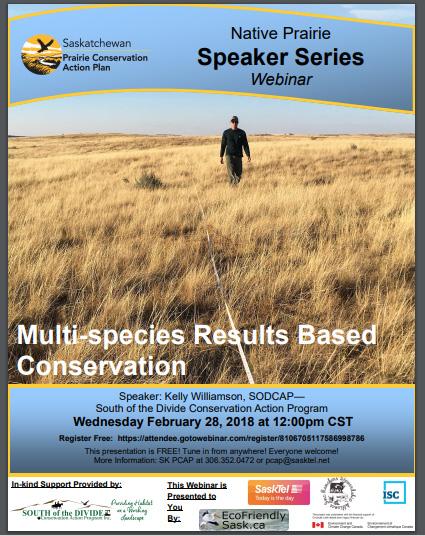
Coming up in the next few months, there will be a webinar on multi-species results based conservation, with Kelly Williamson from the South of the Divide Conservation Action Program (SODCAP) on February 28th and a webinar on enhancing grassland bird habitat in a semi-urban setting, with Renny Grilz from the Meewasin Valley Authority on March 28th.
On February 22nd, we will have Phil Rose discuss his Sprague's Pipit research at a Conservation Awareness Day in Maple Creek, hosted by Nature Saskatchewan. We will also have Krista Connick Todd present on Northern Leopard Frogs in Swift Current on March 5th, at an event hosted by the Swift Current Creek Watershed.
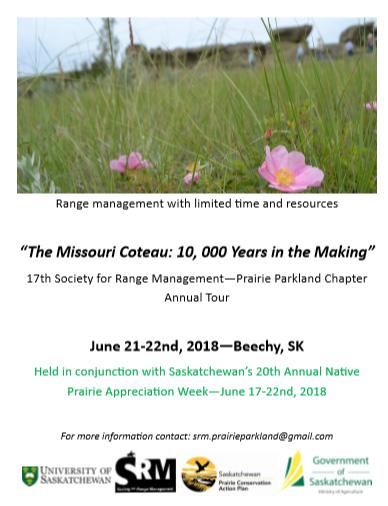
PCAP continues to plan the 20th Annual Native Prairie Appreciation Week 2018 (June 17th - 23rd). We plan to have the youth poster contest and a native prairie photo contest again, in addition to other activities. The Society for Range Management tour is returning this year, after a short break for organizers in 2017. This year's tour will be held in Beechy, June 21-22 with the theme "The Missouri Coteau: 10,000 Years in the Making". The field day will consist of Plant ID, water quality and learning about the practical application of monitoring with limited time and limited resources. For more information, please contact srm.prairieparkland@gmail.com.
That's all for now! Hope to see some of you at NPRRW! Take care!
Carolyn Gaudet
SK PCAP Manager
306-352-0472
|
|
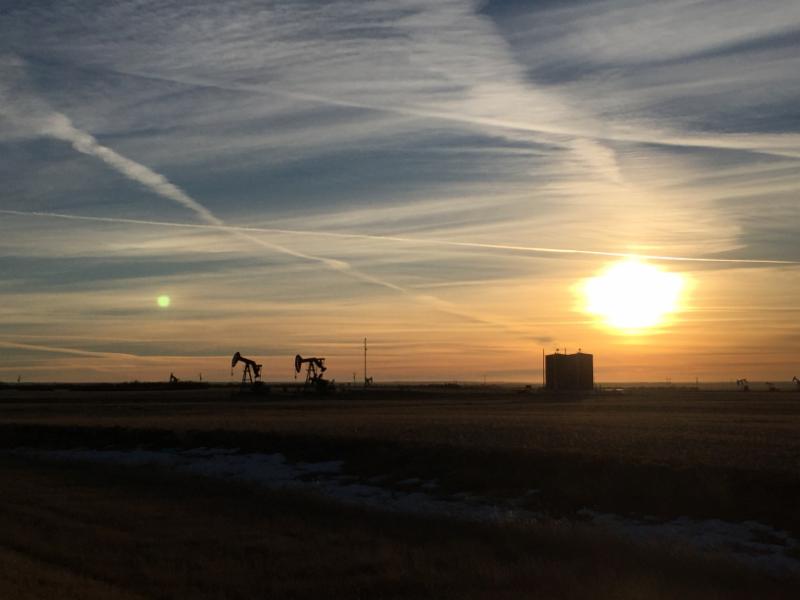
Communication is vital when the prairie and oil share common ground
Originally appearing in SSGA's January Beef Business Magazine
by Tara Mulhern Davidson, PAg
The energy industry is a vital part of Saskatchewan's economy. Gas wells and oil pump jacks dot the landscape in many parts of the province. The infrastructure that goes along with a booming energy business - the well heads, pipelines, right-of-ways, transmission lines, roads, compressor stations, and more - are mainly located on agricultural lands. While there are upsides and drawbacks to industrial activity on any type of land, the potential environmental risks of such operations are unique on native prairie.
Darren Ippolito, a beef producer from Kisbey, SK, is no stranger to oil activity on his ranch, which is situated south of the Moose Mountains in the heart of the Bakken Field. He operates Moose Creek Red Angus along with his parents Glenn and Donna, and partner Kylie and young son Kord, and their farm has dealt with the oil industry for generations. At SK PCAP's 2017 Native Prairie Restoration and Reclamation Workshop, Ippolito shared some of his experiences and expectations regarding oil development on native prairie, during a producer-focused session titled "Landowners and Industry Working Together."
When it comes to ranching alongside oil development, "communication is the end-all, be-all," explained Ippolito, who has himself worked in the oil field. "One of the biggest issues is companies often don't understand native prairie. They treat it the same as tilled acres or tame grass, even though it isn't," he said. "It's hard to relay that a decision made today could have twenty-five years of effects, and no matter how hard we work or how good our management is, we can't fix it," he pointed out. Money often means more to oil businesses than time, "but with native prairie, we talk in years, not in hours."
|
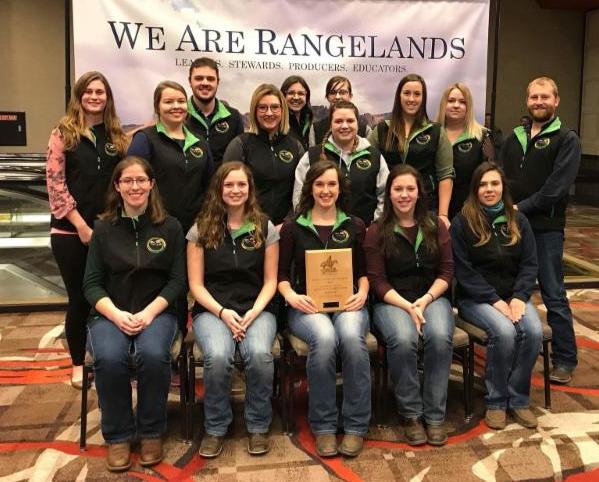
University of Saskatchewan's Range Team Claims Top Spot in Sparks, Nevada!
Submitted by Autumn Lawson, Range Team member
This past week the University of Saskatchewan Range Team travelled to Sparks, NV for the Society of Range Management's 71st Annual Meeting. At the Annual Meeting our team participated in writing the Undergraduate Range Management Exam along with 25 other universities from across the United States, Mexico and Canada. We were very pleased to earn first place with a team score of 71%. The top three finishers on our team were Erin Anderson (2nd place), Nicole Wensman (9th place), and Myles Butt (12th place). To prepare for the URME, our team met every Wednesday with our coach, Nadia Mori and several guest speakers. We are very grateful to be able to learn from Nadia's expertise.
The conference was a great experience for us as undergraduate students. We had the opportunity to take in many symposiums and research presentations about rangeland management and current issues across North America. We also had the opportunity to learn about the many different types of rangeland that vary greatly from what we encounter in Canada. On the last day we participated in full day technical workshops, either on wild horses and rangeland management, or targeted grazing. The conference was a fantastic networking opportunity as well. We met with many professionals that are established in the industry, as well as fellow undergraduate students from across North America.
We had a great week in Nevada, and our team is already looking forward to next year's meeting in Minneapolis.
Front row (L-R): Jillian Just, Tracy Niggli, Erin Anderson, Nicole Wensman, Megan Wanchuk.
Middle Row: Robyn Kary, Jessica Watson, Autumn Lawson, Holli Spittal,
Back Row: Mattias Crooymans, Ashly Dyck, Megan Giddings, Katy Wychopen, Amy Wilson, Myles Butt
|
|
Save the Date! The Society for Range Management Tour will be held in Beechy, SK June 21, 22, 2018!
Plan to attend the SRM NPAW Tour in Beechy, SK held in conjunction with Saskatchewan Native Prairie Appreciation Week on June 17-22, 2018!
|
|
|
|
|
|
|
SK PCAP Speaker Series
Plan to attend our February Native Prairie Speaker Series webinar!
Join our
FREE Native Prairie Speaker Series Webinar on Wednesday, February 28, 2018
at 12:00pm
(CST) and learn about Multi-Species Results Based Conservation.
The presentation will be delivered by Kelly Williamson with the South of the Divide Conservation Action Program (SODCAP).
REGISTER TODAY!
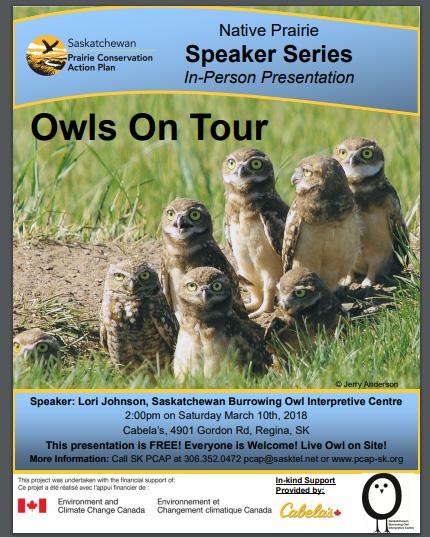
The next in-person Native Prairie Speaker Series will take place March 10, 2018 at Cabela's in Regina at 2:00pm! Join us and meet a live burrowing owl and learn about conserving the species in a presentation delivered by Lori Johnson of the Saskatchewan Burrowing Owl Interpretive Centre.

DYK: you can watch past Speaker Series presentations? All of our previous presentations are available to watch at your convenience on our
YouTube channel
!
|
|
Masters Opportunity
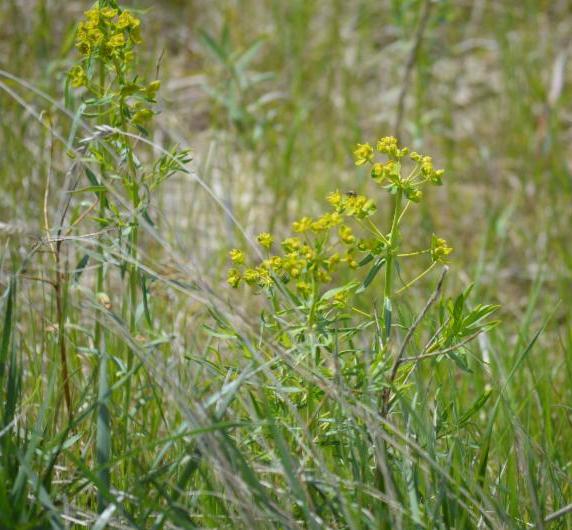
The Bennett Lab at the University of Saskatchewan is looking for undergraduate and MSc students to work on the role of soil fungi in the restoration of native plant communities following invasion. Students will conduct a field study exploring the role of mycorrhizal fungi in the invasion of leafy spurge (Euphorbia esula) and the consequent effects on the re-establishment of native vegetation following control efforts. Leafy spurge is highly dependent on mycorrhizal fungi, and data
suggest that they are able to parasitize the mycorrhizal fungi of native species in their invaded range. Consequently, disrupting their mycorrhizas may increase the recovery of native vegetation, especially native grasses which do not typically rely on mycorrhizal fungi.
Students interested in summer work will start in May and help to establish the field experiments.
Willingness to conduct short trips for field work is required. Relevant plant identification skills would be beneficial, but not required. Interested MSc students have the option of a
May or September start, although May is
preferred. The project is fully funded, with MSc students receiving an annual stipend of $21,000 and undergraduate students paid hourly at a rate coinciding with their experience.
Interested students should contact Dr. Jon Bennett at jon.bennett@usask.ca with a brief statement detailing the applicant's interest, and an unofficial copy of their transcripts.
|
|
Job Opportunities!
Environment and Climate Change Canada has a posting for a Grassland Ecologist in Maple Creek or Swift Current, SK.
Click for application info. Deadline is February 20, 2018.
Environment and Climate Change Canada has a posting for a Species at Risk Biologist in Edmonton, AB,
click for more info. Deadline is February 13!
Rangeland Conservation Services is seeking a Senior Range Ecologist in Airdrie, AB.
Click to read posting. Apply by February 28.
To share a job posting with us, please contact pcap@sasktel.net and we will include it in our newsletter.
|
|
Save the Date
Wild About Saskatoon NatureCity Festival
âniskopicikêwin: things are linked together
May 22-27, 2018
Saskatoon, SK
Keynote speaker - Harvey Locke (May 25)
Dozens of free events throughout the week.
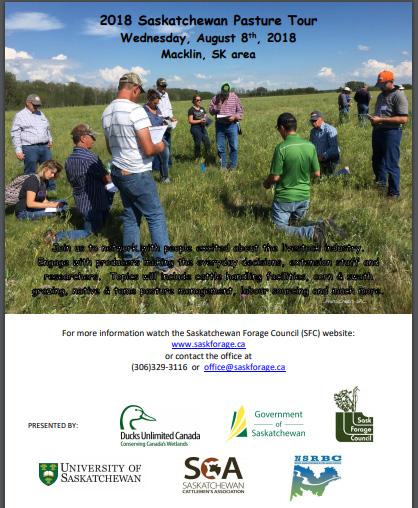
Saskatchewan Pasture Tour
|
|
|
August 8, 2018
Macklin, SK
|
|
|
Tara Mulhern Davidson, Editor, Saskatchewan Prairie Conservation Action Plan Newsletter
306-625-7345 |
|
|
SK PCAP gratefully acknowledges financial support in 2017-2018 from:
Ducks Unlimited Canada, EcoFriendlySask.ca, Government of Canada - Habitat Stewardship Program for Species at Risk, Information Services Canada, Parks Canada - Grasslands National Park of Canada, Rancher's Stewardship Alliance Inc., Saskatchewan Beef Industry Development Fund,
Saskatchewan Ministry of Agriculture - Agriculture Awareness Initiative, Saskatchewan Ministry of Environment - Fish and Wildlife Development Fund,
SaskEnergy,
SaskPower, SaskTel, University of Saskatchewan - College of Agriculture and Bioresources, Water Security Agency.
SK PCAP gratefully acknowledges in-kind support for 2017-18 from:
Agriculture and Agri-Food Canada - Science and Technology Branch, Canadian Parks and Wilderness Association, Canadian Western Agribition, Environment Canada - Canadian Wildlife Service, Friends of Wascana Marsh, Meewasin Valley Authority, Native Plant Society of Saskatchewan, Nature Conservancy Canada, Nature Saskatchewan, Parks Canada - Grasslands National Park, Prairie Wind & Silver Sage, Ranchers Stewardship Alliance Inc., Redberry Lake Biosphere Reserve, Saskatchewan Association of Rural Municipalities, Saskatchewan Association of Watersheds, Saskatchewan Cattlemen's Association, Saskatchewan Environmental Society, Saskatchewan Forage Council, Saskatchewan Forage Industry Network, Saskatchewan Ministry of Agriculture, Saskatchewan Ministry of Environment, Saskatchewan Ministry of Economy, Saskatchewan Ministry of Education, Saskatchewan Ministry of Tourism, Parks, Culture and Sport - Royal Saskatchewan Museum and Friends of the Royal Saskatchewan Museum, Saskatchewan Research Council, Saskatchewan Stock Growers Association, Saskatchewan Wildlife Federation, Saskatoon Nature Society, SaskEnergy, SaskOutdoors, SaskPower, Society for Range Management - Prairie Parkland Chapter, South of the Divide Conservation Action Program Inc., University of Regina - Prairie Adaptation Research Collaborative, University of Saskatchewan - College of Agriculture and Bioresources, Wild About Saskatoon-Nature City Festival.
|
|
|
|