|
 |
Seasons Greetings!
Here at PCAP we are busy as we continue to plan the 2018 Native Prairie Restoration and Reclamation Workshop! Registration is NOW OPEN for the workshop that is taking place on February 7-8 in Saskatoon!
Register soon -- the early bird deadline is fast approaching on December 8th
. The
draft program is also available on our website,
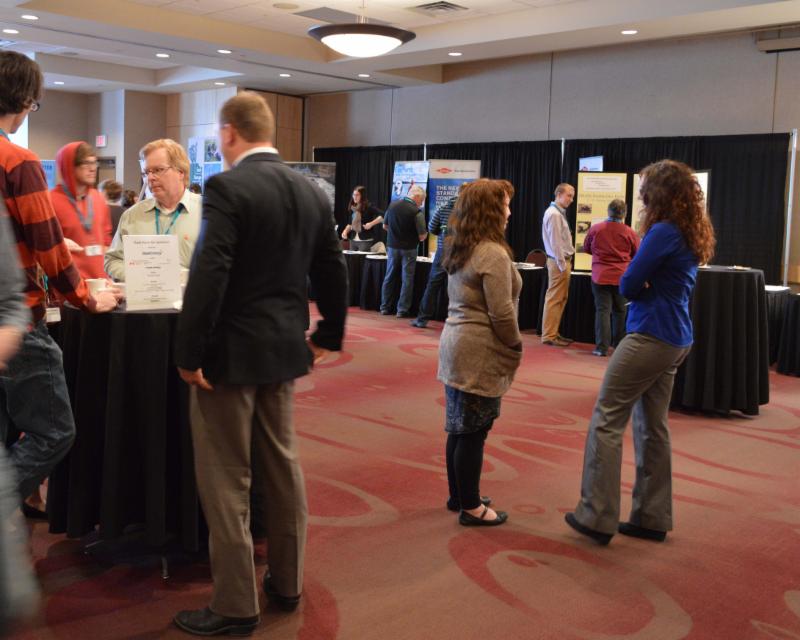
check back often as the program will be updated often as more presenter details are confirmed. Topics include everything from climate change, soil remediation, prescribed burning, restoration for wildlife species at risk, industrial mitigation, as well as presentations about collaborations. NPRRW 2018 has so much to offer, including a poster session, a trade show, and numerous networking opportunities! Sponsorship opportunities are also available and offer some great new and improved benefits. For additional information about the poster session, trade show and sponsorship opportunities, please visit the workshop website.
In November, PCAP hosted two species at risk workshops for the Loggerhead Shrike and Northern Leopard Frog. Species experts and stakeholders came together to discuss current conservation initiatives, habitat targets and beneficial management practices. Stakeholders and workshop participants will continue to be involved in the development of the final workbooks which will be completed in the spring.
We also had Agribition last month in Regina! PCAP had a booth in the Family Ag Pavilion where we talked with students, teachers, parents, naturalists and producers about species at risk, the importance of native prairie, as well as some of our upcoming events. There was an estimated 8100 students that came through the pavilion!
Our Stewardship Coordinator, Caitlin Mroz, created a hands-on activity with a recreated 'Piping Plover' nest and 'Burrowing Owl' burrow that was a real hit!
We also held our Pitch for Pipits & Plovers Gameshow all week, where 26 classes (629 students) participated and learned about how they can help Sprague's Pipit and Piping Plover recovery.
We could not have survived Agribition week without our volunteers! So a big thank you to everyone who spent a few hours working the booth and game show with us!
Also in November, we had Autumn Watkinson from the University of Alberta present about her PhD project on the restoration of sage grouse habitat in Grasslands National Park.
You can watch the webinar here. We also had Kaytlyn Burrows from Nature Saskatchewan present about Operation Burrowing Owl at Agribition. The presentation was recorded and will be posted on our YouTube page soon. On December 6th, we will be hosting another webinar, Jeff Keith from the Saskatchewan Conservation Data Centre will be discussing the value of data sharing. You can register here.
Please note the PCAP office will be closed from December 22
nd
, 2017 - January 2
nd
, 2018.
That's all for now, I hope you all have a wonderful and safe holiday season!
Carolyn Gaudet
SK PCAP Manager
306-352-0472
|
Partner Profile - Grasslands National Park has a busy season with volunteers, visitors, and conservation!
submitted by Danielle Grant, Parks Canada
Visitation to the Park
Visitation has steadily increased over the years in Grasslands National Park. In 2016, the park welcomed 13,543 and at the end of the 2017 season, 18,288 visitors were recorded! The Grasslands National Park is pleased that visitors continue to enjoy nature and encourage them to discover Canada's
amazing network of protected places.
Volunteers Play a Critical Role in Conservation
 |
|
|
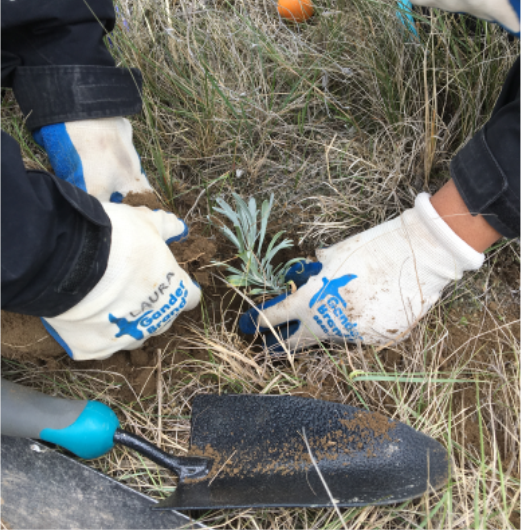
Volunteers plant silver sage brush plugs. Photo courtesy of Parks Canada.
|
Grasslands National Park welcomed over 100 volunteers who contributed over 1700
volunteer hours in activities such as fence marking, sage plug planting, invasive weed management, and black-tailed prairie dog monitoring this season.
Each activity maintained or enhanced the ecological integrity of the park and benefited
many species at risk. Providing innovative programs and volunteer activities allows more Canadians, including youth and newcomers, to experience the outdoors and learn about our environment and history.
If you would like to volunteer next season, check out our
volunteer website.
Greater Short Horned Lizard
The Greater Short Horned Lizard monitoring event held on August 4 to 6, 2017 was a huge success thanks to our 19 volunteers who participated in a three day population density and habitat study of the greater short horned lizard (GSHL). In Saskatchewan, this endangered lizard can only be found in Grasslands National Park.
Volunteers carefully scanned the ground along eight routes in preferred greater short horned lizard habitat. 26 lizards were seen which included 10 adults and 16 young. The longest of which measured 68mm from snout to vent and the heaviest weighed 26 grams.
Results from this activity will help the park to assess areas of occupancy and trends in the abundance of the lizards as well as help identify priority areas for habitat management.
Habitat Enhancement for the Greater Sage Grouse and Fence Marking
Thank to our volunteers who participated in the sagebrush planting and fence marking event on May 25 to May 28th. Together we planted 3000 silver sagebrush plugs, and marked a total of 12.3 km of fence in the East Block of the park.
Planting silver sagebrush enhances Greater Sage-grouse habitat and increases the amount of nesting cover and winter forage for this species. Sagebrush planting is part of habitat restoration research lead by the University of Alberta.
Fences can present an obstacle to wildlife movement. Marking fences by attaching pre-cut 3" vinyl siding makes wires more visible, and reduces wildlife collisions.
Burrowing Owls on the Rise
As part of the park Ecological Integrity monitoring program, burrowing owls were surveyed on the black-tailed prairie dog colonies of Grasslands National Park (GNP) in both 2016 and 2017. 16 breeding pairs and 4 singles were identified in 2016, while 15 breeding pairs and 2 singles were identified in 2017. Although lower than the long-term average, these numbers represent a substantial increase in breeding pairs since 2014, when an all time low of 10 breeding pairs were observed.
From 2016 to 2017 Parks Canada implemented an intensive supplemental feeding
|
|
|
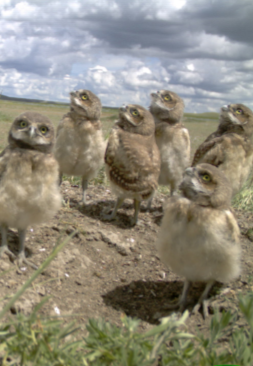
The burrowing owl supplemental feeding program will continue in 2018. Photo courtesy of Parks Canada.
|
program providing a total of 4362 frozen mice to 26 nests located throughout the park. During this period GNP Burrowing Owls had two very successfully breeding seasons with high nesting success (87.5% and 93.3% of the pairs successfully reared fledglings in each year respectively). A total of 87 owlets in 2016 and 79 owlets in 2017 were recorded during our brood count efforts.
In both 2016 and 2017, the average number of fledglings reared per successful nest was approximately 6, which is far higher than the long term average (3.8). This success was likely obtained thanks to the intensive supplemental feeding program, which Parks Canada initiated with the objective of improving population recruitment at GNP. The lack of a decline in the number of owls found in GNP in the last two years, as detected instead in other Canadian breeding grounds, suggests the program is helping the conservation of this species. Given these results Parks Canada plans to conduct supplemental feeding during 2018 field season.
|
|
Rangeland Reality Check: Basic Principles of Grazing Management
submitted by Tara Mulhern Davidson, SK PCAP, originally appearing in the Saskatchewan Stock Grower's Beef Business Magazine
Mother Nature certainly flexed her muscles in the 2017 growing season. Drought, fires, and poor stock water quality are just some issues that caused grief for Saskatchewan ranchers. Challenging years like this sometime cause producers to go back to the basics of range management to help them recover from the past and be productive in the future.
|
|
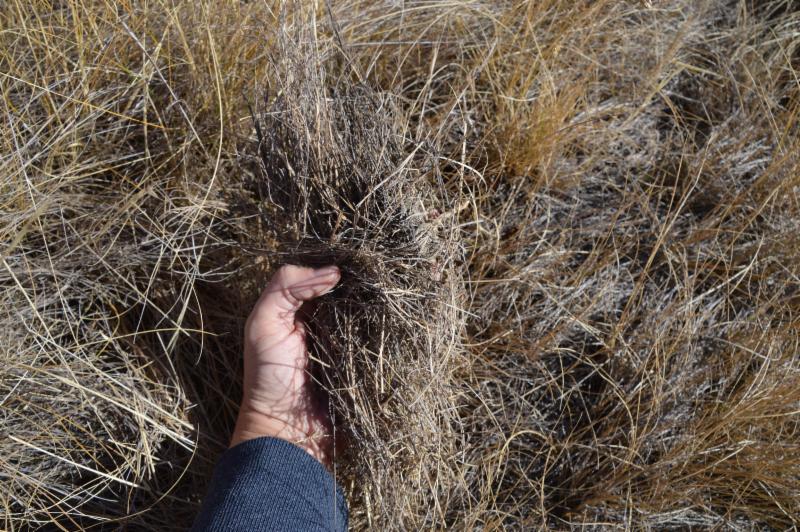
| Litter is a girl's (or guy's) best friend. Litter keeps soil cool, improves water infiltration, prevents soil erosion, aids in nutrient cycling and essentially "drought proofs" rangeland. |
Native prairie grasslands are incredibly resilient and have developed over time to withstand extreme environmental conditions. No rancher looks forward to harsh years, however it is heartening to know that prairie ecosystems can recover provided some thoughtful management is used.
Managing native prairie is an art and a science. There is no perfect way to do things, and real life often gets in the way of theory, however there are four basic principles of range management that producers can use to manage grasslands.
|
|
Native Prairie Restoration/Reclamation Workshop: Look to the Future, Learn from the Past
Early bird registration deadline is THIS FRIDAY!
Plan to attend this unique prairie restoration event on February 7 & 8, 2018 in Saskatoon. Poster abstracts will be accepted until December 8.
Details can be found HERE.
The conference will include a plenary sessions, break-out sessions, and case studies as well as a trade show, awards ceremony, poster session and silent auction.
NPRRW Awards
Do you know of a deserving individual for the
Native Prairie Restoration and Reclamation Award? How about someone worthy of the
Native Prairie Stewardship Award?
View the award criteria here and consider nominating someone! Nomination deadline is
January 19, 2018.
A Silent Auction will be held during the banquet on February 7 with proceeds going toward PCAP's education programming.
|
|
|
|
|
|
|
SK PCAP Speaker Series
Join our
FREE Native Prairie Speaker Series Webinar on Wednesday, December 6, 2017
at 12:00pm
(CST) on the Importance of Data Sharing.
The presentation will be delivered by Jeff Keith with the Saskatchewan Conservation Data Centre and include easy data sharing tools, as well as why it is important to share data and how information will be used.

DYK: you can watch past Speaker Series presentations? All of our previous presentations are available to watch at your convenience on our
YouTube channel
!
|
|
Native Prairie in the News...
Prairie wildfires certainly affect land, but it's more than that. "The land always recovers. People sometimes do not. That's the cost we should focus on in dealing with wildfire," says well-respected range agrologist Barry Adams in this recent Western Producer article.
|
|
Sponsorship Opportunity for NPRRW18!
There are several ways to get involved with the Native Prairie Restoration and Reclamation Workshop in 2018!
If your organization is involved in prairie conservation, you may stand to benefit from sponsoring this large, well-attended event.
Make a difference and get involved! For more information, contact pcap@sasktel.net or caitlinmroz@hotmail.com
|
|
Upcoming Events
Edmonton, AB - December 5-7, 2017
Rockglen, SK - December 7
Shaunavon, SK - December 11
Consul, SK - December 12
McCord, SK - December 15
|
|
Tara Mulhern Davidson, Editor, Saskatchewan Prairie Conservation Action Plan Newsletter
306-625-7345 |
|
|
SK PCAP gratefully acknowledges financial support in 2017-2018 from:
Ducks Unlimited Canada, Government of Canada - Habitat Stewardship Program for Species at Risk, Parks Canada - Grasslands National Park of Canada, Saskatchewan Beef Industry Development Fund,
Saskatchewan Ministry of Agriculture - Agriculture Awareness Initiative, Saskatchewan Ministry of Environment - Fish and Wildlife Development Fund,
SaskEnergy,
SaskPower, University of Saskatchewan - College of Agriculture and Bioresources, Water Security Agency.
SK PCAP gratefully acknowledges in-kind support for 2017-18 from:
Agriculture and Agri-Food Canada - Science and Technology Branch, Canadian Parks and Wilderness Association, Canadian Western Agribition, Environment Canada - Canadian Wildlife Service, Friends of Wascana Marsh, Meewasin Valley Authority, Native Plant Society of Saskatchewan, Nature Conservancy Canada, Nature Saskatchewan, Parks Canada - Grasslands National Park, Prairie Wind & Silver Sage, Ranchers Stewardship Alliance Inc., Redberry Lake Biosphere Reserve, Saskatchewan Association of Rural Municipalities, Saskatchewan Association of Watersheds, Saskatchewan Cattlemen's Association, Saskatchewan Environmental Society, Saskatchewan Forage Council, Saskatchewan Forage Industry Network, Saskatchewan Ministry of Agriculture, Saskatchewan Ministry of Environment, Saskatchewan Ministry of Economy, Saskatchewan Ministry of Education, Saskatchewan Ministry of Tourism, Parks, Culture and Sport - Royal Saskatchewan Museum and Friends of the Royal Saskatchewan Museum, Saskatchewan Research Council, Saskatchewan Stock Growers Association, Saskatchewan Wildlife Federation, Saskatoon Nature Society, SaskEnergy, SaskOutdoors, SaskPower, Society for Range Management - Prairie Parkland Chapter, South of the Divide Conservation Action Program Inc., University of Regina - Prairie Adaptation Research Collaborative, University of Saskatchewan - College of Agriculture and Bioresources, Wild About Saskatoon-Nature City Festival.
|
|
|
|