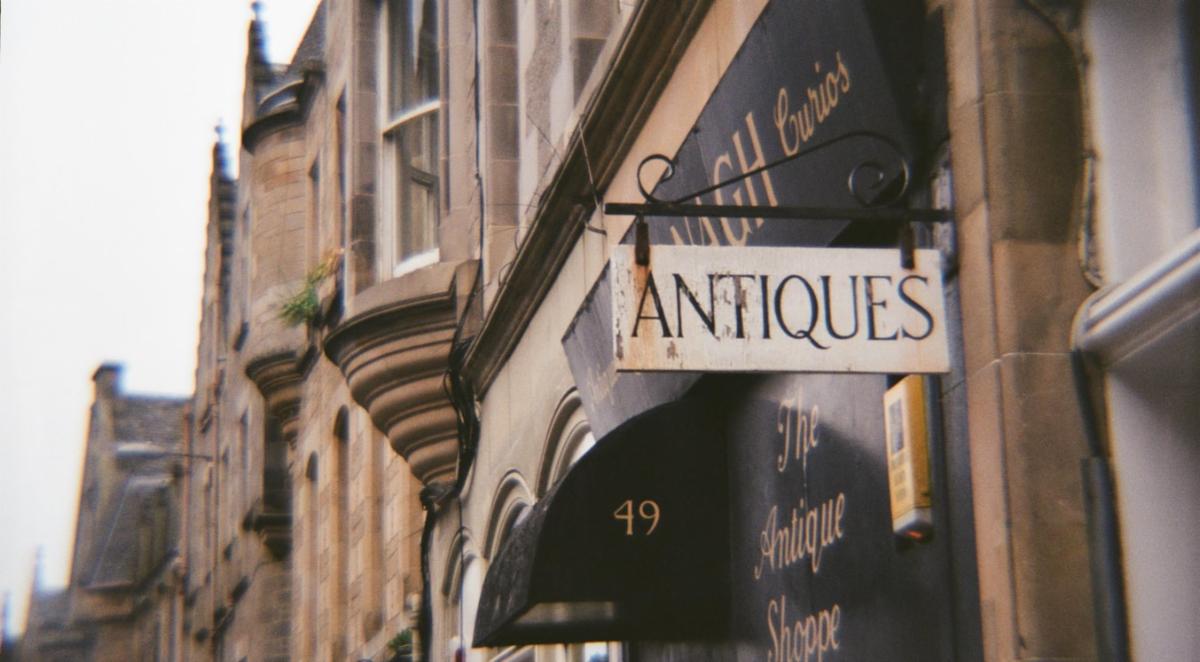
“We’ve become known for providing access to the world’s most remarkable treasures, for our strict vetting standards and for our platform’s overall best-in-class user experience. But perhaps even more significant is the breadth of our offering, which is especially relevant in the market for one-of-a-kind vintage and antique pieces, along with the ability to communicate directly with the dealers who sourced those pieces. This winning combination has made us the go-to resource for our international audience of interior designers, collectors and consumers,” says David Rosenblatt, 1stDibs.
1stDibs Has First-Mover Advantage as RH Moves into Antiques
|
|
In his most recent RH earnings call, Gary Friedman put global antiques marketplace 1stDibs on notice. He’s coming after it, not as an acquisition target, but to eat its lunch. As part of his far-reaching vision for the RH ecosystem of “products, places, services and spaces,” the company will launch RH Antiques & Artifacts.
“Walk through and count how many antiques and artifacts are in our galleries. A lot. People want to buy them and we have to say no because you can’t go manufacture them,” he said.
Enter RH Antiques & Artifacts: “Everything we do has to render everything else that we do more valuable rather than less valuable. RH Antiques & Artifacts will render our galleries more valuable. They are going to render our customers’ homes more valuable. They are going to close a lot more sales. They are going to sell a lot more furniture,” he continued.
Tipping his hat to 1stDibs – “I think it’s great. They have done a great job aggregating the world of antiques.” – he went on to criticize it for putting too much out there.
“Like finding a needle in a haystack,” he said, as he explained RH Antiques & Artifacts will take a more curated approach. “You won’t have to dig through the haystack to find the needle.”
In that, he may be right. As envisioned, the RH way of merchandising and selling one-of-a-kind antiques will be on the gallery floor and displayed in context. 1stDibs sells objects. RH will sell them as part of an overall design. “It’s about all these things in integration, not in isolation,” Friedman continued.
On the other hand, people buy antiques as more than just a decorative accent. The objects themselves hold a special value. 1stDibs understands this better than most and, I would argue, better than RH.
1stDibs has a 21-year running start on RH and real data about what one-of-a-kind items luxury consumers want and what they are willing to pay.
|
|
Learn what the New Year holds for the luxury market and how your company can prepare for the future.
What's the State of the Luxury Market for 2022?
You Need to Know.
|
|
The global luxury market has been through a whirlwind of change since the COVID pandemic hit. This has created a pressing need for luxury industry executives to have the most up-to-date and accurate information to make business decisions. Providing that information has been the goal of our State of Luxury survey of luxury industry insiders, a study now in its sixth year.
Last year’s State of Luxury 2021 survey was spot on in predicting the impact of the Covid pandemic on the luxury market.
Our 2021 survey found the vast majority of luxury insiders surveyed said the pandemic caused a major downturn in the luxury market. But over one-fourth (28 percent) saw a silver lining in the disruption. They believed the pandemic would bring needed change to the luxury industry.
You said:
- “The time luxury consumers spent at home has resulted in major changes to their priorities and values which are likely to continue for years to come. This shift will create major challenges for some brands while offering great opportunities for brands that embrace and respond to those changes.”
- “It has made people drill down to what is really important, what has lasting and enduring value in their lives. People are reassessing what is important to them and what they can and cannot do without – what is truly essential in their life. The pandemic has been the biggest reset ever.”
- “The pandemic didn’t necessarily change trends in the market, rather it only accelerated their evolution. Luxury brands must examine their businesses and business models, as the luxury consumers have been examining their past behavior and values.”
As in previous years, we are asking a cross-section of companies that compete in the luxury market, partner with luxury companies, or individuals who study the luxury market to share their opinions and experiences. The survey will take between 10-to-15 minutes to complete and all respondents remain anonymous. The survey is a collaborative project of Luxury Daily, Unity Marketing, and the Home Trust International.
Every respondent will receive an executive summary of the survey results and attendance in an exclusive respondents-only webinar where Pam Danziger (Unity Marketing), Mickey Alam Kahn (Luxury Daily) and Chris Ramey (The Home Trust) discuss the implications of the survey findings and key trends in the luxury market.
Plus your company will be entered into a drawing to win a customized digital advertising campaign targeting 100,000 High-Net-Worth individuals (HNW) -- a $1,000 value -- provided by Precise Luxury Marketing.
|
|
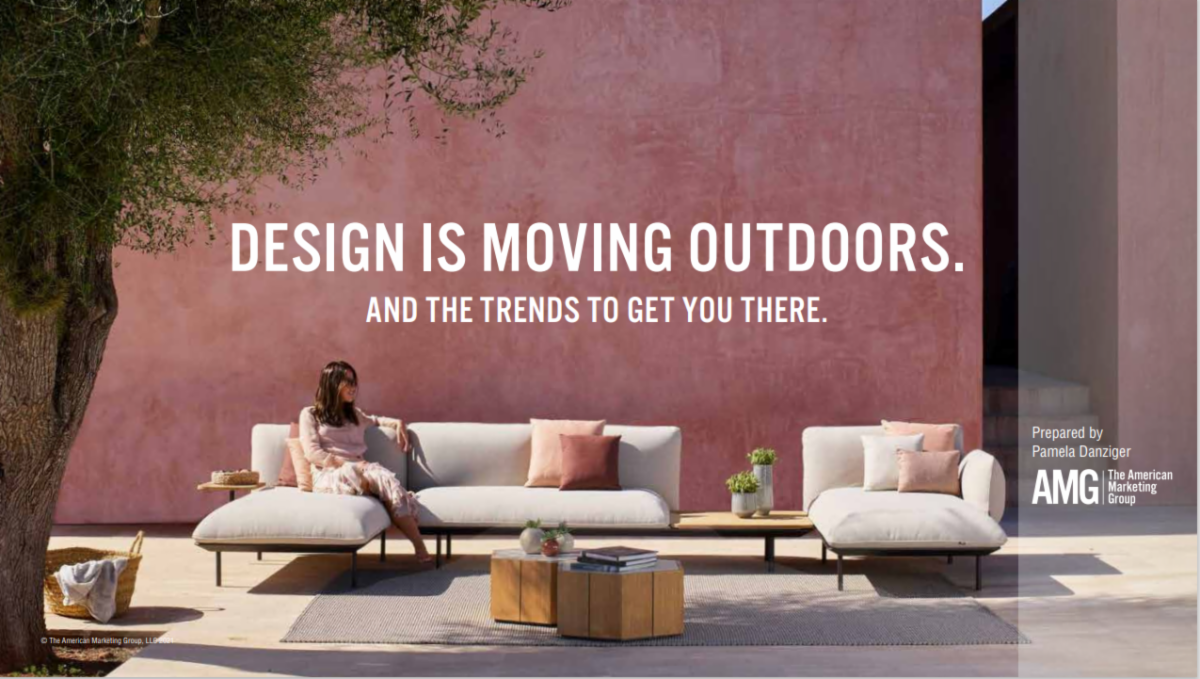
“Outdoors is no longer a separate space, but a continuation of what’s happening on the interior. With Covid-19, nature has become an essential resource to stay healthy and happy and that means outdoor will be increasingly important. The line between what looks indoor vs. outdoor is
becoming ever more blurred,” says a designer.
Design Is Moving Outdoors
|
|
“In the beginning…” people lived in harmony with nature. Nature formed us and gave us all that we as human beings needed to live and prosper. Gradually we learned how to gain power over nature and with that knowledge, cultures advanced and mankind prospered.
But as culture became more technology advanced, we took nature for granted. We abused it and polluted it, taking too much out and not giving enough back. We’ve gotten further and further from our roots and the life-sustaining power nature provides.
The 60s anthem “Woodstock” describes it as “being caught in the devil’s bargain,” and proposes the way out: “We’ve got to get ourselves back to the garden.”
For the last 50 years, people across the globe have awakened to the Faustian bargain we’ve struck living in discord rather than harmony with nature.
In response, people are changing their lifestyles and behavior to get more time in nature as an antidote to people’s stress-filled lives.
The Global Wellness Summit describes us as suffering from a Nature Deficit Disorder. “This 24/7, digitally-dominated, Instagram-able world is depriving humankind of some very basic, very important nourishment that comes from being outdoors.”
Designers have an excellent opportunity, even a responsibility, to help their clients’ mental and health by creating an outdoor oasis for them to refresh and renew their spirit.
Consumers know they need it. In a recent Wakefield survey conducted among 1,300 homeowners on the home improvement projects they plan to undertake in the coming year, outdoor improvements take first place.
For designers, there is no question: design is moving outdoors.
|
|
“A modicum of success in the U.S. is the most common and ultimately the worst outcome. It drains financial resources and undermines hope for long term success and consumer desire. Your first foray mustn’t fail,” warns Chris Ramey, partner in American Marketing Group and founder of The Home Trust International.
5 Challenges Every Home Brand Must Overcome to Grow in the U.S. Market
|
|
Everyone has heard the adage, “The bigger the challenges, the greater the opportunity,” but often the reverse is true too: The bigger the opportunity, the greater the challenges. Both apply for home brands that aim to grow in the U.S. consumer market.“
Here are the five biggest challenges that every home furnishings brand faces entering or expanding in the U.S. market, whether selling through brick-and-mortar retail, B2C e-commerce or through the design trade.
Challenge #1: Sheer size and scope of the U.S. market
While most businesses are entranced by the growth opportunities in China – 1.4 billion people with GDP growth averaging ~9% per year since 1980 – the U.S. market is far larger in market size yet with only one-fourth the total number of consumers – 328 million people living in 138 million U.S. households. The U.S. economy leads the world, $21.4 trillion as compared with $14.3 trillion in China, according to The World Bank.
In reality, China may be the world’s biggest producer, but the U.S. is the biggest consumer market.
Further, the U.S. is where more of the world’s wealth resides. There are 20.6 million U.S. millionaires, more than the five next largest countries combined, including China’s 2.3 million millionaires.
As for the home furnishings market, Americans spent $380.7 billion in 2020 on goods for their home, including $238.8 billion on furniture and furnishings alone. Add to that the $90.4 billion spent on home services, and the total market opportunity in the U.S. is rapidly approaching a half-trillion dollars.
|
|
Unity Marketing | 717-336-1600 or pam@unitymarketingonline.com |
|
|
|
|
|
|