|
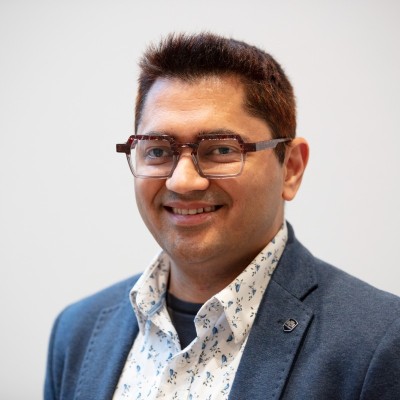
"As a keen observer and contributor to the carbon conversion field, I see a lot of pilots and industrial plants going up that will lead to tremendous growth in the next decade."
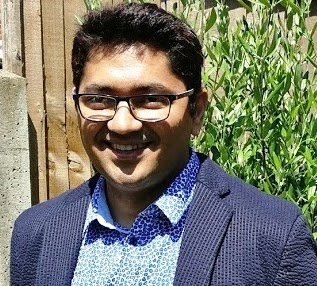
~Dr. Deepak Pant, Senior Scientist, Sustainable Chemistry at Flemish Institute for Technological Research (VITO)
| Deepak is currently working on electrosynthesis and resource recovery, specifically the design and optimization of (bio)electrochemical cells for CO2 conversion and microbial electrosynthesis. He has a Ph.D. in environmental biotechnology. A prolific author and researcher, he has written over 200 SCI publications, 6 books (edited), 7 patents and 40 book chapters as well as contributed to various conferences, symposia, and workshops, and serves as an independent expert reviewer/project monitor for the European Commission. | |
What is a very simple explanation of what you do?
I work on the science of saving the earth from the harmful gasses that cause global warming and climate change. My team and I develop technologies that can not only capture one of the greenhouse gasses, CO2, from the atmosphere, but also then use the captured CO2 to make valuable fuels and chemicals.
We use different techniques and catalysts for this conversion — catalysts such as electrocatalyst or even living bacteria which can eat CO2 and make chemicals like fatty acids and alcohols.
The nice thing about these conversions is that we can power them up with renewable electricity such as solar power.
| |
You have a phenomenal number of publications, awards, honors, and impressive titles. Is there anything that stands out to you among your many accomplishments?
Thank you! The credit for the publications and other accolades goes largely to the current team at VITO as well as former students, postdocs, colleagues, and collaborators who worked on different projects with me over the years and were able to communicate their results in the form of publications.
The papers are never the end goal of our research, which is mainly applied in nature. We seek solutions that can be applied in the field, and technologies that can be upscaled to solve industrial challenges. Of course, if we can also share the knowledge with the scientific community and the public at large in the process, that is a bonus.
| |
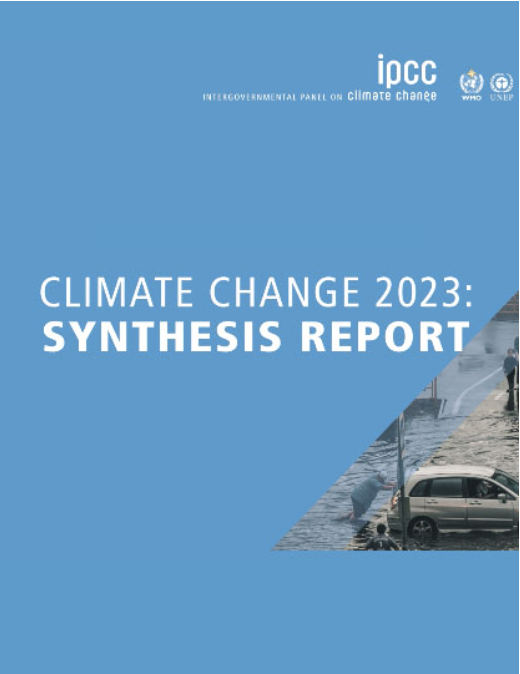
One of the major accomplishments of our team was to help get carbon capture and utilization (CCU) recognized by the The Intergovernmental Panel on Climate Change (IPCC) in its latest assessment report. Together with colleagues from CO2 Value Europe (CVE) and members of its scientific advisory board, I was excited to provide feedback on the draft report and emphasize the importance of CCU to the wider community. We knew our efforts were very worthwhile, when our recommendations appeared officially in the IPCC report!
Do you have any predictions as to what will happen in the carbon conversion field in the next 5-10 years?
| |
As a keen observer and contributor to the carbon conversion field, I see a lot of pilots and industrial plants going up that will lead to tremendous growth in the next decade. While the early starters suffered from working on fragmented efforts in isolation, now more value chain approaches are coming up. There is significant support from both public and private sectors in several parts of the world, but especially in the U.S. (with the Inflation Reduction Act) and Europe (with Innovation funds), as well as several industrial demonstrations that will be operational in the next few years. Some of these large demos are also coming up in China and India. Technology wise, there is bound to be an upward trajectory in several of the technological approaches, including bioconversion and electroconversion (Power-to-X).
Your impressive record suggests that you are very driven, or, perhaps, that you do not sleep much. What makes you excited to come to work every day?
| |
The opportunity to make a difference. I am proud to work at VITO where I get to work on different aspects of research including, but not restricted to, developing new ideas and brainstorming — not only within my own team, but also across teams. I regularly work with teams from energy and techno-economics, formulating research proposals, guiding young researchers (doctorate and master students), managing research projects in different capacities, networking with various stakeholders (academic, industry, and policy makers), traveling (in mostly sustainable ways, using public transport as much as possible) and of course science communication (publishing, presenting or simply sharing on my social media). Basically, no two days are the same at work, and that variety is enough to maintain my drive.
If there is only one thing that readers take away from this article about you and your work in Sustainable Chemistry at VITO, what should that be?
| |
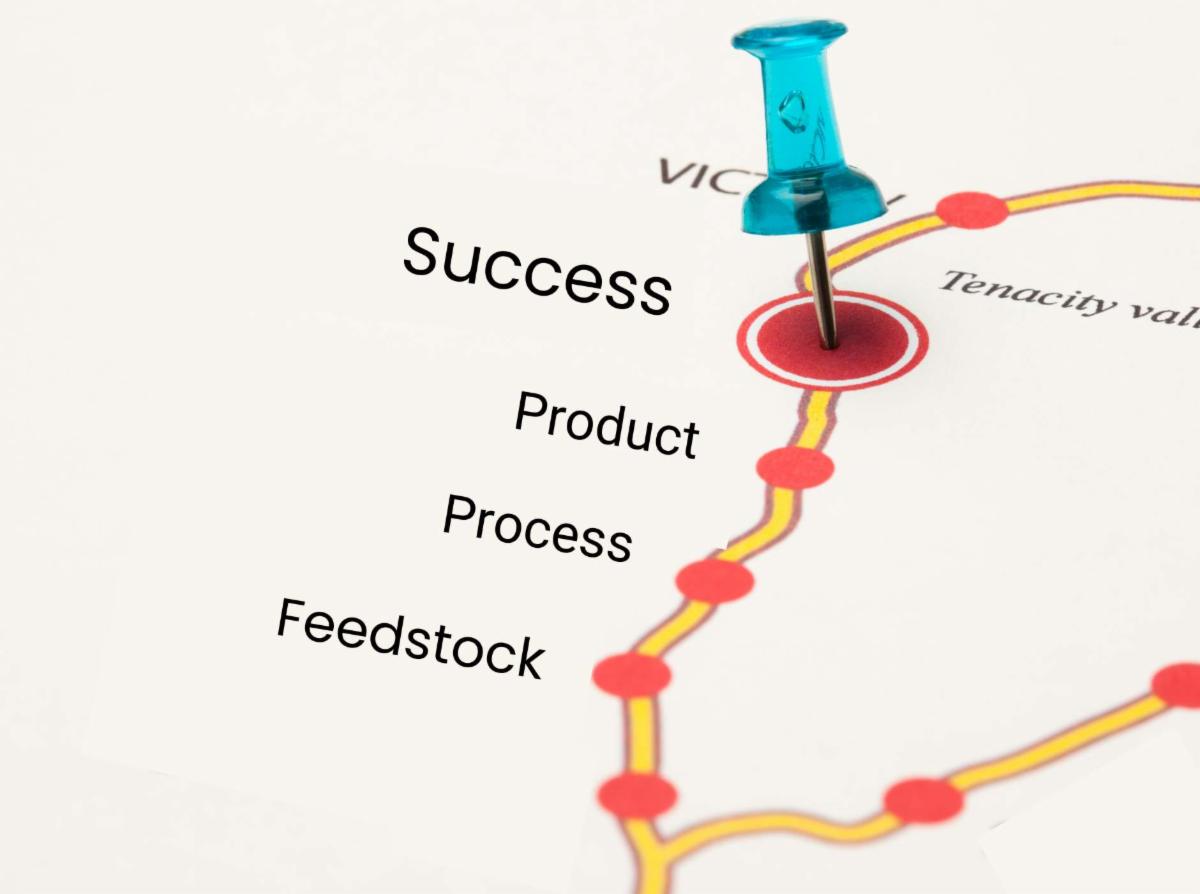
I would say, chemistry or sustainable chemistry can be a solution to create a better outfit by focusing on FP2. The F is “feedstock” which means using renewable alternatives or CO2 as the starting material. The first P is the process and the second P is the product. A sustainable feedstock transformed via an efficient and clean process to better-quality products.
We need to look at these not in isolation but as part of a roadmap, considering not only the current situation but also future needs. We need to keep the likely scenario in 2030 or 2050 in mind and prepare ourselves accordingly. Technology development is only one aspect of it.
What is a fun fact about yourself?
| |
Well, after finishing my bachelor studies, I wanted to be an investigative reporter or journalist. Like all such professional courses in India, there are competitive exams for that as well. I qualified for a Masters in journalism course with a good ranking in the exam taken by thousands of candidates all over India. However, in those days, a science degree was viewed more favorably than journalism, and I was persuaded by my family to pursue a Masters degree in environmental science. I still do investigations, but of a scientific kind!
| |
|
Climate Conversations: Environmental Justice
April 26, 2024
Join the National Academies and the American Academy of Arts and Sciences for a discussion exploring the role of environmental justice and what a just transition means.
| |
|
Keep in touch
We want to hear from you! Is there something or someone that you would like to see featured in a future issue? Let us know!
| | | | |