DVD: Colorblind:
The Rise of Post-Racial Politics and the Retreat from Racial Equity
(City Lights Open Media)
by Tim Wise City Lights Publishers Paperback

List Price: $14.95
Our Price: $8.49
Buy Now
|

Death of the
Liberal Class
by Chris Hedges
Nation Books
Hardcover
List Price: $24.95
Our Price: $7.06
Buy Now
|
|
By Randy Shannon, CCDS

choice "Everyone has the right to work, to free of employment, to
just and favorable conditions of work and to protection against
unemployment."
- United Nations Universal Declaration of Human Rights, December 10, 1948
I. Introduction
The "Great Recession" that began in 2007 has caused the greatest
percent of job losses since the Great Depression of 1929. This crisis is
the end of an era of unrestrained 'neo-liberal' capitalism that became
public policy during the Reagan administration. The crisis marks a new
level of instability with the growth of a global financial elite that
targeted US workers and our trade unions after World War II. |
|
Order Our Full Employment Booklets
 |
|
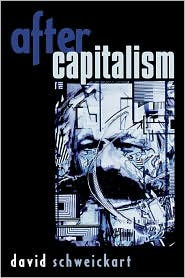
Capitalism may well collapse under its own excesses, but what would one
propose to replace it? Margaret Thatcher's mantra was TINA...There Is No
Alternative. David Schweickart's vision of "Economic Democracy"
proposes a serious alternative. Even more fundamentally, it opens the
door to thinking about alternatives. His may or may not turn out to be
the definitive "successor system," but he is a leader in breaking out of
the box. |
|
Quick Links...
CCDS Discussion
|
Solidarity Economy:
What It's All About

|

A World of Gangs: Armed Young Men
and Gangsta Culture
by John M. Hagedorn
Univ Of Minnesota Press
Hardcover
List Price: $24.95
Our Price: $15.35
Buy Now
|

Malcolm X: A Life
of Reinvention
by Manning Marable
Viking Adult
Hardcover
List Price: $30.00
Our Price: $14.47
Buy Now
|

Planet of Slums
by Mike Davis
Verso
Paperback
List Price: $19.95
Our Price: $8.00
Buy Now
|
|
|
|
An Invitation to CCDSers and Friends...
 Snidley Whiplash Redux: Rightwing
Money Aims to Smash Workers, Unions!
We're the Committees of Correspondence for Democracy and Socialism...Do you have friends who should see this? Pass it on...Do you have a blog of your own? Others you love to read every day? Well, this is a place where you can share access to them with the rest of your comrades. Just pick your greatest hits for the week and send them to us at carld717@gmail.com! Most of all, it's urgent that you press to end the wars and oppose austerity! We're doing more than ever, and have big plans. So pay your dues, make a donation and become a sustainer. Do it Now! Check the link at the bottom... |
|
Following the Money: The Attack on
Working People & Organized Labor
 By Chip Berlet
Political Research Associates
April 19, 2011
It became clear in 2011 that there was a broad attack on working people, especially those in unions.
Anti-labor campaigns by corporate interests are nothing new, and are frequently masked by rhetoric about freedom of choice for employees. The main framing of these anti-labor campaigns is built around the idea of a "Right to Work." Corporate CEOs and wealthy "free market" economists portray themselves as friends of the working man and woman. Like most Big Lie campaigns, the truth emerges when history and outcome are compared to current rhetoric and promises.
In 2008 corporate and conservative strategists were developing a series of fake grassroots groups under the banner of the new "Tea Party" rebellion. To the surprise of many, this astroturfing idea developed into an actual series of grassroots movements. Legitimate anger at unfair government policies and gridlock in Washington, DC was shifted toward calls to cut the budget, reduce taxes, and shred the social safety net. Many in the Tea Party Movement, according to polling and academic studies, also oppose racial and gender justice and stigmatize new immigrants of color.
Starting in the 1890s, and gaining speed in the 1930s, anti-union groups have used hysterical red-baiting rhetoric and fear of "totalitarian" collective action to tar unions as anti-American and anti-free enterprise. Today, some of these same players are trying to undermine government laws and regulations that protect a worker's right to organize a union without harassment or termination.
Over the past 20 years, corporate conservatives and economic libertarians have spent more that $170 million trying to convince us that labor unions are bad for America. During the same period over $1 billion was spent on shifting public debates on social, political, and economic issues to favor narrow right-wing agendas that benefit the few at the expense of the many....
|
|
|

By Randy Shannon
May 17, 2011
In its April 21st issue Black Commentator published an article "How Do We Respond to Obama?" by editorial board member Bill Fletcher, Jr. His article was subsequently published by CCDS in its weekly newsletter, CCDSLinks.
Fletcher is an activist and leader of the African American community, the labor movement, and the left.
Fletcher argued that the political focus should be on the administration and not the man, that the administration is sensitive to pressure, and that "the left and progressives have failed to offer sustained pressure on the administration." He outlined a strategy to build sustained mass pressure on the Obama Administration "to do not only what he has promised but to go beyond what he as promised." A key point:
Forget running a candidate against Obama in 2012. That would be a sure way to alienate much of his black and Latin base. Instead, there needs to be a progressive strategy focused on Congressional races. That means identifying key races to run genuine progressive candidates against conservative Democrats and/or Republicans.
The other elements of the strategy are to build local electoral organizations that can run progressive candidates, to build a mass protest movement willing to engage in civil disobedience and to link with global social movements challenging US foreign policy.
Responses to Fletcher
Fletcher's article set off a lively debate on the CCDS listserv (available to members) that generated numerous posts. Some of the listserv responses are published on the public CCDS Discussion Board. The debate focused on the political question of tactics and strategy of the progressive majority and the left for the 2012 election....
|
|
How the McEconomy Bombed American McWorkers

By Andy Kroll
LeMonde Diplomatique
Think of it as a parable for these grim economic times. On April 19th, McDonald's launched its first-ever national hiring day, signing up 62,000 new workers at stores throughout the country.
For some context, that's more jobs created by one company in a single day than the net job creation of the entire U.S. economy in 2009. And if that boggles the mind, consider how many workers applied to local McDonald's franchises that day and left empty-handed: 938,000 of them. With a 6.2% acceptance rate in its spring hiring blitz, McDonald's was more selective than the Princeton, Stanford, or Yale University admission offices.
It shouldn't be surprising that a million souls flocked to McDonald's hoping for a steady paycheck, when nearly 14 million Americans are out of work and nearly a million more are too discouraged even to look for a job. At this point, it apparently made no difference to them that the fast-food industry pays some of the lowest wages around: on average, $8.89 an hour, or barely half the $15.95 hourly average across all American industries.
On an annual basis, the average fast-food worker takes home $20,800, less than half the national average of $43,400. McDonald's appears to pay even worse, at least with its newest hires. In the press release for its national hiring day, the multi-billion-dollar company said it would spend $518 million on the newest round of hires, or $8,354 a head. Hence the Oxford English Dictionary's definition of "McJob" as "a low-paying job that requires little skill and provides little opportunity for advancement."... |
 In a small, remote mountain top primary school in the Kenyan bush, hundreds of children are jostling for a chance for the free education newly promised by the Kenyan government. One new applicant causes astonishment when he knocks on the door of the school. He is Maruge (Oliver Litondo), an old Mau Mau veteran in his eighties, who is desperate to learn to read at this late stage of his life. He fought for the liberation of his country and now feels he must have the chance of an education so long denied - even if it means sitting in a classroom alongside six-year-olds.
Moved by his passionate plea, head teacher Jane Obinchu (Naomie Harris), supports his struggle to gain admission and together they face fierce opposition from parents and officials who don't want to waste a precious school place on such an old man.
Full of vitality and humor, the film explores the remarkable relationships Maruge builds with his classmates some eighty years his junior. Through Maruge's journey, we are taken back to the shocking untold story of British colonial rule 50 years earlier where Maruge fought for the freedom of his country, eventually ending up in the extreme and harsh conditions of the British detention camps.
Directed by Justin Chadwick ("The Other Boleyn Girl"/"Bleak House") from a script by Emmy-winner Ann Peacock ("The Chronicles of Narnia," "Nights in Roadanthe," Kit Kittridge"), "The First Grader" is a heart warming and inspiring true story of one man's fight for what he believes is his right in order to overcome the burdens of his past. It is a triumphant testimony to the transforming force of education.
The filming process itself was quite extraordinary, as the children in the film - who are in many ways the stars - had never even seen a film or television set before let alone been involved in the filming process. Their involvement in the shoot was a totally novel experience for them and their enthusiasm and energy is captured beautifully on screen.
|
|
Carlos Santana Stands His Ground vs Anti-Immigrant Racism in Atlanta's 'BaseBall Civil Rights' Ceremony

By Dave Zirin
The Nation
Major League Baseball's annual Civil Rights Game was poised to be a migraine-inducing exercise in Orwellian irony.
Forget about the fact that Civil Rights was to be honored in Atlanta, where fans root for a team called the Braves and cheer in unison with the ubiquitous "tomahawk chop."
Forget about the fact that the Braves have been embroiled in controversy since pitching coach Roger McDowell aimed violent, homophobic threats at several fans. Forget that this is a team that has done events with Focus on the Family, an organization that is to Civil Rights what Newt Gingrich is to marital fidelity.
The reason Atlanta was such a brutally awkward setting for a Sunday Civil Rights setting, was because Friday saw the Governor of Georgia, Nathan Deal, sign HR 87, a law that shreds the Civil Rights of the state's Latino population. Modeled after Arizona's horrific and unconstitutional SB 1070, HR 87 authorizes state and local police the federal powers to demand immigration papers from people they suspect to be undocumented. Those without papers on request will find themselves behind bars. Civil rights hero, Atlanta's John Lewis has spoken out forcefully against the legislation saying "This is a recipe for discrimination. We've come too far to return to the dark past."
But there was Major League Baseball commissioner Bud Selig, celebrating civil rights in Georgia, and chortling excitedly about the 2011 All-Star game in Arizona. In the hands of Selig, irony becomes arsenic. Thank God that Commisioner Selig was stupid enough to choose the Civil Rights Game to honor, among others, the great musician Carlos Santana. Santana was supposed to be the Latino stand-in, a smiling symbol of baseball's diversity. And maybe, he would even play a song! But Bud picked the wrong Latino....
|
| �
Higher Education in America: a Crisis of Confidence
 Rising costs test families' faith, while 1 in 3 presidents see academe on wrong road
By Karin Fischer
Chronicle of Higher Education
The American higher-education system has long been seen as a leader in the world, but confidence in its future and its enduring value may be beginning to crack along economic lines, according to two major surveys of the American public and college presidents conducted this spring.
Public anxiety over college costs is at an all-time high. And low-income college graduates or those burdened by student-loan debt are questioning the value of their degrees, or saying the cost of college has delayed other life decisions.
Among college presidents, the rising price of college is not the only worry. They're concerned about growing international competition and declining student quality, with presidents from the least selective, and thus sometimes the least financially stable institutions, the most pessimistic.
But perhaps the most troublesome finding from the surveys is this: More than a third of presidents think the industry they lead is heading in the wrong direction.
Without a change in course, presidents fear, American higher education's standing around the globe could erode. Although seven in 10 college chief executives rated the American system today as the best or one of the best in the world, barely half predicted that a decade from now the United States would be among the top globally.... |
|
What Socialism Could Mean for Women

By Pam Glickman
Green Left Weekly
May 14, 2011 - Our goal, as socialists, is to raise women (and for that matter, all of humanity) to a level where they are regarded as true human beings.
By that I mean, people whose ideas, opinions and desires are worthy of consideration, rather than machines which exist to provide sexual pleasure, offspring, and free/cheap labour in the form of caregiving/housework.
Young women face much pressure in our society, in the form of media and pornography, which tell them how they must behave, look and relate to men.
But instead of dwelling on the negative I would like to give adolescent females a sense of optimism, by asking them (and anyone else who might be reading) to imagine what life would be like for young women growing up in a different world.... |
|
Become a CCDS member today!
 The
time is long past for 'Lone Rangers'. Being a socialist by your self is
no fun and doesn't help much. Join CCDS today--$36 regular, $48
household and $18 youth.
Better yet, beome a sustainer at $20 per month,
and we'll send you a copy of Jack O'Dell's new book, 'Climbing Jacobs
Ladder,' drawing on the lessons of the movement in the South in the
1950s and 1960s.
Solidarity, Carl Davidson, CCDS |
|
|