New dbr header

Tuesday, July 16, 2024


Intuit

Intuit lays off 215 San Diego employees as it pivots to AI investments

The technology company is laying off about 1,800 workers across North America as it leans into artificial intelligence


By NATALLIE ROCHA | natallie.rocha@sduniontribune.com | The San Diego Union-Tribune


Financial software company Intuit is laying off 1,800 workers across North America, many in San Diego, as it plans to invest more in artificial intelligence.

At the same time, the company said it plans to hire more workers next year that will bolster its AI-driven strategy.


San Diego houses one of Intuit’s best known services, TurboTax, its consumer income tax software. Intuit acquired San Diego’s TurboTax in 1993 for $225 million.


Intuit is cutting 215 San Diego-based and remote jobs at 7535 Torrey Santa Fe Road. The local jobs will be eliminated beginning September 9 and continuing through next year, according to Intuit’s WARN notice filed with the state.


Intuit owns the 11.2-acre campus located in the Del Mar Heights/Carmel Valley area, according to real estate tracker CoStar. The Mountain View, Calif.-based company bought the 466,000 square foot multi-building property for $262.3 million in 2016 from Kilroy Realty.


In a company-wide email on July 10, Intuit’s CEO Sasan Goodarzi said “this is truly an extraordinary time — AI is igniting global innovation at an incredible pace, transforming every industry and company in ways that were unimaginable just a few years ago. Companies that aren’t prepared to take advantage of this AI revolution will fall behind and, over time, will no longer exist.”


Read More Here:


UC San Diego poised to super-size dorms to ease chronic housing shortage

By GARY ROBBINS | The San Diego Union-Tribune and PHILLIP MOLNAR | phillip.molnar@sduniontribune.com | The San Diego Union-Tribune


Once again, thousands of UC San Diego students are on waiting lists for housing for the fall quarter, a shortage driven by explosive enrollment growth that’s expected to last for another decade and a dearth of affordable rentals near campus.


But a bold and pricey new plan might finally put the school on the road to relief.


Chancellor Pradeep Khosla will ask University of California regents Wednesday for preliminary permission to create a towering, $2 billion village on the eastern edge of the main campus that would house up to 6,000 students.


It is among the largest and most expensive housing plans presented to the Board of Regents in at least 20 years. The proposed village also would be more than three times bigger than any market-rate residential complex in San Diego County.


Khosla says his proposal is meant to deal with a hard reality: There will never be a big enough supply of affordable housing in the La Jolla and University City area to help the university meet demand.


Enrollment has grown by about 13,000 over the past decade and is expected to rise by about 7,600 during the next 10 to 15 years, pushing UCSD above 50,000.


Read More Here:


The Golden State burn: Climate’s impact on homeowners and their wealth 

By DOUG PAGE/SD METRO Magazine/dpage@sandiegometro.com


California burns, with more than 3,300 wildfires and 150,000 acres charred so far this year, Cal Fire reports, while 1,100 plus tornadoes, says AccuWeather, tore up the landscape from the Central Plains to the Midwest, the Ohio and Mississippi Valleys, plus one – for the first time in 20 years – in Alaska.


Along the country’s 3,700-mile eastern seaboard, which includes communities from South Padre Island, Texas, up to Lubec, Maine, meteorologists forecast many destructive events this year: Nearly 33 million homes risk wind damage at the cost of $10.8 billion in what could be one of the country’s stormiest hurricane seasons.


About 8 million of them, reports Irvine, Calif.-based CoreLogic, are threatened by storm surge, ocean water thrust ashore by powerful typhoon winds.


The forecast, from a variety of weather services, including the National Oceanic and Atmospheric Administration, is that this will be an “above normal” year, with eight to 16 hurricanes, and four to eight of them being “major hurricanes,” meaning they’ll likely have wind speeds of least 110 mph, perhaps faster.


In fact, Texas’s Gulf Coast already experienced one – Beryl – which came ashore the Monday after this year’s July 4th holiday as a Category 1 hurricane with top sustained wind speeds as high as 80 mph. Insurance losses from Beryl are expected to be between $750 million to $1.2 billion, Artemis reported.


AccuWeather estimated damage and economic losses higher – between $28 to $32 billion. Most of the damage was in rural areas, early reports said.


As for California’s wildfires, there could be some good news.


“Most of California had near to above normal rainfall this year,” said Matthew Shameson, a Riverside, Calif.-based meteorologist with the U.S. Forest Service. “And normally during wet years, we have below normal significant fires.


“We get about the same number of fires, but the significant ones go down,” he added.

CalFire, however, warns that due to new vegetation growth, “dryness may increase … potentially leading to more small fires, with the chance of larger fires depending on wind conditions.


“While there are no immediate signs of drought or dryness, this could change as temperatures rise and conditions dry out,” the organization said in a statement.


“Tornado Alley,” consisting of a line of states from South Dakota down to Nebraska, Kansas, Oklahoma and parts of Texas, once saw many tornadoes. But they’re no longer the epicenter. Twisters are moving east and are just as likely to strike portions of the Midwest and Southeast.


“People just need to realize that tornadoes can occur outside of these areas, and although the area has shifted in the last 35 years from the Plains to the Southeast, it may shift again,” said AccuWeather Meteorologist Jesse Ferrell in a story posted on the forecaster’s website.


The forecaster also warns that tornadoes can happen anywhere, including California.


The National Weather Service says about 800 tornadoes strike each year, killing about 80 people.


But AccuWeather Meteorologist Paul Pastelok says the annual number of tornadoes is closer to 1,400. In the 21st century, so far, 2004 and 2011 hold the record for the most tornadoes, 1,817 and 1,700, respectively.


While it remains early in the year for tropical storms, hurricanes, tornadoes, hailstorms, thunderstorms, and wildfires, these events – even the threat of them – could make for lasting consequences for homeowners, especially their wealth.


Read More Here:


NSDBC Ad July 15

Usha Vance, Wife of Trump Vice President Pick JD Vance, Grew Up in San Diego

By Chris Jennewein/Times of San Diego


Usha Chilukuri Vance, the wife of Ohio Sen. JD Vance who is Donald Trump’s choice for vice president, grew up in San Diego, according to media reports and the family’s social media accounts.


Usha was born in California to parents who are immigrants from India. Her mother is a microbiologist and provost at UC San Diego and her father is an engineer. Usha graduated from Mt. Carmel High School in Rancho Peñasquitos.


She went on to Yale University, graduating in 2007, and received a master’s degree from Britain’s Cambridge University in 2009.


Usha and JD reportedly met in 2013 when they were both students at Yale Law School.

They married in 2014 and have three children: sons Ewan, 6, and Vivek, 4, and daughter Mirabel, 2.


Read More Here:


Alaska Airlines Ad

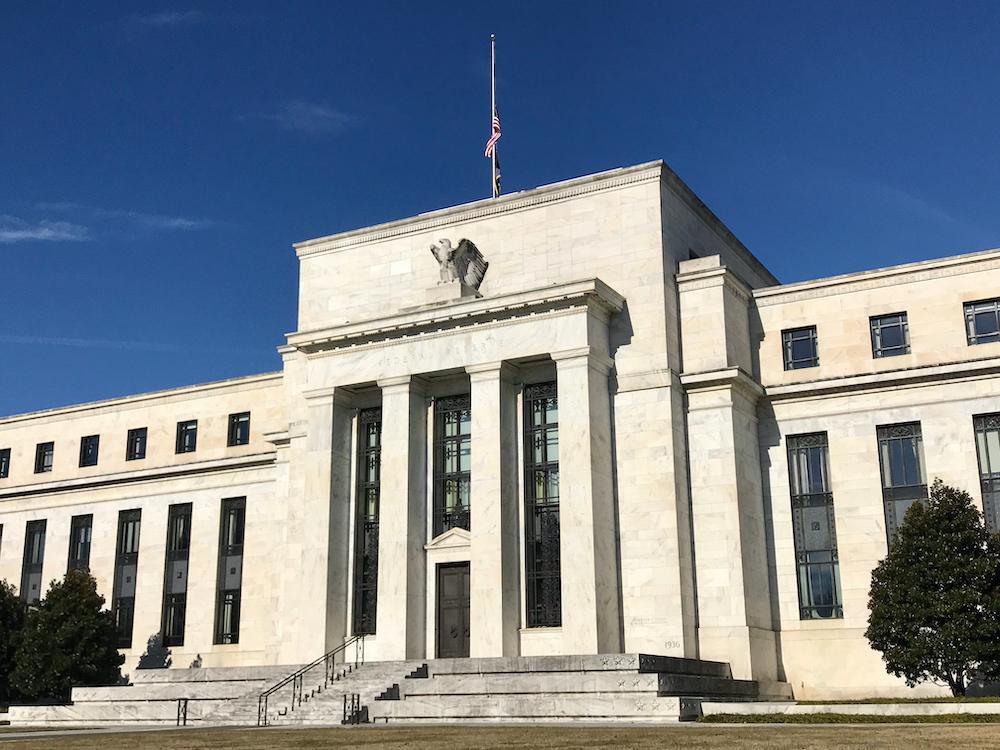
Recent inflation data 'do add somewhat to confidence' Fed can cut rates: Powell

By Jennifer Schonberger·Senior Reporter/Yahoo Finance


Federal Reserve Chair Jay Powell gave another signal Monday that the central bank is nearing the time when it can start cutting rates while emphasizing that he wants to stay in his job until his term is up in May 2026.


Powell cited a recent turnaround in inflation readings following hotter-than-expected data in the first quarter, including the release last Thursday of encouraging numbers from the Consumer Price Index for the month of June. 


"We didn't gain any additional confidence in the first quarter, but the three readings in the second quarter, including the one from last week, do add somewhat to confidence" inflation is moving toward the Fed's 2% target, Powell said during an interview at the Economic Club of Washington.


The Consumer Price Index on a "core" basis — which excludes volatile food and energy prices the Fed can’t control — rose 3.3% year over year in the month of June. That was down from 3.4% in May and 3.6% in April.


The Fed gets a new June reading from its preferred inflation gauge — the "core" Personal Consumption Expenditures Index — on July 26.


Read More Here:


Stuff the Bus

The true bull market may finally 'wake up' as investors eye rate cuts

By Josh Schafer·Reporter/Yahoo Finance


Since the start of the bull market in October 2022, stocks' move higher has largely been about artificial intelligence and the outperformance of a few large equities, driving investor concern that gains aren't widespread enough for the rally to continue.


That could be changing.


Thursday's better-than-expected inflation reading has sent the stock market into a tizzy in recent trading days. As investors haverapidly priced in higher chances of an interest rate cut from the Federal Reserve in September, the most loved areas of the market of the past year have underperformed as investors rotate into sectors outside of tech.


The Roundhill Magnificent Seven ETF, which tracks the group of large tech stocks that led the 2023 stock market rally, is down more than 1.5% in the past five days. Meanwhile, Real Estate (XLRE) and Financials (XLF), both interest rate-sensitive sectors, have been the market's biggest winners over the same time period. The small-cap Russell 2000 (RUT) index is up more than 7% and finally breached its 2022 high for the first time during the current bull market.


In another sign that a wide swath of stocks are rallying, the equal-weight S&P 500 (^SPXEW), which ranks all stocks in the index equally and isn't overly influenced by the size of the stocks moving higher or lower, has outperformed the traditional market cap-weighted S&P 500.


Read More Here:


RJS Law
GoldenCare Ad


Kirby & Kirby LLP

____________________________________________

Mascot Signs and Branding

Mascott

____________________________________________

SymphonyAI targets second half 2025 IPO with $500 million in revenue run rate


By Krystal Hu/Reuters


(Reuters) - SymphonyAI, a U.S. artificial intelligence company whose products help the likes of Pepsi predict demand and financial companies spot fraud, is preparing to go public in the second half of next year, its chief executive said in an interview.


Sanjay Dhawan, CEO at SymphonyAI, said the firm is in talks with banks but declined to disclose details or stages of preparations.


The plan to list publicly came as SymphonyAI reached $500 million in revenue run rate last year and achieved profitability, after growing revenue at a rate of about 25%, according to Dhawan.


The firm, headquartered in Palo Alto, Calif., founded seven years ago by tech billionaire Romesh Wadhwani, is hoping a public listing could provide liquidity for executives and employees, as well as access to additional capital for mergers and acquisitions.


The U.S. IPO market has started to show signs of recovery this year, with 86 IPOs raising $17.8 billion in the first six months, according to data from EY. KKR-backed enterprise finance platform OneStream announced on Monday plans to raise $465.5 million in an IPO later this month, which could help others gauge how the market values software companies.


Read More Here:


NEW COVER


City of SD Ad

Why California’s prison guard union is spending like never before on Governor Newsom


BY NIGEL DUARA and  JEREMIA KIMELMAN/CAL MATTERS


A year after he took the top job in 2019, the president of one of California’s largest and most powerful unions said in a newsletter that he wanted to be “the 800 pound gorilla” in Sacramento politics. 


Since then, the California Correctional Peace Officers Association, the union known as CCPOA representing 26,000 state prison guards, has spent and spent, in a way it never did before.


Its biggest recipient: Gov. Gavin Newsom, who has taken $2.9 million from the union since he was elected governor. 


That’s 31% of all political spending by the union since 2001.


 Read More Here:


Silicon Valley’s Trump Backers Cheer Vance as VP Pick

By Lizette Chapman and Anna Edgerton, Bloomberg News


Major Silicon Valley investors hailed Donald Trump’s choice of Ohio senator and former venture capitalist JD Vance as his running mate, a move that puts the technology industry closer to center stage in Washington if the former president takes the White House in November.


Elon Musk called the decision a “great choice” and said the lineup “resounds with victory” on X, the social platform he owns. 


David Sacks, an investor and Trump supporter scheduled to speak at the GOP convention on Monday night, called Vance an “American patriot” in a post.


And at Founders Fund, a venture capital firm backed by billionaire Peter Thiel, partner Delian Asparouhov summed up the mood of many in his orbit, posting: “IT’S JD VANCE. WE HAVE A FORMER TECH VC IN THE WHITE HOUSE. GREATEST COUNTRY ON EARTH BABY.”


The Silicon Valley tech industry has long been a liberal bastion nestled in California, a Democratic stronghold, with roots in deeply progressive San Francisco.


But a Republican contingent within tech has recently become increasingly visible, with major players like Musk, Sacks and Shaun Maguire from Sequoia Capital throwing their endorsements and donations to Trump for his White House bid against President Joe Biden.


Read More Here:


Over 30 Neighborhood Publications
in San Diego County
Direct Mail to over 125,000 Homes per Month
Twitter  Pinterest