|
Thanks to the flu and more demands on my time than I have, I've been remiss in keeping you informed. My apologies, except for the 15 days combating the flu, flat on my back watching Judge Judy humiliate litigants and contestants dressed for Halloween agonize over door number one, two or three. Who watches this stuff? But, then again it has become near impossible to watch the news. Little wonder that Netflix stock has risen from $143 to $252 over the past year.
Finally arrived!!!
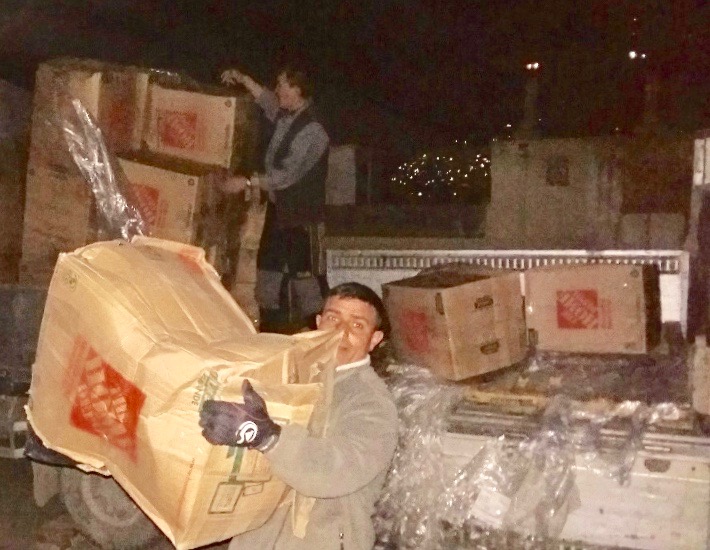
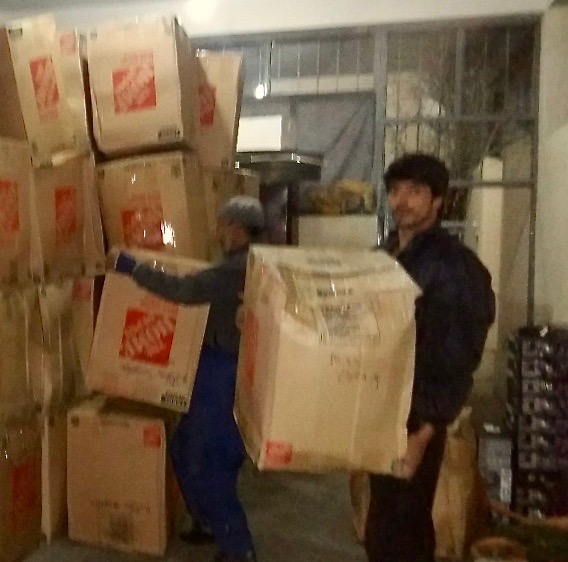
What we packed during our packing party last September finally arrived in Kabul and was transported to Basir's garage last week. This took much longer than our previous nine shipments for a variety of reasons, including, there are fewer flights to Kabul, now that our troop level is around ten thousand.
|
|
| Our guards unload the trucks |
 |
|
|
into Basir's garage.
|
The proverb, "Better late than never", applies. Several weeks ago it was reported that twenty-six people, living in the refugee camps, had frozen to death during the night. Collect everything you can that will help keep them warm next winter. We will keep packing as long as the Denton
program accepts shipments to Afghanistan.
What we send can literally be a life-saver.
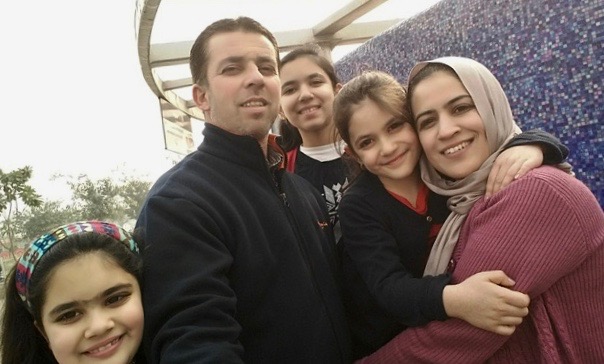
Basir, Qudsia and their family:
As most of you know, Basir and his wife, Qudsia, are our program directors. They and their
three daughters live in Kabul.
|
|
| Try Living in their Shoes |
On January 20 the Intercontinental hotel was attacked, leaving forty people dead and twenty-two injured. Nabi and I stayed in that hotel during our visits to Kabul.
Suzanne wrote to Qudsia checking to see if they were OK. Qudsia's response included;
"...the situation of Afghanistan is very bad and painful. Last week some suicide attacker entered a hotel and this hotel is in front of my house. For 15 hours we could hear the sound of huge bomb blast many times and my daughters were very frightened and they were shocked.
Yesterday once again there was a bomb blast in front of a hospital in
Kabul. It killed more than 100 people and injured near 300 people.
I really feel so bad for my people and for the future of all Afghan
kids. My 7 year old daughter today said; Mom Afghanistan is very
sick and it cannot recover again. It was really a very hopeless moment
for me that a 7 year old kid knows that the future of Afghanistan is
unknown."
Basir sent me the following;
"You are right working and living in Afghanistan is not easy. When we go for work we don't know if we come back alive or not. As a parent Qudsia an I are very worried for the future of our daughters. They are not safe anywhere, even in school. When my kids are in school Qudsia and I pray for our kids and all Afghan kids to come home safely.
It really hurts me when we teach our kids please don't sit near the window and if you hear any huge sound please don't run. Just hide yourself in a safe place.
I know other parents who live in a peaceful country will never teach their kids like us. Usually my daughters ask us why we don't have the right to live like other kids of the world. This is a question which I don't know the answer.
As an Afghan I cannot express my feelings that how much we are tired of this situation in Afghanistan. We suffered a lot and the new generation still suffer this situation. We hope one day peace will come to Afghanistan ( which I think is impossible) and all Afghan kids should have the right to live like other kids of the world."
Basir, Qudsia and their family bear the risk of being in the wrong place at the wrong time, as do all Afghans living in Kabul. They have the added risk of working for Trust in Education, an American NGO, committed to the education of girls. There are 26 Afghans on our payroll doing the same. Fortunately, none have ever been harmed or threatened.
Whenever I give a talk to students I share with them what they often don't realize. The difference between them and Afghan children is where they were born.
Chance Meeting during the holidays -
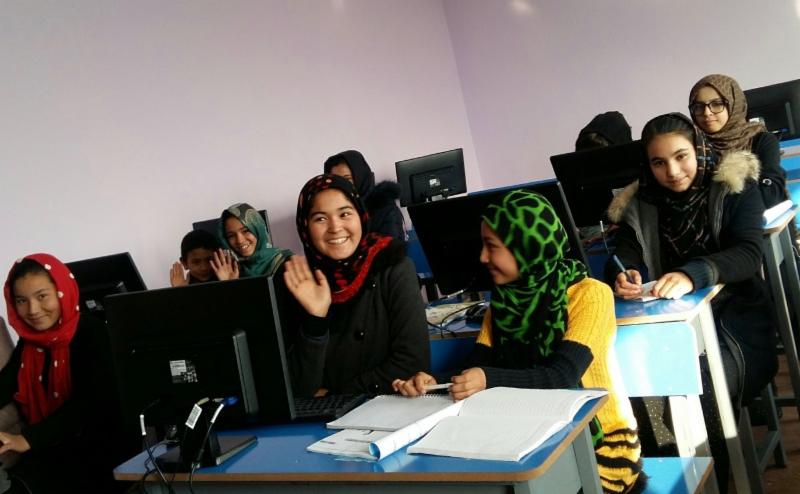
In December, while shopping in downtown Walnut Creek, I saw Mike McCallister, principal of Northgate High School. He told me about Aziz Amir and connected us by email. In 2015 Aziz opened the first school and University in Afghanistan dedicated to girls and women click here for information about the school.
|
|
| Number 9, thanks to a chance meeting with Mike McCallister |
Last month we opened a computer library in Aziz's school. We provided the desks, chairs, computers, computer equipment and cost of installation.
We pay the monthly cost of a library supervisor and English teacher. She teaches two ninety minute English classes a day. Why teach English? It's the money language. Whoever knows English will have more employment opportunities and likely earn more money.
Eight of our nine libraries have English teachers. The ninth is located in a school that has chosen to use its library solely as a library and for computer classes.
There's a surprising phenomenon, I've known for years, that made me realize how important warm clothing and blankets are in the camps. We pay the cost of providing wood to heat the libraries. The cost of wood is greater than all the teacher and supervisor salaries combined, during the winter months.
Compassion and Empathy
Every month I receive a request from Basir for expenses incurred during the month. This includes the support paid to children by their sponsors. The request for January did not include $60 for Wahid Muhammad. Wahid's sponsorship began in 2011. He's entering his last year of college and has been receiving $60 a month from his sponsor, Pathways Faith Community. Suzanne inquired why he was no longer on the list.
It turns out Wahid got a job as an administrative assistant and decided to pay for his last year of college. We have no way of knowing he has a job. He could have continued receiving his support.
Afghan teachers earn between $150-$175 a month and day laborers are paid $8 a day. I am completely astounded by Wahid's selflessness. The support provided by Pathways Faith Community will now go to another child.
I decided to read through Wahid's file. His father worked as a guard when Wahid's sponsorship began seven years ago. At that time, his entire family of six lived in one room. His parents now have a compassionate son with a job who will soon be a college graduate. He at least has escaped cyclical poverty. What is equally astounding about Wahid's story is how little it costs to fund an escape.
Budd
|