¡Versión en español a seguir! | |
This month at QSLA, we focus on working with families to support young children's mental health. | |
Welcoming Environment
Ensure Your Program Feels Inviting
| |
How To Help Children Calm Down | |
|
Many children have difficulty regulating their emotions. Tantrums, outbursts, whining, defiance, fighting, and more - these behaviors we see when kids experience powerful feelings they can’t control. Thankfully, learning to calm down is a skill that can be taught. Take a look at this video "How to Help Children Calm Down" from Child Mind Institute, featuring Alana Cooperman (LCSW) who's part of Child Mind Institute's expert clinical team that transform the lives of children and families by offering thorough evaluation and gold-standard treatment for a wide range of conditions and concerns. Share this video with families to learn about:
- Rethinking emotions
- Modeling how to manage difficult emotions
- Validating your child's feelings
- Active ignoring
- Positive attention
- And more!
| |
This resource will support ECERS-R: Item 9 and FCCERS-R: Item 35- Provisions for Parents, PAS: Item 16- Family Communications, and BAS: Item 7- Provider Parent Communications. | |
Family Partnerships
Work with Families to Build a Stronger Program
| |
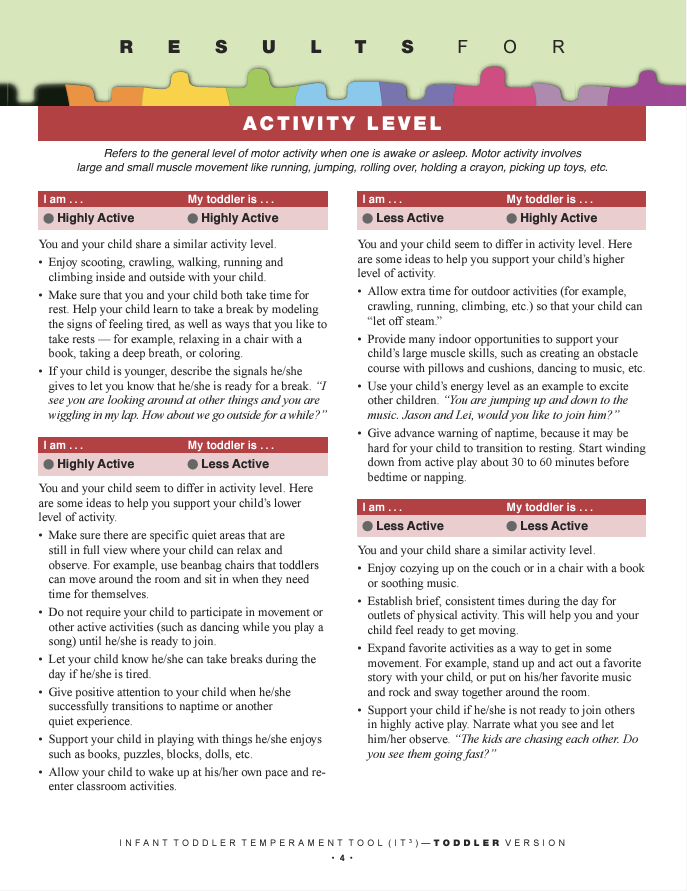
The Infant Toddler Temperament Tool (IT3): Supporting A "Goodness of Fit" | |
The compatibility between adult and child unique temperaments can affect the quality of relationships. This compatibility is often called “goodness of fit.” Head Start offers the "Infant Toddler Temperament Tool" (IT3) to support parents/caregivers in understanding and supporting this compatibility. Goodness of fit happens when an adult’s expectations and methods of caregiving match the child’s personal style and abilities. Goodness of fit does not mean that adult and child temperaments have to match or that the adult needs to change who they are. They can simply adjust their caregiving methods to be a positive support to their child’s natural way of responding to the world! For more background information, click here. | |
|
For Infants (Birth to 18 months) | |
|
For Toddlers (18 to 36 months)
| |
|
0-6歲嬰幼兒睡眠與心理發展
您是否對嬰兒的睡眠模式與其心理發展之間的迷人聯繫感到好奇? 台灣心理健康發展協會的專家們揭示了嬰兒成長各階段的對應關係。 不要錯過這些啟發性的信息! #嬰兒睡眠 #PsychologicalDevelopment #0-6 #TaiwanAssociationOfMentalHealthDevelopment
| |
This resource will support ECERS-R: Item 38 and FCCERS-R: Item 35- Provisions for Parents, PAS: Item 16- Family Communications, and BAS: Item 7- Provider Parent Communications. | |
Community Partnerships
Use Community Resources to Strengthen Program Quality
| |
CalTrin's Resources to Support Early Childhood Mental Health | |
CalTrin's Resources to Support Early Childhood Mental Health | |
|
Positive mental health is essential to a child’s healthy development and overall family well-being. Professionals working with children and families play an important role in supporting early childhood mental health by connecting parents and caregivers to resources and services. Check out CalTrin's resource page focused on early childhood mental health, including research, trainings, evidence-based programs & interventions, articles, videos, and connections to other useful organizations. Here's a snapshot of the many valuable options on their website:
| |
Infant Mental Health Resources from Sesame Workshop | |
|
Through its latest expansion of free emotional well-being resources, Sesame Workshop aims to support children, parents, and providers, using research-based tools and strategies to help them understand their feelings, not only in happy moments but also in more complex times. Focusing on fostering relationships and the mind-body-heart connection can help children develop a solid foundation for their emotional well-being. Here you will find new Sesame Workshop resources (in English and Spanish!) to help families with mental and emotional health, including:
| |
Knowing and using these community resources will support PAS: Item 17- Family Support Involvement, BAS: Item 8-Community Resources, and NAEYC Accreditation: Standard 7-Families | |
Staff Development and Support
Enhance Your Family Engagement Knowledge and Skills
| |
Professional Learning to Support Young Children's Mental Health | |
|
Trauma Sensitive Environments
The impact of trauma is experienced by children, families, caregivers and the childcare providers who serve them. This "Trauma Sensitive Environment" training provided by the YMCA CRS Foster Childcare Bridge Program enhances the participant’s trauma informed lens on the classroom/home childcare environment while children are in their care. In this 3-hour training, you will learn about triggers, how to reduce triggers, and ways to make the classroom/home childcare more trauma sensitive.
| |
|
|
Empowering Children Through Co-Regulation: Tools for Supporting Big Feelings
Early care providers play a pivotal role in helping children navigate the ups and downs of their big feelings. CocoKids is offering this 2-part training series where you will explore practical strategies and tools for understanding and fostering co-regulation skills in young children. You will get to engage in self-reflection and analyze our own thoughts, feelings, and actions as a way of shifting our mindset about challenging behaviors. From establishing safe and supportive environments to implementing soothing techniques, participants will gain valuable insights into promoting emotional resilience and self-regulation in early childhood settings.
|
-
Part 1: Wednesday, May 15th from 6:30 - 8:00PM
-
Part 2: Wednesday, June 12th from 6:30 - 8:00PM
| |
Part 1: Wednesday, May 15th from 6:30 - 8:00PM | Part 2: Wednesday, June 12th from 6:30 - 8:00PM | |
|
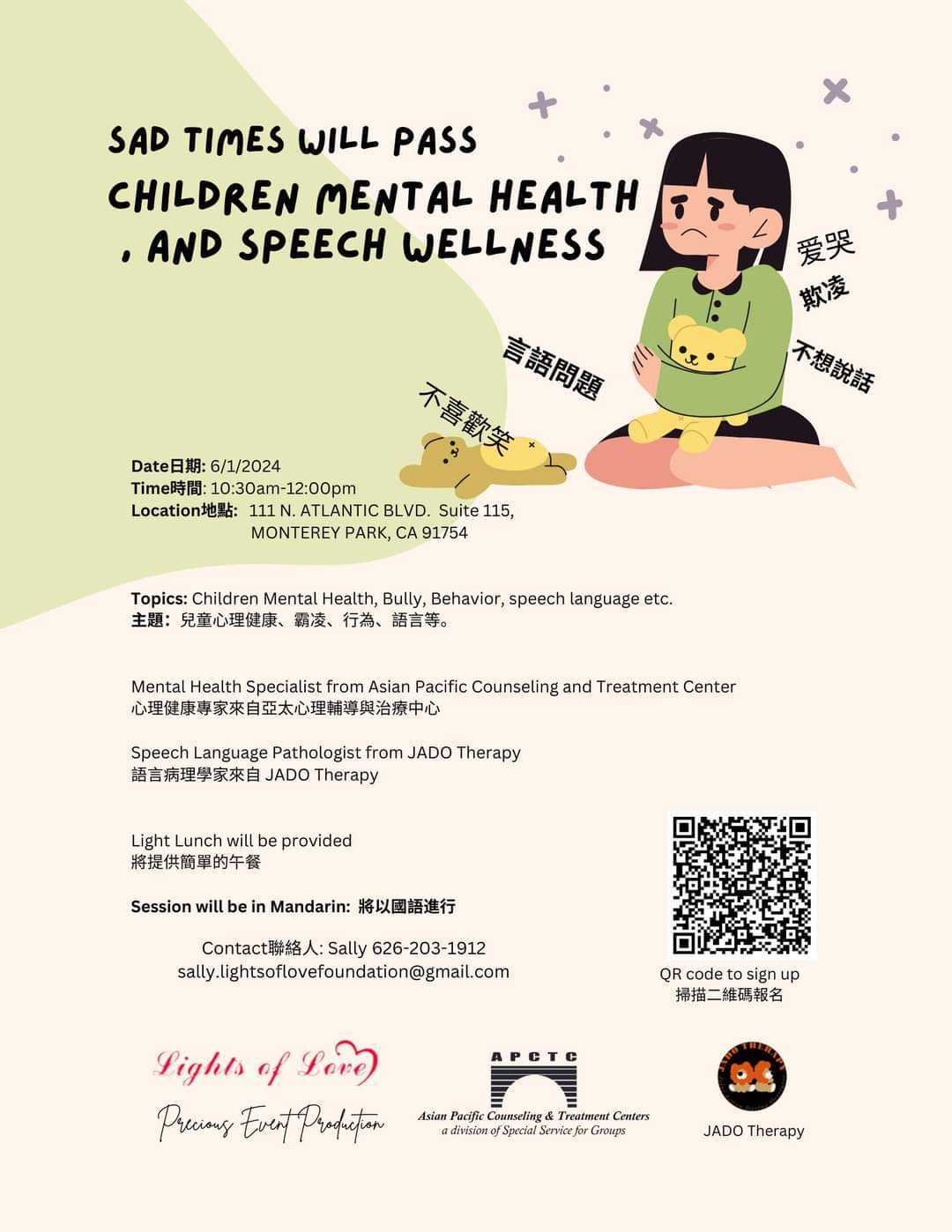
兒童心理健康、霸凌、行為丶語言等
加入我們,觀看專為華人社區的教育演講,重點關注兒童心理健康、霸凌行為和言語意識。 發現有價值的策略來支持兒童的心理健康,有效解決霸凌問題,並了解語言對發展的影響。 標記您的日曆並成為這項賦權活動的一部分!
https://www.apctc.org/
| |
日期: 2024年6月1日 星期四
時間: 晚上10:30點至12點
| |
|
These trainings support ECERS-R: Item 43- Opportunities for Professional Growth, PAS: Item 3- Staff Development, FCCERS-R: Item 37- Opportunities for Professional Development, and BAS: Item 1-Qualifications and Professional Development | |
Equitable Approaches to Supporting Children and Families
| |
Structural racism is taking a toll on children's mental health | |
|
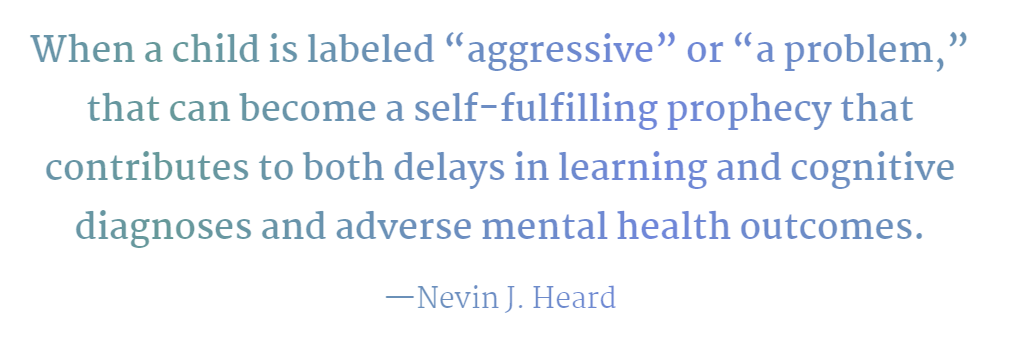
Racism and social inequality don’t just affect adults. In this article "Structural racism is taking a toll on children's mental health" by CNN, the author Kristen Rogers covers how racism and social inequality have a profound impact on the mental health of children of color. Consider sharing this article with colleagues and bringing up key examples/ideas with families to help us all understand how stereotypes, a positive ethnic identity, cultural pride, social disadvantages, historical trauma, invisibility, and more can affect children's mental health.
| |
Mental health plays an important role for children's well-being and health. Mental health can affect how children think, feel, and act. It can also be indicators of how children handle stress, create connections, and response to others. | |
|
Positive mental health are present in most children! Based on reporting from 2016-2019, parents reported their children mostly or always showed:
- Affection (97.0%), resilience (87.9%), positivity (98.7%) and curiosity (93.9%) among children ages 3-5 years Mental, behavioral, and developmental disorders can begin in early childhood:
- 1 in 6 U.S. children aged 2–8 years (17.4%) had a diagnosed mental, behavioral, or developmental disorder.
| |
|
|
Were you forwarded this email?
Would you like to sign up to receive our Family Engagement Newsletters?
| |
Check out our QSLA pages below! | | | | |