A
Word from Catherine
Annual Accounting: Evaluation and Transformation
|
|
Weller Book Works closed for our annual inventory in early January. Inventory is one of those all consuming necessities that can be a store changing event. When I begin planning in October, I often feel like I’m planning a military campaign. I map the store, make lists, create leadership roles and general assignments, and arrange for food. As the date approaches anxiety increases. What details were forgotten? What was dealt with inadequately? Did we allow enough time? On the second day we get into our groove and begin to notice the little quirks and treasures within our store, which we post on social media as time allows. When we’re done, we have a renewed sense of what is actually shelved in our store, what it looks like, and where it is. Each staff member’s familiarity with our stock has increased and our inventory is accurate. It’s a beautiful thing. Thank you for sticking with us through those annual closures. In the end, inventory helps us better serve your reading needs. That’s what makes it all worthwhile.
Our “
New Year, New You”
table this year took a decidedly post-modern turn. I dubbed it, “
New Year, New You – Cyborg Style.
” Others more wisely called it a table of
transformations
. In addition to the usual books one would expect on a display to help one keep those new year’s resolutions, we added gems pointing one to a different way of thinking. I’d like to highlight a few here:
|
|
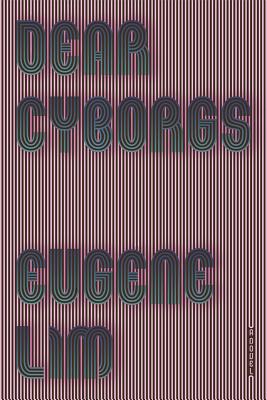
Dear Cyborgs
by
Eugene Lim.
"A fractal fable about the possibility and power of protest as told by three superheroes on their lunch break In a small Midwestern town, two Asian American boys bond over their outcast status and a mutual love of comic books. Meanwhile, in an alternative or perhaps future universe, a team of superheroes ponders modern society during their time off. Between black-ops missions and rescuing hostages, they swap stories of artistic malaise and muse on the seemingly inescapable grip of market economics.”
|
|
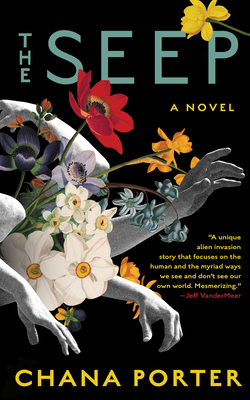
The Seep: A Novel
by
Chana Porter
. This is the book that started it all, a scintillating trade show conversation with a publicist from Soho Press led to us buying the book and creating the table. “"Trina Goldberg-Oneka is a fifty-year-old trans woman whose life is irreversibly altered in the wake of a gentle-but nonetheless world-changing-invasion by an alien entity called The Seep. Through The Seep, everything is connected. Capitalism falls, hierarchies and barriers are broken down; if something can be imagined, it is possible.
|
|
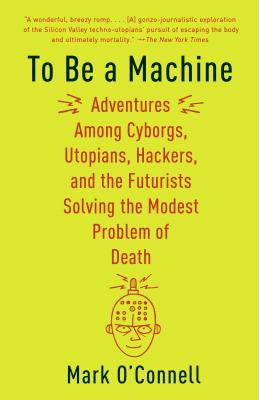
To Be a Machine: Adventures Among Cyborgs, Utopians, Hackers, and the Futurists Solving the Modest Problem of Death
by
Mark O’Connell
is a provocative and humorous – really! – book about transhumanism: the movement attempting to push the boundaries of our biology. What does it mean to be a machine? Well, to answer that we should re-examine what it means to be human, to be animal. Start here.
|
|
Xenofeminist Manifesto: A Politics for Alienation
by
Laboria Cubonika
. The author, Laboria Cubonika is a collective spread across five countries. In this work they begin with the premise that injustice should not be accepted because it’s the way things are. Instead, they have created a radical attempt to articulate a feminism for the twenty-first century. Unafraid of exploring the potentials of technology, both its tyrannical and emancipatory possibilities, the manifesto seeks to uproot forces of repression that have come to seem inevitable--from the family, to the body, to the idea of gender itself. If nature is unjust, change nature!
We think the table is so useful and enjoyable, we’re leaving it up awhile longer. Come in to explore the books we selected, or view some of them here on our website, to help you create your own definition for a new you.
|
|
From the Rare Book Room...
|
|
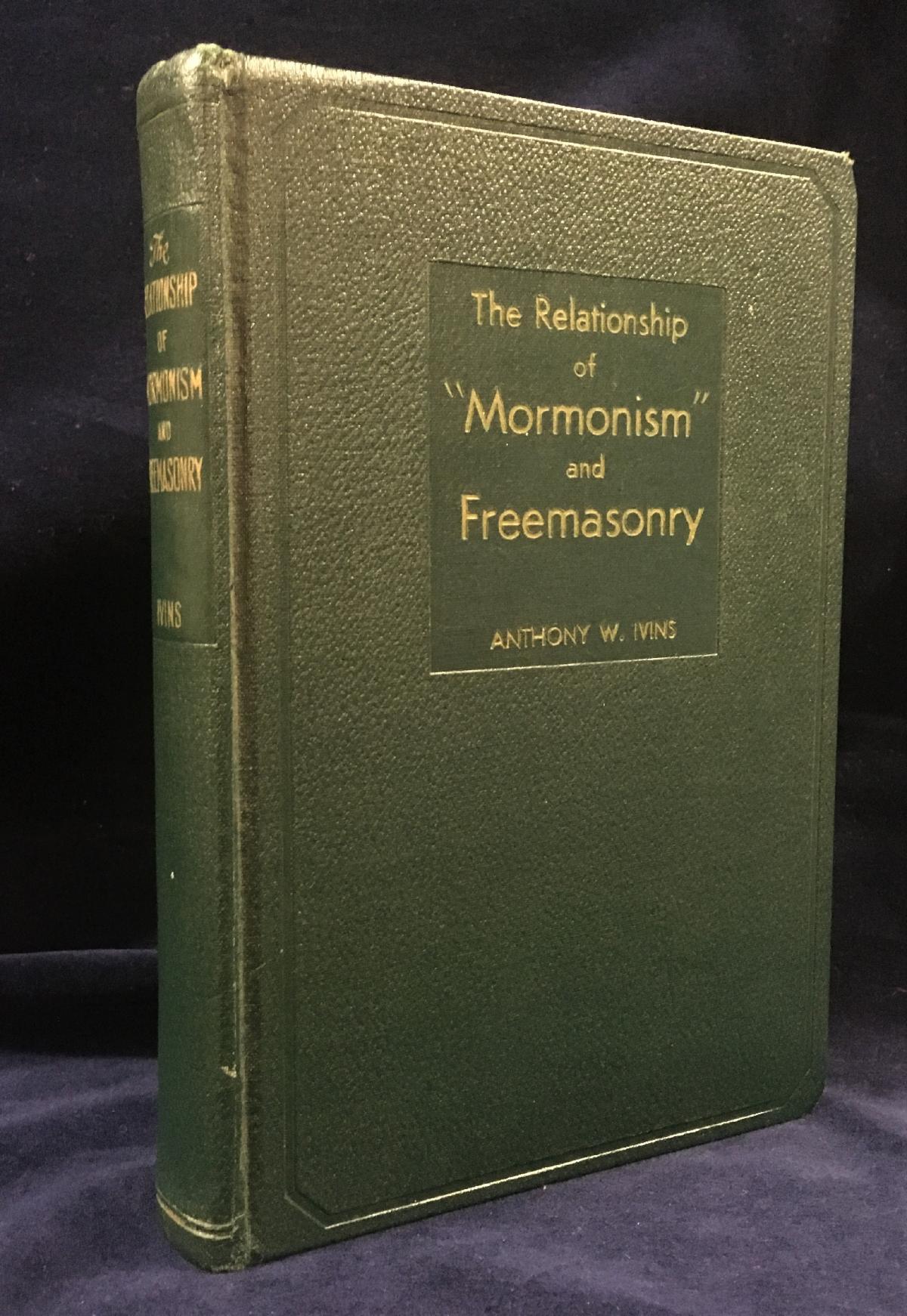
The relationship between Latter-day Saints and Freemasonry has been analyzed and disputed since Mormonism’s beginnings. The Deseret News Press published apostle and counselor
Anthony W. Ivins’
Relationship of “Mormonism” and Freemasonry
in 1934. Copies containing presentation letters were sent as gifts from the LDS First Presidency – they were often signed but sometimes only stamped. This month were are offering a nearly perfect copy with a letter signed by The First Presidency:
Heber J. Grant, J. Reuben Clark Jr., and David O. McKay
for
$120
|
|
|
|
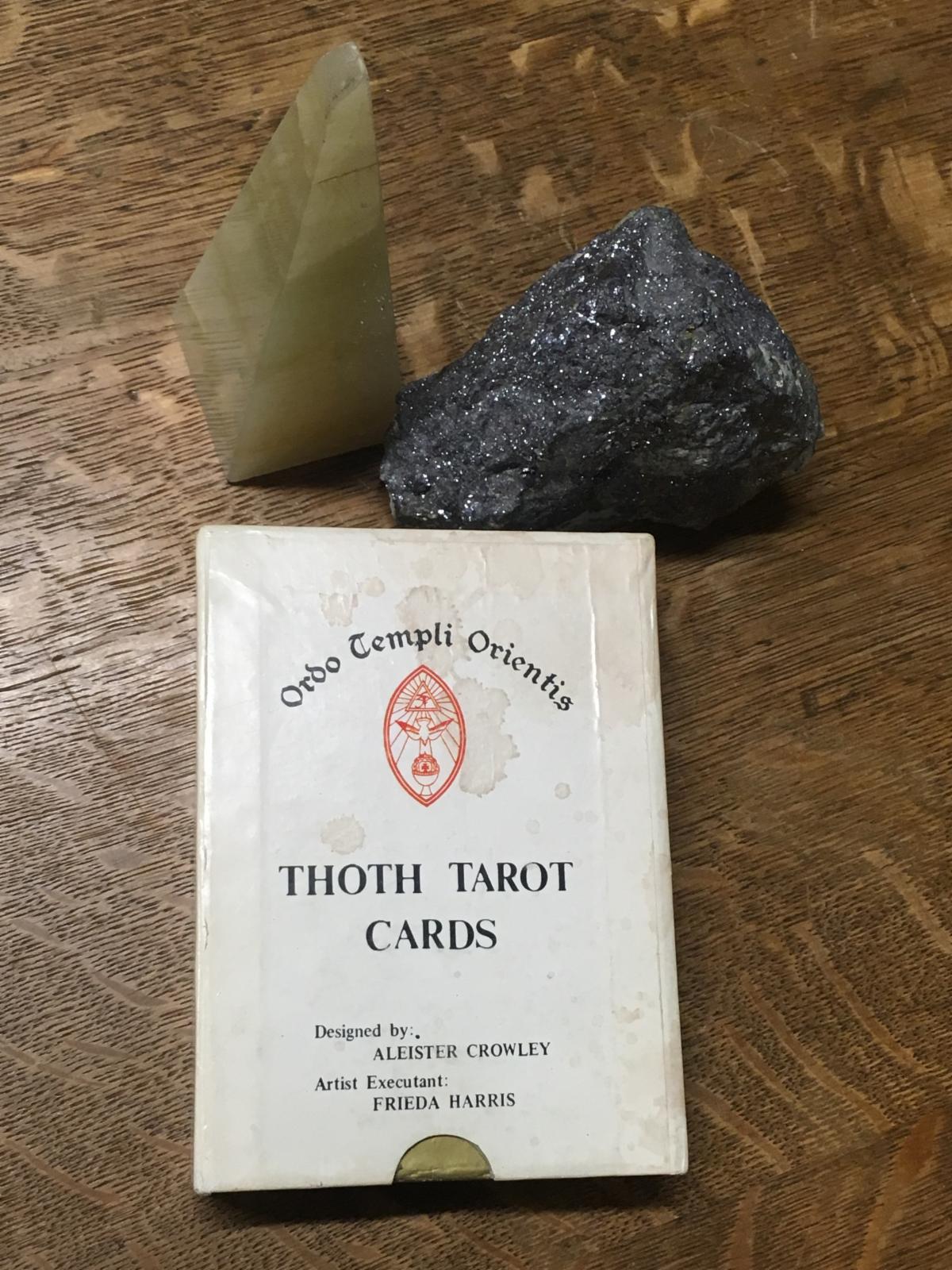
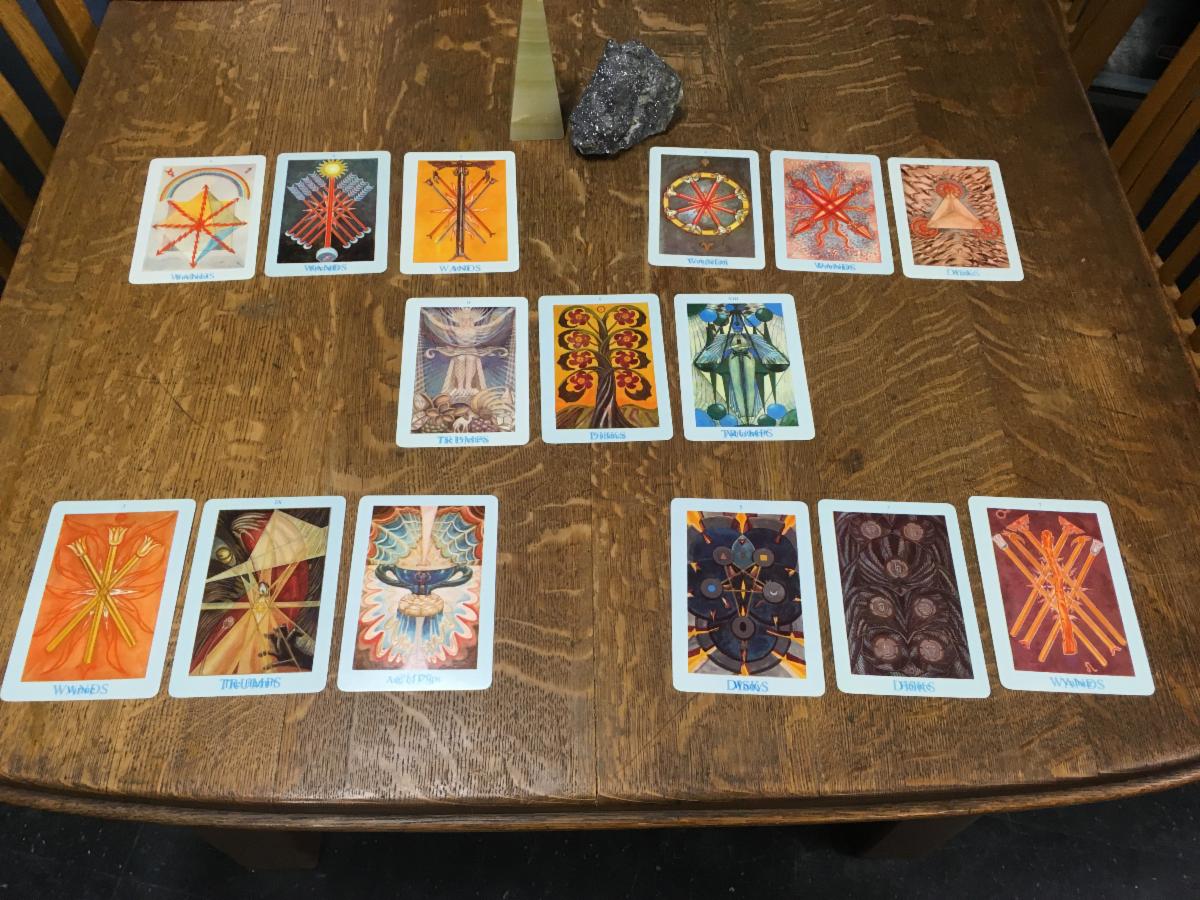
Various paper objects are found in the collections of books we parse and our buyers are attentive. In a recently acquired collection of Mormon and occult books, we acquired a deck of
Aleister Crowley’s
scarce
Thoth Tarot Cards
from circa 1969, published by our old friends at Llewelyn. The box has protected the cards well but is gently rubbed and has a few moisture spots.
$500
|
|
A Brief Bibliography of the Mound Builders
By
Austin Fields
Humans build stuff, and when there's no suitable stone, they'll suffice for soil. This was the scenario for a time in the Mississippi Valley and Great Lakes region, amounting to thousands of earthen works. Due to the Mound Builder's lack of writing and record keeping, a historical vacuum inspired numerous, often bogus hypotheses in the early 19th century as to the nature of the cultures that created the earthworks. The beginnings of archaeology in the New World were focused on the mounds, and systematic surveys were begun in 1848 by the Smithsonian Institute to bury the myths and unearth the facts. Here are two fine examples from that era, and a new title that recently caught my eye.
|
|
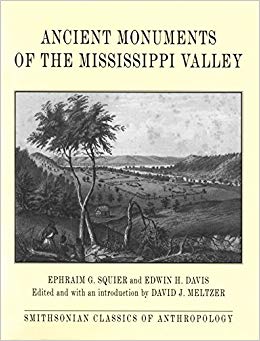
by Ephraim G. Squier
and
Edwin H. Davis
9781560988984
Still the master key to the subject, it was the first ever publication by the Smithsonian in 1848. There are 48 full page illustrations showing overhead views of geometric embankments the size of small towns, many of which have since been plowed level, and thus a useful modern guide. These guys basically invented archaeological surveying as curious and determined Ohio citizens.
|
|
Report on the Mound Explorations of the Bureau of Ethnology. Twelfth Annual Report, 1890-1891.
by
Thomas Cyrus
A tremendous amount of excavations (pronounced 'demolitions') were done in the 1890's for this volume. The stratigraphic descriptions lob images of the inside of the mounds into your mind in full 3D. Artifacts abound in here; copper and mica art, iron blades, obsidian from Yellowstone, shell gorgets from the coasts, etc. This title is quite scarce, but thankfully it's on Archive.org, and in some nice libraries.
|
|
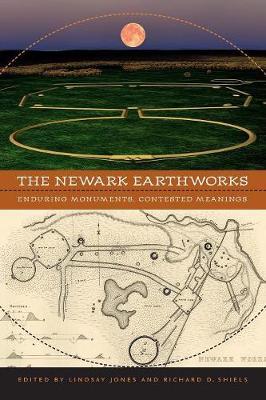
by
Lindsay Jones
9780813937786
Whereas Wisconsin is known for it's animal-shaped effigy mounds, Ohio harbors many geometric earthworks that align with about every possible equinox, solstice, sunrise, moon-set, etc. The town of Newark, Ohio, was built right on top of 3,000 feet of these circular and octagonal embankments. The site has been nominated to be a UNESCO World Heritage Site, which would involve legally relocating the Moundbuilder's Country Club that rests over the area. This title is a collection of interdisciplinary essays on Newark, a site with very little published literature.
|
|
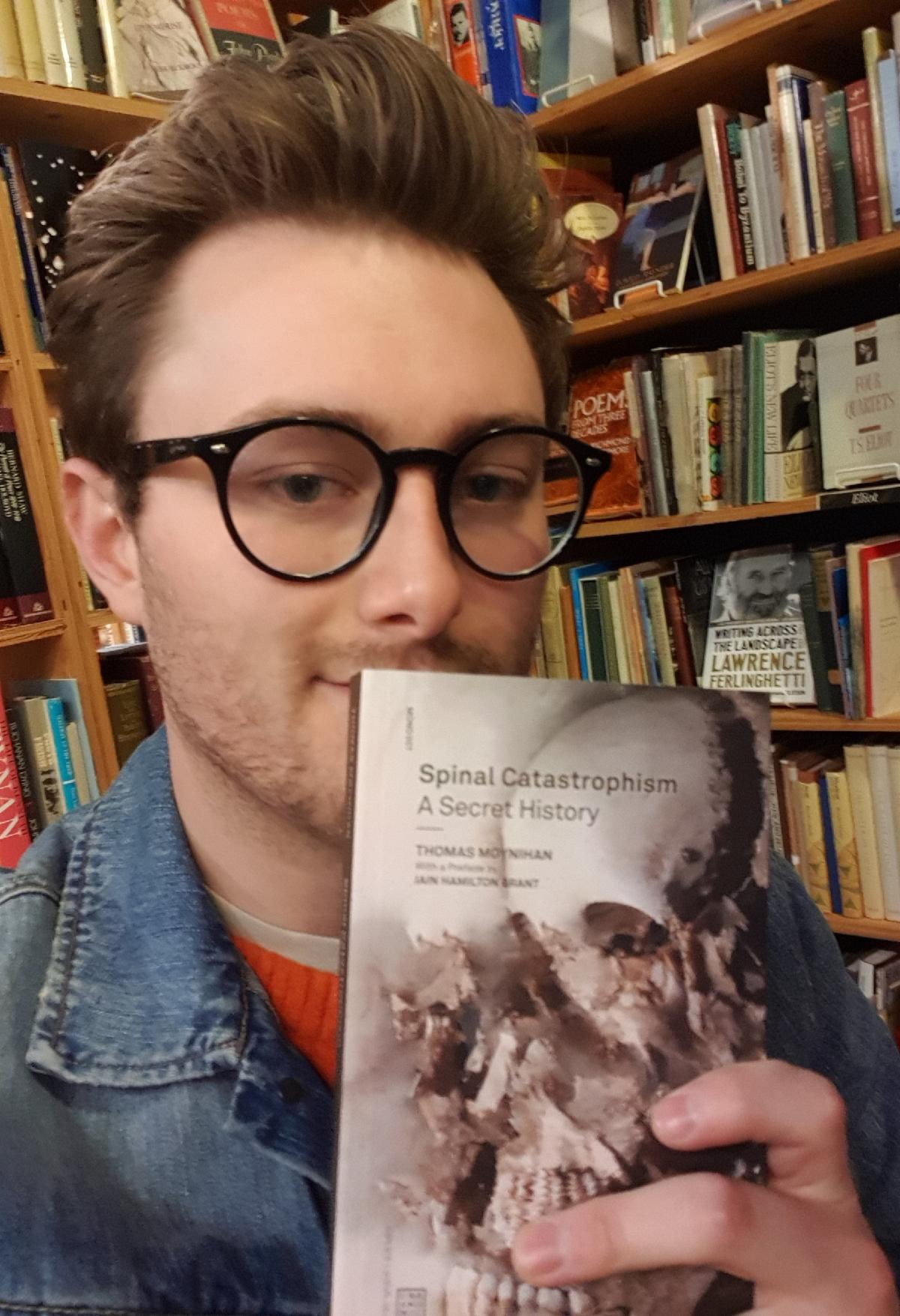
...and much in you is still worm
By
Holden Rasmussen
[Fiction inspired by
Spinal Catastrophism: A Secret History
by
Thomas Moynihan
(Urbanomic, 2019). This book collects various writings across the modern period that are connected in their seemingly idiosyncratic fascination with the spine as the basis of human thought. his suggests that a truly historical and sociological investigation should locate the seat of human experience not in encephalized consciousness, but ossified unconsciousness. This was also inspired the diverse writings of
Georges Bataille
and others associated with that long-dead experiment in community,
Acéphale
, whose internal papers and artworks are collected
in
The Sacred Conspiracy
(Atlas Press, 2019).]
In a distant past, the Archivist tells you, this place was still desiccated. A people pretended to make it bloom and waited for a grand, world enveloping event to transfigure themselves and this world. Then, the wasteland was mistaken for the dry expanse and replaced with the true wasteland of toxic clouds, great belts of concrete whose ruins dot the landscape, and ever-tumescent erections beneath the mountains that enclose this valley.
Those original horticulturists and architects also mistook the coming future for a non-existent past. The Great Disassembly came not from beyond, but from within, or so claims the Archivist, winding his massive, segmented body around the boulder he’s using to elevate himself above you, one of his pupils.
“The Great Disassembly was not prophesized nor was it predicted, but it was anticipated,” proclaims the Archivist. In a language, on a material, and in a manner completely alien to you, a man known only as Zarathustra, who ‘wrote’ (you only vaguely understand this abstract anthropological activity) for everybody and nobody, claimed “You have made your way from worm to human, and much in you is still worm.”
The second anticipation of The Great Disassembly came from a group of what the Archivist calls “experimenters” and “artists” though such concepts, again, remain remote to you. (In an automatic movement, whenever words like these are mentioned you retract your spine from your head; you know the Archivist notices this, and you fell even more thwarted by this observation.) This group imagined a headless, human body, lacking genitalia and reproductive capacity, and destined only for a death which they volunteered for. The experiment of this group failed, but they transmitted a kernel of their ideas into the future. Revealing itself to be true, this kernel suggested a time with no need for encephalization, no need for the endless fictions about consciousness. This group,
Acéphale
, (This ‘name’, transmuted from the Archivist effortlessly with their nearly vestigial vocal cords, is barely received by your ambiguously cochlear and equally vestigial organs. Do you even know where they are on your body?) attempted to illustrate how much in their primitive mode of existence was subterranean, buried deep in their flesh, their bones, and unconscious.
After this, the number of anticipations increases, but one notable instance of primitive recording collected much of these anticipations together. The Archivist calls this the third anticipation. Many humans theorized that consciousness was barely the tip of the iceberg. It was not in their heads that humans were what they were, but in their spines. Their spines, like geological strata, kept a record of histories filled with traumas, ossifications, and paralyses, of which no humans were conscious of in their day-to-day lives. The outside was always inside.
“This is the only way,” intones the Archivist, “that we can retrospectively understand The Great Disassembly. Gradually, humans brought about their own catastrophes and ended themselves. Whence we come is a mystery still, but that some humans saw something like us coming is incontestable. Drowned worlds. Hovering organisms with only tails and brains. Machines that produced desire. Hands that cut-up words and put them back together. Depictions of parasites who look eerily similar to us. All of these things are contained in the Archive. You only have to look.”
“Look with what eyes?” you think to yourself. But you are not yourself.
Your spine retracts agai
n.
|
|
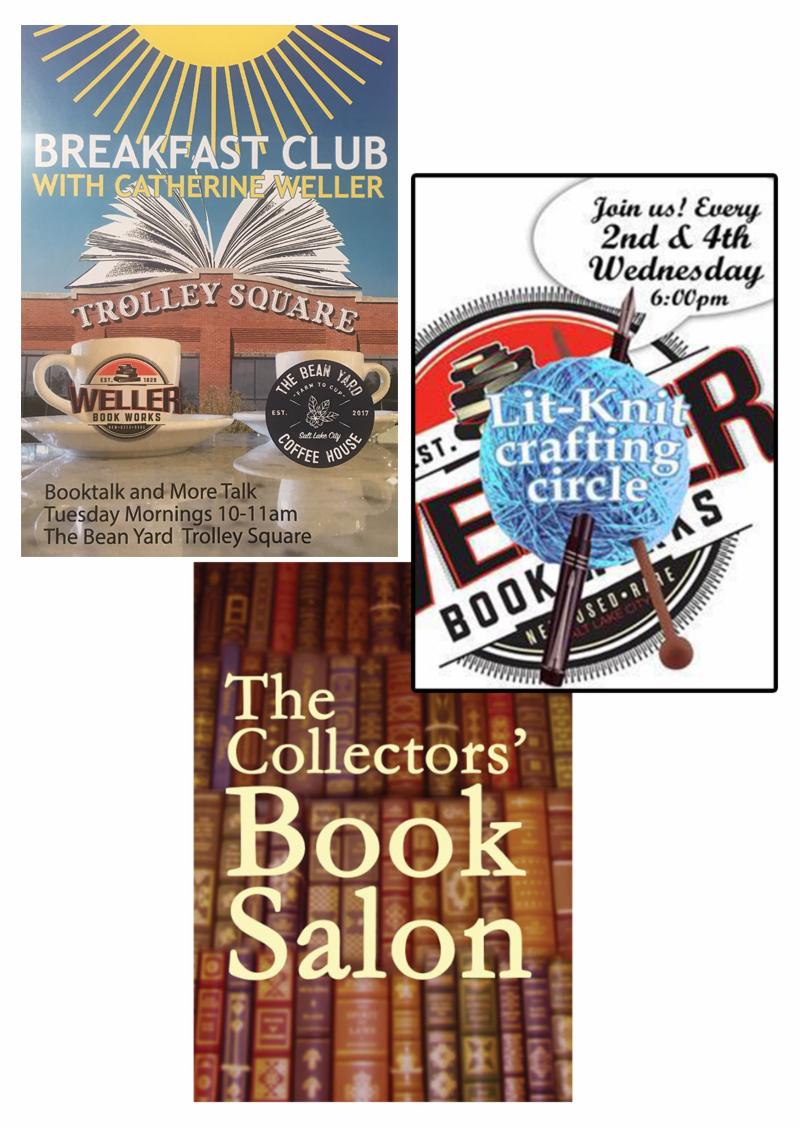
BREAKFAST CLUB
- Join our lead new book buyer and raconteuse, Catherine Weller, for book news and conversation every Tuesday morning. The Breakfast Club meets from 10:00 - 11:00 AM at the Bean Yard Coffee House, the shop that has replaced the Coffee Connection.
LIT KNIT
- Do you craft? Do you like books and casual conversation? Join our bi-weekly craft circle held the 2nd and 4th Wednesday of every month from 6:00 - 8:00 PM.
COLLECTORS' BOOK SALON
- Book lovers of all passions gather in the Rare Book Room each final Friday of the month, January through October for the Collectors' Book Salon. Glasses are filled and socializing begins at 6:30, and at 7:15 an invited guest presents a chat on a topic of their particular bibliopassion.
|
|
SATURDAY, FEBRUARY 1
7:00 PM
Lavender-Farming: Secrets from a Hard Row Hoed
by Lori Parr
Lavender Lori
got a second chance to start completely anew after 90% of her original crop was killed by one freak cold snap that she calls the Devastation. In the aftermath, she discovered and now implements a host of contingency plans toward more sustainable farming practices; the 'secrets' learned through tough experience. Never having farmed before, she learned it all from the ground up, mostly by trial and error. This is an organized, practical instruction manual on how to grow lavender–and what to do with your bountiful harvest. By following the step-by-step guide you will learn how to efficiently and successfully grow your own lavender whether it be by the thousands in a farm setting, a handful in your yard, or one in a pot. Lori also offers advice on planting, irrigation, the harvest, curing, storing, crafting and cooking with lavender as well as marketing and sharecropping.
|
|
 |
THURSDAY, FEBRUARY 8
7:00 PM
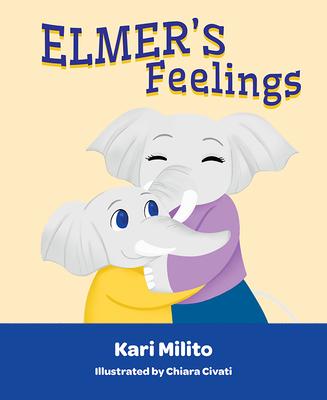
Elmer's Feelings
by Kari Milito
We're excited to have
Kari Milito
with us for a discussion and signing of
Elmer's Feelings.
Elmer’s excited and ready for his first day of school. But things don’t go at all as he imagined, and it’s causing lots of different feelings. Will he be able to sort through them all and find a way to have a better second day?
Kari Milito is a dreamer by day and by night; stories are always spinning round in her head. It only made sense that one day those stories would spill out onto the printed page. Elmer’s Feelings is the first of those stories to be published, and it was only natural that the main character was an elephant; for she has loved them since she was a little girl…collecting them even today. She currently resides in Ogden, Utah with her two sons.
|
|
|
|
TUESDAY, FEBRUARY 11
6:30 PM
The Marriage of the Moon and the Field
by Sunni Brown Wilkinson
+
Eden’s Edge
by
Natalie Taylor
Sunni Brown Wilkinson
's poetry has been published or is forthcoming in
Crab Orchard Review
,
Sugar House Review
,
Ascent
,
Cimarron Review
,
Southern Indiana Review,
and has been nominated for two Pushcarts and a Best of the Net. Her first full length poetry collection,
The Marriage of the Moon and the Field
(Black Lawrence Press, 2019), was a 2017 finalist for the Hudson Prize. Wilkinson has an MFA from Eastern Washington University, teaches at Weber State University, and lives in Ogden, Utah with her husband and three young sons.
Eden’s Edge
,
a collection of poems by
Natalie Taylor
, explores the complexities in relationships—both with each other as humans and our relationship to the earth. The poems explore the themes of sensuality, shame, grief, and redemption lit with radiant
natural imagery. Taylor earned a BFA in English with a creative writing emphasis from the University of Utah. Her work has been published in
15 Bytes
,
Hubbub
,
Kettle Blue Review
,
New Ohio Review
,
Rock & Sling
, and the
Talking River
. She won first place in the 2016 Utah Original Writing competition and was named a 2017 Mari Sandoz Emerging Writer: Poetry.
Join us for this double reading and signing at 6:30 PM!
|
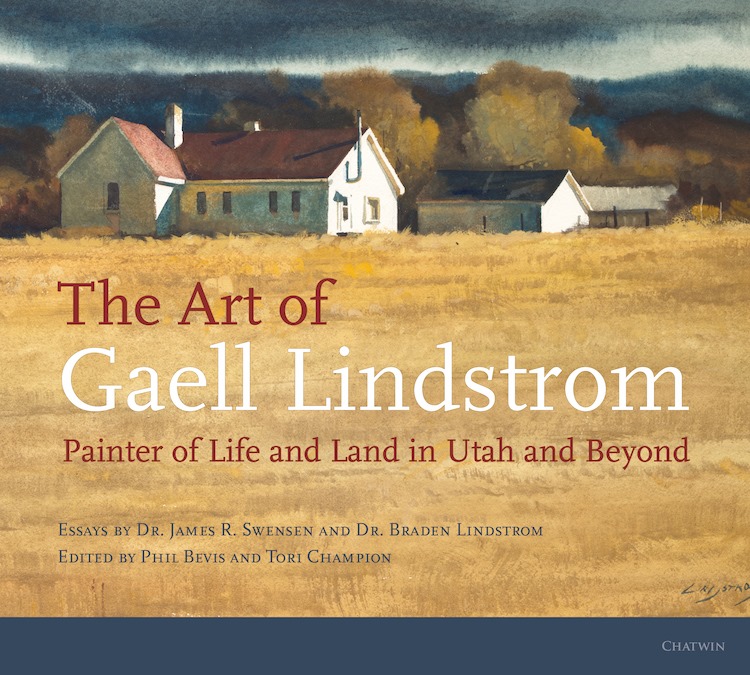
The Art of Gaell Lindstrom
By
Dr. James R. Swensen
and Dr. Braden Lindstrom
We're very pleased to welcome
Dr. James R. Swensen
and
Dr. Braden Lindstrom
for a multimedia presentation and signing of The Art of Gaell Lindstrom: Utah and Beyond in Watercolor and Other Media.
The Art of Gaell Lindstrom: Utah and Beyond in Watercolor and Other Media
is the first major survey of the life and work of Utah artist Gaell Lindstrom (1919-2009). Lindstrom was an artist whose search for inspiration took him from portraying the people and places of his native Utah and the American West to Mexico, Guatemala, Italy, Morocco, and China. Deeply grounded in region and faith, Lindstrom's work testifies to his dedication to craft, which was the foundation for his long and influential career as an art professor. The 130 illustrations, including 100 color plates, showcase Lindstrom's mastery of form and texture, and his ability to capture the stillness of the moment in landscapes and urbanscapes.
|
MONDAY. FEBRUARY 26
6:30 PM
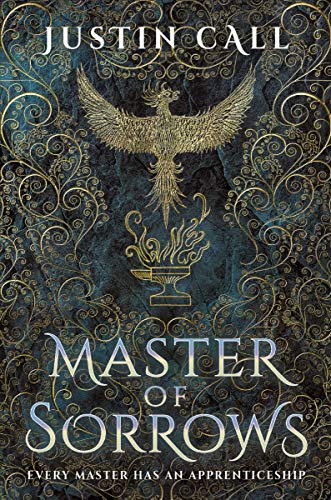
The Silent Gods, Book I: Masters of Sorrow
By
Justin Travis Call
Please join us as we welcome back
Justin Travis Call
for the book launch of his newest:
The Silent Gods, Book I: Masters of Sorrow
.
You have heard the story before -- a young boy, orphaned through tragic circumstances, raised by a wise old man, who comes to a fuller knowledge of his magic and uses it to fight the great evil that threatens his world. But what if the boy hero and the malevolent, threatening taint were one and the same? What if the boy slowly came to realize he was the reincarnation of an evil god? Would he save the world . . . or destroy it?
Among the Academy's warrior-thieves, Annev de Breth is an outlier. Unlike his classmates who were stolen as infants from the capital city, Annev was born in the small village of Chaenbalu, was believed to be executed, and then unknowingly raised by his parents' killers. Seventeen years later, Annev struggles with the burdens of a forbidden magic, a forgotten heritage, and a secret deformity. When he is subsequently caught between the warring ideologies of his priestly mentor and the Academy's masters, he must choose between forfeiting his promising future at the Academy or betraying his closest friends. Each decision leads to a deeper dilemma, until Annev finds himself pressed into a quest he does not wish to fulfil.
Justin Call
graduated from Harvard University in 2012 with a Master's in Literature and Creative Writing. He has studied fantasy literature for over a decade and is co-designer of the board games Imperial Harvest and Royal Strawberries. Justin currently lives in Idaho with his wife, two sons, and Great Dane.
Justin will begin with a reading at 6:30 PM, which will be followed by a signing.
|
|
Thank you for supporting your local, independent bookstore!
|
|
Store hours: Monday-Thursday, 11 AM-8 PM | Friday-Saturday, 10 AM-9 PM | Sunday, 12 PM-5 PM
|
|
|
|
|
|
|