click image to enlarge
This is Difficult Work, But Not Lonely Work
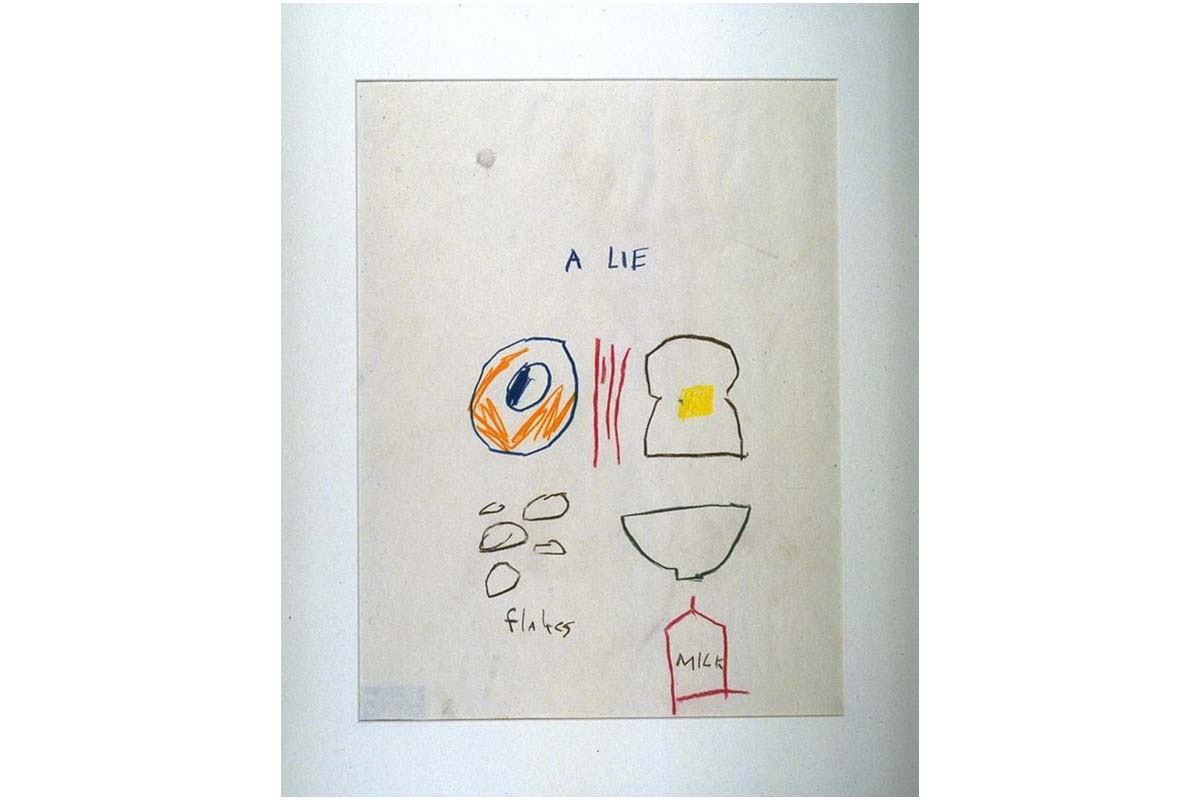
Artwork Title: A Lie
Artist: Jean-Michel Basquiat
1981, colored crayons on paper, 1985/2.18
COMMUNITY COMMENTARY
This piece, made by Jean-Michel Basquiat when he was only 21, is just a crayon drawing of food. Food is a physiological and cultural necessity that everyone participates in and needs. A lot of Jean-Michel Basquiat’s work dealt with social issues he faced as a Black man in America, including criticisms of colonialism and systemic racism. 

Just as Basquiat mentions "a lie" (perhaps told to him by institutions around him), it seems that the more I learn about our food systems the more I feel lied to about where the food comes from and who ultimately benefits or suffers from it. Our challenge today is to transform our grievances caused by the deep problems in our food systems into motivation for communal healing, in developing systems where everyone gets to participate in a way that promotes all-encompassing community and environmental well-being. 

Actively resisting the racist, colonial structures in place in our food systems is difficult work, but it is not lonely work. It is in coming together with friends, neighbors, local organic farmers, and antiracist co-conspirators that we can see the emergence of a society based on cooperation and accountability instead of competition and privilege.

Commentary contributed by:
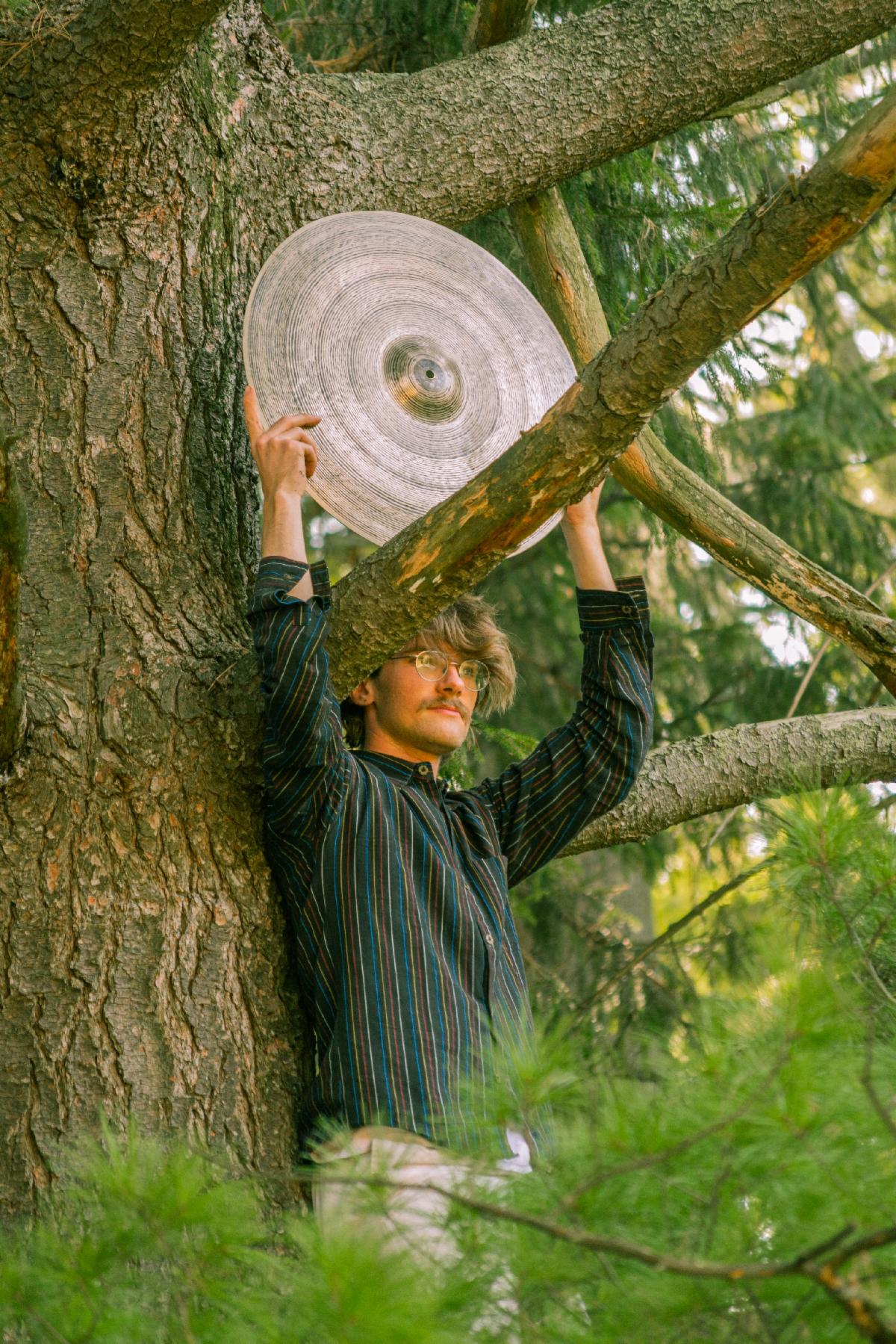
Cameron Wilson
Cameron Wilson seeks to understand different worldly perspectives and tell stories of shared human understanding through his work as a drummer, producer, and inter-disciplinary artist. A native of Augusta, Georgia, Cameron came to the University of Michigan in 2017 to pursue a degree in percussion performance and jazz studies. He is a founding member of Slapslap, America’s favorite post-funk avant-rock performance art quartet comprised of two electric bassoonists and two drummers. As an advocate for environmental justice, he strives to understand and communicate the wisdom of plants and fungi through his work with the UM sustainable food program.

Photo by Daniel Byrd.

Reflection Prompts:
  • Basquiat's drawing prompts us to question basic things we take for granted, like breakfast. How can we be more thoughtful about what we serve to ourselves and our families?
  • When you spend $100 on food, where does the money go?
  • How can my food choices as a consumer be an act of love towards my community and the environment? 
Learn More About the Farm Stand

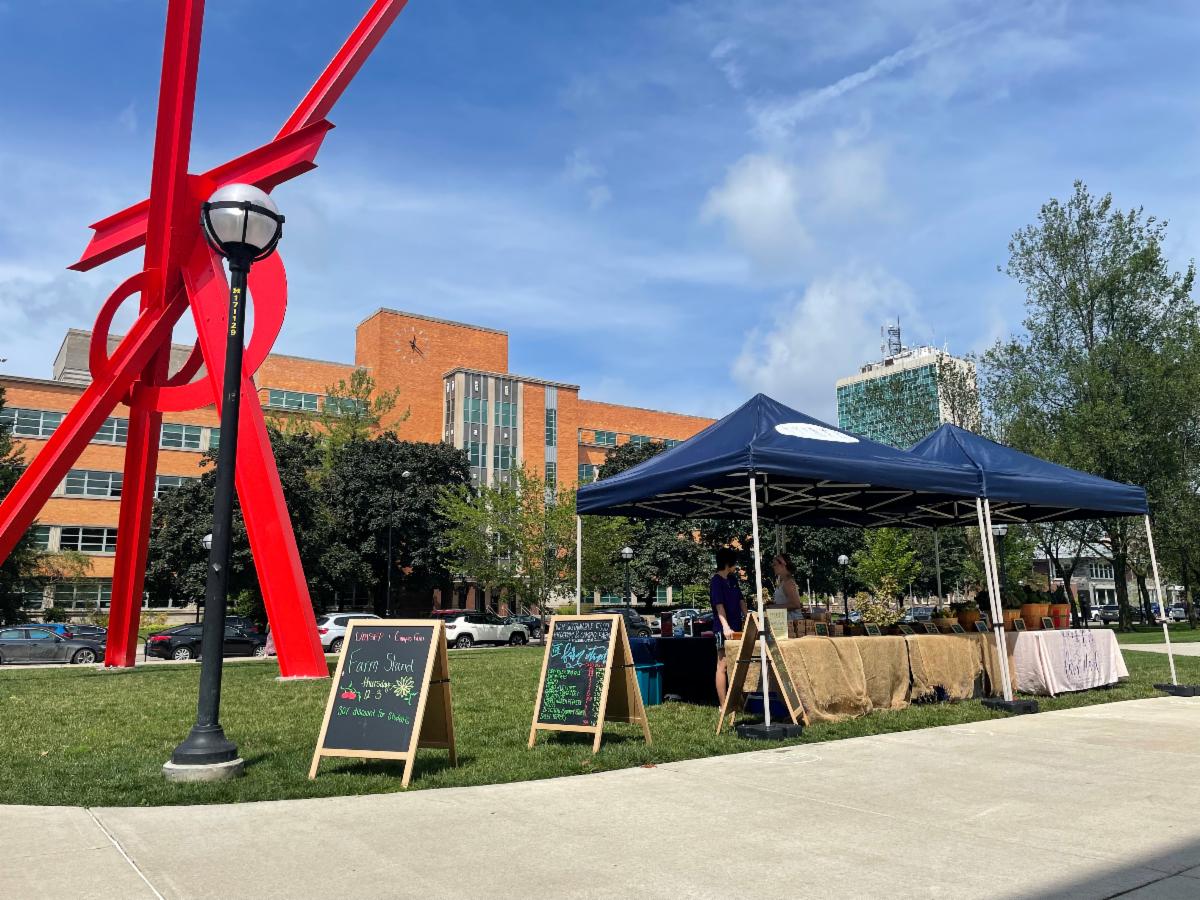
The farm stand, which is located in front of UMMA, is a joint partnership between the UM Sustainability Food Program (Student Life Sustainability) & the Campus Farm (Matthaei Botanical Gardens).

The project seeks to increase access to local food for students and engage the wider U-M community in food systems learning and engagement opportunities. Student shoppers receive a 30% discount, and the proceeds from the Farm Stand go towards funding student-led sustainable food initiatives at U-M through UMSFP’s mini-grants for food justice program. 
Food Literacy for All

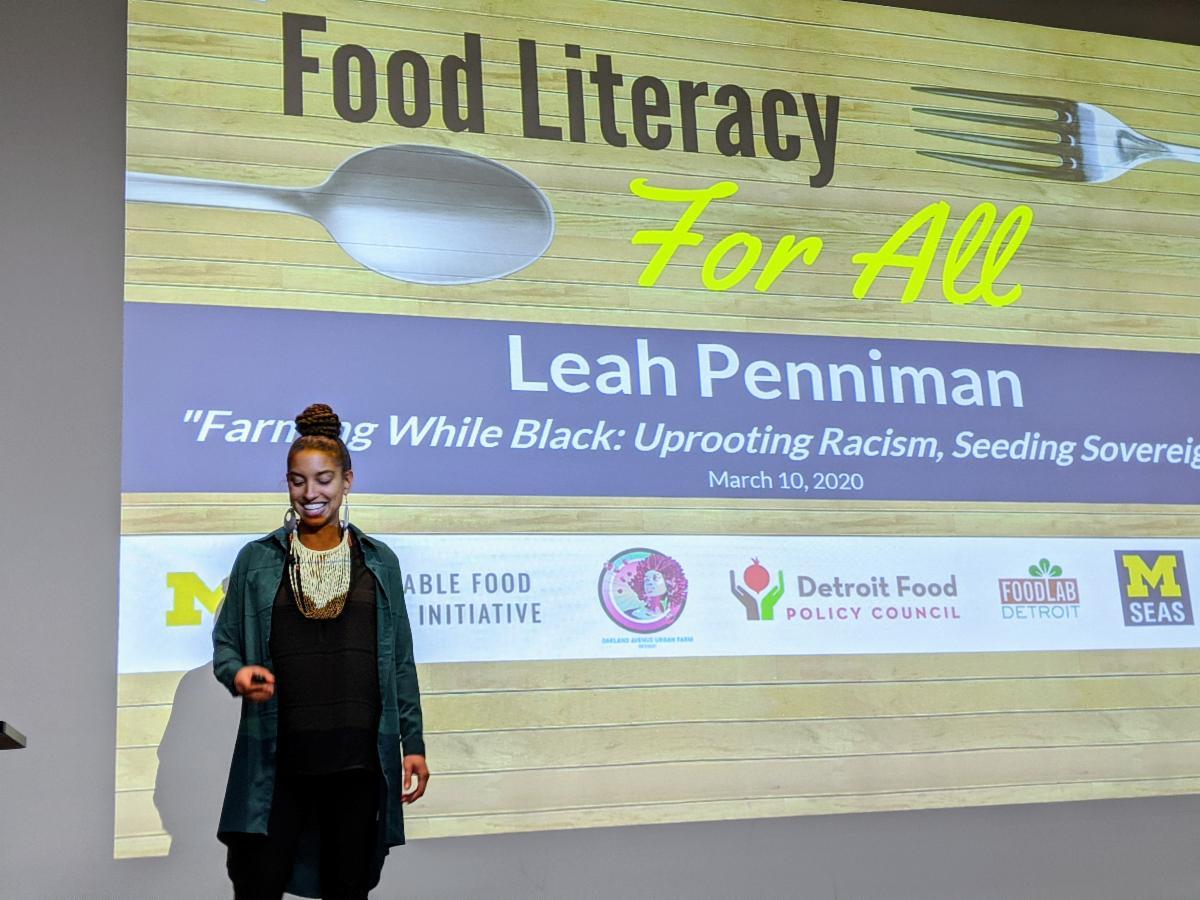
Launched in 2017 by the Sustainable Food Systems Initiative, Food Literacy for All is a community-academic partnership course based at the University of Michigan. Structured as an evening lecture series, Food Literacy for All features different guest speakers each week to address challenges and opportunities of diverse food systems. Over 50 videos of presentations are available for free.
"Detroit Black Farmer Land Fund Launches Second-Year Crowdfunding Campaign"

Rooted, a series from National Public Radio, shares stories about land tending, community healing and regeneration happening right here on the ancestral land of the Indigenous Anishinaabe, the area commonly referred to as Detroit. 

"Now, as Detroit’s post-1950s automotive boom continues to fizzle out, [Jerry Ann] Hebron says the vacant land carries with it an opportunity to reimagine the city in a way that repurposes the land and empowers historically disenfranchised residents. After more than a decade of working in the North End, Hebron says she and others in the community were finally able to demonstrate that growing food, hosting a weekly seasonal farmers market and installing outdoor art and garden infrastructure are viable and legitimate sources of economic viability in Detroit. "
© 2021 UMMA, All rights reserved.