|
|
🇮🇹La Newsletter Italiana
by Sandro 'Sandrino' Cuccia
For Students and Instructors
of the Italian Language
at the
Osher Lifelong Learning Institute
University of Delaware
|
|
8 Interesting Facts about Dante Alighieri
and his Masterwork:
La Divina Commedia [The Divine Comedy]
|
|
BUONDÌ e benvenuti a questo giorno: il 25 marzo!
Oggi è un giorno molto speciale; si chiama DANTEDÌ, ovvero il giorno dedicato al poeta italiano Dante Alighieri, a cui tutti gli italiani del mondo sono davvero affezionati, fin dai tempi del liceo!
[Good Day and welcome to today: the 25th of March! Today is a very special day called Dantedì, that is; the day dedicated to the great Italian poet, Dante Alighieri, loved by all italophiles the world-over. For native Italians, the sentiment is the same from way-back in their high school days when Dante’s most famous literary masterpiece was required reading!]
In case you’ve been in lockdown for way... way too long, Dante Alighieri (simply and lovingly known as ‘Dante’) is the author of “La Divina Commedia” [“The Divine Comedy”, a.k.a. “Dante’s Inferno”].
By the way, have you noticed the word Dantedì?
Leave it to Italians to cleverly meld the name ‘Dante’ with the same endings as the names of the weekdays, making Dantedì look like a member of the weekday club! So, what about that accented ‘dì’? Think of the ‘dì’ endings in weekday names as a short form of the word ‘day’.
All the days of the week – except il sabato [Saturday] and la domenica [Sunday] have an accent on the ‘i’ at the end: lunedì [Monday], martedì [Tuesday], mercoledì [Wednesday], giovedì [Thursday], and venerdì [Friday]. In fact, ‘dì’ is another word for 'day' (of course, normally it’s giorno), and it comes from the latin word diem [by the day].
Here is a simple example: “Un bel dì vedremo.” [Some beautiful day, we'll see.”] In and around Milano and other areas of the northern regions of Italia, the word buondì is used abundantly to mean an informal buongiorno ['good morning’ or ‘good day’].
So… yes, today is Dantedì!
And of course, it’s capitalized because it refers to a proper noun – a person’s name - whereas regular names of the week are not capitalized in Italian.
But don't get me wrong… Dantedì only occurs on March 25.
|
|
Allora… perché proprio oggi, il 25 marzo?
[So… why actually today, March 25th?]
Molti studiosi concordano sul fatto che questa sia proprio la data d’inizio del viaggio di Dante all’Inferno!
[Many scholars agree that this is the start date of Dante's journey in Hell!]
Let's look at some fun facts about the poet… but first…
Facciamoci una PAUSA CAFFÈ!
|
|
Chi è DANTE ALIGHIERI?
Who is Dante Alighieri?
|
|
|
|
Dante Alighieri
Italian poet, writer, philosopher
Born in Firenze in 1265
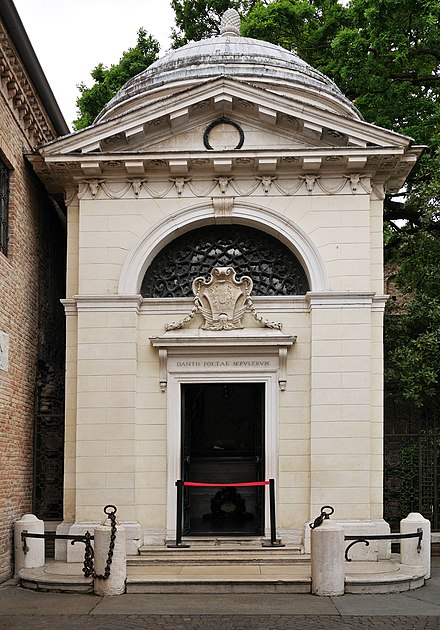
Died and entombed in Ravenna in 1321 (aged 56)
Dante is known for establishing the use of the vernacular in literature at a time when most poetry was written in Latin, which was accessible only to the most educated readers. His use of the Tuscan dialect helped establish the modern-day standardized Italian language. As he was instrumental in establishing the literature of Italy, Dante is known as The Father of the Italian Language.
|
|
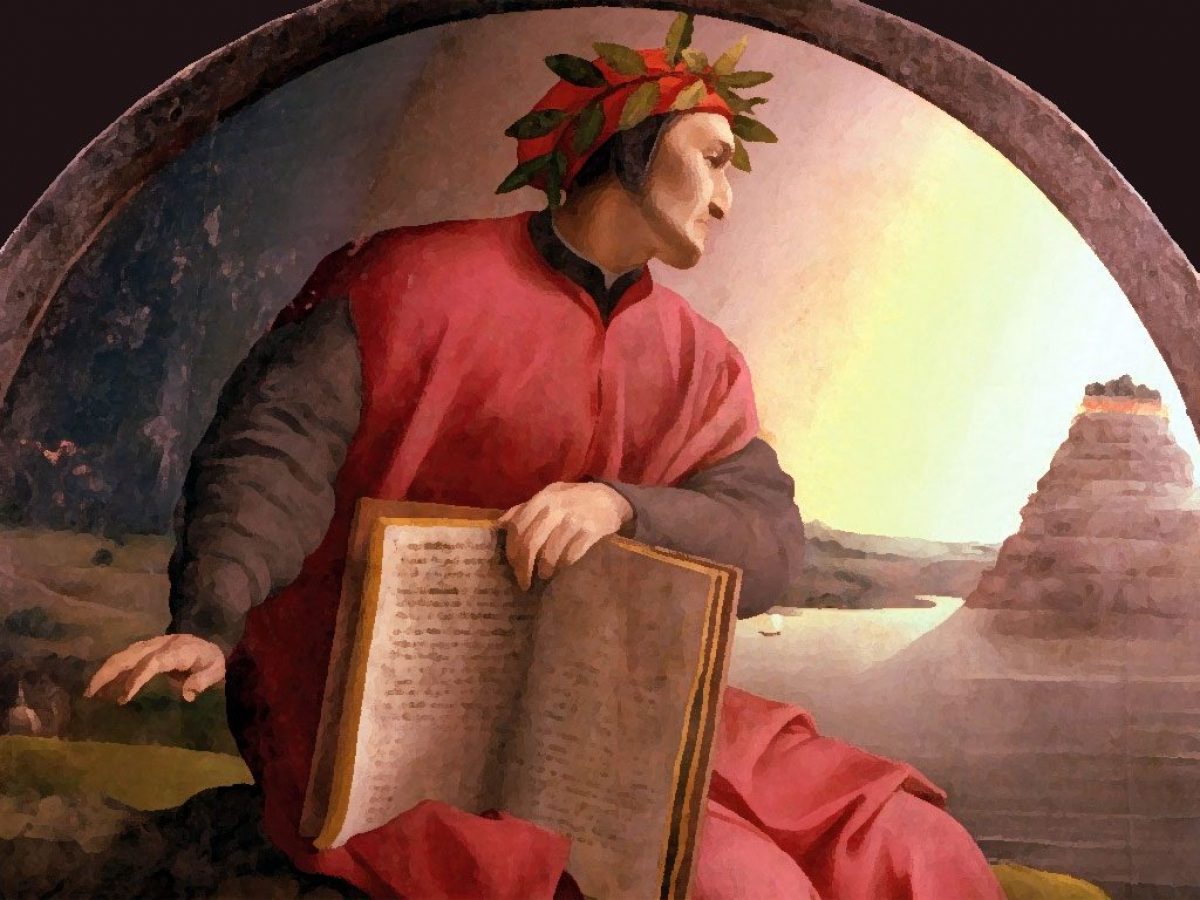
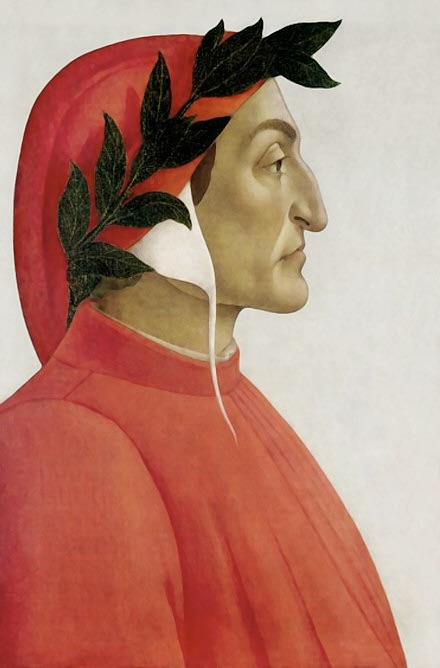
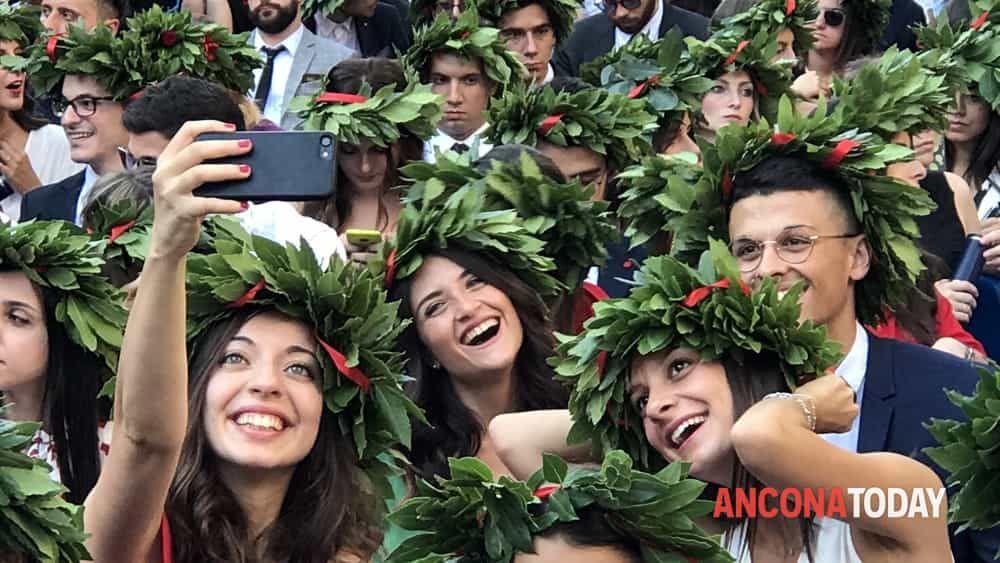
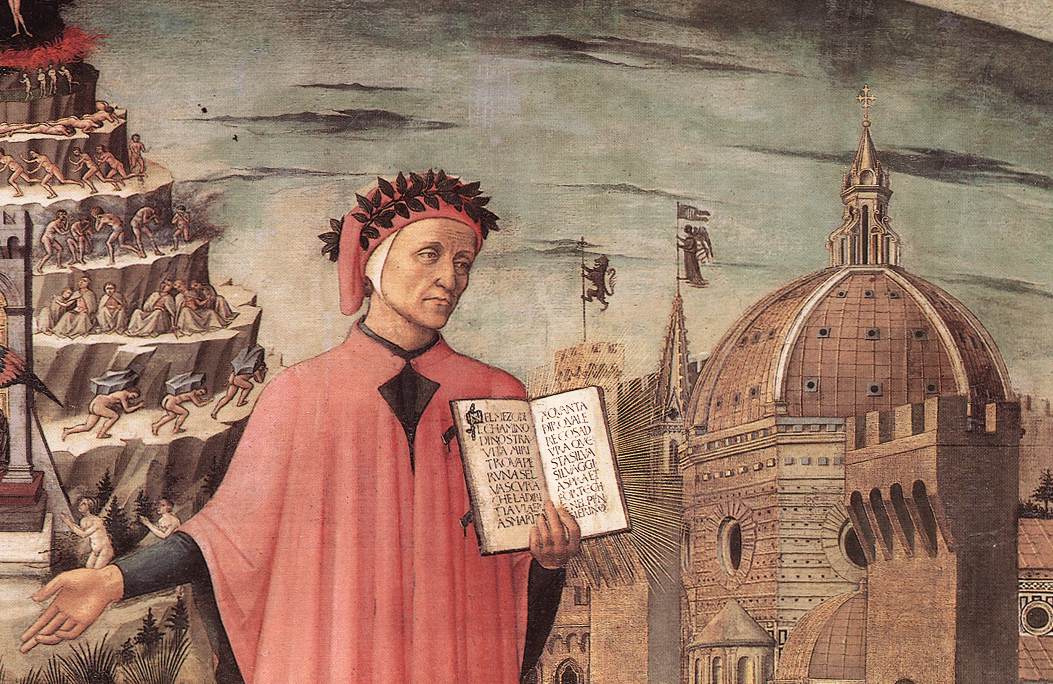
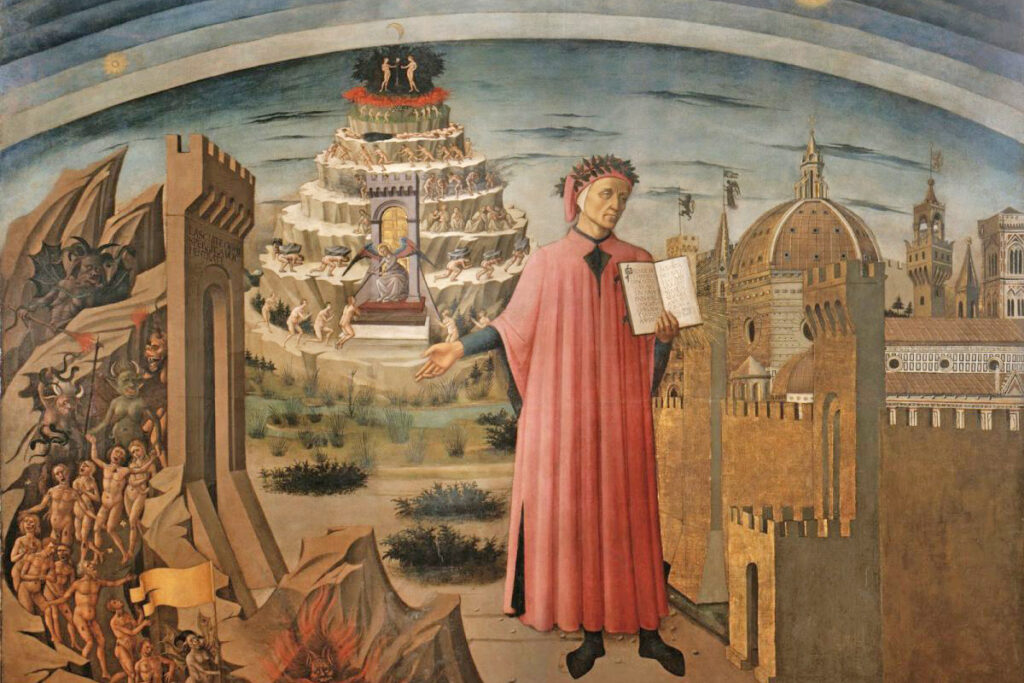
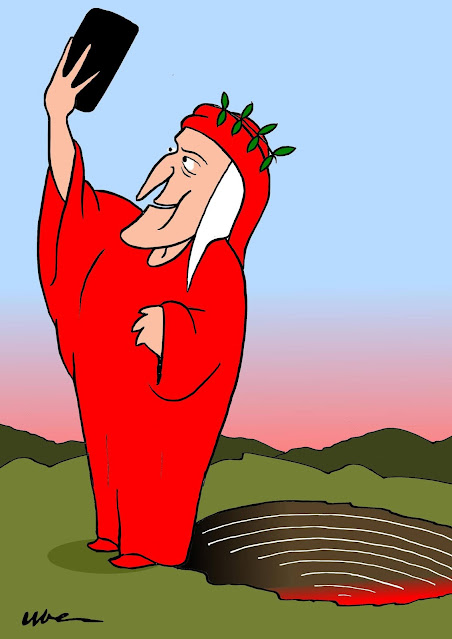
Dante is usually pictured wearing a laurel wreath around his head, a traditional crown for poets that dates back to Ancient Greece. Today, the crown of laurel leaves is synonymous with achievement, and a laureate is one who has bestowed on him or her an award or achievement. In fact, Italian college graduates wear a ceremonial crown of live laurel leaves with red berries plus a gown during their graduation ceremony - equivalent to commencement exercises in the United States. |
|
|
|
LA TOMBA DI
DANTE ALIGHIERI
|
Basilica
di
San Francesco
Ravenna, Emilia-Romagna
|
|
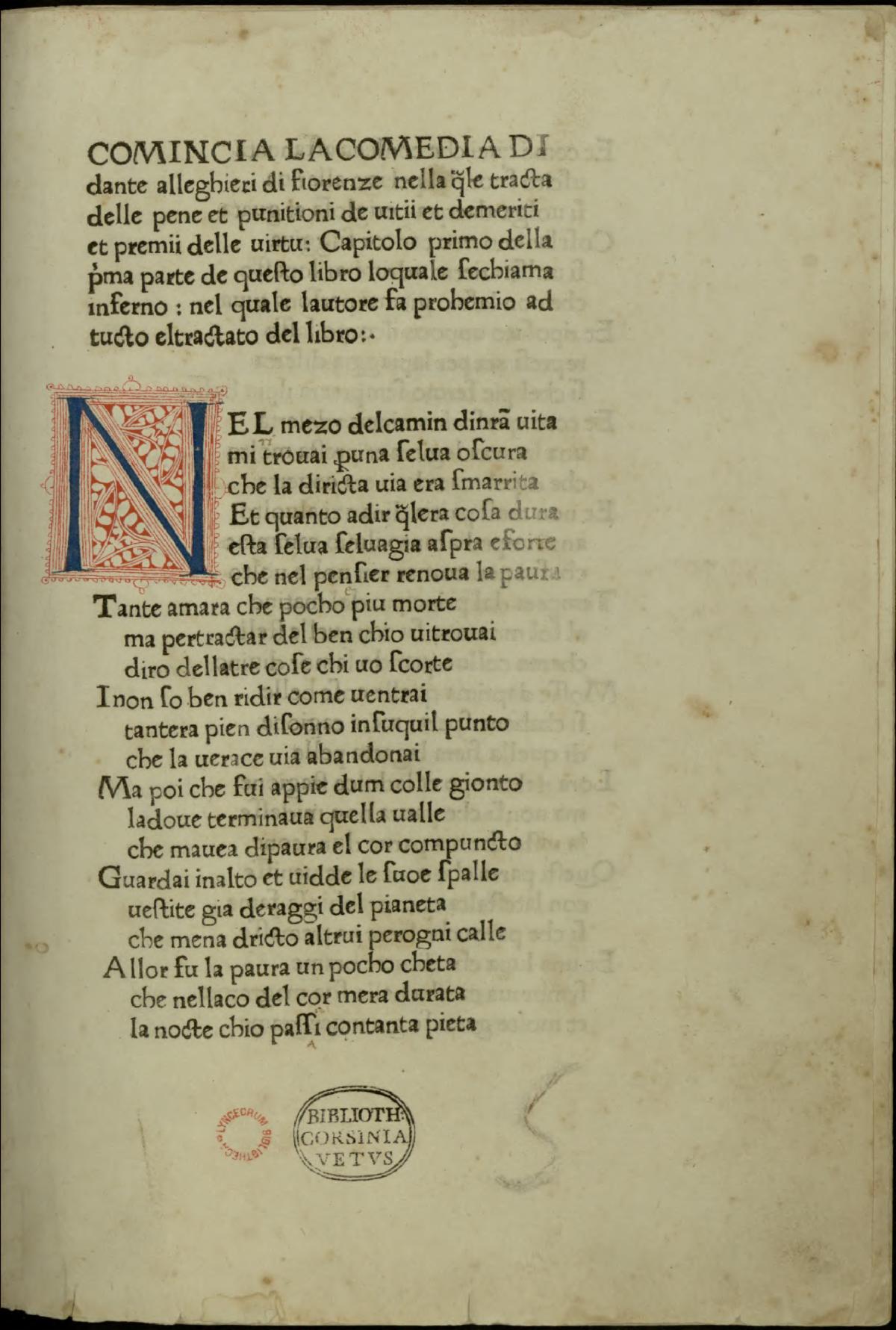
La Divina Commedia was started by Dante in 1308 and was completed in 1320, a year before his death in 1321. It is widely considered the greatest literary work in Italian literature and one of the greatest works of world literature. It is a three-volume ‘narrative poem’ written in Italian rather than Latin. It embraces human individuality and happiness in a way which suggests the beginning of the Renaissance. La Commedia begins with Inferno [Hell] and describes what happens to the souls of the wicked who are condemned to suffer the torments of Hell. |
|
So… what’s this about?
The story takes as its literal subject the state of the soul after death. It presents an image of divine justice dispensed as due punishment - or reward - and describes Dante's travels through Hell, Purgatory, and Paradise (i.e.; Heaven). Allegorically, this work represents the soul's journey towards God, beginning with the recognition and rejection of sin (Inferno), followed by the penitent Christian life (Purgatorio), which is then followed by the soul's ascent to God (Paradiso).
How ‘big’ is La Divina Commedia?
The Barnes & Noble Signature Classics Series version of The Divine Comedy is 256 pages. The classic Italian version is composed of 134,850 words – 14,233 lines – and is divided into three ‘canticles’ (i.e.; parts, volumes, books) – Inferno, Purgatorio, and Paradiso. Each of these consist of 33 ‘canti’ [cantos] . There are 100 cantos in the work.
I read that the average reader will spend 6 hours and 24 minutes reading this book at 250 words-per-minute. However, I might add that, as with many ancient literary works, the Italian can be a bit arcane and tough to understand in some cases; that time-to-read number might just to be a bit understated. It should also be noted that much of the narrative is in the Tuscan dialect.
What do you think? ... A great summer reading activity for my students of Italian???
Purtroppo, il caffè è finito! 😥Ritorniamo a finire di leggere questo articolo affascinante...
[Unfortunately, there is no more coffee! 😥 Let's go back to finish reading this fascinating article...]
|
|
Eight Curious Facts about
Alighieri and La Divina Commedia
|
|
Numero Uno
Tutti sanno bene che la donna amata da Dante era Beatrice, però il poeta aveva una moglie chiamata Gemma Donati - sposati intorno al 1285 - da cui ha sicuramente avuto tre figli (Pietro, Iacopo e Antonia - che diventa suora con il nome di Beatrice) e forse altri due, Giovanni e Gabriello.
[Everyone knows that Dante's lover was Beatrice, but the poet had a wife called Gemma Donati, whom he married around 1285. It is well understood that they had three children, Pietro, Jacopo and Antonia, the latter of which, interestingly, became a nun with the name Beatrice). Perhaps there were two others, Giovanni and Gabriello. This is unclear.]
|
|
Numero Due
Dante era del segno dei Gemelli, come lui stesso ci fa notare nel Canto XXII del Paradiso - “il ventiduesimo Canto del Paradiso”.
[Dante's zodiac sign was Gemini, as he himself tells us in his book in the twenty-second Canto del Paradiso.]
|
|
Numero Tre
Molti studiosi suppongono che Dante soffriva di epilessia, gli episodi di svenimento che racconta nella Commedia Divina; forse ispirati alla sua condizione.
[Many scholars assume that Dante suffered from epilepsy, the episodes of fainting that he tells of in The Divine Comedy were likely inspired by his own condition.]
|
|
Numero Quattro
Secondo dei manoscritti antichi, il titolo originale della Divina Commedia era solamente 'Commedia', alternato alla forma 'Comedia'. Il titolo La Divina Commedia si attesta solo a partire dalle edizioni settecentesche dell’opera.
[According to ancient manuscripts, the original title of La Divina Commedia was just 'Commedia', alternating with the form 'Comedia' (containing one ‘m’). It was only in the 18th century editions of the work that the title La Divina Commedia was confirmed.]
|
|
Numero Cinque
Sapete qual è il sostantivo più frequente nella Commedia?
La parola,'occhio’. Non è solo una parte fondamentale del corpo umano, su cui Dante fa affidamento per tutto il suo viaggio, ci dice infatti di vedere tutto quello che racconta. L’occhio diventa quindi il simbolo della visione, del resto tutta l’esperienza raccontata nell’opera è una visione.
[Did you know what the most frequently used noun is in the Divine Comedy? The word, ‘eye’. It is not only a fundamental part of the human body, upon which Dante relies on during his entire journey, but in fact, he tells us to 'see' everything which he speaks of in the story. The eye therefore becomes the symbol of vision as, after all, the experiences related in this literary work are indeed a 'vision'.]
|
|
Numero Sei
Le tre cantiche terminano tutte con il sostantivo 'stelle'. Le stelle simboleggiano la meta del viaggio di Dante, arrivare al Cielo, quindi alla rettitudine morale.
[The three canticles all end with the noun ‘star’. The stars symbolize the destination or aim of Dante's journey; to arrive to Heaven, thus to arrive at moral integrity.]
|
|
Numero Sette
Non si può evitare di menzionare una curiosità legata alla lingua di Dante! Gli italiani dicono sempre che Dante è "il padre della lingua italiana." Ma perché? Perché otto parole su dieci di quelle che Dante utilizza nella Divina Commedia sono arrivate agli italiani. In fatti, oggi si usa circa l’80% (l’ottanta percento) della lingua usata ai tempi di Dante! A rivelarcelo è stato il linguista Tullio de Mauro, capo del progetto per la redazione del "Grande Dizionario Italiano dell’uso".
[A curious fact tied to the ‘language of Dante’ cannot be ignored. It is always said that Dante is "the father of the Italian language." Why is this? Because eight out of ten words that Dante uses in the days of, and within La Divina Commedia are actively used today. Italians use around 80% of the language used in Dante's time! This was revealed by the linguist Tullio de Mauro, project head for the writing of the “Grande Dizionario Italiano dell’uso” [“Great Dictionary of Italian Usage”].
➜ Incidentally, Amazon has an edition in paperback available for $2,169.24 … I just checked! Saving up those pennies!!>
|
|
Numero Otto
La locuzione “Il Bel Paese” – per riferirsi all’Italia – è stata ‘inventata’ da Dante. La troviamo nel Canto XXXIII dell’Inferno, "Del bel paese là dove ’l sì sona." (il bel Paese dove il sì risuona), ossia... "l’Italia dove si parla la lingua italiana."
[The phrase, "Il Bel Paese", – "The Beautiful Country" used to refer to Italia (and which, along with "La Bella Lingua", I use often in my course descriptions), was coined by Dante himself, where we can find it in Canto XXXIII of the Inferno: “Del bel paese là dove 'l sì sona" (the beautiful country where "yes" is sì), i.e.; "Italy, where the Italian language is spoken."
|
|
Per festeggiare questa giornata di Dantedì, invito ai miei lettori e studenti d’italiano a scoprire qualcosa in più sulla Divina Commedia e magari leggere solo una parte, anche se solamente le parole iniziali del testo: "Nel mezzo del cammin di nostra vita, mi ritrovai per una selva oscura, che la diritta via era smarrita."
[To celebrate this day of Dantedì, I invite my readers and students of Italian to discover something more about La Divina Commedia, and perhaps to read a part of it, even if only the opening words: "When half way through the journey of life, I found myself in a gloomy forest, because the correct path was lost.”]
|
|
Bene! Siamo arrivati alla fine di un'altro articolo che ci insegna qualcosa della cultura italiana, e di Dante!
[Well! We've arrived at the end of another article that teaches us something about Italian culture and about Dante!]
Before we say arrivederci al prossimo numero della nostra
🇮🇹Newsletter Italiana... here are some interesting links for you where you can find out more about Dante Alighieri and La Divina Commedia:
|
|
Allora... arrivederci al prossimo numero della nostra bellissima 🇮🇹Newsletter Italiana!
[So...we'll see each other again in the next issue of our beautiful 🇮🇹Newsletter Italiana!]
Per adesso, vi do un caloroso CIAO-CIAO!
|
|
🇮🇹La Newsletter Italiana
is written and published by
Sandro "Sandrino" Cuccia
sandrino@hey.com
|
|
|
|
|
|
|