|
Dear Friends,
We are taking many exciting steps to enhance the local and global impact of our science, and I want to take a moment to share a few examples with you in addition to the news you’ll find below.
We are moving into the field of neuroimmunology, leveraging our strengths in both neuroscience and immunobiology to better understand how our nervous system helps direct immune responses and how, in turn, infection and inflammation shape our nervous systems.
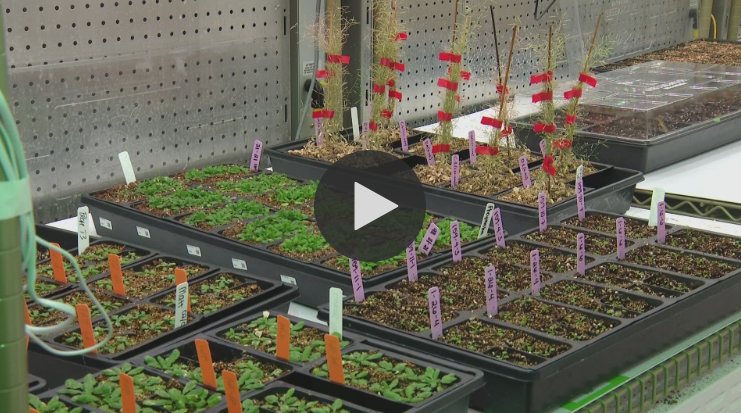
In the area of plant biology, Salk spin-out company Cquesta was launched recently to scale up the production of Salk Ideal Plants® and bring these climate change-fighting crops to farms in the US and elsewhere.
Underlying these and other scientific activities at Salk, we are enhancing our biocomputational capabilities, including investments in artificial intelligence and machine learning, to help tackle currently unaddressed scientific questions and to open fundamentally new areas of scientific inquiry.
We are fortunate to have a passionate community of scientists and staff driving this work, as well as supporters such as you. Thank you.
Warmest regards,
| |
|
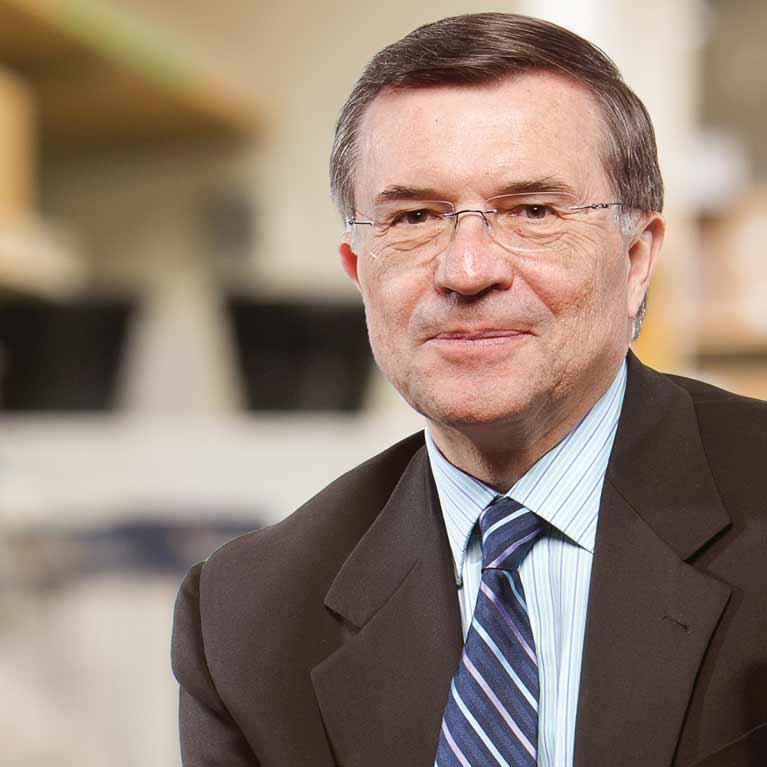
Gerald Joyce
Salk Institute President
| |
Modeling the origins of life: New evidence for an “RNA World” | |
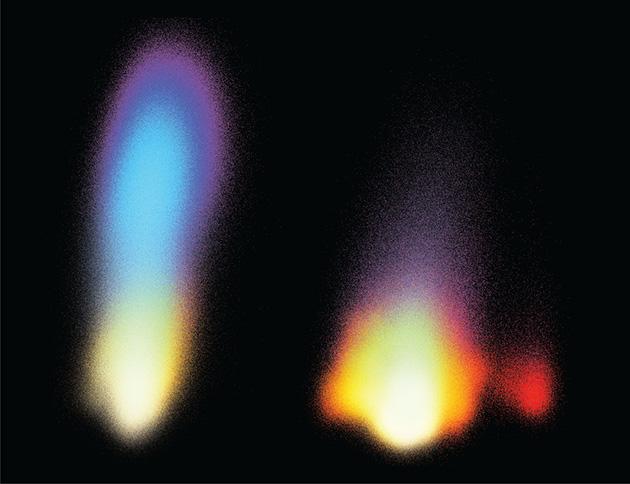
Scientists in the 1960s, including Salk Fellow Leslie Orgel, proposed that life began with the “RNA World,” a hypothetical era in which small, stringy RNA molecules ruled the early Earth and established the dynamics of Darwinian evolution. New research from Salk President Gerald Joyce and team now provides fresh insights on the origins of life, presenting compelling evidence supporting the RNA World hypothesis. The researchers found an RNA enzyme that can make accurate copies of other functional RNA strands, while also allowing new variants of the molecule to emerge over time. These remarkable capabilities suggest the earliest forms of evolution may have occurred on a molecular scale in RNA. The findings also bring scientists one step closer to re-creating RNA-based life in the laboratory. By modeling these primitive environments in the lab, scientists can directly test hypotheses about how life may have started on Earth, or even other planets. | |
More than just neurons: A new model for studying human brain inflammation | |
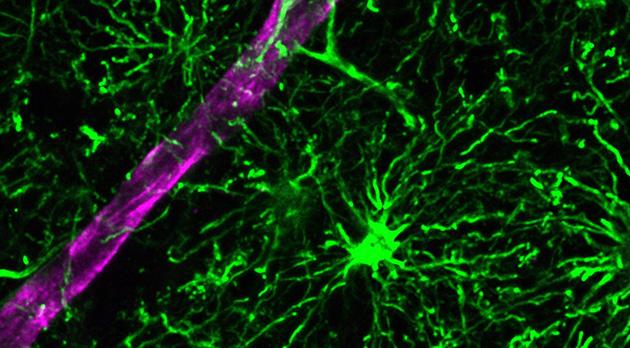
Neurons make up only half of the human brain, while the other half—roughly 85 billion cells—are non-neuronal cells called glia. The most common type of glial cells are astrocytes, yet most existing laboratory models of the human brain fail to include astrocytes at sufficient levels or at all, limiting the models’ utility for studying brain health and disease. Now, Professor Rusty Gage and team have created a novel organoid model of the human brain (a three-dimensional collection of cells that mimics features of human tissues) that contains mature, functional astrocytes. With this astrocyte-rich model, researchers will be able to study inflammation and stress in aging and diseases like Alzheimer’s with greater clarity and depth than ever before. Already, the researchers have used the model to reveal a relationship between astrocyte dysfunction and inflammation, as well as a potentially druggable target for disrupting that relationship. | |
A step towards clinic-ready patient-derived organoids | |
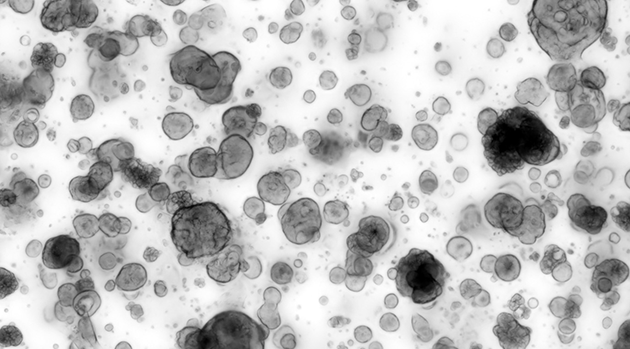
Pancreatic cancer has the highest mortality rate of all major cancers and is projected to become the second-leading cause of cancer-related deaths in the United States by 2030, but patient-derived organoids may help change those statistics. Patient-derived organoids are created by obtaining small tissue samples from patient biopsies and using them to grow three-dimensional cell cultures in the lab, where they act as miniature models of the patient’s pancreatic tumor. The organoids can be used to test various drugs and evaluate which cancer treatments might work best. A recent study by Assistant Professor Dannielle Engle and team confirmed that organoids’ gene expression and drug responses are consistent regardless of which brand of commercial extracellular matrix is used in the cell culture. The findings suggest that patient-derived organoids are a robust clinical assay for pancreatic cancer treatments and raise confidence in clinical trials using this tool. | | |
|
Support High-Impact Science
Salk’s life-changing discoveries are not made by scientists alone. Only with the help of our supporters can we empower our globally renowned researchers, harness cutting-edge technology, and fuel bold initiatives to tackle some of the most challenging problems of our time.
| | |
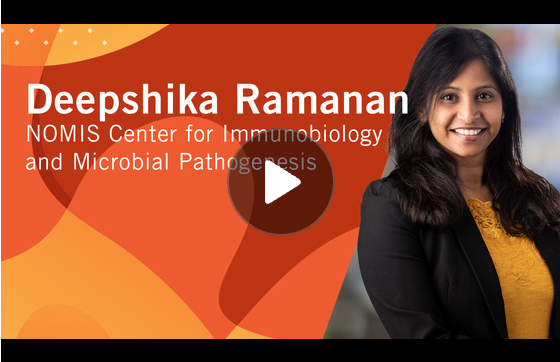
In our new monthly video series “From Then to When,” we bring you the unique stories of Salk researchers, from their personal journeys into science to their motivations and goals for the future. | |
|
“We spent a lot of time in the wild, taking pictures but also just exploring all of the beautiful jungles in Southern India,” recalls Ramanan. “The biggest thing we always wanted to see was a tiger…we really wanted to see all of these different wild animals. And that is sort of what piqued my interest in biology and in science.”
Always a self-proclaimed nerd, by the sixth grade, Ramanan had committed to a lifetime of science. She moved from India to the United States and started studying microbiota in iguana poop, which sparked a broader interest in gut microbiomes and gut-resident immune cells. Now an assistant professor at Salk, Ramanan looks at how breast milk transfers microbiota and immune cell populations intergenerationally.
| |
Salk's new podcast Beyond Lab Walls | |
Join hosts Isabella Davis and Nicole Mlynaryk on a journey behind the scenes at the Salk Institute, delving into the captivating realms of neuroscience, plant biology, cancer research, and more. The Institute’s new podcast immerses listeners in the fascinating world of science while showcasing the brilliant minds and dedicated staff who drive its discoveries. | | |
|
This month’s episode of Beyond Lab Walls features Pamela Maher, a research professor who looks at how natural derivatives of plants can be utilized to promote healthy aging and stop or slow neurodegenerative diseases like Alzheimer’s. | |
Find us on Spotify, Apple Podcasts, or wherever you listen. | |
Our talented faculty are what make Salk’s impressive discoveries possible. To learn more about these faculty members, visit Salk Streaming’s “From Then to When” faculty profile video series. Uncover what inspires and excites scientists studying climate change, cancer biology, immune cells, and more through first-hand accounts by our world-renowned faculty. | |
Salk Streaming is the Salk Institute’s new media channel, which—in addition to “From Then to When” videos—hosts lecture recordings, podcast episodes, scientific discovery explainers, and many more videos to keep you excited and informed about today’s frontiers of science. | |
Inside Salk | spring edition is landing in mailboxes soon! | | |
|
Sign up for our mailing list to receive Inside Salk Spring 2024 as soon as it’s released. 2024 has been declared Salk’s “Year of Healthy Aging”—and this upcoming edition of Inside Salk reflects the progress and plans Salk scientists have made in aging research. We feature faculty studying cell aging, heart health, and diseases like Alzheimer’s to see what they’ve discovered so far and what lies ahead. We also share captivating stories from faculty, postdoctoral researchers, and staff members, and celebrate recent discoveries, awards, and events on campus. Read Inside Salk Winter 2023 online or join our mailing list to receive print editions and get Inside Salk Spring 2024 as soon as it’s released. | |
|
Nature
Roger Guillemin (1924-2024), neuroscientist who showed how the brain controls hormones
| |
Read article »
Features Distinguished Professor Emeritus Roger Guillemin
| |  |
|
Science
Why are all proteins “left-handed”? New theory could solve origin of life mystery
| |
Read article »
Features Salk President Gerald Joyce
| | |
|
KPBS
Have scientists at Salk Institute discovered a birth control pill for men?
| |
Read article »
Features Professor Ronald Evans
| | |
|
Scientific American
The cognitive neuroscientist who helped unravel the mysteries of language
| |
Read article »
Features Distinguished Professor Emerita Ursula Bellugi
| | |
|
The New York Times
Is intermittent fasting bad for your heart? Here’s what we know.
| |
Read article »
Features Professor Satchin Panda
| | |
|
The Franklin Institute
Announcing the 2023 Franklin Institute Awards Laureates
| |
View video »
Features Professor Joanne Chory
| | |
|
CBS8
New data could help understand plants' resiliency against climate change
View video »
Features Professor Wolfgang Busch
| |
Salk Professor Terrence Sejnowski wins Brain Prize | | |
|
|
Sejnowski will receive the 2024 Brain Prize from the Lundbeck Foundation for “pioneering the field of computational and theoretical neuroscience, making seminal contributions to our understanding of the brain, and paving the way for the development of brain-inspired artificial intelligence.” Sejnowski shares the prize—the world’s top recognition in neuroscience, totaling 10 million DKK (approximately $1.5 million)—with Larry Abbott of Columbia University and Haim Sompolinsky of Harvard University and Hebrew University. They will receive the award from His Royal Highness King Frederik of Denmark at an event in Copenhagen on May 30, 2024.
Read more »
| |
Team of San Diego scientists earns Chan Zuckerberg Initiative grant | | |
|
Salk Professor Christian Metallo, in a collaborative project with UC San Diego and Scripps researchers, was awarded a $3.5 million Chan Zuckerberg Initiative (CZI) Exploratory Cell Network Grant. The team will study RNA and protein interactions and their influence on nucleic acid metabolism. The project will contribute to CZI’s mission to “cure, prevent, or manage all diseases by the end of the 21st century.” | |
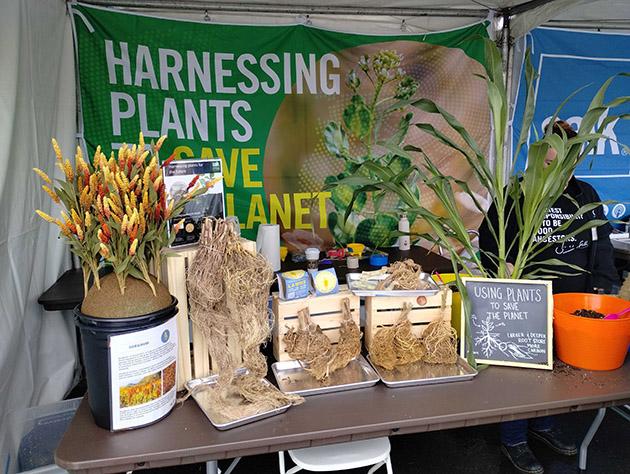
March 2: Harnessing Plants Initiative at Expo Day at Snapdragon Stadium | |
Salk joined the biggest companies in science and technology at this year's Expo Day. At the booth, families could plant a corn, wheat, or pea seed while learning more about the Harnessing Plants Initiative. | |
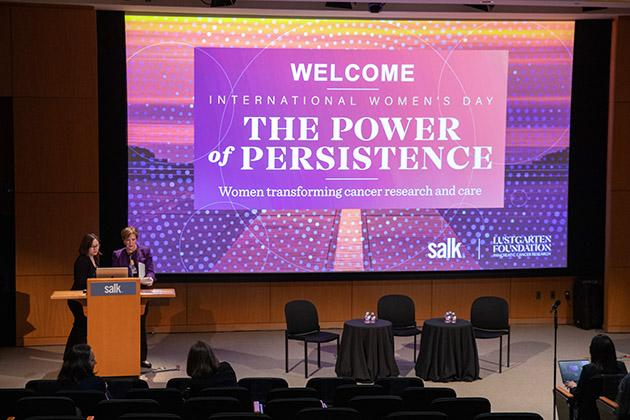
March 12: The Power of Persistence: Women transforming cancer research and care | |
For International Women’s Day, Salk celebrated with an on-campus symposium dedicated to the collaborative spirit and exchange of ideas that enable continual advancement of cancer research and care. The event was hosted by Salk and the Lustgarten Foundation. | | |
|
Your support powers groundbreaking research, and the people who bring it to life. | |
Enjoy Salk science on your devices | |
|
Looking for a unique background image for your computer, Zoom meeting, iPad, phone, or watch?
Twice a year, the Salk Institute experiences Salkhenge, when, on the spring and fall equinoxes, the sun sets in alignment with campus’ “River of Life,” a water feature meant to symbolize the constant trickle of discoveries spilling into a greater body of knowledge.
| |
About this newsletter
Salk’s email newsletter is published monthly with updates on recent scientific publications, media coverage, awards, grants, events, and other timely information for Salk supporters and science enthusiasts.
| | | | |