|
42% OFF
your entire purchase
|
|
|
Be sure to enter code
RFK83689M8 at checkout to save!
| | | | |
|
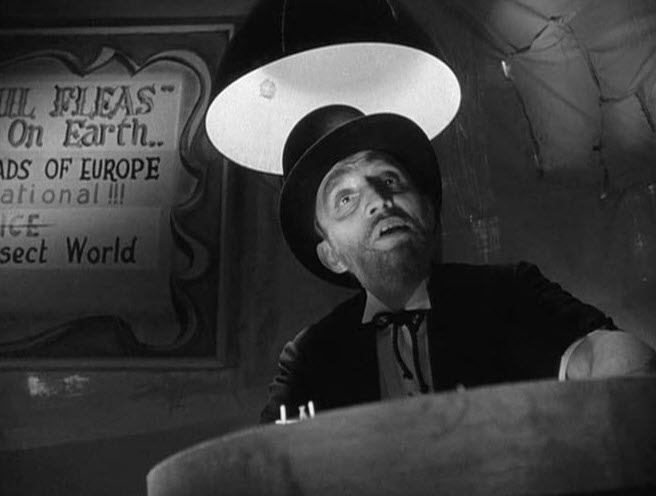
Also known as Mr. Arkadin, this flawed late effort by director Orson Welles recalls the structure of Citizen Kane, centering around an investigation into the past of a powerful millionaire. This time around, however, the millionaire is very much alive; in fact, it is Gregory Arkadin (Welles) himself who orders the inquiry, claiming to suffer from amnesia. The investigator soon gets a taste of the difficulty of his task, however, when several witnesses to Arkadin's past suspiciously turn up dead. Indeed, the closer he comes to the truth about Arkadin, the more he fears that he himself may be the next victim. While it aspires to intense suspense, Confidential Report suffers more than most of Welles' films from budgetary limitations and erratic shooting habits, with the final result often seeming choppy and needlessly confusing. Nevertheless, any Welles effort is by definition at least partially worthwhile, if only for further demonstration of his brilliant visual sensibility. | |
| |
|
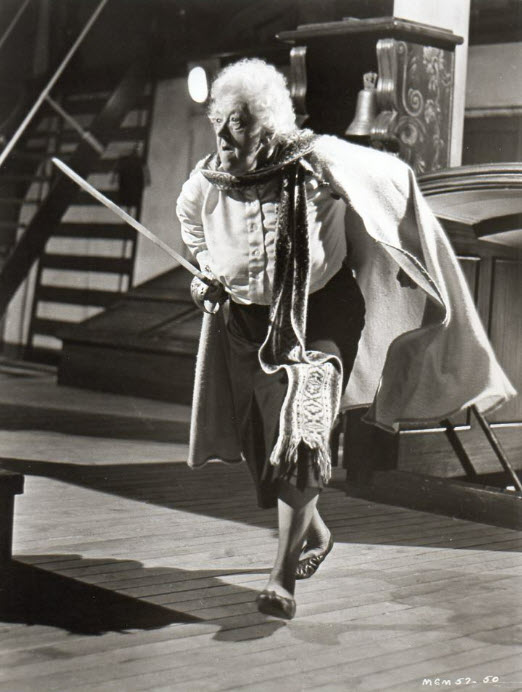
The last of Margaret Rutherford's "Miss Marple" films, Murder Ahoy is the only one of the series not based on an Agatha Christie original. The setting this time is a boat that has been purchased by a trusteeship to serve as a home for wayward kids. One of the trustees, Cecil Ffolly-Hardwicke (Henry Longhurst), dies while attending a meeting held aboard the boat. The police write the death off as "natural causes," but another trustee, our Miss Marple (Rutherford), suspects otherwise. Doing a little sleuthing on her own, she discovers that outwardly respectable Lionel Jeffries is using the boat as a "training school" for aspiring criminals, a la Fagin. This would seem to explain why Hardwicke was murdered, but Jeffries is much too obvious a suspect--as Miss Marple discovers nearly too late. Margaret Rutherford's husband Stringer Davis is back again as Miss Marple's platonic middle-aged friend Mr. Stringer. | |
| |
|
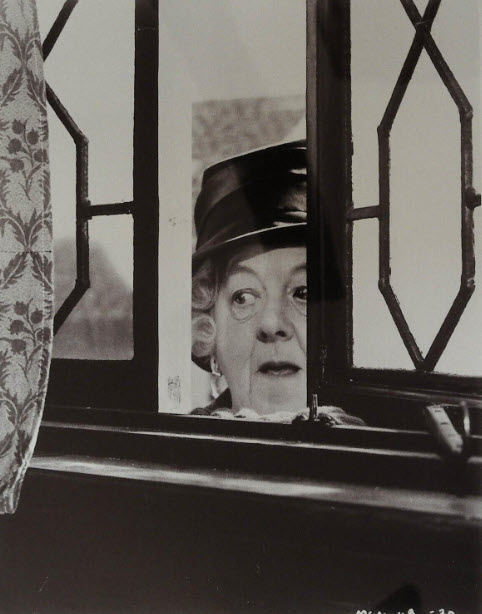
Murder At The Gallop (1963) | This is one of a series of competent murder mysteries directed by George Pollock based on the Agatha Christie character, Miss Marple. Margaret Rutherford stars as the grey-haired, wily sleuth who will not give up until all the pieces of a puzzle have been neatly put in place. This time around, an old village recluse is found dead and everyone except Miss Marple believes he had a heart attack. She is suspicious because four members of the dead man's family stand to benefit from his death, especially when a highly valuable painting is added into the kitty. As she follows her instincts and logic, a few more murders eliminate the same number of suspects, and Miss Marple is compelled to lend haste to her investigation before someone else turns up dead. | |
| |
|
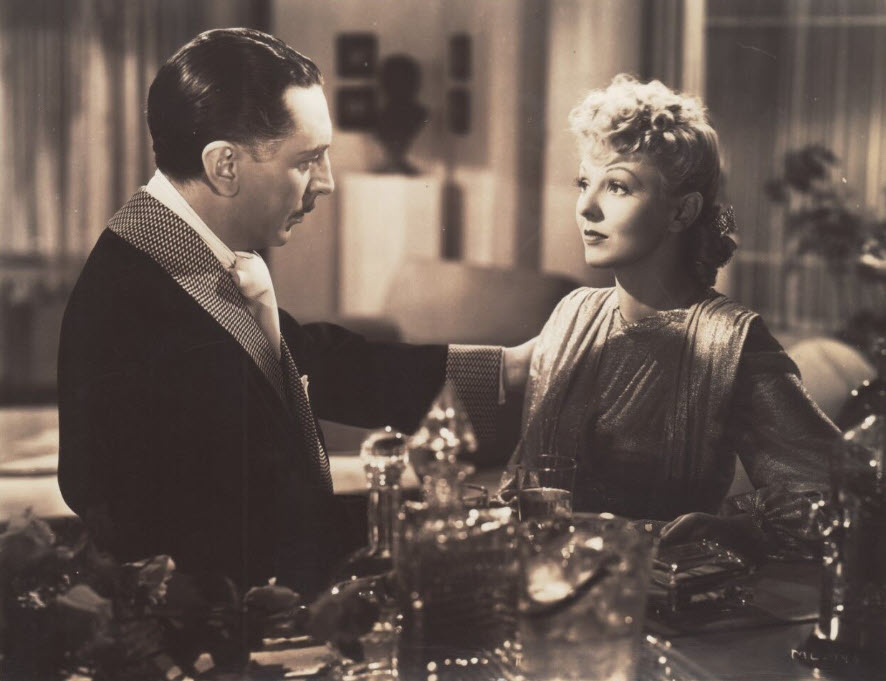
My Life With Caroline (1941) | My Life with Caroline is a dizzy boy-chases-girl affair with a twist: the girl being chased is the boy's own wife. Wealthy publisher Anthony (Ronald Colman) weds dizzy socialite Caroline (Anna Lee, in her first Hollywood film), who sees nothing wrong with seeking out new boyfriends even after her marriage. Caroline thoughtfully informs Anthony that she can't make up her mind between De Valle (Gilbert Roland) and Paul (Reginald Gardiner), obliging Anthony to work overtime to win his wife back. The film is cleverly framed in a flashback, with Anthony's voiceover narration providing the audience information on a "need to know" basis. Based on the French stage farce Train for Venice, My Life With Caroline was co-produced by Ronald Colman and William Hawks (Howard's brother). | |
| |
|
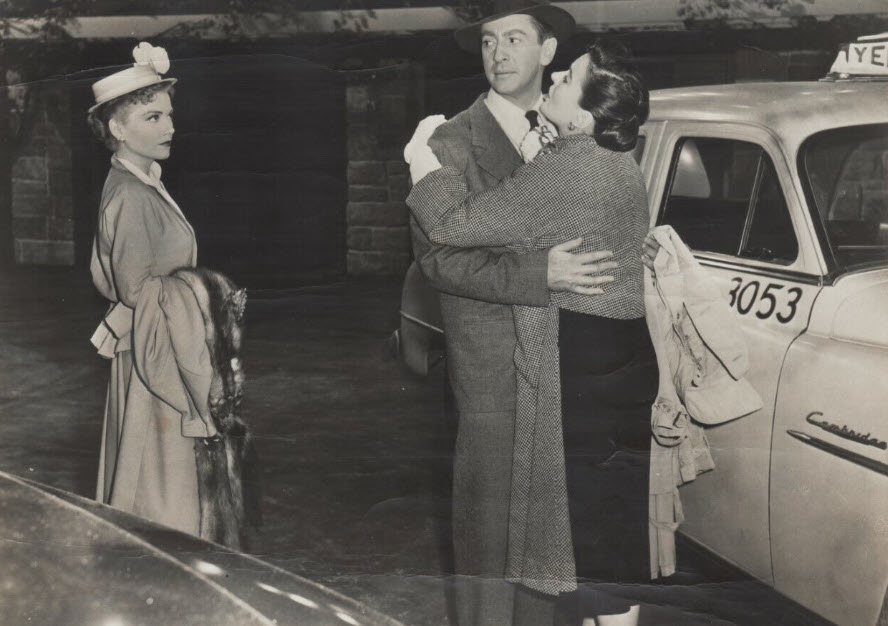
My Wife's Best Friend (1952) | This 20th Century-Fox programmer stars Anne Baxter and Macdonald Carey as husband and wife, both passengers on an airliner. When the plane develops serious engine trouble, it looks like the end for everyone on board. Certain that he's facing an imminent demise, Carey confesses to Baxter that he's had an affair with her best friend (Catherine McLeod). Baxter mulls over several potential revenges in her mind, casting herself as various famous women of history. The plane lands safely, at which time Baxter learns that the "affair" was nothing more than a discreet flirtation. So much for the 87-minute shaggy dog story which calls itself My Wife's Best Friend. | |
| |
|
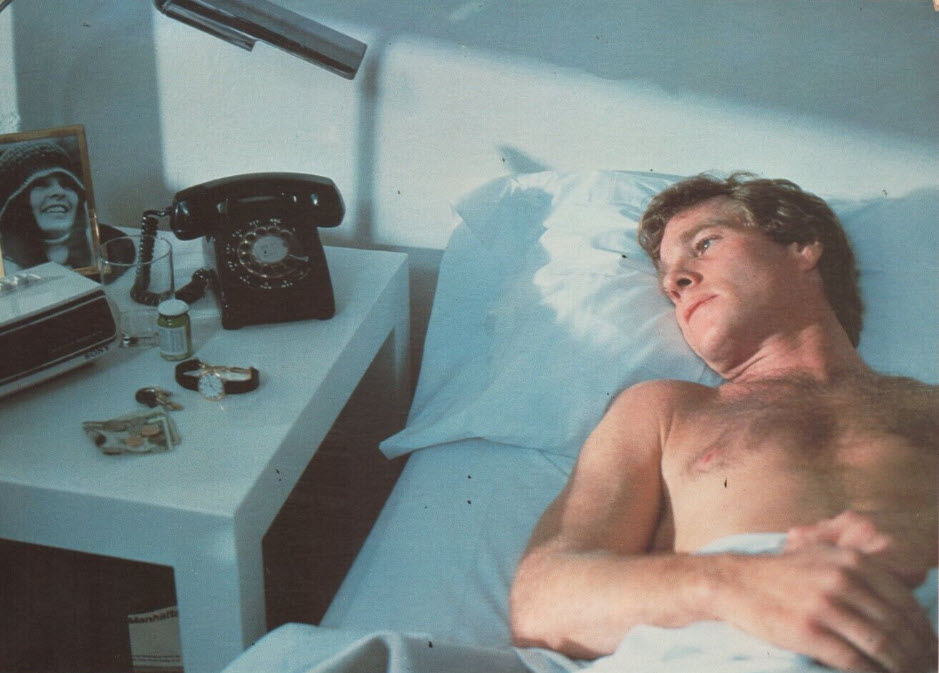
Get ready for another dose of love and loss in this sequel to the four-handkerchief classic Love Story (1970). Oliver Barrett (Ryan O'Neal) is emotionally devastated after the death of his wife Jenny, and while he tries to lose himself in his work as a lawyer, the long hours don't ease his pain, especially when he finds that his leftist views conflict with those of the senior partners at the firm. Eventually, Oliver's inconsolable grief begins to alienate those around him, until he finds new love with Marcie Bonwit (Candice Bergen), the wealthy and beautiful heir to the Bonwit-Teller fortune. Despite his affection for Marcie, Oliver finds it difficult to leave the memory of Jenny behind, which causes major problems in his relationship with Marcie. Ray Milland reprises his role from the first film as Oliver's father; the supporting cast includes Charles M. Haid, Swoosie Kurtz, and Jose Torres. | |
| |
|
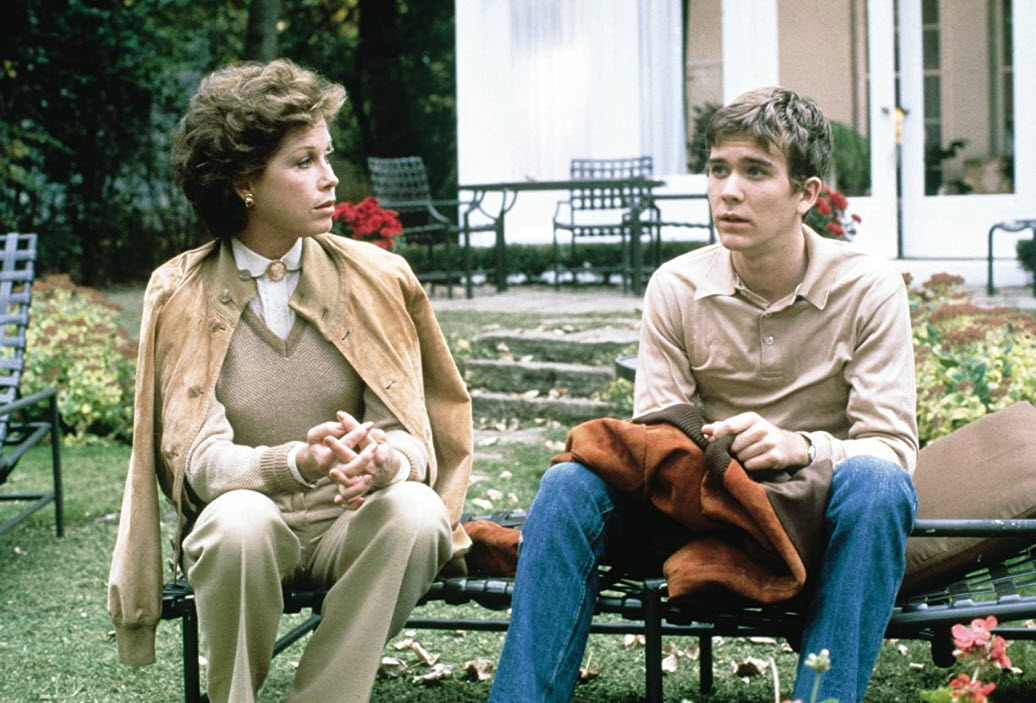
Robert Redford's directorial debut ended up the 1980 Oscar winner for Best Picture. It is a simple but painfully emotional story of the disintegration of a "perfect" family. Teenager Conrad (Timothy Hutton) lives under a cloud of guilt after his brother drowns after their boat capsizes in Lake Michigan. Despite intensive therapy sessions with his psychiatrist (Judd Hirsch), Conrad can't shake the belief that he should have died instead of his brother; nor do his preoccupied parents (Donald Sutherland and Mary Tyler Moore) offer much in the way of solace. The boy is brought out of his doldrums through his romance with Jeannine (Elizabeth McGovern). A winner in every respect, Ordinary People (adapted from the novel by Judith Guest) scores highest in the scenes with Mary Tyler Moore, who superbly and perceptively portrays a blinkered, ever-smiling suburban wife and mother for whom outward appearance is all that matters. | |
| |
|
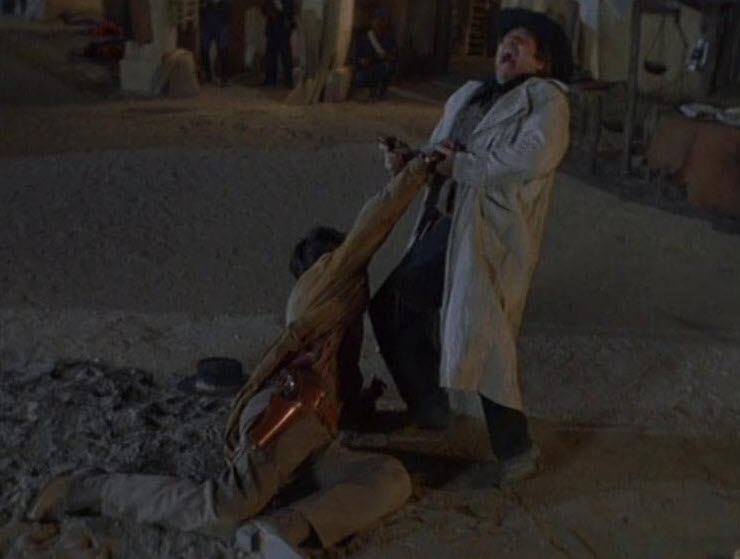
Four superstars of country music saddle up in this made-for-television Western. Waylon Jennings plays Tobey, an aging gunslinger who is murdered by a malicious outlaw. Looking to settle the score, Lee (Willie Nelson), Tarence (Kris Kristofferson), and Dalton (Travis Tritt) team up with Tobey's son to hunt down the bad guy. Directed by Bill Corcoran, Outlaw Justice was originally broadcast on CBS. | |
| |
|
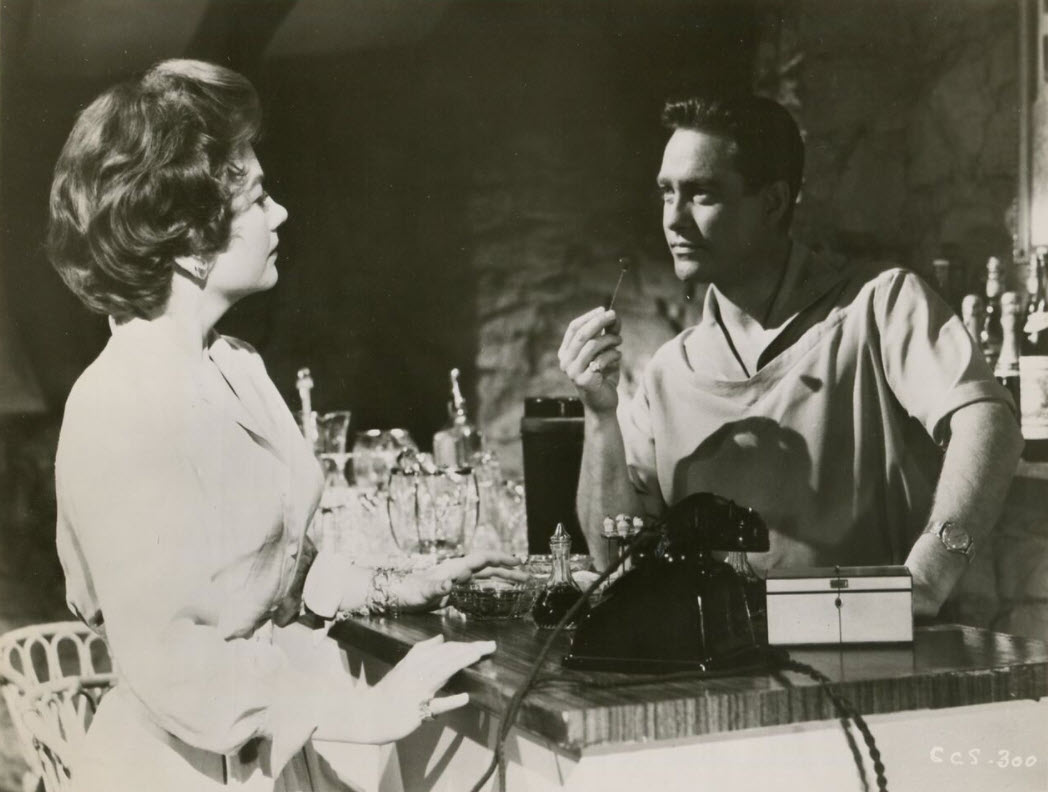
Chase A Crooked Shadow (1958) | Why has total stranger Richard Todd shown up at the villa of wealthy Anne Baxter? Why does he claim to be her long-lost brother? Is Todd planning to finagle Baxter out of her inheritance? Is someone going to end up seriously dead? The answers to these questions can be found in Chase a Crooked Shadow, a confounding chiller with more than a few adroit plot twists. Before the film has run its course, we learn that the true villain is not necessarily whom it appears to be--nor is the heroine all that she seems. Chase a Crooked Shadow was based on an 1943 Whistler radio play; the plot was later reworked into no fewer than three American made-for-TV movies. | |
| |
|
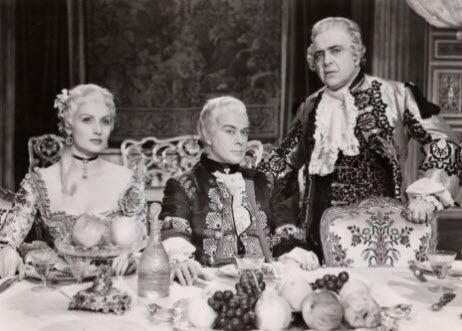
Bouncing back and forth between American and European productions in the 1950s, director Steve Sekely settled in Italy long enough to dash off Cartouche. The swashbuckling title character, played by Richard Basehart, is an 18th-century gentleman accused of murdering a prince. In the tradition of Scaramouche, Cartouche takes refuge with a troupe of wandering actors. Villains Akim Tamiroff and Massimo Serato do their best to knock off Cartouche, but he gets the better of them in reel eight. English leading-lady Patricia Roc displays mucho cleavage as Cartouche's sweetheart. Cartouche was fitfully distributed in the USA by RKO Radio Pictures. | |
| |
|
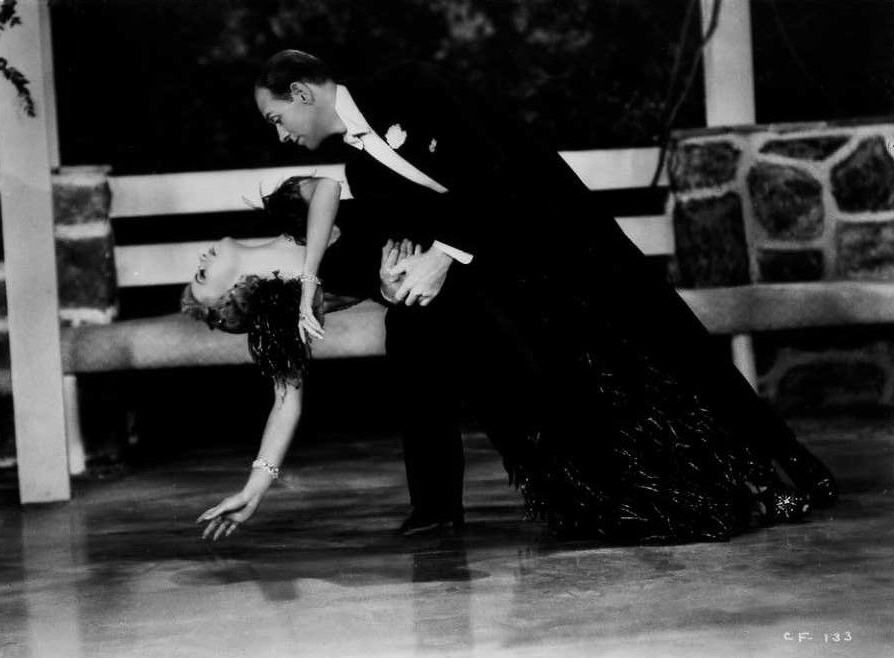
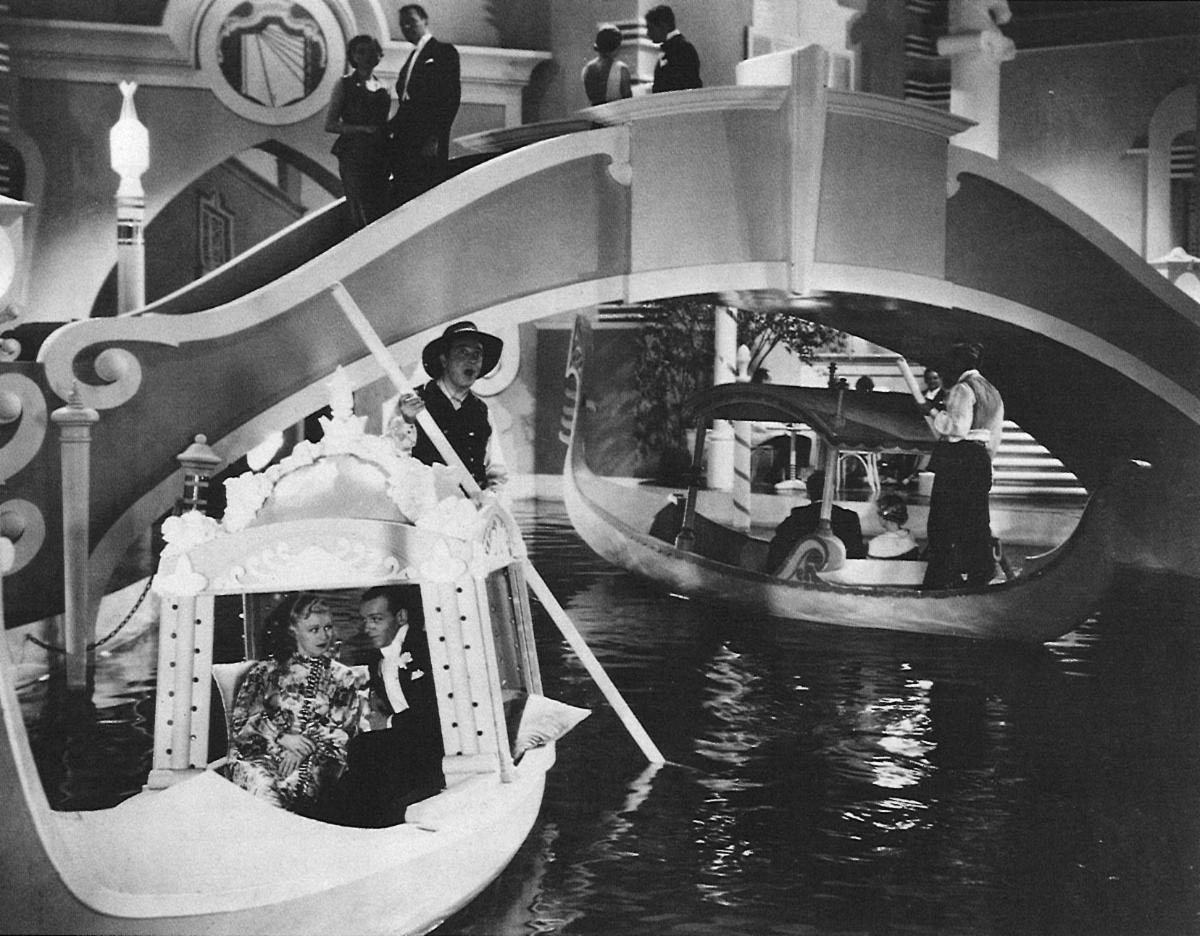
It's more Ginger Rogers than Fred Astaire, and more comedy than singing and dancing in this Astaire-Rogers entry into the screwball comedy sweepstakes which features a top-of-the-line Irving Berlin score (Change Partners, I Used to be Color Blind, The Night is Filled with Music). Fred Astaire plays Dr. Tony Flagg, a psychiatrist, who enters the psyche of Amanda Cooper (Ginger Rogers), a radio singer whom Tony's friend Stephen Arden (Ralph Bellamy) takes to see him. It seems Arden thinks that Amanda needs psychiatric help since she can't reach a decision regarding Stephen's proposal of marriage to her. As Tony explores her subconscious dream life, she falls in love with him. Tony feels that her love is temporary -- merely a sign of transference. To channel her love in the right direction, Tony hypnotizes her to believe that she is in love with Stephen. But then things become more complicated when Tony comes to realize that he, in fact, is in love with Amanda himself. He now has to figure out a way to bring her out of her hypnosis and get her back to normal so that they can both fall into the clinch. | |
| |
|
Assembled by the same production team responsible for the science fiction mini-classic The Man From Planet X, Captive Women is a mixed-bag post-apocalyptic melodrama. After a windy opening lecture about the dangers of atomic power, the story moves ahead to the year 3000. New York City is now a radioactive, bombed-out shell, populated by three groups: the "Norms," the "Mutes," and the "Uprivers." The Norms are cavedwellers, the Uprivers a barbarous people who demonstrate lawlessness and territorial aggression and live in a tunnel beneath the Hudson River, and the Mutes hideously disfigured yet peaceloving surface dwellers. The groups engage in many violent skirmishes, until the Uprivers are wiped out by a massive flood. Now, the only hope for mankind's future is the romance between Mute-man Riddon (Ron Randell) and Norm-woman Ruth (Margaret Field, the mother of actress Sally Field). Production values are better than one might expect, though the film suffers from rather shoddy special effects. Captive Women was released in England as 3000 AD. | |
| |
|
The Broadway musical Beat the Band was boiled down to B-picture terms in this RKO Radio programmer. The plot concerns Damon (Philip Terry), a bandleader who finds himself financially embarrassed when he returns from WW2. In order to earn enough money to reassemble his orchestra, Damon poses as a famed Italian voice teacher. His first pupil is would-be songstress Ann (Frances Langford), whose family fortune figures prominently in Damon's comeback scheme. Ralph Edwards, emcee of the then-popular radio series "Truth or Consquences," provides comic relief as Damon's crooked business manager. The musical highlights include a "hot" arrangement performed in a boiler room by the Gene Krupa Orchestra. | |
| |
|
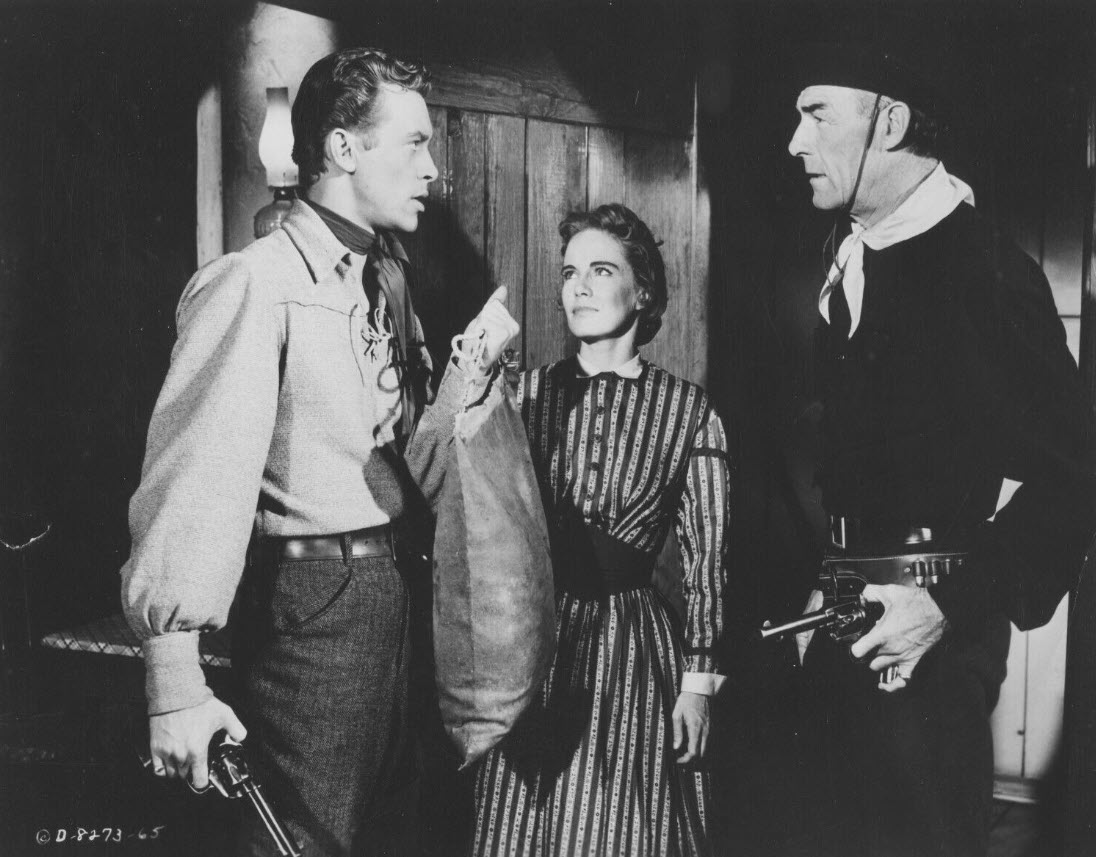
Randolph Scott is tall in the saddle once more in the Scott-Brown production Ten Wanted Men. The star is cast as John Stewart, who attempts to establish law and order on his vast Arizona spread without resorting to violence. Less peacefully inclined is Stewart's chief rival Wick Campbell (Richard Boone), who believes that might is right. To this end, Campbell recruits the services of hired gun Frank Scavo (Leo Gordon) and eight other pluguglies to drive all competition out of the territory. Jocelyn Brando costars as the woman in Stewart's life, while Donna Martell plays Campbell's much-abused mistress. Also registering well is Skip Homeier as Stewart's resentful nephew, who'd rather be anywhere else but Arizona. Ten Wanted Men might have been better had Budd Boetticher handled the direction instead of the competent but pedestrian H. Bruce Humberstone. | |
| |
|
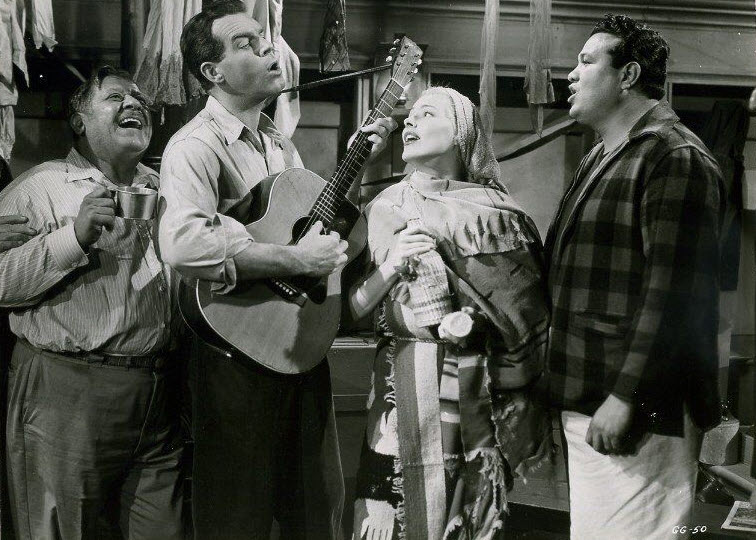
In this '40s film Kay Kyser parades an entertainment group all over the globe providing laughs for the boys in battle. This film realistically portrays the role of the USO during the WW II time period. | |
| |
|
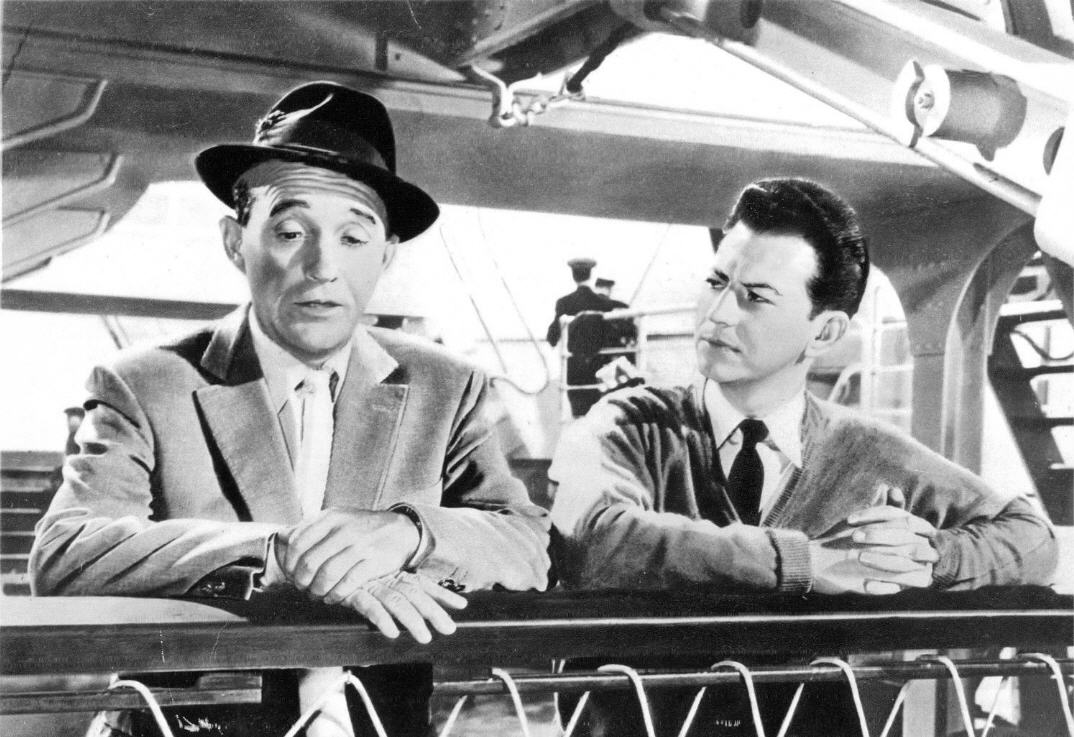
Anything Goes is a Technicolor-and-Vistavision remake of the 1936 film of the same name, which in turn was based on Cole Porter's hit 1934 Broadway musical. The 1956 bears little relationship plotwise to its predecessors, except for the fact that most of the story takes place aboard a luxury liner. Bing Crosby and Donald O'Connor star as Bill Benson and Ted Adams, a pair of top Broadway tunesmiths who agree to collaborate on their next musical just as soon as they complete their respective vacations. Complications arise when, unbeknownst to one another, Bill and Ted each sign up a potential leading lady; Bill's choice is ballerina Gaby Duval (Zizi Jeanmaire), while Ted's selection is brassy chanteuse Patsy Blair (Mitzi Gaynor). Retained from the original Cole Porter score are such standards as "You're the Top", "I Get a Kick Out of You" (with appropriately laundered lyrics), "Blow, Gabriel Blow", and the title tune. New songs, penned by Sammy Cahn and Jimmy Van Heusen, include "You Gotta Give the People Hoke" and "A Second-Hand Turban and a Crystal Ball". To avoid confusion with the 1956 adaptation of Anything Goes, the 1936 version was for many years retitled Tops is the Limit for television. | |
| |
|
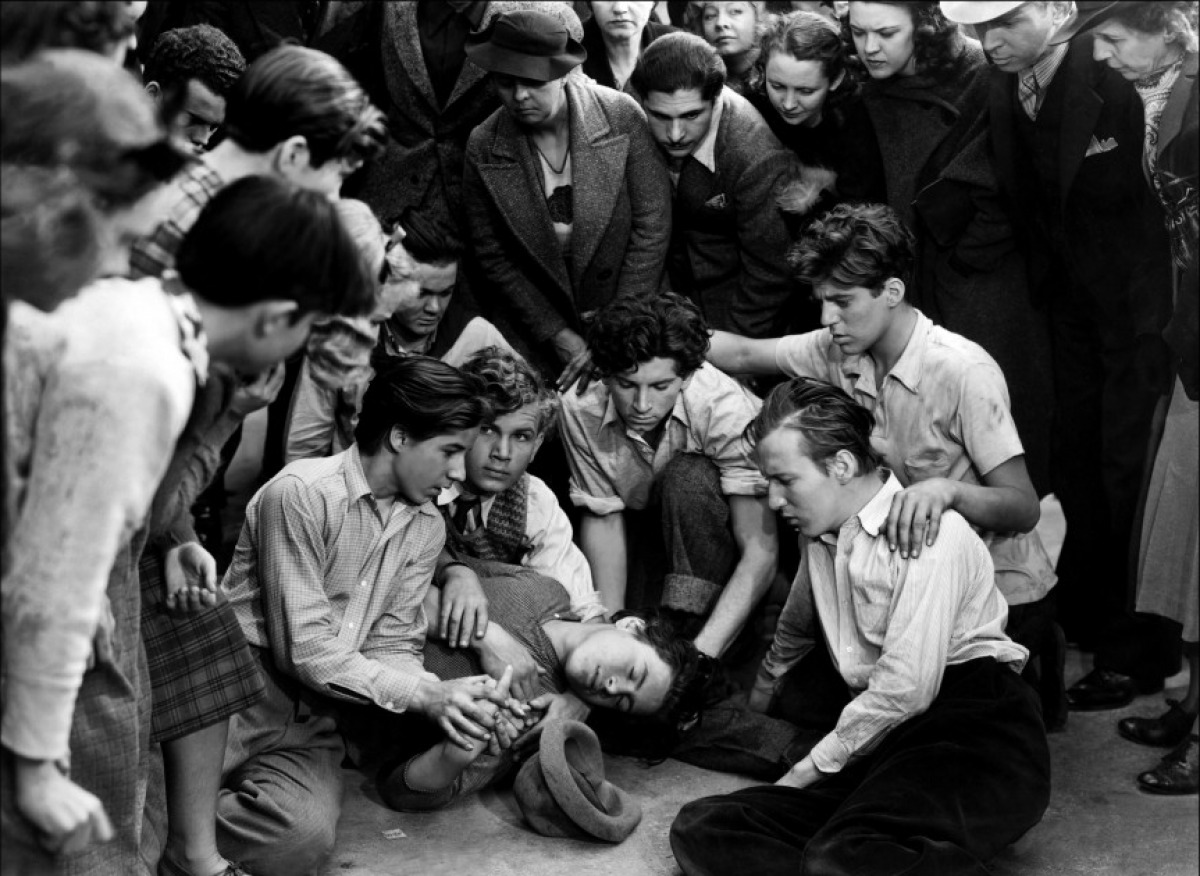
Angels Wash Their Faces (1939) | Though not a sequel to Angels with Dirty Faces, this Warner Bros. programmer does star the Dead End Kids-or, more specifically, Billy Halop, Leo Gorcey, Bobby Jordan, Huntz Hall, Gabriel Dell, and Bernard Punsley. Fresh out of reform school, Gabe Ryan (Frankie Thomas) promises his sister Joy (Ann Sheridan) that he'll go straight, and promptly joins the Beale Street Termites (the Dead Enders), a tough but basically good-hearted street gang. Local mobster William Kroner (Bernard Nedell), seeking out a fall guy for a series of arsons, frames Gabe for a fire in which helpless invalid Sleepy (Punsly) dies. With the help of the other Termites, crusading DA Pat Remson (Ronald Reagan) tries to prove Gabe's innocence, using surprisingly high-handed tactics to get results: arresting Kroner on a misdemeanor, he turns the crook over to the kids, who force a confession out of the terrified crook. In this and several other instances in the film, the gang's rowdy behavior is "purified" because the end justifies the means. | |
| |
|
Jean Simmons' fascinating interpretation of an uncharacteristic role is the main drawing card of Otto Preminger's Angel Face. The daughter of Charles Treymayne (Herbert Marshall), who remarried a wealthy woman (Barbara O'Neil), Diane Treymayne's (Simmons) angelic countenance masks an unbridled psychotic who'll let nothing stand in the way of her happiness. Diane arranges for Catherine's death, making it look like an auto accident. Coveting family chauffeur Frank Jessup (Robert Mitchum), Diane steals Frank away from his sweetheart Mary (Mona Freeman) and forces him to become her spiritual accomplice in her stepmother's murder. And when Diane finally realizes that she'll never, ever, be able to hold Frank, she... well, enough said. If Angel Face doesn't look like a typical early-1950s RKO Radio film, it may be because its director was borrowed from 20th Century-Fox, and its cinematographer (Harry Stradling) was a loan-out from Sam Goldwyn. | |
| |
|
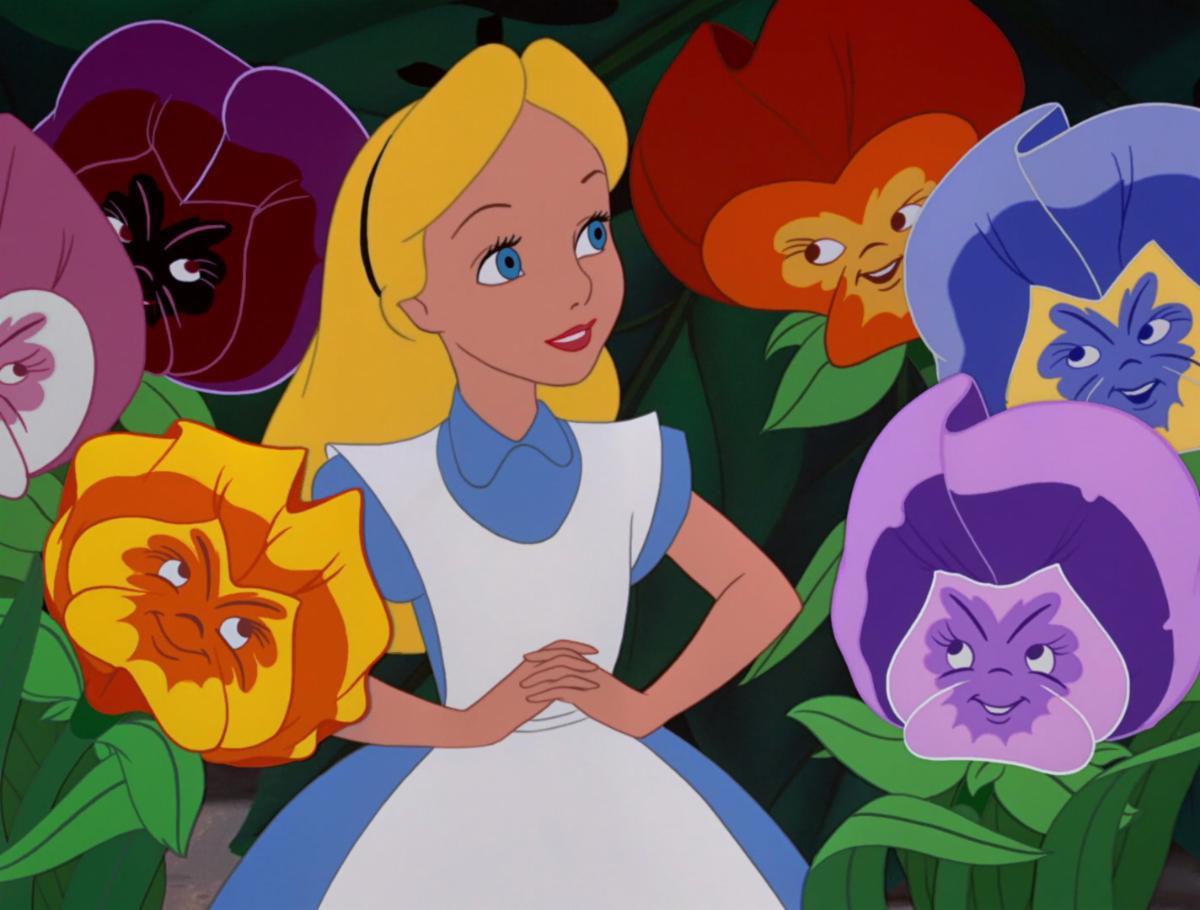
Alice In Wonderland (1951) | This Disney feature-length cartoon combines the most entertaining elements of Lewis Carroll's Alice in Wonderland and Through the Looking Glass. Chasing after the White Rabbit, who runs into view singing "I'm Late! I'm Late!," Alice falls down the rabbit hole into the topsy-turvy alternate world of Wonderland. She grows and shrinks after following the instructions of a haughty caterpillar, attends a "Very Merry Unbirthday" party in the garden of the Mad Hatter and the March Hare, stands in awe as the Cheshire Cat spouts philosophy, listens in rapt attention as Tweedledum and Tweedledee relate the story of the Walrus and the Carpenter (a sequence usually cut when Alice is shown on TV), and closes out her day with a hectic croquet game at the home of the Red Queen. The music and production design of Alice in Wonderland is marvelous, but the film is too much of a good thing, much too frantic to do full honor to the whimsical Carroll original, and far too episodic to hang together as a unified feature film. One tactical error is having Alice weep at mid-point, declaring her wish to go home: This is Alice in Wonderland, Walt, not Wizard of Oz! Its storytelling shortcomings aside, Alice in Wonderland is superior family entertainment (never mind the efforts in the 1970s to palm off the picture as a psychedelic "head" film). | |
| |
|
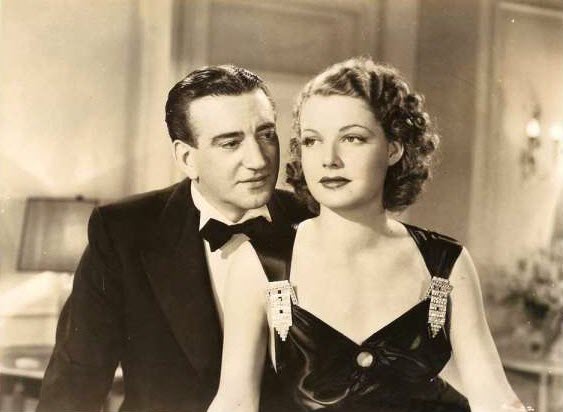
Gat Brady (John Litel) is a wealthy gangster, though he's never killed anyone, an he is devoted to his teenaged daughter Annabel (Mary Maguire). When he's arrested for tax evasion on the eve of a European trip, he has Annabel's governess Flo Allen (Ann Sheridan) continue on the trip with the girl anyway. Red Carroll (Ben Welden), who hates Gat, kidnaps Annabel, but is caught and sent to the same prison as Gat. A fight with Red results in Gat being sent to the maximum-security prison on Alcatraz Island but, still bent on revenge, Red later arranges to have himself sent there, too. | |
| |
|
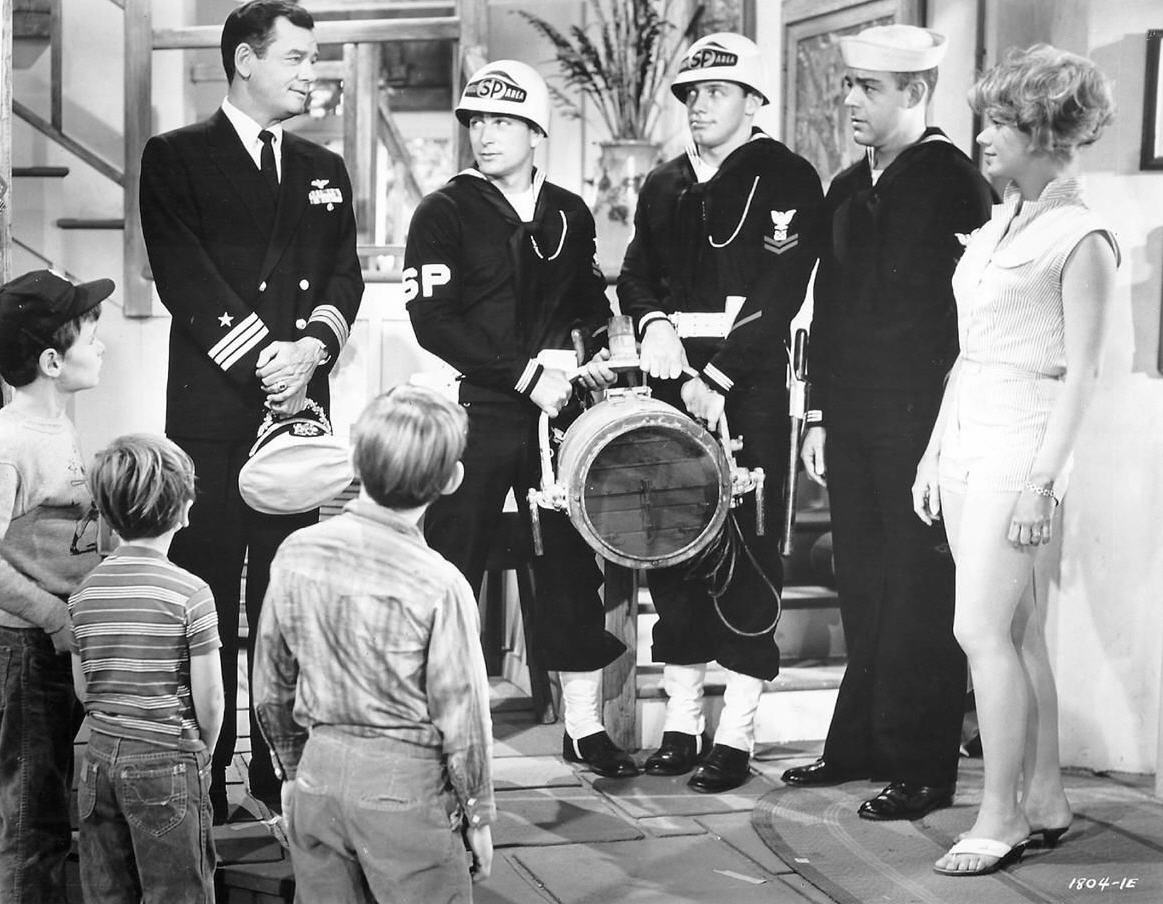
This light romantic comedy finds a young widow with three young boys investigated by the Navy. Amy Martin (Shirley Jones) has a curious child who inadvertently sends out a distress signal in Morse code by the blinds on his upstairs bedroom window. Commander Weedon (Gig Young) and crew observe the signal from their ship and investigate. The commander falls for the young mother and proposes marriage. Amy is reluctant to have her family live out of a suitcase and initially declines. Gramps (Edgar Buchanan) tries to bring her on board to sail the sea of love with the commander, but it's the youngest son Alex (Billy Mumy) who flies high an hits the mark as Cupid. Alex sets sail with some helium balloons and floats out over the ocean. The commander must save the boy and return him to his mother, creating another opportunity for his mother to be captured by the romantic suitor. Red Buttons and Carolyn Jones also find romance in this feature directed by George Sidney. | |
| |
|
A Millionaire For Christy (1951) | In this old-fashioned screwball comedy, Christy Sloane (Eleanor Parker) is a secretary with a large legal firm who is sent to California to inform Peter Lockwood (Fred MacMurray), an overly sentimental radio host, that he's just inherited $2 million. Christy is looking to raise her standard of living, and she gets an idea -- what if she woos Peter and gets him to marry her before telling him that he's a millionaire? Christy decides that it's worth a try, even though she soon learns that Peter is due to marry his fiancée June Chandler (Kay Buckley) in a matter of days. However, the wedding goes haywire when Dr. Roland Cook (Richard Carlson), Peter's best man, takes a flyer shortly before the ceremony. It seems that he's secretly in love with June, and he can't bear to see her marry anyone else, even his best friend. Peter takes off to find Roland, with Christy eagerly tagging along, but after the two are soaked by massive waves while driving along the coastline, they wind up at a wild party thrown by a large, overly-cheerful Mexican gentleman (Chris-Pin Martin) who has somehow decided that they're honeymooners and begins plying them with large amounts of tequila. After a few drinks, Christy begins to realize that she actually likes Peter for himself, not just his money, but where does this leave his almost-wedding to June? A Millionaire for Christy was directed by George Marshall, who would go on to helm a number of Jerry Lewis vehicles (including several with his sometimes-partner Dean Martin). | |
| |
|
The odd combination of Vilma Banky and Broadway import Edward G. Robinson starred in this early sound version of Sidney Howard's 1925 play They Knew What They Wanted. California grape grower Tony (Robinson) advertises for a young wife but passes off a photograph of his handsome foreman Buck (Robert Ames) as himself. San Francisco waitress Lena (Banky) answers the add, and although disillusioned when she learns the truth, accepts Tony's proposal of marriage because of a desire to settle down. When Buck attempts to take her away, Lena realizes that she has fallen in love with her unattractive but kind husband. Howard's play was filmed again in 1940 under its original title and starred Charles Laughton as Tony and Carole Lombard as Lena. A Lady to Love proved to be Hungarian silent star Banky's final American film. | |
| |
|
Based on Aurania Rouveyrol's Broadway play Skidding, A Family Affair is a gentle comedy/drama centering around the Hardy family of Carvel (a small, idealized American town). Judge Hardy (Lionel Barrymore) hopes to be re-elected, but his campaign is put in jeopardy by his opposition of a wasteful public works program. The Judge's position is also threatened by his daughter's (Julie Haydon) unexplained separation from her husband. In the supporting cast, incidental to the plotline, was Mickey Rooney as Judge Hardy's teenage son Andy, Spring Byington as the Judge's wife, and Cecilia Parker as his younger daughter Marian. MGM head Louis B. Mayer sensed series potential in A Family Affair, and the result was the long-running and profitable "Hardy Family" series. Julie Haydon's character was written out of all subsequent "Hardy" films, Lewis Stone and Fay Holden replaced Lionel Barrymore and Spring Byington as Judge and Mrs. Hardy, and Mickey Rooney was elevated from the supporting cast to full leading man status as the effervescent Andy Hardy. | |
| |
|
Scripted by James L. Brooks from Dan Wakefield's novel, Alan J. Pakula's romantic comedy follows the tribulations of a freshly divorced man as he looks for love with a wary single woman. Phil Potter (Burt Reynolds sans mustache) can't quite believe it when his aspiring songbird wife Jessica (Candice Bergen) kicks him out to realize her career dreams, but the added revelation of her adultery speeds him out the door by choice. Relocating to Boston, Phil starts to settle in with the help of his psychiatrist brother Mickey (Charles Durning), joining a divorced men's therapy group. Phil really begins to feel better when Mickey and his wife Marva (Frances Sternhagen) set him up with her friend Marilyn (Jill Clayburgh), a preschool teacher who has had her share of grief from newly single men. Phil wins her over and even convinces her to move in, but an unexpected visit from a regretful, saucily clad Jessica, and an anxiety attack over buying a couch, threaten to end Phil's new life with Marilyn before it has a chance to start. Starting Over offers a ruefully comic look at how the decade's rising divorce rate did not mean fun and games for all the new bachelors; Brooks' movie debut after a sparkling career in 1970s TV with The Mary Tyler Moore Show and Taxi, it was also proof that top '70s star Reynolds could be more than just a good 'ol boy. Still, while the three leads were all praised for their work, only Clayburgh and Bergen received Oscar nominations. Starting Over was a moderate hit, and its humorous yet down-to-earth view of single life and its discontents reassured unattached thirtysomethings that, even though it may not be easy, everything could still turn out fine in modern romance. | |
| |
|
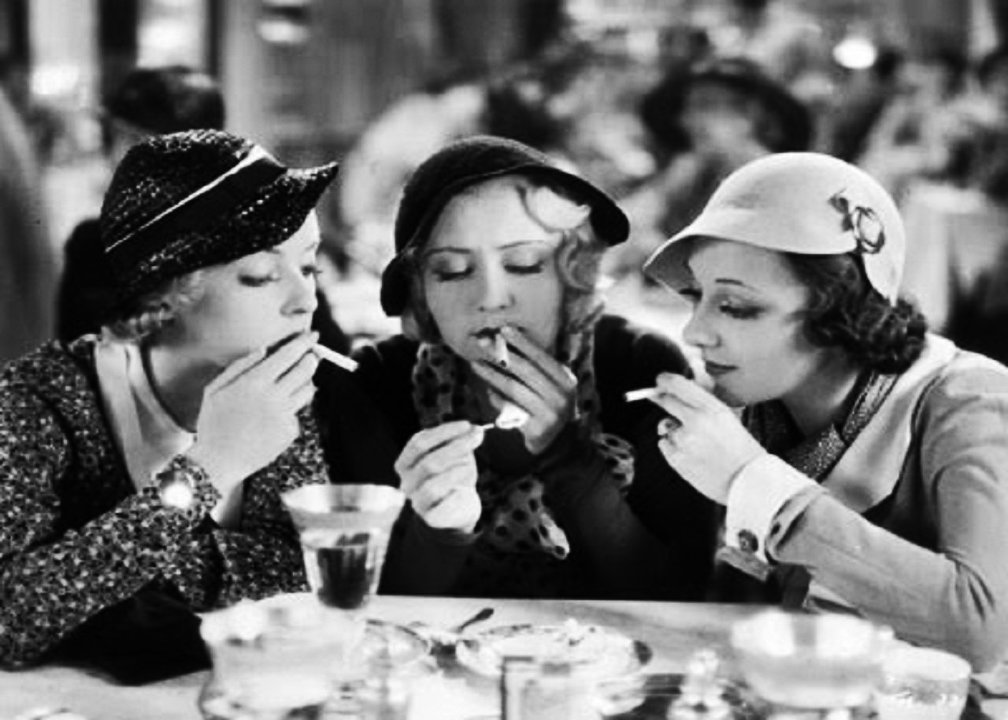
Three on a Match covers approximately 13 years in the lives of girlhood chums Mary Keaton (Joan Blondell), Ruth Wescott (Bette Davis) and Vivian Deverse (Ann Dvorak). Having graduated from grammar school together in 1919, the girls stage a reunion ten years later. Hard-boiled Mary is now a chorus girl, level-headed Ruth has a steady job as a secretary, and vixenish Vivian is on the verge of capriciously deserting her wealthy husband Robert Kirkwood (Warren William) and their baby in favor of sexy mob-boss Mike (Lyle Talbot). Several more years pass, during which Mary marries Henry, Ruth is hired as governess for Henry, and Vivian's son and a drug-addicted Vivian become fatally enmeshed in a kidnapping plot involving her own child. In his second Warner Bros. film, tenth-billed Humphrey Bogart essays his first sneering-gangster role. Three on a Match was remade (and considerably laundered) in 1938 as Broadway Musketeers. | |
| |
|
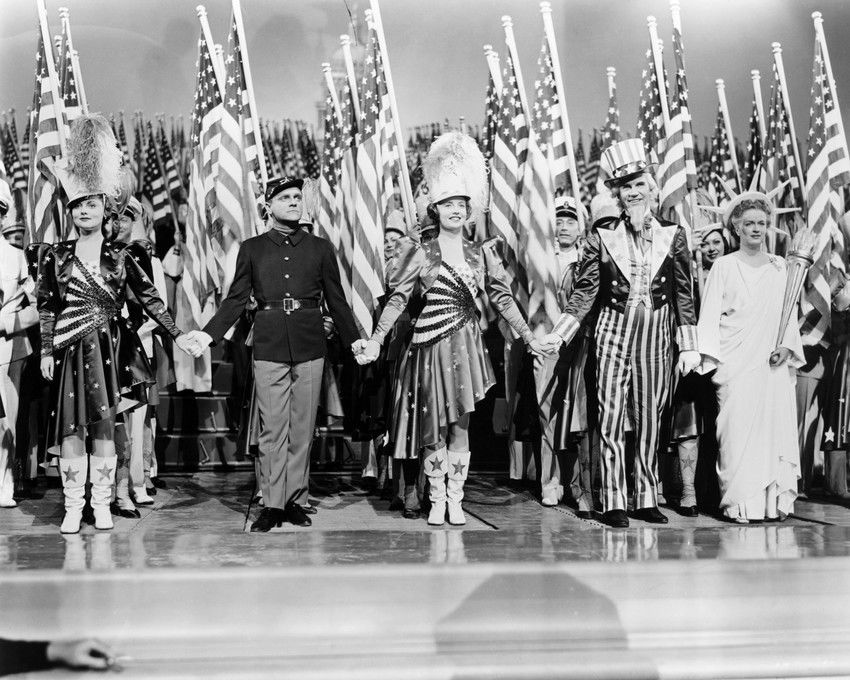
Yankee Doodle Dandy (1942) | Yankee Doodle Dandy is no more the true-life story of George M. Cohan than The Jolson Story was the unvarnished truth about Al Jolson -- but who the heck cares? Dandy has song, dance, pathos, pageantry, uproarious comedy, and, best of all, James Cagney at his Oscar-winning best. After several failed attempts to bring the life of legendary, flag-waving song-and-dance man Cohan to the screen, Warners scenarist Robert Buckner opted for the anecdotal approach, unifying the film's largely unrelated episodes with a flashback framework. Summoned to the White House by President Roosevelt, the aging Cohan is encouraged to relate the events leading up to this momentous occasion. He recalls his birth on the Fourth of July, 1878; his early years as a cocky child performer in his family's vaudeville act; his decision to go out as a "single"; his sealed-with-a-handshake partnership with writer/producer Sam Harris (Richard Whorf); his first Broadway success, 1903's Little Johnny Jones; his blissful marriage to winsome wife Mary (a fictional amalgam of Cohan's two wives, played by Joan Leslie -- who, incredibly, was only 17 at the time); his patriotic civilian activities during World War I, culminating with his writing of that conflict's unofficial anthem "Over There" (performed by Nora Bayes, as played by Frances Langford); the deaths of his sister, Josie (played by Cagney's real-life sister Jeanne), his mother, Nellie (Rosemary DeCamp), and his father, Jerry (Walter Huston); his abortive attempt to retire; and his triumphant return to Broadway in Rodgers & Hart's I'd Rather Be Right. His story told, Cohan is surprised -- and profoundly moved -- when FDR presents him with the Congressional Medal of Honor, the first such honor bestowed upon an entertainer. His eyes welling up with tears, Cohan expresses his gratitude by invoking his old vaudeville curtain speech: "My mother thanks you, my father thanks you, my sister thanks you, and I thank you." Glossing over such unsavory moments in Cohan's life as his bitter opposition of the formation of Actor's Equity -- not to mention George M.'s intense hatred of FDR! -- Yankee Doodle Dandy offers the George M. Cohan that people in 1942 wanted to see (proof of the pudding was the film's five-million-dollar gross). And besides, the plot and its fabrications were secondary to those marvelous Cohan melodies -- "Give My Regards to Broadway," "Harrigan," "Mary," "You're a Grand Old Flag," "45 Minutes from Broadway," and the title tune -- performed with brio by Cagney (who modifies his own loose-limbed dancing style in order to imitate Cohan's inimitable stiff-legged technique) and the rest of the spirited cast. Beyond its leading players, movie buffs will have a ball spotting the myriad of familiar character actors parading before the screen: S.Z. Sakall, George Tobias, Walter Catlett, George Barbier, Eddie Foy Jr. (playing his own father), Frank Faylen, Minor Watson, Tom Dugan, John Hamilton, and on and on and on. In addition to Cagney, music directors Ray Heindorf and Heinz Roemheld also won Oscars for their efforts. | |
| |
|
Variety Time was the first of three "vaudeville-on-film" pastiches released by RKO Radio, each one comprised of highlights from earlier RKO productions. Hosted by Jack Paar (displaying only a fraction of the charisma he'd exhibit as late-night TV talk host), the film is a compendium of musical numbers, short subjects, and the occasional "new" comedy routine involving Paar and his perennial foil Hans Conried. Highlights include a Frankie Carle number from Riverboat Rhythm, a comedy adagio dance from Seven Days Leave, a hot Latin tune from Pan-America, and an excised dance sequence from Show Business. Two comedy short subjects were also included, in their entirety: Edgar Kennedy's I'll Build it Myself and Leon Errol's Hired Husband. Since it cost practically nothing to make, Variety Time couldn't help but post a tidy profit, encouraging future minings of the RKO Radio film vaults. | |
| |
|
One of the best of the Fred Astaire-Ginger Rogers musicals, Top Hat centers on a typical mistaken-identity plot, with wealthy Dale Tremont (Rogers), on holiday in London and Venice, assuming that American entertainer Jerry Travers (Astaire) is the husband of her friend Madge (Helen Broderick) -- who's actually the wife of Jerry's business manager Horace Hardwick (Edward Everett Horton). Complicating matters is Dale's jealous suitor Beddini (Erik Rhodes), whose motto is "For the woman the kiss -- for the man the sword." Beddini is disposed of by some last-minute chicanery on the part of Jerry's faithful valet Bates (Eric Blore), paving the way for the happy ending everyone knew was coming from the opening scene. The Irving Berlin score includes "Cheek to Cheek," "Isn't it a Lovely Day?," and the jaunty title song. The charisma of the stars, the chemistry of the supporting players, the white-telephone art direction of Van Nest Polglaise, the superlative choreography by Astaire and Hermes Pan, and the effervescent direction of Mark Sandrich all combine to make Top Hat a winner. | |
| |
|
The fifth film version of Jack London's The Sea Wolf stars Edward G. Robinson as "premature fascist" Wolf Larsen. The captain of the scavenger ship Ghost, Larsen is a heartless tyrant who can tolerate no sign of weakness in anyone. "Better to reign in Hell than serve in Heaven" is Larsen's philosophy (borrowed from the character of Satan in Milton's Paradise Lost), and accordingly he reigns over his hellish vessel in true satanic fashion. Idealistic writer Humphrey Van Weyden (Alexander Knox) and fugitive from justice Ruth Webster (Ida Lupino) are picked up by the Ghost when their ferryboat capsizes. Realizing that their chances of getting off the boat alive are nil, Van Weyden and Ruth conspire with embittered cabin boy Leach (John Garfield) to escape. They drift in a small open boat for days, only to return to the Ghost, which has apparently been scuttled by the mutinous crew. Larsen has gone blind, but refuses to allow his crew to learn this fact, forcing Van Weyden at gunpoint to perpetuate the illusion that Larsen can still see. Ultimately, the Ghost sinks beneath the waves, carrying Larsen and Van Weyden to their doom ("This is the end of Superman!" cries Van Weyden as the ocean envelops him); Ruth and Leach manage to save themselves, rowing toward the safety of a nearby island -- and hopefully escaping to a new life. The 1941 Sea Wolf would not be the last cinematic adaptation of London's novel; multiple versions have since been produced for both film and television. | |
| |
|
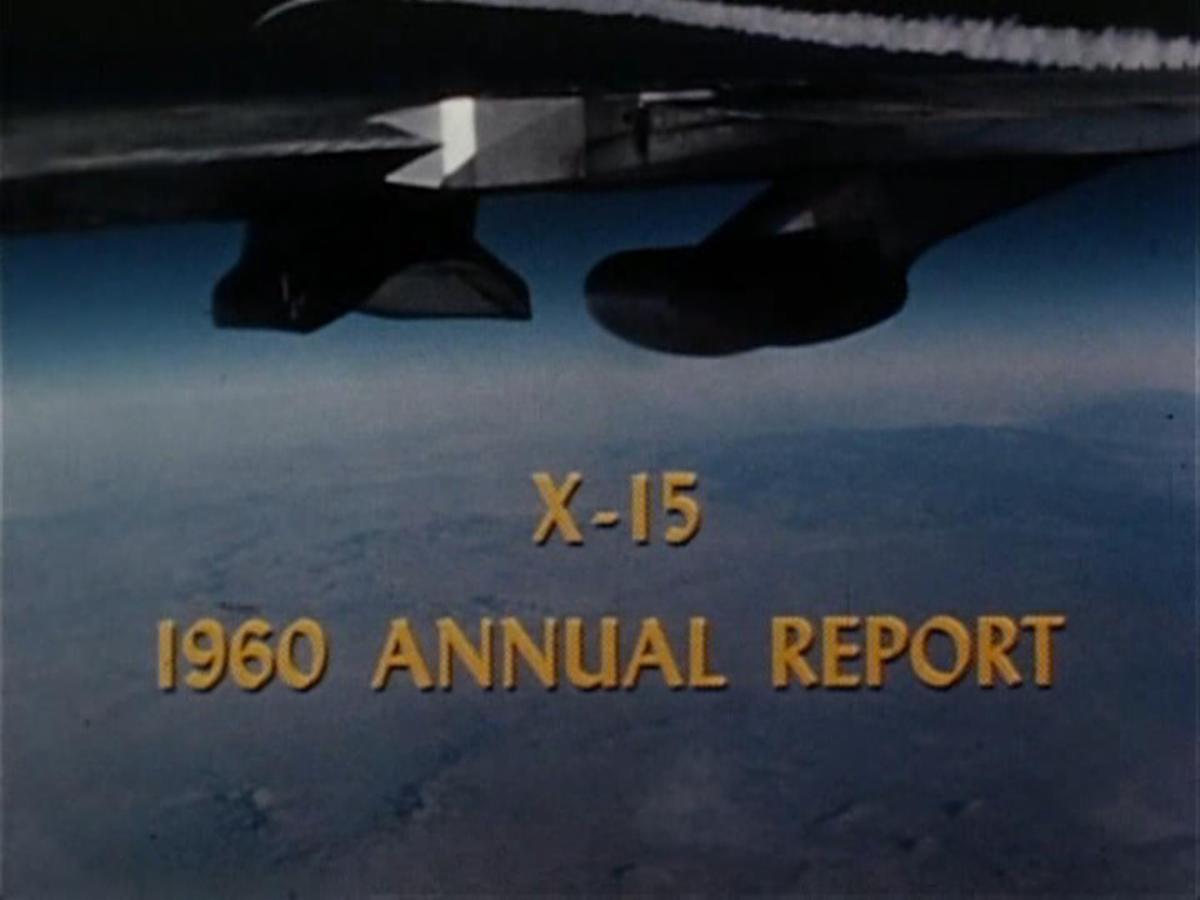
X-15 1960 Annual Report (1959) | This documentary was produced by North American Aviation to show the development of the X-15 rocket plane. | |
| |
|
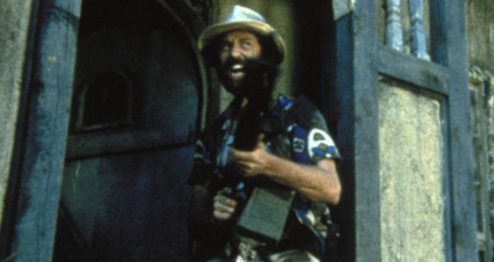
Order Of The Black Eagle (1987) | Typhoon the Baboon and his dashing human partner try to prevent Neo-Nazis from waking the frozen body of Adolph Hitler in this spy movie parody. | |
| |
|
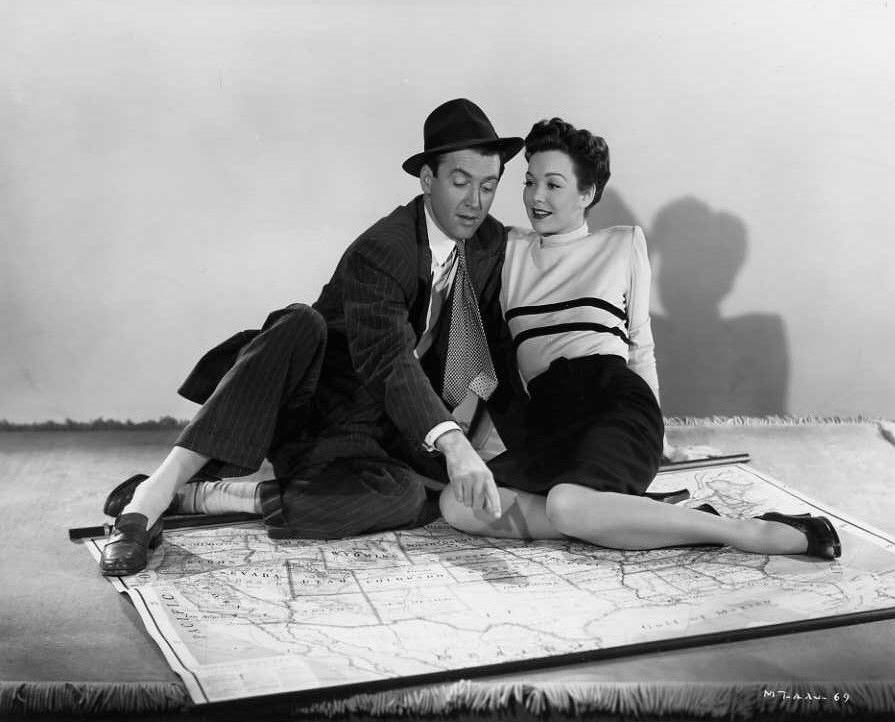
With Robert Riskin as screenwriter, director William Wellman proved in Magic Town that it was possible to make a Frank Capra-esque picture without Capra himself at the helm. James Stewart plays Rip Smith, a cynical pollster who comes across a small American town named Grandview, which represents a "perfect" balance of ethnic types, professions, political beliefs, and personal opinions (a parody of the then-current "Middletown" study). Smith publicizes this discovery, leading to a barrage of media attention and an onslaught of get-rich-quick entrepreneurs. Not surprisingly, all of this has an adverse effect on the heretofore "average" citizens of Grandview; it also seriously threatens Smith's blossoming romance with local girl Mary Peterman (Jane Wyman), who feels that her friends and neighbors are being used, exploited, and in some cases, corrupted. The satirical thrust of the film bogs down into sentimentality toward the end, but it's fun while it lasts. One of the colorful supporting characters is played by screwball-comedy favorite Donald Meek, who died during production, necessitating a number of hasty and not altogether successful rewrites. Though it pleases audiences today, Magic Town was a financial disappointment in 1947, prompting James Stewart to seek out "tougher" and more challenging roles to restore his box-office appeal. | |
| |
|
Harry Carey Sr., C. Aubrey Smith and Charles Winninger play three wealthy bachelors who have spent their lives wrapped up in themselves. Left all alone on Christmas eve, the elderly trio invite a couple of strangers to dinner: misplaced cowpoke Richard Carlson and pretty, but aimless, Jean Parker. Hoping that they've accomplished a bit of matchmaking, the three old duffers board a plane and head off to an important business meeting. The plane crashes, killing all three men. They return to their mansion as ghosts, only to discover that Carlson is making the same mistake they made: he's allowing his drive for success to override his affection for Parker. Feeling as though they won't be welcome in Heaven until they rectify this situation, Carey, Smith, and Winninger stick around to set things right. | |
| |
|
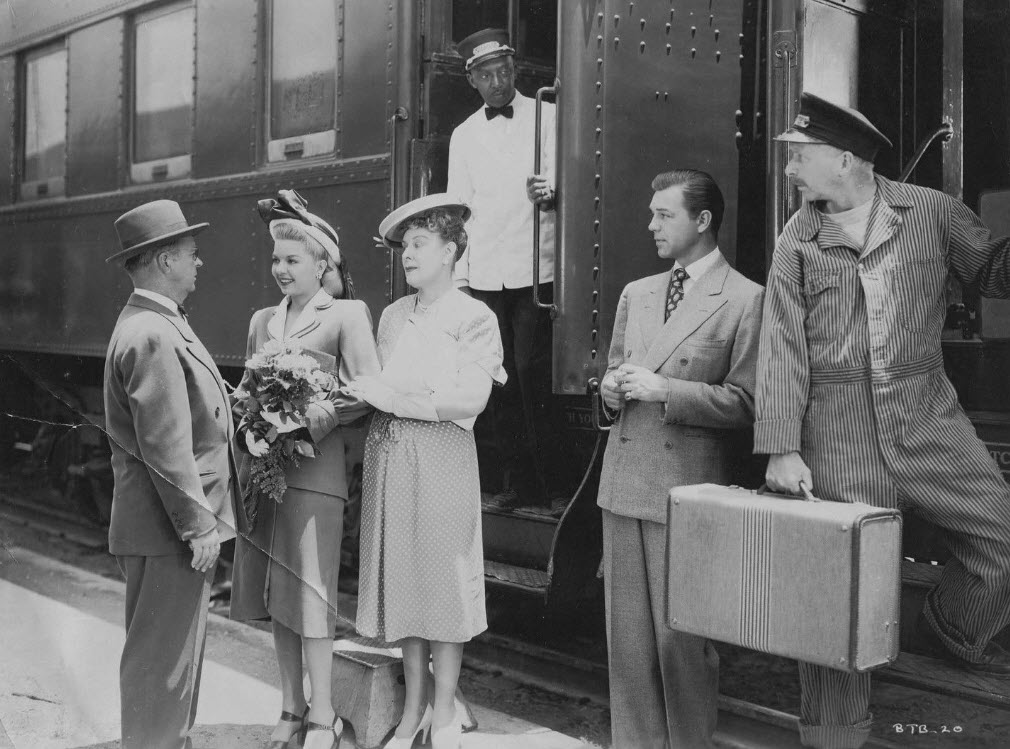
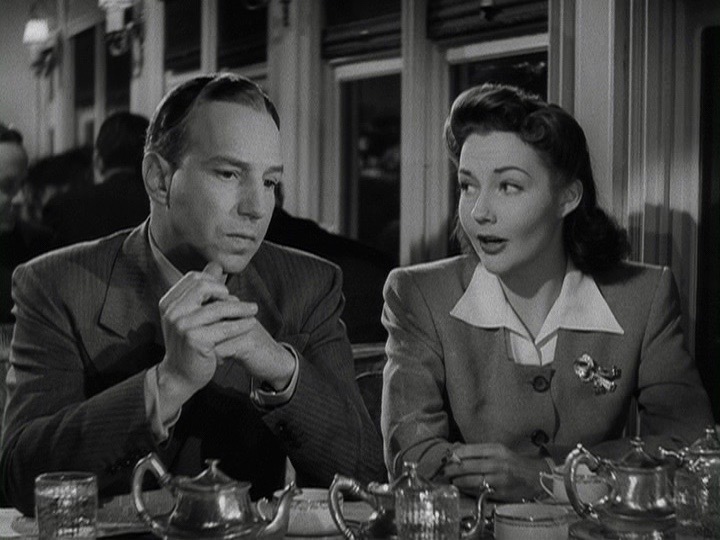
This second entry in 20th Century-Fox's "Michael Shayne" series was a remake of the 1932 Fox romantic drama Sleepers East. In the original, the detective character was peripheral, but this changed once Michael Shayne (Lloyd Nolan) was written in as the leading character. Dogged by persistent girl reporter Kay Bentley (Lynn Bari), private detective Shayne tries his best to secretly escort murder-trial witness Helen Carlson (Mary Beth Hughes) by train from Denver to San Francisco. Helen's testimony will free a man falsely accused of murder, which will also effectively destroy the election chances of a machine politician. Thus, Mike has to protect Helen from any and all likely assassins, including hired torpedo Carl Izzard (Don Costello), who manages to inveigle Kay's wishy-washy fiance Tom Linscott (Don Douglas) into his camp. Meanwhile, the incognito Helen strikes up a clandestine relationship with fellow passenger Everett Jason (Louis-Jean Heydt), who is harboring a few secrets of his own. Based on a story by Frederick Nebel (or "Torchy Blaine" fame), Sleepers West is full of chock-full of fascinating characterizations and startling little surprises, and is considered by many to be the best of Fox's "Michael Shayne" installments. | |
| |
|
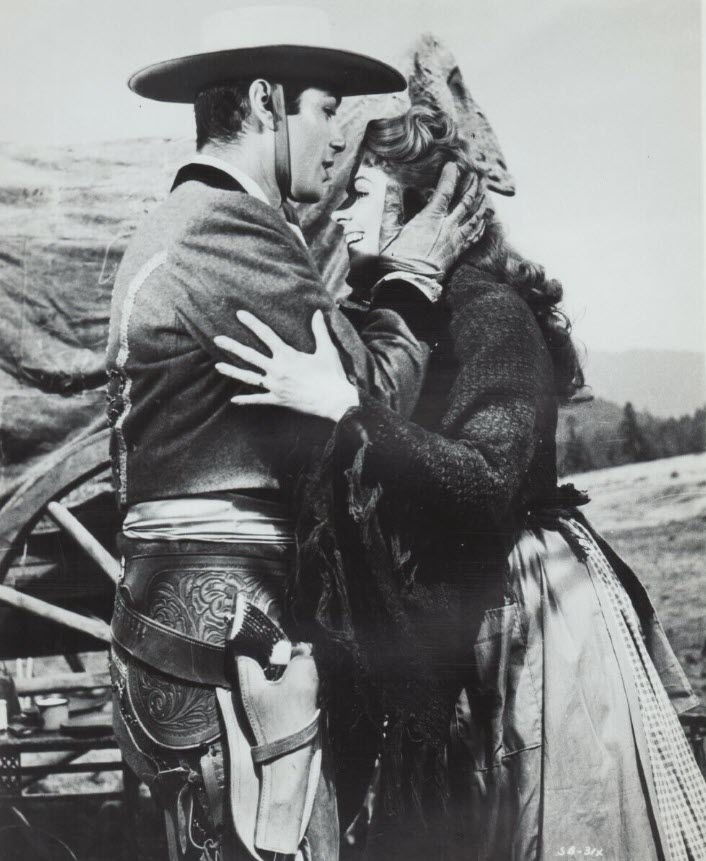
In this western set in the California territory in the mid-19th century, a rancher tries to protect his Spanish land grant from greedy American landgrabbers. Unfortunately the eastern interlopers bring in a Texas gunfighter to frighten the man. The gunfighter ends up falling in love with the rancher's sister, and decides to spare them. In the end, the gunman is killed during the climactic shoot out. The girl who loved him is devastated. | |
| |
|
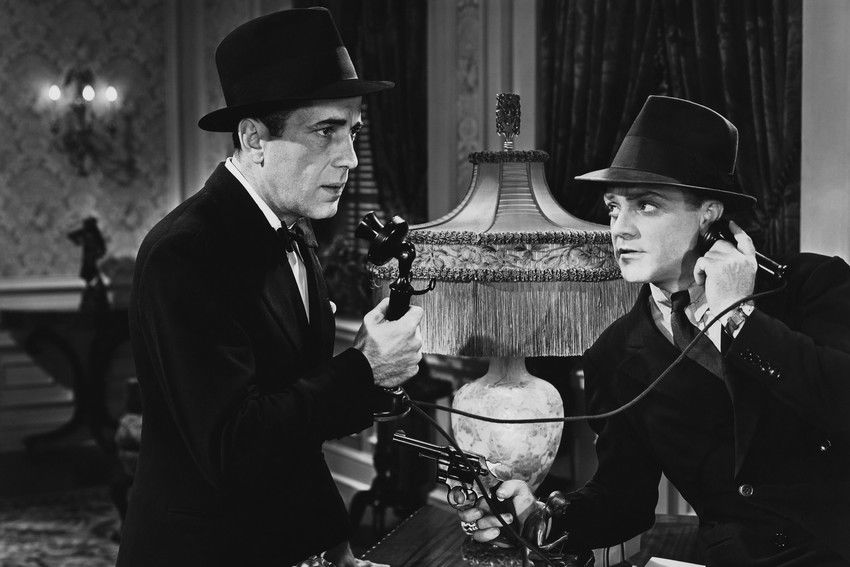
Angels With Dirty Faces (1938) | Childhood chums Rocky Sullivan (James Cagney) and Jerry Connelly (Pat O'Brien) grow up on opposite sides of the fence: Rocky matures into a prominent gangster, while Jerry becomes a priest, tending to the needs of his old tenement neighborhood. Rocky becomes a hero to a gang of teenaged boys (played by Dead End Kids Billy Halop, Leo Gorcey, Huntz Hall, Gabriel Dell, Bobby Jordan and Bernard Punsley). Father Jerry despairs at this, asking Rocky to lay off so he can keep the kids on the straight and narrow. Then Rocky's crooked business associates George Bancroft and Humphrey Bogart attempt to end Father Jerry's radio campaign against the rackets by killing the priest. Rocky (whose cynical outlook on life has been softened by his romance with true-blue Anne Sheridan) shoots them down and takes it on the lam. Arrested and convicted of murder, Rocky sits smugly on death row, fully intending to go to the chair with a smile on his face. A few moments before the execution, Father Jerry pleads with Rocky to "turn yellow" so that the tenement kids will despise his memory. | |
| |
|
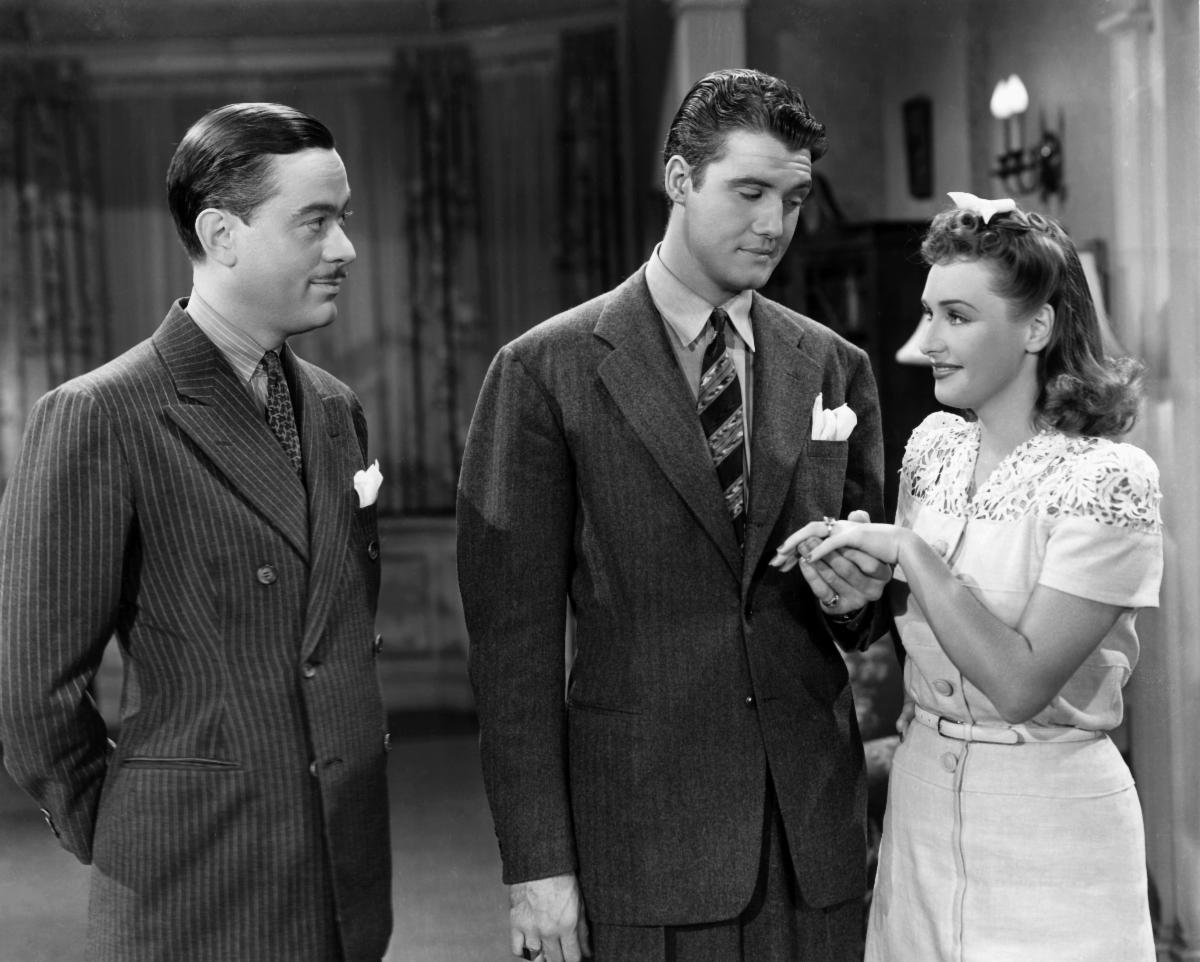
Stalwart Warner Bros. contract player George Reeves, better known as TV's Superman, was given an early opportunity to "carry" a picture in the 1940 quickie Always a Bride. Wealthy Rosemary Lane, dissatisfied with her dishwater-dull fiance John Eldredge, throws him over in favor of Reeves. To make certain that her new beau will be acceptable to her parents, Lane contrives to have Reeves enter a mayoral campaign. As election day draws close, criminals complicate matters (one of the "disreputables" is Ben Welden, later a frequent Superman guest star) The 58-minute Always a Bride was pared down from a three-act play by Barry Conners. | |
| |
|
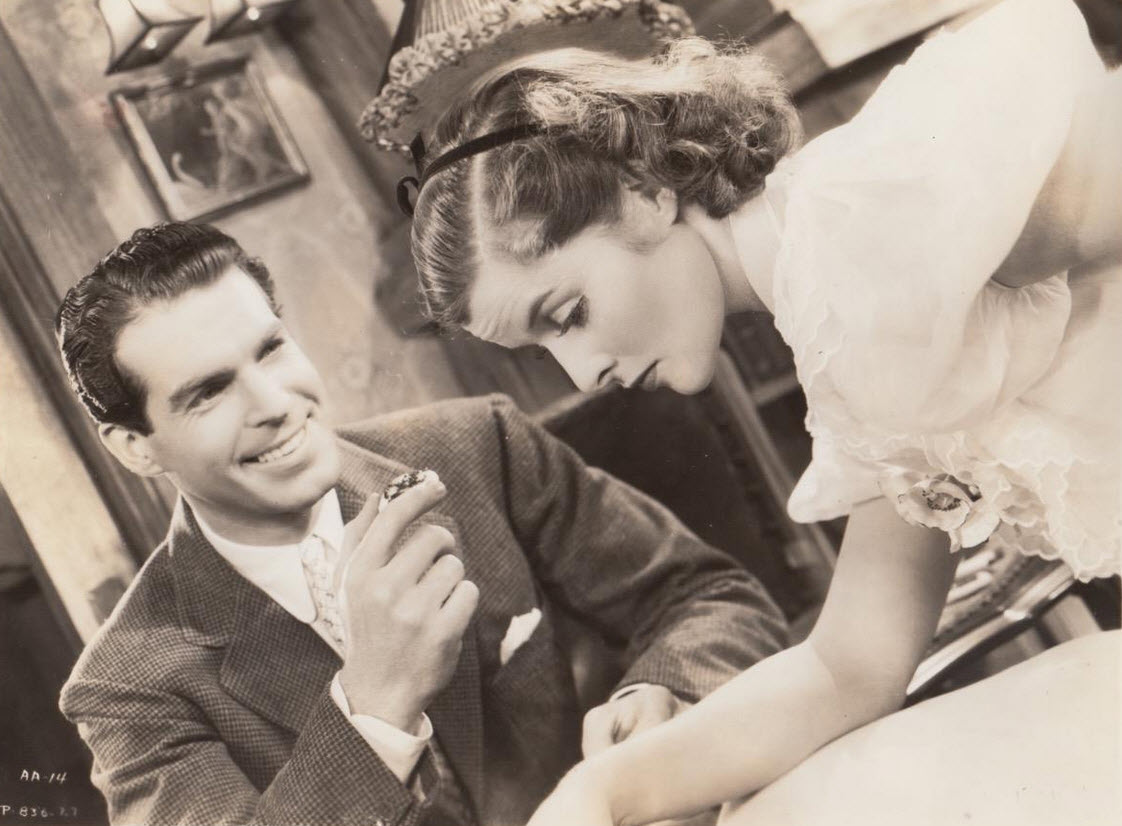
Katharine Hepburn stars as Booth Tarkington's would-be society belle Alice Adams. The product of a family of modest means, Alice nonetheless dreams of being accepted by the "better people." Luck of luck, she meets well-to-do young Fred MacMurray at a social gathering; he is charmed by her pathetic attempts at putting on airs and accepts her invitation to dine at the Adams home. The meal is a disaster: Alice's parents (Fred Stone and Anne Shoemaker) are obviously way out of MacMurray's league, while the servant (Hattie McDaniel) that the family hired for the occasion shows up drunk and very surly. Alice Adams was the first major directorial assignment for George Stevens, as well as one of the few Katharine Hepburn vehicles of the 1930s to score a hit with the public. | |
| |
|
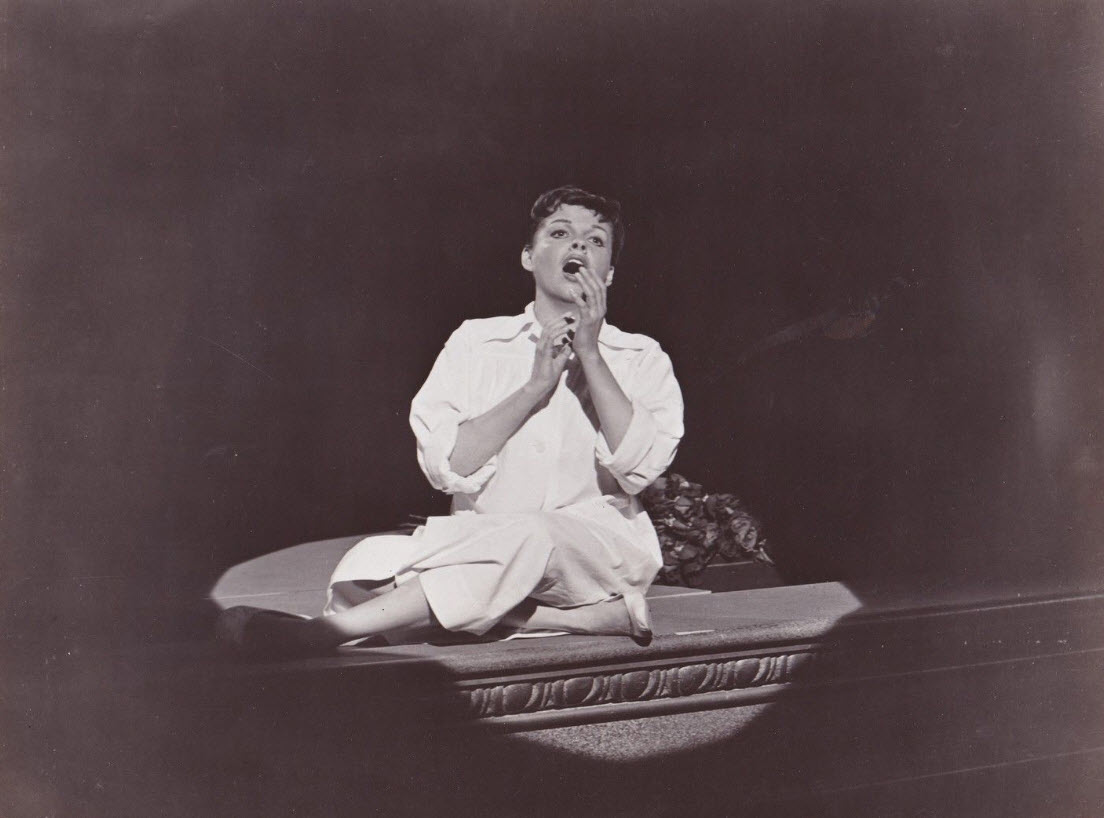
The 1954 musical remake of A Star is Born could have been titled A Star is Reborn, in that it represented the triumphal return to the screen of Judy Garland after a four-year absence. The remake adheres closely to the plotline of the 1937 original: An alcoholic film star, on his last professional legs, gives a career boost to a unknown aspiring actress. The two marry, whereupon her fame and fortune rises while his spirals sharply downward. Unable to accept this, the male star crawls deeper into the bottle. The wife tearfully decides to give up her own career to care for her husband. To spare her this fate, the husband chivalrously commits suicide. His wife is inconsolable at first, but is urged to go "on with the show" in memory of her late husband. In the original, Janet Gaynor played Esther Blodgett, who with no training or contacts came to Hollywood hoping for stardom. The remake, scripted by Moss Hart, is a shade more realistic: Garland's Esther, though far removed from fame, is a working professional singer/dancer when first we meet her. Both Gaynor and Garland are transformed from "Esther Blodgett" to "Vicki Lester" after being screen-tested, though Gaynor goes on to star in fluffy costume dramas while Garland more logically headlines big-budget musicals. The 1937 Star is Born costarred Fredric March as Norman Maine, Esther/Vicki's sponsor-cum-spouse. March patterned his performance after the tragic John Barrymore, reining in his emotions in favor of pure technique; James Mason's interpretation is more original, more emotional, and far more effective (who can forget the scene where Norman sobbingly overhears Vicki planning to give up her career for his sake?) As the studio's long-suffering publicist, the 1937 version's Lionel Stander is more abrasive and unpleasant than the 1954 version's introspective, intellectual Jack Carson; on the other hand, Adolphe Menjou and Charles Bickford are fairly evenly matched in the role of the studio head. Several important omissions are made in the remake. The 1937 Star is Born included Esther's indomitable old grandma (May Robson), a helpful assistant director (Andy Devine) and a soft-hearted landlord (Edgar Kennedy); all three characters are missing from the 1954 version, though elements of each can be found in the "best friend/severest critic" character played by Tommy Noonan. Wisely, both versions end with the grieving Vicki Lester coming out of her shell at a public gathering, greeting the audience with a proud, defiant "Good evening, everybody. This is Mrs. Norman Maine". Though directors William Wellman (1937 version) and George Cukor (1954 version) handle this finale in their own distinctive manners, the end result is equally effective emotionally. What truly sets the 1954 A Star is Born apart from other films of its ilk is its magnificent musical score by Harold Arlen and Ira Gershwin. The songs include The Man Who Got Away (brilliantly performed by Garland in one long take, sans dubbing), It's a New World, Somewhere There's a Someone, I Was Born in a Trunk, Lose That Long Face and Gotta Have Me Go With You. When originally previewed in 1954, the film ran well over three hours, thanks to the lengthy-and thoroughly disposable-Born in a Trunk number, added to the film as an afterthought without the approval or participation of director George Cukor. The Warner Bros. executives trimmed the film to 154 minutes, eliminating three top-rank musical numbers and several crucial expository sequences (including Norman's proposal to Vicki). At the instigation of the late film historian Ronald Haver, the full version was painstakingly restored in 1983, with outtakes and still photos bridging the "lost" footage. Though nominated in several categories, A Star is Born was left empty-handed at Academy Award time, an oversight that caused outrage then and still rankles Judy Garland fans to this day (Footnote: Judy Garland had previously played Vicki Lester in a 1942 Lux Radio Theatre adaptation of the original A Star is Born). | |
| | | |