|
25% OFF
your entire purchase
|
|
|
Be sure to enter code
I85IT7TM86 at checkout to save!
| | | | |
|
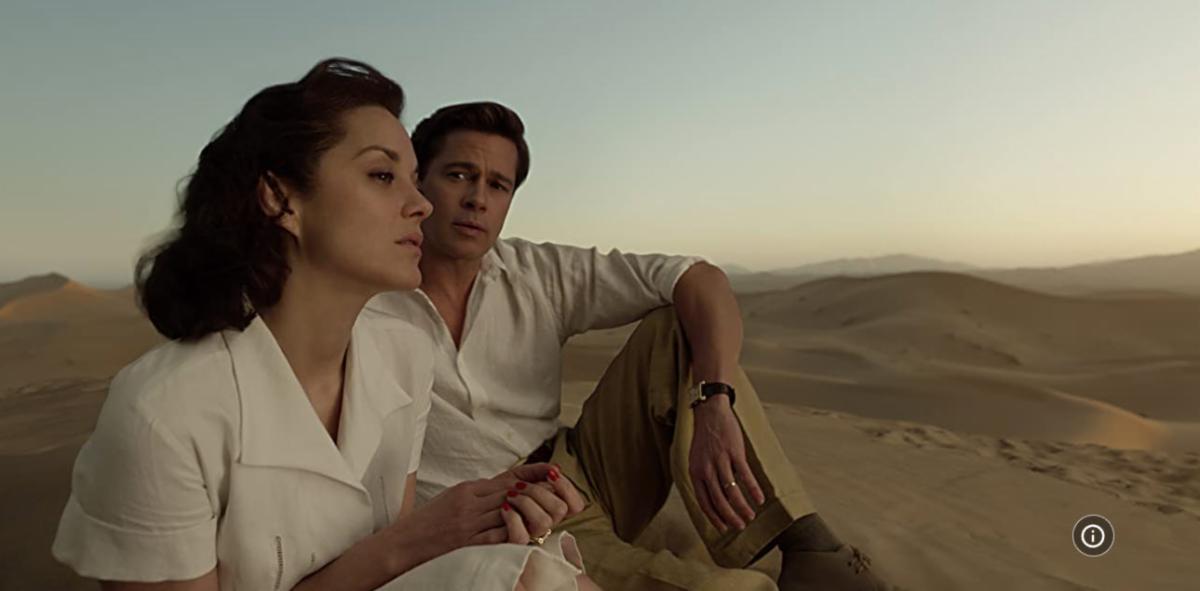
In this WWII spy thriller, Canadian airman Max Vatan (Brad Pitt) and French Resistance operative Marianne Beauséjour (Marion Cotillard) pose as a married couple for a dangerous mission in Casablanca. Their cover story soon leads to an actual love affair and their starting a family together, but Max's happiness is shattered when he's told that he must take part in an investigation to determine whether Marianne is really a double agent working for the Nazis. Jared Harris, Lizzy Caplan, and Matthew Goode co-star. Directed by Robert Zemeckis (Forrest Gump, Cast Away). | |
| |
|
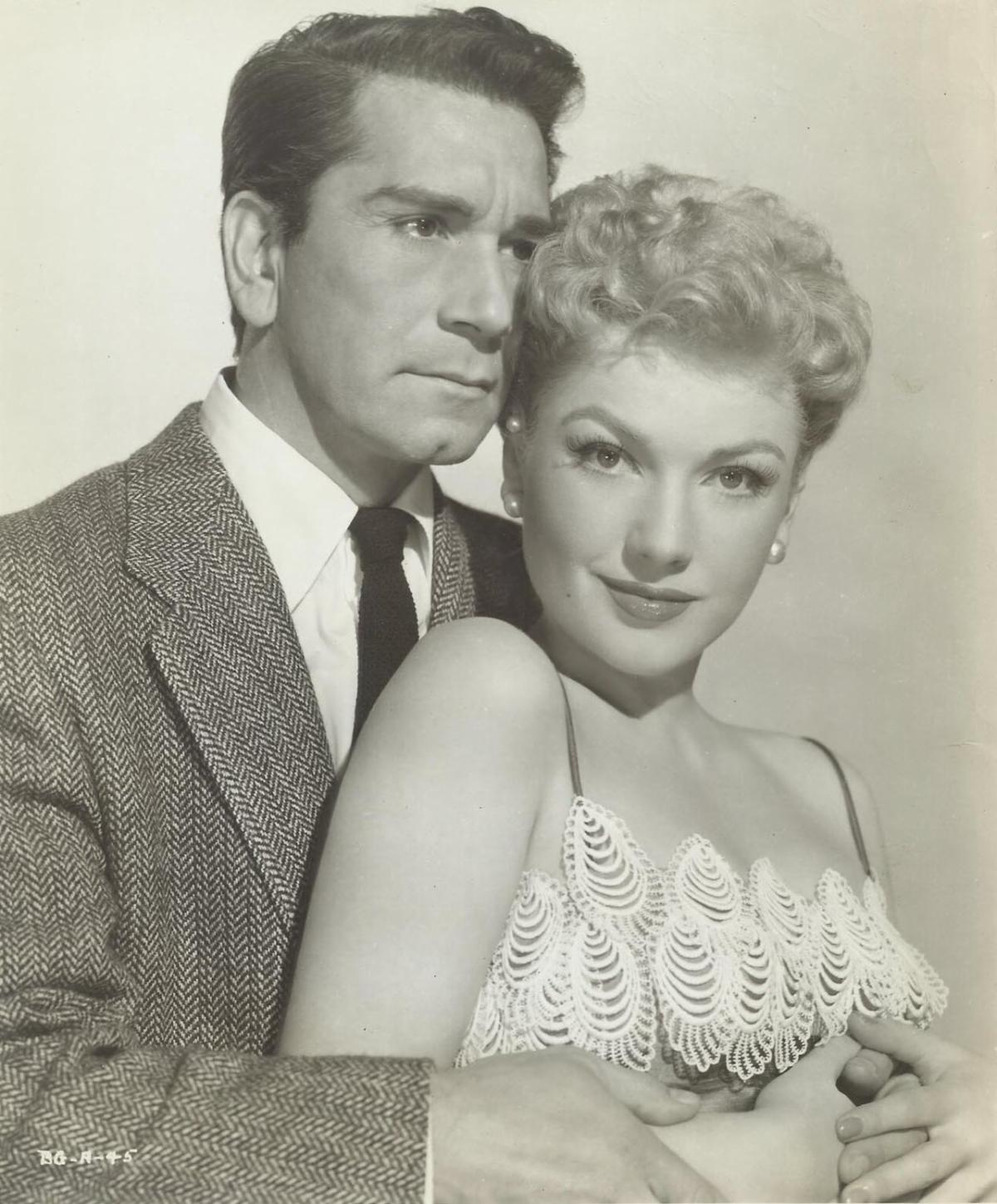
After learning that her boyfriend, a GI in Korea, has found someone else, Norah Larkin (Anne Baxter) impulsively agrees to meet womanizer Harry Prebble (Raymond Burr) for dinner. Norah allows herself to get drunk and accept Prebble's invitation to his apartment. When he tries to force himself on her, she hits him with a poker. Unfortunately, Prebble is found dead the next morning, and Norah, not even remembering how she got home, thinks that she killed him. Meanwhile, newspaperman Casey Mayo (Richard Conte), looking for an angle, invites the "Blue Gardenia Murderess" to turn herself in to him. The high point of the film is the interplay between the vulnerable Baxter and Burr at his smarmiest. | |
| |
|
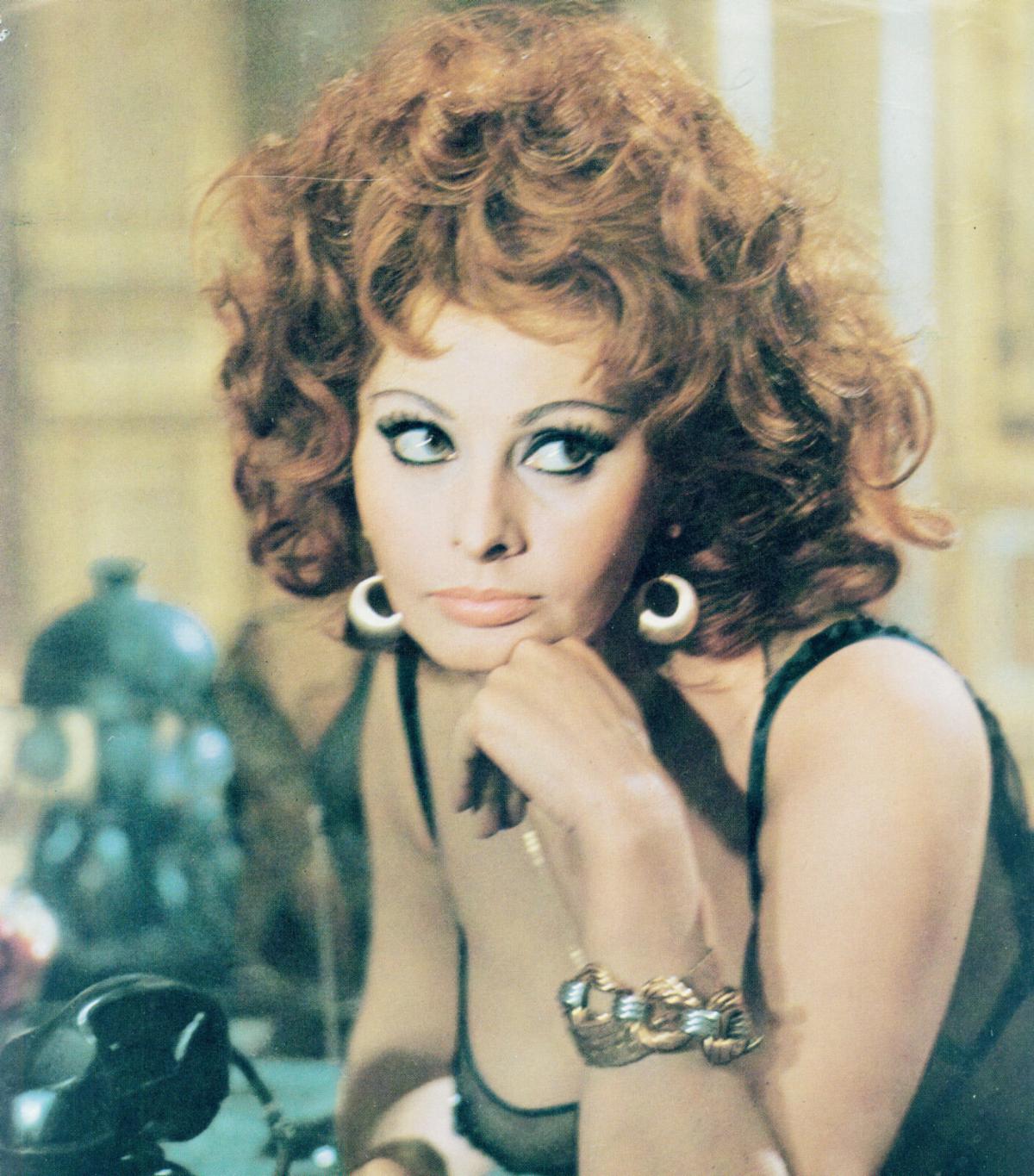
Marriage Italian Style (1964) | In flashback, Domenico (Marcello Mastroianni) recalls his wartime romance with Filumena (Sophia Loren). He is so enamored with her that he finances her escape from the bordello where she lives and sets her up with a good job in the restaurant that he owns, and later finds a place for her on his mother's domestic staff. He is not, however, enamored enough to make their union legal, and expects Filumena to behave like a servant by day and his mistress by night. Years later, Filumena lies on her deathbed. The contrite Domenico finally consents to marry her. Not only does she make a full recovery, but she brings her three grown sons to live with the nonplused Domenico after the wedding. He tries to weasel out of the arrangement, but is mollified by Filumena's insistence that all three boys are his sons. Thus, after nearly twenty years' servitude, Filumena is at last in a position to call the shots. Sold to American distributors on the basis of Sophia Loren's revealing costumes (some of these absolutely defy the laws of gravity), Marriage Italian Style remains a warm and spicy concoction today, even after years of less expert imitations. The film was based on Filumena Marturano by Eduardo de Filipo. | |
| |
|
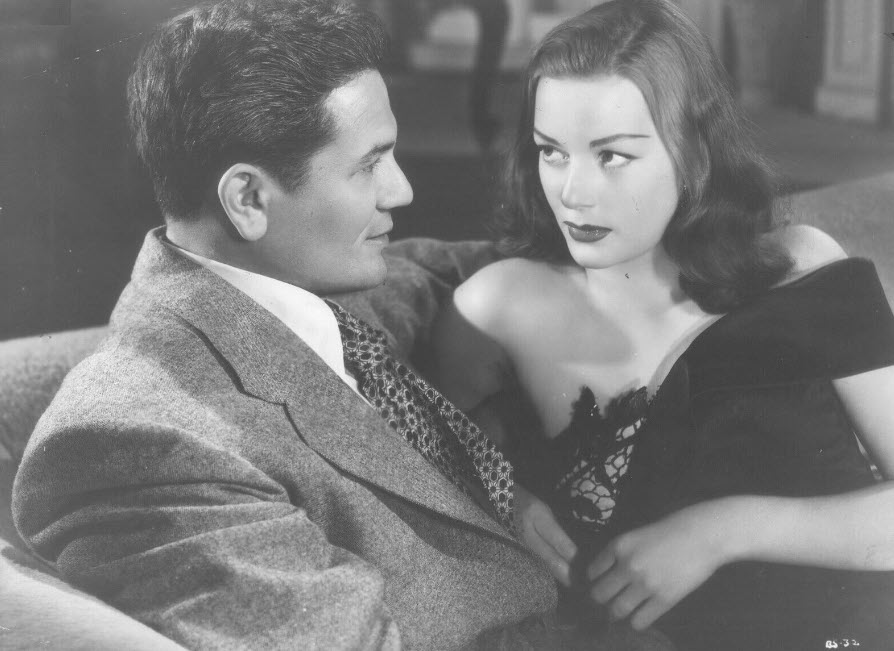
This riveting 1947 drama, regarded by many as the greatest boxing movie of all time, centers on a former pugilist who looks back on his life in and out of the ring and realizes that self-respect is a more important prize than winning. John Garfield is Charlie Davis, a former boxing champion who began fighting in order to save himself and his mother from poverty after his father was killed in a mob-related bombing. William Conrad plays Quinn, a veteran boxer-turned-trainer who discovers that Davis has the potential to be a professional fighter. Eager to take on all contenders, Davis eventually defeats the world champion, but winning has cost him more than he bargained for. He falls in with the mob and takes to a life of easy women and plentiful booze, winning easy bouts with second-rate opponents. In the end, Davis realizes the error of his ways -- but is it too late? With all the odds against him, and knowing that the fight has already been fixed, Davis is forced to make the choice between what's expected of him and what he expects of himself. The fight sequences were filmed on roller skates with a hand-held camera, adding a realism that strengthens the film's verisimilitude. | |
| |
|
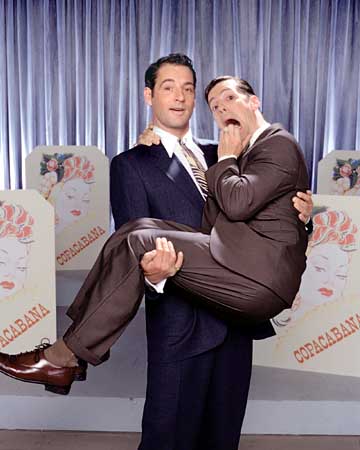
The meteoric rise of the most successful American comedy team of the 20th century is colorfully chronicled in the made for TV biopic Martin and Lewis. Sean Hayes of Will & Grace fame delivers an astonishing performance as the young Jerry Lewis, easily outdistancing British actor Jeremy Northam's capable but phlegmatic portrayal of Dean Martin. The film focuses on the years 1945 to 1956, during which a promising nightclub singer named Dean Martin finds himself pairing up with a manic Borscht-belt comic named Jerry Lewis. Sky rocketing to success in films and TV, Martin and Lewis enjoy a fanatical following comparable to the one attending The Beatles in the 1960s, but ultimately fame and fortune exacts a heavy toll upon the friendship of the two entertainers, culminating in a well-publicized breakup. The script does not flinch in its recreation of Martin's aloof selfishness or Lewis' bullying megalomania, but at the same time the viewer sees the positive character traits of both men, as well as their desperate yearning to be loved and accepted -- not only by their fans, by their families and friends. And even though he is not always shown in the best light, Jerry Lewis, surviving member of the team, loved the film and gave it his unconditional blessing when Martin and Lewis made its CBS bow on November 24, 2002. | |
| |
|
Richard Coogan plays a newspaper reporter whose managing editor has been murdered. Accused of the crime, Coogan escapes in order to find the real killer. The trail of evidence leads to a carnival, where several of the performers seem to have strong connections to the town's biggest power brokers. Rosemary Pettit plays Coogan's secretary, who helps to solve the mystery. Filmed in 1961, Girl on the Run should not be confused with the 1957 77 Sunset Strip pilot film of the same title. | |
| |
|
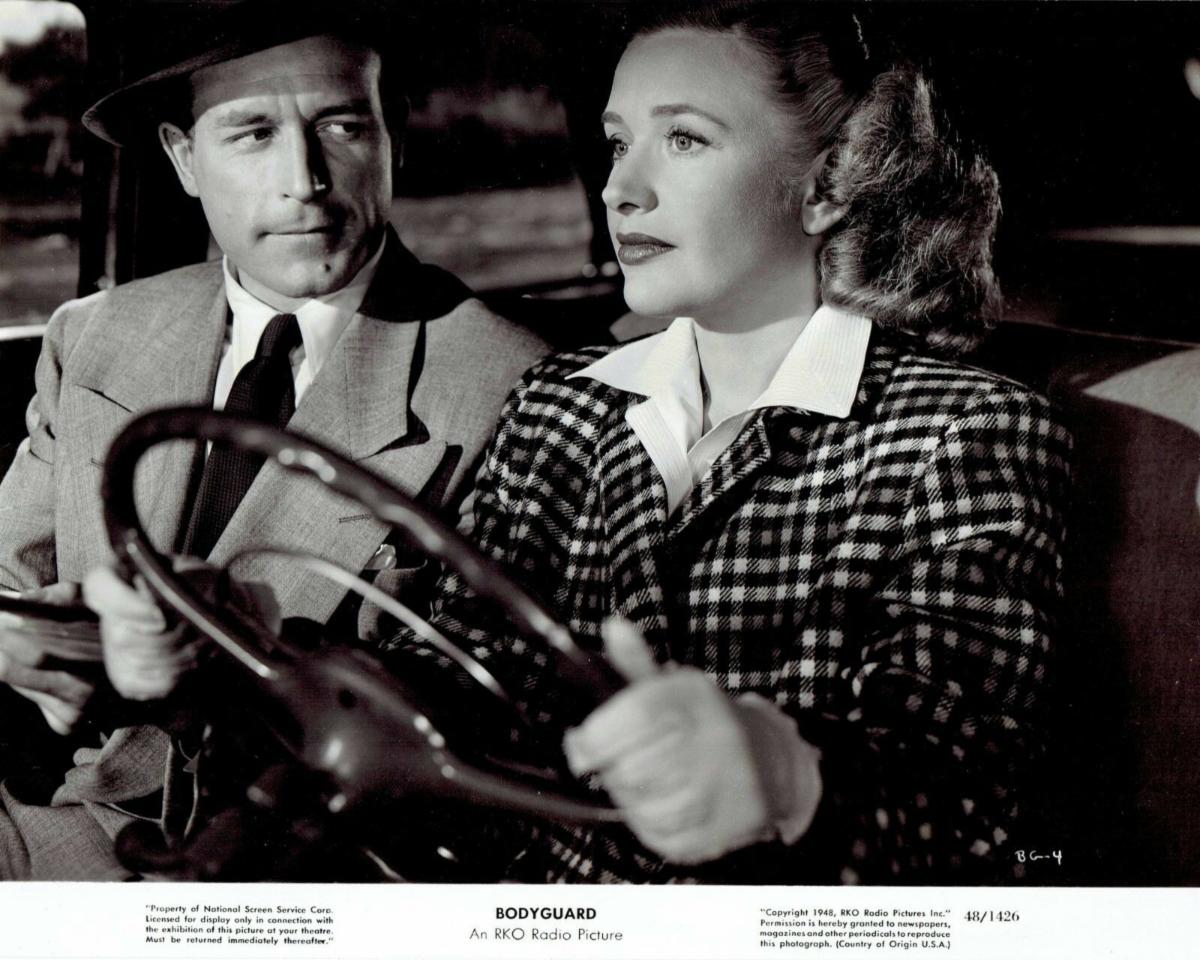
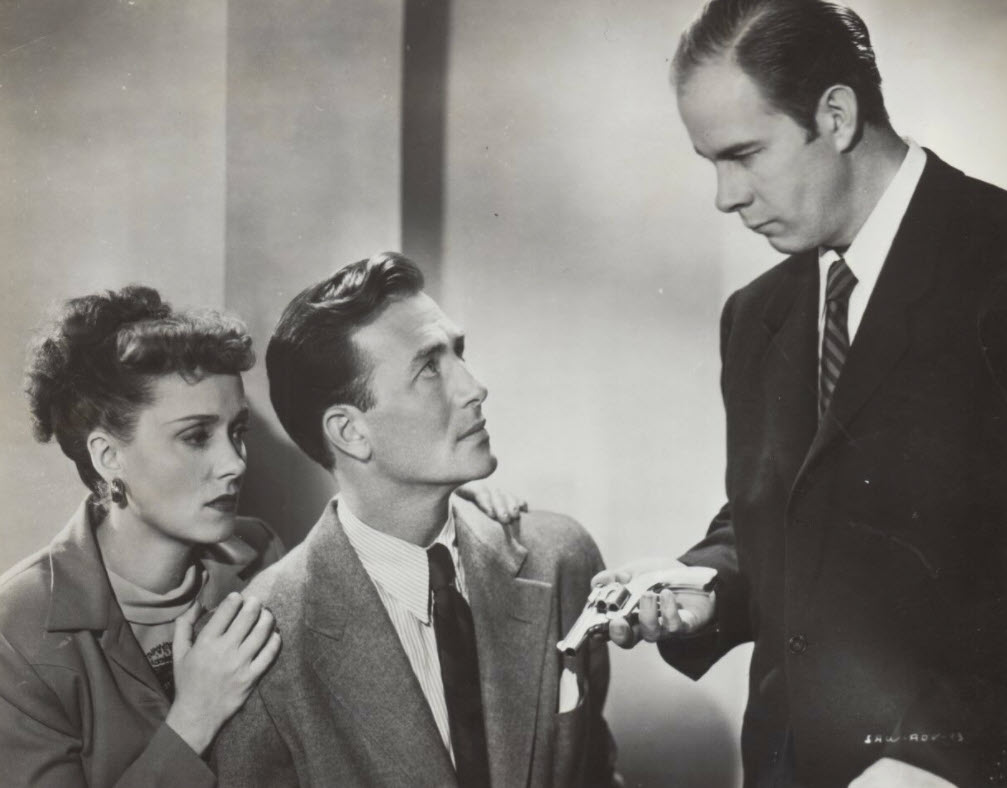
Granite-jawed Lawrence Tierney is the Bodyguard in this second-echelon noir thriller. Invited to resign from the LA police, short-tempered Mike Carter (Tierney) hires on to protect wealthy dowager Eugenia Dyson (Elizabeth Risdon). Before the film has reached its halfway point, Carter has been accused of murder, and is being hunted down by his former fellow officers. Only his file-clerk fiancee Doris Brewster (Priscilla Lane) believes in Carter's innocence, and it is she who is instrumental in cornering the actual killer. After a few more films like Bodyguard and The Narrow Margin, it was obvious that director Richard O. Fleischer had outgrown B pictures and was ready for more prestigious assignments. | |
| |
|
A few days in the life of a murderer go under the microscope in this offbeat and intense low-budget film noir, the first feature from director Allen Baron. Frankie Bono (Baron) is a hired killer from Cleveland who travels to New York City a few days before Christmas on an assignment. Bono, a bitter loner who has few friends and little use for relationships with others, has been brought to the Big Apple to rub out Troiano (Peter Clume), a second-rate mobster. After a less than pleasant encounter with Big Ralph (Larry Tucker), a rotund underground gun dealer, Bono begins casing out Troiano and discovers his target is out of town for a few days, giving him some time to kill. Bono bumps into a childhood friend who thinks he could use a friend and introduces Frankie to Lorrie (Molly McCarthy), but when she invites him to her flat for dinner, the evening doesn't go well and Bono feels more alienated than ever. While keeping tabs on Troiano, Bono runs into Big Ralph again, with consequences that put the hit man and his career in great danger. Blast of Silence features a distinctive and highly dramatic second-person narration read by Lionel Stander (whose name does not appear in the credits); the narration was written by the then-blacklisted Waldo Salt under the name Mel Davenport. Director Allen Baron originally cast Peter Falk as Frankie Bono, but ended up playing the lead after Falk dropped out to take a better paying role in the crime drama Murder Inc. | |
| |
|
Millionaire Playboy (1940) | A hapless young socialite attempts to overcome an embarrassing romantic problem in this silly crime comedy. It seems every time the handsome youth kisses a gal, he gets a horrible case of hiccups. Anxious to cure him, his father spends a small fortune to take his son to a special headshrinker who in turn sends the lad to a beautiful spa filled with gorgeous young women. The crime part comes in when the son learns that his father has been using shady means to procure the resort so he can build a dam there. | |
| |
|
Requiem For A Killer: The Making Of Blast Of Silence (2007) | Expansion of a 1990 documentary about the making of Blast of Silence, a late in the game film noir thriller that was filmed on the streets of New York City to great effect. The original version was made after the film was rediscovered at a German film festival and a TV film crew went and followed director and star Allen Baron around the films locations while he talked about the film. This expansion includes that footage as well as 2006 interview with Baron. This is a good but not great look at the making of the film as well as the career of Baron. The problem is that the stories that Baron tells seem to be almost random and often spiral out in odd directions, for example he talks a great deal about a closed restaurant and how its was important to the New York theater community. Its not bad, its just not on point. When Baron is on point the stories are great. The film is also great in the way that it shows how the city has changed over the thirty years between when the film was made and Baron revisits the locations. (I should also mention that on the Criterion DVD of Blast of Silence, where this film is included as an extra, there is also a series of stills that brings the changes of the locations up to 2008.) Baron also muses a great deal about the psychology of his character from the film. I'm not sure that its all that necessary since much of it seems pretty clear in the film itself. Overall I liked this look at the making of Blast, but I didn't love it. Its too unfocused to be wholly satisfying. Still I did enjoy the hour I spent watching it but I don't know if I would watch it again, not because its bad but I don't think I'd get much out of a second viewing. Worth a look if you've seen Blast of Silence. If you haven't seen Blast then don't even consider watching this partly because its full of spoilers but mostly what is discussed will mean nothing to you unless you've seen the film its about. | |
| |
|
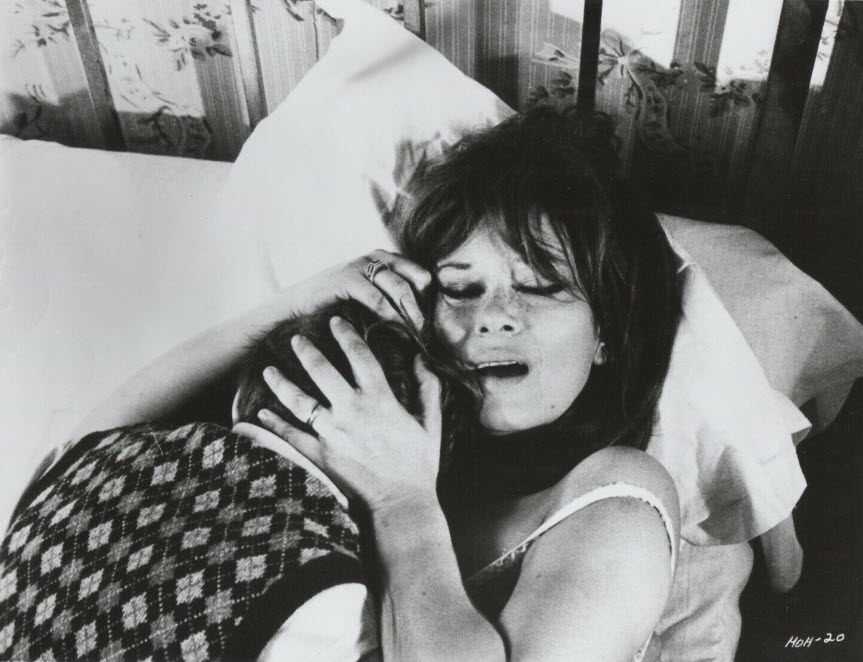
Murmur Of The Heart (1971) | Told with fondness and precision, and set in France at the time of the IndoChina War (which later became an American problem known as the Vietnam War), this controversial feature handles teen coming-of-age, sexuality and even incest with a gentleness that disappointed the prurient and shocked the conservative. This is one of director Louis Malle's finest films: others include The Fire Within and Au Revoir Les Enfants. Laurent (Benoit Ferreux) is 14 years old and anxious to lose his virginity. However, he has a very close family circle, and, between the family and school, he is too closely watched to get anywhere. He makes the most of an opportunity to neck with the girls at his older brothers' party and later almost gets to lose his virginity in a bordello, but his boisterously drunken brothers interrupt him. His real opportunity arises while his mother takes him for a rest-cure for his heart murmur at a very conventional spa. | |
| |
|
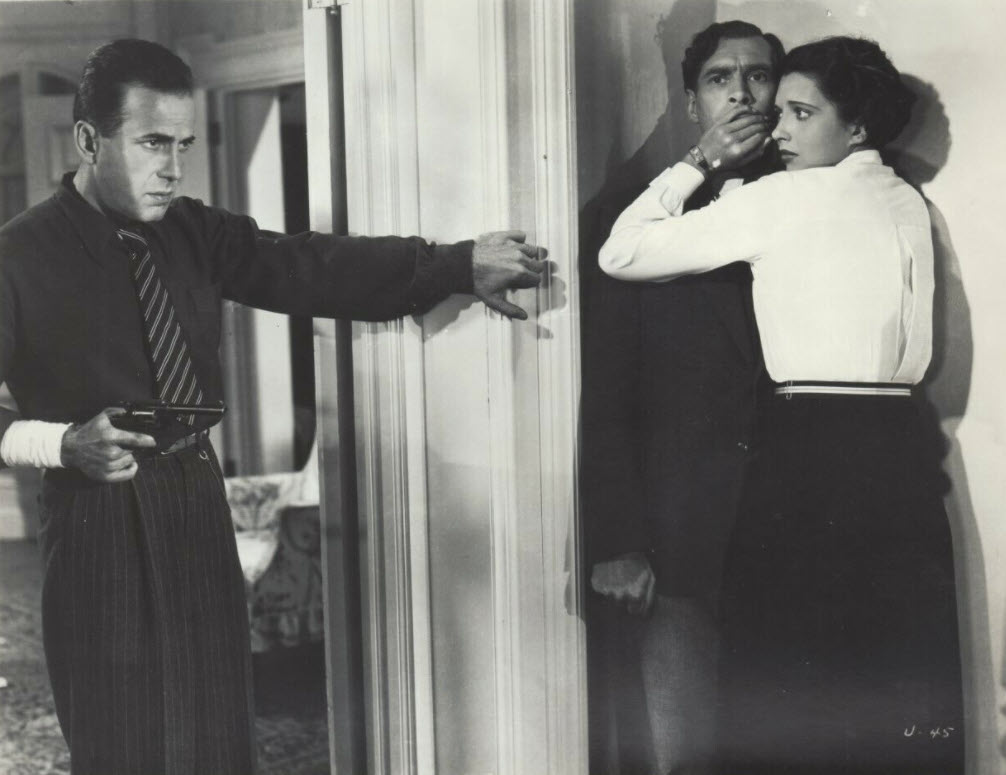
King Of The Underworld (1939) | A remake of Dr. Socrates (1935), this middling melodrama features Kay Francis as Carol Nelson, a medical doctor blaming gangster Joe Gurney (Humphrey Bogart) for the death of her husband (John Eldredge) during a police raid. Determined to get even, Dr. Nelson sets up practice in a small town where a couple of Gurney's henchmen are serving time. And sure enough, Gurney is soon in dire need of Carol's help after being wounded in a jailhouse break. Convincing the gang boss and his men that they all suffer from eye infections, the good doctor proceeds to blind the mobsters with adrenaline eye drops and then calls the cops. Warner Bros. used the general idea a third time in Bullet Scars (1942), yet another B-movie. | |
| |
|
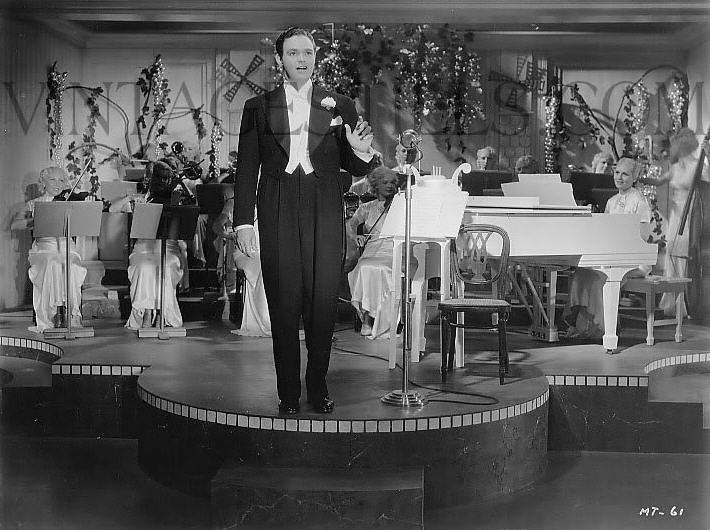
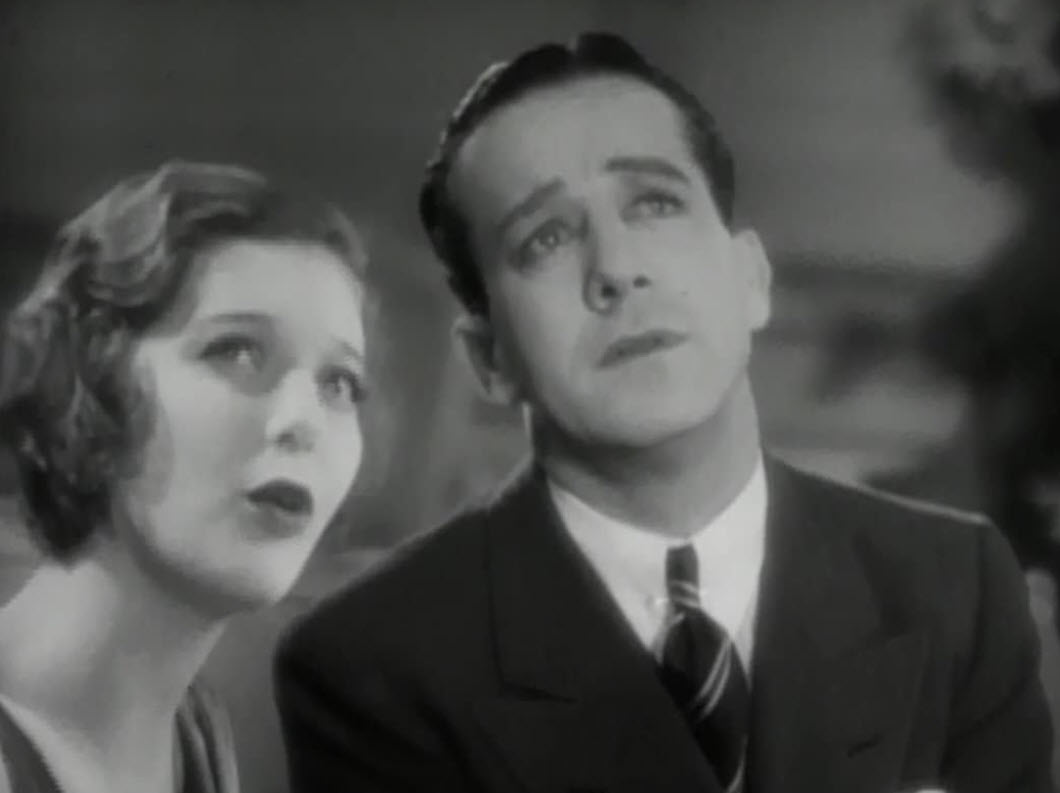
Operatic tenor James Melton stars as on-the-skids bandleader Tod Weaver, who finds himself in charge of an all-girl orchestra. Though he tries to remain oblivious to his musicians' charms, he can't help but fall in love with assistant conductor Gale Starr (Patricia Ellis). Things look bad for hero and heroine when seductive Lorna Wray (Winifred Shaw) comes between them, but Tod is brought back to earth with a well-aimed slap. The cast of Melody for Two contains some potent comedy talent, including Marie Wilson and Eddie "Rochester" Anderson, but the spotlight is on the golden-throated James Melton. The film's one memorable song is "September in the Rain," later hilariously re-created in the "Looney Tunes" installment Porky's Preview (1938). | |
| |
|
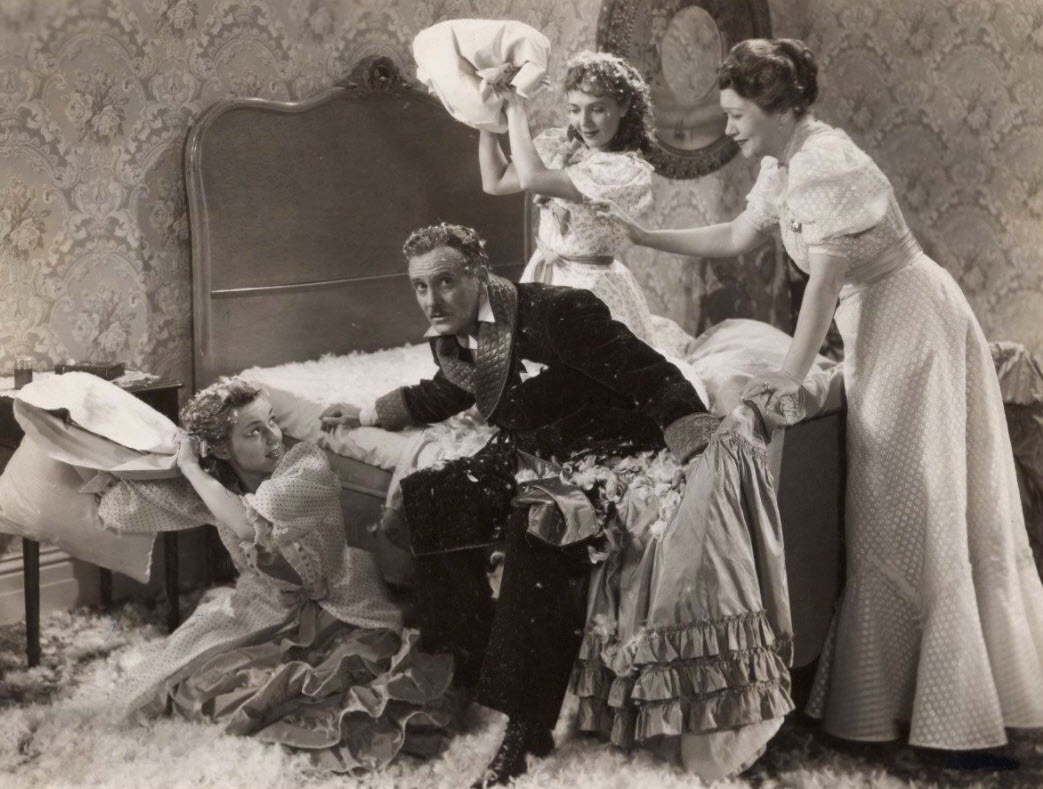
Mother Carey's Chickens (1938) | Katharine Hepburn's association with RKO Radio Pictures came to an abrupt end when she refused to star in the studio's adaptation of Kate Douglas Wiggins' sentimental novel Mother Carey's Chickens. Hepburn was replaced by musical-comedy favorite Ruby Keeler, who though woefully miscast did her best to please. The story proper gets under way when Mr. Carey (Ralph Morgan) is killed in the Spanish American War, leaving his wife (Fay Bainter), his daughters Kitty (Keeler) and Nancy (Anne Shirley) and his young son Peter (Donnie Dunigan) to fend for themselves without a penny to their name. When Mrs. Carey is forced to put up the family's new house for sale, her daughters try to scare off potential buyers by claiming that the domicile is haunted. Thankfully, the Careys manage to find a source of income that will enable them to remain in their home, "ghosts" and all. Even more thankfully, the daughters find suitable mates in the form of Ralph (James Ellison) and Tom (Frank Albertson). With so much sugary sweetness, Walter Brennan's portrayal of the family's curmudgeonly benefactor comes as a decided relief. The film's sentimental theme music was later heard during the newsreel sequence of Citizen Kane, where it fit surprisingly well. Mother Carey's Chickens was remade by Disney as Summer Magic in 1963. | |
| |
|
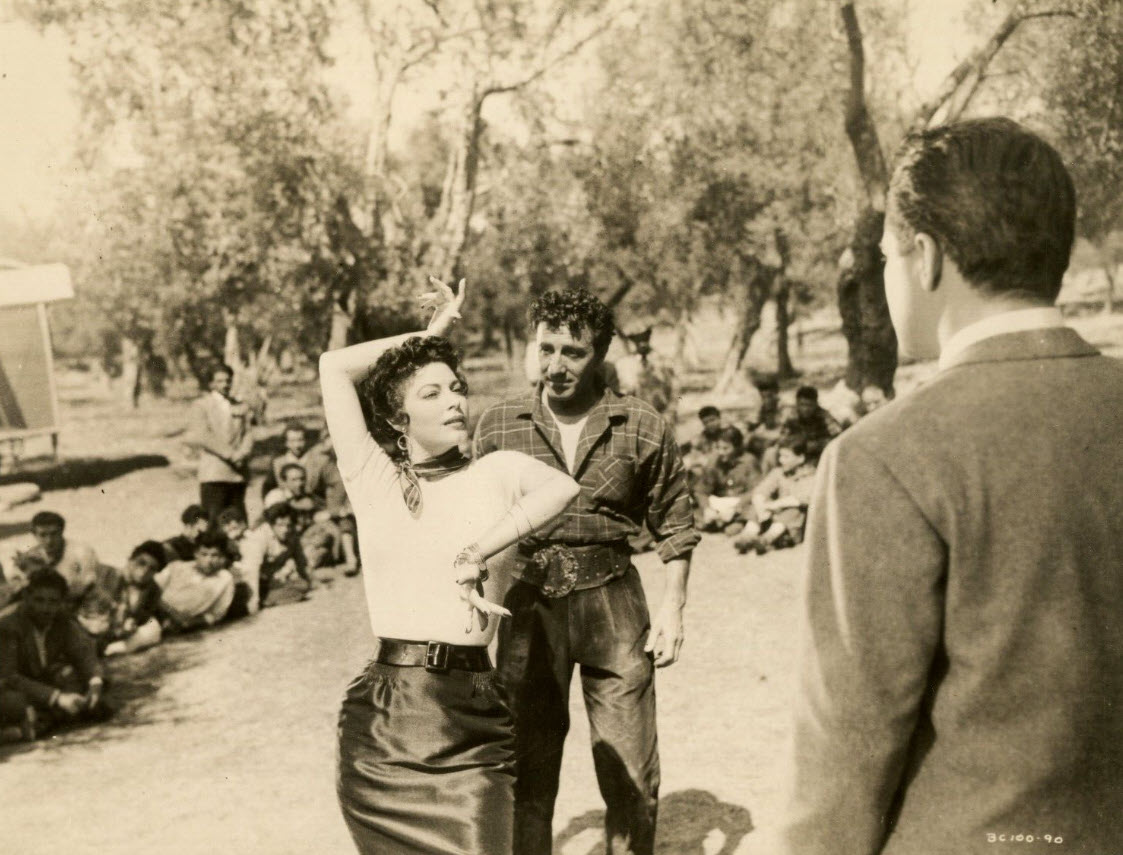
The Barefoot Contessa (1954) | The Barefoot Contessa begins at the funeral of Ava Gardner, a former Spanish peasant, cabaret dancer and movie star, who at the time of her death was a full-fledged contessa. Her life story unfolds in flashback recollections from her mourners. Film director Humphrey Bogart recalls how his career was saved when he discovered Gardner on behalf of Howard R. Hughes-like mogul Warren Stevens. Press agent Edmond O'Brien remembers how Ava was wooed and then abandoned by mercurial millionaire Marius Goring, and Italian count Rosanno Brazzi reflects on how he was able to wed the tempestuous Gardner, only to watch his world crumble after revealing on their wedding night that he was "only half a man." O'Brien received Best Supporting Actor awards at both the Academy Awards and Golden Globes in 1954. | |
| |
|
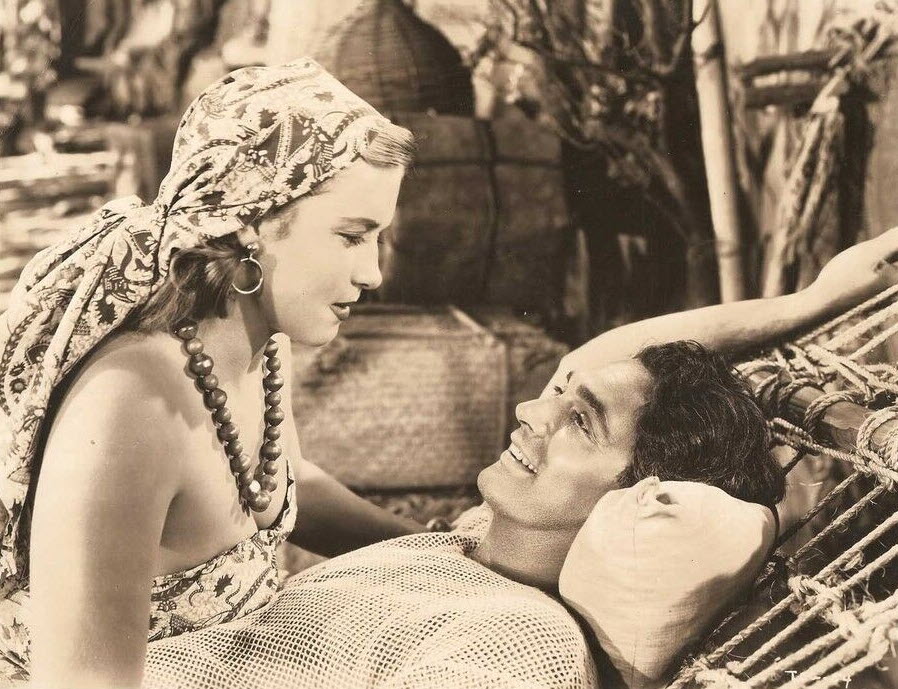
Tarzan And The Slave Girl (1950) | The people of a jungle village are suffering from a strange illness that is killing off the female population. The natives resort to kidnapping women from other regions -- including Jane (Vanessa Brown), the mate of Tarzan (Lex Barker). Never one to hold a grudge, Tarzan offers to deliver a serum that will wipe out the epidemic. Unfortunately, numerous unforeseen perils await Tarzan during his journey through the foliage. The "slave girl" of the title is played by Denise Darcel, whose role as a nurse is secondary but decorative. An 8 X 10 glossy of the underdressed Darcel, her wrists shackled, clinging desperately to Lex Barker's bare legs, turned out to be one of the biggest-selling "pin-ups" of the 1950s. Not bad for a post-Weissmuller Tarzan flick, Tarzan and the Slave Girl falters only during an extended comic sequence involving Cheta the chimp and a bottle of booze. | |
| |
|
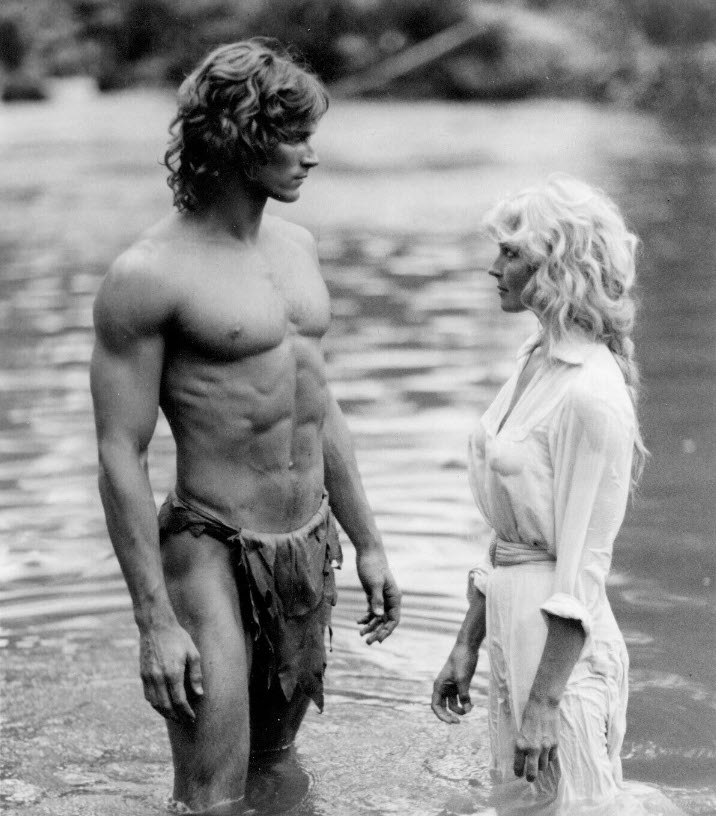
Tarzan The Ape Man (1981) | John Derek directed this 1981 vanity production of the Tarzan tale as a bon-bon for his wife Bo Derek. The Bo Derek version answers any questions viewers may have had concerning Tarzan and Jane's sex life. The film begins as Jane (Bo Derek)'s father Parker (Richard Harris) heads to the African interior on the pretext of searching for hidden jungle secrets. He is actually looking for Tarzan (Miles O'Keeffe), whom he plans to kidnap and bring back to England dead or alive. Jane accompanies her manic father, along with his unassuming assistant Holt (John Phillip Law). Realizing that Parker is on his trail, Tarzan kidnaps Jane and it is love at first sight. Parker forges on, trying to capture Tarzan and save his daughter. But Tarzan finally saves the day when Jane is kidnapped by a band of African mud worshippers, who are preparing her to be sacrificed to the gods. | |
| |
|
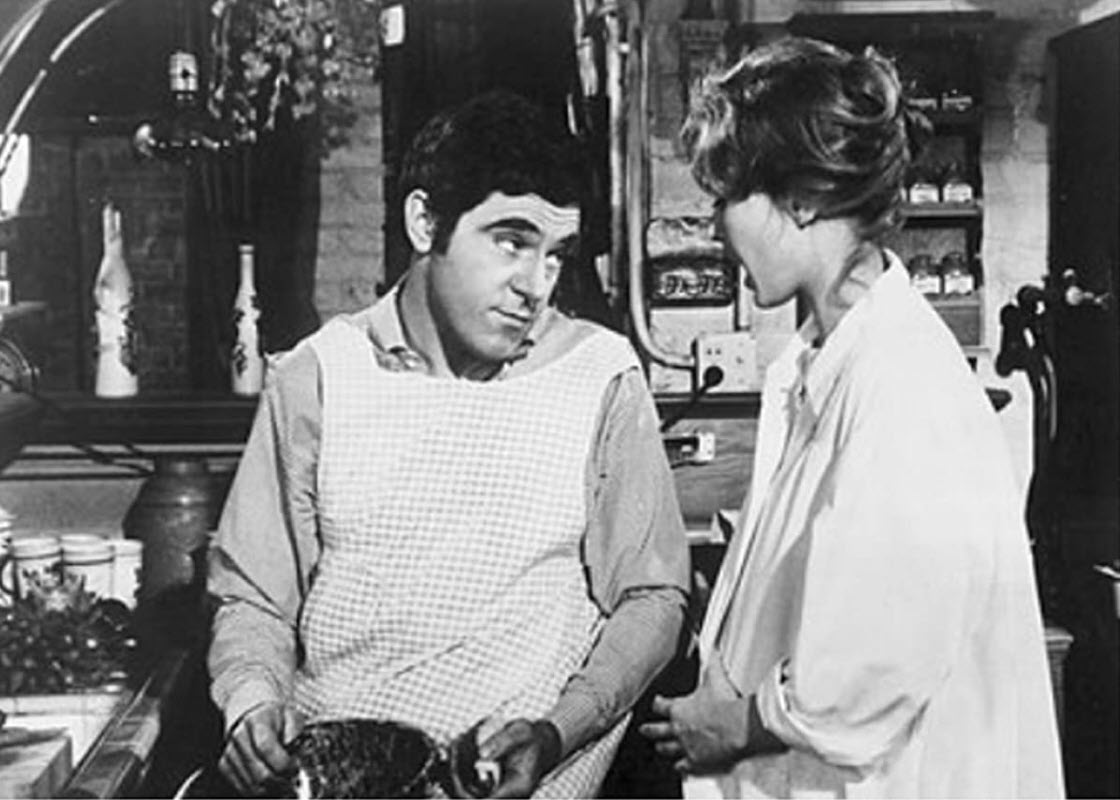
Sarah Deever (Sandy Dennis) is an idealistic young woman living in Brooklyn. Her altruistic nature finds her taking in visitors for a month at a time to help them in their time of need. Charlie Blake (Anthony Newley) is her latest reclamation project, a cardboard-box factory worker and owner of an annoyingly loud alarm on his wristwatch. Charlie gains entrance to her apartment and eventually her heart when he reveals he always wanted to be a poet. Sarah seeks to overcome her own problems by helping those in need, but her need for Charlie's love soon supersedes her initial intentions. He is allowed to stay for the month of November as she adheres to her traditional deadline on guests. | |
| |
|
Jeffrey Lynn plays a bookkeeper who fails in his attempt to get a raise from his employer (Richard Gaines). The boss explains that the company is on the verge of bankruptcy, and that he is planning to kill himself. He offers Lynn $10,000 if Lynn will make the suicide look like murder so that the boss' family will collect on his insurance policy. Lynn agrees--and finds himself the fall guy in a complicated fraud scheme. Much of the footage of Strange Bargain showed up as flashbacks in a 1989 episode of TV's Murder, She Wrote. By removing the original happy ending, the TV installment allowed Jessica Fletcher (Angela Lansbury) solve the mystery of the boss' murder--and to exonerate the long-imprisoned bookkeeper, played again by Jeffrey Lynn! Also appearing on this remarkable Murder She Wrote were Lynn's surviving Strange Bargain costars Martha Scott and Harry Morgan. | |
| |
|
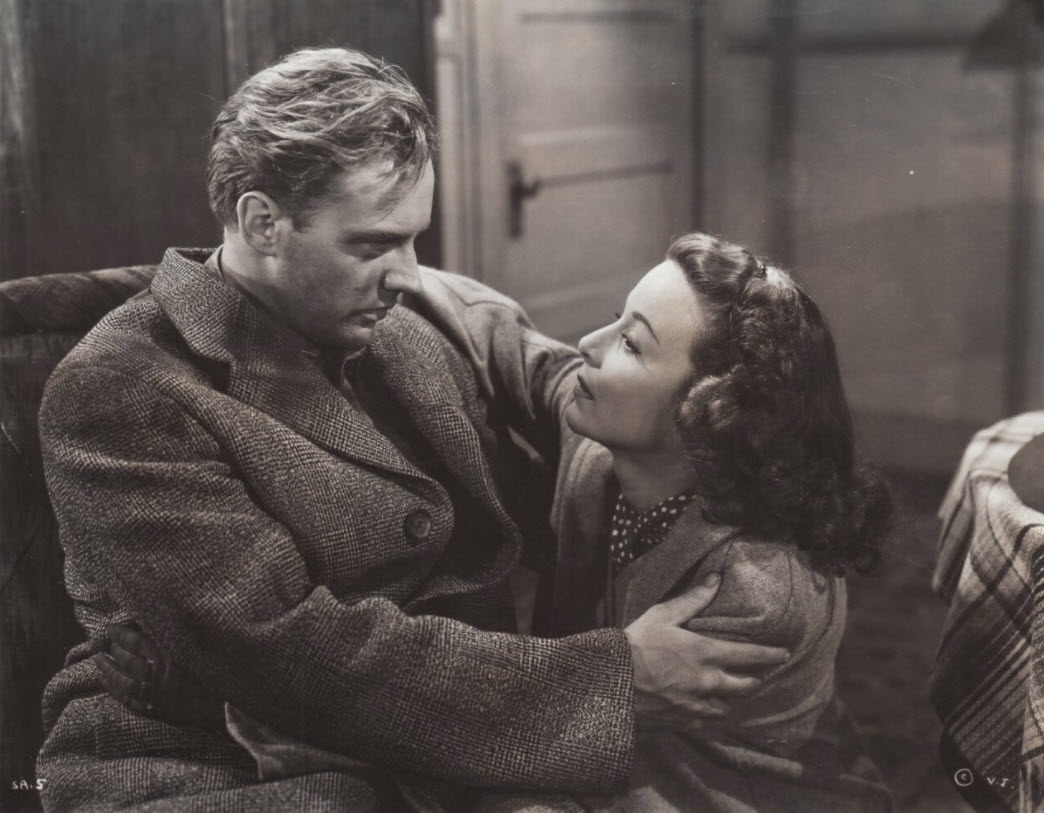
Strange Alibi offered young Warner Bros. contractee Arthur Kennedy to carry a picture all by himself. The star is cast as detective Joe Geary, who is suddenly and unexpectedly fired from the police force. Appararently embittered, Geary joins a criminal gang. Actually, it's all part of a scheme cooked up between Geary and police chief Sprague (Jonathan Hale) to infiltrate the mob. But the crooks get wise, bump off Sprague, and frame Geary for murder. It takes a jail break and a wild chase before Geary is able to clear himself. Critics in 1941 noted that a Warner Bros. B picture would have seemed incomplete without at least one prison scene. And isn't that a young Jackie Gleason as one of the bad guys? | |
| |
|
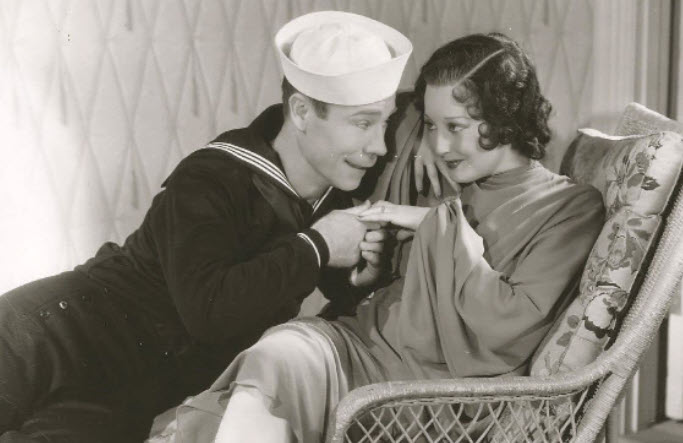
Joe E. Brown is a sailor who hopes to match the accomplishments of his seaman father. Unfortunately, Joe is perhaps the clumsiest gob ever to sail the seven seas. Nor can he steer clear of trouble: Through a series of wholly unbelievable circumstances, Joe finds himself alone on deck of a ship that's about to be shelled for target practice. He redeems himself for this and all past misdeeds when he inadvertently breaks up an espionage ring. Son of a Sailor is typical Joe E. Brown fare, but it's the sort of surefire material the public craved; indeed, at least one theatre manager insisted that Warner Bros. (Brown's home studio) send him more of the same. | |
| |
|
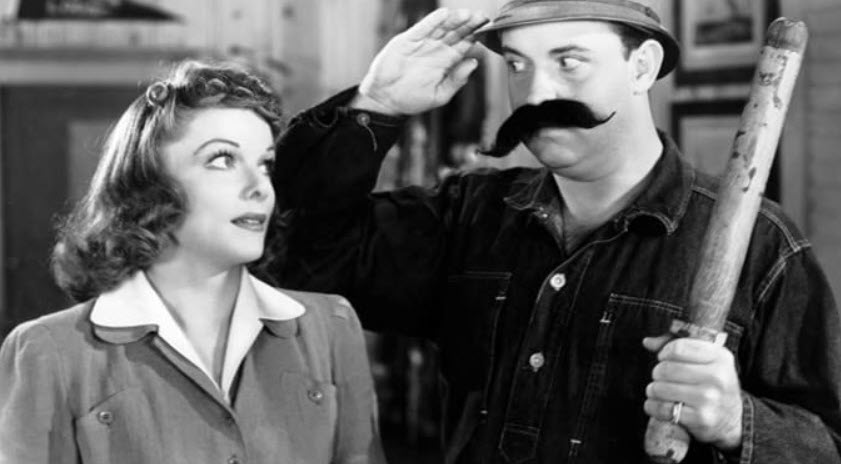
In this comedy, a blocked writer decides he needs a little peace and quiet to spark his creativity so that he can write the final act of his play. Unfortunately, he no sooner settles down in his remote cabin when his first wife comes to call. She is followed by his second wife. A real ruckus ensues when his current girl friend also comes to see him. | |
| |
|
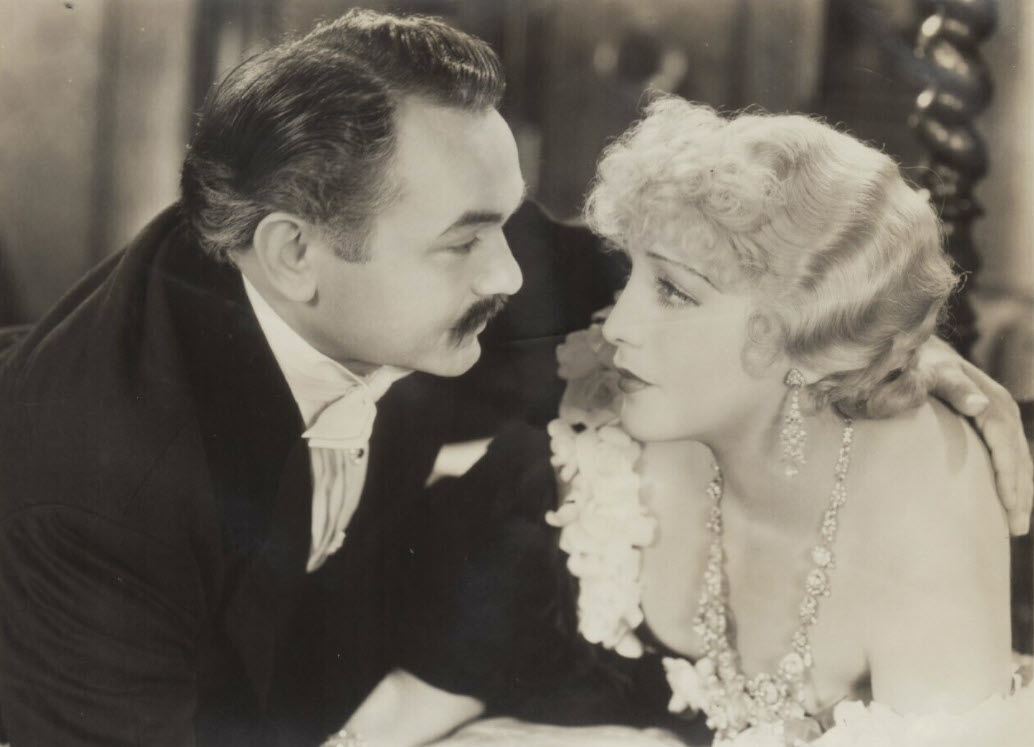
The factual story of H.A.W. Tabor and "Baby Doe" was the inspiration of Silver Dollar. Edward G. Robinson plays the Tabor counterpart, a prospector who strikes it rich with a silver mine. Robinson establishes the city of Denver, strongarms his way into political power, buys every creature comfort he can get his hands on, and deserts his faithful wife (Aline McMahon) for a flashy younger woman (Bebe Daniels, playing the character based on Tabor's mistress "Baby Doe"). Robinson is ruined by the decline of the silver market, spending his last days in near-madness planning and dreaming for a return to his glory days. In real life, it was Baby Doe who went insane, living (and dying) in a tiny shack near the once-prosperous silver mine. Stodgily directed, Silver Dollar isn't nearly as surrealistic as the true story it's based on. | |
| |
|
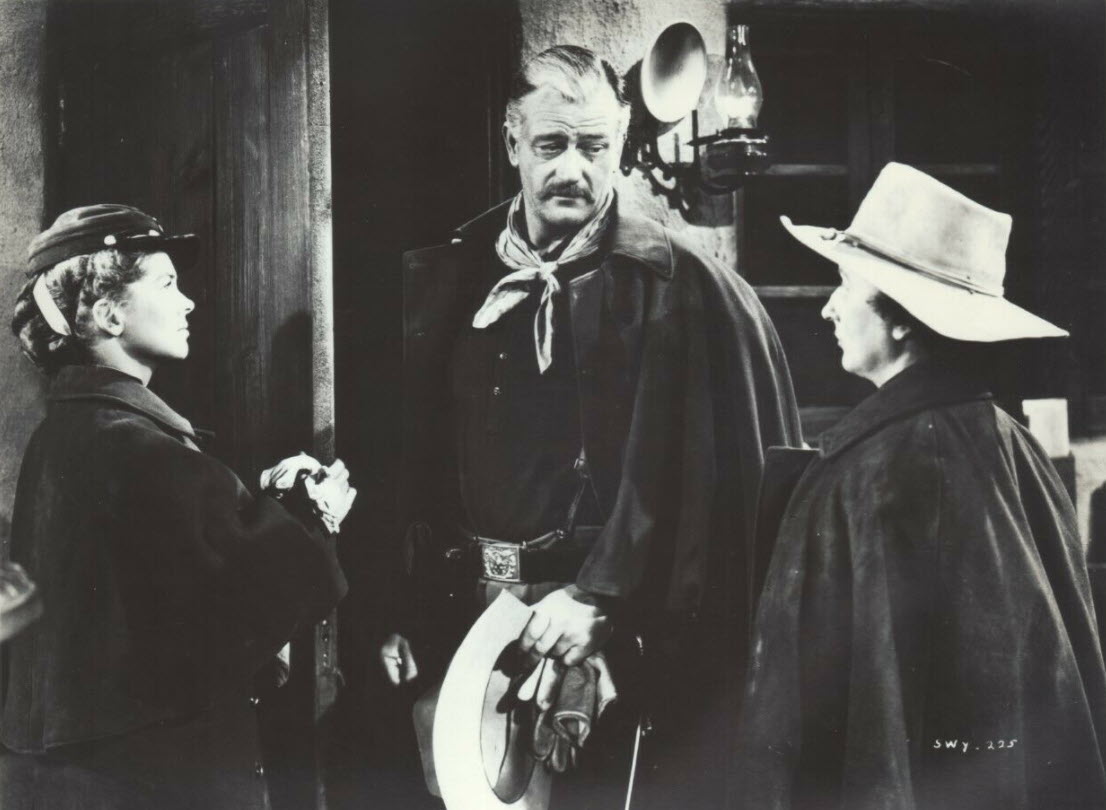
She Wore A Yellow Ribbon (1948) | The second of John Ford's "Cavalry Trilogy," this film stars John Wayne as Cavalry Captain Nathan Brittles. In his last days before his compulsory retirement, Brittles must face the possibility of a full-scale attack from the Arapahos, fomented by the recent defeat of General Custer and by double-dealing Indian agents. | |
| |
|
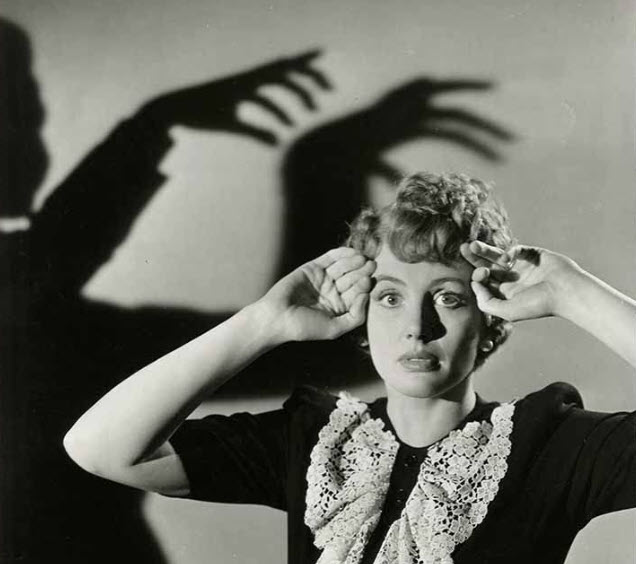
Shadows On The Stairs (1941) | Shadows on the Stairs is a slimmed-down adaptation of Frank Vosper's stage play Murder on the 2nd Floor. There's dirty work afoot at the London boarding house managed by Mr. and Mrs. Armitage (Miles Mander, Frieda Inescourt): several mysterious murders have occured, and everyone is under suspicion. One of the tenants is Mr. Bromilow (Bruce Lester), who weaves in and out of the proceedings with the all-knowing air of one who's already figured out the solution to the murders. Indeed, Bromilow has done just that, as demonstrated by a twist ending that would have done Alfred Hitchcock or Rod Serling proud. Otherwise, Shadows on the Stairs is standard stuff, standardly produced. | |
| |
|
Shadow Of The Hawk (1976) | In this actioner, the Westernized grandson of a shaman decides to return to the wilderness to learn more about his Native American heritage. He ends up meeting some very powerful evil spirits and to escape them he must enlist the aid of his lover and a local chief to stop the spirits from taking over. | |
| |
|
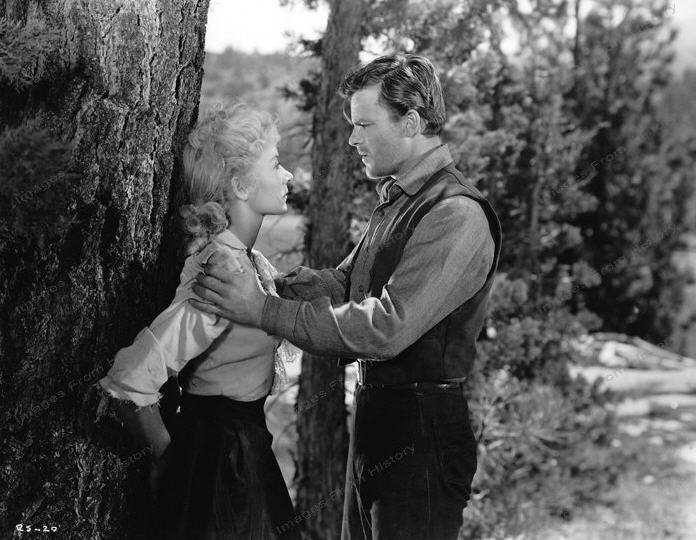
Hovering somewhere between an "A" and "B" production, RKO's Roughshod is an expert blend of western and film noir. Robert Sterling and Claude Jarman Jr. star as young cattleman Clay Phillips and his kid brother Steve. Stalked across the Sonora Pass by an ex-con who has vowed to kill Clay, the brothers find themselves the reluctant escorts for a quartet of stranded dance-hall girls. While the puritanical Clay adopts a strict "hands off" policy, he finds himself falling in love with one of the girls (Gloria Grahame -- the other ladies are played by Martha Hyer, Myrna Dell and Jeff Donnell). The climax is a nail-biting wilderness showdown between the heroes and villain Lednov (John Ireland). On the strength of Roughshod, director Mark Robson was elevated to more prestigious film assignments. | |
| |
|
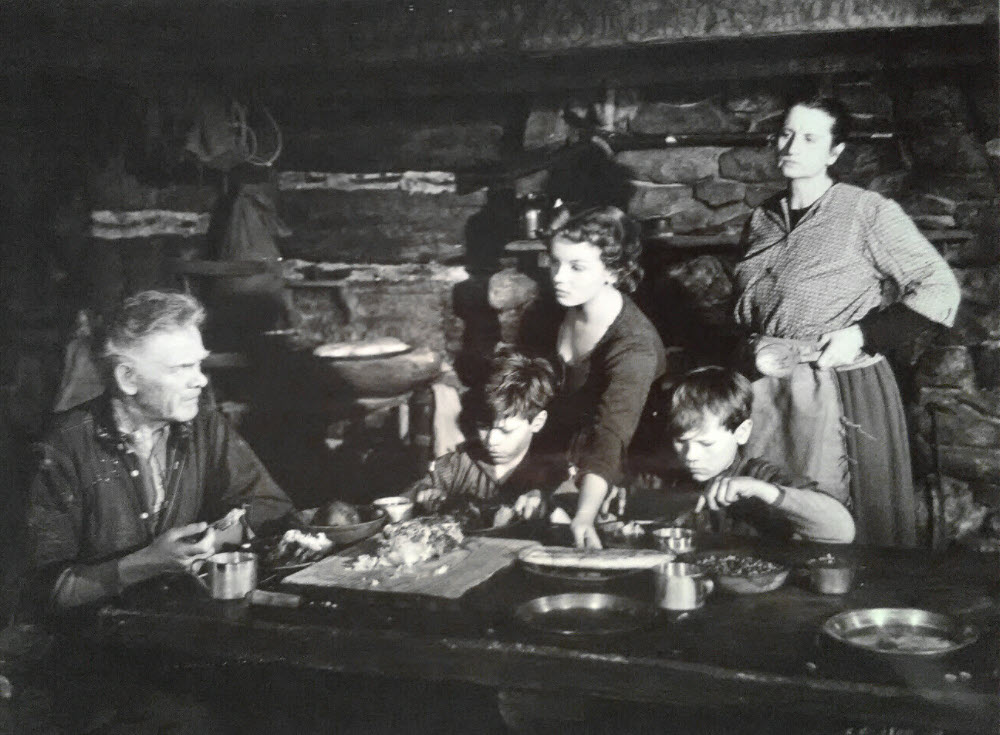
The saga of the Hatfield-and-McCoy feud is romanticized in Samuel Goldwyn's Roseanna McCoy. Newcomer Joan Evans stars as the title character, whose elopement with Johnse Hatfield (Farley Granger) serves to further fuel the flames of the deadly mountain feud. The opposing patriarches, Devil Anse Hatfield and Old Randall McCoy, are vividly realized by Charles Bickford and Raymond Massey. In West Virginia and Kentucky, the debate still rages over what started the hostilities, but there's no question that the end result was tragedy for all concerned. In Goldwyn's version, the feud comes to a halt because Roseanna and Johnse demand it; would that real life were this simple and clear-cut. Based on a novel by Alberta Hannum, Roseanna McCoy was released through the distribution channels of RKO Radio. | |
| |
|
17-year-old Loretta Young is as cute as all get out in Road to Paradise. This compensates for the fact that Young isn't quite up to the dramatic demands of the script. She plays a dual role, as a society deb and her twin sister. Looking for thrills, Young ties up with a couple of crooks (Raymond Hatton and George Barraud), and ends up robbing her own sister's house. Ms. Young's leading man is the personable Jack Mulhall, in one of his last sizeable talkie roles. Road to Paradise was adapted by F. Hugh Herbert from a play by Dodson Mitchell and Zelda Sears. | |
| |
|
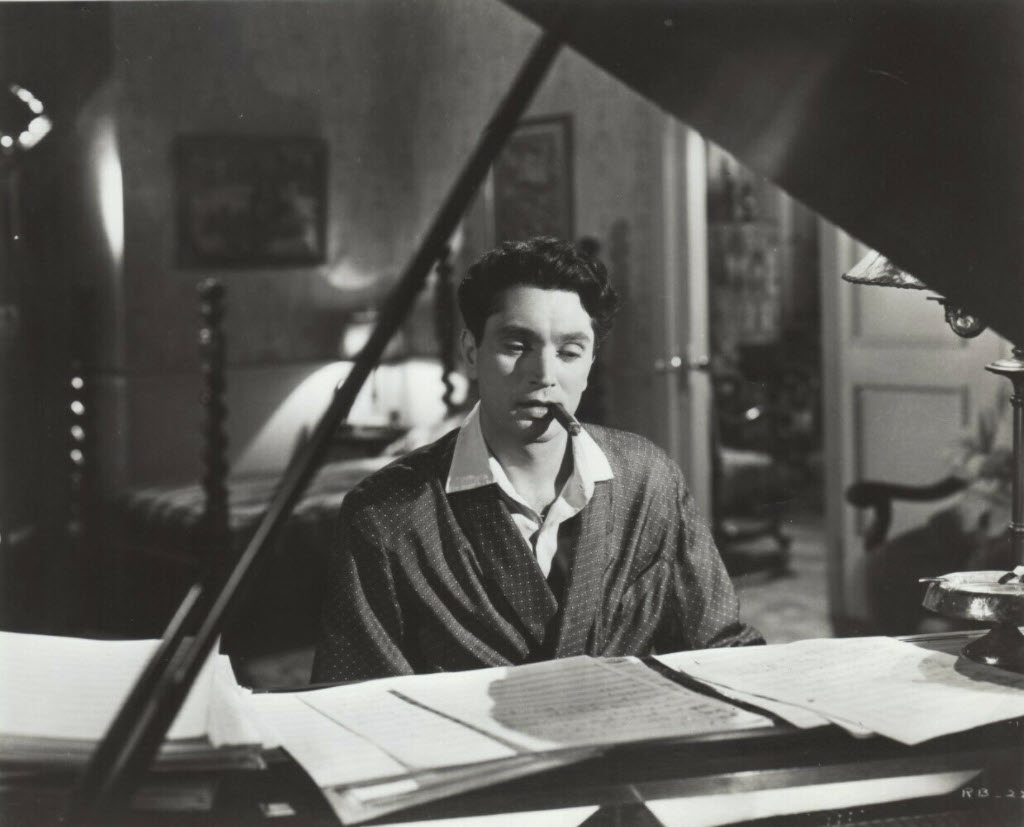
There's slightly more fancy than fact in this lavish film biography of legendary American composer George Gershwin, but oh! That music! Director Irving Rapper had wanted Tyrone Power to play Gershwin, but Power was still serving in the Marines, so Rapper had to settle for Robert Alda--who isn't bad at all, just a trifle over-enthusiastic. The film traces Gershwin's rise from a "song plugger" for a Manhattan music publishing company to the heights of international fame and fortune. Gershwin's first big hit is "Swanee," introduced on Broadway by Al Jolson (who plays himself, making his first film appearance in six years). In collaboration with his lyricist brother Ira (well played by Herbert Rudley), George pens hit after hit in show after show. Impresario Charles Coburn is happy with this, but George's kindly old music teacher Albert Basserman wants his prize pupil to aspire to something more artistic. Gershwin responds with "Rhapsody in Blue", which debuts at Aeolian Hall in 1924 under the baton of bandleader Paul Whiteman (also playing himself). As his fame and workload grows, George finds he has no time at all for romance; the two (fictional) ladies in his life, both of whom eventually realize that they'll always have to play second fiddle to Gershwin's muse, are musical comedy star Joan Leslie and socialite Alexis Smith. Gershwin continues to compose such masterpieces as "An American in Paris", "Cuban Overture", "Concerto in F" and the 1935 folk opera Porgy and Bess. He will not allow himself to rest on his laurels, ruthlessly pushing himself to top all his previous accomplishments. Finally, the strain proves too great: George Gershwin dies of a cerebral hemorrhage in 1937, at the age of 39. Featured in the cast as themselves (in addition to those already mentioned) are Gershwin's lifelong friend Oscar Levant, producer George White, and Broadway performers Tom Patricola and Hazel Scott. Morris Carnovsky and Rosemary DeCamp play George's parents, while Julie Bishop is cast as Ira's wife Lee, who is saddled with the film's silliest line: "Ira, promise me that you'll never become a genius." Alternately hokey and inspired, Rhapsody in Blue has weathered the years as one of Hollywood's most solid biopics. And, as a bonus, we are treated to a virtually complete performance (running a full reel) of the title composition. | |
| |
|
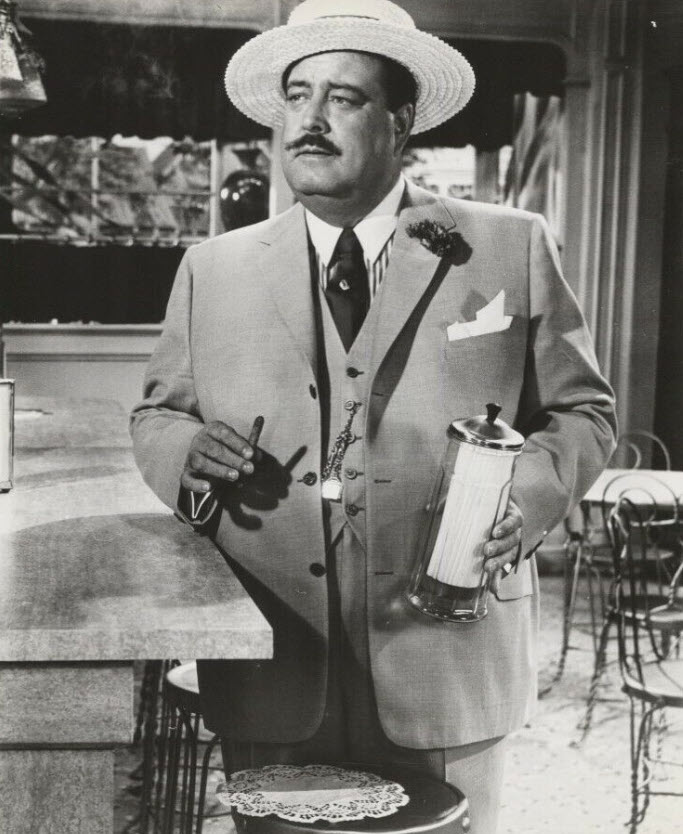
Papa's Delicate Condition (1963) | This charming tale is about a young girl's father and his slightly erratic behavior after sampling a refreshing alcoholic beverage. Although Papa Jack Griffith (Jackie Gleason) never appears to be drunk, his "delicate condition" is well known to his family. His wife is definitely unhappy over his penchant but loves him just the same. He is adored by his youngest daughter, six year old Corinne (Linda Bruhl). When he tries to buy a pony for Corinne, he not only gets the pony but the entire broken down, debt ridden circus as well. This is too much for wife Ambolyn (Glynis Johns), who packs up the kids and heads for her father's house in Texarkana. Jack follows with the entire circus in pursuit to take his loving family back home. He also hoodwinks some local investors to put money into a proposed drug store, thereby circumventing a blue law that forbids the sale of alcohol. Gleason's performance contain many fine moments that run the full spectrum of human emotions and clearly illustrates why he has deservedly been referred to as "The Great One." | |
| |
|
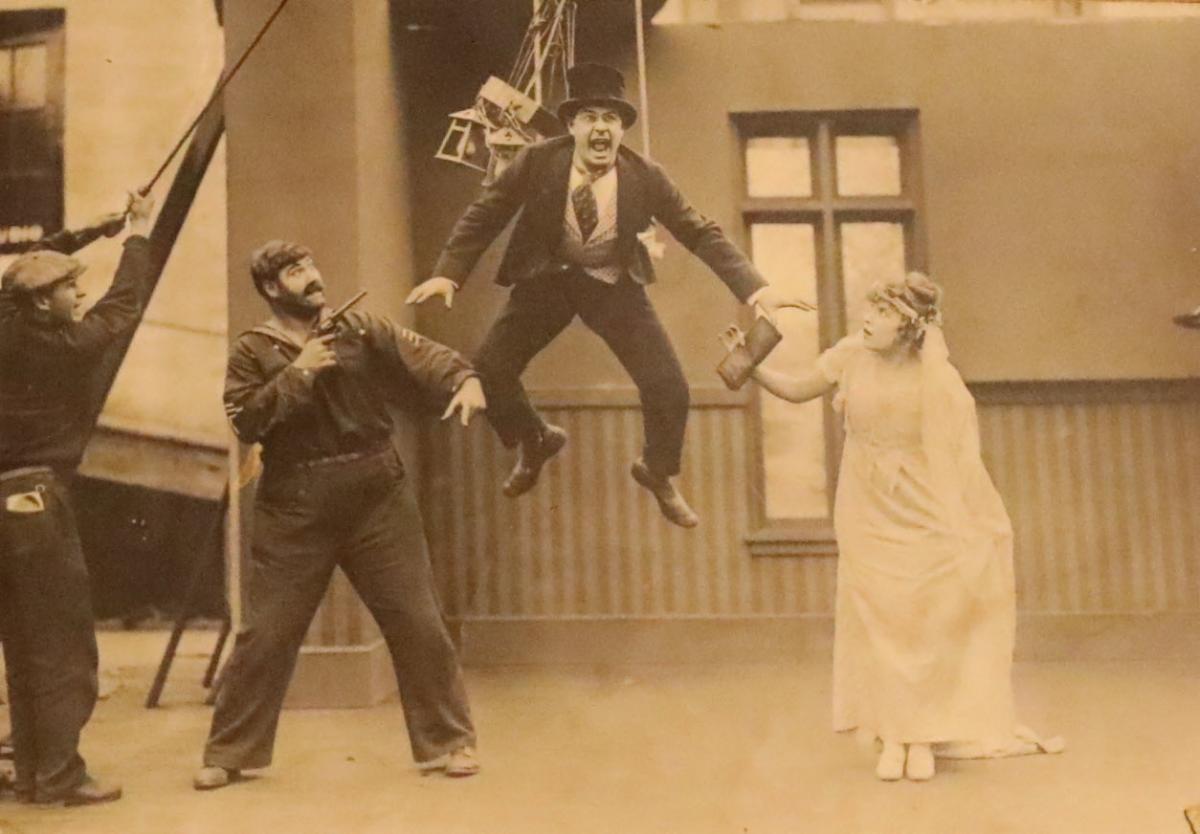
Her Torpedoed Love (1917) | A young woman works as a cook as the sole means of support for herself and her husband, who, because of the nature of his profession, only works one day a year. She is unaware that her wealthy, aging and gout-ridden employer, Phillip Nobrains, has left her everything in his will. Nobrains' crooked butler, Reginald Scuttle, does learn about the will. To get Nobrains' money, Scuttle plans on getting rid of both Nobrains and the girl's husband so that he can enter into what only he would know is a fake marriage with her, she who would become an heiress. To get rid of Nobrains, Scuttle misinforms him of the fact that some submarine pirates will be targeting his upcoming cruise vacation. For the husband, Scuttle manages to get him a job as a cabin boy on the cruise. Scuttle's scheme goes according to plan, until... which leads to mayhem for all concerned. | |
| |
|
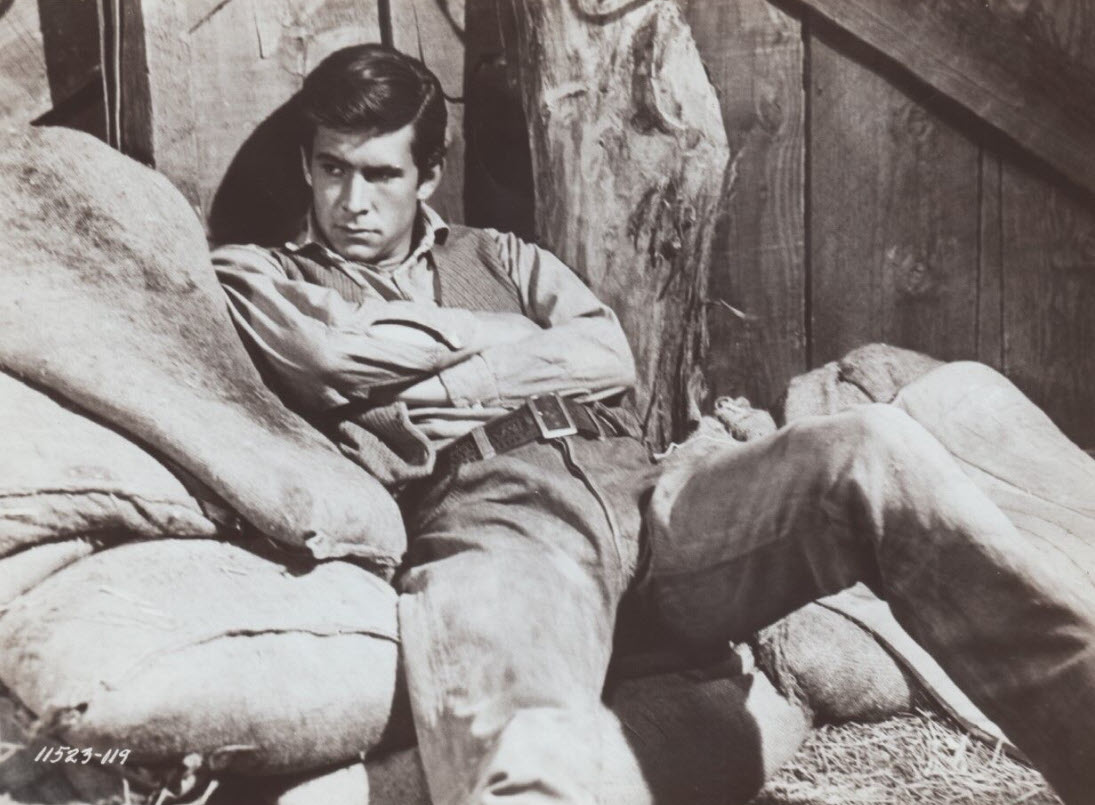
Based on a 1941 movie entitled Shepherd of the Hills, this is the story of a gunfighter who decides to return home after 17 years to make amends with his son. The son blames him for his mother's death and the reconciliation is difficult. Although there are many side action lines -- old enemies still gunning for him and new friends not sure who to root for -- the main theme is that of the interaction between father and son. The push toward one last battle is made secondary. Short on plot, this film features good performances by Jack Palance and Anthony Perkins. | |
| |
|
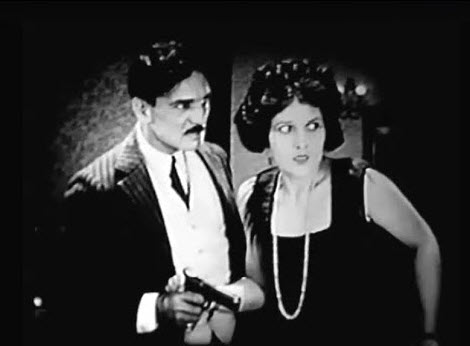
The Arizona Express (1924) | This picture was based on an old time melodrama by Lincoln J. Carter. Pauline Starke stars as Katherine Keith, whose brother David (Harold Goodwin) is vamped by Lola Nichols (Evelyn Brent). Lola belongs to a gang of crooks who are planning to rob the bank where David works. When one of the gang kills a man, David is arrested for the crime. He is convicted of the murder and Katherine is determined to prove his innocence. She becomes a member of the gang so she can evidence showing that David is not guilty, later rushing to the state capitol to reach the governor in time to prevent his execution. Every step along the way, the gang tries to stop her. Somehow she manages to board the Arizona Express, where her sweetheart, Steve Butler, a mail clerk (David Butler), is working. The two of them manage to thwart the gang and they save Katherine's brother. | |
| |
|
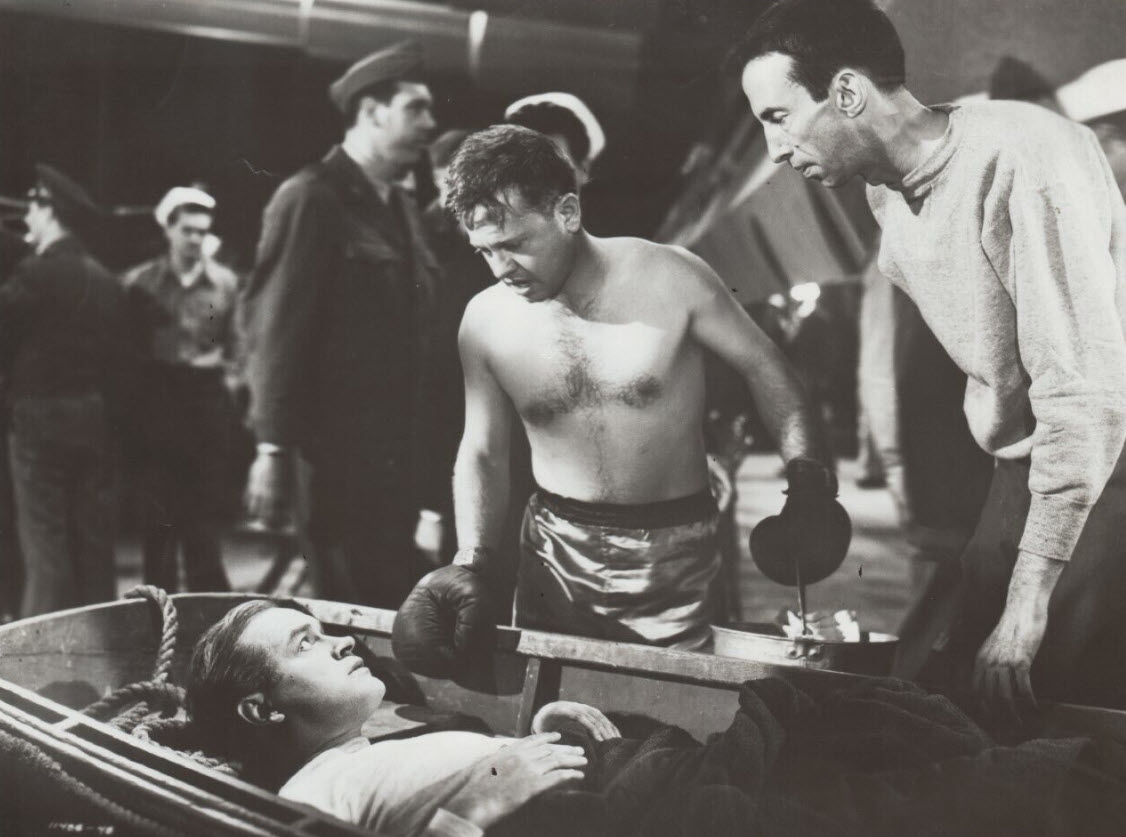
At age 50, Bob Hope was getting a bit too long in tooth for frenzied farces like Off Limits, but his surplus of energy makes up for his chronological unsuitability. Hope plays the manager of boxing champ Stanley Clements, who has just received his draft notice. Gangster Marvin Miller strong-arms Hope into enlisting himself to keep tabs on Clements; when the latter is given a medical discharge, poor Hope is stuck in uniform. During training, Hope makes the acquaintance of draftee Mickey Rooney, an aspiring boxer who wants Hope to handle him. There's one obstacle, however: the Mick's aunt doesn't want her nephew to box. Hope promises to talk the "old lady" into his way of thinking, only to discover that Rooney's aunt is the luscious Marilyn Maxwell. Before the climactic bout between Rooney and Clements, Hope and Rooney sign up to be military policemen under the aegis of buffoonish CO Eddie Mayehoff. If Bob Hope looks slightly uncomfortable at times in Off Limits, it is probably because he isn't politely inclined to such upstarts as Mickey Rooney and Eddie Mayehoff getting most of the laughs. | |
| | | |